TJ WALKER - THE HABIT INFLUENCER - Personal Development | LIVE STREAM
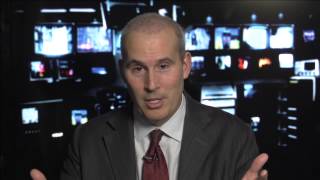
TJ Walker explains how Media Training Worldwide differs from other firms: free access to 100+ video courses with a proposal request, a guarantee of getting your desired quotes or a free training day, and daily on-camera practice with video critiques afterward.
Chapters
If you found this video, chances are you've been surfing the Internet and looking at media training companies and let's face it, they start to sound the same after a while. All the media training companies say they'll help you look comfortable on camera, they'll help you shape a message, figure how to answer tough questions, survive a crisis, and speak in sound bites and get the quotes you want. They all say that. So how do you really tell who's who, who's legitimate, and who you should hire? Well, all I can tell you about is what we do here at Media training worldwide. I'm TJ Walker. Here's where we're different. 10 very specific ways we're different from the competition. For starters, transparency. You don't have to take our word for what we do or our knowledge. I'm going to give you my online media training course in advance, free of charge, just for asking for a proposal. So you're not going to have to guess whether I know my stuff. You're going to see more than 100 videos. Every question you could possibly ask about media training. You'll see me answer it, you'll see my approach, you'll understand how I think before you ever are asked to sign a contract. I don't think any other firm is going to do that for you, so it eliminates the risk. Now, this doesn't mean that you just do the course and you don't need in person training. In person, media training is always the most effective way to really dramatically improve someone's skill level. But I wanted to be transparent with you, so I'm sharing with you every single thing that I often cover in a media training. Now, it's not a cookie cutter approach. The training is going to be personalized to your needs, but you will see all the basic structure of how we teach how to look your best on tv, how to shape messages, how to answer questions, and how to speak in sound bites. So there's a lot of transparency there. The second big difference between Media Training Worldwide and the others is we give you an absolute guarantee. If you follow our principles in your interviews, we guarantee that you're going to get the quotes you want in the story. I'm not aware of any other firm willing to make that promise. Now, if that doesn't happen, we'll do a whole other day of training with you, no extra charge. So this is a pretty ironclad guarantee. I'm such a believer in our techniques that if you prepare your messages the right way, prepare your sound bites and actually practice Answering questions the right way. You cannot just get through an interview or look comfortable, but you can actually get word for word the quote you decided you wanted in the interview before it even started. And it doesn't matter if the reporter liked you or didn't like you, so it's an absolute guarantee. It removes the risk for you. Now, the third big thing that's different about our approach is it's much more systemic. We try to get the whole organization involved. So if we're training one or two or three of your top officers on how to deal with the media, we would make available our online media training course to any of your people who are involved in the communications process, the public relations, public affairs process, so they can actually experience the very same training. Now, they might not be in the room, they might not be in the same city, but they'll all get the benefit of the same training so they can be on the same page. So that's the third big difference. The fourth big difference is that we try to change your entire communications culture in your organization. Now, I've created the largest library of spoken communication courses online in the world. More than 100 courses on every aspect of public speaking, speaking to the media, crisis, communications, how to speak someone on Skype, video, how to speak to someone in a conference call, more than 100 courses. It's comprehensive, and we give access to your entire organization, to all 100 courses for one month. There's no extra charge for this, but it's a way of really boosting the entire communication skill level of your entire organization. Now, the fifth big way, we're different from our competitors on camera time. Now, everybody doing a media training these days is going to get you on camera. That's a given. But here's the key. Ask the others how many times they get you on camera in a day. I get you, and my team will get you on camera not once or twice or three or four times, but instead will get you on 10 times in a day. How do we do that? Well, that's why you want to bring us on board. We'll actually show you. Here's why it's significant. Learning how to be great with the media. It's not primarily an intellectual activity. It's something you have to experience. You have to do it. Your body has to do it, your voice has to do it. It's more like learning how to ride a bicycle than learning how to build an atom bomb. So you need time doing it, watching yourself, doing, being critiqued, doing it again and again until you like what you see. So this is a practice that's evolved over years. The first 20 years I did media training, I was like everyone else three times on camera and the rest of the time the all knowing trainer talking. Our trainings aren't like that and they get better results for you. Now the next area where we're really different is the way we rehearse with you after the training at no extra charge. After the training, let's say two, three weeks go by and now you're doing a TV interview, we'll call you up through Skype Video and not just consult or coach you, but actually do an interview with you through Skype Video. Record it, play it back, critique it. That way, the day of the interview or the day before, you're right back to the skill level of where you were at the end of the day of training. And that's what really makes a difference. So that the skill level is locked in very, very important. The next issue where we're really different is the follow up critiques. Now these days, pretty much anyone says, well send us an interview and we'll give you a critique. And they type a few words and that's great. We do it differently. If you send us a critique of yourself, you email it in. I'm not just typing it up. A response. I will give you a response, a critique in a video just like this. So if your message is great and your smile is good, but your eyes are darting back and forth, I won't just tell you, I'll show you what you're doing wrong and why it looks bad. So it's a much more thorough critique. So that's really our seventh big difference. The eighth difference is we're much more goal focus. The problem with most trainings is at the end of the day of training, your people will walk out and say, wow, that was great. That was fun. The trainer was so smart and charming and interesting. We learned so much. Almost any media trainer can get that kind of response. Because media training is just more interesting than a lot of different kinds of training. But when someone leaves our training, they're not talking about how I'm smart or I'm great or I'm a wonderful trainer. No, what they're talking about is they're looking at a video of themselves saying, wow, I'm great. They're talking about themselves. The trainees are talking about how good they are, how excited they are to do their next interview, how they can't wait to put into action the sound bite techniques they've Learned because at Media Training Worldwide, we understand the goal is not to have you love us and think we're great. The goal is to, is to have your people get the exact message they want, the exact quotes they want and the style they want in the final interview. That's what's absolutely crucial. Now, the ninth big difference for us is the way we collaborate with your entire team. The problem with most. Look, I know all my competitors. They're all charming people, they're interesting people, they're nice people. I don't mean to sound like I'm bad mouthing, but the problem with a lot of media trainers is they're reliving their glory days as the tough investigative journalist for Eyewitness News. So every training is kind of the same. They come in, they're kind of the star of the show, and they're pounding away with all the tough questions. And I'll admit I used to do it that way. But here's what I found. The best questioners, the toughest questioners are not me or some other trainer. The best questioners are people in your organization. So if I'm training the CEO, I'm going to involve the PR person, the communications person. Other senior executives together will interview the CEO in a press conference. And we do it in a way that no one's feelings get hurt and no one feels threatened. If I'm working with two or more executives, I'll have one interview the other. Because here's the thing. You and your people know more about the tough issues in your industry than any trainer can, even if that trainer spends another 40, 40 hours in preparation. Now, sure, we still ask tough questions. We're a part of the interview process, but we really engage all the people in your organization who can be a part of this, so they're not just actively or sitting passively back to the room watching this. The real goal is we want to change the culture so that every single time one of your executives does an interview, rehearsals done with you, because you can't bring in a trainer every single time. So that's so much of what it's about, is changing the culture so that people get used to practicing interviews and rehearsing. And these days, it's as simple as you're in the back of a cab on the way to the station holding your cell phone out. So that's a part of our goal, is to change your culture to get you to practice more. And really, the 10th big difference in our training firm, if you look at all the other websites, they'll have slick video, nice editing, production, sound effects, a little music. That's great if you're looking to hire a video production company. But here's the thing. When you're being interviewed by the media, you can't control any of that. That's why people feel nervous. That's why they feel exposed. It's just you. You've got to make yourself look good. You can't rely on all that other stuff. And that's why in this video and most of my videos you don't see the slick editing. You don't see graphics, you don't see production. You just see one person talking. We try to practice what we preach. I can teach you how to do the same. So thanks so much for listening. I would love to work with you, talk to you more about your particular needs. I hope this has been helpful. So you get a sense that not all media training firms are the same.
More from TJ





The Breakout Cases - What Actually Caused Famous Speaking Career Breakthroughs | Ultamize

The Red Circle Sessions Finale - Build the Speaking Career You Came Here For | Ultamize

Two Stages, One Logo, Two Completely Different Realities - Main Stage vs Independent Events | Ult...

Pre-Reset - Why Repetition Builds Better Speaking Decisions | The Red Circle Sessions | Ultamize

Your Decision, Your Framework, and What Happens After - Build Your Speaking Career First | Ultamize

The Red Circle Sessions Trailer - The Speaking Career Truth Nobody on That Stage Will Tell You | ...

The Two-Minute Ultamize Reset - Your Platform, Your Audience, Your Voice | The Red Circle Sessions