TJ WALKER - THE HABIT INFLUENCER - Personal Development | LIVE STREAM
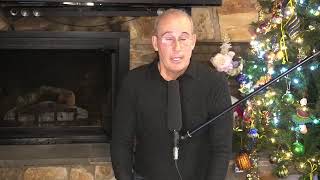
TJ Walker previews his daily personal-development livestream launching Jan 6, 2020. He covers building confidence through video rehearsal, finding purpose by testing skills against market demand, public-speaking tips like one-page outlines, and habit formation through micro-habits and daily accountability.
Chapters
Foreign. Welcome to the show. I'm T.J. walker. Thanks for joining me. If you've ever been to a Broadway preview, that's kind of like what this is on Broadway they have official openings for shows, but then sometimes a month earlier, two months earlier, they have the show but they don't tell everyone it's preview mode. Sort of testing things, tweaking things. Well, that's what we're doing right here on the TJ Walker Show. This is an experiment. This is going to be a daily show that looks at every aspect of personal development, what's new, what's in the news, new books on personal development, communication. And it's going to be more of a community. It's not me as the all knowing guru just lecturing down to you. It's going to be a conversation. We're going to help each other, learn from each other, share from each other. So I thank you for joining me. Whether you're watching this live or on demand, this is going to be live every single day starting January 6, 2020. So mark your calendars. We're going to have a lot of fun in the new year. Sorry I can't come live to you for the next month, but my travel schedule takes me to Europe for a couple of weeks, then on vacation in North Carolina. So it's going to be a fun, busy time, I'm sure for you too. But this is a show where, where it's really a community where people who want to improve themselves, improve their skills, improve their habits, improve their performance in life can get together and share ideas. Now I will certainly share with you my perspectives from my own research in the field, from working with people just like you all over the world, one on one personal development workshops, and from my online courses. I have opened this today to about 300,000 of my online students around the globe. So if you're one of my online students already, thanks for joining. You are going to get special attention here when it comes to having your questions answered. At any point you have a question, just type it into the chat box whether you are on Facebook, YouTube or on many different live platforms. And I do want to hear from you. This is there's something else I am trying to do a little differently than the way most experts, gurus, personal development poobahs do is I want you to challenge me. The problem with so many personal development experts I see is not that they're giving bad information, but they develop a mindset among followers where the followers just say yes, yes, anything you say. The biggest Message I have for you is to question everything, everyone challenge ideas. I want you to challenge me. So we're going to have a segment in this course, I call it Deflate the Guru section of our show today and every day. So if you can ask me the toughest possible question that shows some doubt about one of my premises or if you think I got something wrong, you're going to win a prize. I'll tell you at the end of the show what the prize is. But part of what I'm trying to do is develop in you a sense of skepticism. I've been to other personal development programs, three day programs, some of them well known. You may have been to that. I'm not going to criticize them publicly here, but so often they want you to question everyone else, but don't question the guru in front of you. Well, I see myself less as a guru than as someone who is trying to figure this all out in life. Just like you, and we're on this path together. There may be things where you are ahead of me. I'll learn from you. There may be things where I'm a little further ahead and you can learn from me. But I retain the right to question you and your assumptions and your facts. You retain the right to. To question me at all times. So if you can see me, by the way, do a thumbs up or a check mark or let us know if you're able to watch this, if you're able to hear this. We're still experimenting with the set. We're right here in my living room. As you can see, it's sort of the holiday time of year. And it is a cold. Feels like winter. It's late fall and snowy day. It snowed yesterday. It's supposed to start snowing here in Long island in just a few hours. For the next 12 hours, I'm hoping it doesn't snow too hard because I have to catch a plane over to Brussels and then Geneva to do some training with the United nations there. And if you're hearing that pop, that's because this is a real fire. This is not a video loop behind me. And it's also not a gas fire. Not that there's anything wrong with that, but it is a real fire. And you're in my living room. So I appreciate you joining me today. We had a lot of great segments coming up here today. One of them, and this will be somewhat of a regular A Question of the Day. This is a question for you to think about. We're coming up on a political season here in the United States of America. So this is a question that has a political tinge, but it's not political. This is not a political show. The question is, are you better off now than you were four years ago because of your own personal habits? Ronald Reagan in 1980 famously posed this question during a debate. Are you better off now than you were four years ago? That helped him in his bid to unseat the incumbent president Jimmy Carter. We're not talking about politics here. I just want to know, when you look back in your own life four years ago, are you better off now because of specific changes in your personal habits? So feel free to any place you can leave a comment where you're watching this live or on demand. I'll call you out and mention you if you are doing this live. But if you are watching this on demand, still feel free to post, participate. I read every single comment and I respond to pretty much every single comment. If you want to give suggestions for other topics for this show or shows in the future, just leave a comment. I'm happy to take a look at it. Now let's hop right into the big topic A topic A for this show. How do you build confidence for the outside rest of the world to see? And on the inside? In my experience, too many online courses and books deal with one part of the problem. How do you project confidence to the world? And that's certainly a legitimate issue and one I've dealt with helping people for a long time. There's also the issue of the inner side of things. How do you personally feel more confident? I know so many of my students and many of you, in fact, have told me, TJ I'm just not confident speaking. How do I get confident speaking for that matter, other things in life? To me, it's the exact same habit, whether you're dealing with public speaking or any other skill, is you start and you start small and you show some level of competence and then you build from that. Now, today I'm broadcasting live on half a dozen live streaming networks all over the world. I've promoted this to hundreds of thousands of people. But this isn't the very first time I've ever spoken on video. I've been speaking on video for 40 years in one form or another, ever since junior high school. So my confidence builds because I've seen myself mess up a million times. I've seen myself fail in front of small audiences. It's the small little steps you take that build confidence. The biggest problem most people have who feel like they lack confidence in their life, is they're not trying enough things. If you just sit back and wait till something's perfect or you second guess yourself, your confidence will go lower and lower and lower. And after a while, you just get in a shell. I've seen it happen with friends and other colleagues. The key is you have to try things and don't be afraid to fail. The most successful people in the world, the most confident people in the world have all had massive failures. Elon Musk has failed massively in some of his business ventures. Arnold Schwarzenegger has failed massively with some of his movies. Some of his movies cost tens of millions of dollars down the drain. He's not afraid to try again. So when it comes to confidence, you have to look for this sweet spot. If you're just trying things you did yesterday, oh, I brushed my teeth yesterday, I'll try again. That doesn't build confidence. If you say, I brushed my teeth yesterday, I'm going to run a triathlon today. And you've never exercised before. That's too big of a jump. You've got to find an area where, where you're going outside of your comfort zone. But you're not trying something impossible all at once. Now, you may have a goal for five years, 10 years from now to do something that seems impossible now, but to get there, you have to make small, incremental steps, one step at a time, just pushing yourself outside the confidence, your confidence zone. What I find works with me and my clients and people I know all over the world is to focus on one thing at a time, a little bit out of your comfort zone, and try it and keep tweaking it until you feel better at it and you've seen it and you have evidence. People always ask me, teacher, how can I be more confident when I'm giving a speech or I'm going into a job interview and they expect me to say, you know, meditate and I'm pro meditation. But that doesn't solve this problem. They expect me to say, you know, visualize a standing ovation. It just doesn't help. The number one thing to help you have confidence when it comes to your ability to speak on camera or in any other venue is to actually see yourself do it. And you can do it. These days, it's as simple as picking up your cell phone and hitting record, watching yourself. And this video camera is powerful in many other aspects. Sometimes I want to work on my forehand, on tennis or my serve. I will have. I can't do at the same time. But I'll have someone else record me on video so I can study it and see what's working you. In my mind, it's a perfect stroke. But when I watch it on video, I realize, oh, that's horrible, I'm doing it wrong. That's how you learn. If you can keep practicing until you see it on video, you will be filled with confidence. Ideally, you get to the point where your perception of how you're doing and how you are actually perceived by others melds together. It's the same. But too many of us sit around in our own internal world for way too long and we're second guessing ourselves. We're saying, well, what if this? Or what if that? And that is what causes paralysis. That's what chips away at your sense of confidence. And it's very easy to do. You can't wait until things are perfect. If I wait until things are perfect, we wouldn't be here today. This mic stand isn't perfect. In retrospect, I should have gotten a different mic stand so that this is not as dominant. You know what? If I waited for everything to be perfect, it would never get off the ground. I'm starting a daily show here to be with you because I am convinced that I have some good messages and that there is a need for this in the marketplace. Because I don't see anyone else doing a live daily two hour show really focusing on personal development issues. And if you do know where they are, please feel free to post them. I'm sure I'll check them out and let's share that information with others. But I'm confident that I can make this great. Even though I've had plenty of failures in my past. As recently as three years ago, I did a daily podcast on communication. And you know what? It was a complete failure. Never built up an audience. I've had more comments in the last video I did on YouTube or excuse me, right here on Facebook in one day that a year's worth of comments on a podcast that I did daily. So I'm not confident because everything I've ever done has been a success. I'm confident because I practice, I try, I try new things. I'm not afraid of failure. And when things do take off, I am ready for it and can go with it. To me, that is the key to confidence. Doesn't matter if it's a social situation. You're going to a business networking event and you don't know anyone there and you feel self conscious. Guess what? Everyone else feels the same for the most part. If you want to get confidence for social situations like that, you got to stop thinking about yourself. Just walk up to people, smile, say hello, ask them what they're doing. Chances are they're uncomfortable being there as well. And if you can just talk to them, get them to talk about themselves, they will like you and they will want to learn more about you. So confidence is a critical, critical element to success and I believe to living a fulfilling life, to living a happy life. So the sooner you develop mastery and confidence in your professional skills and your personal skills, the better. We'll be talking about this more on upcoming shows. I do want to mention I'm happy to listen to you. Do you have any comments? Do you have any questions? B Primetime Network is written in B has been a long time viewer on YouTube. So much. So happy to hear from you. And you have a great channel as well, says Merry Christmas Mr. TJ. Thank you very much. Good to hear from you and hope you're posting a lot of videos in the new year as well. Watching On Demand. We'll tweet you later. Okay, well, thanks for stopping by. That's the beauty of the Internet these days is some people catch things live, some people On Demand. It can be either way. It's very flexible, very different from when I started hosting TV shows 30 years ago and it was on 11:30 Sunday morning on ABC. And if you weren't up then or you were doing something else, that was it. A lot of people didn't even have video cassette recorders to record the TV show. So things are, things are much, much better now. So if you are watching us on Facebook, if you're watching us on YouTube and any other format, let me know where you're watching it. Please post a comment. I'd like to know which platform means the most to you, which ones do you enjoy the most and why? Would love to hear from you. So we're going to move on to section B. This is another big one that people like you write to me all the time and that is how do you find your purpose in life? Big, big question. And some of you may be 18, struggling this, some of you might be 60 and struggling with this. Some of you may have had a purpose in your life for your professional career and now you're 62 and well off, affluent, don't need the money, but what do you do all day long? All human beings need a purpose in life. Doesn't have to be about making lots of money or doing anything else to save the world. But you need some purpose for getting out of bed in the morning. And Marcel, do we have anyone joining us on Facebook today or any other forum? Did Yuko say there's some background sound? So we are still experimenting with some of the technical issues. What's that? Okay, we have had some technical difficulties today. We're here in the northeast. There's been bad weather, snowstorms in the northeastern part of the United States and so we lost power earlier. Don't know if that's affecting our bit rate or our Internet speeds. Apologies if the audio is less than great. If you are listening now and if you can hear me on Facebook especially, let me know. Just give us a thumbs up or can't quiet or it's a little sketchy. It may be that somehow I've knocked a cord here and everything isn't perfectly in sync. So let me know. We're always going to be trying to make improvements on the technical aspects of this show too, because so much of communication is always about your substance and your style. And when I say style in this case, I mean the technical aspects of if the audio is fuzzy or if I'm accidentally hitting the microphone, that's going to mess up the style and that will have an impact on whether or not you can hear and process and focus on the message. So all communication, it's always about style and substance together. It's not that one is more important than the other. How do you find your purpose in life? Many people waste years, decades of their life kind of staring at their navel saying, oh, what's my purpose? What's my purpose? Everyone says I have to have a purpose. All the self help gurus say I have to have my purpose in life. I don't have a purpose in life. Why couldn't I just be like Beethoven and know at age three or Tiger woods and know at age three I'm going to be the best golfer in the world. There are some people in the world who do just know very early age that they want to be the world's greatest surgeon or the world's greatest sculptor. In my experience, those people are few and far between. If you are struggling with figuring out what your purpose is in life, my advice to you biggest piece of advice is to simply try more things. This is especially true if you're say, over the age of 22 and you're out of college. It's very easy to get sucked into a pathway where you go to a job that you're not particularly crazy about. But it pays the bills. After the job, you go out for a drink or two with a friend, you go home, you watch Netflix, you count down the days till Friday so you can just chill out over the weekend. Watch a bunch of TV, YouTube, professional sports, and before you know it you're 30 and 40 and 50 and your life is over. And you never found your purpose in life. Sorry if that sounded like a bit of a downer, but that is reality for a lot of people and what I urge you to do if you are in a boring job now, that's not your true purpose in life. Spend every waking moment trying something new, something different. It may be completely unrelated to your educational training, previous aptitudes, what you enjoyed as a kid, but try it. Keep trying things if you fail. Think of it like Edison tried 10,000 times to make a light bulb before it worked. He knew 10,000 ways to not make electricity. You have to have that attitude if you want to find your purpose in life. Let's join in with some of the discussion. Christine Lett writes in don't know if you spoke on this already, but when did you know you had enough experience to begin training others listening from the US Virgin Islands watching live stream on Facebook Christine, you may find this either charming or off putting or obnoxious, but I was in college and I was already thinking I can tell other people how to do this. I was an intern way back in 1984 and worked with a congressional candidate and was his media trainer. Media coach did prep for debates and gave him advice. Which by the way he lost the vote by about 90 votes, came this close after many recounts and did not get seated in the United States House of Representatives. So sometimes you know early, sometimes people are 50 or 60 before they decide they want to train others. At some point though, as long as you know more information then the person you're trying to help, you can help them. You might not be able to charge them $10,000 a day, but you can help them. Anyone who has a mother or father, one of your parents probably taught you something. They weren't a great expert on it, but they knew more than you did. So anytime you can help someone, think of it that way. It doesn't have to be on a professional basis, but it could start and you may have to start for free these days. Very different from when I was starting. If you want to train professionally, if that is your purpose in life or potentially, there's a really, really easy way of figuring out how to do it. Go to an online platform create a course. It cost nothing. The largest platform in the world where you don't have to host it, you have no expense is udemy.com u d e m y.com I have many many courses. There's and it's a perfect way for anyone who is trying to experiment with a life purpose of training to get into the game. You don't have to go cold call and knock on doors at major corporations saying please, please hire me. No one's ever hired me before. Will you be the first one? The problem historically in the training business, if that's going to be your purpose in life, is it's a chicken and egg situation and no one wants to hire you unless you have recommendations from people who've hired you. Nowadays you can solve that problem by just starting and creating your own online course. And by the way, it's great to hear from you. In the Virgin Islands, I've had so many good times there training experiences for many many years. I would spend one to two weeks a year in St. Croix working at the doing media training and presentation training at the oil refinery there. Hovenza so many, many fond memories of the US Virgin Islands hope to get invited back there one day. Yuko writes in that she picked Facebook. I hope it's coming in clearly and hope that's a platform you're comfortable with. Hey, I've been on Facebook for 11 years. Yes, there are problems with Facebook as far as confidentiality and your data and all that. I'm not trying to get into those wars here. If you hate Facebook, that's okay too. I'm coming to you live on any platform I can. So if you know of a particular live platform that you feel more comfortable with as far as giving them your data and your name, feel free to share it to me and we will try to broadcast livestream on that platform as well. Abjit Montney writes in how do you know when your preparation is over before you start speaking? I know preparation will never be over enough. But what's the tipping point? Well, there is an exact tipping point when it comes to preparing for a presentation. For example, the tipping point is you've given your presentation, you have recorded it on video, you've looked at it and you like it. Sounds simple. Nobody ever does it. People will spend days, weeks, months writing and rewriting bullet points PowerPoint slides for a presentation, but they never actually look at what they're delivering. And so they're always wondering in the back of their mind, huh, this might be really awful. Huh, this might be boring I hope not. You get these second doubts going on in your head. You're doubting yourself and it's a problem. So the, the tipping point, the real magic comes from you having seen yourself deliver your presentation exactly the way you want it. When you get to the point when you're watching a video of your own presentation saying that's interesting, if that weren't me, I'd want to watch it, that's when you are ready. You have an over prepared, you have an under prepared, you have an you've simply prepared. And that is my goal for you. So Abjit, thank you so much for your question and if you have more, feel free to share. By the way, you can introduce more on this topic or others too. Talking about your purpose in life. So many people expect there to be a lightning bolt and just be told, oh, I'm going to be a Broadway dancer or I'm going to be a world class musician. Yeah, that does happen to some people. But the far more common scenario is you try a whole lot of things. You figure out what do I like doing and what I'm good at and what do people value. Now I like playing tennis. I really like tennis and I'm better than a lot of my friends. But I am by no means good enough a tennis player to play professionally. And I'm not even good enough to charge a neighbor's kid down the street $10 an hour for a lesson. I'm just not good enough for that. So tennis for me is always going to be one of those things that is a hobby, it's not a purpose in life. I like playing once or twice a week. Good exercise makes me feel good. Although I did tear a calf muscle when I played two weeks ago. Pretty much all recovered now. But that's a perfect example of what is not going to be my life purpose. Now when I started playing a lot when I was eight years old, I probably thought, well, maybe I'll be so good, I'll be a tennis pro. That just wasn't, it wasn't in the cards and it was never really an aspiration of mine. So I'm urging you to keep trying things. But it's not as simple as just follow your passion. You can have a passion for talking about New York Giants football, but it's really hard to make money talking about New York Giants football. Now if you happen to have been a former all all pro quarterback or running back for the New York Giants, well then you can make money talking about Giants football. But if you're simply a fan and you've never played the game and you're not already a successful talk show host, it's really hard to make that your purpose in life. So I urge you, keep trying different things. Figure out what are you good at, what do you like doing and what does the marketplace reward. If you really are good at something and you like doing it, but no one else cares and no one else will ever pay you, unlikely you're going to make that your life purpose as a means of supporting yourself. It may be your number one life hobby, you might enjoy it the most, but it's not your purpose. As far as your impact on the world. There is a lot of advice out there, but just follow your passion. And I say it's with a caveat. Sometimes you don't have a great passion in life, but you're good at something. Initially it might bore you, but what happens is if you go deeper and deeper, you learn more and more, your expertise becomes greater, it becomes more fun. More and more people seek you out, they trust you, they respect you, they pay you more money, they send you different places and it can build into a passion and can become more fun and that can make it your life purpose. Alexander writes in and is joining us. Alexander, thanks so much for joining us, one of our great regular online students. And Alexander, if you have anything in particular you would like me to discuss today, any questions answered, any challenges, let me know. This is a completely interactive environment. And Marcel, are we getting another comment? Oh yes. Abjet writes in another question. I thought I'd read it, but it's not. He says, thank you so much. Does our perfectionism get in the way? How not to want to deliver a perfect speech and be happy with not so perfect a speech even while watching your own video. Here's the problem with perfectionism. Nothing's perfect. I'm not perfect. I've made mistakes already in the first 31 minutes of this show today. But you know what? I don't let it bother me because I'm convinced that any mistake I've made so far didn't really bother you. It's not going to be some permanent stain on my career. It's not going to have a huge impact on my life or your life. Nothing is perfect. Here's what perfectionism really is. It's fear. I'm not the first one to say that. A lot of self help expert psychologists say perfectionism is just masking fear. I do agree with that. Here's the problem I have with people who tend to call themselves Perfectionist is the things they do that they think are making them more perfect are actually making them worse. For example, in my line of work, a lot of what I do, in addition to personal development workshops, is a subspecialty of developing people as public speakers. And I'll have people come to me and say, oh, I'm a perfectionist. That's why I wrote out the whole speech, and I'm now going to read it. That way, I won't mess up one word. I'll get it just right. It'll be perfect. I said, okay, maybe let's check it out. Let's try it out. So they will read their speech, I'll record it on video, and here's what it sounds like. Whoever asked the toughest questions that questions my assumptions, wins a free course. Question of the day. Are you better off now than you were four years ago? But so no eye contact, no facial expression, voices flat, voices monotone, voices consistent in a bad way, no pauses. And I asked them, well, is that perfect? To me, that's about as far away from perfect as you could possibly be when you're giving a presentation. So it always raises the question, perfect at what? When it comes to speaking, people think that it's all about getting every word just right. And unfortunately, that is not how human beings process information. When they're hearing someone speak, I ask people all over the world, think of the best speaker you've seen in the last year, last five years in your life. What do you remember? People always remember the stories and the passion of the best speaker they've ever seen. And never yet in the couple of decades I've been asking that question, had someone come up and say, well, I remember this one speaker who was just perfect in every way, got every word just right, didn't stumble over a single word, and all the bullet points were perfectly aligned in the PowerPoint. I've never heard anyone say that. So abjet, I would ask you to really give thought to what is our actual goal? If you're giving a speech, your goal is to communicate. That means words don't just come out of your mouth, but they go in the mind of an audience. They understand you, and they remember it so they can act on it. That is the goal. So if you're delivering a presentation that's boring, that's flat, that's monotone, where the audience feels ignored because you're staring at a bunch of papers, that's not perfect, that's pretty much a 100% failure. And unfortunately, I'm not Saying you. But unfortunately, with many people, it's. It's really about insecurity. It's like, oh, I want to get each word just right because I don't want anyone to think anything negative about me. I don't want anyone to criticize me. Your goal in life, whether it's giving a speech, starting a new business, any new venture, it shouldn't be a negative goal of avoiding criticism. It should be a positive goal of accomplishing something. And if you're speaking, you're presenting, you're not accomplishing anything unless people can pay attention to you because you're interesting, remember something you said and then act on it. So those are the goals. It's far better off to stumble over a word occasionally, maybe even get the wrong word. If you're memorable and interesting, you'll be a success. If you're not memorable and interesting to the audience, you will be a failure as a public speaker, as a presenter. It's the exact opposite of being perfect. Jude writes in as an Israeli, we get to present in many countries. How would you prepare for an international talk? How would you test your story to see if it works the same in the United States as in Japan? Well, the easiest way to test your stories in advance is to try to find. If you're in Israel and you're about to speak to Japan, try to find. A couple of people are going to be in the audience in Japan and send them a video of your rehearsal in advance. But here's the thing. Don't ask them what they think they might say, oh, great, wonderful. Trying to be polite. Ask them, what do they remember. That's the key. If someone can hear your story once and remember. And maybe you don't want to record a video, maybe you just call them up through Skype video and give them three minutes of your speech to see what they remember. If they're kind of looking at you like, huh, Then, you know, maybe there's a problem. Certainly you need to be aware of sports that are popular in one culture. Nobody cares about another culture. I'm here in the United States and I could talk about the Miami Dolphins and Philadelphia Eagles all day long. Football. If I go to Europe or anyplace else in the world, they're going to look at me like, what is he talking about? There's no touchdowns in football. You have goals in football with a round ball. So you've got to know, ideally, something about the other cultures you're in. Where is their overlap and where are things completely different? But the ultimate way Is test, test in advance. Email your videos, talk to people through live Skype video a couple weeks before you leave. I'm getting ready to do a training in Bern, Switzerland in a couple of weeks. Well, I just spent 40 minutes this morning with the people I'm going to be with to talk over the context, the issues that are most relevant to them. That's how I do. It's not that I'm magic and I know about what works in every single culture. You can't know, but there is a process to help you build confidence, be more comfortable in how you are presenting. So I hope, I hope that was helpful. And that was Judy's question. We've had a few others join us. Nikhil writes in what should you do as a speaker if you forgot your speech? I'm a big believer that you should never speak based on your memory. Now I'm a pretty comfortable speaker, but guess what? I'm cheating. I have a bunch of notes today so my mind could go completely blank. Wouldn't matter. I would just stop for a second and I would see the next item on my checklist and you would never know unless I told you like that. So I teach a method for all of my public speaking students on Never ever ever speak. Unless you have a one page outline that hits all of your major points and a summary of your story. A couple sent a couple of words summary of your story so so that you have it on a single sheet of paper. That way nothing is dependent on memory. Also, if you're using a PowerPoint you could be like what happened to me earlier today. Power outage, might not be able to use PowerPoint computers break compatibility issues. I've had to give PowerPoint presentations before and all of a sudden projector didn't work. You know what my attitude was? Couldn't care less because I had everything I needed on a single sheet of paper. And that's what you do so that you never have to worry about. What if I forget? Because here's the thing, as human beings we are programmed to be nervous when we're giving a speech. Evolutionary biologists believe that human beings are programmed this way as a defense mechanism. Because. Because if you're standing up to speak, you're away from the herd, everyone can see you, you're vulnerable. Think of it in the jungle or in the prairie. If you are exposed from all sides, from everywhere, the lions, the wildebeest, the tigers can see you and they can run and eat you. So that's why we get nervous. That's why we perspire from our palms. Our body's telling us, get ready to grab vines to get out of here, run for your life. So the saber toothed tiger doesn't eat you. But when that's happening, your brain is shutting down. Your body is pulsating with adrenaline because it's just trying to save you. But if you're giving a speech, if you stand up to give a speech and you forget, all these mechanisms don't help. But here's the thing about speaking. Even if you do forget, even if it's awful, it's still possible to come back. Barbara Corcoran. Many of you know she's one of the patients, panelist on the Shark. Wildly successful woman, had her own real estate business. Sold it for tens, if not hundreds of millions of dollars. First time she gave a speech at a real estate conference, she stood up, ran off the stage. And yet what does she do now? She speaks to tens of millions of people all over the world and gets paid handsomely for it. So even if you screw up horribly, it's still possible to overcome that. But I hope it doesn't, that doesn't happen to you. And we have a few more comments. This looks like it's coming from YouTube. And this is Michael. So I appreciate your media coaching videos. Well, thank you very much, Michael. If you have anything else that you want me to give advice on and tips on, please let me know. My areas of specialty are media training, public speaking training and habit formation, particularly habits that will help you in communication but in other aspects of life too. Sid, right? Siddharth Patel says hello. There's no problem with your mic. Well, thank you, Sid. That makes me feel good. This is, I don't even want to tell you how much this microphone costs, so I'm glad it's coming in loud and clear. By the way, those of you considering doing your own YouTube videos, Facebook videos, videos for Udemy online courses, what you will see again and again from the experts is that the audio quality is more important than video. I don't know if that's really true, but I do think that people are more forgiving if you have a backdrop that's a little fuzzy, but if it hurts their ears or it's annoying or the volume isn't loud enough, people will tune out quickly. You don't necessarily have to spend a fortune on a microphone, but if you're serious about communicating in the online and the video world, some kind of microphone beyond the, the built in microphone in your cell phones, there are exceptions. I mean, Just yesterday I made a little video for the platform. Tick tock. Just. Just with a cell phone holding it, no extra mic. I'm wearing just an old T shirt, hadn't coned my hair yet. It got 10,000 views and hundreds of likes and comments. So it's possible that you can do well even when there isn't great audio. But for longer form content, your own shows, anything you're doing for training or online courses. The microphone is important, but thanks for mentioning that. Now have we stroll? Is Peggy the next question? Marcel and my colleague Marceau is helping today and as our is our producer. So Peggy writes in what is the best thing to say if there is an answer? I may not know during Q and A. I have a fear about Q and as. So Peggy, you're not alone. I ask people all the time when I'm giving a speech to say a thousand people. I'll ask people, how many of you seen someone not answer a question effectively during Q and A? Maybe you and it was embarrassing. And sure enough, 300 hands will go up. So it is a real concern. Peggy, you're not crazy. But I always ask a second question. And the second question is, how many of you have seen someone give a speech? It was incredibly boring. You don't remember anything they said and you pulled out your cell phone and you started checking Facebook. Guess how many hands went up that time? That's right, Peggy. All thousand hands went up. So I beg you, I urge you, focus on the bigger risk. The bigger risk for anyone giving a speech is that you're boring and you're not interesting and you're not mean memorable. Focus first and foremost on having a presentation, a speech, a talk, a briefing. You're really delivering interesting ideas and you're doing it in a memorable way. Now, if someone asks you a question you don't know, say I don't know. If it's something knowable, you can say, I don't know. My colleague Marceau does have the answer. I'll be able to email you the answer within a half an hour when the show finishes and then go to the next point. No one's bothered by that. If you're asking me, TJ who is going to win the presidential race in the United States next year and who do you think people should vote for? A. I don't really. I have an opinion on the second question. I don't really know the answer to the first one. So I will simply say, I don't know. What I can tell you is there are things we can control directly. And there are things that are a part of a larger society that this show primarily is about how individuals can improve their own lives regardless of the macro political environment. And I want to give you every tool possible to make your life better in 2000 and 2021, regardless of the politics in your country. Now, is that a perfect answer? You might not like it, but I did answer a question, a tough question, a question I don't know the answer to. So to break that down either, say I don't know. And don't act embarrassed, say I don't know. I'll find out if it's something knowable. And these. And sometimes just the biggest thing is don't act embarrassed or flustered, famously, and I'm dating myself here. And forgive, forgive me if you're watching from India, as I know many of you are, and in Nigeria and other parts of the world that I'm going to give occasionally a number of examples weighted towards the US political scene, since I've been in the US my whole life. Famously, in 1980, Senator Ted Kennedy was running for president, and he was being interviewed by a very famous journalist, Roger Mudd, on CBS News, who just asked him, why are you running for president? And Senator Kennedy at the time said, you know, and it was as if he'd never thought about the question before. It became a tough question for him. Sometimes it's the easy, broad questions that throw us for a loop. His campaign never really recovered from that. And to this day, people talk about how it was a horrible answer to what, what wasn't really even a tough question. He just made it tough. So you've got to go into the any speaking opportunity and any Q A opportunity with the idea of this is easy. It's just another example, another way for me to communicate the good ideas I have to share with the people in this audience. And if I know it, great, I'll share it. If I don't know, I'll just say, I don't know. When you have that attitude, Q and A becomes the easiest thing you'll do. Quite often I'm struck by the fact that I ask people, where are you better speaking, your prepared speech or the Q and A part? And most people say they're actually better at Q and A. And I remind them anything you do in a Q and A part of a presentation, you can do in your actual set presentation. And sometimes what I recommend people do is the speech that they've worked on for months. You tear it up, throw it away, and I say, okay, get a clean sheet of paper. Now just Write down the 10 most obvious questions that you think your audience would ask you if they could sit there one on one and talk to you. And you know what, Peggy, Quite often that makes it a speech that is a thousand times better. So please keep that in mind. Jude writes in thanks a lot Christine says, so happy to hear that. Christine, thanks for joining us today. Nikhil says thanks and Peggy says that very, very appreciative group. And I want to thank you for spending time with me as well today. I do want to share with you some items in the news. Now this is not a news program in the sense we don't cover top level politics, what's going on in London, Washington, strikes, terrorism and political things. But I do want to talk about top news stories that relate to personal development and building new habits and communicating effectively. We are going to to cover that. But first I want to share with you again, I'm not perfect. We're all in this together. I want to share with you one thing that has been working well for me on a personal development level. Those of you who've heard me before, if you've been in my classes, know that I use a system called selfie speak programming. I record a little audio telling myself what I want to have it to be and then I listen to it every day. I don't have to record it once. I may record it different one every three months but with a push of a button I remind myself what is the habit I want to build in a positive way. I then put in the notes section of my phone, I have a little folder for personal development and I just have a headline for what that task is, that habit. And then every day I just spend 10 seconds going there and I just put a yes for for I did it or no I didn't. And it keeps me accountable. Everyone has great ideas on what habits people should have. You look at all the self help books. They're all filled with great advice. The problem is I have found reading good advice in a book doesn't create change behavior because we forget it requires constant repetition. So here's one I've done just recently and I wanted to share it with you. You I have an audio that I made right on my phone, doesn't require a fancy mic or anything. And I just told myself that TJ every single day you're going to read paper books, digital books and listening to books on audio every day. And that has helped me by telling giving myself the goal of I read some paper books before going to bed every night. And I also read digital books rather than checking email obsessively or spare minute at the doctor's office checking out nonsense news, I just go to a news, not a news app, a book app. I use a couple. One of them is Blinkist where it gives great summaries of books. So I read those throughout the day. The other thing I do when I'm reading news, which I try to limit myself to about 30 minutes a day, I actually listen to a book, I listen to an audiobook and I use a couple of different formats for that. One is insta read these and I'm not selling anything today folks. But these are very inexpensive. So that's something that's worked well for me lately. Just more reading, more reading on paper, more reading online rather than spending time on email and other nonsense and actually listening to books on audio. And the reason I'm able to do it is I remind myself every day to do it. And I have a check mark that I did it every day. And that's what built it into a habit other than rather than just a New Year's resolution which everyone forgets or at least I forget by the second week of January. So that's the big difference. I do want to switch and if you have any new habits you have acquired, feel free to share it with us. Post your comments right here on whatever platform you are on now in the news. There's so much bad news out there. I do think it's important to occasionally share good news. So I wanted to direct your attention to a story posted on one of my favorite websites. This is Virginia Box.com and I've linked to it in the show notes. You can see it. These are nine different charts to be thankful for this Thanksgiving. It was just posted on Thanksgiving and it will warm your heart to see some of these charts, the one that jumps out the most. You know, everyone always fixates on negative news. It's. It's part of being a human. We're wired that way. But the first chart they have on this shows how dramatically the rate of poverty has gone down in the world. So for example, in 1981 worldwide, 42.2% of the world lived on less than a dollar ninety a day. I say it's hard for me to imagine, I can't even imagine living on a $90 a day. And this is $1.90 a day in current, you know, current dollar amounts in 1980. You know, I hate to sound smug and self satisfied, but Life was pretty good for me. I lived a middle class life living with my parents in high school in Charlotte, North Carolina. It wasn't anything lavish, but the ducats, the house, plenty of food, I can't even imagine living on a $90 a day. Now here's the good news and grand graphically. This is all charted out today. This is as recent as three years ago. It's down to 10% of the world. So we've gone from practically half of the world to living in dirt $1.90 a day abject poverty to now it's actually less than 10% and I've seen some statistics saying it's as low as 8.5%. Now that's still too high. No comfort for you if you are one of those billion or so people or 800 million still living in abject poverty. But the tremendous successes that have happened over the last three and a half decades, we tend to forget it. We tend to only fixate on problems. And the reality is human beings are doing a lot of good things around the world. There's a lot of different development at the personal level, but also the macro level, the political level. And it's so slow, quite often we just don't see it. Jose writes and this is my first streaming with tj. Very interesting. Well Jose, thank you. Thanks so much for joining me. I have traditionally done short streams before. I would do it in the context of I'm in the middle of training and I'm demonstrating to people, people how to stream live and I'll just do a Facebook live and I've been using it sort of part of as a training. What we're doing here today is very different. Today is not about showcasing my latest workshop. Showcasing, showcasing my keynote speeches so that you hire me as a keynote speaker. Not that I would mind that, but today is something different. Today is about creating a unique experience that's just online for people who care about personal development. Anthony Robbins is the best in the world at creating live events in person. I've been to his. Many of you have too. But I don't see anyone really creating a warm, nurturing, truly interesting, innovative and insightful live daily experience for people who want to learn more about personal development and communication and to share more. So Jose, that's what we're here for. Nikhil writes in how long does it take to master Public Speaking? Typically when I work with someone professionally, we do everything we need to do in a day and they are great by the end of the day. And if you have a specific interest in that I do have online. I'm not here today just to sell you stuff, but I do have a number of online courses and in person workshops too. So if you're interested, feel free to write to me directly. You can contact me through the Facebook page or just tj@tjwalker.com. it's not particularly long. Here's why. You've already been talking your whole life. You already know how to talk. So when I'm working with someone on public speaking, quite often I'm not teaching them a whole new skill. I'm not teaching them how to act for the stage and act for the camera. I'm teaching you how to stop acting. The problem most people in the world have is if they're talking to one friend or colleague, especially over a beer, glass of wine or beverage of their choice, and they're talking about something they care about, they're interesting, they're engaged, their hands are moving, their eyebrows are moving, their voice is all up and down. They can have an interesting conversation for hours. They're telling stories, they're giving examples, they're bringing in passion. And the second you tell them, okay, you now got to get up and give a speech, they get scared, they stiffen up. And all the things they did when they were comfortable, they take those things, they ball them up and they throw them in the trash can and they start doing something completely different. They now want to be serious and give a serious, important, formal presentation. And it's awful. So so much of what I do is not teach people how to act for the stage of the camera. I teach them. I teach you how to stop acting. Stop acting scared. When we're scared, we put these defense mechanisms up. We stand behind a lectern, we stand behind a written speech or a boring PowerPoint. And the problem is, it doesn't defend us. It just makes us worse. So that's the good news. It doesn't take long. Also remember, most people have never gotten any training on how to speak. Most people are awful and boring. If you've been to golf camp for one day and you got great lessons for a day, you might not be ready to go pro. You might not break a hundred, but you'll probably beat someone who's never seen a golf club before. And that's the way it is when it comes to getting public speaking training. It doesn't take much to stand out and be the best speaker most people in your organization have ever seen. Now, did I miss a question from Christine? Christine says, how can I Help my boss improve his public speaking. He believes he's great at it and needs no notes. Often that is not the case. Well, Christine, this is a touchy situation. I can give you public speaking tips, but that's different from office politics tips because this is, it's kind of funny in a sense because quite often I am brought into corporations to train a boss and I will give the boss advice. And they, they take it because I'm the outsider. I flew thousands of miles away. They're paying me not inconsiderable amount of money or not, not in unsubstantial amount of money. And they take my advice and they listen to it. And then they turn to their assistant. How come you never told me that? And here's the thing, everything I told the executive in the training, their assistant told me a month earlier and that the boss just never listens to them. So part of the problem can be standing. It's hard to take advice from someone if you see them at the coffee pot every day. That's human nature. Now I have a lot of CEOs, billionaires, top level politicians, senators listen to my advice. But do you think my own niece or nephew, do you think they listen to my advice on public speaking? Of course not. They'll do the exact opposite. So sometimes the closest is too much and it's hard to do. I do think that the best way to help a boss get ready for a presentation is to encourage them to rehearse, but to do it in a specific way. Just rehearsing in front of you is worthless. The only type of rehearsal I believe that's helpful is if you record them. These days, just your cell phone works. Then play it back. Here's the tricky part. But it's also easy as far as office politics when, when you hear them say something interesting, stop the video and point it out. Say, oh, that's really interesting. Be sure to play that up. Give positive reinforcement. Most bosses in my experience have never watched a video of themselves. Imagine going through life and you'd never looked in a mirror. I never looked in a mirror. How would I know if I shaved half my face or this part of my hair standing up? You don't know. So your boss can't be faulted for thinking he is great at speak. And I think you said he was a. He can't be faulted if he's never seen himself. Quite often just showing video some will motivate that person to really work harder. Because you know what the biggest response is when I show people video of themselves the first time. If they haven't seen themselves speak, they're like, oh gosh, I'm really boring. I wouldn't want to watch me. What do you think, T.J. and I have to say, well, you seem like a smart person. If you think it's really boring, guess what? It is. Now let's figure out how can we say something interesting? So that's my advice on what to do with your boss. Just try to encourage them to practice it on video and show it to them. Ahmed writes in Ahmed Adam writes in I've joined the course on communication and equally interested in public speaking as I always have a lot of fear and I always attend work related conferences and meetings and I really do need to overcome this. Any quick wins and tips? Here's a quick win. Never go to a conference without asking one question. Typically, anytime there's a panel, convention, speaker, keynote speaker, they throw it open to questions at the end. If you can stand up in front of a thousand people or 500 or even 20 people in the meeting and ask a question, guess what? That is a type of public speaking. Most people don't do it because they're nervous. By forcing yourself, pushing yourself out of that comfort zone, it's only 10 seconds to ask a question, you toughen yourself up. You build a skill in yourself to speak, under pressure to speak even when there are butterflies in your stomach. And you'll get better and better each time you do it. The next time it gets a little easier. That's true not just in public speaking. It's true in starting businesses. It's true in starting online ventures. It's true in starting online courses. It's true in everything. Just keep trying. Keep experimenting. It may feel rough at first, but push yourself out of that comfort zone. Most of us, if we're having a conversation with one person, are comfortable asking a question. If we are in front of a thousand people at a convention, we're not comfortable standing up, going to the microphone and asking a question. Push yourself out of the comfort zone. And Ahmed, I think you've just joined the course. The biggest piece of advice, which you'll hear me say ad nauseam in the course you've joined is every single time you have to give a speech, a presentation, a talk, a media interview, rehearse what you want to say on your cell phone repeatedly until you love every aspect of your style and substance. It's not hard. Anyone can do it, cost nothing. Presuming you already have a cell phone and requires no particular skill, you just have to decide to do something that takes you out of your comfort zone. But you can do it. It's not like I'm saying you've got to go do a 20 minute stand up show in downtown Manhattan on Broadway and perform for 500 people and get people to pay you. That's hard. I'm not asking you to do that. Simply asking you to practice on your own cell phone until you like what you see. Here's the thing. If you've seen yourself giving a speech, presentation, a talk, and you like what you see, it becomes virtually impossible to be nervous about giving the speech. In real life, we get nervous because we fear the unknown. Well, it's not unknown to you because you already have seen exactly how you want to come across and that you've done it well. So that's the big difference. So that's really my number one tip, which you'll get to in the course. So, Ahmed, thanks for joining me. And remember, you can always reach me here, starting January, every day live. And I'll answer your questions live. But you can, but you can also. What's that, Marceau? Oh, we'll get to that in just one moment. But also you can always post questions in the Q and A section on the course or the course Facebook page. Let's go to Peggy. Do you offer a course specifically on creating online courses, step by step? If not, have you considered it? I have, Peggy. And at the risk of seeming like a bad business person, I will tell you I would recommend first that you go to Phil Ebbinger's course on Udemy. Phil Ebiner E V I N E R. He does have what I think is the best course for someone new starting an online course. I have a couple of courses. I have a intro course and an advanced course for people considering making an online training course. I do recommend them. If you go to udemy.com and just click on my name, you'll see the list of all my courses and you will see them there. And my courses deal not so much with what's the best camera, what's the best mic, because that is important. But how do you get comfortable speaking on camera? The biggest problem most people have when it comes to an online course, it's not the tech stuff. The tech stuff is a commodity. What holds people back, what keeps them from ever hitting that publish button is fear of looking stupid, fear of not being professional. Oh my gosh. I said, um once. Let me hire an editor and spend the next six years editing out three ums. And then they forget about the project. So there are some technical requirements to make a good online course, but far and away the more challenging issue for most people how do you make your ideas come alive in an interesting, engaging way? So that's what I teach in my course, but thanks for asking, Peggy. And do do check out those court you can also some of those courses are available on my main website, mediatrainingworldwide.com that's my main corporate website for my Public Speaking and Personal Development Corporation courses, so you can check those out there as well. I want to go a little deeper into some of the top news stories of the day that do relate to personal development. This one was posted in the New York Times just today. Headline 3 hours of exercise a week may lower your depression risk. This is a story by Gretchen Reynolds and I just wanted to share with you an excerpt from it. Those of us who walk, dance, run, ease into a downward dog or glide and churn on ellipticals at least a few times a week are much less likely to develop clinical depression than sedentary people, even if we inherited an elevated risk for the condition. This is according to a large scale new study of exercise genetics and mental health. The study found that almost any type of physical activity, whether strenuous or light, helped to offset people's genetic propensity for depression through the benefits. Though the benefits were greater when people exercised more often. Now, at some level this is not that profound. We've certainly heard this before, but it does still strike me as just amazing when people are spending billions and billions of dollars on psychotropic drugs and drugs to make them feel better to alleviate depression. Why not at least try this too? There are 168 hours per week and I think that and not in every case, and some people have physical infirmities or wheelchair boundaries. But the vast, vast majority of people who are not depressed or are depressed have three hours they could squeeze out for some kind of activity out of 168 hours. In fact, the time you spend going to a psychiatrist, and I'm not anti psychiatrist, believe me, a lot of people need them and a lot of people do need drugs. I'm not qualified to give you any recommendation on any kind of psychiatric drug, so don't even ask me about that. But I do think if you're going to spend the time going to see a psychologist psychiatrist, going to the pharmacy, getting pharmacy drugs renewed, the money it takes to make to pay for all of it, why not also at least try what this is recommending, which is three hours a Week of exercise. I mean that's, that's really very little. That's what, 25 minutes a day go for a walk. And I realize not everyone has the luxury of controlling their whole schedule. I'm lucky in that regard. I typically try to go for at least an hour and 15 minute, hour and a half, walk every day and walk at least six and a half miles a day. You don't have to do that much, just 25 minutes a day. And it can be light exercise. I've linked to the story, you can check it out for yourself. Well, also other lifestyle news. This is on Vox.com, which is a website I'd recommend to you headline. It's a lifestyle, it's a culture, it's keto. You've heard of this. Here's a sampling. There's no one figurehead and it's sort of repackaging of the Atkins diet, you know, the low carbs, high protein, high fat diet. It's sort of like the streamlined Marie Kondo version of, of Atkins where he had this multi phase plan and you eventually reincorporated carbs with keto. You just cut all that out and you stay that way and you live that way. So one of the things the journalists discovered, well, here is her assessment. This has become quite popular now and a lot of people are embracing it, like, like crossfitters. There are celebrities in Hollywood who are endorsing keto. Halle Berry, Kourtney Kardashian. Silicon Valley has glommed onto it. People like Tim Ferriss Four Hour, Four Hour Body, a book I've read. There's an ex Jersey Shore character who has a massive Twitter following, an Instagram following, and he talks about keto. Have you tried keto diets? Here's what I want you to think about. Will the keto diet help you lose weight? Absolutely. Absolutely. Will Atkins help you lose weight? Absolutely. Will any diet help you lose weight? Yes. But is your goal to lose weight or is your goal to get to your ideal weight and stay that way the rest of your life? That's my question. I think most sane people would say, yeah, my actual goal is to reach my ideal weight. If you figure out a way of staying there the rest of my life because losing weight just to gain it all back, what good does that do? That demoralizes you. And in fact, if you lose weight and gain it back, quite often people gain more than they lost. So it's a net downward spiral. My problem with keto diet, the Tim Ferriss diet and I've tried Atkins many years ago and I did lose weight. The problem is you have to have absolute superhuman discipline to get past that first six months. The first six months, like first six months of, you know, a new romance. Everything is wonderful and warm and fuzzy and great. You're on a high and you're losing weight. It's wonderful. But after that six months, you're going to be with some friends and it's going to be a fabulous Italian restaurant. Someone else got to pick it out, it was their birthday. And there's going to be mouth watering garlic bread there and there's going to be lasagna and pasta with parmesan cheese. Are you really telling me the whole rest of your life you're getting the garlic is wafting up in your nose and you're hungry, you're really telling me you have the discipline to push that garlic bread and that lasagna away? I know I didn't. And to me that's the whole problem with the keto diet, the Atkins, all of these diets is it goes so much against human nature to say no to entire broad swaths of food. We are human beings, we are social. We have to sometimes go to a nice Italian restaurant or some restaurant that has food that has lots of carbohydrates in it and, and if you have enough discipline to say no, the nice fresh garlic bread the rest of your life. In my mind, that tells me you're so disciplined you're probably out running marathons and have a 2% body fat weight. So you don't even need to be on a diet. So that's my problem with keto. I'm not saying don't do it. I just don't personally know why you want to try something when it long term it has to fail. Unless you have completely had a personality transplant and have a thousand times more self discipline than you ever had before. That's my problem with it. So feel free to share your comments there. If you've been on keto and it's been four years and you want to say, well no tj you're wrong and here's how I stayed on it for four years and I always take my own healthy snacks to restaurants and it works fine, I would love to hear from you. I don't want to appear dogmatic about this or much of anything. One of my big principles and famous scholars throughout history have stressed this. Dumb people are dogmatic and have zero doubt about their opinions. Smart people have lots of doubts about everything. So I do have doubts about a lot of things and I'm open to questioning. And for those of you who came in late, I do want to share with you. We have a special prize today. I'm going to give you a access to my latest best selling course at absolutely no charge. For the person who asked me the toughest question, we have a segment on this show called Deflating the Guru. I want you to take me down a peg or two if you think I got something wrong, if you think I'm full of bs, I want you to challenge me because I think that's where real growth takes place. That's where people learn. When you learn how to think for yourself, I think I have some expertise and some interesting principles, but my biggest principle is you've got to question everyone, everything and use your own intellect. That's really the way to growth. Let's go to some questions. Marceau, did we have another question or comment that I missed? And if we missed you, I apologize. You may want to repost and you can post wherever you're watching this, whether it's Facebook, whether it's YouTube or any other channel. If you're watching this on demand on LinkedIn, Twitter, other places, you can still post a question and I will probably answer you in the text format in the on demand version. Now this is a, this next story I think is especially relevant this time of year here in the United States. Okay, so let's, let's go to. I'll get to that story about the latest Gallup poll as it relates to how much people weigh in America. But first let's go to the comments. Ahmed said, Thanks a lot. Point well noted. I have recently started recording myself in videos and notice I have lots of OZ and ums trying to get rid of these itself, creating me another stereotype and some fear. And the also related to this, I'm not from an English speaking country and one of the reasons I imagine is that when I'm saying ah, I think I'm thinking of some of the words to say next. Any advice on this? So several things, but there are lots and lots of speakers here in America. English is their first language and they still say ah and all the time. So I understand and I respect you that you're willing to speak in multiple languages. I'm one of these dumb ugly Americans who only speaks one language. So I first of all congratulate you for having the mastery over more than one language to speak in different languages. That's great. Here's the magic tip. If you say ah or you Say, what I'm about to tell you will cure this problem forever. If you do exactly what I say, it costs you nothing. You can do this with a couple of household items. It will involve no pain. Believe it or not. I'm not going to ask you to shock yourself. I need you to record yourself, see exactly what you're saying. Is it ah? Is it what is it? And then type up that word in different sizes a whole bunch of times. If it's ah, you could spell it U H or ah. If it's um, you am type it up in different sizes. Print it out on your computer. Next, get a red magic marker. Put a red circle around it and a slash, just like a no sign. An international no sign, no left hand turn. No parking. No no. Then I want you to cut this out and tape it on your cell phone, on your watch. If you're one of those old fogey boomers like me and you wear a watch, tape it on your watch. Tape it on the screen on your laptop. You want it in your field of vision, not when you're speaking, but the rest of the time during the day. If you're like most people, you look at your cell phone 150 times a day. So after a day, when you say ah or the image pops up and you'll still say it, but you'll be aware of it after two or three days as your mouth and lips and tongue start to form the sound of the ah and the you almost catch it, but it still comes out. But after a week, the image will come up. You can catch it before it comes out. And now you can simply pause. By pausing, you'll come across more confident, more authoritative, and more comfortable. Now, related to the second question you asked, because you're speaking in another language, you're saying the ah to think of another word. Pause. Don't say anything. You do not have to fill the sound with the air with sounds, just pause. The bigger tip though, is if you're speaking in another language, or even your own language, don't struggle to find the perfect word. Use the simplest word that comes to you. Use the first word that comes to you, and generally you'll be better off. Doesn't work that way in writing. When you're writing something and you have the wrong word, it stands out. But when you're speaking, people don't catch it. They don't process it that way. So always strive for the simplest, easiest word possible. Jose writes in Haha. As a Spanish speaker, I've to get rid of my it sounds like letter M is pronounced in every culture. There are certain verbal tics. People use certain sounds as a filler. The fewer fillers you use, the better. But I do want to caution you on something. The far bigger problem for most of us if we're giving a speech or talk, is not the ums and ahs. It's that we said everything boring. We didn't say anything interesting. I've seen speakers say uh and um constantly, and the audience loved them because the speaker had passion and was interesting and exciting and told great stories. I've seen other speakers get up. Everything is smooth, professional, polished. Not a single awe. And nobody remembered anything they said because they had no stories, they had no passion. So focus first and foremost on really interesting ideas and interesting stories that will solve most of your problems. And by the way, often crowds out the ums and us. A lot of times people say oz and ums because they're trying to remember stuff in a way they don't normally talk of. Whole laundry list of facts and bullet points. That's boring. It's harder for your brain to remember that's not how you normally talk. So trying to bring your communication back to a normal communication style, conversational style, will solve the problem of oz and ums. Finally, I'm going to give you a couple of examples. They're a little bit dated now because most of them are no longer broadcasting on a daily basis. But three people I know who say ah and more than anyone else, and again, excuse the United States, references talk show host David Letterman, Martha Stewart, who had her own show for many years, still does videos and political pundit talk show host Bill O'Reilly. They all said a great deal. What do they all have in common? They were all making 50, $100 million a year, talking all day long to millions of people. So I think the far bigger problem is make sure you have something interesting to say. Don't spend time obsessing about the odds and ums. Okay. Joanne has joined. That's great. Pete has joined. Pete Burton, my colleague in New Zealand. Pete, thanks for joining us. How are things down in New Zealand? Let's hear from you. And did I miss any other comments? Great. I did want to share with you an interesting personal development story. This is According to Gallup poll polls, more Americans say they weigh 200 pounds or more this decade than ever before. Not a huge shock, but what the research found is, as of right now, by the end of this decade, 28% of Americans weigh 200 pounds or more. This is up Substantially. This is up, up from 24% a decade earlier. Folks, we have a real problem here. And I'm not trying to shame anyone. I don't think anyone should feel shame about their weight. But it's just a reality that if you are obese, you have a much greater chance of heart disease, of developing diabetes, of stroke. There's just a whole host of diseases and shortened long life expectancy. And we, we've got to somehow figure out what to do. And you can blame carbs, you can blame fruit, all sorts of things you can blame. But at a macro societal level, we're simply eating a thousand calories more, 2000 calories more many of us than we were on average a couple of decades ago. It's just not a huge mystery as to why there's now an obesity epidemic in the world. And this is a problem. And I can relate to this, folks. I'm not holier than that. I'm not someone who was rail thin my whole life. I grew up thin. I am only a couple of pounds off my ideal weight right now. But a year ago I was one of these people. More than 200 pounds. Less than a year ago I was more than 200 pounds. My weight had yo yoed throughout, you know, from the time I was certainly 30, my weight would go up and down, I could lose it, but it would pretty much always come back within six months. This time it is not come back. And the difference is I really made a committed effort to turn healthy eating and exercise tips resolutions into daily habits. I am, it's not out yet, but I actually am working on a course on fitness, weight loss and nutrition that will be coming out in the new year to share with you what has worked for me. But those of you who have been with me a while know the one thing I do that's a little bit different from others. It's different from nlp, it's different from self hypnosis. It's different from psychiatry is I use a system for programming my brain called selfie speak programming. I simply talk into my phone keeping a little audio recording of the habits I want to have. So every single day I listen to an audio. I did the audio a couple months ago and the audio has a whole section on health and it's filled with tips like tj, you do not snack. And if you do snack, it's going to be an apple. Tj, you don't eat second helpings. You love vegetables. I give myself a whole bunch of basic tips that you've heard other Places you've read in other books. The difference is in my own voice, I share these concepts and I talk to me and it's just for me, not for anyone else. I then listen to the audio. First thing in the morning, I sit on the couch right over there and I listen to my selfie speak programming and I program my own brain on what I want to eat, how I want to eat, and how I want to exercise. I've always exercised, but sometimes I might slack off for two weeks. I exercise every single day now because I have a way of holding myself accountable. I'm telling myself to exercise every day. I also create a folder, my notepad section, where I have very specific exercise requirement. Did I do stretching exercises for 60 seconds a day, yes or no? I hold myself accountable. Did I do 40 pushups today, yes or no? I have to hold myself accountable. I have a whole series of things I do that typically, with one exception, they all can be done in one minute. So they're so bite sized. The habits are so small and bite sized, it's, it's easy to do. I go to the gym every day and lift weights, but the gym's in my house and I only lift weights for five minutes. By the time I go in, it's already time to go out, basically. So it's very easy to motivate myself to work out and go to the gym because there's no friction and you could just have a dumbbell in a studio apartment. You don't need a gym. So to me, that is what's key to habits. We all can slip into bad habits or focus ourselves on good habits. Very easy for me to eat a giant bowl of ice cream every night after dinner. And when I was young, I could do that and have zero excess weight and fat. In my later years, if I do that, I've gotten as high as £217 before, I still like sweet things, but now I just have non fat yogurt with raspberries and blueberries on it. And that's a tasty dessert. I'm not here to tell you exactly what to eat. Everyone is different. But I can tell you this path we're on. It's not just in the United States, it's really everywhere in the world. I was spending a month in China earlier this year. A lot of very obese people in China now and you see Kentucky Fried Chicken everywhere. I pointed that out to my tour guide. I pointed that out. Kfc. She says, oh yes, kfc. Very popular here in China. Kfc. It Stands for Keep fat Coming. Her words, not mine. But I do see it all over the world. I mean, Qatar, great country, I've been there. But now they have supplanted the United States as the number one place for obesity in the world. There's, there's so much obesity there. And it's, it's really a shame because when you look at since the Enlightenment several hundred years ago, the average lifespan of human beings has gone from about 30 to 70, 75, 80 in some places. We're going backwards now for the first time since the Enlightenment, even though our medical care is better than ever, pharmaceutical is better than ever. But if we're continuing to just eat 1, 2, 3, 4,000 more calories than we need every day, none of that's going to matter. We're just going to be dropping dead. So more on that because I think for many people it is the number one personal development issue before you bother to learn how to speak. If you can't get out of bed because your health is so poor, because you're eating yourself to death, nothing else really matters. So this is an issue that I think is of paramount importance that we will be talking about in the months to come. Again, if you're interested in that article reading the Gallup poll data directly, it is linked to you in the show notes. Amin writes. Thank you so much. I like this live stream very much. Would encourage you to have interactive way of doing, such as Zoom, where participants can directly speak to you and ask rather than typing in order to practice speaking. So, Amit, interesting that you said that we're having a discussion. I was talking to my producer Marceau just the other day about that. It's certainly a goal of ours for the long term or even the midterm. I don't think we can do it in the next month or two, but it is something we're going to try to do because I, I do agree with you. There's two people talking is more powerful than one person talking and one person doing this. And I don't know about you, obviously you're not lazy. You're taking the time to tie. I know I'm too lazy to type a lot of times. So I want to thank you and if you have any other suggestions on how to make the show more useful to you and this experience. I say show. Maybe I shouldn't even use that word. This experience, we can make it more helpful to you, more interesting to you, more useful to you in this community. I do want to hear from you because this is a work in progress. I don't have all the answers of how to make a perfect live stream that has 10 billion views tomorrow and is the biggest thing in the history of the world. I don't have that yet, but I'm willing to experiment. I'm willing to try. I can tell you this. Some of the things that I experiment with are going to fall flat. Some of the things are not going to generate any interest. I just will stop doing it and we'll try something else. I'm trying here in my living room. We tried it the other day, a sort of a rehearsal that was broadcast and my fireplace started smoking so much it set off the smoke alarm. Thought well maybe we shouldn't do it in here anymore. Maybe we'll go back to my studio. Some of you have mentioned you like being in my living room. A little more open space seems a little warmer than when I'm in my studio which is a 6 foot by 9 foot room and I just use a white PowerPoint screen behind me. So I do want to hear from you. There's really nothing too trivial on the substance or the style or the production values of this show. If you wanted to comment on that, I wouldn't appreciate so I do appreciate you sharing those positions. Michaela writes in Michaela, thanks for joining us today. Good to see you. And if you are just joining us, feel free to say hello, share any topics you would like us discuss, if not today, then in the future on this program. One of the things I like to do on this show in the first few previews we've had and I want to continue to do is to reach into my bookshelf and share with you readings that I find important, interesting, useful to my own personal development education. I'm going to reference one here today that is a bit controversial. So get ready for that. But first let's go to some of the comments coming in on YouTube. Marcel, who's the next person? Hugo Nunez Quote from Ted Na Diet and exercise is key. Talking about the oh above that from Ted Naman, you can't out train a bad diet. You also can't out diet zero training. So Hugo, I I definitely agree that you can't out train a bad diet. And okay, I'm going to say something here. I hope this is not taken the wrong way. I'm not trying to shame anyone. I'm not pointing fingers. Yes, there's different metabolism but the perfect example of this, I'm here in New York and I used to live in New York City. So Occasionally I would go to the New York City Marathon. Well, if you go to a New York City marathon, not in hour two and hour three, but the people who are coming over the finish line in hour four, hour five, hour six, some of them are 250, 300 pounds. They're running marathons, but they're still wildly obese. And it just goes to show you, your principle is absolutely correct. You cannot, you cannot out train a bad diet. Now certainly there are people who don't exercise much at all, but if they're really healthy eaters and their portions are small enough, then they might not have a weight problem. Now they might not be in perfect health, they may aerobically be in poor shape, but at least they don't have the problem of the tremendous strain on their heart from being obese. So we're basically in agreement, you need exercise and you need a good diet. And beyond a good diet, you need the right portion size. For me personally, I was a pretty healthy eater. When I was heavy, I just ate too much. Guacamole is good for you, but if you eat this much, you're going to eat 3,000 calories and you're going to become overweight. And that was, that was more my issue. So Hugo, thanks so much for joining. Now Olga writes in it looks like there's a problem problem with your microphone. Is there anything your technician can do about. It's really difficult. Oh, that's an earlier comment. Sorry about that. And Olga, we're going to continue to try to improve the audio quality. If you are listening to this now, not just Olga, but anyone, let me know. Are you hearing a fuzzy sound, a pop sound? Is the volume too low? Crackle? It may have been the problem with the fact that our power went out earlier and I don't know if we restarted everything and pulled everything out of the. I'm not big techie, but the one thing I know with microphones is anytime I'm about to produce something, I pull all the plugs out, turn the power off and then I plug it back in and that gets rid of a lot of hissing sounds. So basic production note for those of you considering doing your own talk show or your own udemy course or online course, pull out all the plugs on your microphones, power down, put them back in every single time before you start shooting video. Because the worst thing in the world is to finish a whole course, think, wow, this looks great. And then you listen to it and you hear that's the worst feeling in the world. And I tell you, it's happened to me before, so shame on me for not checking faster. I do want to go back to our segment on TJ's bookshelf. This is a book a bit controversial. I read this the first time. I was probably 12 years old, 13 years old, back in the 70s. This is a book called Winning Through Intimidation. It sold millions and millions of copies. It was a number one bestseller. Interestingly enough, it was a self published book. We're used to thinking of self publishing as sort of a modern phenomena. This was done in the 1970s by Robert Ringer, who's a very different personality profile than the typical psychologist self help expert. He's more of an Ayn Rand follower, much more libertarian, and really promotes self interest in this book. But it's, it's so memorable and it's, it's seen as a classic quite often you'll see it in movies where there's some horrible, obnoxious, greedy businessman and they will show this on the bookshelf. So it's still a, a constant cultural reference point. I wanted to share with you, just an ex, an excerpt or two. The leapfrog theory states that a person has no legal or moral obligation, or for that matter, logical reason to work his way up through the ranks. It says, in fact, that every person has the inherent right to self proclaim, to announce at any time he chooses that he is on any level he chooses to be on. The quickest way to the top is not by fighting your way through through the pack. The quickest way is to leapfrog over the pack and simply take it upon yourself to proclaim that you're above it. Now this is fascinating to me because he wrote this in about 1973 and yet this is what so many young people are doing today. Becoming famous on Instagram, becoming YouTube stars. They're not paying their dues, getting coffee at the local TV station, they're just making their own videos. So a lot of what he says I think you can look at from a completely non ideological, non offensive perspective. There's a couple of other things I wanted to share with you because again, his theory is about intimidation. If you can look as intimidating as possible, people will give you stuff. And he gets to the point by the end of the book where he shows up for meetings in his Lear jet and finds that everyone he's dealing with in the real estate world will sign contracts on his term. I don't know if I buy that completely, but I do think he's on to something that if you feel intimidated. If you feel like you are of lesser value than the people you're dealing with, it puts you at an unfair advantage. You're going to be a poor negotiator. In this modern world where fewer and fewer people are working the 30 years for one big corporation. You have to believe in yourself and you have to, in a straight face, ask people what you want to be paid and not be intimidated. So I do think there are still some nuggets here that are fascinating. Another excerpt. After a while, I began organizing my notes into logical order and found that they led me to intimidation. To intimidation as the very root of the problem of earning and receiving big money. He just found that the people who intimidated the most got the big money. Now this is seen as sort of a dark, extreme, negative side of the self development movement. I can't strongly recommend this book, but I do think if you have an interest in the history of personal development and the personal development genre, that this should be in your library now. Warning. It is very dated and sexist. Every reference to a woman is as of a secretary or a wife, something like that. So again, I'm not endorsing the book, but it is a cultural touchstone. I do want to put attention on a more recent book that I can endorse strongly, this next book. And forgive me for sounding like a prude, I'm not going to read the name of the title. Get sh T Done. The reason I'm not saying the word is not that I'm approved, but we are In India and YouTube a lot of different countries where your video just won't be shown if you use anything that's considered an obscenity. This is a mo mild obscenity here, but it's blanked out. This is by the internationally renowned sales expert Jeffrey Gittamer. Now I have to recommend this book strongly. Full disclosure, I met Jeffrey Gmer 25 years ago and became friendly with him a dozen years ago. And I've read all of his books. Every Jeffrey Gmer book is a new experience and it's all also a way to see what the future is. If you go back and look at Jeffrey Gitter's book the Little Red Book of Sales, for example, which came out 16 years ago, it basically predicts everything of what Facebook and Instagram looks like today. This is the guy who really mastered the pull quotes. And you know, every page is graphically a little different. You've got white text on dark, you've got dark text on white. You've got pull quotes you have cartoons, you have different size fonts. Now, I do think there are a number of great nuggets in here about how to get stuff done, how to live life with purpose, how to be better organized. But even if you have no interest in those subjects, I highly recommend this book by Jeffrey Gittamer because he has proven himself. He's always ahead of the. I met him 25 years ago. He was kind of bald and had a scruffy beard. I thought, who. Who walks around like that? Well, now everybody walks around like that with the whole scruffy beard. He was a guy who had these books, all sorts of different fonts 20 years ago and pull quotes. And this is exactly what everything looks like on Facebook today and Instagram. Jeffrey Gittimer is a guy who gives tremendous thought to every little detail and making it stand out as a little different. His books always feel different. They look different graphically, they're set out different. And confession. He used to do something that annoyed me. Instead of saying, here's 14 tips, he'd say it's 13.5 tips. Why does he do that? It's a little bit different. Anyone can say here's four tips or five tips. He says it's 4.5 tips. He's always looking for a way to be a little bit different. Now, if you've ever met Jeffrey, you know he is unique. I give people a paper business card. You may give people a paper business. He doesn't get paper business card. He gives a coin with his own face on it. That drives home that he is the world's greatest salesman. Now, he talks about more than sales today. He talks about communication, personal development issues. To me, what's fascinating about Jeffrey Gitamer and all of his books is to me, he is, he is the perfect distillation of what the modern self help movement says you should do. And I don't think I'm insulting Jeffrey when I say this. He's not someone who has fancier educational degrees than anyone else, not a college graduate. He's certainly not better looking than the average person. And I'm sure he's bright, but I don't think he has, you know, a 300 IQ or anything. But here's what Jeffrey Gittamer has that most people don't have. Tremendous, tremendous focus. Here's a guy who said, I'm going to become the best expert in the world on sales. And he did it by reading every book ever written about sales. I've been to his library in his home, and he has a Library of basically every prominent famous self help book of the last 200 years. He has a copy. Every original Napoleon Hill book. He's got them. He doesn't just have them, he reads them every day. He hones his skills on sales because he writes about sales every single day. He started this column more than a quarter of a century ago and he writes the column every Tuesday for the last quarter century. To me, he's a perfect example of someone who, when you have enough focus and it's in a good subject area, you can be wildly successful, rich and famous, because Jeffrey is all of those things. Gives keynote speeches around the world at an extraordinarily high fee. He's worth every penny and he does it by focus. I remember him saying 15 years ago, stop looking at news. Stop looking at news. It's a waste of time. Read every day. And I used to think, well, I'm a news junkie. I like reading the news. I'm not going to do that. And you know what? He was right and I was wrong. I do still read news. I do think you need to be a part of the world, a citizen of the world. But I have strict limits now where I. I have a timer that goes off after 30 minutes in the morning. I don't look at news anymore. I go to reading books sometimes. Books like Jeffrey Gittamer's. So this is a brand new book. It's just out. I highly recommend get, we'll call it Stuff Done by Jeffrey Gittermer. If you are in sales at all, you have to buy this book. It's almost a crime to be a salesperson and not own every Jeffrey Gitter book. But if you don't care at all about books, if you don't care at all about getting things done and organized, if you are a consultant, a writer, an expert, someone interested in social media, someone interested in the future, I highly recommend you get this book because this guy's always doing things two or three steps ahead of the rest of us. And I'm tired of playing catch up. So that's why I'm. I'm getting the book, really the week it came out. I urge you to do the same. We do have some time for a few more questions and comments. Peggy writes in I'm hearing a crackle. I thought it was only on my end. So Peggy, I apologize for that. We'll certainly try to clean up the audio for the next version of this show and make that better. But anytime you hear something about the audio quality or the video, let me know Right away. We want to make this better. I think that this particular problem occurred today because we had the power blackout and we just didn't. I should have done it. We just didn't pull all the plugs out and restart again. So I think that was the issue. Something else I like to do in this show and we'll be doing on a regular basis is putting a spotlight on creators. I do think that when it comes to personal development, the people who develop themselves the most do so in a way that channels their energies into creating. I don't just mean being productive. I mean actually creating a product, an experience. Could be a book, could be a digital channel, it could be a software programmer, it could be a business, people who create things. Because it's very hard to create something substantial without having confidence, without learning new skills every day, without overcoming challenges and without having confidence. And I think personally, it just makes people happier and feel more fulfilled when they create. So I wanted to share with you a spotlight. This. This was from a New York Times story November 29, just a couple of days ago. And it's about Rowan Winch. He is a businessman. He's 15 years old, and this story chronicled his life. His alarm goes off at 6am every day. He rolls over, grabs his iPhone, and then starts looking for memes, viral images, videos to share on his Instagram account. Now, here's the thing that got my attention. He makes 100 posts a day on his Instagram account. 100 posts a day. I don't know if I can even read a hundred. Whatever's a day. He's posting 100 day. By comparison, the New York Times makes 250 posts a day. So this one, I'm not saying it's the same quality or same journalism standards, but he's doing a hundred posts. As one person who's in school, by the way, he is a kid and he's doing, you know, more than a third of what the New York Times does with a staff of thousands of professional journalists. So there's some kind of amazing work ethic going on there. He has a popular or he had a very popular account on Instagram, and it was called Zuck Z U C. So a whole bunch of Cs. It was a reference to Mark Zuckerberg. He had 1.2 million followers. Now, he did something wrong and that one was taken down. But he was making $10,000 a month. He's 15 years old. At 15 years of age, if I got $1.25 an hour mowing someone's lawn. I. I thought I was the big entrepreneur of the year. I thought I was the CEO of General Motors. This guy was making $10,000 a month. Now he's got numerous accounts and apparently he did some infraction there. But he's still trying. He's still innovating. He's trying new things every day. Some people can look at this and say, well, this is nonsense. He should be learning, studying, right? Real things, getting real skills. You know, he's learning editing skills, reading skills, editorial judgment skills, graphic skills, marketing skills, negotiating skills. He's having to negotiate separate deals for sponsors. I mean, this is business and this is the competition. This is the future. I'm not saying everyone has to be an Instagram star or everyone will be an Instagram, but I think the whole idea of just focus on going to school, get good grades, get into a good college, get into a good business school, pay your dues, worry about gatekeepers giving you a gold star and never actually making money in the marketplace. If that worked for people in my generation, I know a lot of them did quite well and they're retired already. It's not working today anymore. I think this kid is the future. I urge you, check out the story. It's on the one hand fascinating, on the other hand terrifying. You think, here's somebody doing a lot better than I am and they're 15 years old. But it's also inspirational. If this kid can do it and he can't even drive and he's got to be in school all day long, what excuse do I have for not executing? None whatsoever. I would like to reference our sponsor of the day. And the sponsor of the day is my latest best selling course. I'm very happy to say it's not just a successful course, but it did in fact reach bestseller status on the number one platform in the world in terms of overall students. And this is my course, Decluttering Complete Organizing Home, Home Office and Life course. I've linked to it below. It's a special discount just for you. The list price is about 200 bucks. And you're going to get this course for $13 and some change. And it gives you a systematic way of organizing your life, your home, your office, your home office, your car, your yard. Ways that are just minimalistic. I like to be less materialistic and to be. It's not about having no stuff. It's about having the right amount of stuff that serves you. Frank Lloyd Wright once said that the problem with so many rich people is they become butlers. To their own stuff. And I do think that's true at some point. People have so much stuff, they spend all their time just taking, taking care of their stuff. It's not giving them any joy. So part of what I do in this course is help you systematically weed through things you don't really need or want. How to organize your house, how to have a system. I'm proud to say that this course is the top selling course to any other course online other than Marie Kondo, who is the queen of tidiness and, and she has great books. I highly recommend Marie Kondo. Part of what she wrote inspired me too. But I try to go beyond just how to organize your bedroom and house and really how to organize every aspect of your life and to gain control over your life. The biggest problem for most of us is this thing is telling us all day long, buy more stuff, buy more stuff, buy more stuff, buy more stuff. Amazon. The number of specials we've all gotten today on Cyber Monday is more advertisements than most people in history got in a lifetime. And we've gotten them all today. Ads, email ads, text notifications, other bings, bops, boops, all coming in on your cell phone. And it causes clutter in your life, it causes clutter in your brain. So this course really going to help you in that regard. So I urge you to check that out. We are coming up at the end of our two hour block. My plans right now is to perhaps do a couple more experiments this year. But for the most part the show is going to really launch fully and officially January 6, 2020. And my goal is other than days when I'm speaking in a different city or training someplace or on an airplane to be coming to you live every single day, Monday through Friday, right here. So we can create a real community of people who want to improve in every aspect of self development, improve their habits, improve communication skills and get more fulfillment out of life. If you have any thoughts on how to make a course like this more meaningful, I appreciate. I think it was Jose who suggested bring on callers and guests who can just connect through Skype. We're certainly going to look at ways of doing that or through Zoom or maybe Facebook audio there there's a lot of different ways to connect. We hope to just get the technology better and better. The hard part for me, for my colleague Marceau and the whole team here and for most people it's just getting started because if you let yourself get caught up, you can always say, well, if I just get this new camera, if I just get this new microphone if this ha. You can be in planning stages for years before you do a live show or any other show. And I may make mistakes, but that's not one mistake I'm going to make, I promise you. We've done several of these now. I've learned from each one and we'll be doing them regularly in January. So I look forward to our time we'll be able to spend together and learning from each other again. If you have any other questions, comments, thoughts, I would love to hear from you. Otherwise, I hope you have a very happy holidays, a wonderful new year. I'm T.J. walker. I'll see you soon.
More from TJ





The Breakout Cases - What Actually Caused Famous Speaking Career Breakthroughs | Ultamize

The Red Circle Sessions Finale - Build the Speaking Career You Came Here For | Ultamize

Two Stages, One Logo, Two Completely Different Realities - Main Stage vs Independent Events | Ult...

Pre-Reset - Why Repetition Builds Better Speaking Decisions | The Red Circle Sessions | Ultamize

Your Decision, Your Framework, and What Happens After - Build Your Speaking Career First | Ultamize

The Red Circle Sessions Trailer - The Speaking Career Truth Nobody on That Stage Will Tell You | ...

The Two-Minute Ultamize Reset - Your Platform, Your Audience, Your Voice | The Red Circle Sessions