TJ WALKER - THE HABIT INFLUENCER - Personal Development | LIVE STREAM
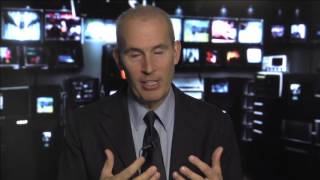
TJ Walker uses a Hillary Clinton hair scandal to discuss how image affects public speaking, comparing media treatment of male and female politicians. He argues speakers should use outlines instead of scripts, practice on video, and criticizes universities for hiring public-speaking instructors who've never been recorded speaking.
Questions this video answers
140 to 160 words per minute.
52 years old.
Chapters
It's the latest scandal to hit the 2016 presidential campaign. Hillary Clinton's hair. Now, folks, if you haven't seen this on the Drudge Report or other conservative and Republican leaning websites, you're probably going to think I'm making this up. But there is a scandal that's been a so called scandal that's been percolating for the last few days revolving around Hillary Clinton's hair. There are a number of photos on the Drudge Report that would suggest that Hillary Clinton is wearing a wig. Wig gate is what it's called. Donald Trump of all people has weighed in. Here's the thing, folks. You take any public personality who's been around a long time, who's photographed in thousands of situations almost daily under different lighting situations, different wind circumstances, you can make almost anyone look like they're wearing a wig from time to time. Present company typically excluded. I don't put a lot of credibility in this. It does put a spotlight on the broader issue of image for public personalities, for politicians, their body language and how you, how you present your hair is a part of your body language, ladies and gentlemen. Now, some of you may remember earlier this year there was another big so called scandal about whether Michelle Obama is wearing a wig. Folks, I don't know 100%, I'm not their hairdressers, but it doesn't really look like it to me. And it's kind of a silly issue. But if it detracts from a public personality's ability to communicate and to put a spotlight on the topic at hand, it is something you have to address and you have to deal with. Now, Hillary Clinton has received a lot of criticism over her hairstyle, various hairstyles over the years. You may remember, especially her first term, the first Bill Clinton term in the White House. She changed her hairstyle fairly frequently and every single time. It generated headlines. And it also created a lot of people to say, hey, there's a double standard. Women get picked apart. Everything they wear, everything they do with their hair. Men, they get a free pass. A part of that is true, certainly when it comes to dress. Men can wear your basic blue suit, light blue shirt, a solid tie as I'm wearing and nobody ever comments. In fact, I'm not doing it now. But there have been times when I've worn the same jacket and tie on my daily show here for eight months at a time. Nobody noticed a woman would be criticized for wearing the same dress. In fact, Seinfeld comedies have been premised on that for an entire episode. So There is some double standard. But here's the thing about hair. Now that we have Donald Trump in the race, you can't really suggest that men get a free pass on their hair. I don't know of any woman, Hillary Clinton included, who's had as much ridicule as Donald Trump has over his hair now hasn't seemed to hurt him in the polls thus far. He is still number one. And you could make the case. And believe me, I'm not one to say that Donald Trump is a victim and that he deserves a special break and that in general, men have it worse than women. That's not my point at all, folks. But you certainly could make the case that if a woman had a hairstyle teased out lots and lots of hairspray the way Donald Trump did, it really wouldn't get much notice. For that matter, women can wear. There are a lot of women in public life, some of them my clients, who do wear wigs. Nobody comments on it. Nobody talks about it. Not at the level of presidential candidates, but political pundits, talk show hosts, commentators, they can get away with wearing wigs in a way that men would be laughed at and ridiculed and mocked. Similarly, going back 15 years or so, Al Gore was ridiculed and mocked for having a bald spot. Now you're getting a little closer to my heart. You're getting close to the bone here. Here's the big public speaking tip I have for people as it relates to hair. If you're going to be in public life, if you're going to be speaking, appearing in the media, the best thing is to have a hairstyle that doesn't really call attention to itself. And that doesn't change that much. Now, you may find it comical taking hairstyling tips from me. Here's the thing about my hairstyle. It's not going to win any awards. Obviously, no one's going to say, wow, what a nice haircut. TJ no, but by cutting it really short, I increase the focus on my face, not my hair. I don't appear to be trying to fool anyone or trick anyone. And that's the problem with the whole comb over and, you know, letting your hair grow long and teasing it. And, you know, the Donald Trump stuff is it appears as though you, the speaker, the presenter, or trying to fool and trick the audience. People don't like to be tricked. They don't like to feel like you think you're smarter than they are. And that's the problem with a lot of male hairstyles. If their hair is going short. So my recommendation for men, if you don't have a perfect head of hair, cut it short. And that way you don't get accused of trying to trick people, you don't become an object of ridicule. For women, it's a harder issue. I do recommend that if you're not in the fashion industry, a movie star, the arts, if you're in business or public policy or government or candidates, you are better off with something that is relatively conservative and relatively consistent. Margaret Thatcher. People would occasionally make fun of her helmet head with her hair, but it always looked the same year after year in office. It didn't change. So there were no new opportunities for making fun of it or commenting on it. Instead, people focused on her actual policies. Speaking of policies, there's going to be a bit of a policy fest Saturday night on the Democratic side. Bernie Sanders, the Vermont senator, Hillary Clinton, and I guess if he's still in the race, Martin o', Malley, the former governor of Maryland, will be speaking at the debate in Iowa. Here are my predictions. The debates are not that interesting in part because the political dynamics of the race are so unfluid. And by that I mean Hillary Clinton has a greater lock on the Democratic nomination than any non incumbent or non vice president in maybe forever. I can't remember certainly in my lifetime and I'm 52 years old, I can't remember any non incumbent, non vice presidential former vice president of a party having this much of a lock. She's way ahead in the polls. She's way ahead in the polls in almost every state. And New Hampshire is close to Vermont. Maybe Bernie Sanders could win that, maybe he could win Iowa. 2 But when you look at the width and breadth of her support from elected officials from Congress all across the country, when you look at her support in the poll, it frankly just makes the primary not particularly interesting. Now one sharp commentator, Matt Iglesia, well known blogger, has pointed out that the Democrats have essentially done Hillary Clinton a disservice by the theory goes that the Democrats have scheduled these debates on Saturday night at a time when political reporters are not interested in working, voters aren't interested in paying attention because they don't want to put a spotlight on the debate because they don't want to hurt Hillary. They want to keep this a low key affair that continues to help Hillary. And Matt Iglesia points out that there's a problem with this strategy because if she makes a big blunder that is going to replay it again and again and again and again on TV broadcasts, Sunday morning, the rest of the week, every blog. But if she does what she does best, which is thorough competence and let's be I understand some of you hate Hillary and the sight of her face makes you throw up. And there's nothing she could say that would ever make you think she's intelligent. But for non aligned voters, for independents, moderates, people who have an open mind, I think a fair minded person would say Hillary Clinton is actually a good debater. She didn't lose in 2008 because of how she performed in debates. She comes across as lucid, intelligent, rational. She is a policy wonk. She's able to speak intelligently on a wide range of topics and she actually does pretty well in debates. What she doesn't do is have those magic moments, those magic sound bites. The element where she attacks someone deflates. She's not particularly good at that. What Iglesia points out is the Democrats did her a disservice. Anyone who sees the whole totality of the debate would have a good impression of Hillary. But if they're only seeing sound bites, the media will only pick up a soundbite that makes her look bad. And that's the impression they'll leave. What I think Iglesia leaves out is the fact that Hillary really doesn't have much of a track record of saying stupid things or bad things or ignorant things in debates. Now, if you don't like her, I understand you might think everything she says fits that category, but she's not trying to win you. Overall, I do think it was a smart policy of the Democratic Party to try to minimize the debates because the party is unified behind Hillary Clinton. You can say that's awful, but it's a simple reality. And political parties that are very much unified ideologically and unified behind a candidate typically do better in the general election. We will see. Now it's time for viewer mail. This question comes in from James Lang Smith, one of my students from my online courses. Says, TJ do you have any view on how many written words of a script loosely followed equate to approximately one minute of speech? Typically, people speak 140 to 160 words a minute. The larger the audience generally, the slower you want to speak. If you're speaking to one person, it may be one rate. If you're on a stage speaking to 5,000 people, it physically takes time for your words to get around the room. I'd put in longer pauses, so I would want even fewer words. The broader point, though, is I'd be very careful about scripting out any of your comments word for word. Using a teleprompter for people who are not full time news anchors and professional actors is usually a prescription for disaster. You're far better off focusing on an idea. Have a simple outline. So for example, in this 25 minute show today I have all my notes except for one other ad that I want to share with you on a single sheet. I can glance down occasionally, but I'm not tempted to read to you and have this sort of blah blah, blah tone of voice that people get when they're reading. So my bigger suggestion for you would be really figure out, do you want to write it out word for word or are you better off to simply have a bullet point with a concept you're trying to convey and then just talking about it now in today's what I think is a funny moment, you might not this caught my eye. It's an ad from the University of North Georgia. They are seeking a part time faculty member to teach public speaking. Here's the part that caught my eye. Job, duties and responsibilities. You have to teach public speaking. You have to give assignments. You have to have standard rubrics and grading reporting grades in a timely manner. The other requirements Applicants must have completed 18 hours of graduate level coursework in communications or related discipline required documents, a cover letter, a resume, curriculum vita, unofficial transcripts. So all these requirements to be this teacher in public speaking except for one. You know which one's missing actual proof that the person can speak. Well, it would be incredibly easy to for this university or any university to say, please send a video of yourself giving a great speech. Sounds obvious. It's obvious to me. And yet we live in a world where people talk about public speaking. Think about it. Write about it. But so few people actually want to do it, even when they're put in a position or applying for a job to teach other people how to do it. I'm constantly amazed at conversations I have with students of mine. Some of them who may have just graduated from college in the last couple of years tell me they went to a public speaking course in college. I say, oh great. How many times were you videotaped? Sometimes it's not at all. Sometimes it's three times in the whole semester. Well, let me tell you folks, if you're videotaped three times in a semester, that is worse than not being videotaped at all. If you're going to learn how to be a public speaker, you need to speak. Watch yourself on video again and again and again. So, for example, when people come to me for a day of public speaking training, they are video or media training. They are video recorded not one or two or three times, but typically at least ten times. The whole point is they have to get to the point where they can see a video of themselves and they're great, not simply see a video where they are aware of their flaws. That doesn't help at all. So I just find this comical that people are looking for instructors on public speaking and they don't ask for a single shred of evidence that the person could speak. I don't see ads for writing instructors and they say, don't send a single piece of writing. Just call and leave us a voicemail. That would be the equivalent. You're hiring someone to be a writing teacher and you say, don't actually send us anything that shows you put text together. Just leave an audio message for us. That would strike most people as absurd. And yet that's what's happening with public speaking. If you're teaching someone to speak, you need to actually be able to speak. And these days with video, it's very easy to prove it. So those of you in academia in charge of finding public speaking teachers, please ask for a video of the person speaking. If they can't provide that, they are by definition unqualified to teach other people how to do it. Today's spotlight on online courses goes to our online course, Public Speaking for Kids. Folks, it is never too soon to teach your child how to be a good speaker. Your child is going to have to speak for the rest of his or her life. Knowing how to speak well is going to help them in school, it's going to help them in business, it's going to help them in their career, it's going to help them in life. So I urge you, check out the course. You can look at the first few videos at absolutely no charge. Check it out. Go to mediatrainingworldwide.com and click on the online courses and you'll see Public Speaking for Kids. Check it out, and if it seems like a good fit, go ahead and enroll your young Johnny, Suzy, Jose, or Sanjay in the course today. I do not think you're going to regret helping your student helping your child become a better speaker right away. As always, if you have questions, comments, anything you want to see addressed in this program, please post your comments here in the discussion forum. Whether you're watching this on Facebook, YouTube, at my blog, or you can always write me tjediatrainingworldwide.com and as always. If you haven't yet signed up for our free online course on public speaking or free online video based course on media training, you can do so today by clicking below on the link or just going to mediatrainingworldwide.com on the homepage and signing up for the free course. I'm TJ Walker. Thanks for joining me today.
More from TJ





The Breakout Cases - What Actually Caused Famous Speaking Career Breakthroughs | Ultamize

The Red Circle Sessions Finale - Build the Speaking Career You Came Here For | Ultamize

Two Stages, One Logo, Two Completely Different Realities - Main Stage vs Independent Events | Ult...

Pre-Reset - Why Repetition Builds Better Speaking Decisions | The Red Circle Sessions | Ultamize

Your Decision, Your Framework, and What Happens After - Build Your Speaking Career First | Ultamize

The Red Circle Sessions Trailer - The Speaking Career Truth Nobody on That Stage Will Tell You | ...

The Two-Minute Ultamize Reset - Your Platform, Your Audience, Your Voice | The Red Circle Sessions