TJ WALKER - THE HABIT INFLUENCER - Personal Development | LIVE STREAM
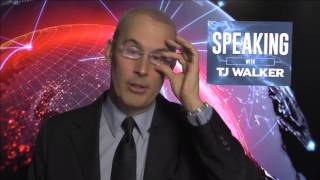
A transcript of a TJ Walker live-stream episode answering a student (Bonnie) about common public-speaking problems: losing the train of thought, struggling for words, and presenting ideas in logical order. Walker emphasizes using a concise written outline/cheat-sheet, avoiding verbatim memorization, focusing on one idea at a time with simple language and stories, and prioritizing memorable examples over perfect logical flow. The episode includes practical tips and encouragement for improving communication beyond merely overcoming fear.
Chapters
So how do you keep from losing your train of thought when you're giving a speech or presentation?
Speaking the show about effective speaking in public, to the media, at work and in Life. Speaking with T.J. walker.
This question comes from Bonnie, one of my online training students. She writes in tj I'm an area director so I'm required to speak and over the years have overcome the fear but feel I'm not very good at speaking. I get flustered and lose my train of thought. I struggle for words, I forget key points and I do not present present in a logical order even though I plan to do so well. Bonnie, you've uncovered a lot of issues there. I want to devote this whole show really to going into a lot of depth answering that. There are many problems you focus on here. They all really stem from one issue and that is how do you keep a focus on what to say when you're speaking and you're a little nervous and your memory doesn't work as well because it is simply human nature. When you're feeling stressed, your memory isn't going to work as well. It's not the same thing standing, talking for 20 minutes in front of 50 people if they're important clients, customers, prospects. As it is sitting down talking to one friend or one colleague, it's always going to be easier sitting down talking to one person. And that's because your brain isn't feeling any stress. So you can think and recall in the moment. Now, the number one solution to this problem, and some of you have heard me say this before, you've perhaps gotten tired of me saying that the number one solution is to have a written outline. I have a written outline for everything I'm going to say on this show today. But it's bullet pointed. In fact, this is a week's worth of shows for the behind the scenes moment. I record seven episodes in one morning. That's how I'm able to do a daily show. Because I'm not really getting up on Sunday morning and producing a new show for you, even if you're watching this on a Sunday morning. So here, my outline, here are my notes for those of you listening. I'm holding up just a sheet of paper and it's really two sheets of paper. There's large font. If I'm giving an actual speech, I would always limit it to a single sheet of paper. These are my notes for seven episodes. Therefore I do have it on a couple of sheets. But because it's on, the notes for any one show are on one sheet of paper. I don't have to pick it up typically unless I'm reading the exact question from someone who's written in a question. But beyond that, it takes all the stress away. It takes the pressure away. I don't have to remember what to say. I don't have to figure out is there a logical flow to this because I did the planning in advance when there was no stress. So Bonnie, I will be totally candid with you. This is one area where I've had a massive communication failure because I have talked till I'm blue in the face with my clients, my public speaking clients all over the world. And I continually regularly tell them, don't try to memorize, don't try to read a script word for word. Don't be reading your bullet points off the slide. Instead, have a cheat sheet just for yourself to make life easier. And a remarkably small number of people ever take me up on that. People go one of two extremes. They try to put all this pressure on themselves to memorize and then or they try to read word for word, which is disastrous in both situations. It's undue pressure and it typically leads to problems. So we're going to unpack more aspects of your question in just a moment. Bobby.
Do you have a speaking related question for number one, USA Today best selling author TJ Walker? For more than 30 years, Walker has been a public speaking coach and media trainer to presidents of Countries, Prime Ministers, CEOs, Nobel Peace Prize winners, professional athletes and Ms. Universes. Send your questions to infoediatrainingworldwide.com or on Twitter J. Walker.
So Bonnie, I want to go even deeper into some of the aspects of your questions. You write specifically that you've overcome your fear of speaking, but you still don't feel like you're doing a very good job. Important, important recognition on your part. People come to me all the time saying, well TJ I want to get over my fear of public speaking. I have fear of public speaking. Here's the problem. You can get over your fear of public speaking and still be awful. So I believe the goal should never be to simply eliminate your fear of public speaking. That's a minor first step. Your goal should always be to be a great communicator and to make sure the ideas you have are understood and remembered by your audience. Now if you do that, your fears of public speaking will completely melt away. So I'm glad you're recognizing you've gotten over one hurdle, but that's really just one hurdle. In a longer race, the Bigger issue. Are you communicating in a way that is logical, makes sense, resonates with people, and they understand it. Now, you mentioned losing the train of thought with my method. When you have simple notes in front of you, it takes all the pressure off. You glance down at your paper, you see two, three words that remind you of the topic, maybe a word or two that reminds you of the story that you want to use to make that topic, that message, come alive, more memorable. Then you focus just on that one thing and you talk about it for a few minutes. You're not thinking about where are the tracks headed. You're not thinking, where is this train going? You're just focused on one idea at a time. You're present, you're in the moment. I know that sounds a little touchy feely. Oh, be present, folks. I don't mean to sound all new agey and touchy feely, but there is an issue there where you've seen speakers before. Technically, they may be professional, they may not have uhs and ums, they may have good hand gestures, but you can just tell they're thinking about what they're going to say five seconds from now, 20 seconds from now. They're not really in the moment. They're sort of going through the motions because they don't want to lose their train of thought. They want to keep things on track. There's a real problem for that. Doesn't seem real, doesn't seem like they're having a conversation with you. Great speakers, great communicators are with you for that moment. Now the problem is if you don't have a plan, if you don't have a structure, you finish an idea and then you're like, oops, where do I go now? I forgot what I'm going to say. What do I do? That is why you need to have notes. For those of you listening on the audio podcast, I'm just hitting my piece of paper now. I give technology updates on this show from time to time. And goodness knows, if you type in public speaking plus PowerPoint or templates or special effects, you'll have hundreds and hundreds of millions of websites come up. People love to fixate on the technology for public speaking, but the best technology of all for most speakers most of the time is a good old fashioned piece of paper. This paper has never let me down. This paper has never asked for electricity, has never complained about compatibility issues, has never said, oh, you're Apple, I'm Microsoft, so do not negate the basic power of a piece of paper. When it comes to technology to help you with these issues. Now the next part of your question, Bonnie, you say you struggle for words. Here's my solution for that. Don't look for particular words when you are speaking to people. For a business, setting, professional, civic, doesn't matter. Never ever try to get the magic words. And I realize there's some controversy here. There are so called public speaking experts who will tell you, Here are the three power words. Here are the 10 power phrases to use that resonate with audiences. And I don't doubt that there aren't some phrases that either are more appealing to audiences or less appealing. But to me, there's a huge problem for most speakers. Most of the time that you're trying to memorize a set list of words or trying to find an exact set list. Flow of words, it trips you up. It forces you into a recall situation that will strip you of all conversationality. So what I recommend is just focus on the idea and let the words come to you. Use the simplest words, the easiest words, the first words that come to you when describing that idea. Think of it this way. If a close family member or friend comes to you and talks to you about a wrenching personal problem, is it more important that you get the words just right or is it more important that you're listening, show some levels of empathy and can say something back that shows you care and you're there for them. Obviously, the exact wording probably doesn't matter as much as showing empathy, conveying sympathy. Well, it's not that different giving a so called technical speech or formal speech or PowerPoint speech. Not that you're listening to someone's personal saga or tales of trauma. But it is important that you simply focus on ideas, use the simplest words possible, and that will make things resonate in a much more powerful, powerful way.
Speaking is brought to you by Media Training Worldwide. For all of your media training and public speaking training needs, go to mediatrainingworldwide.com.
Bonnie, I want to address the final element of your question, which is how to present in a logical way the idea of logic in a speech. There's some validity to it. Flow, yeah, I get that. But I do find that people put an outsized level of importance on these issues of flow and internal logic with a speech. Now, obviously if you're giving a speech and people are totally confused and they're saying, well, this doesn't connect. I don't understand how point A relates in any way to point B or how we even got to point B, because it Seems more like point F. Yeah, you have a problem. But I do want you to realize that the way human beings, even very smart, well educated human beings listen to someone speak and process that information is profoundly different from how people read. When you're reading a document, whether it's a book, magazine, newspaper, online, or in a paper text world, it's a different intellectual process. It's much easier to spot inconsistencies, logical gaps, problems with flow. It's much easier to do that in a written arena. When it comes to speaking, I've never heard any audience leave a convention hall saying, wow, I really am. I was really impressed by the way that last speaker had his or her ideas flow together. I've never heard anyone specifically praising that. And the reason that's relevant is I believe as a speaker, you should focus first and foremost on putting a spotlight on one idea at a time, making it interesting, making it memorable, and then just go to the next idea. Sometimes the way of making it flow is to stop, pause, take a couple steps to your right or left and introduce the next topic. It can be as simple as that. There are times in any great novel where one paragraph erases and connects to the next paragraph. But there are also times when you simply have a chapter break and there's a white page and then you go to something completely different in the next chapter. It's exactly the same thing when it comes to public speaking. And I find too many speakers will waste too much time trying to look at, well, how does the last sentence in this paragraph, you know, use one of the same words as the new paragraph or the new first sentence in this new paragraph? As I bring up this new topic, it is not the best place to put your energy, put your priorities, because I just don't find speaking audiences really reward that. They're much more likely to reward the fact that you've got interesting ideas. Because what I have seen consistently is a speaker who has a speech where everything flows. There's a logic to it, there's a connection to flows. Professionally, if you were reading it, it would be perfectly fine, but when you're listening to just fell flat because it didn't have enough stories, it didn't have enough emotion, it didn't have enough riveting case studies or examples. So please keep that in mind. Bonnie, thanks so much for your questions. As always, we answer all of your questions here. If you have any questions, please send them to me infoediatrainingworldwide.com or post them on any of the social media outlets where you are listening to or watching this program. As always, may all of your presentations in life be a huge success. I'm TJ Walker.
Speaking with TJ Walker is the number one rated daily streaming TV and radio show devoted to all aspects of speech, speaking and communication. If you received value from this show, then please subscribe to it@mediatrainingworldwide.com Please review the show, leave comments and share it with your friends and colleagues today.
More from TJ





The Breakout Cases - What Actually Caused Famous Speaking Career Breakthroughs | Ultamize

The Red Circle Sessions Finale - Build the Speaking Career You Came Here For | Ultamize

Two Stages, One Logo, Two Completely Different Realities - Main Stage vs Independent Events | Ult...

Pre-Reset - Why Repetition Builds Better Speaking Decisions | The Red Circle Sessions | Ultamize

Your Decision, Your Framework, and What Happens After - Build Your Speaking Career First | Ultamize

The Red Circle Sessions Trailer - The Speaking Career Truth Nobody on That Stage Will Tell You | ...

The Two-Minute Ultamize Reset - Your Platform, Your Audience, Your Voice | The Red Circle Sessions