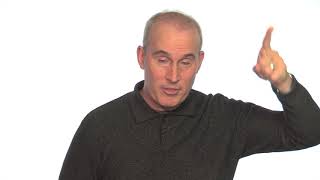
TJ Walker (video dated April 13, 2018) discusses the growing use of teleprompters in workplaces and argues that most people should avoid using them routinely because they make presenters sound and look unnatural. He offers five specific body-language tips for those who do use teleprompters: vary speed, vary volume, move your body (especially head and hands), pause periodically, and rehearse more than for normal notes-based speaking. He also advises rehearsing on video and correcting mistakes calmly when they occur.
Questions this video answers
April 13, 2018
Five
Chapters
If it hasn't happened to you already, it's going to happen soon. I'm seeing it everywhere in the workplace, and that is the rise of the use of teleprompters. There are teleprompter apps you can have on your cell phone, on your iPad, and there may be times when this is effective. For those of you who don't know what it is. You type in your script and then it scrolls across and you can look at it. You can have a through the lens teleprompter. You can have one that's right next to the camera. When you're seeing a State of the Union address, in most countries, the president or the prime minister is using one. Newscasters use them. So it allows someone to read while looking up at people or the camera. So, sounds great. Why wouldn't you use this all the time? Sounds wonderful. You don't have to remember what to say. You don't have to look at notes. Why wouldn't everyone use a teleprompter? Saves a lot of time, right? It's not that simple, folks. My recommendation is you should not use a teleprompter most of the time. In most situations, if you are a president of a country or a prime minister or a finance minister, and any single word out of your mouth is analyzed, sliced, diced, people are looking at it. It could cause scandal, economic turmoil. There is a good reason to use a teleprompter. But let's face it, for most of us and Most businesses, even CEOs of big companies, the biggest danger in life is not that we have one word taken out of context and something gets wrong. The biggest problem is nobody remembers anything we say. So let's focus on the real challenge. So my recommendation, from a pure body language standpoint, don't use a teleprompter because it's a lot harder to do. You're trying to do something you don't normally do. When you're reading your whole life, you're used to reading like this. You've got a cell phone, an iPad here, a newspaper, a book. You're not used to reading with a whole lot of people staring at you, reading text that's 5 or 10 or 20ft away. It's a very unnatural thing. What happens when people feel unnatural? All of a sudden they feel like this. And I am now reading my teleprompter and wow, this is great because I do not have to memorize it. Hear how awful that is? Okay, so I've done my due diligence my proper procedure there, my boilerplate. Now, let me tell you what you need to know if you're going to actually use the teleprompter. From a body language standpoint, it all comes down to five tips. Tip number one, you need to vary your speed. Sometimes faster, sometimes slower, when you're speaking. Most people, they get on the teleprompter and they speak at the same speed and it sounds like a robot. So you have to vary the speed, sometimes faster, sometimes slower. Next big tip, sometimes louder, sometimes softer, because that's how people talk in real life when they are engaged and having an interesting conversation. Most people, when they are reading a teleprompter, everything comes out the same volume, and that's why they sound robotic and the audience feels empowered to ignore them and start checking their email. So that's the second big thing. You've got to change the volume. There's got to be volume variation there. Next thing you've got to do is you got to move your body. Even though you're using the teleprompter, your hands have to move, your body has to move, especially your head, because most people get that headlock. And when nothing's moving but your eyes, they become very, very noticeable. And everyone's like, oh, look at them using the teleprompter. If you're moving your head and your hands and your body, the eye movement is a part of many, many movements and it's not detectable most of the time. So that's the third big tip, is you need to move your body. The fourth big tip, you've got to pause from time to time. Real human beings in real conversation, when they're finishing a thought, they'll stop. And they're finishing one idea to transition to another, they'll stop. Maybe walk. You don't need five minute pauses or even five second pauses, but a couple of seconds here and there that will make you sound real conversational and not canon, not like you're eating. Again, for most people who are not professional news anchors, they never stop. They go from the next sentence to the next sentence. Why is that? It's because they're fun. Following the speed of the teleprompter. You're not there to follow the teleprompter. The teleprompter is there to follow you. So that's the problem with all these nice, cheap, inexpensive and free apps. You pick one speed and it forces you to go the same speed. That's yet another reason not to. Do not use a teleprompter. If you can't vary the speed, either someone else doing it for you or you adjusting it with your hand or a phone, or there are even foot pedals. The fifth thing you really need to do if you want to use a teleprompter effectively is it takes even more rehearsal time than a regular speech with notes, because it is harder. You're going to trip up. It's very easy to trip on a word. Then you think, oh, darn, I tripped on a word. And you're going to want to go back, and you can't do it. So it's even more important than ever to rehearse and to rehearse on video and to not give the teleprompter speech in real life until you've seen a version of yourself doing it on video that you like. And that's how you use good body language for a teleprompter. Okay, the way did you see, about 30 seconds ago, I really stumbled on a word. I'm trying to practice what I preach here with you. And that is, if you make a mistake, don't act in horror. Don't act appalled. Don't get all flushed and blush and all that. Just correct yourself and keep going. Because, by the way, I'm doing this course live to tape. I'm not doing 10, 20 takes. Because when you're in the real work world and you're speaking in a meeting, you don't get to do 20 takes. So I want to show you this, warts and all. I am creating this course for you. It's not live in the sense that people are watching me this second, but I'm doing it once, recording it. My editing consists of turning on and turning off with remote control. And I need you to get to the point where you're just as comfortable with that thought process when you're speaking. Because that's part of what makes people scared about speaking in the workplace, talking to people, is you can't sit there and type and edit and refine and put fancy graphics on top and fancy music on top to redo something. You got to just put it out there and get it the best you can the first time.