TJ WALKER - THE HABIT INFLUENCER - Personal Development | LIVE STREAM
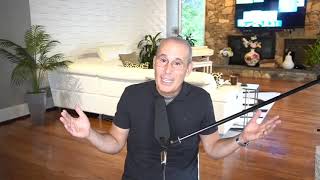
A recorded live-stream by TJ Walker offering practical personal-development advice centered on micro-habits (do one small thing often instead of ‘massive action’), techniques to improve public speaking (practice on video, use TikTok for 15-second practice), and methods to self-program behavior (recorded audio 'selfie-speak'). The stream includes audience Q&A (impromptu speaking, accountability), book recommendations (Jack Canfield, The Talent Code), links to apps/courses, and an explanation of Walker’s plan to run frequent live sessions.
Chapters
Sa. Take massive action today. Take massive action today. How many times have you heard that expression from some of the best known, most well known, most respected personal development experts? And I have to tell you, when I've heard that before, it sounded like great advice. But the more I think about it, I actually don't think it's good advice. It's not practical. Here's my point. Ask yourself this. In the last month, have you run a marathon? I'm willing to bet probably not. But in the last month, have you brushed your teeth in the last day? Once or twice, or even three times? I'm willing to bet the answer is yes. They're both about helping you, helping your health. Why do one rather than the other? Obviously, it's so much easier to just brush your teeth. It takes one minute a marathon. Oh, you got to run 10, 12 miles a day sometimes to get ready. It's so hard. It's difficult to get over that hump of motivating yourself to do it. And that's why I'm a big fan of not doing the massive action, but instead doing one small thing. If you want to get your health in better shape, don't say, I'm going to run a marathon next week or next month. It's too easy to get discouraged and to just blow it off. You're far better off focusing on a small, small task. If you want to get in better shape and you're out of shape, why not start today with just one pushup? Maybe that's hard, Maybe that's a struggle. Just do one push up. You can do that about five seconds and once. That's really easy. Do two push ups a day and then three. That's my method. I started doing push ups. I was kind of out of shape. I only did one, but now I do more than 30 a day. And I'm on track to meet my goal of doing 100 push ups a day. It's easy to motivate myself because I just do it first thing in the morning while I'm waiting for my milk to be microwaved to get warm for my coffee. I don't have to think about it. I don't have to schedule it. I don't have to go to the gym. I don't have to hire a marathon consultant or coach. It's just one minute. More and more I work with people trying to help them influence their own behavior. I find that this whole idea of focusing on simple steps, one thing at a time, something you can do often in 60 seconds or less, that's the key quite often to huge breakthroughs. You want to be a lot healthier with your diet. And right now you eat a lot of junk food, fat potato chips, french fries, hamburgers. Don't just say, well, as of tomorrow, I'm going to become a vegan. I'm going to eat nothing but vegetables. Because it's too easy to just get overwhelmed. And you're right back where you started. Why not start? Instead of massive action, one tiny action. Here's an example. If you're used to having two or three cups of coffee in a day with cream and sugar, why don't you just scale back to one cup of coffee with cream and sugar? That's what I did. I used to drink coffee all day long and I loved it with cream and sugar. And I focused on just narrowing it down to one cup of coffee. And that way I didn't feel deprived. It wasn't that hard. It was just one specific action. But cumulatively, over a year, a lot fewer calories, a lot less sugar, a lot less junk. And then I only made one last tweak to eliminate sugar from my coffee. So now it's really a healthy drink. Just coffee and a little skim milk. And I don't start off the day bloated with all sorts of sugar and cream and five cups of coffee inside me. Now, you might not need that kind of a tip. You might not drink too much coffee, but there's something you can do to improve your life, whether it's your health, whether it's your diet, whether it's your body, whether it's your career. Focusing on one little tip. I hear from so many people just like you around the world who say, tj, I want to be doing live video on Facebook and YouTube. I want to be doing YouTube videos. I want to be marketing my ideas, my business, my book. But it's just so overwhelming. All the cameras, all that. Let me start with something really, really simple for you. Just grab your cell phone, hold it up and go get the app TikTok. And I've linked to it in the show notes so you'll see. If you don't see it now, it will be posted in the show notes. This is a site where you're only allowed to speak for 15 seconds. It's a great way of practicing your on camera presence. It's a great way of getting used to putting your ideas out in the world. And it's a great discipline to force you to be concise. I've heard from you and a Lot of other people all over the world. Tj, teach me to be more concise. I want to be a concise communicator. Well, learning how to speak in 15 seconds is a great way of doing that. Now, I've only been on the TikTok site, by the way. I'm not a paid spokesperson. I'm not getting anything from TikTok. But I've been on that site for about three weeks now and I just post one, sometimes two 15 second videos a day. Sometimes only five people watch it, sometimes a thousand people watch it. It's really more about just getting and sharpening that axe, my ability to communicate effectively anytime, anywhere, in any length of time. So rather than spending all this time in the next six months about brainstorming on your perfect promo video for your website, your perfect channel trailer for your YouTube channel, and still having nothing, why not start today? Why not start in the next five minutes? Just posting a simple talking head video on TikTok. It costs nothing if you have a cell phone, an Internet connection, which I assume you do, otherwise you wouldn't be watching me. Now you can make a TikTok video. If you don't like it, you just hit delete. And if you make one good point, boom, you hit okay and it's on there and anyone in the world can see it. So little steps, because if you make a TikTok video every single day for a month, I guarantee you you can be a lot more comfortable speaking in front of a larger camera or someone else's camera, making a longer form, more polished YouTube video or Facebook video. Small little steps like that. And by the way, if you want to get more comfortable speaking, I do have a solution for that. It is selfiespeak.com that's my latest boot camp to really help people massively improve their public speaking skills. Whether you are doing it to small audiences, large audiences, in front of a camera for YouTube or Facebook, whether it's on demand video or whether it's live video. Speaking of live video, that's why I'm really here today. It is to experiment because I don't know everything about how live video works. Live, multi, streaming. Today I'm coming to you, or at least trying to come to you on Facebook, on YouTube and a lot of other sites. In fact, let me ask my colleague here, our executive producer for today, Marceau, are we on the other websites today? We're on a lot of websites. Because I'm a big believer that you don't want to put too much faith in any One site, who knows? The government could put Facebook out of business. They could change their whole business model and charge $1,000 for charging for posting a video. So I try to diffuse risks and reach people wherever they are. It might be more convenient for me to go on just one website. But here's one thing I've learned after teaching people 35 years, for 35 years, how to communicate effectively. You have to go to your audience. You have to do what's convenient for them, not for yourself. So I'm broadcasting today in part on Twitch and Mixer and other sites where a lot of young kids are that I never go because it's more convenient for them. So that's what this is about today is. It's an experiment. I hope to come to you on a regular basis, live, daily, where we can talk about personal development issues. I can share with you new insights from my own research with students from around the globe, but I can also answer your questions. We can have a conversation. You can have a dialogue with other people just like you. And it should be a dialogue. That's the beauty of live streaming media, as opposed to video on demand. Sure, you can always post a question or a comment on someone's YouTube channel. Maybe they see it, maybe they don't. Maybe they answer it six months later. But with live, I can see it. Now, we're still setting up the system here, but if you have a question, post it. If you have a comment, post it. If you like it, like it. If you don't like it. Well, there's no dislike button on Facebook, but on YouTube, you can do the thumb down. Now, I don't want you to, but I would like you to register some response and communicate, even if it is a thumbs down. Now, Marceau, are we able to capture comments? Can we see them if they come in? Okay. And part of what I do teach people and part of what makes people insecure about giving speeches sometimes is what if I give a speech, ask for questions, and nobody ask a question, won't it be embarrassing? It's only embarrassing if you let it become embarrassing. If you act like it doesn't bother you, if you act like, hey, I'm going to give all of you even more time to reflect on my words, then no one will notice that you were embarrassed, and therefore no one will remember it. So keep that in mind next time you have to give a presentation, whether it's online, whether it is in person, and nobody asks a question because it could mean they're just thinking about what you said and they're enjoying what you said and they don't have a question yet or that you explain things so thoroughly. Don't let it bother you. The big mistakes most people make when they're giving a speech are not what they think. People think they got a word wrong and they go and they look embarrassed. The mistakes like that are not what people remember. They do remember if you act embarrassed, look like you're ashamed of yourself, look like you're in a hurry to get out of here. That's what people remember when you make a mistake. So the key is not to become perfect, not to become flawless, but to simply not register on your face and your body that you're upset with yourself or you're disappointed. So those of you who are joining me, some of you perhaps for the first time, let's let me introduce myself. I'm TJ Walker. I'm a personal development expert and trainer. I've been coaching people all over the globe for 35 years. I've trained people in personal development, communication skills, media skills, public speaking skills, personally in 35 countries around the globe. And I have online students, more than a million online enrollments from more than 190 countries. Pretty much every country in the world other than I think North Korea, we're not well represented, or the Vatican. So the lessons I'm distilling for you today are based on actual experience in the field working with people just like you. And what I'm trying to do now, what I see as a void is a way of really helping people in a live format. When I look at the world of personal development, I see a lot of people I respect, I respect Anthony Robbins, I respect Brendon Burchard, and there's a lot of the Les Browns of the world whom I've been fortunate enough to meet before at the National Speakers Association. There are a lot of greats out there and they have great books and they are really good at the imperfect live multi day seminar. And Anthony Robbins has said publicly that's what he loves the most. That's why he doesn't write books that often is he loves those live immersive experiences and he's great at that. And I'm never going to be better than Anthony Robbins at a live workshop with 5,000 people in the room. And there's so many great books out there. I'm going to mention one in a little while, Jack Canfield's books and we'll talk about books like Ben Franklin from a couple hundred years ago. His autobiography is one of the great self help tombs, Dale Carnegie a hundred years ago. There's a lot of good books out there, but what I see is missing. What I see is the void is no personal development trainer that I see is really spending a lot of time every single day interacting with people in a live format where it's true give and take, true interaction and engagement where, you know, you can interact with a personal development expert and get their take on your problems. Same day. We have this in politics. Every country for the most part has daily political talk show host where the host interacts with real callers every day. Here in the United States, Rush Limbaugh has been on the air for more than 30 years. Now, a lot of people don't like his politics, but he has a massive fan base in part because he's there live three hours a day and he takes questions every single show. And that builds a connection, a rapport. And that's essentially what I'm trying to do here. Now, we do have some questions and comments and we're still focusing on our setup here. James writes. And James, thanks for stopping by today. Do you ever advise clients to visualize themselves giving a great presentation? James, there's this, there's this, this advice out there that you're giving. You're going to give a speech tomorrow. Close your eyes. Visualize everything going well. Visualize a standing ovation. Here's the problem. It's not the worst advice in the world, but here's the real problem with that. People do that all in their brain. The easiest way to visualize yourself giving the speech successfully is to practice the speech on video using your cell phone. Practice. Look at it. That's the ultimate in visualization. If you can actually see yourself giving a video and you lay you love everything about how it's coming across, once you do that, it becomes virtually impossible to be nervous. So I do not recommend that you visualize what we think of in the traditional sense of, you know, close your eyes and imagine. I also do not recommend that you practice in a mirror. If you practice in a mirror, you're going to think, oh, is my hairline receding more? It is. Is my nose getting crooked? Am I getting jam? They are. You cannot actually focus on giving a speech and watch yourself at the same time. So. So I recommend you record yourself on video. Look at it, figure out what do you like, what do you not like. Keep doing that until you like it. That is a form of visualization of your speech in advance. I think it's the most advanced form and Traditionally, it was expensive to do it, and nowadays nobody has an excuse not to do it because everyone has a mobile TV studio in their pocket. Your cell phone. But, James, thanks for asking the question. And I see you've posted another question in a. Oh. In addition to filming themselves and watching it back. So, James, here's the thing. I. I find very few people actually take my advice when it comes to practicing their speech on video. So they're always looking for. And I don't mind you asking this, there are no bad questions, but it's sort of like, well, that seems like it's too much work. That's too hard. I'm not comfortable. Let me do the second or the third best thing. And the problem is the second or third or fourth or fifth thing. All of those things don't add up to even 1% of the effectiveness of practicing on video. I have been helping people develop themselves as communicators all over the globe for many decades, as you heard me mention. And there's simply nothing that is as effective as practicing on video. Everything else is not a second choice. In my mind, it should really be the 50th choice or the last choice. And I just don't know why, in this day and age when everyone is completely surrounded by video cameras, every laptop, every iPad, every cell phone has got a video camera on it. There's no rational reason not to practice your presentation on video. So, James, I. Please, please, I beg you, please do that. If anyone else has questions, I am seeing the questions post posted on Facebook. And Marceau, are we able to pull it? Marceau is my colleague here and producer today. Are we able to pull comments from YouTube or any other sites? If people are watching from there? Okay, so if you have comments, please go ahead and post them right here. Part of what I want to do in this show is cover new tips, old tips, classic information, but also items in the news. And something caught my eye. This was just yesterday in the New York Times, and it's talking about how if you want to be mentally healthy and productive, you do, in fact, need alone time. Now, so often in our culture, we're taught to think that, oh, it's bad to be alone. You're a loner, you're lonely, you're gonna be depressed. And there is a problem with a lot of people being depressed from being alone, alone too much and lonely because they want companionship. But that is different from seeking out solitude. Now, I'm going to link to this story in the show notes. You'll see those and the researcher goes into great detail talking about how you need to carve out some time for solitude, alone time. It could be as little as a half an hour on a weekend because I realize you have a busy life. Between job, career, commute, kids, family, you probably don't have an extra 10 hours sitting around. But you have some time. If you really think about it. Everyone has some control over their schedule, even if it's only five minutes a day to walk around the block. Once having time alone allows you to think, reflect, focus on your purpose in life, your bigger goals, what's working in your life, what isn't. And it's something all highly successful and creative people do. And it's something extroverts do. You need something sometime away from human conversation, away from cell phones. I personally go for an hour long walk most days, unless it's raining or pouring out or I'm on an airplane. I carve out an hour a day where I'm walking alone, not because no one will walk with me, but because I need time alone to think and reflect. So interesting research in the New York Times yesterday documenting why that is basically a good thing. Now I want to move to a quick tip and this is one that it's going to sound a little cheesy, but I do think it's a good personal development tip. I now use it every single day. You've heard of this before and if you're like me, you might have thought, you know, that sounds a little cheap, cheesy, it sounds a little childish, it sounds a little bit like it's for a kid, but here it is. The tip is learn a new word every day. I say this not because I want to use big words to impress you or that I want you to use bigger words all the time, but I like to learn a new word every day because it really sends a powerful signal to my brain. Hey, hey brain, you still learn. You still learn new things every day. And a word, one word is kind of the simplest, smallest bite size of a lesson of learning. Now I just go to an app. It's a free app and it is the Word of the Day app. I've linked to the app on the Google Store and where you can find it on itunes as well. I recommend this. Again, it's not because I want you to use bigger words. It's because I want you at any age to constantly think every day, what am I learning? Because when you learn one small thing, I like to do this the first half hour of when I wake up it's sending a signal to your brain. Hey, brain, let's continue to learn the rest of the day. Let's be on the lookout for new ideas, new words. And an added bonus is when you do see that word, you now know what it means. So check that out. I initially didn't like this tip because I thought, well, that's just people who think the bigger words they use, they'll sound smart and impress people. I'm not a fan of doing that. In fact, when I'm coaching clients, giving their presentations, or doing media interviews, I often have to ask them to use smaller, simpler words. I have clients who like to use the word mitigate in a speech, and I always tell them, please mitigate the use of mitigate because it's not a word real people use in real conversations on a daily basis. So when it comes to spoken communication, I am a fan of using the simplest, smallest word possible. But if you're writing and a bigger word makes sense and your audience understands it, by all means, feel free to use it. What do you think? Have you ever used that technique? Let me know. And by the way, I'm here, this is live, and I'm here to answer your questions and comments. And I think we have another comment here from Juan. And Juan, thanks for joining us today. Any recommendations on improving impromptu speeches? I'm pretty good at preparing and giving prepared speeches, but need improvement on impromptu speeches like table topics at a Toastmasters Club. Juan, many people feel exactly as you do that I'm great at this type of speech, but the impromptu ones, I'm awful. Part of it is simply do it more. I mentioned at the beginning of this video today, do a TikTok video every day. It's only 15 seconds long. And don't script those out. Think and speak at the same time. Anytime you're in a meeting, just raising your hand and asking a question is a type of impromptu speaking. So try to ask a question as often as possible. As long as it's an insightful question, look for opportunities to speak. Now, this is going to sound silly to some of you, but if I'm going into a grocery store through the parking lot and I see a local TV crew, or if I'm walking in a park, Bryant park in New York City, and I see a TV crew, I always just walk up to the person who looks like a producer or reporter and I say, hey, what's the story today? And 98% of the time they'll say, oh, we're doing a story about X. We ask You a couple questions and I do the interview. It could be about a sporting event or the weather, a new TV show, but it's something anyone can talk about for 60 seconds. And I always do the interview. Not because I'm such a raging egomaniac that I'll die if I don't get on TV that night. Although some might debate that it's because it's more practice every time you can speak in front of people on camera or any other situation. It makes it less nerve wracking to do any other type of impromptu speech, and you get more and more comfortable with it. And it's like any other conversation. Because think about it this way, Juan. You give impromptu speeches all the time. A friend, a colleague, a family member calls you on the phone, asks you a question, you talk. That is an impromptu speech. Now, I realize it doesn't feel like a speech because you're only talking to one person. But what great speakers realize is that it doesn't matter if you're talking to one person. Five, fifty, one hundred, a thousand, five thousand. The more you sound like you're just talking to one person, the better off you'll sound to everyone, no matter how large the group. Now, sometimes I'll make a video like this, and I might literally have one person watch. But other times I've done videos and 100,000 people have watched. I still try to talk like I'm talking just to you on just to one person. And by doing that, it's easier for people to listen to. It's also less nerve wracking for me. I'm not talking like I'm giving a big speech to 100,000 people on the Mall in Washington, D.C. because that makes the speaker nervous and also can make you look pompous and stiff and a little bit phony, too. So practice more, but also realize a lot of things that seem impromptu aren't. And forgive me, I forgot if whether it was Winston Churchill or Mark Twain. But someone once asked them, why are you so good at impromptu speeches? And they said, well, it only takes me two weeks of preparation and rehearsal to make a great impromptu speech. So a lot of times people look like they're making an impromptu speech, but they may have rehearsed it in advance. And you could be in a meeting and you know you want to add something and you'll need to talk for two minutes. There's nothing preventing you in a meeting from having a little note card and writing down just two, three bullet points. You might not even look at it from the Impromptu speech. But the sheer act of writing a couple of notes in the meeting will frame your brain and make it easier for it to come out. The other thing is, realize you don't have to be perfect. One of the things that trips people up in an impromptu speech is they think, oh, what's this perfect word? What's that word? What's the right word? And they tense up and they're, oh, I better sit down. Take the pressure off. Just use the first word that comes to your brain. And don't apologize. Don't act embarrassed. People, as I mentioned earlier today, don't remember your mistakes. They remember your reaction to your mistakes. About 10 minutes ago, I forgot Ben Franklin's name. It just didn't come to me. And I paused for a second or two, but I didn't say, oh, gosh, I'm losing my mind. I forgot how embarrassing. I didn't make a big deal out of it. I paused, and then I said, ben Franklin. You might have noticed, but I'm willing to bet you wouldn't have remembered it without me mentioning it right now. So all those techniques will help you become a better impromptu speaker speaker, and again, seek out the opportunities. There are opportunities. You could be at your kid's PTA meeting. You could be at a civic group. You could be at any. You could go hear a guest lecturer at your community college. And they open it up to questions. If there's a thousand people in the audience because it's a famous speaker. If you're like most people, you think, well, I'm not going to ask a question. Get in line and ask question. And that will sharpen you up and make you a better impromptu speaker in the future. So, Juan, thanks so much for stopping by today. As I say, this is interactive. I have more stuff I want to talk about, but I also want to give the opportunity to you if you have questions, comments, other topics you. You want me to talk about. Because ultimately, this is your show. It's not my show. I'm certainly here. You know, my name is on it, and I want to share my expertise. But this is about a community of people who are interested in personal development, not just communication skills, but in other skills in life to lead more fulfilled, more purposeful, more successful and happier lives. That that's what this show is about, and that's what I'll be talking about on a daily basis right here. So one of the segments I want to have on a regular basis here is just looking at my bookshelf and sharing with you what I think are some of the seminal works in the personal development world and throughout the history of personal development. I read a lot. I like to read. I actually like to read more than I like to watch video, so. So I better be careful biting the hand that feeds me. But I do like to read and I typically read one new book every day now. No, I'm not the fastest reader in the world. Some of the books are short. I do like Amazon Kindle short reads that sometimes can be read in 15 minutes. But sometimes I read really thick ones. Like here's a really thick book. This is Jack Canfield's the Success Principles. Jack Canfield, famous to most of you, he is the co creator of the Chicken Soup of the Soul series which is the most successful book series in the history of the world as far as I know. Hundreds of millions of copies have been sold and I think there are more than 200 different titles out. This is not the Chicken Soup book, this is his book the Success Principles which is now more than 15 years old. And it's a great book that really catalogs almost every major development in the personal development space for the last hundred years. And the thing about Jack is he's a great sponge and a synthesizer. You don't really associate him with any tremendously different, proprietary, unique ideas. He's not a founder of hypnosis or NLP or biofeedback, but he's a great describer summarizer of pretty much every personal development principle technique system out there. So I want to just share with you what I think are some of the important elements of the text from these things which are basically the Bible. Some of the founding textures and scriptures don't mean to be sacrilegious of the whole self development movement. He writes if you want to be successful, you have to take 100% responsibility for everything that you experience in life. And this is in Jack Canfield's book. Now this is also something that's in pretty much every single self development book. You can go back to Ben Franklin, you can go back to the Stoics from 300 BC. This is a fundamental principle. Now you get a lot more than that in this book. And it's a book that's 582 pages including the index. And no, I did not read this in a single day. But I do recommend this if you want a kind of a thorough history of key ideas from the personal development space. Space. Another more recent book, it's not brand new, but this book has been out in the last decade. This is The Talent Code. And this is by the author, Daniel Coyle, New York Times bestseller. And he does a thorough analysis and investigation of some of the most talented, successful people in the world, especially in the world of sports. So I want to share with you just a couple of ideas he shares. We tend to think of our memory as a tape recorder, but that's wrong. It's a living structure, a scaffold of nearly infinite size. The more we generate impulses, encountering and overcoming difficulties, the more scientific scaffolding we build. The more scaffolding we build, the faster we learn. So he looked at a lot of the top athletes in the world who came from quite often impoverished small islands. And what he found is the training they did was different. They just, they might swing with a heavier bat, they may play with a heavier ball. They may have things thrown at them three times faster than what happens in a real game. If it's soccer, they may play in a much smaller area where the balls are coming at them much faster. So they didn't start off with any more natural talent or innate physical talent, but the way they learned was more intense. They always stretched themselves and they learned at a faster rate and ultimately they made more progress. So I do recommend the book the Talent Code. I'm putting a link to both books in the show notes so you can see those. And by the way, I'm not an affiliate for any of these things other than it's on my own site. But these are links to Amazon if you want to get the book. So I'm not pitching any. I'm not making any money off of these. I just want to share these with you because I do think some people like to read. I know I do. And I want to give you guidance on what I think is some of the best personal development content out there. Because there are thousands of books and even I can't read all of them. And I want to put a spotlight on ones that I think could be most helpful to you. Do you have any comments, questions, thoughts? Now, I didn't promote this, so you didn't know that I was going to be here. So if you're watching this on demand, realize even if you and I don't have 10 billion followers, but I do have, as I mentioned, more than a million online student enrollments on my online courses. I have 5,6000 subscribers on YouTube. But no matter who you are when you're doing live, there's always a chance you don't get instant feedback. That's why you have to prepare valuable content for your audience. You can't depend on them providing it unless you're really, really famous. Gary Vaynerchuk does a show sometimes just you ask, I answer. And it is all question and answer format. But for most people you still need to prepare something highly, highly specific. If you are on the Facebook platform today, I do see your questions and can answer them. Also if you're watching this on demand, if you post your questions here, I'll answer you tomorrow or the next day. I do a live show now. I'll probably respond the text format too. But I also want to build a relationship with you where you see me addressing you directly and I speak to you directly. And that way it's a little more personal, more of a connection. And you know, it's not just an intern of mine typing an answer or something like that. You can actually see me talk. So that's why I think it'll be more powerful that way. But I will respond to you if you post a text as well, ideally both by commenting and addressing your questions on the next live broadcast here, but also answering them in the Q and A section too. So that's it for our our bookshelf section. I do want to focus on a couple of other tips and tricks for you today. My big breakthrough, I've been researching following personal development in a lot of different avenues from great religious figures, TV preachers on since the 1970s. So I have tried to bring to you and distill the very best practice principles out there. But also look at what's missing and what I have found is the most powerful way of influencing human behavior ever devised. It's not a book as much as I personally like books. But if books were the most powerful way to influence, then McDonald's and Coca Cola and Kentucky Fried Chicken would be mailing us books every day. But that's not what they do. They send us short little 30 second or 10 seconds video ads online, on TV shows. They send us radio ads, 10, 15, sometimes 60 second radio ads. They bombard us with ads. But here's the problem in the modern culture we're in anywhere in the western world, and increasingly everywhere in the world is all the ads we're hearing are basically encouraging us to do things that aren't helpful. Drink coke, eat fried food, eat french fries, go into debt to buy brand new cars you don't need or want. They're all things that actually either harm our body or our wallet or our self esteem. The big innovation I've come up with that I use in My students, is the whole idea of creating an ad for yourself. Simply using your cell phone, speak to your own phone, record your own voice, telling yourself what habits you actually want. So if, for example, you wanted to have a habit today that from now on instead of taking the escalator, you're going to walk steps to get more exercise, to be more fit, you could simply go to the memo audio memo record in your phone and just tell yourself, hey, T.J. from now on, you would use your name. T.J. from now on,. You're not going to take the escalator. You're always going to take steps unless there are no steps. You like to walk, you like to take steps, you're going to take steps. Took 30 seconds. Just listen to that. You listen to it every day. It only takes one push of a button and you can put all of your habits together in one short audio. Mine is less than 20 minutes long, but I program myself. I basically do an ad to how I want to program my life in less than 20 minutes a day. I can listen to it while I'm on a treadmill or walking or sitting on a couch or on a plane or a train or a bus. I don't have to carve out a lot of extra time. So that's the big innovation I have that is getting meaningful results with my personal development students in my own courses. By the way, I do have a new course and I'm giving you a special discount to it. I'm going to link to it in the show notes. But this is my complete time management course, how to help you raise your personal productivity Course is normally a couple hundred bucks. You're going to get it with this link for link less than $14. I forgot the exact price, but it's a great deal. Check it out. You can also watch a bunch of the videos. Check it out for absolutely no obligation and no cost. So check out that link if you're at all interested in learning more about not a new technology in personal development, but it's a new way of using existing technology in a more meaningful way to influence your behavior. So check that out. Now we've got a couple of other comments. Bridget, thanks for joining us today. Glad you're here. Appreciate it. Bridget says we have to have common sense to know, not to indulge in the things we don't need. Bridget, you are right. A lot of this is common sense, but it's not commonly subscribed to. It's not commonly done. You know, every day there's a thousand new Diet books that come out. And yet Michael Poulon, if I'm pronouncing his name correctly, summarizes it in about six words. And I'm jumbling it, but he basically says, eat, eat less. Eat mostly plants. You do that and you're going to be healthy. But pretty much everything you need to know about diet can be summed up in that you shouldn't eat processed food. You should eat as much raw vegetables, raw fruit as possible. Avoid processed sugar, avoid processed food, drink lots of water all day. That's really all you need to know about diet. That's common sense. And yet we have an epidemic of obesity. By some estimates, as much as 40% of Americans are obese. And when you factor in obesity and those who are overweight, it's more than half the population. We're seeing average life expectancy for the first time in human history, drop instead of going up. Even though the advances in technology in the healthcare field have never been better, our ability to keep people alive has never been better. But if you're carrying an extra 50, 60, 70, 80 pounds, it leads to diabetes and heart attacks and you just die a lot younger. So I agree with you, Bridget. A lot of what I talk about, and any personal development expert is common sense. The idea, the issue is how do you influence yourself to follow the common sense? We've all heard since we were children that exercise every day. But does everyone exercise every day? What I do with my selfie speak programming, I call them SSPs, is I actually tell myself I don't have to imagine a voice in my brain, I don't have to visualize. I hear my own voice saying, tj, you love to exercise and you're going to walk at least 12,500 steps every day. And TJ, you're going to lift weights for five minutes a day. And TJ, you're Going to run full blast 10 miles an hour for one minute. And TJ, you're going to do stretching exercises for one minute a day. And DJ, you're going to do push ups every single day. Now, that whole thing only took one minute to say, but by me making the recording once, all I have to do is push the button once in the morning, I hear myself telling myself I'm going to do these common sense things. And then I take my cell phone and I just do a quick guess that I did it first thing in the morning. I check off these things as I do them. So I agree with you completely. It's common sense. But we still need motivation Influence and a process to make it happen automatically. It's common sense to brush your teeth every day. And Bridget, I'm willing to bet you do brush your teeth every day, or probably two or three times. And it's easy to do that in part because it only takes a minute. And what I try to do with the selfie speak programming is to break things down and make them as simple as possible as brushing your teeth, to make it a habit so that you don't really think about it. Because right now, because I told myself, I only drink one cup of coffee, I don't have to think about it much anymore. I've had my cup of coffee. I only make enough for that and my wife. And so I don't have this big temptation every day. Well, here's the pot. Do I pour more? Do I not? But it took me listening to audio saying every single day for many months, you don't want a second cup. You're not going to have a second cup of coffee with cream and sugar. So that's why I think it's a handy way to help you influence yourself and to counter all the other messages we get. Because we are all inundated. All day long, we're bombarded. We have this overabundance of information. Our cell phone, primarily, but our computers, our TVs, billboards, all day long we were bombarded by marketers who are just doing their jobs. And some of them are my good friends, but they're bombarding us to do things with our money that generally aren't healthy. You typically don't see lots of slickly produced ads telling you to eat a banana. You may occasionally see one. But for every ad you see about eat a piece of celery, you're going to see 10,000 ads saying you deserve a break today. You know, have a burger, have a. Have a Big Mac, have a Coca Cola. So it's this huge imbalance. And human beings, it's only natural if you've got 10,000 messages to do this thing that's bad for you versus one general principle that your teacher told you or a book said is common sense. It's not weighted properly. And that's what I'm trying to do is change the weighting. Let's go to another question or comment. Let me scroll down here again, Bridget, thanks for stopping by. I eat my spinach salad without dressing. Well, that's fantastic, Bridget, because as a lot of people may know, you're fooling yourself and tricking yourself. If you go to McDonald's or Wendy's or some fast food place. Oh, I'm just having the salad. And then you put, you know, 10 ounces of gloppy salad dressing that is full of sugar and fructose and fat and everything else. So congratulations. What I like to do is I don't like a pure dry salad. I. I'd like to put balsamic vinegar, maybe some oil. At least then I know I'm not getting all the sugar, all the other chemicals, all that process, and it gives me the sensation that I'm getting the salad dressing. It is something dressing up the salad, but is much healthier, much lower in calories. And let me scroll down here. Thank. Thanks for the smiley face. Or is that a pumpkin? Well, it's where the day before Halloween, when we're doing this live. So I'm thinking of pumpkins and Halloween time. I do 300 jumping jacks every day. Bridget, that's fantastic, by the way. How long does that take you? I think a lot of people would hear someone say that and say, well, you know, this person must not work or must not have a life or has the luxury of going to the gym. I'm willing to bet. I mean, that's something you can do anywhere. You can do that in a small studio apartment. But, Bridget, tell us, how long does it take you to do 300 jumping jacks? I bet if I ask people to guess, some people would say five minutes and some people would say 25 seconds. So I'm interested if you could just post below. Bridget also mentions my husband helps me stay on track. This is key. Human beings are social animals, and there's been a lot of research showing that just making yourself publicly accountable to friends on social media with your goals can really help people stick to a diet. So I'm all in favor of that. And certainly if you have a spouse and you're both exercising together, that's great. I mean, my wife and I love to play tennis at our home here, and that's a great form of exercise, too. So having an exercise partner is great. And having a partner who's also willing to eat healthy is great. Because if you're in a big family and everyone insists on going to the Cheesecake Factory and having the bread, having an appetizer for each person, an entree for each person, and a big dessert for each person, it's only natural to go with the flow and do the same thing. And if you go to the Cheesecake Factory, which disclosure, I go to every once in a while with my family, you can easily, and I mean easily, consume 5,000 calories per person in one meal. You could consume 10,000 without breaking a sweat. And don't forget, the average person only needs 2000 calories for an entire day. So when you're with family and friends who go to restaurant, you've really got to watch out for that. Ideally, Bridget, people do exactly like you do. And you've got a partner, a husband, a spouse, a wife, family member, a good friend who is in on it with you, who wants to have healthy living, productive living. And it doesn't have to be just regarding what you eat. It could be what you produce. The very first book I ever wrote, more than 30 years ago, part of it was because I had a friend, Don Yeager, who's now a New York Times best selling author. He's written more than 20 books. He wrote his very first book and he was the same age as I was. We were both about 24 at the time. I went to his book signing party and I thought, wow, he's writing a book. I've always wanted to write a book. What's holding me back? And the very next day I started writing my book and I spent an hour a day writing the book. So I do think it's good for you to associate with people who don't just have the health habits you want, but have the work habits you want. If you want to be a rapper and you're only hanging out with people who just want to go to clubs and never write music and never create music, and they constantly want you to spend all of your time clubbing, that's a problem. Not saying, get rid of those friends, but you need at least some, some friends who also like to write music, who also like to compose, who also like to record. Because if you have three friends and two of them have just dropped a new single and it's getting some good traction on SoundCloud or iTunes, and you think of yourself as a musician, you're going to feel pressure. I got to put something out that's a good thing. So, Bridget, thanks so much. And Bridget, again, if you did hear my question now, how long does it take you? Oh, you say less than 15 minutes. Great. And that's. That is a great exercise technique because a lot of times we tell ourselves, oh, I love to exercise, but I can't afford a gym membership. Oh, I love to exercise, but I don't have time to get my workout clothes, get in the car, drive across town, love to exercise. Oh, but it's rainy out. So I can't go for a jog and the beauty of a jumping jack completely self contained. I don't know how big or small your house or apartment is and it's none of my business, but that is something you can do in a tiny studio apartment. I like to exercise in my own home. I have a small home gym so I exercise right there. I realize not everyone has that, but a lot of the most productive exercise I do is just with dumbbells which you could have and I have had before when I lived in small apartments. So you don't have to have all the tools and bells and whistles. Ashik has joined us. Upham Ashik, I hope I'm pronouncing your name correctly. Thanks so much for joining us today. Do appreciate you spending time. If you have any comments or questions, feel free to post it because I am here for you now. Bridget writes down I'm retired. I work from the age of 18 to 42. I've been retired for 10 years now. Well that's great that you are active because one of the problems a lot of people have when they retire is not only are they working less, they're moving less. So I'm glad to see you're spending your time actually moving and doing the jumping jacks. Bridget writes where can I buy your book? The easiest place is just to go to Amazon. I used to sell them myself at higher profit margin but it's, you know, I don't want to have a whole team looking for envelopes and all that so I don't fulfill them anymore. But certainly you can get my number one USA Today bestseller Secret to Foolproof Presentations on Amazon and that's a great read so I hope you enjoy that. If you want my online course and I do include all of my books in the online course, the easiest place to get that is selfie speak.com and that is my very high level intensive online public speaking presentation skills course. That's selfiespeak.com and if you're looking for other personal development courses the easiest place to Access those is Udemy letter u--E-M-Y.com type in my name. You'll see more than 140 courses. So I want to thank all of and thank you so much. You are truly blessed. Highly favored and thank you for all the good wishes there Bridget. So I very much appreciate all of your kind thoughts and everyone else's thoughts. By the way, one of the reasons so many people are afraid to do YouTube videos, Facebook videos and think what If I'm criticized, what if people are nasty to me? What if people are mean? Well, you will get some of that from time to time. But to me, what's far more meaningful, people like Bridget, people who want to interact with you and have an open, kind heart, are wanting to get help from you and want to help back and want to participate. So to me, one Bridget makes up for a thousand nasty, mean people. Now, every platform is a little different. People on Facebook tend to be nice and friendly and upbeat because you can see their name and you can see where they live and who their friends are. People on YouTube have a lot more anonymity, but I still love posting on YouTube. But I've had all kinds of horrible comments. People on YouTube have said, you know, stop showing your face, you bald headed loser, you beady hide, bald haired, ugly old man. Shut up, shut up, shut up. All kinds of really harsh comments. And you know what? There's not a single wildly successful person in the entire world who hasn't gotten comments like that. Now, they might not be about their being bald if they have a beautiful head of hair, but everyone who is successful, who's really creating something, it doesn't matter if it's a book, a movie, an online course, a workshop software. Anyone who's created something really powerful, that's true. Changed millions of people's lives around the world or more, has had vicious, nasty, personal attacks. And you know what? Just ignore it. Just ignore it. If people are saying something nasty, I just chalk it up to, okay, they're having a bad day, maybe someone cut them off in traffic. It's probably nothing to do with me. Now, I still read it because someone may say something harshly critical and it's a fair point. They say this is awful because you didn't have any audio in the last half of your video. Well, that's legitimate criticism. If someone has never seen me before and they take the time to watch a video and all of a sudden there's no audio and they want to criticize, that's fair game. But I use that. I don't let it bum me out, depress me. Oh, I have low self esteem. I better not ever do any more videos. No, I use that information to try to make it better and to try to improve. And that's what I think is the secret to this. It's not about being perfect. I'm not perfect. I've made numerous blunders in this show today, but I don't let it bother me. I don't hold up a placard saying, hey everybody, I screwed up. Poor me. I want your sympathy. No, because I realize you don't care. You're here because you want to hear something interesting and useful to you. And if I deliver that, you'll ignore any mistakes. If I don't deliver that, well, you've got 10 billion other options online and offline, and so you just go. So that's what I think is the best attitude. I want to thank you for joining me today and those of you who gave comments. Thanks. If you are watching this on demand again, post your comments. I'll answer them in the Q and A section on whatever platform you're on and I will likely answer you in the next live stream that we do. This is going to be a regular thing. I can't guarantee you it's going to be tomorrow. We're still perfecting the technology. But I am very soon going to be coming to you Monday through Friday, Most likely starting 1pm Eastern time, and most likely for around two hours. At least one hour. And we'll be able to grow together, learn from each other. So if you have any thoughts on what you'd like to see, the topics you'd like to see in a daily personal development livestream, please let me know right here. I will be looking very closely and giving considerable thought to every one of your comments. I'm TJ Walker. Hope you have a great day.
More from TJ





The Breakout Cases - What Actually Caused Famous Speaking Career Breakthroughs | Ultamize

The Red Circle Sessions Finale - Build the Speaking Career You Came Here For | Ultamize

Two Stages, One Logo, Two Completely Different Realities - Main Stage vs Independent Events | Ult...

Pre-Reset - Why Repetition Builds Better Speaking Decisions | The Red Circle Sessions | Ultamize

Your Decision, Your Framework, and What Happens After - Build Your Speaking Career First | Ultamize

The Red Circle Sessions Trailer - The Speaking Career Truth Nobody on That Stage Will Tell You | ...

The Two-Minute Ultamize Reset - Your Platform, Your Audience, Your Voice | The Red Circle Sessions