TJ WALKER - THE HABIT INFLUENCER - Personal Development | LIVE STREAM
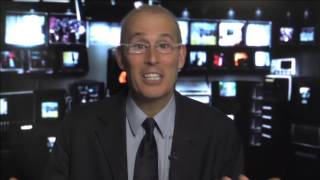
TJ Walker discusses public speaking and media training, citing a study showing private-college presidents average $436,000 yearly while Columbia's Lee Bollinger makes $4.6M. He shares speaking tips: stories naturally loosen your gestures, live interviews beat edited ones, and he uses Ryan Seacrest as an example of a speaker who became a media entrepreneur.
Chapters
Looking for a high income job. Ever thought of being the president of a private university? Folks, I realize we live in an era where baseball players are paid 30, 40 million dollars a year, football players are paid similar fortunes. But this did jump out at me. A study showing that private school, university, not universities, colleges and universities, the presidents are getting on average $436,000 a year. This is an increase of 5.6% in just one year. According to the Chronicle of Higher Education, Lee Bollinger, the president of Columbia University, clocked in at $4.6 million compensation. Now, the reason this jumps out at me is we do live in an era where there's more and more learning, more and more of a thirst for learning everywhere in the world. Whether I go to India, whether I'm in Beirut, everywhere I go I see people, especially young people, craving for more, wanting to learn more. The thousands of students I have around the world for my online courses, people, people want to learn. And yet the issue is, what's the best value for your dollar? Now, there was a time, certainly when you could get admitted to Columbia University, you took it. It was a golden ticket to success. You're an Ivy Leaguer. But when you have to pay tuition of what? Living expenses, New York City, $60,000 a year, what are you paying for? Part of what you're paying for is a $4.6 million salary for the president. How does that benefit the student? No doubt Lee Boinger is a charming fellow and deserves nice compensation. He could be on Wall street somewhere making a nice living. But $4.6 million to be an administrator for schools? Here's why I'm even talking about this. On this public speaking platform course, on this public speaking focused show, it is that I do teach public speaking courses all over the world in an online environment and in person. And everybody likes to think that they are part of the latest, greatest trend. And I guess I'm no different. But what I see is more and more opportunities for people to reach directly to instructors, professors, teachers, experts, whatever you want to call them, without having to pay all the middlemen of Lee Boeinger at $4.6 million. This is why I think universities are running the risk of becoming irrelevant. At least some of them, perhaps not Columbia University. It is wildly prestigious, still highly selective, but there's so many second tier and third and third tier private schools where their instructors aren't necessarily great, the students aren't great, and yet they still expect to, as this story illustrates, charge, double, triple, quadruple the rate of inflation, higher Every year they want to increase what they pay themselves. Every year, folks, I don't get to raise my rates. Triple inflation every year might be nice. I have to deal with the marketplace. And I think more and more people who have expertise, whether they call themselves teachers, professors, instructors, coaches, are going to be doing the same thing where they're dealing directly with end user students. Students and professionals of all stripes are going to be focused on one thing. What is the value that they are getting? How is this learning going to help them? As opposed to a piece of paper? If you need a piece of paper from a Williams College or a Davidson College or even a Columbia College, there was a time when that meant a lot. I'm not sure the future is going to be that way, when it's going to be easier and easier to get access to the best teachers in the world without paying for all this bureaucracy and all this middleman. And Again, apologies to Mr. Bollinger, but at some level, he is a bureaucrat, albeit an extraordinarily high paid one. So those of you who are consumers of education, I urge you, be skeptical of every dollar you spend. Make sure it's really benefiting you, because you can hear great education experts speak on what they do. It's never been easier to do that. If you're going to get more than that, if you're going to pay more than that, you should get a lot more than that. So enough about that. Okay, folks, a reminder. This program is brought to you by mediatrainingworldwide.com if you've not yet signed up for our free no obligation media training and presentation training course, please, please go there. How's that for a contrast? You don't have to pay me $4.6 million. I'm going to give you a course for free online public speaking media training course. Just go to the website and sign up for it. It's 3Ws MediaTrainingWorldwide.com now for our body language tip of the day. Those of you who are regulars know that every day we have one tip early on in the program on body language. So here's what I notice in my own trainings. Most of what I do is small group trainings. I'm in a room, four or five executives from a company, someone will raise a hand. Hey, T.J. i hear you talking about stories, but you know, I'm just a technical guy. I don't really have stories. I can't tell stories. Should I make up stories? I hear that all the time. And what I tell this person Jim, you're overthinking this. We all tell stories all day long. You ever have a conversation about a tech problem with a fellow techie, just recount that conversation. Now here's the body language tip. When you are telling a story, it's virtually impossible not to have your hands move, your face move, your face become more animated. So you've heard me, a lot of other public speaking coaches tell you tell stories. TED forces their speakers to tell stories. Part of the added value is it naturally forces you to use fuller body language. It's just harder to keep your hands frozen, your body stiff, telling a story. If you're trying to go through the data and go through points A, B, C and D, well, then it's easy for your body language to be stiff, frozen and uninteresting. But when you're telling a story and you're actually seeing this person you were having a conversation with and you're talking about how you felt, your body will move. It will make you come across more interesting, more engaging, more memorable and more like a real person. So that is today's body language tip. Now behind the news segment. This show is not about politics and it's not about hard breaking news. But I do want to give you a tip on how to get yourself into a news story. There are certain hooks where reporters feel obligated. They basically have to include you in the story. One of them which brings the attention here is President Obama recently gave a major primetime address, State of the Union on terrorism. So if you are running for president to try to replace him, the media is going to do a story on this. They're going to take a quote or two out of your statement. So if you're running for president and the job, something happens, some major significant statement is coming from the person in that job. You know, you have an excellent like a 95% chance of getting your comments into a story the next day. And in fact, that is what happened. I'm going to link to the story so you can see it for yourself. But basically every Republican who was running for the job of president was able to get quotes in the story. Not going to dissect the quotes today. I just want you to see structurally from a media training standpoint, you always got to be looking for opportunities to get your message out. Certainly if you quit a campaign, you're going to get coverage. That's probably the last time you really, you're not even thinking about it at that point. It doesn't help you. If you get arrested, you're Going to get media coverage that doesn't help you. What you're looking for opportunities when reporters basically have to include you in the story and it gets some positive message out. And that is the case when a major politician gives a speech, a state of the Union address, some other major speech, and you're running for that office or you're seen as the true opposition, you just write up your statement, especially if it's attacking, Chances are that will work its way into the story the next day. Okay, in other news, something jumped out at me recently is a major profile of Ryan Sechrist. Now, some of you think of Ryan Seacrest as just that guy who is sort of the almost anonymous generic host for a TV show that's been canceled or about to be canceled. American I O. Well, he's much more than that, folks. He's put together a huge, huge, many hundreds of millions of dollars worth of an empire as a TV producer hosting the New Year's Eve special. He's sort of taken over Dick Clark's position there. He has a daily radio show. He has news segments on E. He produces the Kardashian show. Had a very, very positive favorable profile of him in the New York Times recently. I'm linking to that story. The reason I point that out is buried in the story. Someone said essentially, you know, this guy's really successful considering he has really no discernible, you know, talent. Well, out in Hollywood, you think of talent as acting talent, singing talent, and it's true. He's not an actor, a singer, a dancer. All he really does is talk. He introduces segments, he introduces acts, he asks questions from guests and judges on shows. It doesn't look hard necessarily. And yet he's got a huge, huge, perhaps billion dollar empire now. And he's personally worth hundreds of millions of dollars. And he's able to do it through speaking. And he's not a comedian, folks. You can say, well, David Letterman, Jay Seinfeld were just speaking, but they were comedians. They could really make people laugh. People don't really laugh listening to Ryan Seacrest. What he does, I believe, is he is an effective speaker. And he also is good at doing what Dick Clark used to do, which is he put the spotlight on the guest, on the celebrity, on the other person. He didn't have to have all the spotlight on himself. And because of that, he's actually much richer, much more successful than 98% of the celebrities he interviewed. So keep that in mind, folks. A lot of times people think, oh, well, speaking, that's only Helpful. If you want to be some cheesy motivational speaker and you're going around giving rah rah generic speech, that's not what a real business person does. Well, Ryan Seacfrist is a real business person, folks. He is wildly successful, incredibly rich. This is the guy behind the Kardashian show machine. We can debate for another time whether that is a blight on humanity or not. But what you cannot debate is his ability to leverage basic speaking skills, basic communication skills in creating a vast, vast multimedia empire. So, Ryan Seacrest, fantastic success story. The power of speaking. All right. In other segments today, I wanted to talk to you about the question of the day. Here's my question to you. What is the amount of time you spend writing your speech versus rehearsing your speech? In my view, the correct proportion should be roughly 50 50. In my experiences with clients all over the world, it's about 99% to 1 or 99.9% to 0.001 or 100% to 0% for the most part. Everybody makes the same blunder. They make the same mistake in that they spent all of their time writing, rewriting, editing, reviewing words, very little time actually stating them out loud, saying, presenting them video, recording it and watching it. So that is my question to you. I do want to know, what is it? What's the percentage of time you spend writing, including in that preparing slides versus actually rehearsing your speech? If you tell me you don't have time to rehearse, well, I agree with you because you only have the time for what you make time for. What you're really saying is you don't make time for rehearsing. The question, of course, does that pay off? Does that really benefit your audience? Does it benefit you? That's my challenge. But I'd like to hear from you. Please post your comments in the discussion section right here. Whether you're watching this on YouTube, Facebook or my blog, or you can just send your feedback to infoediatrainingworldwide.com or on Twitter jwalker. I'd like to hear from you, as always. Now this got my attention. Our social media insights for the day. I've seen this on a number of people's blogs, Facebook posts in the last day or two. And it is a story that purports to show that meaningless quotes and speeches are resonating and are more popular with people the dumber the person is. Now, folks, I don't really know how you quantify that, and I don't even know if this is a scam story. So I want to be careful that I'm not spreading something. That's disinformation. I'm not vouching for that. But I do think whoever's putting this out there is on to something. When you're putting a quote up on a slide or delivering a quote in a presentation, you need to ask yourself several things. Number one, does this truly crystallize an important idea for my audience, that is stating it better than how I could say it myself, saying it in a more interesting way than how I can say it myself. And does it bring clarity and insight to the audience and get them to think? If you can say yes to all those things, then by all means put the quote in, especially if it's from someone the audience would respect. But if the quote is just to sort of make you look smart, aren't I smart? I read works of philosophy. If it's just to make you smart or to be all schmaltzy, make people go, oh, isn't that cute, then I would err on the side of leaning out the quote. Quotes should be there for your audience, to genuinely help them. And I don't care how good the quote is. If you have more than less than a handful in anyone's speech, it's overkill. At some level, it makes you seem insecure. You're the one asked to speak, not the person whose name is on the quote. So a speech should be primarily about the added value you bring to it, your insights. So have some quotes, but be sparing with them. Make sure they truly deliver insight and they're not just clutter and just, you know, extra frosting on the cake. Okay, in our Community Spotlight section, I wanted to focus on something I saw on the Media Training Associates website. This is a great website. Some of my professional colleagues over In Great Britain, mediatrainingassociates.co.uk they had a client who thought, apparently, that she was not live. So she was way too casual. Stop saying, oh, this isn't live, is it? And it was live tv. Couple of rules that I always give my clients. Assume anytime you're around a camera or a microphone, it is live. You can't go wrong. That's number one. Number two, live is always, always, always, always easier to do well in than an edited interview. Now, this seems counterintuitive. People get much more tensed up for live interviews. They think edited interviews are easier. Oh, I have more control. I can stop. I can start. No, it's not your production. It's that TV reporter's that TV network's production. Anything you say in an interview that isn't live can be used. In fact, if you said a thousand smart, intelligent things in one stupid thing, all the smart, intelligent things you said could be edited out and just that one stupid thing gets in. Don't take my word for it. Look at Tony Hayward, former CEO of bp. He can tell you a little about that. So anytime you have the option of doing live versus edited, in my view, go for live. Because if you do say something stupid, but you said a thousand other smart things, people saw the whole thing. Doesn't mean you should go out of your way to say stupid things. But live is always better. It's easier for you to get your message across. You don't have to focus as much time on your sound bites because your sound isn't going to be taken out in bite section. People will hear all of it. So remember, big myth that live is harder than recorded. It's always easier and better to do live interviews. That's the program for today. Again, if you haven't done so yet, please sign up for the online free no obligation media training course@mediatrainingworldwide.com and a free public speaking course. You can get that@mediatrainingworldwide.com Sign up today and start learning right away. I'm TJ Walker. As always, may all of your speaking opportunities in life be a success.
More from TJ





The Breakout Cases - What Actually Caused Famous Speaking Career Breakthroughs | Ultamize

The Red Circle Sessions Finale - Build the Speaking Career You Came Here For | Ultamize

Two Stages, One Logo, Two Completely Different Realities - Main Stage vs Independent Events | Ult...

Pre-Reset - Why Repetition Builds Better Speaking Decisions | The Red Circle Sessions | Ultamize

Your Decision, Your Framework, and What Happens After - Build Your Speaking Career First | Ultamize

The Red Circle Sessions Trailer - The Speaking Career Truth Nobody on That Stage Will Tell You | ...

The Two-Minute Ultamize Reset - Your Platform, Your Audience, Your Voice | The Red Circle Sessions