TJ WALKER - THE HABIT INFLUENCER - Personal Development | LIVE STREAM
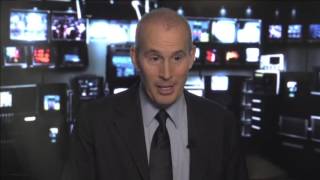
TJ Walker critiques Prince Charles' 15-page interview contract as bad PR and breaks down what actually works in public speaking: stop licking your lips, hydrate, nail your message before you touch the slides. He argues storytelling is the skill most people auditioning for shows like America's Got Talent overlook.
Chapters
Revealed. Prince Charles has a 15 page contract he asked reporters to sign before doing an interview with him. Is this a good idea? Decidedly. No, this is not a good idea. Now I understand why the monarchy wants to control its image, wants to control the media. Hey, everybody would love to do that, but is this the best way of doing it? Just ask yourself. In all the news coverage you have seen of Prince Charles over the years, I mean, he's been around my whole life. I'm 52, so I have images of him back to the early 70s when I started looking at news. He always has a very mixed image and it seems like the media goes out of its way to portray him as sort of spineless, wimpy, out of touch, not really the strongest, most forceful image. I have to think it's because of policies like, here's some of his policies. He wants every single question sent to him and agreed upon in advance. Well, journalists hate that, number one. Number two, they don't know what the questions are necessarily. Number three, this completely destroys the ability of the reporter to have a conversation and to ask follow up questions. Next, according to the contract, and this is reported in the Independent, prominent British newspaper, he wants the right to look at all the footage and edit out anything he doesn't like. Now folks, if I were part of a monarchy and had thousands of years to draw upon, I might like to go back to the good old days where, oh, you do something I don't like, off with your head. But those days are gone. The British monarchy exists for one reason and one reason only. It's to generate positive publicity, to generate tourism, to bring people to Great Britain, to go see Big Ben. And hey, I've gone to see Big Ben. I love going to England. I've gone to the castles and the pageantry. It's great, but it's all for show because the monarchy isn't actually running things anymore. To me, I see this to a lesser extent with certain corporate leaders who want the questions in advance. The goal, to try to control your message, to control how people perceive you. I understand, I get it, I'm a part of that. I want that too. But in the era of a modern free press, trying to put restrictions on the report isn't the way to do it. The way to do it is to learn how to control one thing, your own mouth. That's what Prince Charles needs to learn if he really wants to upgrade his image. He needs to let reporters do what they do. And he needs to come up with interesting messages about how he's trying to put a spotlight on improving the world for the citizens of Great Britain, the United Kingdom, Europe and the rest of the world. If he just keeps focusing on on what he's trying to do to make life better for people, people who weren't born with a silver spoon in their mouth as he was, he'll get plenty of great publicity. But by trying to micromanage things at this level, all you do is cause resentment and you give reporters hooks for attacking you, making fun of you, mocking you as thin skinned and ridiculing you. So I hope it's something. Maybe it's going to be the next generation, but at some point the monarchy needs to realize they're just PR guys at this point and PR women. So they might as well learn the game. The game is develop good media skills, learn how to communicate effectively and you will be able to sell your product. In this case, Great Britain. Folks, this program is brought to you by Media Training Worldwide. If you've not yet signed up for our free, no obligation online public speaking and public media training courses, please do so today. Go to mediatrainingworldwide.com and sign up to receive the free online courses. I think you'll get a lot out of it. Our Body Language Tip of the day. Those of you listening to this on the audio podcast aren't seeing this, but those of you watching can see what I'm doing. I'm licking my lips. Unfortunately, there's nothing that looks worse on TV or on video than licking your lips. It looks lascivious. I don't mean to make light of this. It makes it look almost like you're a molester of some sort. So why do we lick our lips? Well, if you're speaking and you're nervous, what happens? Your mouth goes dry. You may be craving water. But if you're already speaking in front of a camera, you can't necessarily do what I just did. Here's my suggestion. Drink plenty of water before a TV interview. Put some sort of a lip balm. I mentioned chapstick. It could be any lip balm. And when you're talking, try to keep your tongue in your mouth. There are exceptions to this rule. There are some famous people who break this rule. William F. Buckley, the well known conservative pundit who's no longer with us, jabbed his tongue out like a snake. Didn't seem to hurt his career, but people did when they were imitating him and doing impressions of him. That's one of the first things they did. Charles Schumer, a prominent United States Senator from the state of New York does that. His tongue is constantly flicking out. So it's not the end of your career. But that is the body language tip of the day. Have lip balm, drink water, keep your tongue in your mouth when you are speaking in a video camera because it just doesn't look pretty good. Now in our behind the scenes segment, something that caught my eye recently, revelations that one of the top TV shows in America, America's Got Talent, is now letting people audition online. It used to be they would go to a city and that was the only way. You'd have to wait in line all day and that was the only way to audition. Now here's what fascinates me from a public speaking perspective. You think of America's Got Talent. You think of the Voice, you think of all these shows as singing shows, performing shows. If you actually did a content analysis by the minute of these programs, most of it is talking. The judges are talking, they're talking to the singer. Where did you start? How did you get into this? So I believe one of the most underrated talents for singers is the ability to talk about yourself, to come across as warm, interesting, to express emotion. So, sure, continue practicing your craft 10, 12 hours a day as a singer. But if you want to increase your odds of getting on America's Got Talent, you've got to tell your story. You've got to speak with emotion. You've got to talk about how your mom or your brother or sister made all these sacrifices so that you could have that violence, whatever it is, you've got to be able to talk about it. So please, entertainers, sure, spend most of your time on your craft, but spend some of your time practicing, preferably on video, on how to speak about yourself and your passion and your craft. And you will be rewarded. Also in the news, part of what I do in preparation for you is I scan every single news story about public speaking on which websites, blogs, Internet, YouTube. And there's rarely a day that goes by where I don't see a story citing the well known statistic that public speaking is the number one fear people have, or it's certainly in the top 10. Let's quantify this. I do believe people don't like speaking. Most of us, not me, of course. But it is a fear people have, but it's certainly not the number one fear. Let's qualify this. I do think it's the number one fear of things people find unpleasant to do that there is a high probability of them being asked to do. If you work for a corporation, a government entity, a non profit. You will be asked to give a presentation at some point. You're most likely not asked to jump out of a plane without a parachute, or to be pushed off a cliff, or to dive into a bag of snakes. All of those things are supposedly things people fear less than public speaking. But something tells me if you're on an airplane and I said, okay, I'm going to push you out of the plane right now without a parachute or you've got to give a 30 second toast to everybody, a New Year's toast. Here's a glass of champagne. You would figure out a way to give that speech to the airplane. So just keep that in mind. Public speaking isn't really the number one fear. It is something most people feel uneasy about. That's because they haven't taught, they haven't been taught the basics, the fundamentals which since you're here regularly, you know the fundamentals in our bad segment of the day. Our bad public speaking advice of the day. The other thing I see just every single day is more content about new gimmicks for slides, new graphics for slides, new procedures for slides, new templates for slides for PowerPoint presentations. And it's not that any one of these slides isn't good or look professional. But the bad advice is for people to prepare for their presentation focusing on the slides. Folks, I'm not anti slides. There have been times when I've used slides and presentations five days a week. But your focus has to be on your message, speaking about your message, telling stories to make your message come alive. Then and only then should you ever worry about even constructing the first slide. If you're focused on your slides first and foremost, in my view, you've already lost. The game is already over. You are guaranteed to be an utter failure as a communicator. That is my professional opinion. People in the slide creation business may think otherwise, but that is that's my bad Advice of the Day segment. Now the good advice of the segment. This comes from Seth Godin. Those of you who follow marketing sales. He is a guru in publishing. He is a wildly respected guru. He's had umpteen best sellers. I've read dozens of his books. Here's the advice he puts on his recent blog post. It's called Running out of Length versus Density. He claims that people spend way too much time trying to artificially shorten a presentation. Whether he didn't name it directly, but he implied the TED talks or going from, in his case, someone had interviewed him by text from 17 questions, narrowed it down to two and it was posted online. He didn't know why they shortened it. His point is, and I'm going to link in the show notes that you could find at Media Training Worldwide for you to see the article yourself. And by the way, I mentioned the contract Prince Charles has with the reporters. I'm linking to that in the show notes on mediatrainingworldwide.com in the news section as well. But Seth Godin's point is that you shouldn't focus on artificially shortening a speech, a presentation, interview, or lengthening it. It's not about short versus long, in his words. It's about length versus density. You need whatever you do to be dense with interesting insights to people. That's got to be the focus. It's far better to speak for two hours if everything you say is dense with content that's interesting, useful and helpful to your audience. It's the density that's important, not oh, I did it in two minutes, but I didn't say anything. So Seth Godin, always in Insight, Always. I do read him every day. You may want to check it out as well. Again, I've linked to his website and you can see it there. The question of the day coming from viewers. This one comes from Bob. He says, TJ what proof is there that media training and presentation training actually has a positive impact on someone? What is the return on investment? This is a question I get from time to time. Although to be brutally honest, it's not a question I get from people I consider to be serious people or people who are serious about improving their presentation skills. Now, my glib answer is the exact measurement is $35 billion. Because if you look at the BP CEO Tony Hayward, what the market price was before he started making stupid statements to the media when they had their whole Gulf oil spill a number of years ago and where it was several months later after he made numerous bad statements to the media. I want my life back. BP dropped $35 billion in market cap. So my glib answer is the value of media training is $35 billion. My slightly longer answer is what's the value of running documents through Spellcheck? Every corporation, every nonprofit for that matter, every independent consultant I know who works from home, they don't ask themselves what's the return on investment of me spending five minutes running a document through Spellcheck? I could just save time, hit Send, and if it's filled with spelling errors and typos, you know, I don't really know that it's hurting me. No one thinks like that. You take the time, you invest the time, software time, running things through spell check because you don't want to look like an idiot to the world receiving your information. What's the return on investment of companies that routinely ask lawyers before doing things that are legally risky, hard to prove, yet people do it? What's the return on investment on hiring an accounting firm? So my point is this. There's all sorts of important things people do routinely where they don't ask them. They don't demand an immediate quantification of what's the return on investment? What's the return on investment of dressing nicely in a professional attire versus showing up in rags or looking like a bagman or a bag lady? It's very hard to prove specifically, and yet most business people do spend some time figuring out how can they dress in a way that looks professional. So that's my longer answer to that question. And those of you who are public speaking trainers, communications advisors, consultants, little tip for you. If someone's asking that question, it means they haven't really bought into the idea of getting improvement. My advice? Don't even waste time with them. If someone someone asks you why should I bother spelling correctly? It's kind of hard to convince them. They need to take the time to use spell check. It's the same with public speaking. Now, my question of the day for you, and this comes from Dr. Michelle Mazur and her podcast, which I'm going to link to in the show notes. Why are there so few women speaking at marketing events and other business conferences? Now, I of course have noticed this. You have noticed this almost at any professional business conference. Don't even start with tech conferences, but almost any professional business conference. The proportion of women speakers to men speakers, sometimes 1 to 10, sometimes 1 to 20. Why is this? I'd like you to check out Dr. Michelle Mazur's podcast on this. I do have a few theories, but I would like to hear from you. So send me your thoughts on this. You can write to me anytime. Infoediatrainingworldwide.com infoediatrainingworldwide.com you can also post your comments and your questions to me on Twitter jwalker. Certainly I do think there is sexism and we all consciously, unconsciously look at the world through a particular prism. I'm a male. I'm sure I have unconscious sexist attitudes. I will say this though. As a television producer, I had a political talk show, regionally syndicated this is more than 20 years ago. This is early 90s. It was a panel show like the McLaughlin Group. And I have to tell you, I spent a tremendous amount of time recruiting female pundits, reporters, commentators, columnists to be a pundit on my show. And I gotta tell you, it was extraordinarily difficult. I would sometimes call female reporters who had tremendous experience that more than a decade experience reporting in this particular political niche and they would say to me, well, I'm not sure, I'm not sure I have enough gravitas, not sure if my bosses would like it. And then I would call a male commentator because I had to have someone fill that fifth, fourth or fifth seat. It could be someone who is 23 years old and been on the job for two weeks and they'd be sure. I'm not saying this to suggest that there's no such thing as sexism and I haven't been booking talk shows or booking speaking venues lately. But I just wanted to share with you my experience. I put a lot of time and effort recruiting female talking heads and we typically always had some females, although often it was only one of five and there were weeks when I literally couldn't get any females. Not saying there are no qualified women speakers in the world. I just am sharing with you my particular experience. I would like to hear from you on this. Why are there comparatively so few female speakers at business conferences? So post your comments on YouTube, Facebook if you're watching it there or on my site at mediatraining Worldwide. Thanks for watching. I'm TJ Walker. May all of your speaking opportunities in life be a huge success.
More from TJ





The Breakout Cases - What Actually Caused Famous Speaking Career Breakthroughs | Ultamize

The Red Circle Sessions Finale - Build the Speaking Career You Came Here For | Ultamize

Two Stages, One Logo, Two Completely Different Realities - Main Stage vs Independent Events | Ult...

Pre-Reset - Why Repetition Builds Better Speaking Decisions | The Red Circle Sessions | Ultamize

Your Decision, Your Framework, and What Happens After - Build Your Speaking Career First | Ultamize

The Red Circle Sessions Trailer - The Speaking Career Truth Nobody on That Stage Will Tell You | ...

The Two-Minute Ultamize Reset - Your Platform, Your Audience, Your Voice | The Red Circle Sessions