TJ WALKER - THE HABIT INFLUENCER - Personal Development | LIVE STREAM
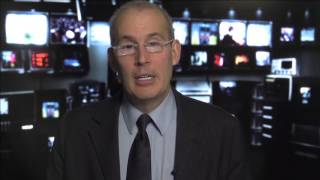
TJ Walker critiques how phones kill in-person communication and shares public speaking tactics: nail your opening before worrying about first impressions, rehearse on video, read your audience, control your pace and breathing. He highlights a high school speaking contest and Media Training Worldwide's free course.
Chapters
Hi. Yeah, just. I'll be with you in one minute. Hang on, okay? Just hang on. Are you encountering a lot of this when you're talking to people? I gotta confess, I'm guilty of it, too. I finished dinner. I may pull out a phone. It's rude, it's obnoxious. I hate it when other people. But it is sending an extraordinarily powerful communication message to people. When you are in front of someone and they are talking and you're doing this, you're basically telling them, drop dead. I find you profoundly uninteresting and unimportant. Is this an epidemic? It certainly appears so. I see more and more commentators talking about cell phone culture. We see it all the time in speeches. There used to be a time when people would check their cell phones kind of on the sly, but now I find out and notice, even when I'm giving presentations, people on the front row occasionally feel entitled to pull out a cell phone. Now, you can't exactly yell at them or go back to puritanical times and knock them on the head with something, but I do believe as speakers and as presenters, it needs to be addressed. I try to do it by asking the person a question related to what I'm talking about or engaging them in conversation, sometimes walking over. But today I want to talk about it not just in the context of public speaking, but in the broader sense of all communication. What do you do when you're sitting down with a friend at lunchtime, you're having a talk and they're pulling out and checking what's the appropriate thing to do? Is it to ignore it? Wait for them to finish, say, what the heck is going on? Chastise them. How do you respond? I try to do it, depending on the situation in different ways. I'll just be quiet. If I see someone doing that, it looks like it's urgent. But there is a certain percentage of people who get the sense that they can multitask and they can listen to you have a conversation, be polite. And continuing having an aimless text chat with friends. What do we think about that? I'd like to hear from you, so post your comments. You can post it in the discussion section right here, whether you're watching this on YouTube, my blog on Facebook, or send it to me on Twitter jwalker. The other question I have for you, the question of the day, is, what are your rules with your own children? Now, my daughter is about to turn three. Thankfully, she's not yet sending text messages on a cell phone, but I can certainly imagine the day when that happens. And she might rather have text messages with friends than listen to dear old dad. What is the appropriate rule for children at a dinner table when it comes to communicating? Should there be some time set aside to we're just going to communicate with friend a family in person face to face? Or does that make me an old fashioned fuddy duddy and out of the times? And kids should be able to text the whole time and if you try to deal with it you end up with a big screaming magic and it's not worth it. I'd love to hear from you. So please post your comments or send them by email to infoediatrainingworldwide or to Twitter jwalker in our body language segment of the day, first impressions, you hear people talk about that all the time, how important it is with public speaking. In fact, I want to direct you to an interesting blog post of one of my professional colleagues, Diane DIresta Communications. It's diresta.com I've linked to it below, but she has an interesting guest column about how important it is to really come across your best in the first 30 seconds. I have a slightly different take on it. I do think first impressions are important, but if you have a great first impression and then you don't say anything interesting or memorable, you haven't really done anything, you haven't communicated. They might have a good impression that you looked confident, but that's a pretty low standard. I go into every presentation opportunity with the assumption that you or I have a specific communication goal. There's a set of messages that we want the audience to understand and remember so they can act on it. And simply leaving people with a good first impression doesn't really do any of those things. Now we want people to have a good impression of us, but that's kind of the basic assumption. Before we go to the three goals we really care about having people understand messages, remember them so they can act on them. So I want you to of course, be aware of your first impression, but focus primarily on delivering great information in an interesting, memorable way. Now, the best way to get rid of the problems of the first impression is to practice on video. I was training a client just yesterday who was a great speaker, had fascinating ideas, but but the first couple of times he practiced on video, he held his arms behind his back and spoke as if he had a gun to his head and were being held for ransom. So his first impression, the first couple of times were awful. I mean, it really stood out. But the solution was not to Just focus on a good first impression. The solution was to practice his speech a whole bunch of times on video until he liked what he saw and that he had an interesting open. The first thing out of his mouth is interesting. The number one reason most people have bad first impressions is they're saying boring stuff. Good morning. My name is TJ Walker. I am president of Media Training Worldwide. I'm very happy to be here today. Thank you for that nice introduction that I sent you and wrote. I mean, that's how most people start their presentation. It's boring, it's awful, it's entirely predictable. And that's why it makes a bad first impression. So focus on saying something interesting to the audience, first thing out of your mouth, and then focus your entire presentation on making ideas that are important to you and your audience understandable and memorable. Do that and you'll have not only a great first impression, but you'll have a great first impression, middle impression, and last impression, and you'll actually accomplish what you want. So please keep that in mind when you come across more and more articles, blog posts, YouTube videos on the importance of a good first impression. Yeah, it is, but that's often not the entire story. Now, in our section on good advice from the web, I do want to put a spotlight from the folks over at the Accidental Communicator, great website. I frequent it all the time. And they have an article today on how to learn to read your audience. That is something that is incredibly important. If you want to be a great speaker, even a pretty good one, you need to read your audience. The article is full of tips and I've linked to it on my blog. But here's what I think is most important and is the advice I give my own clients. There's two main ways of reading your audience. Number one, you have to be comfortable enough with your material, not reading a script, not reading bullet points, so that you're actually looking at your audience and you can see what they're doing with their eyes. If they're kind of looking like, hey, Jim, if you can tell one person is asking another person questions, typically that means you've lost them. So it's not wildly complicated to read your eye. You actually have to look at them. Do they look quizzical? Do they look confused? Well, stop. Restate your message. Ask yourself, what do I mean by that? And come at it from a different perspective and look at your audience and see if you can see these looks of recognition or even nodding in agreement. Now, you can't do that. If you're nervous. If you're nervous and uncomfortable and you're thinking, okay, I'm just going through my stuff and I have to go through the next bullet point and I see this mass of people out here, you're not even going to see their faces, you're not going to see their eyes. So this is why it's critically important to rehearse, to have internalized what you want to say so that you're comfortable enough to really look at people one at a time. You should never be looking at the audience. You should be looking at one person at a time for a full thought and going to another person, looking at that person, talking to that person for a full thought, and around. And not just friendly faces and not just the person who seems bored or annoyed. You need to do it throughout. The other great way of reading the audience is cheat. Read them in advance. If you're speaking to 40 clients on Thursday to give them an update of how your fund has performed in the last quarter, call one that you're the most comfortable with, where you have some rapport, tell them what you're thinking of talking about, ask them what they find most interesting, and ask them what they personally would find most important for you to address, and then reconfigure your speech around that. Nothing wrong with that. People seem to think that speech writing is about staying up till two in the morning and getting these great bursts of inspiration and writing and rewriting and rewriting. There's nothing wrong with just picking up the phone and asking an audience member, what are you really interested in? It's the most widely underused tool when it comes to preparing speeches and presentations. Now, I understand you can't do it every time, and sometimes the audience is so broad it doesn't work. But for most people in business and in government and in public life, it really can work. You can find a few people who are representative of your audience and ask them in advance before you even created your speech outline, and you'll be in great shape. So please give that a try. By the way, today's program, as always, brought to you by Media Training Worldwide. For all of your media and presentation training needs, go to mediatrainingworldwide.com if you haven't yet done so, please sign up for our online no cost, no obligation public speaking course. You can learn many of the same secrets techniques that I teach presidents of countries, prime ministers, Nobel Peace Prize winners. All you have to do is go to mediatrainingworldwide.com and sign up for the free course or click below the links below and that will take you there as well. Now in other good tips from the web that I've found recently. This one from Ethos 3. Great website. You've heard me reference them before. Tips on breathing. We've all heard people sort of run out of breath or are kind of talking from up here and it's sort of weak and shallow. Breathing is important to good speaking and they have some great tips on how to breathe deeper, more fully. The number one problem for most people who have breathing problems when it comes to speaking is they aren't pausing enough. They're nervous, they're excited, they want to finish up and go home. So they speak too quickly. They don't really pause, they don't really take time to breathe normally. Next thing you know, they sort of gasp for breath. Now the way to solve that problem is I know some of you don't want to hear this, some of you say it's repetitive. But the way to solve the problem is you have to practice your speech on video. Pull out your trusty smartphone, a webcam, by the way, if you have a flip cam, fine, go to the grocery store and get a webcam for $9. If you're computer doesn't have one, you cannot use the excuse of I don't have the technology. Baloney. If you want to give a better speech, if you want to be seen as breathing properly and giving an interesting, engaging speech, you need to practice on video. And video cameras are cheap, plentiful, and they are everywhere. So you simply have no excuse. The way most people did throughout human history because cameras were either non existent or were wildly expensive to record yourself. So you don't have that excuse anymore. So you need to practice and listen to see if you're racing. And if you sound out of breath, keep practicing until your speed sounds good and you have variations in your speed. Most important, you have plenty of pausing. That's where you can breathe fully. And that will solve most people's problem. Not every problem, there's always particular ones. But that will solve most problems. By the way, if you have any questions on public speaking, speaking to the media, speaking during times of crisis, please send them to me right here. I will answer them on the program. So all you have to do is email me infoediatrainingworldwide.com or on Twitter jwalker or you can post them anywhere you're watching this. If you're watching it on YouTube or Facebook or any other platform, post it there. And we go around and gather up the questions everywhere and answer them. Now this is a two way street, so you can ask me questions, but I also want to ask you questions. I want to know, are there any other podcasts or YouTube channels that relate to speaking that you go to or use, let's say twice a month or more, you subscribe, you use it. I'd like to know what sources of information about speaking that you personally use and you recommend where the person is already speaking. So by that I mean not just a blog post where there's text. And I'm not against text. I blogged for many years, I've written numerous books. But the reason I spend time doing this as a show where I'm talking is that speaking is about talking. And ultimately I feel if you're going to really help people speak more effectively, you have to practice what you preach and you have to show them. They have to hear you and ideally see you. So that's why I have sort of doubled down on this medium as opposed to writing 10 blog posts or doing 50 tweets a day. So I'd like to know, are there other sources that you respect, admire when it comes to public speaking, media training, advice, and it's delivered in either a YouTube video or a podcast, audio or video, in any format. Please let us know, post it here or send an email to infoediatrainingworldwide.com in public speaking contest news, we try to put a spotlight on that from time to time, if not every day. This is from Cumberland County. The Cumberland County High School Future Farmers of America competed and placed first in the Parliamentary Procedure district contest. This is in Cookeville, Tennessee. So congratulations to the high school there. I realize this isn't quite as sexy and glamorous as talking about a high school kid who's caught doing something illicit with a teacher. It's not as exciting to some as the high school kid who's throwing 150 touchdown passes and gets a full scholarship. But I do believe that when there's so much attention given to kids athletic skills, when 99.99% of them will never make a penny in athletics, it does pay to give some attention to those who are spending the time building their public speaking skills. Because virtually every, and I may go so far as to say every single kid who enters a public speaking contest, even if they come in last place, will use that skill, that specific skill for the rest of their life. Whereas the person who is great at tackling people on the football field will probably never, ideally, will never use that skill in real life. The rest of their life. So again, not anti sports here, but let's give some equal time to young people who are trying to better themselves and build lifelong skills in the public speaking arena. Thanks again for joining me. Again, if you have not yet gone to our site to get the free online public speaking or media training course, please do so. All you have to do is go to mediatrainingworldwide.com to pick up the free online media training or public speaking course. Thanks again for joining me. I'm TJ Walker. May all of your speaking opportunities in life be a success.
More from TJ





The Breakout Cases - What Actually Caused Famous Speaking Career Breakthroughs | Ultamize

The Red Circle Sessions Finale - Build the Speaking Career You Came Here For | Ultamize

Two Stages, One Logo, Two Completely Different Realities - Main Stage vs Independent Events | Ult...

Pre-Reset - Why Repetition Builds Better Speaking Decisions | The Red Circle Sessions | Ultamize

Your Decision, Your Framework, and What Happens After - Build Your Speaking Career First | Ultamize

The Red Circle Sessions Trailer - The Speaking Career Truth Nobody on That Stage Will Tell You | ...

The Two-Minute Ultamize Reset - Your Platform, Your Audience, Your Voice | The Red Circle Sessions