Transforming Public Speaking into Business Growth
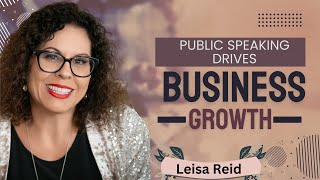
A live YouTube interview (May 21, 2024) where TJ Walker interviews Lisa Reed—author of Get Speaking Gigs Now and founder of the International Speaker Network—about turning public speaking into a business growth channel. Key points: the importance of having a ready, well-defined talk; positioning yourself as an expert rather than only a "speaker"; networking with other speakers to find opportunities; practical tactics (a seven-step program, calls-to-action from stage) and marketing follow-through (post-TEDx promotion, speaker readiness assessment). The session includes a client case study, book and network promotions, and Q&A about storytelling and moving from trainer to keynote.
Chapters
So many people have the dream, the dream of being on stage, sharing your wisdom, sharing your insights with the world, looking at that light up in someone's eye of, wow, I really helped that person. It is a dream so many people have and yet so few people achieve. Well, our guest today helps people achieve that dream. She's the author of Get Speaking Gigs. Now. Anyone can call themselves a speaker. We all speak if our tongue and our lips move. But to be a professional speaker means you get paid, and that means speaking gigs. Our guest today has been in the industry for years and years and years. She's spoken on more than 600 stages around the globe. She's a podcaster, speaker, author, expert. I'm very happy to bring onto our stage today Lisa Reed, who is the founder of Get Speaking Gigs Now. Lisa, thanks for joining us today.
Thank you, tj. It's exciting to be here.
Thanks for being with us. So let's just dive right in. So many people, I think, are mystified by professional speaking. On the one hand, it's rare for me to ever go at a professional meeting where someone doesn't say, well, I'm a speaker or I want to be a speaker. I'm a great speaker. I was at a ted talk conference, TEDx, this past weekend. Every everyone said, oh, I'm a speaker, too. What really separates between people who want to be speakers and those who get on stage and get paid?
Yeah. And I don't. I look at it a different way. One of the things that I always tell people is once you say you're a speaker, usually the next question, question someone's going to say is, oh, well, what do you speak on? And I have found that's the first delineator is do you actually have a talk in your back pocket that you could whoop out that you know the title of you feel confident in? You've put that stake in the ground and you know your stuff. To me, that's an indicator right away. I can tell if someone has never actually given their talk, but they do want to be a speaker or they've been around the block a few times. So that's my first, like, okay, now we're talking serious. And I always tell my clients, you want to be able to.
Lisa, I apologize. We have one technical issue and I want to, I want to be fair to you and get you maximum exposure. Ben, do we need to reconnect with Amazon? I think we're not going live on Amazon yet. Can you elaborate? Ben, do we need to disconnect and Start again. Yes, I'm having issue here. I'm getting an error that the, the, the. The dimension received is. Varies. So it says we need to, to change. To adjust to the recommended dimension. So we have to change a dimension somehow. So apologies to our guest, Lisa Rhee. We go live on Amazon almost every day when we have a guest with a book and we want to do justice to her book. Get Speaking Gigs now and Five Top Tips to Get Speaking Gigs now, her latest book that is designed to help you get more speaking gigs. Pretty clear right to the point. Topic and title for that book. But we typically simulcast on Amazon Live. YouTube, which we're on now, LinkedIn, which we're on now. Facebook, which we're on now. Instagram and a few other places. But we like to include our friends on Amazon Live because, let's face it, that's, you know, if Willie Sutton says Rob Banks, because that's where the money is, we like to be on Amazon because that's where the book buyers are. People increasingly buy lots of everything on Amazon, but if you're an author, as an author myself, that's where I'd like to be. Amazon, because that is increasingly the easiest place to buy books. So, Ben, can we try it again or would he actually have to start a separate feed?
I'm still trying to work on it.
To see if I can. I can adjust. Okay, so we apologize to Lisa, but we'll try to get back on there. Or we may have to conclude this part of the interview and try a separate one. But Ben, just let us know what else is when we're back. I'm going to take you off and we'll continue with Lisa. Janice writes in and says, thanks, Lisa. Have a talk in your back pocket. Assign someone who has been around the block and serious. Thanks, TJ for having her on. I interrupted you. If you could please elaborate more on having a speech, because I agree with you. I hear so many people. I can, I can speak and I say, what topic? Oh, I can speak on change and communication and management. And if you speak on everything, you speak on nothing.
Tj, you are speaking my language right now. That's exactly what I say. Because a lot of times people will say, oh, I can speak on anything. And I'm like, no, no, I did not. That you're not comfortable speaking spontaneously. That's a different. But I want any client who works with me to be able to. If there's an opening and the speaker canceled or whatever happened and they could just jump on that stage, the Next day. I want them to be completely prepared. But when it comes to the title and just knowing your stuff, I don't know what's going on with my voice today, but I would say I want you to be able to pass the grocery store test. Meaning imagine you're standing in line at the grocery store and you get to talk another person in front of you or behind you, whatever, and you say your speaker, and then they'll say, what? What do you speak on? You want to be able to pull that right out of your back pocket and say, this is my topic without any hesitation. You don't want to look it up. You don't want to be thinking about it. You just want to have that confidence. And I think that's the, the key to start building your confidence and certainty about getting on stage and actually becoming a speaker.
We were speaking in the pre interview a little bit. Do you recommend people position themselves as a speaker or position themselves as an expert? Because to my eye, the most successful speakers in the world that I see, people like Gary Vaynerchuk, Barbara Corcoran, they don't call themselves speakers. That's 1/10 of maybe what they do in their professional life. They're known primarily for something else.
Yeah. And you address that an expert because you want to be known for something. Like, I'm actually known for speaking, not speaking, being the speaker necessarily, although I'm known for that as well. But when someone says that they want speaking engagements or they want to learn how to get on podcasts, or they want to learn how to create their talk, people in my network go, oh, have you met Lisa Reed? Like, you should talk to her. That's what I want to be known for, is helping them get their speaking out there and to more, to more audiences. So I think it's important to be known for whatever that thing is that you do versus the job that you do.
Our special guest today is Lisa Reid. She is the founder of Get Speaking Gigs now and she's the CEO of the International Speaker Network. What is the International Speaker Network?
That's a network that I created back over 10 years ago. Now, off camera, you and I were chatting about some of the speaking organizations. At the time, there was nothing near me. I'm in Southern California and it was going to be a couple hour drive to get to any other kind of speaker network meeting. But I was tasked with being able to speak and I wanted to hang around other speakers because I know, just like you said, if you're going to rob a bank, that's where the money is. Right. I believe that where the speaking leads are, are with the speakers. So I want to surround myself with other people who are doing what I want to be doing. Because this is when I had first started, and what I didn't realize was that there was such a need for that. And our speaker network's a little bit of a different animal. It's. It's definitely designed for entrepreneurs or people who are utilizing speaking to build business, to grow business. And now speaking is more than just speaking on a stage. It's virtual, it's summits, it's being a part of giveaways, it's being on podcasts. Anything that's going to help you gain clients, help you build your list, potentially all those things that we do for marketing to help, you know, grow, grow profits, but we do it in a really fun way. And, and I say the one requirement is you need to be nice. That's the requirement to be in our group. You need to be a speaker, and you need to be nice to other people.
What's the mix of. I mean, I see there's two. Two types of professional speakers. There may be the professional speaker who's charging 10, 15, 20,000 a speech, maybe Gary Vaynerchuk, 200,000 a speech. But in my mind, those are not the people who make the most from their speeches. The people who make the most from their speeches are people like Mark Zuckerberg and Jeff Bezos, people who basically speak all day long to build big businesses. They're speaking to industry conferences, they're speaking to investors, they're speaking to clients, customers, advertisers. They're speaking. They're professional in the sense that, hey, they're making tens of millions, if not hundreds of millions of dollars a year. How do you differentiate in your own mind? People who are speaking at a high level because they. They're building a huge brand in the business, or it's already a big brand versus people who are viewing an individual speech as a significant revenue stream.
Yeah. And I mostly work with the individuals who are. It's perhaps a solopreneur or someone has a small team or a smaller business, because you can make thousands and thousands of dollars even in a room full of 10 people. And if you have the correct message, that's going to provide value for them. If you are in a room with potential clients, like if it's a match, you want to make sure that you know what you're going to be speaking on and know who you're speaking to. So that you say yes to the right opportunities, and then I think you can monetize every scenario. Right. Whether there's a speaker fee or not. And I think there's a lot of misunderstanding for the little people, like, meaning like the solopreneurs, the new business owners, the person who's got a dream that they want to be speaking, but they don't think it's possible because they see like those big famous, you know, icons and tech, tech geniuses out there and they think, well, I can't. Who am I? I can't do that. No, absolutely you can do that. And that's where I'm championing anyone who has a dream to speak and can provide value to other people. To me, that's that ripple effect that a lot of us can relate to.
That's. I want to ask you in a moment about how you provide value and sort of the ideal case study for you, but let's show your book to everyone because there are really not that many good books specifically about how to enter the speaking industry, and a lot, not many recent ones. So get speaking gigs now. Learn the secret to getting 500 plus speaking gigs. So clear, focused. Check it out. It's on Amazon. And Ben, are we on Amazon live yet? Okay, we're still trying to work that out. Sorry about that, Lisa. We'll work out the kinks there, but I want to hear a case study. Tell me about the ideal person who comes to you. Where are they on their professional journey? What have they tried to do that isn't working? What brings them to you?
I.
What happens immediately in the first month and then where are they, let's say a year after working with you?
Well, I'll. I'll share a more recent story. So it hasn't been a year yet, but a gal I've known for quite some time has been dipping her toe in speaking. And I know she's. She had had some coaching in the past, but she still had something that was holding her back. So. And she had changed her business. So she, she was still like, muddling in her mind, like, what am I going to talk about? How's this going to work? And I just said, let's just let me help you. I knew I could help her. I just knew it. There was just a couple little tweaks that we needed to make and she trusted me, thank goodness, and really leaned into the process and we created her talk that felt really good to her, that allowed her to be her. I think she was so busy following other people's formulas and trying to make it perfect and reading from a script and just worried about doing it right, that her personality was getting lost in the process. And she's got this great, welcoming, warm personality. So once she, it clicked that she could like let go of that perfect, perfect model of doing it, she started to shine. And just the other day I saw her at an event and she said, lisa, I owe everything to you. I thought, oh yeah, I don't know about that. But she was very, very complimentary. And she said, I am speaking all the time, I'm attracting clients, I've got people in my network now. Like she has a community of women. She goes, I cannot believe how much you've changed my life. What I thought was so hard, now I can do it all the time. It's flowing, it's easy and I'm having fun and I feel like me. And to me that was like the highest compliment. I'm like, I know the money is going to come for her continuously. But just that she unlocked that, that fear and let it go and was able to shine to me is amazing.
And let's get really, really practical and tactical. What did you do for her to actually get the phone to ring or the email to come in saying, hey, we want you to speak, you know, four and a half weeks from today, from 11 to 12 and our budget is $10,000. Let's really get practical and tactical.
So it, I love that question because of course we all want the exact formula that you do to, to make this thing happen. And I have a seven step program that what is what I call the general education of learning how to use speakers, speaking for business. But it's deeper than that, right? Yes, you can follow all the steps and do exactly what I tell you to do. But what I have found is that actually as entrepreneurs we are not cookie cutters, right? Like we are not all the same. And what's really helpful is having someone look at your stuff, listen to you, understand you and think, okay, let's try this. How does this feel? Feel? What do you think about if we did it this way? And allowing the person to start to create their own way of doing something that feel right for them. Because they could do my stuff, but if it doesn't feel right, it, they're not going to do it. And what I'm talking about is, is the sales part, right? Like if I always say you have to have a call to action, I think you should have a call to action at your talks. Now if you're a paid keynote speaker, that might be a little bit different situation. Again, all situations are going to be contextual, but let's say you got invited to speak. There's not a speaker budget, but you're allowed to offer the audience something, whether it's a monetary thing or a free thing, whatever it is that helps you get your business. If you're not clear on that, the audience is not going to be clear on that. And that's usually the thing that people forget to do. Now, do you have to do it exactly the same way I do it? No, but you have to be in love with whatever you're doing. And I think that's the key missing ingredient, that people just don't feel comfortable selling from stage so that they just forget, quote unquote, to do it or they run out of time or it feels awkward or weird or because they feel awkward or weird about it. So there's all these little components that go together to help you be successful.
Well, here at the TJ Walker show, we love selling from the stage. In fact, in a moment, I'm going to do what I do with every one of our guests. I'm going to say, lisa, you got two minutes. I want you to blatantly sell, give us your best pitch. We want to help you, and we want our people to see a good pitch in action. So I want you to pitch your book, I want you to pitch your practice, I want you to pitch your organization, your consulting. So I'm actually going to take my face off and it's going to be you on screen for a couple of minutes. And, and again, this isn't, you know, some podcasts don't like that. We want you. We're all about empowering people to commit to be more successful by communicating more effectively and having more confidence in their communication. Because you're absolutely right. Nothing's worse than someone. I've seen it. Well, well, I have this new CD here on how you can sell products and make money and you probably don't want it, so I'll just leave. I mean, we've all seen that. And they, of course, sell nothing. And I've been fortunate enough to see Zig Ziglar selling from the stage. And he's, he's. This was, you know, 17 years ago. He would sell his $2,500 cassette tape package and he treated like it was gold. And he got you really excited about it. Wow. He would sell six figures worth every time he spoke. So with that, I'm going to take my own face off and I Want to hear you give us your best pitch, your best ask, starting now.
All right. Well, one of the things that I hear speakers or people who want to be speakers get challenged with is I'm not sure where I should speak. I'm not sure who would allow me to be on stage. I don't know who, who would even have me speak. How do you do that? And that's why I created the International Speaker Network, which is on ispeakernetwork.com because what I found is that over many years, the easiest way to get speaking engagements without cold calling, yes, without cold calling, is to hang out with other speakers, have that virtual handshake. You would be so surprised how generous people can be when you just get to know people and you know what speakers have, they have all the information that you want. They have the name of the meeting organizer. They have probably the phone number and the email and the website. And when they meet and what the event was like, they have all that information, whether it's in their head or written down, but they have that. So why not hang out with a whole bunch of other people who have the information that would be really helpful for you? And at the iSpeaker, it's @ispeakernetwork.com is where you can go find out more information and join. It's very low entry point to join. We meet virtually once a month. And our goal is that you get to have relationships with other speakers that can help you minimize your cold calling, get booked more often, more easily, get exposure. We use the whole community to lift you up. It's only $99 to join, so it's such a no brainer if you're out there struggling, going, how can I get more podcasts? How can I get more speaking? How could I actually do this and get my message out there and help people? The I Speaker Network is where you're going to want to go. And it's short for the International Speaker Network. Now here's another, here's another opportunity I want to share with you. A lot of the times I work with people who secretly have been dreaming of being a speaker for quite some time. Maybe it's written in their mind or they've recited that. This might be you. You've recited your talk. You've imagined yourself on stage, but it just hasn't actually happened yet. And you know that you can help people, right? You know that you can help people and just think it would be so, such a big dream, so fulfilling to share that message that you have with a group of people, whether it's virtual or in person. If that's you and you just need support and you don't know how to get started and you've been looking for somebody to help guide you through the process, then I'm going to give you a different website and that's get started speaking gigsnow.com chat that will lead you to a speaker readiness assessment. And I'd like you to just put your heart and soul into the answering those questions and let me into your speaker journey. I'll read those and we will have a meeting and talk about what it is that you're trying to create and we'll go over some different options that would be helpful for you. So that's@getspeakinggigsnow.com chat. I don't usually offer that publicly, but TJ you.
Well, let's go ahead and put that out there. Ben, if you could post that in the comments section. And let's get a little extra traction for Lisa. And now tell us, let's give a full throttled pitch for the book because having been an author myself, I know you put a lot of time and energy and effort into creating a book.
Absolutely.
And very few of us really make a fortune off the book sales. It's because of the leads, the other business, the speaking gigs that can come in from it.
So.
So now let's hear the pitch on the book.
Yeah. So the book is available also at Get Speaking Gigs Now. And there's another URL to that, but I don't have that memorized. Sorry about that. Oops. So here's a tip. When you're holding your book up. Sorry, I'm Streamyard. So you always want to hold it up nice and tall and right near your face so that people can see it and show the whole thing. Right. So this is what I created when people kept asking me, how do you get so many speaking gigs, Lisa? What are you doing? How do you do it? And I'm like, well, let me write out my ideas and give actual scenarios. What is it that I do? And it's divided into these seven steps, right? Talk about getting your talk created. How do you monetize your talk? How do you start to figure out your ideal prospects and audiences? Where are they? How do you actually have conversations with people who are potentially the meeting organizers? How do you keep following up? How do you keep your speaking gigs the pipeline full? Right. All these are questions that I know you have if you're thinking about being a speaker. How do I know? Because I work with speakers all the time and we all think our scenario is totally unique, but we have a lot of things in common. We also talk about what do you need to do to get your speaker sheet put together and what kind of systems would you need to have in place to, to stay booked. So all of it's about keeping you, getting you booked and staying booked, not just a one off. Right? You don't want just one speaking engagement. You want multiple speaking engagements for the rest of your career. Why not make it hard? You know, we don't want to make it hard. We want to make it easy. So you just go to getspeakinggigsnow.com and then I know the link will be in the chat for the actual Amazon link and you can find it there as well. So get the book, what are you waiting for?
Get speaking gigs now. And we've posted the link in the URL as well. And we'll post, we'll post other links too. So, Lisa, here's a common problem. I've faced this before. Many of our listeners have is there are people who are trainers. They train very specific skills. But in the mind of a speaker bureau or a convention planner, it can be easy to put, be put in this ghetto of the, of the trainer. Oh, you're a trainer. You're a skills person. Yeah. TJ, you can train 4, 5, 10 executives on how to give a speech or how to speak to the media, but we're not going to have you on the keynote stage. And I have seen in the past a lot of speakers. Excuse me, a lot of trainers, they sort of position themselves stylistically, everything from how they dress to how they speak to being more like the, the high school biology teacher, homeroom teacher, there's not a lot of polish there. And so they permanently get stuck in sort of the training ghetto. They don't get on the main stage. And yet I know I've used that as an excuse myself because we just had on last week Julian Treasure, who has the fifth most viewed TED Talk of all time. And he talks about the same things I do. Public speaking, communication skills. And he's, he's had 160 million views and gets invited to speak all over the world. So do you have any particular strategies for people who are already trainers, maybe are in the marketplace? Corporations hire them for trainings and they want to make that jump to the keynote speaker slot.
You know, I don't work with a lot of people like that, but I would imagine that the clearer that you are on what it is that you're trying to do and why that would be helpful because you have to have a strategy of why you're doing it. And I'll use an example of TED talks, since you brought that up. Sometimes people will come to me and they say, well, I want to have a TED Talk. And I'm like, oh, okay, why, what's that about? And they'll say, well, I've heard that's what you're supposed to do and that's how you get famous. I'm like, well, not necessarily. It depends. So it's a lot. All these things require energy and effort. So it depends on how badly do you want it and what is it that you want. And then we can get narrow and like figure out, okay, this is the best resource for you or this is the best direction for you. Because keynote speaking and being a full time speaker or is a different strategy than building a business. You can dabble in both, of course, but it's just, it's a different strategy. You know, often I'll say that speaking is like a deck of cards. You can play lots of different games with the same deck of cards, but solitaire and strip poker are two very different games. Right? Same, same deck of cards.
Let's talk about TED a moment. I like ted. I like to watch TED speakers. I've trained a lot of people for their TED main stage speeches as well as TedX speeches. I was at Ted Boca just two weekends ago. But you know, people are shocked when I tell them the following fact, which I'm sure you've heard. The the median number of views of a TEDx speech is 411. People think, oh, you get on the TEDx stage and you know, millions of people.
What?
Well, to a tiny percentage, yes. And I see so many people almost fetishize TEDx like it's the gatekeeper. Well, you do that. Wow. The millions of dollars are just flowing in. And I see the vast majority of people who do a TEDx, I mean they spend so much time, effort, effort, energy on gets 1100 views. The amount of time they spent on that, maybe they could have built a YouTube channel that now has 10,000 followers and subscribers watching them every day. So your thoughts on where TEDx really comes into play? Also some questions. Joanne says thanks for the advice. Is it, is it best way to impress the audience, storytelling to relate your messages? Let me let you answer that after we talk about the TEDx.
Yeah, I have a similar questions about TEDx. When someone wants, wants to do that. I think as Long as you're clear on your intention and what your goal is and what your expectations are in line, then it's a. It can be a great vehicle. It can give you credibility. But you're right, it is a lot of work. It's a lot of effort. So the other thing is, do you have a marketing plan after it's over? And this is similar to when I help people. Like within the first 30 days, we do a thing called get your talk ready to rock, meaning we're going to work on your talk, get it ready so that you have that product on the shelf. If you don't ever use it, it's not going to do you any good. If you don't use your TED Talk in marketing, your views are not necessarily going to go up. So a lot of times people think, oh, I have to just put the effort into the content of the talk and forget that, oh, yeah, I'm building a business and there's this other part to it, so. Or like writing a book. Like, you could spend all this time writing a book if no one reads it and no one hears about it. It's not going to make that cash registering either.
Yeah, I mean, well, don't even get me started about books. I find so many people waste their time. Let's switch gears for a minute. But first, take Joanne's question about storytelling. Because everybody says they like stories, and yet the first thing I see so many people who tell me they want to be a great speaker and maybe get on the TED stage is they get up and they've got bullet points on a slide. I'm like, where's the story?
You know, I think it really depends. I think storytelling is important, but it has so many different formats that can. That it can take. Also, some people are naturally gifted in it and some people are not. So I think also it's a matter of finding what are you excited about, what lights you up as a speaker, what part of your personality and your expertise can really make you shine on stage to give value to the audience. And that might be in a story, it might be in your own story, it might be in a client success story, it might be in an industry story. But I'm not as strict about it because I think it can freak someone out if they're just brand new thinking, oh, I'm not a good storyteller, I can't do this. And I don't think that's true. I think you can absolutely do it even if you don't have a story. But if You're a really good storyteller. Certainly that's a superpower. So, yeah, I could talk about that for a long time.
We're going to take a a short break. When we come back, we will be on Amazon Live. We think so. We we're and this we'll be back. Same say I'm sound like myself in the 1960s when I did watch Batman every day. Same Bat channel, same Bat station, which I did watch in in the mid-60s, not in the original primetime show, but I did watch it in its first round of syndication. So we'll be right back. Lisa, stay with us. We'll tell you the link and everyone else, you can just stay right where you are. And one last comment from Janice just writes in pass the grocery store test, akin to the elevator pitch of what you're known for. Provide value to the audience. Be in love with selling from the stage. Hang out with other speakers. Great advice. So we know you're communicating because I think she, one of our audience members, captured what you said perfectly.
Thank you, Janice.
Great. So we'll be right back.
Again.
You don't have to leave if you do want to join us live. We'll be posting a new live stream in just a moment.
More from TJ





The Breakout Cases - What Actually Caused Famous Speaking Career Breakthroughs | Ultamize

The Red Circle Sessions Finale - Build the Speaking Career You Came Here For | Ultamize

Two Stages, One Logo, Two Completely Different Realities - Main Stage vs Independent Events | Ult...

Pre-Reset - Why Repetition Builds Better Speaking Decisions | The Red Circle Sessions | Ultamize

Your Decision, Your Framework, and What Happens After - Build Your Speaking Career First | Ultamize

The Red Circle Sessions Trailer - The Speaking Career Truth Nobody on That Stage Will Tell You | ...

The Two-Minute Ultamize Reset - Your Platform, Your Audience, Your Voice | The Red Circle Sessions