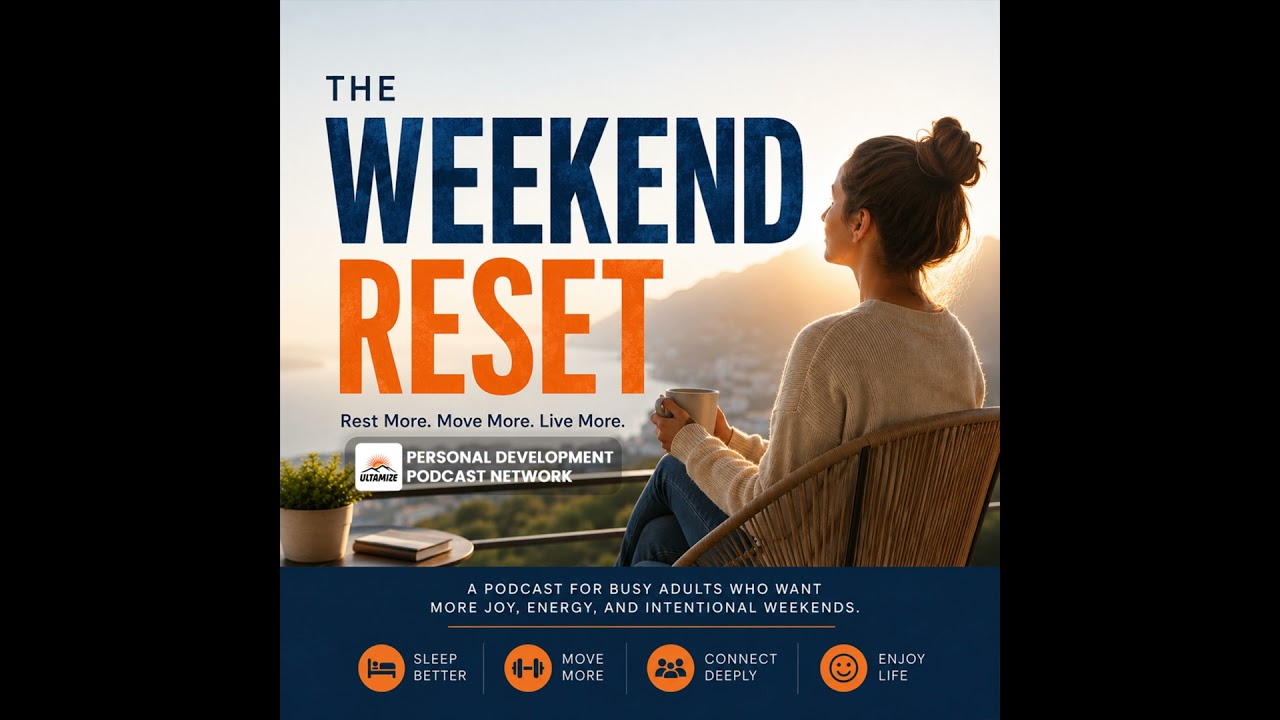
TJ Walker argues that knowing how to rest isn't enough; weekends exhaust us because repeated patterns become identity. He uses pickleball as an example of how intentional reinforcement—the same technique advertisers use—can reshape weekend habits toward rest and connection instead.
Chapters
Ultimize. One of the biggest problems with the modern personal development industry is that it often confuses information with behavior change. The assumption is if people hear good advice once, like reading a book once, watch a seminar once, or feel inspired once, then their lives should permanently improve afterward. But real human behavior usually doesn't work that way. Most people already know what they should do during the weekends. They know they should move more, sleep more consistently, spend less time staring at screens, maintain friendships, exercise, relax more intentionally, and stop letting their weekends disappear into distractions and errands. The problem usually is not lack of information. The problem is lack of reinforcement and reminders. That's one of the core ideas behind Ultimise. Ultimise is not built primarily around one-time inspiration. It's built around behavioral reinforcement, repeated exposure, repeated reminders, repeated emotional associations, repeated environmental cueing, repeated identity shaping, repeated habit installation over time. Because repeated exposure changes behavior. I gotta say that again. Repeated exposure changes behavior. The modern world already understands this principle extremely well. Advertising understands it. McDonald's doesn't show you one ad when you're 7 years old and then disappear forever. Coca-Cola doesn't show you one commercial and assume your habits permanently change afterward. No. Nike doesn't display one logo one time. No, global corporations spend more than a trillion dollars every year surrounding people with repeated exposure. Why do they do that? Because they test it, and it turns out repeated exposure works. But advertising is only one example. Modern technology companies now shape behavior constantly through repetitive messaging. An environmental cueing. When your car goes ding, ding, ding until you put on your seat belt, that's behavioral reinforcement. I remember back in 1970, many people didn't wear seat belts. Today, most people put them on quickly and automatically, not because they attended a motivational seminar about seat belt safety one time. No, It's because repetitive reinforcement changed behavior over time. Ding, ding, ding. When your phone buzzes, when it lights up, when it vibrates, when it rings or flashes notifications dozens of times per day, that's behavioral reinforcement. Apple doesn't need to buy advertising every time you pick up your phone. Notifications already train the habit. They train you to be addicted to their product. When Netflix automatically starts the next episode, that's behavioral reinforcement. When Amazon immediately recommends 3 additional products after your last purchase, that's behavioral reinforcement. When social media apps create endless scrolling feeds, likes, alerts, streaks, and recommendations, that's behavioral reinforcement. The modern world already shapes behavior constantly. Ultimai simply asks a different question: What if those same behavioral reinforcement systems were intentionally used to help people build healthier, happier, more rested lives? That's the Ultimai philosophy. It's not one-time inspiration. Behavioral reinforcement over time. That's what we're about. I'll give you a simple example from my own life. For years, I thought about exercise mostly as an obligation, something healthy I was supposed to force myself to do. But when I intentionally started playing competitive pickleball weekdays and on many weekends, the emotional structure changed completely. Now there was anticipation, community, competition, Movement, social connection, laughter, and genuine enjoyment all attached to this habit. I stopped thinking I should exercise. I started thinking I look forward to Saturday morning. That's behavior architecture. The treadmill often requires discipline, but surprisingly, after doing the pickleball and making that a part of my life, it's actually easier for me to do the treadmill. And lift weights because they do those sorts of exercise too on weekends and weekdays. That's the thing about play. Play can motivate you to do other things. Play creates desire, and desire is one of the strongest behavioral forces human beings have. One of the core ideas in this series is that weekends don't accidentally end up making you more rested. They become shaped by repeated patterns. Repeated screen habits, repeated sleep habits, repeated social habits, repeated movement habits, repeated environmental cues. And over time, those repeated weekend patterns quietly become part of your identity and your quality of life. That's the Ultimize philosophy.