Unlocking Your Soft Skills: Your Quick Guide to Career Success
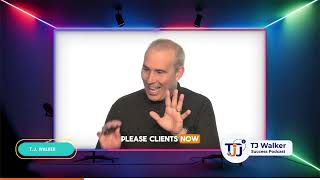
A YouTube course preview by TJ Walker introducing core 'soft skills' essential for career advancement. The speaker emphasizes practical habits—technology literacy (basic tool fluency and patience), proactive attitude toward work beyond formal job descriptions, strong communication (speaking and listening) with practice exercises, emotional intelligence (managing emotions and cultural sensitivity), and leadership through small, solution-driven initiatives.
Hello and welcome.
This is an exclusive excerpt from the soft skills, the 11 essential career soft Skills course. In this preview, you'll hear powerful strategies to boost your career and communication skills. And although this introductory part is AI generated, rest assured the full course is entirely created and delivered by the real TJ Walker. To get the complete course and transform your career and check the link on your screen or check the description of this video.
You want to be that person. When there's a new promotion open, you're the first person considered for that. You want to be the last person any boss considers. When the boss is told we have to fire 20%, get rid of the least productive people, you don't want to be on that list. That's what having strong soft skills is all about. It's about protecting yourself and really making yourself indispensable for any organization and for any industry and for any career. You don't remember all 11 skills, but think of it this way. If you have a colleague who has to travel across the country three days a business trip, how do you get to be that person that is indispensable for this trip? How do you get your colleague to say, oh yeah, we need that person with us for a variety of reasons, not just because you're fun or likable, but because you're absolutely indispensable. That's what this course is all about. And I want to start off an area that may surprise you. I want to talk about technology skills. Now, I don't mean computer programming and learning C or HTML. I'm assuming that even if you have those skills, that's not why you're in this course. These are the soft skills, the things that don't show up on the resume where you would put computer skills. But when I say technology skills, I mean simply being more patient and being better able to use the technology in your office and in your industry. Here's a simple fact in if you're the only person who knows the password into your office database, you'll never be fired. You're simply seen as too indispensable. If you are the only person who knows how to get into the Twitter account for the office and there's a crisis, you're going to be seen as indispensable. So what I mean by technology is simply learning the basics and not being the last person to the party unless you're really young. We all know people who had to be pulled into using Facebook. Oh, I don't want to mess with that. I don't have time for that. And of course, they all eventually got on Facebook or Twitter. Some of you may be old enough to remember those who refused to use texting or even email. Don't be the last person to use communication technology. Be the first person, be the person in your office, in your organization who knows how to help other people do that. Think of it this way. A hundred years ago, if someone showed you a toaster, you look at, what is that? I don't know how to use this technology. This is crazy. Where's the electricity? But now, if someone hands you a toaster, you know what to do. You don't think of it as, oh, I'm now using the toaster technology. Let me plug it in, let me. But no, you just toast your bread to you. It's not technology, it's just a toaster. Well, increasingly, with so many technology tools used in a career, in an office, whether it's Facebook, whether it's Twitter, whether it's the database, whether it's autoresponders for people who use it every day, it's just Facebook, it's just Twitter. It's not fancy technology. You need to really be on top of that ahead of everyone else. And guess what? It doesn't require a computer science degree quite often. It just requires a little patience. It requires going to a frequently asked questions section. One young man I hired many years ago, right out of college, he had no computer skills other than he used email and a word processor to write term papers. But what he had was patience. So every single time we got new software for shooting videos or recording or editing, he was the person when I said, how do we do this? He said, I don't know, but I'll find out. What did he do? Did he go to community college and study computer science programs 12 hours a day? No. He simply went to the website read frequently asked questions section. And he had the discipline and the patience to call an 800 number for help. These days, when it comes to most technology that you're going to need in your office and your career, unless you're a computer programmer, it's not about knowing complicated technology. It's not about knowing complicated computer science programs or wildly sophisticated databases. It's just about patience. A willingness to learn, a willingness to call an 800 number occasionally, a willingness to go to a frequently asked question section. So this is an incredibly important skill. Too many people have the idea, well, I'm not a technology person. I'm. I'll tell you what a lot of bosses hear when you say, I'm not a technology person. What they really hear is, I'm lazy. I don't want to learn. I want to be able to sit back and let someone else handle my problems. That's not impressive to anybody. Now, the boss may be the same way. I'm the same way. Sometimes I get lazy. But if you want to focus on helping your career, you've got to cut through that. You've got to really get to the point where you might not be the earliest adapter with new technology, but you are going to be earlier than other people in your office, other people than are already in your industry. That's the way you stay ahead. So here's the exercise for you right now. I want you to look at some aspect of technology you already know. It could be how to create a Facebook group page. Nothing very hard, but something you think might be of interest to other people in your office and then just let them know. Friday at lunchtime, you're going to be giving a little demonstration for 15 minutes. It could be in the office, lunchroom. It could be at your desk. You'll take questions because if you pick the right topic, the there will be people who are more senior to you. Your boss, your boss's boss, other people within your organization who want to learn this as well. And they don't have the patience to go to a website or call an 800 number. This way you start to show you are technologically savvy. You're not the technologist, you're not the IT department, but you're someone who is a little quicker, little faster at learning things. So it could be how to put up a Facebook page. It could be how to do a simple Facebook Live video, something I teach people on. Doesn't matter what it is, as long as it's using technology some way and you're comfortable using it and you can show others do that. And that's a soft skill that's going to help you for the rest of your career. Hey, that's not my job, not my problem, not my job description. Those words in the modern era are career, kiss of death. You have to realize you have one job. Your one job is to please your boss. And related to that, please customers, please clients. Now, I'm not asking you to do anything illegal or immoral. And if you think you're in an oppressive situation, that's a whole different issue for a different course. I'm assuming that you have a perfectly fine relationship with your boss and you want to make it even better. Well, one way of doing that is, by constantly exuding the attitude that this is my job. Anything you want to throw at me is my job. When you look at so many people who've become wildly successful, talk to anyone who worked with them earlier in their career, certainly, and their attitude is always the same. I'll do anything, anything I can do to learn, anything I can do to help the organization. If you look at any of the top network news anchors, major TV networks around the world, the people who are the primetime network anchors, so often when they were 23, 24 or just starting off in their news network, their bosses will tell you the attitude was always the same. I'll do any story, I'll go anywhere, I'll hop a plane to the most remote part of the world with two minutes notice. That is their attitude. Certainly you can be hired for one position and be given a task that you think is way beneath your dignity, way beneath your educational credentials and background. And legally, you may have a point. But do you want to fight legalities? Do you want to be litigating your career? That's typically a surefire path to career death. Now, I'm not suggesting you should have to go to the boss's home and on your own free time, cook and clean the boss's house. I'm not suggesting anything like that. But when it comes to any organization, any industry, any office, there's always a lot of things that are not technically in anybody's job description. And if you can fill the void, that's a way for you to provide more value, meet more people, and really display the fact that you have certain competencies. Could be starting a trade organization that no one thought of. It could be just as simple as putting a label on the trash cans, which one is for recycling and which one is for trash. If you really keep your eyes open for things that need to be done to advance the organization, there are going to be a million things that are not officially your description. Now, this relates to the first soft skill we mentioned a moment ago on technology. Simply learning the technology, being comfortable with the databases, being comfortable with new social media, whether it's Facebook Live or whatever is relevant to, to your career, it's certainly related to that, but it's related to everything that goes on in your office and your organization. Because no organization is so big and has so many people that they have someone with a title for every single task that needs to be done. That's why it's critical for you to have an open mind, have your eyes open, have your, and always be Looking for things that are important, but you don't really want to do it and nobody else does too. So that's your exercise. Look around your office right now. Find some task that you know needs to be done that you don't particularly want to do. Do it anyway. You don't have to brag about it forever. Eventually people will know and you'll develop a reputation. The person who does things, even though it's not officially their job. When you build a reputation as someone who does stuff that isn't just your job, that is career gold right there. Do you know what the number one trait is among wildly successful people in every industry? Doesn't matter if it's business, technology, the sciences, politics, economic. It's not necessarily getting up early, some work late at night. It's not necessarily being a teetotaler. Some like to drink. It's not about religious belief. You see the whole spectrum. The only thing that's remarkably consistent among wildly successful CEOs, political leaders, major leaders of industry. They're excellent communicators. They, they have figured out a way to communicate what it is they do to the rest of the world. It's often the biggest differentiator between those whose careers peak out at middle management and those who get to the very top. When people in any industry or any organization are trying to figure out who do we promote? They're often asking themselves, do we see this person speaking on behalf of the entire organization, the entire company, to the outside world, to the media, to all of our investors, to all of our most important clients? You may have the best work ethic in the world, but if you can't communicate, if you appear to be someone who's scared, nervous and uncomfortable speaking to more than one person, that is going to severely restrict your long term career potential. So if you want to really unleash your potential, you're going to have to learn to be a comfortable, confident, successful speaker. Doesn't mean you have to become the next Anthony Robbins or the next Ronald Reagan or Bill Clinton. But you are going to have to communicate what it is you do, what it is your organization does. Now, before we can get to that part, an essential ingredient to communication that's often bypassed, often forgotten, is listening. Before you can even tell people what your organization does, what you do, you've got to really develop a habit of listening carefully to everyone you work with. Your bosses, your bosses, bosses, your colleagues, and those who are newer than you are. Your industry. Too many people can get good at presenting and pontificating and they're comfortable, but they never listen. You don't want to be one of those. You've got to first start by listening, really listening, and figuring out what's truly most important. But then you've got to have the ability to communicate effectively. And these days, it's not just with one other person or in a conference room talking to five people. You could, at a moment's notice, be asked to present to a thousand people around the world through a Skype video hookup. Are you ready for that? You could be asked to substitute for your boss at the last minute and deliver his or her PowerPoint presentation at an industry conference because your boss got sick. Are you ready for that? You don't want to be one of these people who say, oh, you know, I'm not a public speaker. You are a public speaker, unless you want your career to end out at the lowest possible level. If you know how to talk and you've ever talked to more than two people, guess what? You are a public speaker. Now, I have more than a hundred other courses on udemy that talk specifically about how to give speeches, boardroom presentations, how to use a teleprompter. But let me sum up what's truly most important. If you want to be a great communicator, the most important thing is figure out what is it you want your audience to do. Whether it's an audience of one, your boss, or five colleagues, figure out what is it you want them to do. Then figure out what are the top, no more than this many, five, one handful of messages that would make them want to do what you've said. Then come up with examples stories for each one. If you're going to use PowerPoint, I'm not suggesting you do most of the time, use images, not text. And the most important part of communication practice. It may be as simple as a board meeting or a weekly conference meeting. And you know you're going to just ask one question. Practice that, but practice in a specific way. The number one way great communicators get better and better is they practice just using their cell phone. You can talk to yourself in your car before you get out to go into your office. You can practice in a hallway, in a bathroom. You can practice pretty much anywhere these days. The number one way to be comfortable as a speaker, to be confident as a speaker, it's not meditating, it's not drinking green tea. It's to actually practice on video until you can look at the video of yourself speaking and you like it. If you do that Then it's going to be almost impossible to be uncomfortable or nervous. Here's your communication homework assignment. Right now, I want you to just, in 60 seconds or so, explain what it is your company, your organization does. Record it, look at it, figure out what do you like, what do you not like? Redo it. You don't like your voice, Keep practicing it. You'll get used to it. If you think what you're saying sounds boring, uninteresting, like something right off a Wikipedia page, well, redo it until you find it interesting. You have a lifetime of experience of hearing people give boring presentations, boring talks, boring videos. Use that to your advantage. If you think it's boring, guess what? It is. Keep practicing until you like how you look, how you sound, and the message. Do that right now, just with your own cell phone, iPad or laptop. By the way, part of being a good communicator is always getting feedback. Always ask your audience, how are you doing? Test your messages, test your presentations and figure out what's actually working, what are people remembering? And you know, I'm going to practice what I preach because in a moment, if you haven't already received it, you're going to get a page popping up from Udemy asking you to rate this course. I do want you to rate the course and I want you to rate it honestly. But here's the thing. I want your opinions to have even more impact. If you see anything about this course that you'd like to see improved, because, hey, I'm not perfect, send me a message right now. You can hold off on your review. Send me the message. Give me the opportunity to improve it. I want to make you happy and I want to be successful in my own communication. So let me know directly now exactly what you'd like to see improved on this. If you don't think it's already a five star course, if you think it's already great, go ahead and review. But otherwise, send me a direct message and I promise you I'm going to do whatever I can to improve, refine this course and make it even better. You've heard the expression before that emotional intelligence beats actual intelligence, EQ beats IQ in many cases. Certainly that can be true for many people in their careers. What is emotional intelligence? How smart are you when it comes to managing your own emotions and understanding and being aware of other people's emotions? That's all it is. It sounds simple, but we're all human beings and it's not. First of all, everyone in the world gets angry, everyone gets pissed Off. But guess what? Most people in most offices and most organizations don't like working around someone else who is angry disproportionately or annoyed or unhappy. So you're going to have to learn to control your emotions. It doesn't mean you have to be a robot and be stoic. But when it comes to negative emotions, being upset, being angry, even a little bit too much of that in most organizations and most offices is going to be a downer, and it's not going to help your career. You've got to be highly selective of what you're going to be angry about, what you're going to be upset about. Because if you're angry all the time, then people just want to tune you out. This shows up in a lot of different ways. Are you someone who, when you're angry, you curse a lot or you yell? Some people, that's how they grew up. No big deal. For other people it is. It's almost traumatic being around someone who curses on. Now, I live in New York now, so I'm kind of jaded. But I do remember growing up in a conservative, traditional household in the south, being around a football coach when I was in fifth grade, about 11 years old, and for the first time in my life, I'm hearing someone curse. And it was almost like I was being hit. It just was not something I was used to. So you got to be aware of that. If you don't know everything about everyone you work with, you need to avoid things like cursing. There are other things you just need to be highly sensitive to. Every organization is a little different. Every culture is different. Every city can be different. Every country can be different. I work in a lot of countries all over the world. My day job is teaching people how to communicate, how to give speeches and how to speak to the media. And so I have to be keenly aware. Every country I go to, in some countries, it would be rude for me to shake a woman's hand. You kiss on the cheek. Other countries, you kiss on two cheeks. Other countries, believe it or not, it's three cheeks. I've got to look carefully where I am now. In certain countries, people of the opposite sex do not touch. They don't kiss, they don't shake hands. You've got to be aware of what the cultural norms are so you don't violate them and you don't upset people. Part of emotional intelligence is simply not being selfish. It's not thinking about yourself all the time. Let's face it, the easy thing, the default position for Any human being is to just think about me, me, me. If you want to show emotional intelligence, you have to to think about others in your office, in your organization, in your industry. And a lot of times that's just about asking them how their day was, how their weekend was, how their vacation was, and actually listening. A lot of so called smart people with advanced degrees will say, well, I don't have time for that. I got my work to do. Guess what? This is your work. Getting along with people. Showing emotional intelligence is a part of your work. If you want to have a career. And if you don't want to be seen as someone who's easily dispensed with, you need to find out what are the names of the spouses and the children of the people you work with, what's going on in their life. You may be someone 27 and the idea of having a family and kids may seem bizarre to you. Well, you may have a co worker or a boss who is 47 and has a kid trying to get into college and that's the number one thing they're thinking about in life. You need to find out what are their concerns. I don't mean be a busybody and try to find out everything going on with their life, but certainly if you have a co worker who is on pins and needles waiting to find out if their son or daughter gets into the college of their dreams, try to find out. Congratulate them if there's good news, express sympathy if something bad happens, whether it's on the college front or an illness or a death of a close family member. A sympathy card goes a long way when someone has just lost a loved one and maybe no one in the office seemed to even care. So you've got to be emotionally intentional sync. You don't have to be the office shrink, you don't have to be the inner Oprah for everyone. But listening to other people, finding out about what's making them happy, sad, going on in their life, being connected with them is going to help you in your career immensely. It's also going to make life more interesting and make you enjoy your experiences with your fellow colleagues in the office and in your organization. So here's your homework. Now I want you to find out either the birthday or the anniversary of three colleagues. Make a note. And you don't have to go out and get them a big cake, but just a simple email Facebook post recognizing them on a special day. That's your homework. Leadership is a topic that gets a tremendous amount of discussion. There are gazillion books on the subject and management gurus. And yes, it can be an overworked subject, but what does it really mean? Especially if you don't have the title of CEO or president or some official title? Leadership means you see a problem, you brainstorm on solutions, you come up with something working together with other people or your own idea that you think is the best possible way of solving the problem, and then you work to solve the problem, and then you try to encourage other people and you get other people to share your vision of a solution and solve the problem. That's all leadership really is. Now if you're Abraham Lincoln and you're trying to keep the country together in the United States, that's one set of problems. If you are trying to solve the problems of not having enough toilets in your country, that's a completely different problem. But there are problems everywhere and there are potential solutions everywhere. So if you really want to help your career, you need at an early age to develop a reputation as someone who shows leadership. Now unfortunately, in a lot of parts of the world and a lot of industries, leadership was defined as the tallest white guy who's oldest and maybe has a little gray hair. That's not the reality. Not saying there isn't sexism or racism in the world, but that's not the main thing that determines leadership in most organizations anymore. Leadership is much more diffuse and more organizations. And if you have a solution and if you can convince other people of your vision and to help you, that's going to make you a leader again. It could be something as relatively simple as starting a recycling program at your office. Maybe it doesn't have one. It could be beautifying a courtyard in the back that can be used at lunchtime for people to simply enjoy their time working together more. It doesn't have to be something as big as solving wars or solving world hunger or coming up with a new computer chip that is going to be a billion dollar industry. It could be something small. If you solve a problem that's causing a problem for co workers or clients or customers and you get other people to share your vision and you make it happen, you are going to develop a reputation for leadership. And that is a prized commodity. That is fortunately or unfortunately why CEOs are often paid 300, 400,000 times more than what a line worker is paid. Now that's a topic for a whole different course on whether that inequality is fair or not. That is the reality now though, if you are seen as a leader and if you're someone who can actually convince other people to do what you want them to do and you've solved a problem. The sky is the limit on your career, but here is the challenge for you. Many people make the mistake and say, well, I'm just a junior person or I've only worked here for one year or five years or 10 years, or I'm, I'm a low level cog here. Don't write yourself off. Leadership has nothing to do with your formal position or formal title. Again, there are exceptions in certain industries where you may face discrimination. But in general, many, many organizations and industries around the world, if you show initiative, you can get other people to follow you. You can make some difference. You now have a track record and maybe if you apply for your next position, your raise, your higher open position, you're more likely to get it. Even more important, people are likely to seek you out without you applying for anything. Because you've already established one of the hardest credentials to ever establish the credential of leadership. So that's your assignment right now. Pick something. Almost the smaller the better. Pick some problem that affects either other people in your organization, in your office, or in your industry and come up with a solution. Again, almost the smaller problem, the smaller the solution, the better. Try to convince other people to work with you and solve the problem. Okay, here's the part where you think I'm going to be cheesy and tell you, put on a happy face all the time, run around, say rah, rah, rah. Unleash your inner Anthony Robbins. That's not quite what I'm talking about here. I do think you need to exude a positive attitude about your work, your career, your profession and yourself. It's a simple fact that most human beings don't like to be around somebody who seems down in the dumps. Crabby, complaining, negative doesn't mean you can't have a biting wit. It doesn't mean you can't be sarcastic and go after other people in your industry don't like. You can still have your own personality, but in general, you've got to exude some positive sense of why you like being there. In general, people, especially bosses, like to have workers around who actually want to be there. If you seem like, oh God, it's Monday morning bliss and this horrible I can't wait till Friday, you're not going to be showing boss or anyone else that you're a real value, that you want to be here. You're negative, you're draining people, you're a downer. You don't want to be a downer. I'm not asking you to be a fake phony. But you can look at any glass and say it's half full or half empty. Focus on what's full. Focus on what's working. Believe me, I've had jobs before that I didn't love every aspect of it, but it was better than unemployment. So here's the challenge for you. I want you to imagine that you're at a college fair, a job recruiting fair, and you have to pitch your company, your organization, what you do to a young college graduate or whoever might be an entry level applicant for a company or an organization like yours. I need you to sell it. Don't be fake. Don't be phony. Be real. But focus on trying to convince someone who could have any kind of job why they should work with you. What's exciting about your organization and what you do. And I want you to actually practice by recording it on cell phone. It only has to be 60 seconds or so, but imagine you're talking to one specific prospect who isn't necessarily even interested in working with you. Record yourself and look at it and ask yourself, would you want to work for you? Would you want to work in your organization? After watching it, that's the test. Do it now.
More from TJ





The Breakout Cases - What Actually Caused Famous Speaking Career Breakthroughs | Ultamize

The Red Circle Sessions Finale - Build the Speaking Career You Came Here For | Ultamize

Two Stages, One Logo, Two Completely Different Realities - Main Stage vs Independent Events | Ult...

Pre-Reset - Why Repetition Builds Better Speaking Decisions | The Red Circle Sessions | Ultamize

Your Decision, Your Framework, and What Happens After - Build Your Speaking Career First | Ultamize

The Red Circle Sessions Trailer - The Speaking Career Truth Nobody on That Stage Will Tell You | ...

The Two-Minute Ultamize Reset - Your Platform, Your Audience, Your Voice | The Red Circle Sessions