"What is Media Training?" An In-Depth Review
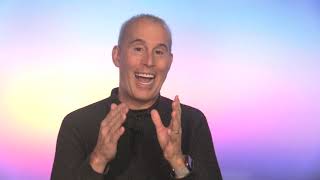
TJ Walker explains media training as coaching for appearing and speaking effectively on camera and with reporters. Core skills include camera comfort, focused messaging, and packaging sound bites. He recommends regular self-practice with a phone and personalized workshops for executives.
Chapters
Media Training what is it? It's really about helping you come across as comfortable, confident, relaxed. Anytime you have to speak to someone in the media, a reporter, a journalist, a talk show host, and these days it's about speaking to your own camera. For social media and media you create now for many people, the hardest times type of presentation to give is in front of a video camera, whether it's a TV reporter or whether it's your own camera. Because all of your insecurities come out. Am I losing my hair? Are my eyes too beady? Am I getting a double chin? I hate my voice. All of these issues come up if you're a human being. So if you're nervous about how you present yourself to the media, you are in good condition company. The good news is with proper media training, you can get over that. You can go into every media interview, every media opportunity, even if it's your own media opportunity, with complete confidence you can know how to look your best, sound your best, come across comfortable, confident and relaxed. You can have a clear, focused message, something you can say in 30 seconds or less. You can have a strategy for answering questions, even the tough questions, in a way that doesn't get you tripped up. And finally, you can speak in sound bites. You can package the messages you care about the most in interesting quotable sound bites so that you get the exact word for word quote you want. If any part of your message is edited out of the context of a full interview, that is really what media training is all about. And it also applies to print interviews, interviews over the phone with online journalists, radio, audio, video, it doesn't really matter what the format is. Good media training will help you with every single format accomplish what you really want, which is to communicate the message you care about the most to the audience. That is the big goal of media training. Media Training Tips the number one media training tip I have for you is never ever do a media interview unless you have practiced just on your own cell phone. Hit record on the video player and record yourself stating your messages out loud, stating your sound bites out loud and really look at it, listen to it, figure out what works, what doesn't work. What you don't want to do is have the first draft of your messages and sound bites come out of your mouth during the actual interview. You want to do your rough draft when no one else can see it. You want to practice on your cell phone, video, webcam. Don't just say it out loud to a mirror. You can't process it and critique it and say it at the same time, you need to practice it and record it on video. Even if it is an online, newspaper or phone interview, you still need to see yourself saying it to build a comfort level with your messages and your sound bites. So that is the number one tip when it comes to how to prepare for media interviews. Good media training helps you do this. They do that in the training. It's also something you need to learn how to do and to practice on a regular basis just by yourself. Media Training 101 Traditionally, media training starts off with how to be comfortable on camera. Because if your eyes are darting all over the place and you're licking your lips and the ums are coming out because you're so nervous, no one is going to remember anything you said. They're just going to remember that you look nervous. You came across as uncomfortable. So the basics of media training, where Media Training 101 really starts, is just putting you on camera, really recording you playing it back, focusing on strengths and weaknesses. You want to do more of the strengths, you want to do fewer of the weaknesses. Next up in traditional media training, as it's been practiced since really the 1960s, is making sure you have three messages. What you don't want to do is bounce all over the interview, and no matter what the reporter asks you, you give them 50, 100 new messages and ideas. Many people get into the mistake of thinking, if I just overwhelm the reporter with so many facts and figures and numbers and messages, they'll think I'm really smart and I'll get out, okay, I'll win the interview. That is the wrong attitude to have. You need to think about focus of what's really important. Because it's highly unlikely unless you're doing an interview where there's a full transcript involved that you're going to get 5, 10, 15, 20 messages into the final story. You're much more likely to get one or two or maybe three of your ideas into a final story that's edited in audio, video or text format. So that's what is really involved with Traditional media training. 101 media training workshops. This is one of the best ways to really quickly build your media skills. Now, traditionally, media training workshops have been done live, in person. You're in there with a group. It could be five or six other colleagues from your organization. You could be in a public workshop, and there could be 5, 8, 15 other people from other corporations. The beauty of doing a workshop is you don't get to decide, oh, am I going to get my Nerve up to go on camera today or not? No. You've got a good trainer there who's just going to ask you to stand up and they're going to ask you questions and they're going to record it and you're going to be critiqued in front of everyone else in the room and you're going to feel anxious and embarrassed and guess what? No one else in the room is going to notice or care care about you. Because everyone's worried about themselves, everyone is nervous about how they come across. So traditionally it's a great experience to help you get over the hump, get you comfortable practicing. And in good media training workshops. The way I do it at media training worldwide is we pair people up so, so often throughout a day of media training, and it's typically one day long, could be two days, you're doing interviews back and forth with another colleague or the instructor. So you're never going more than an hour in a training session without standing up and being video recorded and practicing. The real way to master the skill of speaking to the media is you have to do it. In that sense, being media trained is much more like learning how to ride a bicycle or swim. You can read a dozen books on swimming. Until you get into the water, you haven't really learned anything. You can watch videos all day long about how to ride a bicycle, but until you get on and wobble and fall down half a dozen times and then get to the point where you're not falling down, you haven't really started to learn how to ride a bicycle. Learning how to speak to the media, being properly media trained is similar in that regard. And you have to actually do it. It's not a passive thing. You can't simply read books. Although I think my book, Media Training A to Z is a great book. You can't just click videos and watch. Although I think my online media training videos are great. You have to at some point stand up, speak, or sit down and speak, record yourself, watch yourself. So that's the beauty of a live in person media training workshop. These days, of course, they're done virtually as well. I conduct them through Zoom, Skype, other online platforms and they can be nearly as effective too, some ways even better because you don't have travel involved. So a lot of different things go on in a typical media training workshop. And if it's just for you, or if it's just for people in your company, then every single example, every single media scenario is tailored to your specific needs. That's what's happening in an ideal Media Training Workshop A Media Training Course Sometimes you might want to go beyond a one or two day workshop and take a full fledged media training course at Media Training Worldwide. I've created more than two dozen online media training courses that are tailored to specific needs. So for example, if you just want to take a course on doing a print or text interview and you want to really be prepared for that, you can take our online course preparing you just for phone interviews. If you want to prepare just for radio interviews, you could take a course just on that. The beauty of a course, especially an online on demand course, is we can go into much greater depth because you're not constrained by an eight hour day. Because once you factor out bathroom breaks, lunch questions, answers, other things, you only have really a few hours to deliver pure content and concepts. The the beauty of an online training course is you can do it on your own time. Whether it's 10 minutes an evening for six months, whether it's four hours on the weekend for two months, there's a lot of different ways in a self paced media training course you can get the most out of it. I happen to have created the longest, most comprehensive online media training course in the world that is around 30 hours long. So if you want a full fledged course, that may be something you should look into. Media Training for Executives Media training is especially important for executives at all levels because the stakes are higher. If you are the sole proprietor of a one person consulting company and you get quoted, you do a media interview and it's not great, chances are it's not going to hurt you that much or hurt your business, or really destroy your reputation. But if you are the CEO of a publicly traded corporation and a major crisis hits and you run and hide, or you have lots of bad quotes coming out, it can destroy your reputation, destroy your market cap. Billions of dollars can be liquidated. When BP had its problem in the Gulf with a large spill more than a decade ago, their CEO Tony Hayward, frankly did a horrible job with his media interviews and ended up getting quoted saying things like it's America, of course there'll be frivolous lawsuits and I want my life back. The Result? More than $30 billion of market capitalization disappeared from BP in the six month period after the leak started. So that's why media training is so important for executives, because you've got to have pinpoint precision when it comes to getting your message out and avoiding traps, especially in a crisis situation. The best way for executives to be media trained is frankly one on one where everything is especially personalized to them. Now, nothing against group workshops. And I conduct group workshops all over the world and they're great, but it's much more effective to do one on one. The only reason to be a part of a group workshop is for savings. And with many executives their time is so valuable when you factor in their salary and what they're compensated for a day, it makes no sense to save a few dollars by having them sit around and watch other people in a training. So that is something that is the norm with most executive media training is that it's done one on one or maybe two people, sometimes the CEO, the CFO in one corporation where everything is tailored to their needs. Are you looking for a media training guide? I have found in my own media training practice since 1984 that media training really comes down to four basic principles. How to look comfortable, confident, relaxed on camera is the first big pillar. The second big pillar is how to shape media messages. How do you go from a complex topic to where there's a thousand things you could say and really narrow it down to your top three? The third skill is how do you answer questions in an interview, in a conversation, in a talk show appearance? And then the fourth skill is how do you speak in sound bites? How do you package your messages and interesting quotable sound bites so that you know in advance what will get quoted. So in any media training guide, any good one, you're going to find those four pillars discussed in detail. In my own book, Media Training A to Z, each one of those subjects has an in depth chapter and will guide you through the process. Media Training what is the actual definition? The working definition I have is training you to speak and appear before the media. It really comes down to that and traditionally it is about helping you when you are going to be interviewed by a reporter. So it's not about how to write an op ed piece the right way, get it submitted to a newspaper and have it printed. It's about when a reporter, a journalist, a talk show host, a news anchorage is asking you questions and how can you come across your best have a message, answer questions, package your messages with sound bites. So that is the definition of media training as it's understood and commonly used in the communications industry, the public relations and marketing industries. Media Training Template here's what I do as a template for a standard media training workshop. I have people come into the room and no good morning, no how's your coffee? I just start interviewing them. I have a camera, a light and A microphone. And I just ask simple questions. What's your biggest challenge in your industry, in your career? How are you feeling today? What's going on? Simple question. And they're standing. Quite often people are like, oh, I didn't realize we were going to start yet. Then I have the person sit down and I'll ask a few more questions about how's business, what are your challenges, what's going on? Then I turn the light off of my camera, drop the mic, and I kind of sit back and say, so how'd that feel? Typically, their face lightens up, smile comes out, they relax, their hands start moving in. They're saying, wow, I wasn't expecting that. That was awful. I don't even want to look at myself. And now they, of course, look great. Energies come back to their voice and their hands and their face. Then I turn the camera on one more time, mic on, and I say, before we go through the rest of the day, tell me everything you want to get across from today. What do you want to take away from this experience to make the most valuable training experience you can have? What else do you really want to learn from today? And I have them speak. So there we have it. It's what they think are three interviews. It's really four separate interviews. And then I hit play and I ask them to rate what they like and don't like. Typically, everyone likes the secret interview when they didn't realize they were on and they see their natural speaking ability respond. The big problem most people have is not that they need to learn how to move and speak in front of the camera. They don't need to learn how to act in front of the camera. They need to learn how to stop acting in front of the camera. Indeed, that's the biggest problem most executives, celebrities, politicians, authors, experts have is that they start acting in front of the camera. They act scared. That is the beginning template of a media training as I do it at Media Training Worldwide. Are you looking for a media training presentation? One great way to get people in your organization interested in media training is to have an expert come to your group and give a presentation highlighting good and bad interviews from people within your industry and then spotlighting anyone within your organization who's done a good job and to isolate what is done well. Now, when I do this, I don't pick apart people from within the organization. What I like to do is showcase individuals doing a good job with their media interviews and analyzing exactly what they did well and pointing out how anyone can do this. And then I'll pull interview clips, video clips from others throughout the industry, some doing well, but others making blunders, others making mistakes and really trying to figure out what do they do wrong? What can we learn from that so that you never make the same mistake? That's typically what I do when I'm giving a media training presentation to organizations. What is the cost of media training? Well, purchasing media training in some ways is like buying a car. You can spend a million dollars on a car, you can spend $200 on a car. What you get for $200 is not the same thing as you get for a million dollars. Now, the traditional range for media training, professional media training typically starts around $5,000 a day with a lot of firms. More experienced firms with higher levels of expertise charge more in the 8, 9, $10,000 per day for individuals and for groups. Online courses could be as little as $10. And in some cases individuals might want extensive training. Once a month, sometimes twice a month in person for a year. So then you're talking about six figures. So what you've got to figure out is what do you want to invest in the training and what is it worth to you? Everyone has two things they can invest in media training. Their time, their money. Sometimes you have a lot of one, but not much of others. So if you don't have a lot of money but you have a lot of time, then you might want to do a really intensive online course and immerse yourself for 100 hours over the course of six months. When it comes to practice sessions, going through curriculum, that is one option we have at media training worldwide. Other times, individuals have very little time, but they have money. If you're the CEO of a large cap corporation or a political figure in charge of a large government, your time is much more valuable than saving 5 or $10,000. So what you really need to do is twist. Talk to media training providers, tell them exactly what you're looking for, tell them what your needs are, but then listen to them and ask them how are they going to do that? And look at their proposal, find out what they're offering and select someone who seems like they are the best value for you. You might find someone who is less expensive but actually seems to get you better than the highest priced firms. Whatever you do, make sure you hire someone you're comfortable with. I also would highly recommend you don't hire anyone until you've seen them speak in front of a camera. So for example, when someone calls or writes my company asking for a proposal, asking for cost. I talk to them, I try to really go into detail about their specific needs, and then I give them a proposal in a video just like this so they can see me walking the talk. Because if you hire a media training firm based on price and all you're looking at is text, how do you know you're not getting a 20 year old who has never done a media training in their life? How do you know this person really has the skills? So I do recommend never, ever hire a media training firm unless they give you a proposal in a video format so you can see exactly what you're getting.
More from TJ





The Breakout Cases - What Actually Caused Famous Speaking Career Breakthroughs | Ultamize

The Red Circle Sessions Finale - Build the Speaking Career You Came Here For | Ultamize

Two Stages, One Logo, Two Completely Different Realities - Main Stage vs Independent Events | Ult...

Pre-Reset - Why Repetition Builds Better Speaking Decisions | The Red Circle Sessions | Ultamize

Your Decision, Your Framework, and What Happens After - Build Your Speaking Career First | Ultamize

The Red Circle Sessions Trailer - The Speaking Career Truth Nobody on That Stage Will Tell You | ...

The Two-Minute Ultamize Reset - Your Platform, Your Audience, Your Voice | The Red Circle Sessions