Why the Iran War Is Costing You More Than You Think
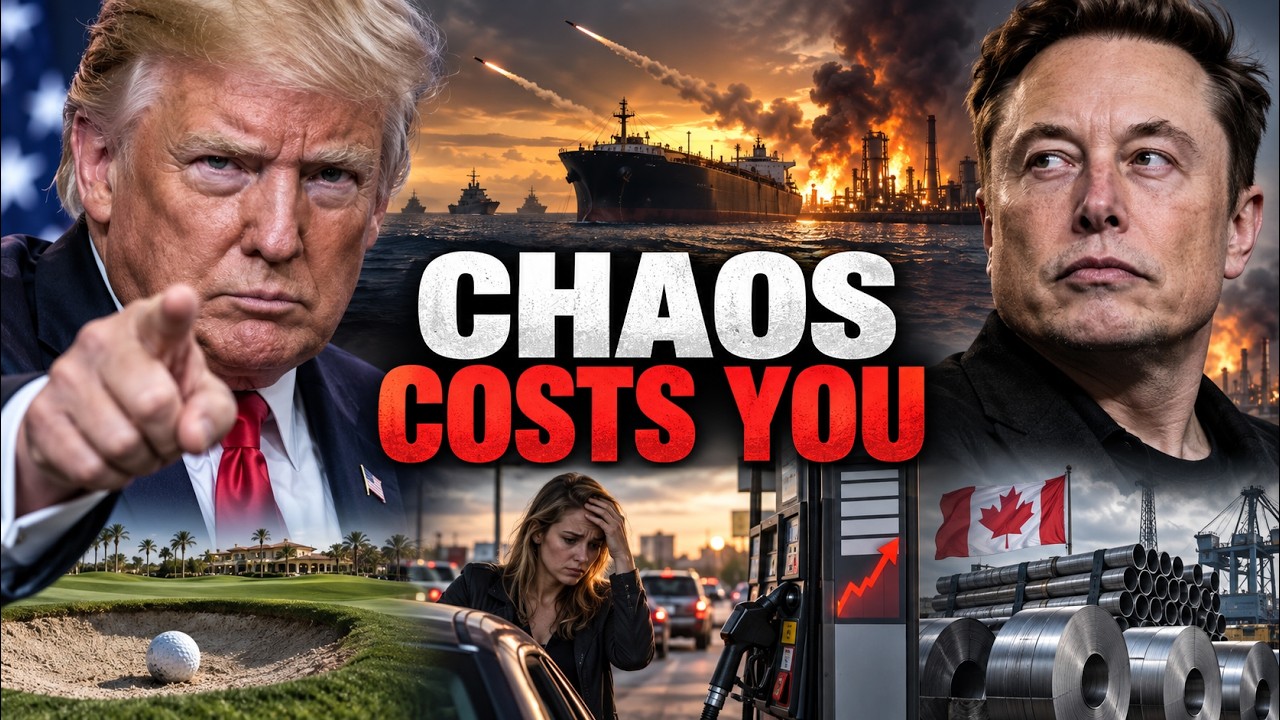
TJ Walker traces the Iran conflict's impact on American gas prices, which hit $5.94 per gallon as oil tankers get attacked. He compares it to past wars that succeeded with clear goals and international backing, then moves through Elon Musk's political ads, LIV Golf's $5 billion collapse, and Trump's Canadian tariffs as examples of conflicts without defined endgames.
Chapters
Ultimize. The war with Iran has reached the point where every government is retaliating for the retaliation to the retaliation. It's less like foreign policy and more like a family group text after someone replies, fine. Here are the facts. The United States says it destroyed 5 Iranian oil tankers after Iranian missile attacks on an American warship. Iran says it then attacked 10 ships and fired ballistic missiles toward a base used by American forces in Jordan. Jordan reported no casualties at the base. Brent crude crossed $100 a barrel. American diesel reached a record $5.94 a gallon. I have to point out, it cost me more than $100 to fill my car with gas last night. So, congratulations to everyone. The only territory decisively captured was the number 9 at American gas stations. Before this war, about one-fifth of the world's oil supply passed through the Strait of Hormuz. This is no longer merely a Middle Eastern war. It's a Middle Eastern war with worldwide shipping and handling. America says it attacked because Iran attacked. Iran says it attacked because America attacked. Nobody started anything, apparently. We are 6 months into a war composed entirely of sequels: Fast and Furious, Strait of Hormuz, Drift. Now comes the fundamental problem: winning a war is extraordinarily difficult when the other country has not given the world a clear, broadly accepted reason to remove its government, and when you cannot explain what winning means. Now, this is not an iron law, but legitimacy, a narrower objective, and a visible finish line matter. In World War II, Japan attacked Pearl Harbor. Germany had invaded much of Europe and declared war on America. The enemy was identifiable. Victory meant surrender. Nobody needed a PowerPoint called Possible Definitions of Success Version 9. In 1990, Saddam Hussein invaded Kuwait. The United Nations condemned it, and a 34-country coalition formed to force Iraq out. The ground campaign lasted 4 days. Kuwait was liberated. That war has something Washington has since treated like an optional accessory: an exit. Vietnam had overwhelming American firepower but no durable political outcome. U.S. forces left. Saigon fell 2 years later. Afghanistan began with a strong justification, allegedly after September 11th, but not really, but expanded from destroying al-Qaeda's sanctuary to rebuilding a country. 20 years later, America withdrew and the Taliban returned. The government we built lasted about as long as potato salad at a Florida picnic. In Iraq, Saddam fell quickly, but the core weapons of mass destruction intelligence was later found to be— oops, wrong. Removing a government took weeks. Producing a stable replacement consumed years, lives, and trillions. It became the world's longest home renovation, except the house kept exploding and nobody could agree who owned the kitchen. Being attacked does not guarantee success. Afghanistan proves that. But legitimate cause, limited mission, international support, and an achievable political ending improve the odds. Change their attitude is not a military objective. Parents can't achieve that with one teenager upstairs. Trying it with 90 million Iranians is ambitious. Iran is not a liberal democracy, although come to think of it, I'm not sure the US is anymore either. Its rulers suppress protests, censor criticism, and force citizens to absorb costs that would threaten an elected government. Democracies fight on 2 clocks: the battlefield and public consent. Authoritarians try to turn off the second. Democracies have clocks, dictatorships have locks. Iran cannot stop all the world's oil, but disrupting a route that carried 20% of global supply raises costs everywhere. Iran need not conquer Washington. It can reach America through every diesel pump, delivery trunk, and grocery aisle. Did I mention I paid $100 to fill my car with gas last night? Economic pressure can weaken a regime. It can also convince that regime it has less to lose. A burning tanker is an expensive way to discover which reaction you purchased. So define the objective. Who governs afterward? What concession ends the fighting? What if Iran refuses? How much cost will Americans and allies accept? My personal development advice is simple: never begin a transformation without defining the after picture. We will know victory when we see it is not a strategy; it's a vision board with aircraft carriers. A war without a defined ending is not a plan; it is a subscription everyone forgot to cancel. Okay, moving on. Elon Musk America Pack has. Launched ads against Democratic Senate candidates in Ohio, Iowa, Texas, and Alaska, focusing on transgender athletes, gender transition care, and related issues. Axios reports that Musk authorized the PAC to spend upward of $100 million in the midterms, although that covers its broader campaign, not only those ads. Culture war advertising is an emotional energy drink. It makes people feel alert, furious, and ready to vote before anyone checks the nutrition label. There is a legitimate debate about eligibility rules in women's sports. Okay, got it. For female athletes and their parents, fairness and opportunity can feel immediate. People can disagree without either side being malicious. But scale matters. There's no national census of paid female athletes. Okay, still, the WNBA has no more than 180 standard roster spots, the NWSL roughly 352 to 416, and League One volleyball lists 137 athletes. At American professional hockey, And you reach roughly 850 paid team sports slots for women. Okay, add tennis, golf, and smaller leagues, and the number exceeds a little more than 1,000. So about 1,000 families is the right neighborhood, not an exact census. School and amateur sports involve far more people. Fine. But the professional category where money is involved is is tiny. The broader debate is not. Every voter sets priorities, but attention has a cost. If an ad keeps your eyes on a locker room while tax, education, healthcare, wage, and subsidy policies reshape your bank account, your values may be sincere while somebody else collects the dividend. Let me just spell this out. Okay, look, if you are a member of a family where someone is a professional athlete and a woman in America, Okay, congratulations. There are about 1,000 of you. If you want to vote on this transgender issue purely on the basis of greed, do so. Have at it. Be my guest. That's going to be a maximum 1,000 people. Okay, 5 family members, 5,000 people. But for everyone else, especially if you can't afford a house, a car, your rent, If you are not as rich as you want to be, it's insane to vote on this issue. It has no impact on you. You know what does have an impact? All of the legislators that Elon Musk is endorsing, because they all follow the same playbook: cut taxes for people like Elon Musk, give billion-dollar subsidies to people like Elon Musk, cut every sort of funding— healthcare, schools, anything else needed to help You. So I differ from a lot of so-called liberal progressive pundits say, let's not be— I want you to be greedy. Start voting in your interest. Because voting because you're so upset about your non-existent child not getting to the WNBA because of transsexuals is absolutely imbecilic. Would you like to be the sort of successful person who is dominating news, at least in your industry? Well, if so, it's time to up your skills. At ultimize.com, I've created online courses to help you do that. Now, here's the thing: no obligation. You can get a free course on communication skills, a free course on how to build better habits. All you have to do is go to ultimize.com. That's U L T A M I. No obligation. Go there now. Okay. LIV Golf. Remember them? They filed for Chapter 11 bankruptcy. The Saudi Public Investment Fund put in more than $5 billion. LIV reports $100 million to $500 million in assets and $500 million to $1 billion in liabilities. Oops, that's not a sand trap. That is a beach with accountants. LIV will try to restructure with a nearly $50 million Saudi loan and new investors. Jon Rahm, Bryson DeChambeau, and Dustin Johnson are its largest unsecured creditors. Each owed more than $5 million. LIV calls the new plan a player-first ownership model. Apparently, the old plan was, congratulations, you now own the debt. Golf is the only sport where you bring your own servant. I can understand why it's especially popular in the Middle East. We call that person a caddy because servant carrying my clubs while I ride in a cart sounded rough in the brochure. You bring your own equipment, you're chauffeured around in a tiny vehicle, you spend enormous amounts of time in sand. So yeah, I really understand why wealthy Middle Eastern leaders looked at golf and said, finally. A sport that understands our lifestyle, not that we really want to play it. Golf is LinkedIn with sand traps. 4 hours hanging out with rich people, nothing exciting interrupts, and everyone pretends the business meeting was accidental. Critics call LIV sportswashing. Spend billions so Saudi Arabia becomes associated with birdies instead of journalist Jamal Khashoggi's murder and the kingdom's human rights atrocities. But money can buy players, tournaments, and airtime. It can't guarantee a sustainable audience. Authenticity is apparently available for lease, but the payment schedule did not survive Chapter 11. And now the golf league middleman looks needlessly complicated. In 2025, investors spent an estimated $148 million competing for 220 invitations to dine with President Trump by becoming top holders of his meme coin. The top 25 received a VIP reception. Reuters said more than half the attendees were likely based abroad. That doesn't prove anyone bought a policy decision. No. The White House said Trump's assets were in a trust managed by his children, but buyers of a president-linked product received personal access to the president. So my efficiency recommendation for any foreign potentate seeking access to the United States government these days is skip the $5 billion golf league, just buy the Trump cryptocurrency, dress for dinner and save $4 billion. Call it decentralized diplomacy. The blockchain is immutable. The guest list is not. LIV tried to improve a nation's image by paying famous men to hit little balls through the desert. Reputation management is also a difficult sport, and no caddy wants to carry $5 billion of baggage. Okay, let's move on. President Trump has announced bans on Canadian alcohol, some dairy products, and large motorcycles beginning September The White House will also extend 50% tariffs to more Canadian steel, aluminum, furniture, and paper products beginning September 15th. America has identified the central threat to national security: a Canadian riding a large motorcycle while carrying cheese and whiskey. America and Canada spent decades integrating supply chains. Canada retaliated after earlier U.S. measures. Washington says its restrictions answer discrimination against American commerce, but escalation can raise costs for business and consumers on both sides. This is like unfriending your best friend because they gave you a $100 birthday gift card, even though you gave them the same card last year. Then you say they should have put more thought into it and set your wallet on fire to teach them reciprocity. The administration says buyers can find other suppliers. It also removed several products after businesses explained that American supply chains depend on Canada. Nothing says strategic confidence like discovering halfway through the trade war that your wall requires Canadian lumber. Political chaos also creates attention scarcity. War, tariffs, crypto conflicts, and bankrupt Gulf crowd one another off the screen. Deliberate or not, by the time anyone focuses on Canada, the whiskey is contraband and furniture has a 50% cover charge. If a trade strategy punishes Canada, American factories, and American shoppers simultaneously, that is not 4-dimensional chess. That is regular chess after eating the pieces. Here's today's personal development lesson. Before ending a friendship, define the problem. Before starting a war, define the peace. Before following a billionaire's priority, check your own balance sheet. And before creating a $5 billion golf league, ask whether dinner reservations would have been cheaper. Emotional satisfaction is immediate. Results arrive with receipts. Special note to our friends in Canada. Let's be very clear about it. I'm an American and I speak for a lot more Americans right now, at least on this issue, than anyone in Washington, D.C. And I'm here to tell you, you, Canada, are right. Your political leaders are correct. Not on this issue, 40%, 50%, or 80%. They're right 100%. United States policy is 100% wrong. So you might not love your politicians, but realize in this one, they're right. Ultimize.
More from TJ



Pre-Reset - Why Repetition Builds Better Speaking Decisions | The Red Circle Sessions | Ultamize

The Red Circle Sessions Trailer - The Speaking Career Truth Nobody on That Stage Will Tell You | ...

The Two-Minute Ultamize Reset - Your Platform, Your Audience, Your Voice | The Red Circle Sessions
How to Find, Research, and Apply - The Step-by-Step Process for Speakers | Ultamize
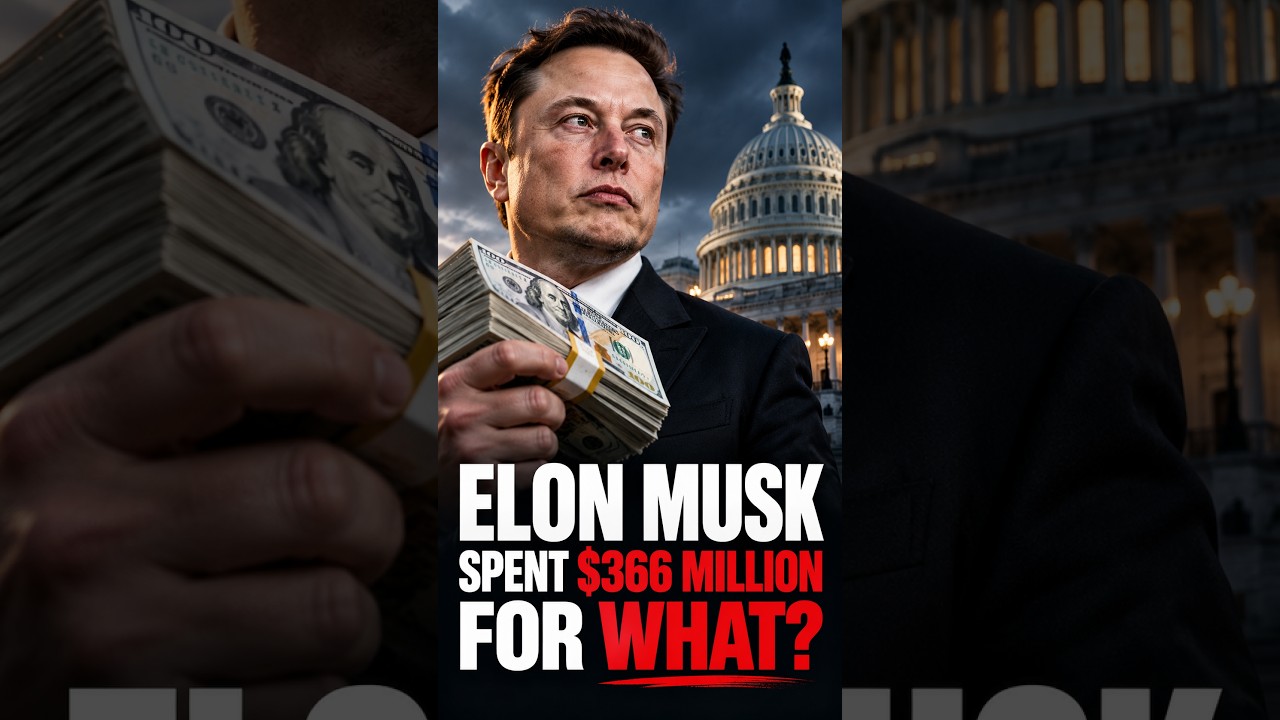
Donation or down payment? Elon Musk’s $366M move #PoliticalAnalysis #Filtered #Shorts

The Purposeful Retirement Trailer: Retirement Planning Beyond Money | Ultamize