Xavier Becerra’s KTLA Interview Backfires: A Media Training Disaster
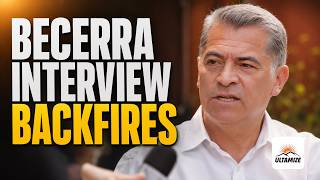
TJ Walker breaks down Xavier Becerra's failed KTLA interview, where Becerra asked if it was a "profile" or "gotcha" piece before it started. Walker explains why negotiating with reporters tanks your credibility and shows the right move: listen, reframe the question silently, answer on your own terms without labeling it as tough or unfair.
Chapters
Ultimize. According to the New York Times, Javier Becerra, the former Biden Health Secretary and former California Attorney General, is now leading the Democratic field in the California governor's race. And what did he do with the wonderful new spotlight? He walked into a KTLA interview and immediately made every media trainer in America reach for the emergency bourbon. Before reporter Annie Rose Ramos even began, But Sarah asked, "By the way, this is a profile piece. This is not a gotcha piece, right?" Oh boy, that is the interview equivalent of walking into a restaurant and saying, "Just to be clear, this isn't one of those food poisoning restaurants, right?" Well, congratulations, now everybody is thinking about food poisoning. The first rule for any savvy politician is simple: never Talk about the questions. Never try to guide the questions. Never try to negotiate the vibe of the interview like you're ordering a massage. You listen to the question, you rewrite it in your own mind, and you answer it on your own terms in a way that makes you look calm, confident, and prepared. But Sarah did the opposite, and it got worse. Annie Rose Ramos told Becerra, "I think these questions are fair. It's in order to learn about you as a candidate." Now, that should have been the end of it. Instead, Becerra said, "So long as it's about the profile." Sir, this is not a creative writing workshop. This is a campaign interview. Then he explained, "The way I describe profile is you talk about all the things that I've done, things that I wanna do, and along with some tough questions, but not only tough questions." Okay. This is not media strategy. That is a hostage negotiation for flattering coverage. And the tragedy is Becerra didn't need to do any of this. A professional politician doesn't tell the reporter, please ask me different questions. A professional politician hears the question, mentally repackages it. This is not the same thing as dodging the question. You repackage it, you rewrite the question, and then you answer it in a positive framework. The reporter owns the question, you, the politician, own the answer. That's the whole game. And this is why this little viral clip matters. Now, this is not the greatest scandal in the history of California politics. Nobody is saying Javier Becerra should be banned from public life because he awkwardly tried to steer a local TV interview. It's not Watergate. It's not Teapot Dome. This is not even a city council member getting caught stealing mulch. But as a media training case study, it's almost perfect. Because in just a few seconds, Becerra showed us what not to do when you are a politician, a celebrity, an executive, or anyone sitting down with a serious journalist. He tried to guide the reporter. He implied the reporter might be setting him up. He used the radioactive phrase, "Gotcha, piece." He created tension before the first question. Worst of all, he made the interview about the interview. That is the blunder. When you're running for governor of California, the interview should be about housing, homelessness, affordability, public safety, wildfires, water, energy, immigration, schools, and why voters should trust you with one of the hardest executive jobs in America, and indeed the world. It shouldn't be about whether KTLA is giving you the correct ratio of biography to scrutiny. Nobody watching at home is thinking, you know, before I decide who should govern 39 million people, I really need to hear a rich discussion about the difference between a profile piece and a gotcha piece. No, they're thinking, Why is this guy nervous? That's the damage. And I say this as someone who spent decades training people for media interviews. The biggest mistake public figures make is believing the interview is something they're supposed to control. No, you're not supposed to control the interview. Let me repeat that. You're not supposed to control the interview. All you have to do is control your own mouth. That is the discipline. The reporter gets to ask whatever question the reporter wants. That's their job. Sometimes you might think the question is fair. Sometimes you might think it's unfair. Sometimes you think it's brilliant. Sometimes it sounds like it was written in the parking lot by an intern eating gas station burritos. Guess what? Doesn't matter. Your job is not to review and critique the question. Your job is not to grade the question. Your job is not to say, "That's a gotcha question," or "A tough question," or "A good question," or "That's unfair," or "That's not what I thought this profile was going to be," because the second you do that, you've stopped being the candidate and started being the media critic, and unless you're applying for tenure at a journalism school, nobody cares. If you're a candidate, your job is to Communicate messages that help voters decide whether they should vote for you. That's it. That's your job. Everything else is a distraction. Here's the simple professional method. The reporter asks a question. You listen. You don't flinch. You don't make a face like someone just opened a tuna sandwich on an airplane. You don't say, whoa, whoa, whoa, I thought this was a profile. You take the question into your brain, you rewrite it, you repackage it, you convert it into a closet truthful positive version that allows you to answer in a way that helps the audience understand you in a positive light. Not the same thing as avoiding questions. This is not dodging. This is communicating. Dodging is pretending the question doesn't exist or answering a completely different question. Rewriting the question, repackaging, is answering the substance of the question without accepting necessarily the most negative frame. There's a huge difference if a reporter says, "What is your record at HHS of failure?" The amateur says, "That's a gotcha question." The professional does it differently. The professional says, "I'm proud of the work we did under extraordinarily difficult circumstances, and I also know every large agency has to be accountable. Here's what I've learned, and here is how that experience would help me govern California." The answer doesn't run away. It doesn't attack the reporter. It doesn't repeat the word failure. It doesn't sound defensive. It sounds like an adult. This is what voters are looking for, even if they don't use media training language. They may not say, "I admire the candidate's disciplined reframing of a hostile premise." No, voters don't think that way. They just think, "Okay, that makes sense. He handled that well." Or in Becerra's case, they think, "Why is he negotiating with the reporter before the interview even starts?" And this is why the phrase "gotcha question" is so dangerous. The moment you say "gotcha," It's a soundbite word. You're going to get quoted on that, and you look like you've already been got. It's like saying, "I'm not sweating." Nobody noticed until you mentioned it. Now we're all staring at your forehead. If you ask a genuinely hard question, wonderful. Treat it like you're having the time of your life. That's the attitude every public figure should bring into a serious interview. There's nowhere I'd rather be than right here, right now, answering that question. That's the attitude you should exude in an interview. Not fake happy, not mannequin happy, not my consultant told me to smile and now I look like I'm being held in a basement happy, but you want to exude real confidence. You're happy to talk about your campaign, why you're excited about running for this job, and how you're going to help people. The kind of confidence that says, I expected scrutiny, I respect scrutiny, I'm ready for scrutiny. If you're running for governor of California, Tough questions are not an ambush. They are the job interview. California is not hiring someone to cut a ribbon at a frozen yogurt opening. California is hiring someone to handle wildfires, budgets, homelessness, water shortages, earthquakes, crime, energy prices, housing shortages, and approximately 12 million people who all believe the DMV was personally designed to ruin their lives. If you can't get through a KTLA interview without pre-complaining about gotcha questions, what are you going to do when there's a billion-dollar budget hole and 5 reporters are shouting at you at once? Ask whether the press conference is more of a profile press conference? This is why the optics matter. Becerra may have had perfectly reasonable things to say in the interview. He may have had thoughtful answers. He may have a serious record. He may have a capable public servant record, but now the viral moment The soundbite that gets spread everywhere is not about any of that. The soundbites that float, the viral moment, is about him trying to set the terms, essentially complaining, whining. That is a strategic failure because the best way to influence a reporter is to make the reporter feel absolutely no manipulation is happening. That's the art. Bad media training looks like media training. Looks like trying to control the interview. Good media training looks like a normal human conversation. Bad media training sounds like, "Let me be very clear, what the American people care about is..." Good media training sounds like, "I understand the concern. Here's how I see it." Bad media training tries to drag the reporter to your message. Good media training makes your message feel like the natural destination. Becerra's mistake was that the manipulation was visible. You could see all the strings. You could see the consultant's fingerprints. You could feel the campaign anxiety in the room. It felt icky. And once an interview feels icky, everything after that is a lot harder. The reporter gets more skeptical. The anchors get more interested. Opponents get a clip. Social media gets a snap. Mmm, that's tasty. And the candidate loses the ability to define himself. This is especially foolish because Becerra is not some rookie candidate running for student council. He's been a member of Congress. He's been California's Attorney General. He's been in— he's been the Secretary of Health and Human Services in the cabinet. He should know that if you are the front-runner, scrutiny is coming. When you're unknown and polling at 2%, reporters ask, tell us about your journey. When you become the leader, reporters ask, what went wrong? Who warned you? Why did you do it? And can you prove the opponent is lying? That's not bias, that's gravity. The higher you rise, the more people test whether you belong there. And if you want to survive those tests, you don't ask for easier questions, you develop better answers. Now, Let me correct one bad media cliché. Some people say there are no tough questions, only questions you didn't prepare for. Oh, that's not true. There are infinite questions. A reporter can ask something you never heard of. A reporter can ask about a study you haven't read. A reporter can ask about a breaking development that happened 10 minutes ago. A reporter can ask about a detail buried on page 417 of a report written by someone whose name sounds like a minor character in a British detective show. You won't know everything. It's okay. If you don't know, say, "I don't know." There's nothing weak about admitting that. "I don't know" is infinitely better than pretending to know and then spending the next 3 days explaining why your fake answer was not technically fake if you redefine 6 words and ignore the footage. The professional answer is, "I don't know, but I do know the larger issue that is important here. Here's how I would approach it." and then you bridge to your messages. That's honest. That can be calm. You don't want to look nervous or uncomfortable there. That can be useful. You're not letting the reporter trap you into pretending omniscience. You're also not letting your lack of one detail stop you from communicating what you do know. That's the balance. You don't try to constrain the reporter. You don't let the reporter constrain you. Either. They can ask whatever they want. You can answer on your terms in any way you want. That's where politicians get confused. They think if they do not accept the exact wording of a question, they're dodging. No, you're allowed to reject a frame. If a reporter says, "Why did your disastrous policy fail?" you don't say, "Well, my disastrous policy failed because—" Why would you do that? It's like someone handing you a flaming bag and saying, "Thank you. I'll now hold this close to my chest." Don't repeat the negative. Don't amplify the attack. Don't put the ugliest words in your mouth. Instead, say, "The real issue is whether we helped people, what worked, what did not, and what we can improve. Here's what I learned. Here's what we did right." That's clean, that's strong, that's non-defensive, and nobody can fairly accuse you of dodging because you're engaging in the substance of the question. You're not just wearing the reporter's vocabulary like a rented tuxedo that smells like panic. This is why I always tell clients, answer the questions you wish you'd been asked, but do it in a way that still addresses the concern, the nub, the core of the question the reporter raised. The last part matters. If they asked about migrant children and you start talking about your favorite taco truck, that's dodging. If they ask about migrant children, you say, "Anytime children are involved, the standard has to be extraordinarily high. I'm proud of the work we did. I know accountability matters and here's what I learned." That's not dodging. That is projecting leadership. And it's much better than saying, "Is this a gotcha piece?" because once you say that, the clip is no longer about children, policy, leadership, California, or your record. The clip is about you trying to manage the reporter and be slippery. Now, I should point out, in fairness, there is an exception. If you're a Donald Trump or a Trump-style Republican, attacking the media can work because attacking the media is the the message. It's central to your appeal to voters quite often. The media is corrupt is a part of that brand. It's the rally chant. It's the bumper sticker. It's the emotional glue. So, when Trump attacks the press, he's often still on message. I may hate the message, I often do, but strategically it is coherent. Now, for a mainstream Democrat running in California, Prescolding KTLA is not coherent. Doesn't energize your base. It does not reassure swing voters. Doesn't make you look tough. It makes you look like you expected a campaign brochure and accidentally encountered journalism. It's not a part of your message. This is not where you want to be. The irony is that Becerra was worried about a gotcha piece, but he created the gotcha himself. The reporter didn't need to spring the trap. He brought the trap from home, assembled it on camera, stepped into it, and then looked surprised that it closed. That's the lesson. In interviews, your fear can become the story. If you fear tough questions and talk about tough questions, the story becomes your fear of tough questions. If you fear looking defensive and start managing the reporter, the story becomes your defensiveness. If you fear being portrayed as not ready for prime time, do not begin the interview by acting like prime time needs to be negotiated down to a safer time slot. Just answer calmly, clearly, positively, within your own context, on message, with a smile that says, "I've been waiting for this question. I'm happy to be here," even if you're not. That's professionalism. That's good media training. Not tricks, not gimmicks, not robotic talking points, not pretending the reporter said something else. It's the skill of taking any question, understanding the real concern underneath it, and answering it in a way that makes you look more credible when you're done than when you started. That's what Becerra failed to do in that moment, and if his campaign is smart, They're not going to spend the next week complaining about KTLA or social media or the unfairness of clips going viral. They'll learn the lesson. The lesson is not avoid tough interviews. The lesson is stop looking like you want to avoid tough interviews because voters can— they can smell that. Reporters can smell it. Opponents can smell it. And once they smell it, they'll come back to it again and again. So here's the final media training rule for every public figure watching this disaster and thinking, How do I avoid becoming the next viral clip? Well, for starters, don't ask the reporter for a profile. Don't ask if it's a gotcha piece. Don't negotiate the tone. Don't review the questions in advance. Nothing they hate more than that. Don't repeat the negative. Do not act like scrutiny is an insult. Listen to the question. Write it in your own mind. Rewrite it. Repackage it in a way that neutralizes it, not avoiding it, but neutralizes it. Then answer the concern. Use your words. Use your frame. Use your facts. If you have to say, "I don't know," that's okay. Then pivot to what you do know that's relevant to the concern that puts you in a good light. And through all of it, look like there's nothing you'd rather be doing. Because if you're asking voters for power, the least you can do is look comfortable being questioned. This isn't unfair, it's democracy. And if you can't handle that, maybe you do not need a profile piece. Maybe you need a different line of work. I'm TJ Walker, this is Filtered. Thanks for joining me today. Please post your comments. In the comments section, and I'll see you tomorrow. Ultimize.
More from TJ





The Breakout Cases - What Actually Caused Famous Speaking Career Breakthroughs | Ultamize

The Red Circle Sessions Finale - Build the Speaking Career You Came Here For | Ultamize

Two Stages, One Logo, Two Completely Different Realities - Main Stage vs Independent Events | Ult...

Pre-Reset - Why Repetition Builds Better Speaking Decisions | The Red Circle Sessions | Ultamize

Your Decision, Your Framework, and What Happens After - Build Your Speaking Career First | Ultamize

The Red Circle Sessions Trailer - The Speaking Career Truth Nobody on That Stage Will Tell You | ...

The Two-Minute Ultamize Reset - Your Platform, Your Audience, Your Voice | The Red Circle Sessions