Dance Accelerator 2 with Orlando Ballet
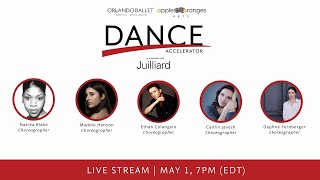
Five choreographers pitch their dance projects to a panel of judges who allocate funding from $10k to $30k per artist. The judges emphasize realistic budgeting, donor relationships, and clear value propositions, with Netria winning the top $5,000 prize and all participants receiving an additional $2,000.
Chapters
Welcome everybody to our Dance Accelerator. We are happy to have you live and virtual for this run. We are running on Zoom, but we also have an amazing group live in the Orlando Ballet Center itself, the Harriet's Orlando Ballet I'd like to welcome to the stage Mr. Robert Hill, who is going to be my co-host for the evening. Hello, Robert.
Hey, Tim.
Good to see you.
Good to see you.
DA2, a year later.
Wow, unbelievable, unbelievable. And I think people are in for a great treat. So as you mentioned, we have a live watch party going on. Is it my turn to continue going on?
You can continue whenever you want, Robert.
Great, great, great. I love it.
So there's a live watch party right there, right here where I am upstairs in my office at Harriet's Orlando Ballet Center for our Artistic Director's Circle of donors, fabulous, wonderful, generous people. Also gotta do a big shout out to our Board of Directors. And actually our president is one of the judges and you'll get to meet him in a little bit. And of course, Tim is one of our board members. So, so much generosity and wonderful experience coming to help us go forward. We've had an amazing season. We did our entire season live and we actually did more performances this season than in any other season in this company's history. So we're not only surviving the pandemic, but we're thriving. So, and coming back to Dance Accelerator for the second time is icing on the cake for us. It's the way we're closing our season and couldn't be more excited about that.
So I'm going to share a couple of little pictures here so you can go ahead and talk about the season.
Oh, that was me dancing Jessica Lang's The Calling. Wow, after almost 20 years off stage, I went back and Jessica made a wonderful, wonderful experience for me. Kate Robichaud, our lovely ballerina, doing The Dying Swan on a program called The Robert Hill Collection. And this is a piece called Requiem that I created for the company, and they danced the hell out of it. I mean, unbelievable. So Yeah, and this was something we call uncorked where we create choreography in the moment. That's Charmaine Hunter throwing out some steps at them and having a good time. Two of our second company boys that I created a duet to that they just danced so beautifully together. And again, Kate Robichaud getting ready to do Peter Pan as the character Wendy.
Oh, and it's been an amazing season, and now we're capping it off the end of the year with Dance Accelerator.
Yeah.
And Dance Accelerator, we designed as a 2-week immersive program that follows the Silicon Valley vibe of being an entrepreneur and how can you take control of your career. It's all done online for the choreographers. In fact, they're virtually from all over the world. We have people in from Berlin, Canada, US, different parts of the US. From Apples and Oranges Arts, I'm in the orange California, you're in the orange Florida of our world. And why we designed it that way is because one of the things we all learned in the entertainment business during this time of COVID is that virtual is something that got us through a number of different things, but it's also something that will be able to live on. and what we want to be able to do is use the best of it moving forward. And how can we create new works in a way that supports visions of people that are geographically in different locations? And our initial design was to have our choreographers be virtual from our partner Juilliard on this, who they are all alumni from the amazing Juilliard School who have been a partner all the way on this endeavor. Working with the live dancers in Orlando at Harriet's Orlando Ballet Center. And that's exactly what we did. They have not physically met. Every piece of choreography that you see tonight has been done virtually. The also part of the design was to incorporate the vision out in TV land so that you would be able to get a sense for what was taking place here live. Therefore, the structure that these choreographers entered on was that during the show there would be live performance in Orlando at HOB, and then there would have to be virtual components that would be linked together. We had a 7-camera setup in the beautiful new technology in the Ballet Center to stream it, as well as bringing in a projector to project on the screen for those people that were live in the Ballet Center to watch the vision. And I can tell you, it all looked amazing. And then life came as life does. And we found out that on Thursday, as we were right starting our tech rehearsal— I mean, timing couldn't have been more nuts in this whole thing— that unfortunately one of the dancers did test positive. And because they do have safety protocols, very good safety protocols, there at the Orlando Ballet, we knew that we had to test, contact trace, and we had to quarantine. And one of our choreographers, Daphne, her team is the one that had to quarantine. All 5 members were not allowed to be physically in connection with each other, thus took them out of the running. But it also rolled off into every team had some form of a contact And thus we didn't feel that it was safe nor really fair to have some teams doing something live, some teams doing something virtual. And so we said, let's level the playing field and we will all be doing virtual aspects, very much like our first Dance Accelerator, because in the first one we had to be all virtual. And all I can say is I am like there's impressed and then there's here with how the choreographers and dancers handled it. We got a little bit of the Natrya dance, and if you're lucky enough to see it, you'll know what it is here in a minute, which got us all laughing and smiling.
Joy, joy, joy.
And we just moved forward, and that's really all we can do because one of our key tenets was resilience, and we have hopefully been resilient in this. Therefore, tonight you are still seeing a competition, and the parameters are fairly similar, but the pieces themselves will incorporate rehearsal footage. This was not shot by a professional camera team. This was them practicing their shots of what they were going to do at the actual performance, and they have put together a piece based on different aspects of footage they gathered through the weeks. 'Cause in day 1, we said capture anything you can 'cause you never know when you'll need it. Now they know when they need it. And our judges, who we will meet in one quick moment here, they will be looking at the pieces from 4 different quadrants. They will be judging it on the overall theme. Is this something I connect to? The story, am I emotionally moved? Number 2, the pitch itself. Are you making a valid argument for you as an entrepreneur? Somebody that I feel like that if I invest in, you're able to move forward and partner with somebody like the Orlando Ballet or any other ballet company and work with donors and investors and be able to stand in front of them and make your case. Then there is the piece itself, which is about 2 minutes of their 5-minute pitch. And finally, like any good Olympic sport, there is a difficulty rating for how they were able to achieve what they achieved given the parameters. Each of our choreographers will get 5 minutes to present. After those 5 minutes, we will have our judges pop up on screen, and they will have 5 minutes of questions and answers. And after that, we will go to the next person, and we do that 5 times in a row. And then at the end of the 5 times, They will then come in and we will look at an overall set of questions at the end to see where the judging goes. And each judge will get one virtual dollar to invest, and they can divide that virtual dollar up any way that they want to. It is completely up to them. Robert, anything you want to add?
No, I, I'm glad that you, um, gave a shout out to the Juilliard because I think what happened was one of the other things that I added to my list of things during the pandemic was this podcast called Bartok. And so I've known Alicia Graf Mack for many, many, many years, and she's the director of the Juilliard. And so I just put two and two together and thought, what a perfect marriage to do Dance Accelerator 2 with. And so here we are doing it. So I'm really thrilled about that.
Well, besides all of those wonderful people, we also had every day a mentor that we want to be super thankful to.
Yes.
So each day we had class time, they had choreography time. These were full days, and each one of these wonderful people on here gave at least an hour of their time to share every bit of wisdom that they could on anything from how do you handle crazy press situations to what happens when you've given your Broadway debut and you now have to work with insane producers like myself and some of the other people that are on this call. So huge shout out to all of our mentors.
Wonderful.
And now we'd like to jump into our judges for tonight. So first up, we have one of my close friends, Deborah Barrera, who we worked together on An American in Paris, who is a Tony Award-winning producer and is on the— waiting in the wings, as she likes to say, for Broadway to open again, as we all are. She's also part of the Edgerton Foundation as a script reader and founders of the Women's Independent Producers Group in New York City and part of the Legislation Council. She recently joined the producing team of The Seven Fingers, which will reimagine and reopen the iconic theater club Fugazi in San Francisco. She has been part of our Theater Accelerator team since the launch, and she rides bikes with my wife. Which, what can you say more than that? Thank you, Debra. Welcome.
And next up we have Alicia Graff Mack, who I met many years ago when she was dancing with the Ailey Company and I was still dancing with American Ballet Theatre, and they had asked me to come and teach company class. So that's when I got to see this amazing, gorgeous creature in class as a dancer, and she's now the director and dean of the dance program of the Juilliard. So welcome, Alicia. What a thrill to have you here.
And look who I get to introduce— Mr. Robert Hill. And there's an illustrious bio for me to read from that I'm going to throw out the window, as I should, and just say that I have thoroughly enjoyed getting to watch Robert as both an artist and part of a company, watching him navigate the evolution of a ballet company growing into what it is today, and most importantly, doing it with heart. It is so exciting for anybody to watch the dancers and Robert interact because not only do they love him as a person, but greatly respect him as an artist. So yeah, he's danced at all these huge companies and he's done all the important things that one should do, but we are so lucky to have him as the Artistic Director just because of who he is.
Well, thank you, Tim. That means a lot. And up next is another lovely, lovely, wonderful human being named Abdur-Rahim Jackson, who I also met for the first time and he was a dancer with the Ailey Company. And I understand that it was He and two other dancers in the company that actually went to the Associate Artistic Director and said, we want Robert Hill to teach company class. So thank you for that, Abdour. And I have since had you come and create works on the Orlando Ballet. You have been everywhere, including working with Beyoncé. I forget which Super Bowl that was, but it was not that long ago. And what I love more than anything is you're a lovely, lovely human being. So thank you for being here.
You didn't forget, you just couldn't read the Roman numerals, I bet.
Probably not. Oh gosh, talk about a long bio. The one world-renowned, one and only Jessica Lang. And I've known her for so many years. I first brought her down to Mexico when I was directing Ballet de Monterrey to stage some some of her works and to choreograph. I've had her here 3 or 4 times to the Orlando Ballet, and she is beloved wherever she goes. And I thank you, Jessica, for being here. I'm so excited to see you.
And my friend and neighbor, and also most importantly, the board president of the Orlando Ballet, Jonathan Leiden. And one cannot say Jonathan Leiden without his partner in crime, Krista who both fell in love with the Orlando Ballet kicking and screaming and came on to help really turn it into what it is today. And they brought me along and have created a wonderful, amazing group of supporters that are sitting there live in the new center, which when I joined, there was— Robert likes to say the old building that you had to get kicked out of because of mold to come into a new building. But Jonathan has the dual background of plenty of business acumen from the world of business as the Chief Operating Officer of Citadel, but more importantly, started his career off as a stage manager. And that's where he met the ever just beautiful person inside and out, Krista Leden, and has also been a founder of Theater Accelerator, which we have based this program on. And last but certainly not least, close friend of mine, Brian Morland, who is a Broadway producer but also nurtures every kind of artist and every kind of work. Previous works include things like Lifespan of a Fact with Cherry Jones, Daniel Radcliffe in The Sea Wall, A Life with Jake Gyllenhaal, and The Sound with Mary Louise Parker for Broadway, just to name a few of those. But upcoming is Charles Randolph Wright's— or sorry, we worked together on Charles Randolph Wright's Cuttin' Up, starring Blair Underwood, Joe Morton, and Tiché Campbell, while— and that was during the pandemic that we did online virtually. But importantly, his upcoming Broadway shows are The American Buffalo with Laurence Fishburne, Sam Rockwell, and Darren Criss, Blue with Tony and Emmy Award winner Leslie Uggams and Emmy winner Lynn Whitfield, directed by Tony winner Phylicia Rashad. And last but certainly not least, Keenan Scott II's "Thoughts of a Colored Man," directed by Steve H. Bourneau III. Thank you, thank you, Brian, and welcome. You all have an incredibly difficult job tonight, as I mentioned earlier, because we have some amazing choreographers. So now, enough of Robert and I. Let's get in. Here are the 5 choreographers and the dancers that you are going to meet tonight. First up on the docket, we're going to have Ethan Colangelo— see, I did it, Ethan— Ethan Colangelo and his 5 dancers, Colangelo. And then we have Maddie Hansen and her Orlando Ballet dancers. And Maddie has alumni from the previous group that are part of hers that were part of Dance Accelerator 1. Natreya Blake up on the third spot, and then Caitlin Javick in fourth, fourth up for you to view. And finally, last but certainly not least, all the way from Berlin, Daphne Fernberger and her dancers. On that note, we are gonna get on with the show. So thank you, Robert. We'll see you back as your judge. You're done now as the nice person So now you get to come back and judge how you want to see all of these things work. So Ethan, if you would please, can you come take the stage and kick off our Dance Accelerator? Take it away, Ethan.
Thank you so much, Tim. I want to start with a question. Does too much distance create loss, or does too much connection create suffocation? At what proximity do we all fit best? This past year has offered many challenges, confusions, and uncertainties, but has also allowed an immense amount of time for reflection, specifically reflecting on how I interact with others such as colleagues, friends, family, and lovers. As the world changed, all of our relationships adapted, and one of the biggest changes was proximity to one another. Some of our relationships became farther than ever, and some became closer than ever as households remained at home for extended periods of time. This brought up the interesting dichotomy of why as humans we sometimes do the worst things to the ones we love most. Regardless of proximity, one theme stayed consistent: listening is always the most important factor to understanding one another. Hello everyone, and thank you kindly for taking the time to watch my work and all of the other incredible choreographers participating today. A huge thank you to the Orlando Ballet, of course, the amazing Dance Accelerator organizers, and the beautiful dancers I was able to work with. My name is Ethan Colangelo, and I'm currently a creator based in Toronto, Canada. I also dance professionally with Body Traffic, a company based in Los Angeles. And what you just saw was a compilation excerpt of my piece Proximity. This dance film that incorporates live elements deals with two people represented by six couples finding themselves thinning the lines between care versus suffocation as they try to navigate at what proximity do they fit best. Unfortunately, due to a recent coronavirus exposure, we were unable to use any live elements to remain stay safe as our piece revolves around duets. And we made the decision to use the prerecorded footage that was just shared with you. The dancers and I had to make quick and difficult adaptations to new environments and floors, and I thank them greatly for their work and their efforts in this sudden change. The audiences for this piece is vast as human connection is a relatable topic across any person. This idea has not only been amplified more in a pandemic world where all of our relationships, regardless of what they are, have been affected immensely. As the piece would be performed and shared from an online platform, it has the ability to reach a large variety of demographics. I believe this film and research has great potential to go further and through larger access to resources. I'm hoping for a $10,000 investment for this project to be able to expand my ideas to a grander scale, making the cinematography and concepts even more effective, and of course, being able to compensate my dancers. My goal is to collaborate with cinematographer Amy Gardner, who can amplify these ideas in a clear and connected way. As the piece revolves around 3 couples at different distances or proximities, the only necessity would be for 2 of the couples to be in the same household to remain safe for current pandemic measures. As dance on film since the start of the pandemic has exploded into an exciting and progressive endeavor, one thing I noticed is that length is very important. For this reason, the live and prerecorded dance film will only be 30 minutes with a clear trajectory to keep audiences engaged. Due to the performance being at short length and for the ability for it to be created virtually, there will be an improved cost efficiency for production. Leading up to the presentation of this piece, along with exciting photographic stills and video trailers, I will increase engagement through social media such as Instagram and TikTok, challenging people to reflect and create with one another with the hashtag #Proximity. Relationships, regardless of what they are, is something all of us as humans can understand. As the performance is viewed and progresses, my goal is that the tension and mistakes that arise are a reminder that no relationship is ever perfect, and that we are all on our first life. I just want to quickly allow the dancers to come on screen and take a quick bow for their incredible work and very quick adaptations to our quick and last-minute change. Thank you so much, Kelly, Kenna, Louise, Raquel, Abel, and Matthew. I really appreciate all of your wonderful work. Thank you, everyone. Thank you, guys.
Breathe, Ethan, you did it. Judges, come on in. Nicely done. All right, let's open it up to our questions. Who would like to go first, please?
I'll go first.
All right, Brian.
Subject matter proximity is so absolutely fascinating to me, you know, the the conversation between how, how far apart or how much distance can you give your partner and/or loved one before you, before you lose touch, and/or how close can you, can you be with that person before you actually begin to suffocate them. How did that interplay affect your dancers as you're choreographing this piece to actually embody suffocation?
Initially it was even more prevalent when we had accessibility to the studio and we could like really go the extreme in terms of like the partnering, but obviously with the new adaptation of floors it was slightly modified. But we were talking about especially when the partner work was really close, how we could feel a sense that when sometimes people spend too much time together or are too close in proximity, there's almost this aspect of overindulgence and that suffocation inherently comes when people don't allow that space to breathe. And then in opposite, sometimes Sometimes when that space is inherently too far away and there's not enough communication or connection, sometimes the most important factor of being, you know, in contact with one another can get lost so easily.
And I'll just add in, because Ethan didn't say this, some of his footage was filmed as early as yesterday, and that's what he meant by floors— that they were originally on the Marley in the studio, but now they're on grass. And they're in rooms and they're in different places. So this was not all picked up before. Next question. Robert, yeah.
I actually just want to know, talk a little bit about your shift. So you were thinking a certain way for a certain amount of time and then boom, you had to rethink, you know, and unfortunately in live theater, that happens. So just talk a little bit about how you did that.
Right, I mean, it was quite a drastic thing because it was funny because I was like, of course I pick a subject matter that's all duets, and then when we get to something that's a coronavirus exposure, it is very difficult for that communication, uh, to be felt. Because initially they were all going to have, uh, aspects that were in studio, even the ones that were furthest apart. It was going to be two separate cameras and they were going to be dancing on separate cameras while still in the same space. So the adaptation was quite quick and I had to think fast. The most difficult aspect was, okay, how are Louise and Raquel now going to be doing lifts that, you know, maybe aren't the safest on pavement? We did a lot of adaptation and refining and quick thinking, but as a whole, I was just glad that we were able to get all of the pre-recorded footage compiled together to be able to present. But yeah, it was an exciting switch. It was difficult, but it kept me on my feet for sure.
Good.
You know, I would, I would comment, um, that if you hadn't told me, I wouldn't know that that wasn't your plan, right? Just to get what to start with. So I think it's great that you adapted, because that's, you know, when you think about it, you know, I had, you know, paying something, starting a project, and things always go wrong. How adaptable are you? I think that was— I think that's great. I don't know, did you do the editing yourself? You know it already? Did you learn on the fly? Did you get Any answer is fine, but I mean, I thought it was pretty interesting actually.
Um, I went to bed at 4:30 yesterday, so that was editing very last minute because I got one of the videos, you know, as late as like 8 PM. So I was just hustling, bustling, making sure that I could have something presentable for you guys.
Great. Well, and I appreciate you picked up your tagline, which I think is great, that humans— why don't we do the worst things to the ones we love most, right? Which I just think is such a great tagline that you had in your original application. And we talked about it last week. I think it just draws you right in. If somebody's thinking about, you know, what's this project you're pitching me and telling me about, I just think it's just, it's relatable. And, uh, and so I think, you know, great job.
Thank you very much. I really appreciate that. Thank you.
Okay, time for one more.
Yes, can you hear me okay?
Yeah, you sound great.
I can, yes. Thank you.
Um, so, so you had to shift, um, your plan from doing it always in one location, if that's gonna happen, how would you reimagine just in case this happens again and still have your message come across? Because we always, you know, as creators, you have to always have that in mind.
So what I'm thinking for this, if I had the opportunity for it to be reimagined, the two couples that would have the necessity of them being in close contact, I would make sure that those are people who live together. And I can definitely think of people who, for example, in the New York scene as artists, we always just compile into these households. And I think it would be definitely possible. But for that switch that you talked about, which is inherently possible because the world is always shifting, being new restrictions and all these things, I would just make sure that the two couples that have to interact would be from safe households. So regardless, it would always be safe and possible.
Nicely done, Ethan. Thank you so much, judges. We are at our 5-minute mark. Well done. All right, everyone, appreciate it. We are coming up to number 2, and number 2 is Maddie. And for Maddie, that is one that I am going to be doing some background tech on, so I will warn you all ahead of time if something goes awry, it is completely my fault. So I want her to come to the stage and be relaxed and enjoy. So Maddie, you have the stage.
Hello everyone, thank you so much for coming to support Dance Accelerator tonight. My name is Maddie Hansen and I am also a Canadian choreographer currently working out of New York City. My piece tonight, titled "Of Mind," dives into the mind of our protagonist as they journey through their changing thoughts embodied in virtuosic dance, taking you, the audience, on a journey from darkness into light and utilizing flower imagery as a metaphor for thought. The piece investigates the power of our thoughts, both positive and negative, and also reflects upon the events of the past year and the toll that it has taken on us. My incredible group of dancers also contributed to the piece with their own reflections, which you'll see incorporated into the text in the video element. And I also want to say a huge thank you to them for their being so flexible in adapting all of the live elements at the last minute. This piece was created specifically for Dance Accelerator and the virtual format and to really rise to the challenge of putting together live dance in different spaces and making it work while also maintaining the goal of creating something powerful and really telling a story. So without further ado, I present to you Of Mind, and I hope that you enjoy it. Mind work, mirror work, language work. Undeniably confronting to examine the words running in the background. The inner real ever-present. State of mind changes state of being, always in a fluctuation. Facets of ourselves surface, resurface, slip into fear and then reemerge. Thoughts quieting and softening with practice. As the windows open and light slips in and time dances by. From the inside looking out, the voices roar and carry us forward, calling to mind the power of language and the infinite work of mind. Beautiful work, dancers. Thank you so much. So I'm hoping to take this seed of a piece that you just saw and turn it into a 25-minute dance film, as well as a full-length piece for live performance in two phases. My ask tonight is also for $10,000 to produce the film version as part of Phase 1. Some of the expenses included in that will include videography and editing costs, an original score, location costs, insurance, additional production personnel, a choreographer's fee, location costs, and of course compensation for the dancers for their performance and filming time. The specific allocation of funds in the budget is currently in development as I'm in the process of researching potential collaborators and locations. The distribution plan for this film will be to target short film festivals as well as a ticketed virtual Premiere and Eventbrite viewing passes, and will work to create a social media and marketing strategy that really engages and creates a group of followers prior to the release of the film, encouraging people on Instagram, Facebook, TikTok, LinkedIn, Pinterest to create their own videos using the hashtag #ofmind, from which one person will be selected to join the cast for the live creation of, in part of phase 2. This would be a pivotal project to produce in my career thus far, and more funding would allow me to really take it to the next level of producing on a larger scale. And I truly believe that this work is something that can resonate with many people and reach a large audience, as it is grounded in shared experience, but it is also reflective of our own individual journeys. So I want to thank you for your consideration of support of myself and of MIND and for the opportunity to present to you tonight. And lastly, I want to say a huge thank you to my beautiful dancers for their performance tonight, but also for their work and their generosity and their tenacity through the entire process. I truly could not have done it without you, and I'm so grateful. So please, if you could come on camera and take a well-deserved bow, I would love that. Thank you so much. I'm very grateful for the opportunity.
Thank you, Maddie. Judges, you're on.
Well, first we want to say happy birthday to Kobe.
Deborah, go for it.
Maddie, congratulations. That was beautiful. And, and to all of your dancers, and just quickly to everyone, that I— the fact that you all— the generosity that you gave to each other by coming together and deciding to experience this the same way it's really impressive and actually quite beautiful. So I just wanted to acknowledge that first. I wanted to ask about the concept that you brought in about bringing an— I'm a little— just want some clarity. An audience member or an outsider into the process in phase 2. I actually think that's a kind of a really cool idea because it sounds like you're going to do some significant work in the social media platforms. And I'm assuming that that's how you're going to bring that other person in. So if you could elaborate a little bit on that, and also, will that person— can that person just be a layperson, we'll say, like a non-dancer, just for clarification?
Yeah, thank you so much. And thank you for that question. Yes, my plan is to, you know, utilize that hashtag across as many platforms as possible, and then hopefully have a team and myself and hopefully some of my collaborators as well, and just go through all of those videos, I want to make it a cross-platform, so it's not just movement artists. It can be visual artists. It can be any kind of person who is interested. And from there, we'll select someone, probably, you know, potentially at random. That's still under consideration to be a part of the process. And it's— I want them to be an equal player as the dancers in the film in whatever capacity that could be. If they're a visual painter, maybe they're working on some of the set work. If they choose to be in more of an acting capacity, we can make that work because the script for it's currently in development. So there's flexibility within it. But it's important to me to really engage the audience and allow that to be a connection point and like an entry point for people into this film and the viewing experience.
Thank you.
Yeah, Alicia.
Hi, Maddie. Beautiful work.
Thank you.
Wonderful to see you here. The question that I have for you is around the difference between creating for stage and for camera. There were so many kind of close-up shots of the dancers. How did you come to these ideas about the framing? And also, how did you coach the dancers? Because this is such a different experience than dancing on stage.
Absolutely, thank you for that. Yeah, so originally when we were working in the studio, I always wanted David, who was our protagonist, to be close up, to really bring us into this internal space and really hit home that idea. And I was interested in the juxtaposition of full body, more phrase-heavy work to really bring these ideas to life. And then on Thursday, when the COVID outbreak happened and we wanted— we had to think about how to adapt. It was super important to me to continue with a live element, even though it was like an additional challenge because the dancers have put so much in and I really thought that was important. So when we started reworking, we mostly scrapped all of the material and made it for Zoom. So I wanted to try and take advantage of this kind of unique framing of playing with perspective and can we see their face more and these things that also allowed them to make it work in their home spaces. And very quickly as well. And then in terms of coaching, we began the process the very first day I had them write 3 sentences and send them to me. And they were one sentence in when you felt like you were in a heavy place, one when you were starting to feel more hopeful, and one when you were hopeful. So for a lot of us, that could be when the vaccine was starting to be distributed, you know, it was very personal. And I really encouraged them to tap into those reflections throughout the process and each, each dancer was really trying to embody a state. So our beginning two, Eric and Saki, they were in this heavier state of mind, and then Kate and Annie, they were starting to represent this transition towards a lighter feeling, and then Kobe at the end was kind of representing hope. So I really wanted them to feel authentic in their presentation and the way that they were moving so that they felt their best as well in the work to bring those ideas to life.
Yeah, Brian.
Maddy, well done. I mean, absolutely well done. I'm really struck by screaming in silence, you know, to have a person who was living a life and have your piece be titled "Of Mind" and to have that ephemeral scream, that yell of what's going on in your mind. I was really struck by that. Thank you for that.
Thank you.
As you're scaling and growing, this piece, and you're talking about involving the social aspect of it, it feels like it's about community and about bringing others in and along with. Is that correct for you as you grow the piece?
Absolutely. Yeah. I think a lot of this idea was that so much of our experience in life and just in the past year, it was individual, but it's something that we're all going through in some way together. And it's this opening up and this normalizing of talking about experience and sharing it and leaning into each other in that and knowing that the person next to you is in a similar place and tapping into that so that as we're moving hopefully into a better chapter, we're doing that as a community, as one.
Thank you.
All right, well, we are at time. And Jessica, when we do our 5 minutes at the end for everybody, You can go ahead and ask that once while we keep that time at the end. Well, thank you, Maddie. I was only one beat late on that whole thing.
It's okay, don't worry about it, you did great.
Yeah, that whole thing was live, everybody, and that was choreographed yesterday, so good on the difficulty factor too. Thank you very much. Let's bring up and get next up on our stage. We are going to bring up one of our joyful folk here, and this one's going to start us off with a video, and then we will bring her to the stage. And next up, we have Nettria.
In order to break through, one must represent perseverance and endurance. Breakthrough: an experience that delivers progress us through process, initiating joy, vitality, and wonder. An important and necessary discovery. Welcome, I'm Tria Blake and I am from Queens, New York. A lover of the arts, I am a mom, teacher, choreographer, dancer, artist developer, and entrepreneur. I am a huge believer in the importance of being responsible for the energy that you bring to all experiences. The goal is to always, always choose joy. I enjoy creating an environment for dancers to shine and thrive. Breakthrough, in its entirety, is a 12-minute work honoring the resilience of the dancers of Orlando Ballet. This time last year, the dancers were home preserving their instruments, taking class despite the odds. This must be celebrated. Today you will see an excerpt of Breakthrough. This experience reminded me of how sacred and valuable the studio is. Missing the coaching and the amazing energy exchange that happens between the dancers and the choreographers is something that I miss most. Of course, there were a ton of rewards. The lens of the camera The camera enhancing my choreographic vision is something that I had to accept and welcome. It has been such a treat, inspiring me to think beyond the steps to exploring the possibilities of what goes on behind the lens. I would love to do a series of workshops at different middle schools and high schools, creating dance as therapy for an outlet for students who may be suffering from mental health Today you will see an excerpt. I hope you enjoy it. Thank you. Thank you so much to the dancers. If I could have all the dancers turn on their videos, please, and take a bow. I would like to thank the dancers first. Go ahead and take a bow. I would like to thank the dancers, Orlando Ballet, Apples and Oranges, the Juilliard School staff, tech team, and crew. Congratulations to all of the other choreographers. Any funding that is, any funding is greatly appreciated for this project. I appreciate and I thank all of you. Thank you.
And thank you, judges. Let's, it's time.
Nettria, I am so thrilled with this piece, overjoyed. You know, progress through process. Thank you. Progress through process. It, it, it, it. Yes, yes. I, I, I will not go on because you will make me cry about it.
It's a lot.
The progress through process. So thank you for that. If you can name one dollar amount that you need in order to move this forward. Forward so the rest of the world can experience this 12-minute piece in its realness, in its full expansion of your vision, what would that dollar amount be?
I'm seeking $25,000.
Thank you. Next question, please. Yeah, Alicia.
Hi, Netria. Thank you for your work.
Hi, Alicia.
You mentioned that you would love to have workshops for middle school and high school students. Can you expand upon this idea?
Yes, definitely. So the goal would be to have a group of dancers come in, perform this piece in its entirety, and then have instructors hired to go to different middle schools and high schools schools and create an outlet really geared towards mental health and use dance as therapy. Um, this past year for parents, for teachers, and especially for children, it's been extremely difficult. And I feel like they have things inside of them that they may not be able to articulate, but they may be able to get it out through dance. So I want dance to be that therapy. And that workshops can vary from contemporary to modern to maybe hip-hop crop, but just something expressive so that they can get that out, that inside doubt or, you know, lack of confidence, get it out through dance.
Yeah, Abdur.
And beautiful, vibrant, celebratory work. So proud of you. Congratulations.
Thank you, Abdur.
Two questions. One is, is that what the dollar amount which you're asking for is going to go to, the $25,000? To pay for the transportation, all those things? Is that what it's allotted for?
Yes, so it would pay for the instructors that are going out to facilitate the workshops and also for the dancers, because it's going to fluctuate, it's going to change based on availability, to compensate the dancers who do the performance. So the goal is for the schools, middle schools, high schools, the children to see the performance and then have an opportunity to feel what it's like to be the dancer. So the money, the funding, any amount, I'm grateful, would be to compensate and facilitate that, to bring the full vision to life.
Beautiful.
Thank you.
Jessica.
Hi, Natria.
That was so nice to see you.
Hi, Jessica. You too. I have a question about this process of filming and what that experience was like for you. Like how you, you have like this obvious stage image that we see, and then we have the silhouetted, you know, backlit from the beautiful new facility. Who did some of that filming work and who did the editing, and how was that process for you?
Sure, so I call myself the dinosaur of the group because I just feel like I'm just not tech savvy at all, and I'm like, ah, But I made sure at the end of every rehearsal, we videoed footage for myself for homework to go back and critique. So, for instance, the ending, that trio when they run in, they had just learned that, but it was raw footage. I wanted the raw footage so that I can go and critique it and, you know, fix it. But so it was really just myself and the dancers. I think it was Remy who recorded one day and then Annmarie recorded another day. And we had to be creative because the spacing, and we didn't have tripods, was limited. So some of it was a floor shot, some of it was leaned up against a book, you know, stage left, you know, we used a shoe, I think one day, put it inside the shoe, but I had to get it, you know, by any means necessary. So that ended up becoming the piece. I had to piece those videos from different days together to create something that is, presentable for you guys.
The famous Hollywood shoe shot.
Yes.
Abdul, were you gonna ask? Oh, Jonathan, sorry, go ahead.
Well, we want to thank you for showcasing our beautiful studios and the lakeside views and so forth. You know, parents, if you're watching, you can send your kids to Orlando Valley.
That's right.
That's right.
Absolutely.
We have Orlando Valley. Great improvisation on that. So really well done. And, um, I don't have any questions because we talked before, but I just, I love your presentation and the way you think that you're— the way you have positioned yourself as not just an artist, but as a human and as an entrepreneur. And that just says, I'm somebody that understands the full picture and I'm willing to explore. And the theme of joy and just letting those dancers, they just let go and we these beautiful dancers that are just great at what you did. And I don't have to go as an audience and think about it. It's just, I want to sit down and I want to watch some beautiful dance. And then having a full package where you thought about the enrichment piece, which is so key to funding, is a great piece. And I love how you've developed it over the course of the last week. So well done.
Thank you so much.
I want to add a few kudos, Jonathan. I 100% agree with you. I've not had the personal experience to visit the studios, but they are expansive and they are inspiring. And to have a person that has created a piece of work that is about the community and has the ability to grow, and have it be from a mother— and mothers are always caring and nurturing for us, for the entire world. So thank you for that.
Thank you so much.
Well, thank you. Now, Natreya, we can't end without— you know what I'm going to ask for here. Yeah, there you go. This is how we started every day of class, and even the day when we were told that we had to completely change what we were doing, she broke into the dance and it just put us all into a good spot. All right, yes, thank you all, and thank you, Netraja. And, and wonderful. So let's get the stage set. So this next one, we're going to bring up choreographer number 4, Caitlin. We are also doing a hybrid on this one where you are going to get to see some of the recorded information as well as some live dancing. So Caitlin, I'm going to turn it over to you. You have the the floor.
All right, everyone, take a nice big stretch. I can't even see you, and I am very serious, but take a stretch, move around a little bit. Oh, we've been sitting for a while, so just kind of shake that off and find your sit bones, however you're seated, and your feet nice and planted, and just rub your palms together for a moment to feel a connection to your body. Start to notice your breath, and then Bring your palms either to your chest or your belly or your, your thighs and close your eyes, if you will, and start to notice your breath. And start to connect to that breath a little more fully, allowing the exhale to take a little more time and starting to notice that connection between your mind, your body, your breath, that oneness that comes together as we sense a little bit more quiet and go away from the stimulus. Oneness goes beyond the mind, the intellect, the ego. It is a coming together of all the opposites. It holds the potential for everything. We've all had glimpses of this when we've had our breath taken away or time felt like it stood still. Take another nice deep breath in, taking yourself to that place, remembering that the whole never loses contact with its parts. They are never lost or forgotten. Take a nice deep breath in, sensing everyone who's on this call. A big full exhale. And now you can open your eyes. We are one. Together.
All we are one. Alone together. Alone. We are one. All alone. We are one together, one home, all alone. We are one together, one home together, one, one world together, together.
Thank you, dancers.
I know the end quit. Are you okay? That was the video crashing. Do you want to—
That's okay. I think it's okay. You guys can take a bow. Thank you. Thank you so much, dancers, for your resilience and your tenacity and your humor throughout the rest of this process. Thank you so much. So I created this work titled At One to remind people to take a fuller exhale. It is my mission to integrate my work as an artist and a Pilates instructor and a mindfulness practitioner to build stronger communities that are more integrated and people that can take care of each other as well as themselves to connect to oneness. I'm asking today for $15,000 to take this project further. I'm hoping to do a 2-week residency with 5 dancers and to pay them, to have the composition more fully developed, to do a 1-week-long outdoor performance series where the audience gets to interact safely with the dancers and to move with them through space, and to do a 3-day workshop with young artists to start to teach them these tools to have a more sustainable, healthy career. So it's not something that comes later in life when they're an adult, and going through a situation like this, but that it starts from the beginning. The rigorous training also goes with taking care of themselves from a young age. This is part of my mission. I am so happy to have shared this work with you. Thank you very much.
And thank you, Caitlin. If you— I looked at the end of the video that had crashed, and it actually looks so beautiful on the screen that I I think it almost was a happy accident because you got to highlight all the dancers at the end. So congratulations.
Thank you.
All right, judges. And again, from the difficulty factor, she was still choreographing up until about, oh, 30 seconds before we went live. But I love the new ending and how you incorporated them in with their piece. So well done.
Thank you.
Questions? Yeah, Jessica.
Yes, Caitlin, wonderful. I just want to ask, describe what the ending should have been for those— for what you guys are talking about, that you know something went wrong and we don't know what went wrong, but what was your artistic intention for the ending?
Yeah, so the ending has had many versions and when we've been going through this process now of how do we do this phrase work seated and how can we film it and can I see you and the camera's on and off and this outdoor footage, which was before we were ready. Like, I was like just playing around outside. So the last image was the dancers going around the tree again and then it pans away to the sky as well as the dancers in the studio at the same time trying to do this phrase work and then just collapsing to the ground. A lot of my initial choreography incorporated the overhead camera. And was gonna be shot in that studio with the overhead and have that dynamic of changing these visions. So I tried to have that same feeling even with exporting this video 2 minutes before our tech, and Tim really stuck it out. So thank you for your question.
I am gonna show everybody just the ending, and you can imagine that you saw that beautiful shot of the dancers were in unison. It was tied to— and take the magic out of the moviemaking, we will jump right to here where she said they are back at the tree, and it was cut between— I actually think Jonathan just wanted to show off the beautiful ballet center again.
No, I really did.
I'm kidding, I'm kidding.
I mean, she's working really hard on this. I just technically just run it again so that she—
I agree.
So it was a nice picture of Harriet's Orlando Ballet Center. It was. We offer a number of classes for—
I'm working it all in.
Uh, Brian, yeah.
How does the piece scale inside the theater Well, I understand you're incorporating the outside portion of it, but how does it scale indoors, or is it intended for indoors?
Well, for this, for this research period, it was an indoor and outdoor experience. I was interested in using the Zoom platform in conjunction with pre-recorded material outside and to practice this filmic quality between those two things to see if if it's possible, because maybe we're here a little bit longer, maybe these are tools I should start to develop, to have that eye of, okay, she falls to the ground or they fall down and look up and they see themselves and then they're reaching down from the tree. You know, I had all these ideas in that way, but I think the larger work is really an outdoor work to have this transition of people coming back into performance in a safe way and also to start to to take those lines of who gets to see what and who gets to experience dance and make it more accessible. So that if there's a beautiful group of dancers moving through the park with musicians and this incredible music, and it happens 3 times a day, someone's gonna see it that would've never seen that. So that was part of my intention with that.
Thank you.
You're welcome.
All right, next. Yeah, Alicia.
Hi, Caitlin. Thank you so much for your work. I was really drawn and taken to this sort of sensory experience, which is really hard to capture on film over Zoom and all the things. Can you talk about your thought process of creating such an experience? And also, how did that tie into your initial pitch to us, the— how you opened your conversation.
Sure, so corporeal experience is something, and connection to breath in the body, is something that I find is integral to creating work and to also being a facilitator in the front of the room. Who's walking in? What energy are you bringing? How are you teaching? How are you choreographing? How are you talking to your dancers? How are you talking to your audience? Audience. So all these things are connected to how you're connected to yourself. So that's always first for me. I also thought, you know, being able to feel this emotion of movement with nature, movement with the body, how do you get that in this platform? Today I was like, there's a lot of things going on, I don't know if this works, but dancers have fun, feel good, and that was, you know, at the end of the day, my initial thought process was I wanted to have fun and bring joy and learn some— learn from the dancers. So we did a lot of improv based on sensation, based on memory, based on oneness, and we made something together, and they really stuck it out. I hope that answers your question.
Thank you.
All right, we are at time. Thank you, thank you, Kim.
I just wanted to— Caitlin, just thank you, um, just to say, uh, especially since your first presentation of this winter, just the way you sort of took coaching and you made things much more tangible because we just talked about like we had some very big word, ephemeral words that were hard to put in the way you sort of made it more tactile. These are the things I want to do and this is the experience I'll have. So I think it was a good job of sort of clarifying that. So thank you.
Thank you so much.
Thank you, Jonathan. Thank you for that. Yeah. All right, thank you, Caitlin. Wonderfully done. Which brings us up to our fifth person who also was the one that had the quarantine, that was the entire team was taken out, but she rolled with it and she laughed and she kind of went with it. So please let's bring up Daphne to the stage. It is yours.
Hi, hi everyone. It is such an honor to be here. These past 2 weeks have been full of growth and new opportunities. And thank you so much for this. I believe in art as a transformative opportunity for the performers, the audience, and myself. I believe change happens like a ripple effect, always starting with myself and sharing from there with my ever-growing community. I wanted to share a bit about myself with you, and one of the most critical things happened to me recently. Long story short, 2 years ago I had a horrible bike accident where I found myself face to face face with an oncoming tram. It's now, I thought. As my full body came into contact with the tram, I had this thought impression: relax. And I did. I surrendered to that instinct and to what was happening and used every bit of body and motion knowledge I have ever gained or experienced. Although I broke many bones—my pelvis, my nose, and both my recovery was surprisingly mental. Even in the ambulance, I knew I needed to get out of my panic to help myself, so I was meditating and chanting. The doctors were shocked by how swiftly I was able to walk again one week later, albeit delicately, and performing again five months later. At some point, we will each come across the hardest moment of our life. Whether it's physical, emotional, or some combination. Overcoming the most traumatic event of my life, I know it is through dance. I understood how to work with my body, nurture my spirit, and lead myself into health again. I know what my brain and approach is capable of, which I only learned through this experience, and I carry that with me. Although this accident will never disappear from my body, completely, I live with it like a dance partner. I believe this knowledge, this body wisdom, this trust of self is perhaps the greatest gift of dance. And though it enters your being through dance, it ends up being with you in all parts of your life because it is part of you now. Through creation, performance, working in the studio, and the movement meditations that I started offering online every Sunday, My wish is to inspire and share this approach through my work. And that is also why I share my story today. So it is through sensorial movement, this piece we've created titled "In Relation To," we explore the essence of the power of vulnerability, transformation, and transitioning from isolation into connection. Please enjoy the piece. Thank you so much, dancers. And congratulations, Izzy, your last day with the company. Congratulations. Thank you, guys. In lieu of flowers. Yes. This experience has once again shown me the power of collaboration and I would love to make a full 25-minute version of this piece with the dancers of Orlando Ballet. Winning this competition will definitely help me move forward as a creator, not only as an accomplishment, but also using this towards the budget of my next dance film titled The River Within. Thank you so much. This has been an incredible experience.
Nicely done, and nice surprise for Izzy that I almost blew during rehearsal, but luckily I came this close to blowing it, but I did not. Ah, all right, judges, you got 5 minutes.
Go for it. Deborah, I'm gonna be very quick. Daphne, I just— I got to see you in a previous version, and I just wanted to say you really came so far, and certainly under the circumstances that you then had to confront. It was a beautiful presentation. The pitch was great. I loved how the pitch connected. Everything you said in the pitch, I saw in the choreography. And I don't want to take up other people's question time, but I loved seeing the camera person in the choreo. I thought that was really cool. I just personally, as an aesthetic, I really like that. So congratulations.
Thank you so much. Thank you.
So a quick question. I think the intent is for it to be an entirely filmed piece, right?
I think this piece is great for onstage and a dance film. There would be adjustments for both. And I was creating this very segment of it to be danced beginning to end for those judges that would have been in theater. And of course, close-ups.
Yeah, I mean, the filming was great. I mean, it feels like you had— you worked on it a lot.
Yes, it feels like you had to start—
that's sort of the original intent, to be ready for video. So because it was just the camera sort of moving through and so forth was like, look great.
So And she actually, I mean, I just, her actual filming day was Thursday when we had to shut the studio down. So she did not get to film what she wanted to film to show you. So what you saw was stuff she had gathered before her actual film day. Great.
Brian, you had a question. Thanks, Tim. Not so much a question, more like a comment. I definitely— I am so moved by your story. The ability to relax and, and/or surrender during an accident to the physical body and then move through that experience to come to where you are today. It's the basis of the training that I had with Luigi. If you've ever studied the Luigi technique, it's always about— it's the basis of his accident and then his movement is the healing that we all experience today at Training of the Body. And I just want you to know that I experienced that looking at your piece today. So thank you for sharing that.
Thank you so much. Thank you.
Yeah, go for it, Abdur. So the 25-minute piece, could you This was like a snippet. Could you walk us through what you're envisioning as the concept, meaning the beginning, middle, or ending in a 25-minute one? That's pretty, you know, a good feat to try to explain through movement.
Yes, from the beginning, my concept was for having the network of the group being like a web where duets and solos, they get ejected out. And you might have the whole group offstage at moments or onstage at moments for more of a complex piece, but there would be a lot of interspersed duets and solos, which I tried to achieve through even just 2 minutes. Yeah, so many of the group sections would need time to develop. I really enjoy the buildup that happened even in the 2 minutes, but to just like really go into more of that, many more duets and solos, and then end in this place where it's a bang and a question. That's why I ended the film with a jump. I wanted it to be like, this is never done. It continues and we don't know where, just like life. Okay, thank you.
Thank you.
What was this, the music?
Thank you for asking. I wanted to add that the music is by Uli Songs, and it's a new creation, also a work in progress. He's an up-and-coming musician, songwriter.
Great. I love electronic. It drives my wife—
He was gonna say crazy. Jessica, yeah.
Hello, Daphne, how are you? That was beautiful, and your story was moving and incredible. I have a question about the fact that we just watched a film of what you, what you want to present as a dance piece, like a stage piece, correct? And then you mentioned that, and you want to do a film as well, right? Something entitled The River Within or something? Is that connected or separate? And how would you— what are your plans?
So for this piece that we saw a segment of, I imagine it being a fuller piece, 25 minutes, that would be performed on stage, but we would also work with the choreography, filming inside with the dancers, making it really come alive on screen. There's so much to explore with dance on film, and I'm very passionate about, of course, performance on stage and also dance on film. So I'd like that. And then also this new dance on film is separate. The River Within, I imagine it to be— it's the rivers representing a lot of things, and it would be filmed on site by a river, small river. And the river and the water represents emotions. It also represents something to cross over, whatever challenge that may be, or receiving something or letting something go, what it means to be in one environment and another, the subconscious underwater, the conscious above water. And yeah, I plan to film this this summer. And I would love to make it more of a reality with more of a budget to pay the camera operator, an editor, the dancer, choreographer, and so on, and music, of course.
All right, we are at our 5 minutes. So judges, keep your cameras on actually, because this is number 5, and let's bring up all our other 4 choreographers. Choreographers. And while they turn on their videos, one thing that may help clarify for you judges too is there's this beautiful projector at Harriet Solano Ballet that they were incorporating what, for those of you that are sitting live watching this right now, it's always been the dream to have live dancing connected to the visuals that are presented there. And we will get there. We have the technology. We have the expertise. We will do it. So now we have a few more minutes to just ask questions of any one of the five, since it's been a while since Ethan took the stage. So if you've got a question for anybody, fire away now.
Question to Nettria. In the beginning, you had the painting. That was my second question earlier. How can you explain how that correlates to your piece?
So the painting is actually something that my daughter drew. She's 11 years old. And, um, the cubes in the beginning— um, where is it? I probably could grab it. But the cubes in the beginning represent, um, the moments that we all have inside of us that we want to change or that we want to break through from or break away from. So there's those cubes, almost like a cubic cubic, um, remember those little things, those cubic— what do you call them? Rubik's Cube. Yes. So it's that, and then it bleeds out to those same colors but in bigger, bigger panels. So the cubes represent the bondage, the straitjacketness, and then bleeding out of that represents us, um, the rebirth birth, coming out, the awakening, moving towards the light, moving towards the joy. So that's the inspiration behind the painting.
Yes, that's—
thank you, that's very clear. Thank you. Thank you.
Okay, another one. Oh, Brian, yes. Yeah, sorry.
To go back to that with you, Nettria, will you remind us as a group the $25,000 investment that you are seeking into your, into your work? Will you remind us as to the importance of the communal aspect of what you're proposing? Because the way in which you displayed Orlando Ballet, giving us a glimpse of this, of the facilities that are there and the ability to grow with within that facility and then take that beyond, to take that outside of the studio and into the schools, into the pipeline of the future of dance. Will you explain to us one more time what you want to do with that?
Yes, so definitely, um, the goal is to workshop the piece so they would see, uh, Breakthrough in its entirety, and and have a moment to become the dancer in it. And through that workshop, I will aid in mental health and that breakage, that breakthrough that children may need, that outlet, that resource that children may need to express themselves in a different way outside of talking, because they may not be able to articulate it, but they may be able to express it and get it out through movement. You know, sometimes it's hard to articulate what it is we want to express and what we may be feeling, but through dance, which is why dance is fabulous and it's so beautiful, you can express yourself and you can release and you can have breakthroughs throughout movement, throughout execution. Beautiful. Thank you.
I love a breakthrough versus— I love a breakthrough.
Thank you. And you're welcome. And specifically, it's about the value in the process, and I didn't mention that enough. Enough, um, which is why I said it in the beginning, um, progress through process, learning to trust the process, um, you know, we can't have every— everything now. And if you just stay the course and trust the process, eventually your breakthrough will come when it's supposed to come for everyone.
Can we have each one, starting with you, Ethan, just go around and state your ask in one sentence, please, to remind everybody what you want and why you want it. So Ethan, just in order we did, so Ethan first, please.
Hi, yeah, so I'm asking for $10,000, and this is for a specific collaboration with the amazing cinematographer Amy Gardner, who's also a fellow Canadian. Along with about $3,000 catered towards her, the rest of the money will be equally split amongst the 6 dancers, with leaving about $300 for costumes, which I will purchase.
Thank you, Ethan. Maddie?
Yes, my ask was also $10,000 to produce the film version of "Of Mind" as part of Phase 1 of this project.
Thank you. Netraja, we heard yours. Do you want to say anything else on that?
No, it's, it's for $25,000. I think I think we, we covered most of it.
Great. And Caitlin.
Yes, I'm asking for $15,000, and that's for the cost of a 2-week residency period with 5 dancers, followed by a week-long outdoor performance series, and most importantly, a series of workshops with young artists to start to implement wellness, mindfulness, Pilates-based training practices with their artistic work.
Awesome. And Daphne?
Mine's for the opportunity to create a fuller length with Orlando Ballet because I've loved working with your dancers so much, and also for $5,000 towards The River Within, a separate dance film project.
Perfect. All right, judges, this is the hard part. I said I didn't envy you in the beginning because you can see it is an amazing group of work. And I don't know what, what water they have over there at Juilliard, but you sure are doing something right because not only are they amazing artists, but oh my gosh, as human beings, it has been an absolute joy. So go ahead and calculate. We'll give you a minute and And while you do, you can take your cameras off, everybody, and then we'll call each judge up individually to, to divide up your virtual dollar. And while we do that, want to let you know that everything that you've seen on here is part of a new work series and additional artistic movement within in the Orlando Ballet as well as what we're doing here at Apples and Oranges Arts. And we just have to give a huge shout out to Meredith and John and Andy and Cheryl and everybody at the center for all the hard work they did. And also those of you that are sitting there live, I wish I was there with you right now, but I will be in Orlando in the next couple weeks for your continued support to create work works and opportunities like this. And I think, as you can all see, I'm stalling so that they can do the math and do the calculations. And now I have stalled long enough, so choreographers, can we have you all on first? Can you please turn on your cameras? All right, first up was Brian. I, I mentioned you went last in the intro and you would go go first, so hopefully I gave you enough time to go ahead and calculate. I know, sorry about that.
All right, so I'm gonna be like Deborah for just a moment here. I, I enjoyed every single piece. Every single piece has so much merit. This particular portion of the evening is challenging because It might feel like one did not succeed, and that is not the truth. All of you succeeded, and all of you are worthy and have created works that will move us as a community forward. To that end, um, I offered 10 cents of my dollar to Ethan. I offered 20 cents of my dollar to Caitlin, and 70 cents of my dollar to Nettria. And I offered the most to Nettria because this particular work, I believe that the work of our youth and the work of getting into our schools and promoting mental health and promoting awareness and an ability and access for us to express ourselves is what will ultimately propel us forward. So that's why I gave the bulk of my dollars there.
Thank you, Brian. My pleasure. All right, next up— well, actually, if you're ready, Debra, your camera's on, so if you want to go, I'll go out of order.
Okay, I'm not sure if I'm ready, but I'll just go.
You can wait if you want. We can have somebody else go if you're still crunching numbers.
Well, if there's somebody ready to go, then I just have a few— you know, I'm terrible with math problems.
All right, well, let's see how we doing. Jessica, you ready? Jonathan, you go.
Okay, Jonathan, you're up. Jonathan's ready. I'm ready. I think I'm ready.
All right, so, um, uh, first of all, I wanted just a couple of things. Is, is I know that the COVID emergency eliminated the, um, the budget day session where you were going to talk about how to make a budget and formulate, so I'll just But the broad-based thing is that your numbers are way low, like way low, right? So like, and so that will be a homework assignment is to work on budgeting. Because, you know, the thing I hate most is like, is like, you know, you're like, how about paying yourself? Like, a thing. Um, but you just, you just keep working on that. But I appreciate that you guys, we talked about that last week, you got to have an ask, you had an ask, and so forth. Um, and if you can't go too high is bad, going too low is bad, but you can never remember it's always better to go too high because you can never ask for more. So that's just one sort of piece of advice. Another thing I point out is I would— well, I will say thank you to Izzy for her many years at the company and congratulations on her upcoming wedding. And we appreciate it and looking forward to having her as a supporter and her husband. I think you all did a great job. I think, and as Deborah and Tim, anyone who's been on these Theater Accelerator for many, many times, the 15, 14 or 15 times I've done Theater Accelerator, they will tell you that I will, if I don't like your piece, I will certainly zero you out and I'm not shy about it. But I think each piece merits investment. Any one of you or all of you, in my view, would be, you know, one day when we can have that choreographic workshop live in Orlando, would spend 4 weeks, you know, creating new works and so forth would be worthy, would be worthy in the investment. But here, and so I'm gonna, but I like diversification and I like, and so the first thing I would say is Ethan, I just think the grab on your piece, so the way you sort of framed your piece, the way you're focusing on filmmaking and having, I think that's a funny sense of it. Maddie, I think I think the way you've combined live and virtual is very interesting. Your focus on having a good social media strategy and so forth early on, I think you were one of the first really, was, was, was good. Um, still a lot of work to do on it. So this is early stages, sort of, you know, seed, you know, when I think about seed capital. So this is a smaller investment, would be $15,000. Um, uh, Caitlin, I think you developed massively over the course of the I think you're compelling. I think the way you're sort of combining disciplines is compelling. I think that's 15. Daphne, the sensorial movement piece that you sort of talked about, the way you refined your story and made it more specific, taking— bringing dance to film, I think the scoring is interesting. I think that's worth 20 cents. And so as a— but I look at this as I look at— being a board president and being a funder in the arts, the thing you, you know, how, what do I see that's the most advanced, ready to go on stage, that is, that is saleable? And so, Nettria, that's 30 cents to you, because I think the way that you've thought about an enrichment component, I could put that in front of donors tomorrow and pitch that out and talk about the community piece piece does the corporate— where the corporate dollars come from. I think your piece is about joy, which I think everyone could use. I could see the piece is, is portable to like Dr. Phillips Center Stage downtown. It's portable to here. It's portable to film. So it just seems like the idea has come along further. So I'll give you 30 cents, but I'll congratulate all of you on jobs well done. Thank you, Jonathan.
Jessica, please.
Hello, hello, hello. Okay, so a lot to say, um, and I'm not sure how much I'm actually going to remember to say. Um, congratulations to everyone. I think what you did was near impossible, bar none. Like, that was so hard to have an experience and then have the ball shift in the 9th inning and then have it be live for so many people that we can't see, you know, share it for the world. We hope the world is watching. I'm not sure. But I think that was really hard. And I think it's really hard to take dance and move it into Zoom and how zoomed out we are. Like, we don't wanna watch squares. What are— you have to start thinking like, I know you didn't have time for this, but it's like, well, what, what are we tired of? Like, how can you shift your piece away from what we've seen? And it's— and how do you make your movement and your ideas unique and uniquely yours out of this? Like, this is my house and that's your house. And when you have to present something on film in this kind of last-minute scenario, how Like, I just don't, I don't know if we had enough time to adapt, and I, I give you all like kudos because I think that was really, really hard. Um, I think everyone did a great job. I do completely agree with Jonathan, everyone under-budgeted everything, and most importantly yourselves, because if you— it's one thing to want the opportunity and it's one thing to like, you know, put in the work and say, okay, you know, money will come later. And that's true, but if it's not sustainable for yourself, it's not going to be something that can be realistic. So put yourself in that budget, look at how many numbers, how many zeros are after that number, and then realize the work that has to go into, you know, all of it, like the the people who are going to support you. And for that, I'm going to say that I took my dollar and split it in half. I didn't give it to everyone because one of my most important lessons that I learned is that I found it to be— I find it, and I found it to be in my career, the, the most beneficial when you can have financial support that is reliable, that keeps coming back, that a donor doesn't take it. It's not stock. You're not stock. Don't diversify in this moment. You need people who value you and, and will come back and you can rely on them when you have highs and when you have lows, but you need people to be reliable. So in this moment, I'm giving— I am doing it fair and square though. I didn't, because I think these two presentations had something that I, I felt motivated and moved to support One was Nettria for, I think, everything that has been spoken so far about, about you and your idea and education. And I thought you— your presentation was beautiful. I think you have the maturity to communicate your ideas in a very calm and matter-of-fact but very real— I felt very connected to your conversation that you've had so far. And I loved, you know, like the art as well. And my other 50 cents I'm going to give to Daphne because I think what you demonstrated through film and the dance, like the dance, what we are making was there and prominent. And I felt as a filmmaker, you really gave me something that I could visually understand. I didn't feel like we hopped all over the place with, you know, the many challenges that I'm sure everyone faced. But I want to say congratulations to Ethan and Maddie and Caitlin. I know what you did was remarkable. And I— and I— if I had— what I should do is put my dollar in the stock market, diversify, and then have $5 and give it I ruined the dollar. There you go. Budget lesson. Here we go.
Congratulations, everyone. Thank you, Jessica. Abdur.
Hello. How's everybody doing? At this moment, I know this feeling of many times I've been in situations where you're waiting, you know, as a creator and as a dancer, you're waiting, anticipating so I know the feeling. Congratulations, just like everybody's saying, y'all did great work with the dancers, with your pitches, with your concepts. I was very, you know, enthused and excited watching you all, your pieces this evening. Now we get to the reality, the business, the business which is what we have to learn. Ethan, I'm going to do— I'm doing my Abdur math, which is creative. So you're going to get congratulations. My— as a pitch, because I've had to do it so many times, I know we are probably like, you know, thinking, our brain is moving so many, so fast. In how you were speaking, the first thing, I would suggest, you know, just breathing next time. So could that affect affected how I saw your piece because you was going, you was speaking so fast. So, I was trying to understand it and working at the same time. So, I'm going to, that really, you know, just told me, informed me that you're there, but you just need a little bit more time to, you know, flesh out things, practice this, you know, pitching concept. So, I'm going to do 12.5 seconds. Makes sense to you. That's the doormat, right? Then I go to— after that is Maddie. That really— everything about it really resonated with me from the filming, from your approach. You spoke a little bit too fast too in the beginning as well. So that— this is— so I know, believe me, I always say whenever I do things, I was like, whew, and just yet with that, once your film and your concept, all of those things, like on the scoring, I was like, yes, okay, I'm with it. All right, so congratulations to that. So you get 25 cents. And then we have Nettria. I love the fact that whenever there was questions, you were ready to answer it in relation to what you needed. And I agree with, you know, when you're doing budgeting for shows, it ain't those numbers, especially in this day and age. So, and we all learn, we all learn. I appreciate that the painting had a deeper message and then it made me understand your piece even more. So that helped, you know, let me know that it's not just about joy, but it's just about making dance real, you know, that it is, you know, we all dance. Like I said, you got your dance because it's real, and we train, so that's a part of it. So your pitch and concept and idea is real, it's tangible. So with that, you get 25 cents, and after that is Caitlin. From the beginning, I was down there typing my notes. Caitlin, right? Am I? Yes. I loved your pitch. You won me over. I was like, mm, yeah, I was typing. I wasn't doing the breathing and everything. I think I'm frozen. I wasn't doing the breathing and all that kind of stuff, but I was just taking it in because I liked how yours was real. And that's how a pitch, in my opinion, should— when you come in a room, you should be just real with the people. Like, I'm a person. You're going to come into my world and experience Then once I saw the content, I know everything had to change last minute, but we have to be ready for that. We have to be ready for that. It's like when they change your gate at the airport, you got to be ready to go. You can't, you know, it's kind of like that kind of concept. You can't say, oh my gosh, you're like 38 and it's all the way in the other terminal. So with that, I loved your speaking and your concept. Feel that more development in the movement and all those things, you will get, you will get. Takes time, practice. So that's 12.5 cents. And then Daphne, just how you started off, I was like, whoa, okay, here we go, this is a good one, this is a good one. Bringing yourself, you know, something that happened to you and really just translating that into art. That's how— that's what I believe. That's what I live by every day. So I really appreciate that you're sharing a part of yourself. You didn't, you know, do something that was like, yes, and A, B, C, D. You told something that happened and then used it and made a dance out of that, a story. And I like the fact that you're thinking about about it. Yes, we can do it on stage. So you're thinking 10 steps ahead. So I appreciate that, and I appreciate the execution of it. So I'm going to give you 25 cents, and thank you and congratulations immensely to everyone. You should be so, so proud of yourself. Okay, thank you. Thank you.
Your math worked. I was, I was just making— I was expecting the last one to go, and I give you 37.235 cents when you gave us that intro.
With Abdur, you gonna get the artist math.
Robert, your turn.
Okay, I've been enjoying this whole process. I had the advantage that none of the other judges had in this process, and that is given that my office is right here on the second floor and a lot of the creative work was going on in the studios just downstairs. And I made sure to peek into each of the studio. I know I talked with you, Ethan, and I think I wanted to make it clear that you knew that I was popping in because for me, it's very, very important and how the artists respond to the creators, right? What kind of relationship they're developing. Every room that I walked into was inspired, completely at attention, and focused. And I even asked a couple, how's it going? Oh my God, it's such an amazing experience. And to me, there's a huge value in that. The other thing I'd like to add, so kudos to all of you and thank you for sharing your beauty and your creativity with these artists. Some of them, most of them were company members, but some of them were second company members, so you got a diverse group. I think that there should be if you're looking for funding to do the completed project, I think that there should be allowable a next step. Because to me, it's not enough information to listen to you talk about your piece and look at this piece. I want to see more from all of you because of the fact that you were so able to capture the focus and attention of the artists here. So I, I know Jonathan's not going to like this, but I don't care. I have to be me. And I would like to split it up 2020, 2020, 2020, because I would love to encourage all of you to continue on your journeys. And I hope that your journeys will coincide with what we're doing here down the road. So let's keep in communication and, you know, Thank you for what you're doing. Well, thank you, Robert.
Next up, we have Alicia followed by Deborah. And we, if we gotta pick up the pace slightly here, I know you guys have all these wonderful things to say, but we're gonna run out of our window with a live audience. So Alicia, please.
Okay, I'm nervous. Thank you all for your work. It was incredible, and I, I know that it's not easy to work over Zoom, and you all created really impactful, touching work, so thank you. I am going to take the Jessica Lang route, and I'm going to split my dollar, uh, 50/50, um, for two artists. I'm coming at this from a very personal perspective. The first thing that I learned when I studied nonprofit management is when you're fundraising and when you're developing, the kind of framing is that people give to people and not necessarily to an organization, but to something that they, people that they feel drawn to or tied, connected to. And I felt like these two artists kind of drew me in for a couple of reasons. So, uh, Nettria, I would give you 50 cents of my dollar. I am a working mother with two kids at home for the last year. I know how difficult it has been for kids to be not having social experiences, trying to understand what this COVID situation is, this virus is. So I'm using that as sort of my framework for the importance for art to be part of young people's lives, to give them a means to express themselves. So I'm looking at this more of as, as an investment into a community of people who really, I feel, would benefit from the incredible work that you've made. And good dance is good dance, and they will take that in. It will, it will forever change their lives just seeing the work, but then also experiencing it, I think, will be really impactful. And I would like to give 50 cents to Caitlin. Caitlin, when you first started your pitch, I thought, okay, where is she going with this? And then the film started, and as I said before, it was such a— it was a sensory impact for me with the hands and the sky and all the textures of the trees and the movement itself, the music also that the choral feeling with the chorus and kind of tying in your theme of "We Are One." I also heard in the second part of your pitch that you would like to be able to give artists, the dancers, workshops in Pilates, meditation, and I think we rarely think about the artists and how we have to be able to offer them professional development, health opportunities, so that our companies can thrive because we depend on the health and mental health of our artists. And I really appreciated that aspect of your thought and your work. And I think that your choreography also kind of encapsulated that holistic way of thinking. So I thought as a whole that you really captured your, your inspiration for the work.
Thank you, thank you, thank you, Alicia. And now you're back on, Deborah. Okay, round us out.
I'm watching Tim look at the clock over there, so I'm going to just say ditto. I have so many things to say to all of you but I'm not going to— I want to— I know Tim wants to get to it. So the only thing I want to open with is this: you all have brought to attention the concept and the idea of mental health. All of you did it in one way, shape, or form. And I just want to give you all a shout out for that because the mental health issue during this pandemic has been massive, as we all know, particularly with artists. Artists. It has devastated artists, and we are just now becoming aware of that in multiple ways. And you all are bringing your art form into that conversation. So thank you for that. I just wanted to— that's my acknowledgement. I'm going to put you into sort of clumps here, and I apologize for that because you're all unique and different and lovely. And so I'm going to put I'm gonna put Caitlin and Maddie, you're together at 17.5 each. I think you both are experimenting with the way you engage with your audiences. You're going outside, you're coming inside. The social media concept that Maddie, that you shared, and engaging with your audience before you even begin and bringing in another artist artists to participate in the forum. I love all that. I think it's great. I think you guys are at the beginning of something really wonderful, so congratulations. I'm going to then move to Ethan. Ethan, you're bringing up something that I think audiences are going to relate to in a really connected way. It was a very emotional— me watching— me watching you— me watching you share your story. And I love that both you and Daphne experimenting with film. I felt that you both wanted to use the money that you're asking for to experiment with film. And I'm gonna ditto Jonathan to say, both of you especially, but everybody needs to ask for what you are worth. All of you, ask for what you're worth. We don't do that as artists enough. So I'm going to give 15 of my dollars my 100 to Ethan and 20 to Daphne. And Daphne, I think because you are, you're just a little bit further along in your live performance and then the combination of the two, I just wanted to give you that little extra bump. And Nettria gets the balance of the 100, which is at 30. Nettria, you, you clearly have covered all the bases, and that is the primary reason and for, as a producer, giving you that extra bump because you're, you're so close, you're there, you're covering so many of the bases. I would have liked to have understood the beginning stages of the dance and how it then moves out into the world, and I know Brian touched on that with you. I wanted to ask more questions, but I know we're running out of time, so just thank you for all the work that you're doing. And I'm really excited to see how you're gonna bring all these elements into what you're going to do. And that's it. Thank you, thank you.
Thank you, Deborah and judges. Let's have all your screens back on. Well, it was an amazing group here today, and we, from our virtual dollar calculation, Nettria, you have brought brought home the most of the calculation. So Netria, thank you.
And there it is.
Yes, she's doing the dance.
But I'll tell you, everybody else was, uh, incredibly close in, in what we had here too.
So we're gonna congratulate Netria and thank you very much. You are the— you are the winner of the $5,000 prize. Prize. But we like— every one of you have a product that's worth investing, so we're going to throw $2,000 to each one of you to continue to meet your dream. So another $8,000 to help you guys out and wish you the best of luck to move forward. So because I know it's tough times for you guys, and maybe, you know, take some of it and go, you know, go buy something outrageous and then spend the rest on your dreams. Probably tough times.
So, but congratulations to all Well, and I'm gonna add in, because we were not able to actually do the business stuff in the last part that we were able to do, and you are all fundable. So those of you that are available in a group or one-on-one, I'm going to work to find ways to get you all that you asked for. So I'm gonna give it the college try, and we're gonna do it together. So this has been just an absolute incredible experience for all of us. And please, can we have all the dancers and everybody back on screen? And we have a huge, huge thank you for everybody. So one of the goals of people like all of us that were on here is to help you craft your story, your pitch deck and put you in front of people that can get you there. And you've already taken the first step. You've moved all of us, and now it's our job to work with you and bring you home. So let's take us out, Ido, and let's wave to everybody. Thank you, Christopher. Thank you, Ido. Thank you, our entire team, for doing all the magic that we do.
More from Tim










TikTok Mental Health Awareness Month Video from The Magicians' Society of Manhattan | TA Spring 2022
