
You’re Using AI Wrong: How ChatGPT Actually Works

Tochii Achebe breaks down why most people use ChatGPT like a search engine and get weak results. AI works in six layers: the model, your prompts and files, tokens, compute, APIs, and the UI. Three mistakes kill results: confusing the interface with intelligence, trusting confident wrong answers, and ignoring cost and privacy.
Chapters
Most people are using AI like another Google search or simply a chatbot. They simply type something like, write me a product brief, or which one should I choose or select from? And other people, they give it a goal. They tell it the number of users or the types of users. They lay out the context of the problem they're trying to solve. Or they're researching on, they lay out the constraints of that problem. They ask and challenge some of the assumptions that AI makes. And these two groups of people are using the same product, say your ChatGPT, Gemini, or Claude, and they get two different results. Now, it's not magic. It's not magic why they get this. Two different results. It's simply the science and the infrastructure of how AI works today. And that's simply what I'm gonna break down today. How does AI work? What's the infrastructure behind artificial intelligence? Say your ChatGPT, your Claude, your Codex, your Gemini. My goal here is for you to rewire your thinking from thinking of AI as a chatbot to thinking of AI as, or starting to see your AI as a thinking partner or a research assistant or your executive assistant, so to speak. Or if you're a developer or software developer, you're thinking about it as a coding partner. If you're a product manager, you're thinking about it like a product engineer. And that's primarily what this video is about. I'm Tochii Achebe, a product leader. I'm a candidate at the Stanford Graduate School of Business, and welcome to my YouTube channel. Today I'm introducing a new series, and this series is all about AI and the infrastructure behind it. So How do you use AI to improve your work? How do you use it to assert yourself at your job? How do you build your first AI agent? People talk about AI agents, autonomous agents, and all of that. How do you remove yourself from all of the fad that is going on out there to start to ground yourself in the understanding from where you are to becoming AI capable? And then how do you actually get the best out of these tools? Like I said earlier, to make your AI or your ChatGPT sound natural like you. How many of us have seen all those posts on LinkedIn? I'm sure I'm not the only one that has seen those posts on LinkedIn or Twitter whereby it goes one line, one line. Just look at those, look at these screenshots on your screen right now. Like those one-liners that you keep seeing and you know it's ChatGPT that wrote it. I don't wanna be the only one saying this, but I'm sure as you're watching this, you can tell, you can see these screenshots and you can tell the kinds of posts I'm talking about. I wanted to create some form of like understanding to AI. Of course I don't know everything, right? However, from my context, I can as well try to build up some knowledge gap or try to plug into these knowledge gaps. My goal is that by the end of this video, you would understand what happens behind the scenes when you prompt your AI or the AI tools you should even be using. That is what an AI infrastructure means. How do you prompt it to get the response that you actually want? Why is the context important? What are contexts? What are tokens, right? I'm sure you hear about tokens a lot, AI tokens. What's that infrastructure behind your AI? What are these AI models? You hear about ChatGPT 5.5, you hear about Opus, you hear about, I think the most recent one was the Claude Fable, right? You hear about all of these models. What do they mean? Obviously, if you've been watching this channel, you know about APIs and then you probably hear about compute a lot. The purpose of this video is to break all of this down. So If you're not subscribed to this channel right now, hit that subscribe button, turn on your notifications because we're gonna be going deeper and deeper in this series on AI, how to use AI, how to leverage AI. We're gonna go deep into the toolings, how to use Codex, how to use ChatGPT, how to write better with AI. So pretty much The most important part of this course, or I wouldn't call it a course. This episode is really laying out the foundation for what's gonna come. So what is the AI infrastructure? The way I look at infrastructure is that is what actually powers up your ChatGPT. That is those models that you have, your ChatGPT, Gemini, or Claude today. So AI infrastructure is simply the system of the technology that allows a person to be able to type, be able to speak, that is the voice part of things, be able to like upload files or upload videos or pictures, or being able to request the way you send your prompts in, and then you're able to receive that. AI output that you get. So when you use ChatGPT, you're not just talking to one big-headed giant brain like that. You're using an app that is connected to one, one, a model that is also running on compute, that is using context from somewhere. It also has safety rules. It has memory rules and a product design. Now, I've said a lot and that could like skew non-technical users. So let me give you an example. When you order food and you see the menu and the waiter that sort of takes your order in a restaurant, you understand that there is a behind the scenes to the interaction that you have with the waiter and you give your order. The behind the scenes are like the chefs, the ingredients, the kitchen, the equipment. The recipes for the wagyu steak that you have just ordered, the quality checks that goes into it. But the meal is actually the answer. That is, whatever you send in a prompt, the answer that comes to you is just a meal. The kitchen is the system. The kitchen is the infrastructure. And AI works the same way whereby the chat is simply that user interface that you have. And the infrastructure is what makes that experience possible. So think about it this way. You have the interface, you have the engine, you have the context, you have GPUs. All of these parts, they're all working together to come together to give you that output. That is that Wagyu steak, that output that you get whenever you ask a question. So that's pretty much what happens when you interact. So what really happens when you press enter? For example, you have written in very nice prompt with context, with all the nice stuff. What really happens when you press enter? So let's say I type, help me turn my AI video idea into a clear YouTube outline. The first thing I want you to understand is that the app, that is my ChatGPT, Gemini, or Claude, it's going to capture my requests and then it's gonna package that request with instructions, context, and sometimes file or memory that it already has on you. So mo— the model, that is whatever model you are using, whether that's GPT-5.5, 4.5, Pulse, Haiku, Flash, depends on what you use today. Whatever model you are using is going to process it and it's going to generate a response, whatever that response is. So depending on the product that you use, the system might also search other documents or call APIs, use different tools. It's going to. Add some sort of formatting to the output for the interface. It works very well in Claude, whereby Claude takes a minute to go through, do like some deep research, like it's gonna pull information from different places. Meanwhile, ChatGPT can really like just give you an answer like quickly. So it doesn't mean that ChatGPT does not do all the pulling of information from these different places. It's just that ChatGPT has its own way of doing this and it happens in like seconds whilst Claude takes its sweet time to put it all together. So the truth is the answer that you get is not magic. It's simply the result of this workflow whereby you have a goal. There are certain package rules that are in there. There are reasoning models that are allowing it to process the information. There is the context. And then obviously you get the output. So let me give you an example of this. If you send a vague message to your team at work, what pretty much happens is that they would guess. They'll guess the results that you want to get. However, if you send a clear message, say they understand the goal, the audience, the request is for, say for example, you say, I want to send this report to senior executives. These are my constraints. I don't have this data at the moment. This is the formatting I want it to be in an executive brief, and this is my deadline for 4:00 PM. That context already enables your colleagues to be able to work with you to not just meet the deadline, but to also be able to format the documentation in a way that it meets your goal of sending this to senior executives. Similarly, that's how AI works. If you don't give AI enough information, you tend to let it to guess, like you leave it to chance in terms of AI would begin to guess what kind of output you want to get, and it's going to give you that output confidently. So you need to be very intentional about how you write out the context. You want to be very specific. So the question is, what are these core pieces of your AI model or your AI infrastructure? Like I said, let's start with the models. So the model is the engine that creates the outputs that you see. So you have different models. Some of them are very good at writing. Some of them are good at reasoning. There's some that are very good at coding as well. Some are good at image creation, and some of them are good at speech. A simple example is the way you have your Lovable today, and you have those coding agents that sort of work for you. An example of your model is you using a coding model for simply like debugging your code and you're not just using it to write general code. The second piece to your infrastructure is your data and your context. Your context is what the AI knows for the task that you are giving to it. So your prompt, the file that you probably added, if you added a file, the conversations that you have had. The documentation or maybe like data that you are sharing, the product data that you're sharing. An example of your data and context is simply like a detailed brief that gives better strategy output than just you having one simple vague sentence out there. The third piece to this AI infrastructure is what we call tokens and windows. Now tokens are pieces of text and the context window is how much the model can pay attention to at a single period in time. Your AI forgets. I know they don't say that a lot, but that's something that they talk about when they like say AI hallucination. So let me just put it out there. Your AI forgets. When the chat gets too long or too messy, your AI can pretty much forget. So you need to understand what are the windows. This is part of the fundamentals. The fourth piece here is compute, and compute is the processing power behind that model. So you remember we spoken about the models, the data and the context, the tokens and the window, and now we're talking about the compute. And now I'm relating the compute back to the models. Again, I give you the examples of models, your ChatGPT 5.5, your Gemini Flash or Pro, your Claude Haiku, Opus, or your Fable. So understand this, harder tasks can take more time and they can cost more to your infrastructure. And the reason why you have so much cost or high subscription rates is because your ChatGPT, your OpenAI are also paying the infrastructure companies that are powering what they do. For example, your NVIDIA. I'm sure you must have heard about NVIDIA and probably heard about their stocks and why their stocks have grown in this age where AI has been booming over the last 3, 4 years. It's because they are an infrastructure company powering your OpenAI, your Anthropic, your Mistral, and the likes. So every time you have all those deep reasoning questions, or maybe you use your AI agent to do DevOps work or coding work that usually takes longer to write. Those are deep compute works that are like eating a lot of your subscription. I think it eats a lot of your rate limits these days if you currently use Codex or Claude Code. The fifth piece in your AI infrastructure is your API and tools. So your APIs simply connect the different models to products and the tools let your AI search, helps it to retrieve, helps it to calculate, and then it also helps it to code and it helps it to act. So an example of an agent is an agent would check a database before it starts to drive or draft a response. The sixth piece is your product layer. And that's pretty much the user interface you see today. So your product layer is the interface, the permissions, the memories, the safety, the workflows, the experiences around your model. So everything, your ChatGPT, your Claude, your Gemini today, or even your Codex, they may share ideas, but they all feel different for you because it's just simply that the product layering is just different. And that's pretty much what it is. So let's quickly go into where infrastructure appears in our everyday. So the first example that I'll give you here is your chatbots. When your ChatGPT answers a question, the interface, the model, the context, the memory, the safety layer, they're all involved. So. Every time you're refining your CV, your CV bullet points, or you're preparing interview answers, that's pretty much like you're seeing the infrastructure at work. Another example is your coding tool, your Codex. Codex is a very good coding tool. I don't work for OpenAI. However, Codex is a very good tool. Your Lovable, Replit. Forgive me if I'm forgetting anyone today, but pretty much like these tools connect AI to code context, files, test even your tools, and also develop different workflows. So your engineer example is where you're explaining an error or you're proposing a fix to an error, or you're writing test cases. Another example would be your RAG or your knowledge systems. RAG systems let AI using like trusted documents instead of like only general model knowledge. For example, in business, you have policy assistants that they cite company documents whenever they reference any information that they're trying to put out there. The point is not for you to start to memorize any one of these points. The point is for you to just be able to ask better questions. What's the context to whatever prompt that you are given? What data are you using to buttress what you're trying to ask? Can this AI tool take action? Who is going to check the output for this? What happens if the response that this AI tool gives to you is wrong? How would you even know it's wrong? Those are fundamental infrastructure questions and they make you very good, or would I say better, at using AI if you are a builder. So I want to just go into simple mistakes, mistakes that you can avoid when you're thinking with AI. Number one mistake you shouldn't make when you're thinking with AI is thinking the interface is the intelligence. That's absolutely wrong. And I hope that so far you've been able to gather that. That's absolutely wrong. The chat window is just simply the front end or the front door to what's really going on behind the scenes. The useful part is the system behind it. That's where the model, the context, the tools, the rule, The rules, the workflows, that's where it's really at. That's where the power is really at. It's the same thing as a technology person where they talk about backend and frontend. Backend is where the business rules are at, the logic and all of that. It's the same when it comes to AI. Number 2 mistake is trusting all the confident answers blindly. I mean, I'm sure so many people have been in this trap before where AI can sound like or sound very fluent and it is very wrong. I'm not gonna call any AI names here, but pretty much it is very wrong. It sounds very confident, but it's very wrong. So always check the sources. Mostly if you're a student, check the sources of whatever information it gives you, whatever assumptions it's making, the logic around the assumptions it's making or whether even your answer fits your situation. Number 3 mistake that I see a lot of people make is ignoring the cost, the speed, and the privacy around AI. If you notice, there are some AI tasks that are slower, they are more expensive, or they are more sensitive than other tasks. I want you to always think about it like a serious user, think about the trade-offs that you're making in these cases. The basic principle around this is that AI is very powerful. This is one of the biggest revolutions that we have had in the 21st century. We came from dot-com. I think I was a young person when dot-com came, became a thing. And AI is literally revolutionizing how people work today, how people interact, how people experience things. And we are at the cusp of everything. Literally, we are just scratching the surface. In 2022, when ChatGPT got released, nobody would've thought it'll be where it is today. And where it is today, this is dumbest is going to be in the next few months, not even years, in the next few months. So I always hold this simple principle. AI is powerful, but it is still a system. And every system needs clear inputs. It needs to have constraints as well. It needs to have checks and it also needs feedback. If you start to treat AI as a magic trick that sort of gives you all the answers, you'll either end up overtrusting it or underusing AI, but if you treat it like a system, you can use it much more confidently and you can start to build eloquently. So let's simply just do a practical demo. Let's map an AI product idea like a simple system. Let me just quickly show you how you would think like a builder. So instead of saying, I want to build an AI app. We map the system. An example is an AI assistant that turns meeting notes into product briefs. We're going to identify the users, the inputs, the model, the context, the outputs, and the different checks. And we can say this is the beginning of the real AI product thinking. So you can start to think about it like, how do I make this a process that is repeatable for me? If I'm a product manager or a founder or an operator or a team lead at my job, how do I make this a repeatable process? You want to build up strong ideas with AI. You want to also build workflows that work for you. So let's turn all of this that we've learned into a clear principle because it's very easy for all of this to just lose the clear reasoning why we're doing— why we're like watching this video today. Let me reinforce what this video is all about. We want to deeply think clearly, want to systemically infuse how we think about products because The simple truth is that the future will not only belong to people who know how to use the tools, it's going to belong to the people who can think clearly and they can ask better questions and turn those ideas into systems. So all these tools will keep changing, new tools will come about, The tools would literally keep upgrading over and over again. The competition is gonna grow stiffer over and over, but the underlying skill is going to stay the same. So the first principle thinking here is always think in systems. Always think clearly about the problem that you want to solve. Define the goal. Give your AI whatever AI tool you use, the context, evaluate the output that it gives you, build the right workflows, and ensure that you review the output. Understand this: the AI infrastructure is simply the foundation that helps you use AI better. It helps you, if you're a product manager, to build better products. And if you're a strategy person, it helps you to make smarter decisions. So if this has helped you, subscribe to this channel, save this video, send it to someone that is probably feeling very overwhelmed around all that's happening right now with AI, because what we are gonna be doing here is we're gonna be eliminating all the jargons and we're gonna be breaking down all of the context. In episode 2, we are going to be showing you how to use ChatGPT properly. ChatGPT, Claude, Gemini, any of these tools. So we're gonna eliminate using it as a search engine and we're gonna start to use it as a thinking partner. We'll cover the different contexts, that is asking better questions, challenging the outputs that it gives, the frameworks to prompting into that tool that sort of helps you do better work. I'll see you in the next video. Cheers.
More from Tochii




Stop Using ONE AI Model For Everything! 🛑 2026 AI Breakdown #AI #Tech #shorts

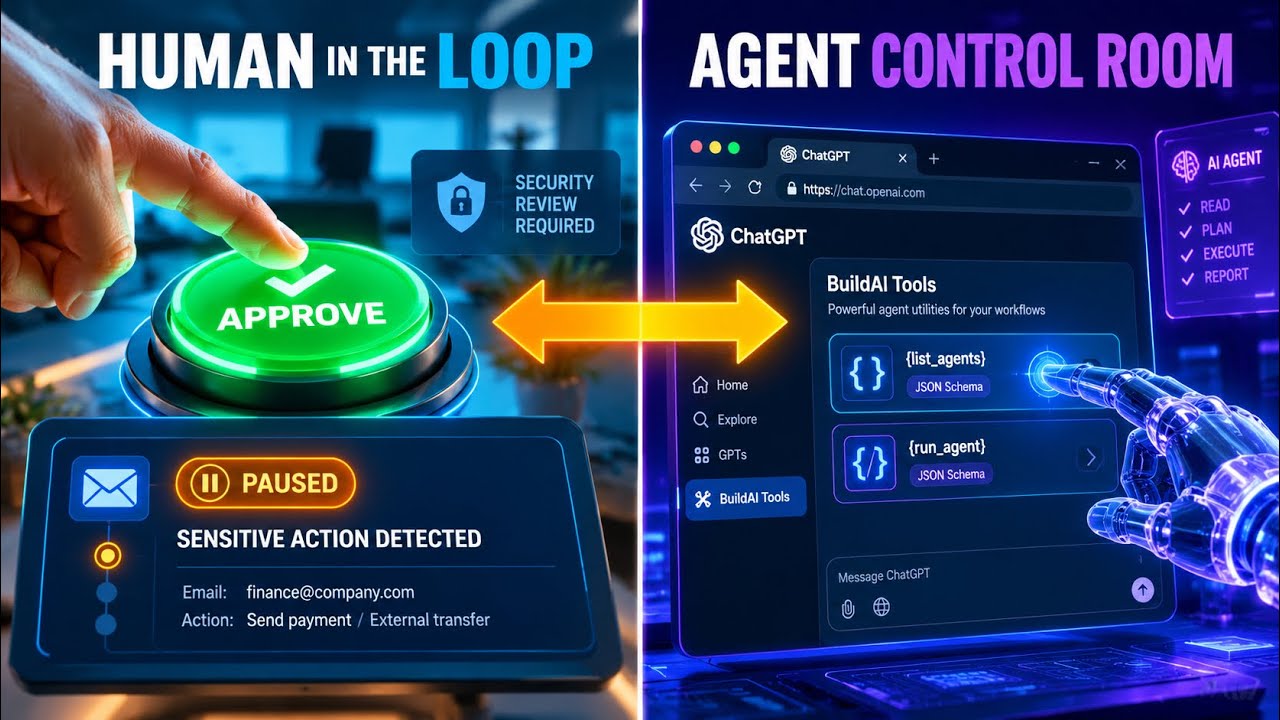
6 Game-Changing Ways to Use GPT-6 Astra! 🤯 #GPT6Astra #OpenAI #Shorts #aitools
AI Engineer Skills Employers Actually Want in 2026 🤖 #shorts #aiengineer #techskills