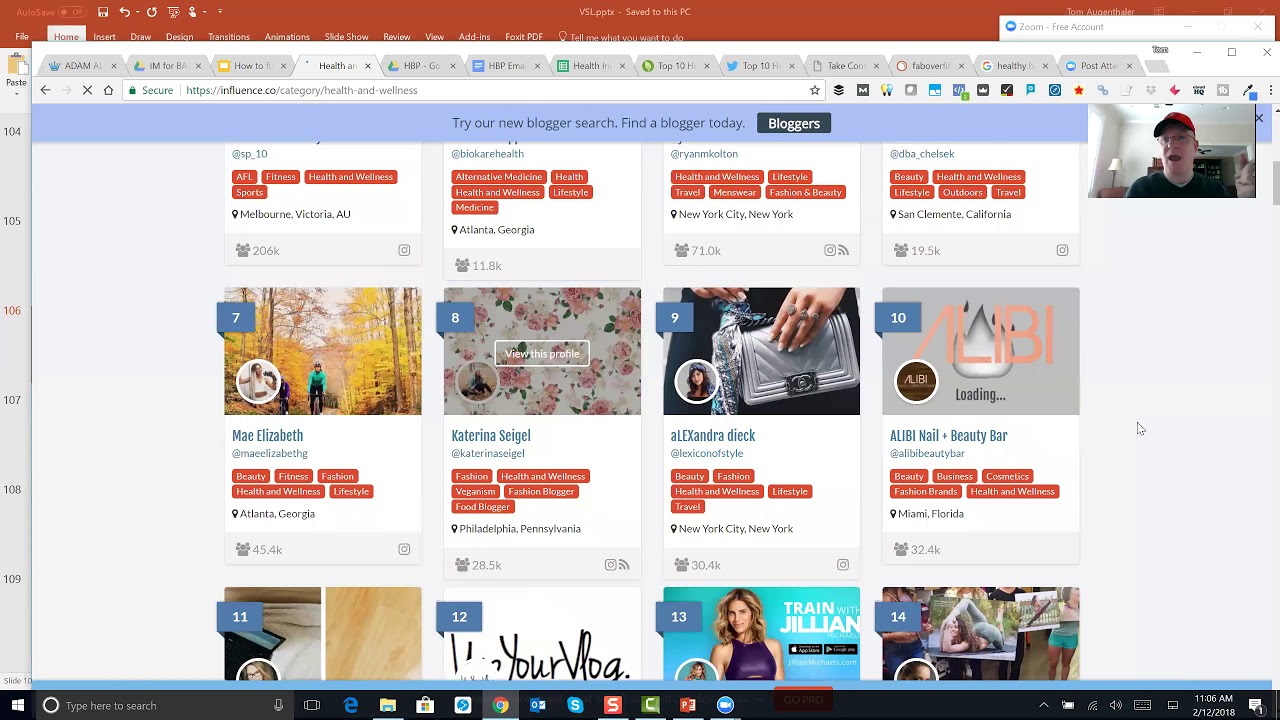
An Australian TV host with 7,000 followers proves you don't need millions to be an influencer. What matters is reach, relevance, expertise, and whether you can move your audience. Nano and micro influencers often deliver better engagement than bigger accounts.
Chapters
Hey everyone, I wanted to bring up a topic today that I think needs to be discussed, and that is, if you have a small social following online, does that qualify you to be an influencer? And What prompted this is a conversation I got involved with on Twitter not too long ago, a few weeks ago, and it was about an article that was written by a woman in Australia, and she was a national TV host there. I think she still is on a morning show, and her point was that she found it being very tiring being an influencer, and it was too distracting, and it was causing her anxiety in her life, so she decided to just cut off the social media stuff and focus solely on being the TV host, her day job, her real job. And somebody chimed in after looking at this article, reading this article, and said that she had a very small social following online. I think it was about 7,000 followers across multiple channels, and that Didn't qualify her to be an influencer. And I chimed in and said, no, excuse me, but she is an influencer. And just because she has a small social following does not mean that she isn't. I mean, especially when you consider that she is a national TV host on a morning show in Australia. So she's being seen nationally every morning that she's on that program. So she is an influencer. So that caused me to think a little bit and to reflect, and I think there's a lot of confusion out there, especially in the last year or so, because more and more people seem to be believing that you're not an influencer unless you have a large social following on social channels, particularly something like YouTube or Instagram, and that couldn't be further from the truth. Many of us know who are in this business, this crazy business we call influencer marketing, that smaller influencers, if you want to call them that, or nano influencers, very small social followings, or more mid-tier, there are more of the micro influencers, if you want to call them that, and then they get larger social followings, they have other names, categories for it. But the point is, is that just because you have a small social following online doesn't mean you're not influential. Especially when you consider that many different types of people can be influencers: book authors, speakers, journalists, industry analysts, business consultants, and the list goes on and on and on. So just because you have a small social following doesn't mean you're not an influencer. You are an influencer. It's just you're an influencer in a different way, and your ideal audience is probably consuming your content in a different way. So, these are things to consider, and I don't think that we should be so narrowly focused on an influencer is only somebody with a large social following. I don't think that that's true at all. And I know for a fact in the B2B space, that is not the case. Yes, you usually would like to have some people with larger social followings involved in your program or your campaign, but it's got to be remembered that there's got to be context there, there's got to be relevance there. Right. And just because you have a large social following doesn't mean you get a lot of resonance, meaning you don't get a lot of engagement. There are people out there that have large social followings and don't get a lot of engagement. So ideally, you're looking for lots of engagement, no matter whether they're small or they're large in terms of their social following. So these are just some things I think that we need to think of as an industry, and we need to think about from the point of view of brands too. Don't get caught up in thinking that a narrowly defined category of influencer means that you have to have a large social following. That is not true at all. There's no basic threshold for it. It's not 10,000 followers or 20,000 followers. That's not it at all. It's about context. It's about expertise. It's about, are they able to motivate their audience to do something, click on a link, download an article, download an ebook? buy something. All of these things are important and can be involved, but it depends upon your goal, right? It depends upon whether you're trying to drive awareness, are you trying to drive leads, are you trying to drive sales? All of these things play into it. But overall, don't get caught up in thinking that somebody is not an influencer if they don't have a large social following. So that's it. Give me a Give me your thoughts. Am I crazy? Let me know. I look forward to chatting with you all. Thank you.