A Deep Dive On Ski Bindings - Tom Gellie and Phil Pugliese
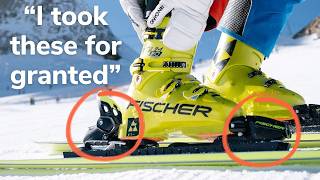
Phil Pugliese, a 50-year bindings expert, explains how ski bindings work: they hold your foot and release during falls. He breaks down DIN settings, elasticity, heel release mechanisms, and why binding placement affects ski flex, using examples from Look, Salomon, and Marker.
Chapters
Today we are going to be talking about ski bindings. So these things that we all trust hold our boots to our skis and release at the right time. So we put a whole lot of faith in them, and I realized I really don't know that much about bindings. So I wanted to learn a whole lot more, so I went and had a chat with Phil from SkiTalk. Now Phil is a great authority on this because he has reviewed skis back from when they were this sort of straight shape to the modern ones now, and he's unbiased. He doesn't work for one of the brands, he just tests the whole variety, the whole range. He's actually helped give feedback on bindings over the years to, you know, keep them evolving and moving forward. So Phil gives us some great insights around design of bindings, changes, the effects that they have on performance, and the feel you get from the snow. Because they're a big part of how we connect to the ski through the boots. The next, the next part. So I learned a bunch of cool things about the elasticity. That's what it's called. You'll find out about elasticity in a binding and how that actually affects the feel and safety of a binding. Differences between race and recreational bindings, where you should put your— like, do you need a high DIN binding? Like, should you really be cranking your DINs right up? A whole bunch of stuff, really interesting. I want to make a disclaimer here that this is just a chat, this is not advice. None of this, we take no responsibility, Phil and I, for what you do with this information. But I think it's really cool information for the, the, those of us out there like me and Phil that just live and breathe skiing, chat about it at the bars, chat about it with friends. And yeah, so I really hope you enjoy this next episode of the Big Picture Skiing Podcast with Phil on bindings. Phil, I'm really interested in today's conversation. My hope is to get some insight into the history of ski bindings from you because you've been testing skis and bindings for a long time. I want to cover some safety things so people with bindings, whether they're old or new, have GripWalk soles, have worn out soles, need to re-grease springs— that's the stuff I want to help answer those questions, uh, as well as things about ramp angle, so that— so the felt sense of balance and performance that you get from, from different bindings. So lots to get into. Where I'd like to begin is, I guess, the evolution, because you've been like— when you first started testing skis, what were bindings like back then, Tom?
I'm not that old, so we, we weren't— we weren't dealing with, uh, bear trap bindings, we weren't dealing with leather fongs. I mean, we've been working with this, this century. Let's stay in that range there. But I've been a binding geek for probably 50, 50+ years. And we're gonna, we're gonna go down a rabbit hole today. I think we're gonna have fun. We're gonna get in the weeds and we're going to be bouncing off of different stuff. But let's start in the modern era of bindings. And that started around late 1970s. And that is when we started seeing DIN standards in bindings, where the bindings went from a 1, 2, 3, and maybe an R or an S setting to a, a full scale. And there's something we're going to circle back on this later on. It remind me to do that. But bindings, for the most part, really have not changed. In the evolution of time. It's just the simplicity is what really has been functioning the best of the bindings. If you take a look at a Look Pivot, that really hasn't changed in the 1960s. Uh, single pivot toe, the turntable heel, and we've got a couple of examples here that that binding really changed and has a loyal following, and both in performance and in perceived safety. So we'll talk about that. We'll talk about my evolution and bindings. And let's talk about, as far as bindings, basically have two functions: to hold you in and to release you. So you want to hold you in when you want to be held in, and you want to release when you want to get released. So it's pretty simple in that way. And what it comes down to, whatever brand or binding that you're working with, is what you have confidence in that working for you.
So go into that a little bit further. So, okay, say you're a— I can maybe understand that from my perspective skiing for a while and on some different brands. How would you phrase that for someone who's maybe their second or third season in?
Uh, on that beginner skier, they're, they're not going to be picking up on it. They're probably leaning more towards that release than retention. If they fall, they want that ski coming out. It's that high-level expert skier that might be skiing in adverse conditions and adverse terrain that are concerned about retention over release, being in a no-fall zone. The average consumer, and I'm maybe the low— I'd say the lower, the lower third of the consumer coming into the sport, just want a binding that's going to be simple and easy. And they look at bindings, and quite frankly, industry has worked this way, that the bindings become a commodity.— and where we've actually made some changes ourselves working with manufacturers is making that higher level binding more accessible for skiers that might not need that higher spring tension rate but want that high performance of that binding.
Okay, all right, so, all right, yeah, I think this is a great area to get into. So retention on one end, keeping your boot connected with the ski, and then the other end is, is release. And it is quite a design challenge, engineering challenge, to balance that out. So like, I guess maybe where's a good question that I would ask is I've always wondered, like, do I need, do I need a stronger binding if my bind— if my DIN setting— I usually ski at about 8.5 or 9. I don't usually go above that. Should I be choosing a binding that puts me in the middle of that? And I guess that's thinking about release. And then how do I think about retention as well? Are bindings better at retaining, or is it just about cranking it up more?
And that's a really good question. That's a question that comes up a lot. If you're a 7 or an 8, do I want to be in the middle of that, that window range? Manufacture in, in that range. If there was a number on that window The binding is going to function properly at that number. Okay. If you put it on an ASTM machine and test it, it should torque properly within that range. Now that's reality. Now in practicality, sorry, in perception, if you've got a spring that's compacted down and you at that higher, that DIN range, you've got the less ability of that spring to adjust. Where if you're in that middle range, it has more range that to, uh, to expand and contract. So even though it will perform at the extremity, it ideally, preferably, you want to be in the middle of the range.
Okay, so, so, okay, that's a good way to put it. So yes, it should— it will release. I could get a binding that only goes up to 10 and, and I could be fine skiing it on 9. But if I get a binding where I, I'm more that 9 number, for me is in the middle of say 4 and 14 or 6 and 14 or something that spring to get it to 9 isn't compact as much. And so then maybe, I don't know, we're jumping already around here. I know there's something about float and that that's important in a binding. Is that then going to give you this more sort of, you know, where that— where your foot can kind of move a little bit before it releases? Am I—
the question I think you're asking is elasticity. Elasticity. Yes. And that, and that's what, again, the binding's about confidence. If you look at the World Cup, what is the most popular binding on the World Cup and the variation of it? It is that Marker Race binding. And then, and Atomic and Salomon just basically mimic that binding with new binding. Look is coming out with another new binding down the road, and that's going to be coming down there. But a racer wants to be over the center of the ski, and they have a minimal amount of elasticity down to about 3 millimeters of lateral elasticity because they want to be just over the center of that ski. Now, if you take a look at a binding, and I've got one here, even going back to this guy, which is the Salomon Driver Toe, uh, single, uh, pivot here, elongated wings here, a ton of elasticity in that toe. Okay. What I find with that binding is that you have more room for error where I can run this binding at a lower setting and still have some absorption there before it releases. So that racer isn't concerned about that slow twisting fall. As a consumer, as a recreational skier, I am. I'm concerned about getting knocked over the lift line. I'm concerned being on a green trail and taken out from behind. And that's a slow fall. And that's where a binding— again, it's balance of retention and release. Bindings, and I've said this, are dumb. They only know the amount of force that's put into them, whether it be lateral here, upward compensation depending on the binding, and upward out of the heel. So if, if it's a minimal amount of force and that's a slow torque fall, more elasticity for me is more confidence. Now, other skiers have different ways, and you have to think in your mind what's important to you.
Yes. Okay, that, that really helps. Now, so we've got this term elasticity in the binding, which is, yeah, how much sort of freedom and play before it really does release, like a bit of almost the boot is on its way out and then it doesn't release, it sort of comes back in because you didn't have the fall. Does that— so there's my question, does the spring have anything to do with that, or is it more the design? Okay, so it doesn't matter if I'm winding it into that 9 setting and it's halfway between the two edges of the window of like 6 and 14 or something, right? Right. That's not going to affect elasticity. It is purely designed— okay, okay. So that's, that's definitely a choice consumers would want to think about, is like you said, to give them confidence. If you're the always maybe skiing in the trees and you like going early season and you're not sure if there's little twigs and stuff under there, an elastic kind of binding could be a little bit safer if you're not going super fast through there.
It can be. And again, we're, we're in a really gray area. And, and we watch how we watch how we say, we say this, but again, it's about the confidence that you have in that. And that's what scares me, that you've got people setting the binds at 10, 14, whatever, and they're beating their chest and dragging their knuckles. They've got the extra long cranium and they think it's their rite of passage, but it's that slow twisting fall that they're not going to release. That binding doesn't know.
Yeah, yep. Okay, um, all right, from here now, wondering, because this elasticity thing, that's— I've never really thought about that before. Does it affect your performance then? Like, for someone like me, if I get in a binding and I set maybe the DIN a little bit lower because I'm skiing at Perisher, it's very busy, and I'm aware that people could be taking me out in the lift line or from behind, Am I then, when I go and ski the black run that's quite firm and do some carved turns, am I going to notice the performance is lacking?
No, I think actually you might be able to pick up some performance. And, and this is where I, I talked about that elasticity. And we're again, we're going to take a little side detour here. And when we talk about getting your binding set, there's 3 settings: 1, 2, and 3. There's an assumption that is beginner, intermediate, expert, and that's not the case. It has to do with retention, um, aggressiveness, and are you leaning more towards release and retention or retention and release, right?
I'm gonna— just so people know, okay, Phil is talking exactly here. When you go into the rental shop or you go online and you type in DIN release, and right, you're— and you're a class— and one of the things you have to do is you have to classify yourself as a 1, 2 or 3 skier. Yes. And is there plus as well?
There is a 3 plus, and I mean, that, that's the guy that doesn't want that binding coming off.
Yeah. Okay. Okay. But yeah, so, so this is what you're talking about. So, so there's already— so I'll let you get back to it. So that has got to do not necessarily with how skilled you are.
I'll let you take over. Well, yes and no. My feeling, Tom, you could probably ski a binding at a 4 or 5 and not come out because you're so smooth over that ski. You're centered, you're pressured downward, you don't have a ton of different torque values in that binding, and you could probably ski that binding lower. Okay. The better— in my opinion, the better, smoother your skier are, the lower you can keep that binding set.
I would agree with that. Because yeah, I've not really had many releases even when I thought it might. I didn't crash, but right, yeah. And I think it's— maybe that's a bit to do with telemark too, where you have to be trying to stand centered. You're getting no heel lockdown support.
You're absolutely right, Dad. It's all factors that come in to becoming a better skier and having more tools in your ski box and to be better balanced.
Yeah, okay. So in my head I'm just thinking now, I don't need to— when I go and see my buddies in Austria who maybe formerly raced on Europa Cup and they're like, I'm on 11, 12, I don't have to feel like an idiot or like a lesser skier if I'm happy on 7 or 8. In fact, it could be, be in my favor because then if I do have these slower falls, it's gonna more likely come out. Yes. Okay, that's good. I feel better already with this conversation.
Probably you've had very few pre-releases in your career.
Yep, yep. I can't even— I don't think there'd be less of them on, on one hand. Yeah, yeah. With the thousands of days.
And if you think about that situation very well, that Bonnie should have released.
Yeah. Yes. Okay, so now where do we go? We've talked about Uh, we're still on elasticity.
Okay. And that's, and that's absorption. And that's where I'm going to bring in, and we talked about the balance of safety and such, and manufacturers, they really try to avoid the word safety because it can pigeonhole them. But the one binding that comes into play with this, and I know you've worked with variations of it, is good. Sorry, is the Tyrolia Protector binding. And what that is, and we talked about elasticity in the toe and the way the binding releases, and bindings were designed to release forward out of the heel. Tyroli, when it came out, this protector 2, 3 years ago, it is the first binding that has a bilateral release out of the heel. And here's an inset that you can see as far as how that binding is coming out., as far as lateral pressure. And in the heel, it has about 7 millimeters of lateral travel on either side before it releases laterally. Uh-huh. Now what that can mean for a better skier is that is absorption, especially in firmer conditions, is that ski is quieter because that absorbs in the heel. Yeah, that's key. Smoother.
So could you almost think of it a little bit like mountain— it's adding a little bit of mountain bike-like suspension to the ride? Yep. Obviously not in the— this vertical plane, but it's lateral. Yeah, the lateral plane. Yeah. Okay, so that's why you're saying I may actually notice an increase in performance because some of that juddering is negated because there's a bit of this elastic elastic play. Exactly.
Interesting. Okay, so that's when we're getting into the nuances of a binding and where a better skier is going to feel some of these nuances.
Yes. Okay, okay. All right, so elasticity, how much play there is in a binding. Generally racers do not want this because they want precision and they want every bit of input in, into there. And so there are binding designs that are like that. Um, was there— do you remember, was that Salomon one the first time you'd really tried a binding that had this like greater elastic, elastic kind of—
where, where the evolution started with me, and I've got the bindings here also. I'm going back to the late 1970s, early 1980s, growing up in the Poconos and like all of us kids, we thought we were better than we were. I was a whopping 145 pounds and a regular Solomon 727 would be enough. I needed the Equipe. But, and again, I've got the Equipe here and this is the first of what I refer to as the modern bindings, taking the Look Pivot out, which has some different aspects, but this was the first binding to integrate upward compensation in the toe. And what that meant was in a rearward twisting fall, lateral pressure turned to the upward and lateral, um, diagonal pressure and allowed that binding to release this way. And I remember I was skiing down Asp at Poconos and I went to a mogul backwards on my 204 pre— uh, no, I'm sorry, it was a 195 Rossignol ST Comp. I hope the pre was later on. So, but I went to a backwards and that rear twisting fall allowed that binding to release upward out of, out of the toe. First time I've ever experienced that. Bindings were really designed up to that point to work in a forward twisting fall. Rear twisting falls really didn't come into the play as they do now, and that's where we're talking a lot about that. But this binding here worked very well. The next evolution of that binding was the 747, which I do have one here. And with, with this binding here, very similar in design of this, but if you notice, these wings are not that long. So yeah, this is where I lost elasticity in that. And I was up at Killington, came to conclusion, and I was in a fall and I didn't— the binding released and I didn't feel it should have released. So this is where I lost the confidence at Tom— sorry, sorry, Salomon at that point.
Okay. And so simply put, the one of the design changes, you— yeah, you lost that elasticity and, and you could actually see it in the wing. Yes, just narrowing that changed that, right?
And that's where I actually switched over to a Mark at that point. I went to the the MRR, the Rotomat, for that short mount distance. Then when I came back to Salomon in 1989, when they came out with the 957, and you can see the difference in how long these wings are, and that created more elasticity in that toe. And the other thing that was unique with this binding is, again, getting into a little bit of weeds, but The way that these wings work is that they hold on top of the lug and not the end of the lug. So what it does, it gave a little cleaner release pattern, so it was a little bit smoother in that release. Um, if you go to our— like, to plug our site, we have got a video with Jim Shafter with the whole history of, of the Salomon bindings for that.
Oh great, I will leave a link in there for people that that, yeah, really want to get in.
And but that, that's a ton of great information there.
Okay, okay. What came to mind then when you sort of talked about that backwards fall, and then also when you had a— you tried the new, the next version, and you pre-released when you thought you shouldn't have? Yeah, maybe we should discuss the, the types of falls that tend to be the most traumatic. Would, would that be fair to say?
That— well, again, bindings are, are dumb. They don't know the amount of force that's put into them. So if you've got a downward pressure in that heel and a little bit on the toe, the binding doesn't know that. It cannot sense that downward pressure.
So you need a combined force for that, for that to be able to release. Okay, okay. But would you— I guess what I'm asking is, you know, most the, the most common problem is an ACL tear in skiing, which tends to come from a rearward twisting fall. Rearward twisting. And a lot—
yeah, and a lot of it has to do with the modern ski, okay, because of that flare in that tail, that, that tail doesn't allow to scrub out. It gets locked in, though the pressure is backwards, and all that torque is on the knee and the— and on the ligaments. And bindings designed to protect bone, not ligaments, and that's where the protector comes in, allowing that to release laterally out of the heel.
Okay, okay. And then, have you ever had times where, like, when someone— it doesn't release forward, say they hit, I don't know, maybe it's an object just hidden under the snow— is that— that's when the, the the heel should release and you should come out forwards. Is that typically— when that doesn't happen, people might break a bone against the, like, a boot top tib fib, is that right?
Yep. Yeah, a boot top fracture. Um, not as common as they used to be. And we have to remember the, the forces that are required— the heel release is 4 times the amount of force than the lateral on the toe.
Oh wow. Okay, that's got a— there's a lot more retention holding that the heel down than it is this way.
And that, that's where some of the heels, different designs have different amounts of elasticity in it. A two-stage heel, um, like the Salomon that we have here and the Race Bindings have less elasticity. When you get into a Look Pivot, that has more elasticity in that heel before that releases.
Okay, so if I'm now thinking I'm— I'm okay, we're back, we're in the modern age right now, and I'm thinking about selecting a binding. Sometimes I don't really get the choice because it's integrated into the— into the system. But I guess really, is there much difference? Are they all pretty good, or are there nuances in terms of where the— maybe say the toe release pivot sort of point is? Or is it this— the wings and elasticity? Is it the— I know sometimes actually There's a lot of questions coming to my mind, like where this— where the spring is located. Like, can it— can be— it can be kind of forwards or sideways, is that correct?
Uh, we got a longitudinal spring and a lateral spring, okay? As far as our two designs here, longitudinal here. And again, I'm going to use some of these older ones because quite frankly they haven't changed that much, but we've got a longitudinal spring here, lateral spring here. Simply put is a lateral spring is going to be a little bit quicker return to center and keeping you over the center of the ski, not as much elasticity. The longitudinal springs tend to have a little more elasticity, a little bit slower return to center, and you'll be able to run— again, my, my feeling, this is my opinion. Yes. Put disclaimer in there. Yeah. I have more confidence with the longitudinal mounts of spring because I like to be able to run it lower and smoother.
Okay, interesting. And I guess that— yeah, so either the spring is lined up more in the same direction as the kind of the torque is releasing the toe. Yes. And here, or it's lined up this way. And, um, so then those longitudinal ones like that Salomon binding— yep. And is that the Tirolia, like the Tirolia now?
Well, Tirolia has two. If you look at the race bindings and the PRDs and what they're using on the World Cup is a longitudinal spring. The, the protector is a lateral spring. Where some of these lateral springs started coming into popularity is when we got into frame bindings where they're allowing that whole binding frame to lean up and that longitudinal spring was too further forward. Okay, changing that hinge point. So they went with the lateral spring like with the Warden and the Griffin and and those, those the royal bindings, then that allowed that to, to twist up in that walking. But we've pretty much gone away from frame bindings, uh, this era.
Yes. Okay, okay. I guess the one question, this, um, I'll grab my ski here. Okay. This binding, this Tyrolia It's, it's got this diagonal.
Yeah.
And I know that this is different from the Protector. Am I correct? Yes. Okay. I tried the Protector once on a pair of skis just last month, and it was quite— there was like, there was— I was like, oh, I have to adjust another point. I've only ever had to really go like forward pressure and DIN, and then the Protector, there was another screw on the side here. So first, what's, what's going on? Like, why has this got a little diagonal thing?
Okay, the diagonal release came out in the early 1970s. Again, remember I referred to most of the falls back then were forward twisting falls, and what that, what that diagonal release is allowed that boot to come out a little bit smoother out of the heel. Now, the diagonal aspect of that really did not come into play until the binding will already release the boot. Okay. And I really wish I had a Tyrolia 360 here for another, another point. But yeah, that, that really didn't come into play. They still use it today. Now, your question regarding the other aspect of the protective binding and that adjustment here. Now, when we set a binding for our release at the toe, release at the heel, is that it's under what they refer to as an ISO, um, restriction. And that's where those numbers are set. The lateral release on the heel, there is no standardization in that. Okay, but what— but they want you to ideally set that up. If you're an 8, they want you an 8 on the lateral for point of reference. Okay, now if you go— I've got an—
let me just— I'm gonna pause you there because I think that's, that's really important. Can you just repeat what that— there's no actual standard for figuring out the correct lateral?
Even the first lateral release heel binding, which was the knee binding, had— it was, it was only a lateral release out of one side on, on the meat, on the lateral side, on the lateral side of the heel, and yet left and right specific. Um, but with this here on the lateral, on this here They've got these for points of reference on it. Got it. Okay. Now, with that said, and again, I go against what Tyrolia says about this. I do not set my lateral release to match my heel. I work on the lowest setting, which is a 4. Okay. And because I want that in a real twisting fall, I want it to come out.
You want it?
Yeah, you want it off, right? And I've, I've skied it in the bumps. I've skied it down Mammoth, the face of Dave's Run on Mammoth. I've skied it all over the place on the floor.
I've yet to pre-release out of it. Okay. And have you had some releases where you thought that was— did it release nicely at lower speeds or you haven't had crashes yet?
It hasn't released on me yet. Okay. But it's also like fire insurance in my house. I haven't used it. I'm not going to cancel it.
Yeah, I know what you mean. I know what you mean. It's only useful until the day it happens.
Yeah, it's cheap insurance. I mean, everybody's deductibles have a comma in it, and some two-jits left of the comma. For the extra $100 of this binding, it's a no-brainer to me.
Yeah, yep, interesting.
Okay.
Um, any thoughts on where we go next? I want to— I kind of want to, I guess, ask a little bit about—
you touched on the performance aspects of a binding and how that changes characteristics.
Yes. So let's go there.
Let's go there.
Okay, so let's get— let's get me out of my freaking out about my knee going on. Let's get back into the— into the— into the fun stuff. Yes, I want to make some fun turns, right?
And, and this is where Um, people have a lot of opinions and there's really nothing right or wrong. Uh, I remember we were on a conference call 2 weeks ago with, uh, one of the manufacturers, and we started talking about stack height of the bindings because they're coming out the new binding that's much lower on the ski. And excuse me, and the subject of race skis came up that were stacking really high. And FIS regulations have a maximum that we're allowed to do. And they went into— is when Stenmark and Phil Mare were skiing, is if you take a look at some, some of Stenmark's skis, he's even taken the AFD off the ski. He wanted to be as low on that deck as possible. Hmm. And the reason that we've gotten away from that from when Phil and Steve and Angermar said is the way that we're skiing now. Racers now, the angles is so incredible that they're booting out. Yes. And that extra height helps minimize that booting out. So that's why we see it there. But we're seeing a trend on wider skis being lower on the deck, and the feeling is tremendously different. And really, I had a problem with a lot of demo skis and demo bindings that their stack height was a lot different than the retail version. Again, I've got stuff on the site about this also, but when you demo a ski with a certain demo binding and you fall in love with that ski, you like it, you go in, you buy that ski, you put the retail version on, and you feel like you have a different ski. Because of that, that stack height.
Do you know what, I just, I just had a memory, uh, when I used to ski on Völkl more, the, the only time I really liked the Völkl Kendo was when I bought— it was a Marker, it was, it was that classic one that goes on their race skis, the kind of real arrow-looking one. It wasn't the, um, Griffin or anything like that, right? It was really low to the deck on this Kendo, and I can remember this, this, these great days at Revelstoke where I could get on the groomers and just charge and through the trees. I really loved it. And then I got this, got the next, you know, version, and it came with— it was, it must have been a much higher stack height, and it just did not feel the same. So that, that makes a lot more sense now. There wasn't much change in the design, just the binding.
Exactly. And this is what we run into, this, and Well, we had a problem with, with Marker in that not only their demo binds were taller, but they were a negative delta, meaning the toe was higher than the heel. If you got in the retail version that had a positive delta, it was a 3— it was 2-degree negative to 3-degree positive or vice versa. But it was tremendously different. Interesting.
So are they addressing that now?
And this is something I went nose to nose with them and to the point they walked away from me and they forgot how to speak English and went back to speaking German. But when I went to meet with Vocal not much later, they said, we've addressed what you were talking about. And their new demo binder, they make a running change that it mirrors the delta of the retail version.
Okay, nice. And just for the listeners who are hearing delta and are wondering what that is, just think the chain like higher in the front, higher in the back, lower in the front, or the difference in the toe and the heel height, the, the ramp kind of angle. So is what Phil—
it changes everything in your position on it. And again, you— I know you had some conversation with Brett Amsbury about this, but yeah.
Maybe that delta is dramatically different. Yeah, so I think it's really neat. When we first spoke, you, you mentioned this, and when we talked about demoing skis, choosing a pair of skis, how you, how you're trying to ski, the conditions, the binding, and, and this, this ramp angle delta height, a delta angle thing here. Let's, let's talk about this one. I mean, I've talked about it before on other podcasts, but Do you want to maybe talk from a felt sense, like what— maybe from what you notice when you get on bindings and you're like, oh, I can tell this is— I, I can't do this on the ski, or I feel I have to adjust my stance like this, or I can't go as deep in the turn. Are there things you notice, let's say, with a binding that has a lot of delta? So the heel is like high heel shoes, you feel like the, the heel is really high.
What, what's your experience? This where it started for me was when Volkl came out with the M5. I was never a fan of the previous generation Volkl. I found them very stiff, stiff and blocky. And the M5, I said, you know, let me take a look at this with a clean, clean head. And I took out the 177, I took the 184 out, I moved the binding back, I moved it forward. I just could not mesh with the ski. I talked to the rep about it. He thought I had some personal grudges. I said, I'm real— I'm trying to like the ski, but it wasn't the ski, it was the binding. It was because that toe was higher than the heel, and I had real trouble pressuring that tip. Then when I put— I skied it with a retail version, the light bulb went off, said, yeah, this is a really nice ski. And then I started looking at it a little bit deeper. And just realizing the differences. And where I started feeling the height difference was going from that, that demo to retail version. And I came to the conclusion, and this is where I looked at this a couple of years ago when they were coming out the new, a new demo system, is that they went with a fixed toe and an adjustable heel. That adjusted like 4 different sizes, which puts you a little bit fore and aft on the ski, but it puts you very low on the ski. So, and what I came to the conclusion is I would rather be fore or aft a centimeter or so than too high a centimeter or so, especially once you get into skis that start in 80 and above. Okay.
But let lower feel Interesting. So what you're saying there, on this particular binding, you, you couldn't really keep your boots centered when you, when you changed for different sizes because the, the toe was fixed. The toe on toe piece on the ski is in the same spot. Bigger person, yet you can only move the, the heel part back. And so they're actually going to be kind of further back, as you say.
But they also set the ski up, they had a 160 set, let's say 178, they had two different positions on it. One for a 25, 26, 27, and the other one maybe for 27, 28, 29.
Got it.
Okay, so they got around it that way. Yeah, they got around that way. So it wasn't a dramatic difference. We were never more than a centimeter. Yeah, but that was a much better feel than being too high.
Yeah, but that's your point. Yeah, that's what you realize, like the height thing is really— you like the feeling of lower to the deck. Um, yeah, so just— is that— would that be— am I saying that? Yeah, that's correct. Yeah, yeah. What do you feel you get with that? What do you like about the low—
lower height? Um, I feel like it's snow feel. Yeah. And especially on a wider ski that really wants to be in the snow and not on the snow. When you're pressuring that edge down, I think it reacts a lot smoother, but it is a more tactical feel for the snow. And that also gets into mount distance and how letting that ski bend naturally underneath.
Okay, okay. Yeah, I would, I would agree. I like the lower to the deck feeling, um, especially in, in uneven sort of terrain, like you said, like moguls. You feel like you're you're down there more, you're less sort of, um, topply kind of feeling. I mean, it's subtle, but it is definitely there.
So then do we kind of found it accidentally from that Marker Race, that comp binding, which is fantastic binding, um, to, uh, to the, the Griffin, which actually wasn't— you went from about, uh, about probably 18mm high to around 30mm high.
Wow. Okay. Yeah, so it's quite a— yeah, no wonder I noticed it. So then I guess it's got me thinking, I— because I've, I've pushed towards my carving skis or wanting like a little bit wider, like this, this one here is, is now 77 and sort of like that Fischer Curve GT 76. I really enjoyed that because of the not booting out in, in the snow, especially on the north West Coast of America where you sort of, you're carving, you're definitely getting into the surface of the snow. Yeah. Any, any thoughts on, yeah, on that in terms of like booting out? And would the World Cup people, if they could get around it any other way, do you think they might prefer a flatter to the deck, lower, lower stack height feel?
Or, um, again, if I think booting out is still their priority. Yeah, one of the reasons that we, we haven't seen Boa on the World Cup yet is the positioning of the dial. We're going to see it moving up, and it's, it's in development from brands. We'll see it in the next year or two, and I wouldn't— and I would be surprised if we don't see it on a podium, um, within the next 24 months. But I think because those angles that they're getting, they need that extra height. Yeah, that started with Shapeways. Back in the mid-'90s.
Yeah, yep. And I kind of curse my wider feet that I have to blow my boots out because I'm really always— I just know that point's coming where the boot on firmer snow, I'm like sliding out because it's dragging. Like all my boots, I have to kind of stretch a little bit, and, and so there's a bit of— even on the big toe side, I tend to, to do it. So there's a bit of overhanging plastic. So I like the kind of the skis that still carve well and are wider bodied because I don't have that.
So that's 77. I've got some 77s, probably one of my favorite widths of a ski. It's a ski that I've run flat and I've skied that I've run with a plate system on it. I use a Blossom AM77, which we have branded for ourselves. I'll run it with the Vist plate on it and I run a Look Pivot on it. I love them both and they are definitely different fields.
Yep. Hey, you just, you mentioned plates there. Yep. You want to, do you want to talk about plates, your experience and what you find?
No. I mean, that, that's its own thing. And I mean, we can get into plates, but those are really more technical derived skis and there really isn't much choice with them. You're not picking a plate, the plate picks you by the ski. Yeah, whether it be Fischer plate, which is a— I should say really by Tyrolia plates and Look and different.
Yeah. Okay. So maybe then let's talk about— I mean, just I asked you, does how the binding is screwed into the ski, so where those screws are located, do you think that people could feel if they're really sensitive the difference? And does that affect the flex pattern of a ski?
Absolutely. Okay, that can create a blockiness underfoot, and this goes back to like a Marker Rotomat, which has a very short mount distance on it. These, these 3 screws here and these 2 screws here are fixed. The front screw is a floating screw, allowing that ski to flex very naturally underneath the ski, and that is also one of the popularities of The Look Pivot is that short mount distance. And on the race side, the Rossignol, um, Rocker Race, which is a very short mount distance. Other manufacturers address it a little different ways. Tyrolia has their FreeFlex, which the heel body is attached to the toe and it's floating in the back, allowing that ski to flex underneath it, allowing that ski to flex underneath is huge. Yes, yeah, definitely not having this blocky, non-flexed, bent ski, and especially for a lighter finesse skier.
Yes, yeah, and I found that out through sort of pushing my skiing for a long time and chasing like demo team stuff, went to stiffer skis, race plates on them, that sort of stuff. I've just realized this last season I don't— I need to come back. I actually prefer the feeling of a flexier, lighter And I'm not very heavy, I'm only like 74 kilos. So it's interesting you, you mentioned this and this flex feeling of the ski. I, I think— I don't know if you agree, but now that's almost the first thing as I make turns on a ski. I'm trying to feel, feel for this. It's another— no better word than just this, this flex feeling and feeling like your foot, your outside foot is right in the middle of this bow that's occurring. And when you feel that, you just go, oh, you sort of start going, I like this ski.
And if a ski doesn't bend, it doesn't turn. Yes, it's such an important—
change direction. Yeah, yeah. Like, you could have some good sidecut and everything in it, but it's awful if it doesn't really bend nicely for your weight, right?
And again, this gets back to— I talked about people skiing dims above their, um, really their, uh, staying in their lane, but skiing too long, skis too stiff, thinking that they need a ski with metal and not realizing metal doesn't make a ski stiff. One of the biggest, burliest skis ever was the K2 VO Slalom. Not only didn't have metal, didn't have wood in it, it was a foam core wet wrap ski, but the thing was an I-beam.
Okay. All right. So if we wrap up this— so the binding screw location or how the binding flexes with the ski. Most bindings now are well aware and they try and address it. You know, Tyrolia with the Free Flex thing, the Look, the Pivot with— it's just where the screws are located. Um, any final words on your own personal preference, what you like? Do you think you can find words? We're just getting started.
Okay, all right. I get that. How far do you want to go into weeds? And this is, this is where I, I want this little tangent here, is everybody needs a 12, 14, 16-pin binding. I'm not sure really when that started. I mean, I've got 4 bindings here, and I really wish I had Tyrolean being a 5th. And this is a Marker M46, Marker MR, Solomon 747, look for Zeraci. These bindings maxed out at a 10. Now 10 is a junior binding. Any adult would be fine on these bindings. The people that you think you need a 12, 14, 16 DIN, you're buying a better housing where these were the best housings offered back then. And we've seen a change in the industry in that sense. And that bothers me a little bit.
So if I was to say it back to you, would you like to see the same housing almost across whether you're right down? Would that be a better solution?
That we need that in bindings, the same construction all the way through and boots to make everything the same qualities at 130. Same quality liner, removable buckles, and a boot completely coming apart from a 90 to a 130.
So, but yeah, so in agreeance with you there, got like, yes, I do. Yeah, and I know there's a price thing, but yeah, the fact that like I have to often recommend people get a stiffer kind of boot and just soften it to get the features of both sides, cuff alignment, to get a better liner It is. Yeah, you're right. They need to bring out the kind of the, the, the good quality in just for lesser, lighter people, little kids and everything.
But unfortunately, manufacturers have to meet all these price points, which makes it, which makes it difficult. Yeah. So, and that, that part, that part is unfortunate in that sense. Yeah. But I mean, I've got a, a Rosinul 120 here from 2002 maybe, and their new 11 here, it's the same binding, same exact housing. If we took these apart upside down, they're identical.
Okay, nice.
So that's, that's the thing that I did want to touch on was indemnification and lifespan of a binding.
Yes.
Yeah.
Oh yeah, and when I said wrap that up, I just meant wrap up just the flex part. Oh, okay. More than into talking more. Yeah, yeah, I was just more like on flex part. I just want it like so people in their minds are like, okay, Phil's sort of, uh, just making us aware of— yeah, flex, definitely the binding has an effect on the flex of the ski. And, and the way it does is through screw locations and also like the Tyrolia, this different design floating heel. So yeah, if we come back to that, was there anything more you wanted to mention around flex and choice of binding for that.
This is something that a skier is going to mature into. I mean, this isn't high on our priority list, but it's something that might hinder their progression over the, over the course of time. And again, I know you've talked to Brent about this, but like, it's canting of a boot. You and I and Rogan, or a lot of people, can discern— I get on a ski that's not canted right and make that work. I'd be an intermediate and advanced skier hits that ceiling and they can't improve. They don't realize that it might be the equipment. And that's where somebody grows into a better binding as they get better. And skiing to an extent, ice, it's projected as a triangle. As you get better, there's one way to do things. In my opinion, it's the opposite. As you get better, there's more options for you, and that's where you need to find what works best for you. And while we could talk about technique all you want, but I firmly believe skiing is still art, not science. Yeah, there's some science involved, but there's still perception of art and a personal support.
Yes. Yeah, it was interesting in, in Austria one of the, the projects was to do film myself testing a bunch of skis and this other, this female, and she was, um, like a, like a good skier but just a recreational kind of skier. And we tested exactly the same skis and we tried to get like the same length but we changed the flex. So we all, we tested a 175 and a soft, medium, and a hard, and it was just for the point of like finding out this exact same ski, but you feel it different to me. And it's, it's coming out, but it's really interesting, like what— like there was a few assumptions I made beforehand that were wrong. She liked some skis that I thought she wouldn't, and, and kind of vice versa. So, um, yeah, I think it's, it's— I know what you mean about the art side of things, and this felt sense side of, of skiing. It's important. You don't want to just base everything on hard numbers.
And this is an individual sport. And I mean, gone are the days when all the skis were shaped the same and the only differentiation really was the flex. We've got different tip profiles, different shapes, different sidecuts, multiple sidecuts that really change the nuance and characteristics of the ski. Ski. And you talked about different testers testing different things. You being able— a good skier and be able to test the nuances of a ski are two completely different, uh, abilities. I'm not the best skier in the mountain, I'm far from it, but I can discern the nuances of a ski. And that's what— that's something I've learned over the course of the time. There's skis that I've taken that ski, flexed that, say oh, this is going to be good and get on ski, I'm absolutely right. But there's other skis that I completely missed on that other people like. And I don't care if I dislike or like a ski, that's irrelevant. My job as a tester is to discern who's going to ski that, who's going to enjoy it, who's going to get the most out of it.
Yes. Yeah, yeah, that must have— that's— and you can only do that with the amount of experience years you've, you've put into doing that. And probably thinking like in your head going when I ski, like, I'm not just thinking about Phil skiing this and whether I want to buy this myself. You got— you've got to be, how do I write this up and recommend and pretend I'm Jim, and would he enjoy, enjoy this?
I remember the first time we started seeing rocker in skis. Um, it was— I was back at Stratton, and it was a beginner ski that had some tip and tail rocker. And I remember getting off the lift and getting off as a beginner would, leaning back because you're in that defensive position. I slid off the lift, spun around in a 180, and I'm looking back at the lift and it scared me. Yeah, you need that camber as a connection to the snow.
So next, let's, let's discuss a little bit of safety with, with bindings. And I think the first one is— I mentioned this with Brent— but grip walk bindings. GripWalk soles and older bindings? Can you speak to safety there? And if you own a GripWalk boot currently and you have an older ski, you really need to listen up right now.
Yeah, it's, it's a compatibility issue. And in today's environment of people buying product online and not getting the compatibility checked in, in a retailer, Um, Joe Smith buys a pair, has a pair of 26.5 boots. Those are getting tired. He had it for 10 years. He goes online, buys another pair, 26.5 boots, same shell size. He looks at the 305, 305, they should be able to go into the binding, not a problem. He clicks in. I don't know what the problem is. Everything should work fine. Yes, very well, you might click in, but doesn't mean you're going to release. Because we're talking about when going from grip walk, and we've got our regular soles here, and you can see the heights here, to a grip walk, and you can see the difference in the thickness here, specifically on the toe contact point, where the AFD on the toes, uh, on the toe lug touches the binding should be identical, but it's going to be taller. And we've got all of this extra material here. So if we got into a binding that is not a GripWalk binding, that this toe is going to be jammed in there because of this being so much thicker. And while you'll be able to get in there, it doesn't mean you're going to release. And unfortunately, we see a lot of people out on the hill and just look in the lift line with an older binding with a new boot in there, and there is incompatibility. And it's not that they're trying to sell you something new, but it's about your safety out there on the hill. Yes. So in, in that case, most every boot out there that has a GripWalk on the sole has an Alpine option that you can swap these soles to the older soles so you can use that older binding.
Yes. Yep. So that's one option people have got if they're like, yeah, I just bought a new boot and it's got GripWalk soles, right? I've got a binding that's not GripWalk compatible. They can go buy the, the, the, the soles to replace it so they can still get it. You're going to lose the function of GripWalk, which is kind of nice. Or they have to go and, yeah, and get like— the binding has to say like GripWalk on it to be, to be compatible.
And either GripWalk or multi-norm. Okay. Um, AT. And if you look at the Venn diagram A multi-norm binding and a grip— a multi-norm binding is going to accommodate GripWalk and Alpine. A GripWalk binding will not accommodate multi-norm or AT, but it'll accommodate that DIN or that Alpine sole.
And an Alpine binding will not accommodate GripWalk and those, the multi-norm, the other ones. Okay. Okay, so there's, there's that out of the way. Any other things? Should I be greasing my bindings in summer? Should I be doing anything to maintain it? You know, I've got to wax and tune my edges.
Any advice there? Fairly self-contained. Okay. Um, and the one thing I do recommend is get your binding checked regularly, once a season. And just make sure it's functioning within range. And again, what it says on the window, if you're 6, 7, 8, whatever, that number is a point of reference. It's the amount of Newton meters that on that ASTM testing machine really matters. I mean, it might show a 7, but as long as it's functioning within that range of that 6, within the— I'm just going to use numbers out of the air here. 244 to 260 Newton meters in our range here. And yeah, I don't know where these numbers are coming from.
I didn't look at the chart. Okay, okay, okay. That's good. Um, well, that's kind of— at least that's something I don't really have to worry about too much. But oh, what about when— how do you know when you should replace the soles on a boot? Like, when do they start messing up and maybe making it too easy to release or not holding in? Is there any checks for that?
Uh, there kind of is. If you take that boot and— let me just grab a boot here. This boot is sitting nice and flat here. There, if I, if I tilt that, see, it stops center again. If a boot has a lot of wear, that's just going to keep going a little bit and just slow down a little bit. Any rounding down on the bottom from walking is going to lose contact with that ski. So as you pressure into that ski where this should be square all the way through, a rectangle really, is as you pressure on that, that inside can flex down a little bit. So you're going to lose a little bit of control in there of that boot. And then also you're risking safety in that binding possibly jamming because that boot is moving in there.
Yep. And one thing that comes to mind is, is kids, because I know I buy secondhand boots sometimes for my son, and, and kids get, you know, a pair of boots could go, could have gone through 3 different families. Definitely keep an eye out on your kids' stuff.
Would you? Yes. Oh, absolutely. And my feeling on that is kids need to grow out of equipment, not into it. Do not expect that boot to get little Johnny through middle school, high school, 6 years of college, and his first 2 marriages. Yeah. Hope for 1 year, plan for 1 year, hope for 2.
Yeah. And I think that if you have this mentality of, of marketplace and places like that, that you, you get it and then and you put it there, and then you're getting some money back perhaps. Like, there's one way around it. I mean, I— like, now I'm fortunate to, to be able to buy him some, some newer boots, which are really nice. But yeah, I would totally agree. There's a lot of kids out there, his friends, that go skiing with him, and they're just— the boot looks the same size as mine, and they're, they're up to my hip, and they wonder why they're in the back seat.
Yeah, you, you try to wear a 30.5 and see how you do. And that's one of the things I was working on, a boot bench, and parents wanted the kid little— he's on like an 18.5. He says, put him in 20.5. And I asked him, I said, what size do you wear? He says, a 26.5. I grabbed the 29.5. I said, put this on. Tell me how you're going to ski.
That hit home pretty well, I bet. Yeah. Yeah. Okay, excellent. So it's safety thing with the bindings in terms of maintenance, um, leave it to the professionals. Yeah, yeah. And you— and when you said go get it tested, yes, certain shops, good, good shops have been around, the ones that have a good reputation, they often have— they'll have the facilities to be able to test a binding, won't they?
That the release— any, any shop that carries this specific brand are required to be able to test that binding. They go through all the procedures, all, all the, all the modules on how to do that.
Yep, great.
Okay, cool. At least in the US. I'm not— I can't speak. Okay, I'm not sure how it is where you are.
Okay, yep, that's good to know. Phil, is there anything more we need to mention about bindings? We've, we've covered a lot here. I'm feeling good about, especially about the— for me just like the non-ego macho, like, oh, I should be on a higher DIN binding or whatever.
Um, yeah, anything more you want to— um, and I'll take this from Marcus Caston, is your ego is not your amigo. Don't think that you need to run that binding at a super high DIN. As soon as I hear that a young guy comes in, my eyes roll in the back of my head. Dude, you're not that good. And to be honest with you, you're compensating for something else. Learn how to ski better. So the smoother you ski, the lower you can ski that binding. Yeah. Okay. Fantastic. And I will say, when you're buying a better binding, you're not necessarily buying a bigger spring. You're buying a better housing. And that coupling of how that holds the boot to the ski. And again, a lesser binding where manufacturers unfortunately have to meet these lower price points because a good amount of people out there just look at binding as a commodity. And these are the people that go to Walmart to buy their tires, but— and not realizing the tire is the most important safety aspect of your car because it's what holds you to the road. The binding is what holds you to the ski. Don't shortcut on the binding. Get a better binding. Step up to that little bit better of a binding because of the better housing.
Yeah, okay. Yeah, that's great. That's great. Uh, that's great advice. And I would say, please take this— all this is a conversation between Phil and I to bring up some interesting topics. None of this is a recommendation. You take everything on your own risk. Saying that right, right now. Thank you. Yes, yeah, you do it at your own risk, but hopefully it's some interesting stuff and it forces people to think more for themselves like you've just done there about the housing idea, not the numbers. It's the quality of materials and how it binds to the ski.
And I know you've had to influence a lot of manufacturers and ski designs. Same with me on the binding side. I've dealt with every single one of these manufacturers. I've got my thumbprint on a lot of binding products that are out there. The Pivot 15, that was us pushing them to come back. Marker changing to Delta. Salomon with some variations of their bindings. But this is something I've worked with almost every single manufacturer and they trust my judgment.
Anything then coming we could be expecting or they're kind of in the works? Yeah. What are some— are there any things that Yeah, you— are you allowed to give us so many insights there?
No. Okay, uh, is it exciting? There's NDAs that I'm involved in. Um, in the next— I will say in the next probably 30 to 45 days, we're going to see some significant bindings coming up.
Oh cool.
For—
and I'm really excited. Okay, cool. Performance and safety. Sure.
Yeah, okay.
Yeah, yeah, yeah, yeah, yeah. Great. Oh, that's cool. That's all I wanted to know.
Is it—
is it just something that just dead in the water. Yeah, bindings are going to be the same way they are. Awesome. Well, that's cool to hear, and you heard it here on, uh, Big Picture Skiing Podcast first. Phil, thank you so much. Everybody, make sure you go check out skitalk.com if you're really into finding out the nitty-gritty and, and a community. I know the community there, there is a lot of people sort of that, that have invested a lot of time and, and they're willing to give their time on advice of skis. And you can look up the, the search bar, the history there is huge. I know any topic you can think of about equipment skiing, it's probably got a thread on SkiTalk. So yeah, I'm definitely plugging it there. It's, it's, it's a great site. Thanks Phil for, for being one of the reviewers and testers out there, giving people some, some insights so they don't have to drop a bunch of money on something they have no idea about. Anything you want to say?
Final, final words before we wrap it up? Thank you. So thank you so much, Tom, for bringing me aboard here. Um, again, the information that we have— there's nothing worse than getting somebody on the wrong gear. So it doesn't do them any good, it doesn't do the manufacturer any good, doesn't do us any good. We want to set people up for success. So anything we can to help out, reach out to Tom, reach out to me.
Um, if we don't know the answer, we'll make it up and say with confidence. Yeah, unreal. Thanks a lot, Phil. Thank you. Thanks for listening to another episode of the Big Picture Skiing Podcast. I really appreciate everybody that tunes in and listens to the show. So if you're not a subscriber, do it now, because then you get notified whenever I bring out a new episode. And I always try and make them always full of great information, useful stuff, makes you think. So yeah, hit that subscribe button right now, and I'll see you on the next podcast.
Happy skiing!
More from Tom



Most skiers overlook how they use their poles. Try these five pointers next time you’re skiing.







