Do I need a zipfit liner in my ski boots?
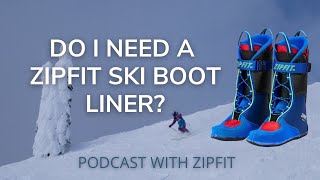
Jeff Colt of ZipFit explains why custom ski-boot liners matter: stock foam packs out over a season, while ZipFit liners improve heel hold, power transfer, and fit consistency. The conversation covers materials like neoprene and cork, different product lines for various boot shapes, and how some shells are now co-designed with ZipFit.
Chapters
Ski boot liners— you sort of don't think too much about them, but these ones right here from ZipFit, they may be just one of the best upgrades I've made to my ski setup in the last few years. In this podcast episode, you're going to meet Jeff Colt, who works for ZipFit and has a wealth of knowledge around these custom liners that are an upgrade to any ski boot you may own. So in this episode, you'll hear reasons as to why I did take the plunge and my thoughts after using the liners for a couple of seasons now. You'll also hear from Jeff around why certain materials are used in a ZipFit and what sets them apart from the regular liners that you'll find inside your current ski boots. We also delve into the brand new Fischer ski boot for this season that ZipFit have collaborated on. So it's the first ski boot with a ZipFit zip fit that comes stock with it. So that's an interesting one, as well as some sort of foot function mechanics of, of how the foot works in skiing. We share some of our own thoughts around this area, as well as plenty of other interesting things around ski boot equipment. So if you're a nerd, you like skiing, you love getting into the details, then this is a podcast episode definitely worth listening to. My goal with this episode was really to help you decide whether a zip fit is something that you need, or perhaps don't need, in your ski boot setup. So Jeff and I would love to hear in the comments below if this interview was helpful and what you got out of it, and perhaps if you're a ZipFit owner, what currently you really like about putting this liner inside of your ski boots. Now finally, before we get started, if you've enjoyed podcasts like this or YouTube videos where I've featured in it, then I think you will really enjoy the Big Picture Skiing app and website. It's designed as a resource for all levels of skiers, all ages, to help you improve. Covers every single aspect of skiing you can think of, including stuff like equipment and why I choose certain things. And you can ask questions, comments, whenever you want. I reply to all of them. I invite you to go over to bigpictureskiing.com if you haven't already. There's a 7-day free trial so you can see if it's for you risk-free. Thanks for checking it out. All right, let's get into this episode with Jeff Colt from ZipFit Liners. Jeff, why do people purchase a ZipFit liner?
It's a couple different reasons. I think first and foremost, skiing— it's my favorite passion. I think it's your favorite passion. It's a really fun activity, and unfortunately, ski boots are not designed to feel good on a foot. And I think people are mostly coming to buy a ZipFit liner because they want a comfortable ski boot that they can ski in all day. They can ski in day after day after day, season after season, and have that consistent fit. So when we think of performance meets comfort, every brand, it's like, oh, it's the balance of performance and comfort. The reality with a zip fit is the liner is designed to hold your heel really well in place, and if you have proper foot positioning that means that you shouldn't have to buckle down your, you know, second buckle as much and put pressure over your navicular. Your toes should stay warmer. Your foot is not moving within the liner. All of a sudden you're more comfortable and you're actually getting better power transfer. So I really think that it leads with comfort. Most folks come to ZipFit because they have foot pain and they don't like skiing. They can't ski all day anymore. And like, that's our goal is to like get more people out skiing with comfortable ski boots. The performance element, you know, we hear from so many professional freeride athletes, ski patrollers, ski instructors who are looking for the performance side of things. But to deny that that's not directly connected to comfort is, I think, missing some of the, the bigger picture. With that, I think durability, like I mentioned, consistent fit. It's so nice to start each season, you know, Saturday's gonna be my first resort day. I'm gonna throw my Gara HVs in my Tecnica Cochise and go ski. And like, I'll have the same fit that I had, you know, April 15th last year when the mountain closed and the first day of last season, the last day of the previous season. So, I think consistency. Like, why fuss with your gear when you can have a solution that does make skiing better and life easier?
Yeah, absolutely. And I, I led with that question because, you know, some people are not necessarily going to— like, some people ask me, like, do I need a ZipFit to ski well? And so I led with that one because people— the reason people mostly come to you to get that ideal comfort inside a ski boot, spending a lot of time in it. I know you have so many ski patrollers on it, ski instructors, like the people that spend a lot of time, yeah, in boots, that they really appreciate the sort of custom materials or the full package of a ZipFit liner.
Yeah, I think, uh, one, one comment there, and then I want to throw the question back to you, but, you know, with with Zipfits, like we, we hear from customers who, you know, skiers who have 1,000 or 1,500 days in their, their Zipfits. Those skiers are typically ski patrollers or ski instructors who their full-time job is for 6 months of the year, they're skiing every day and on their off days they want to go ski. You know, that's like, that's their passion. So racking up 1,500 days in a ski boot liner when, you know, you're skiing 150 days a year, that, that might be 10 seasons. That's much more skiing than like most folks get in a lifetime by far. So the consistency is, is a huge play there. But even if folks are coming to us for performance and they want their PSI level 3 or they want to, you know, bump up and be able to, you know, fully engage on a steeper pitch and still like drag hip, those skiers who want that performance, like, you're not gonna get that performance if your foot positioning is compromised, if you are in excruciating pain. So I think those are so tied together. But with that said, like, it's been over a year now that you've been skiing in the, the Corsa liner. Like, why ZipFit? What, what's working for you?
Well, Yeah, I just had heard from so many people, clients, students, who would mention like a ZipFit, and they'd maybe say, Tom, have you tried it? I'd say no, no, I do my own customization. And I mean, if you're watching, you'll be able to have a look at like an older liner. And to get comfort, you know, I cut out this entire section, the big toe. I'd often cut out bits around the ankle here. To fit my bony foot. And so I just heard enough from people going how great they are that I went, fine, I'm gonna, I'm gonna take the plunge. And this is before we'd even decided to do the podcast prior to this one. And, uh, so I took the plunge, bought a pair, we did that interview, learned about them. And yeah, and I would say the main thing is because I have a skinny ankle, wide forefoot, I wanna— I want a really precise fit, but I'm not gonna stop at lunchtime and say, sorry guys, I can't ski, I'm in pain. I want to keep skiing. And so the neoprene front part of this liner, that was probably— that is probably like the number one thing that if I, if I had to take one of the features from a ZipFit, that would be the one I would, I would, I would take. Like, I absolutely love that.. And if people have never seen the difference with a ZipFit liner and a normal liner, where the neoprene, which is stretchy, flexible, and is sort of lined on the inside with wool, where it comes back to is, is I wanna say it's like two-thirds of like the, the liner accommodates stretchiness, it accommodates your foot. And so straight away I, I put these in, uh, my, my boots. That the shell was all really nicely, uh, customized to my foot. And I was like, there we go, that's like the, the missing piece. So I had warmer feet, I still had a precise fit, but I had that comfort.
So that was— yeah, the, um, I think that comes with the heel hold, right? Like, that toe box design is possible. Having that neoprene extend back as far as it does is possible because the cork pouch is designed in a way to have really, really good wrap around the ankle and kind of, you know, hold—
That's a good point.
Along the Achilles.
Yeah, that's a really good point.
So if you didn't have that heel hold and, you know, it's your, your foot's like a shape, shaped like a piece of pizza, right? Like you've got this, you know, narrow, narrow heel, wide forefoot. You need to be able to hold that heel in place to be able to allow your wide forefoot to wiggle your toes, or, or even just exist in the boot comfortably, not slam the toes at the front.
And we— yeah, yeah, that's a really good point. That, uh, yeah, so it's, I guess, those combinations. Because the other thing, I mean, I absolutely love, uh, yeah, the heel hold part, sometimes to the point when this one, it's, it's at the end of the day hard to to get off. I have to kind of loosen it, wiggle it, and— but it's— it really holds my foot in place. But I should say, and I know that there's been a little bit of some, you know, admin on your side because of me endorsing this Corsa liner, which is the one I ski in. Yeah, it's the low volume liner, and the boots that I use are a low volume fit. So the distance kind of from my foot to the shell, there's there's not much in it. I'm pretty darn close everywhere. So this being thin in a lot of places works well. However, I would say the majority of skiers out there are in a boot that the liner that comes with it has more padding, and that's for, again, to try and provide comfort. And so then they go, Tom's in a Corsa, I want a Corsa. So we should address that now.
Yeah, I wanted you to make that announcement. I, I love the Corsa too, but like, I wouldn't put the Corsa in a 97 or 98 last boot. Like, it, it would be moving around too much. Like, it would quite frankly be uncomfortable. And if the goal here is comfort, like, we make all of our liners with a specific, you know, volume of shell in mind as well as that user type. So if you went and put that Corsa in a 96 last shell, like you've skied it in a, a wider boot, right?
Yes. Yeah, yeah, ski, and it's really comfortable. I've, I've, I've enjoyed doing that like on powder days or if I need to really maybe give my feet a rest, but it is, it's a little bit too loose.
Yeah, it's, it's, um, you're losing that precision fit. And the Corsa, like, I really think of the Corsa as precision fit and all other Zipfits as performance fit. And like, what's the difference there? Well, very, very small percentile of skiers are crazy enough to want to put their foot in a 91 to 93mm last shell. So like, if you're in that group that's skiing in a ZA or a Podium or, you know, like Raptor 140 RS, DRS, exactly. If you're in that tiny group of people that like can't give up the race fit, the course is likely for you and that's great. But if you're in a, you know, an LV boot that's 97 last, unless you have a very, very thick ankle, wide foot, that course is gonna be not enough material to take up the volume of that shell and have it ski comfortably. So we kind of say the extra low volume fit that's that, that Corsa in like the, the proper like plug race boot shell. Yeah. The, the Gara LV, the GFT touring liner, those are more designed and catered for skiers who are in a low volume 97 to 98mm last shell. Yeah. Then like the Workhorse is kind of in that 100mm area because it has the leather interior. That leather is 1mm thick. It's sourced from, you know, the, the best leather tannery we can possibly source leather from. And it's 1mm thick versus neoprene, which is 3mm thick. So the materials that make up the liner, as well as the amount of cork that is in the, the pouches, you know, in the ankles and the tongue, those are what dictate the volume difference. So in a lot of ways, the Workhorse liner and the Freeride liner are the same DNA, but the Freeride has a neoprene interior and that's 3mm thick. And when you wrap that around your whole leg, that's, you know, adding to take up more space than a 1mm, you know, leather interior of the Workhorse. So all of our liners, we kind of have them on scale from extra low volume to high volume. And you know, if you've got a really skinny foot and you're trying to take up volume in your shell, you'd likely want the Gara High Volume, the Freeride, or the Workhorse. If you end up in the Corsa, it's, it's just not the right equation for happy feet. So yeah, yeah, we love your endorsement. The Corsa is like, it's meant to be, you know, the precision fit, like highest performing liner. And I think skiers often have a good bit of ego. I do like I, I'd like to think I'm that highest caliber skier. Even if you're that highest caliber skier, if you're not in that super low volume boot, you probably don't want the Corsa. You actually probably want a Gara low volume.
Yeah, I'm going to put a disclaimer in there. You know, you can hear from my accent, I'm Australian. In Australia and New Zealand, we get more often than not firmer snow conditions, and so the type of skiing that I've learned to really enjoy. And like, it's similar to a racer, except that I'm, I'm not worrying about time down the mountain. I just like the feeling of a carved turn. And that's what's sort of directed me towards the type of boot setup I've gone for. But if I just lived in Colorado, you know, and that was all I skied, and I didn't really have any desire to ski in the other— I don't need to go for such a precision type fit that, you know, my skills are what— and same with your skills, you know, that's what makes us ski really well, sort of no matter what the boot. So I guess there's a reason behind it. And I should say, my boots, like that 92mm Podium I've got, I've spent possibly, I don't know, like 100 hours maybe, you know, just tinkering with it to make it right. So it is not a 92mm last shell. It's been stretched, ground pushed in all different directions. And I, and I make that without the liner. I get that all perfect, and then I put this in there. It's the cherry on top. That's like, you know, because I want the narrow at the back, the wide in the front, and the width because my, my fifth metatarsal, that, that little bump, if you can— maybe people, you often find it sore in some people.
Yeah, fixed toe. Yeah, I've got a sixth toe as well.
Yeah. But even further back from that, the fifth metatarsal, like bumping out. Yeah, exactly, like the, the styloid process there. That, that often gets sore. And even if I've punched a boot, sometimes if it's— if the liner is quite tight and there's a harder material over there, that I've just had discomfort there. So it's, it's a really great option, I feel, for those people that, uh, have the kind of bit more of a funky, maybe not European Italian foot that's the, the boots were kind of first built, built off of.
Yeah, I think I, I love the idea of the Italian boot and all the Italian bootmakers, which is essentially everyone save Salomon, like building these, you know, performance ski boots for Italian feet. And then the rest of the world that doesn't have Italian feet is trying to figure out how to make them work. I think you brought up a, a couple great points there. Like, you know, there are skiers that have everyday foot pain, cold feet, like that's foot pain. If your feet are cold every day, that's not comfortable when you're skiing. I think navicular pressure over the top of the foot is a really common one that like if there's too much material over the top of the foot, like buckling down those lower buckles is gonna be really painful and like if you don't have proper heel hold, all of a sudden that navicular bone is like jamming into the hard plastic, you know, kind of associated with toe bang. So, you know, those are kind of the like issues we hear about often. I'd say that most skiers deal with at some point in their ski, ski life. Skiers who have abnormal like foot shape at like truly freakishly skinny ankles or really bony, um, malleolus or, uh, really wide, like, you know, lower legs, really large lower set calves. Like, that's where ZipFit maybe shines the most because it's a customizable product in a lot of different areas. And you mentioned that neoprene toe box. This is, I think the, like the fix or the solution for so many people is just instead of having a foam material that when you clamp down the boot, it becomes kind of a flat ellipse forcing the material to the outside of your shell where like you already have a wide foot and you're creating more material there. The neoprene conforms to the width of your foot. That's a skinny foot, that's a good thing. If that's a wide foot, that's a good thing. Not having excess material where you don't need it. That's what the ZipFit toe box does really well.
The, that's the same across all, like, that's not just a Corsa thing. That is, that's all of them. ZipFit. Yeah.
They, they have, yep. The cork material is kind of the, that next element of customization and the fact that you can add more material to dial in the ankle pocket. I often don't talk about removing cork material because if you get a liner and the first thought is I'm going to remove cork material, you just— you likely chose the wrong liner. Maybe you shopped on color instead of like the actual recommended volume fit. We want to set you up with the right liner for the right— like for the shell that you're in and your foot or for your foot and skiing type. If you're going to get a new shell, like that's the first step. So you can always add more cork to take up voids in the fit and really ensure that you have that proper heel hold. Our goal is like reduce movement of the leg through the cuff. That's why you see a power strap on a liner. You know, I don't think your audience— I don't think this is news to your audience, but for most of the ski world, like the power strap still goes over the shell of the boot and like that, that's what they think. The design of the PowerStrap was. Like Sven who made this boot, like Sven made the PowerStrap, he designed it, like he was the engineer behind it. The thought there was not to put it over the shell. The thought was this needs to hold the liner to your leg in a way that this whole mechanism is not moving on your leg. So then think of the, the shell like a binding, right? It's what holds the liner in place. The shell is like— you're not— you can crank down on a power strap on your shell too, but over the actual liner, you know, this movement right there, like you want that snug, you want everything through the liner snug. And that customization that comes with the ZipFit, it's, I think, what skiers who do have notably abnormal feet and those skiers know who they are. Like, yeah, it's unfortunately, yeah, they're a pain. And like, it's what boot fitters comment on. Like, yep. They're like, wow, you got like tree trunks. Wow, you have like chicken feet, chicken legs. Yeah. Like those, like if, if that comment has been made about your foot, like you can probably like believe that you can improve that. Yeah, is not an average— like the ski boot was not made for you in that way. And that's like that video you posted of you with just your foot in the shell and the, like, the little motion that that shell actually, you know, gave as you like, you know, tilted your leg and your foot for edging. Yeah. You know, that's proof that you have hundreds of hours into that boot because I've put on that 92 mm podium and like I have a wide forefoot and immediately I was like, I need to do a lot of work to this. Yeah. Before it's going to work for me. Yeah. Like I do live in Colorado. I'm like fortunate to have a lot of good soft snow and like I'm not interested in doing that work. I'm interested in going and skiing like soft bumps and like my higher volume, more cushioned Gara liner works great for shell that I'm in.
Yeah, so probably on that too, like the first question, why do people buy it? I mean, you, you was telling me most people that purchase a liner are doing it as an after— like they've had a boot for a few seasons, the liner's packing out, the shell's still good, they go for that. So do you want to talk about, yeah, maybe those people, and then, yeah, the other option for those who maybe, you You know, at the point they're gonna, they want a whole new setup.
Yeah. And like such a good opportunity to plug, like for the first time ever, you can get a whole new setup with a ZipFit in it with this like Fisher RC4 Pro. If and only if like a 130+ flex boot is the right choice for you. Don't like, if you don't need a boot that stiff, don't go buy that boot. But you're, you're absolutely right. Most folks think of ZipFit as an aftermarket liner, and it's a solution to a present, like a problem that's present across all, you know, all boots in the industry. Ski boots come with a stock liner that's mostly built up of open-cell foam. Some of them have higher-end, uh, liners in them that have closed-cell foam, the really high-end, you know, race liners, like that one that you had from your podium, those are like, those are quality materials, but they're still relying on foams in the ankle and through the tongue in a way that those materials pack out and you end up getting a different fit after 30, 50, 70 days in that shell. So most folks come to ZipFit looking to solve the problem of their, their boots are packed out, their shells are still in good condition, but that like plush comfortable fit they had when they started skiing, now they're getting toe bang, now they're getting shin bang, their heel is moving. They're like, you can develop Haglund's deformity from, you know, that, that heel movement in your ski boot as you're skiing over moguls.
Like, That's, that's what I ended up— because, because of my foot shape and I wasn't aware as a young ski instructor, I've still got these bumps, hooks on the back of my heel from that.
Yeah, so like, that's not good. And like, it's not just discomfort. Like, you can do lasting damage to your feet skiing in a ski boot that doesn't fit well. So like, what does that mean? Does your foot move inside the ski boot when the liner and shell are on properly? Like if the answer is yes, and it's not like, we're not talking about wiggling your toes, we're talking about foot movement, that ski boot doesn't fit right. So like a lot of folks seek out ZipFit as a solution to that problem. They're coming to us to make their shells last longer. And like what they end up learning is when when they get new shells, like their Zipfits are still in great shape and they throw their Zipfits in their new shells. And it's that customer that like has learned, you know, I'm skiing in Zipfits regardless. It's, it's one of those few products that like we hear from skiers all the time. Like once you ski in Zipfits, you're not gonna go back. So we also have skiers who they need a new ski boot shell and like they've been convinced by,, you know, the same person who convinced Tom to seek out Zipfits initially, or, or some friend that like, do it right, get a Zipfit. And for that skier, like, you can go and buy a ski boot shell and go to the ski shop and kind of do that fitting and then decide you're gonna take the liner out and buy a Zipfit and then do that fitting. Or you can just commit and say, you know, I, I'm pretty sure the Gara Low Volume is the liner that I want. Buy that liner, go bring it to the ski shop, find the shell that works best for your foot and that liner. And it's, it's the more direct route, but it's only 5 or 10% of skiers who are coming to ZipFit who are in that position where they're fully bought in. You know, every other patroller or ski instructor or whatever skier in their club has, has convinced them like this is the route and they need new boots.
I have a story that, that, that, yeah, that works with that. So a friend, he's a ski instructor, he's one of the supervisors in Threadbone Australia, full cert, been doing it forever. And he came up to do some initially just some grinding and punching with the tools I've got with his new Atomic, uh, 140 flex kind of race boots. And so we put them on, we just did some stuff, like had a look and everything. Yeah, I came into grind here, here, here. And I said, hey, just put on my ZipFit liner. Because he was asking, he's like, well, so what's this all about, you know, this, the ZipFit? So he put on this Corsa and retried his boots with, with the ZipFit on, and he's like, oh, I don't need to do as, like, what we just figured out we needed to do before. I don't need to do as much. In fact, I could probably even go skiing for an hour and, and be okay beforehand. No chance, too, too painful. So there's kind of a great example. You start with, uh, like I'm in the fortunate position now, I've got my ZipFit liner, the new boots. When I go, I'm going to be putting that liner on, pulling out the one that's in there and trying it on and going, yeah, okay, cool, because this is all custom fit to me now. Then I go to the, the next layer out and go from there. So there's a good, like, testament to that, you know. If you've already got a ZipFit liner and you love it, it's great. Now when you go choose your new boots, and if you're in the position you just need the whole new setup again, like, approach you guys at ZipFit and say, hey, this is the kind of skiing I want to do. I'm— maybe, maybe you are more of a touring person, or maybe you're— you are— you do want to just carve because you're in New Zealand and go to South America and ski in the hard snow. Or whatever it is, find that liner first and then go and work on the shell.
Yeah. And it's not just that, like, the, the aftermarket, like, online model either. Like, if, if ski shops were able to move more volume of shells, they would have the agency to say, I want these shells without liners. Right. And like, I only know of a couple of ski shops in the world that do that. Mountain Air Sports in Verbier, like there's a plug for them. That's all they do. They sell enough shells that on their, like on their shelf, they've got all the shells without liners and they've got their zip fit solutions. Maybe they've got their intuition solutions and solutions and no skier is leaving there without the right fit for them.. And like in some ways that's beautiful cuz it's saving a bunch of waste of, of those like stock liners that it is the greatest compromise I think every ski boot manufacturer is making. And that's not to say that ski boot manufacturers aren't trying to do the best thing.
It's just people have different feet.
People have different feet. Yeah. Yeah. That's, that's it. So like, The— there was this whole, I think it was probably Malcolm Gladwell, like, you know, study, like he brought it up in one of his books around the cockpit for pilots and how they made the cockpit for fighter pilots to fit the average person. And when they made all these updates and changes, it actually turned out that it didn't really work for anyone. It didn't work well for anyone. And like, the, the reality is like average isn't, isn't a real thing. So when we, when we make these hard cast ski boot shells with a fixed last and, you know, if, if you look at these lasts for everyone who's listening, a last looks like a foot with no leg attached, right? It's made traditionally out of wood, like bootmakers, cobblers, they'd make these lasts. And what defined a really good bootmaker was like nailing the shape of that foot. If there's one thing that ZipFit's founder Sven Coomer did, you know, for us, he made the best last for a ski boot, you know, for a ski boot liner. And that's the last that we get to use at ZipFit. And you'll look at other lasts and you'll see how narrow the actual ankle is because they're relying on a really narrow plastic mold to hold your ankle in place as opposed to maybe a smarter material like a core composite that is malleable, takes the form around your ankle and your heel. Like hard plastic is not comfortable. And so these lasts, like ski boots are made with this foot shape in mind and you can bet like, you know, you might think, oh, technical boots work better for me. Fisher boots work better. Lange, like Atomic. Oh, like No, like, you know, whatever. I ski the white boots. Everyone has this, you know, kind of preference. And ideally you do find the, the ski boot last, the actual shape that works best for your foot. But the ski boot manufacturers are not putting the same thought into their liners as they are their shells. And there's huge advancements in liners in the last couple years. Like I think, more folks are talking about the liner is what's in contact with your leg, not the shell. We can go into specific examples of like companies that are doing great work with ski boot liners. Improvements are being made, but the difference between the improved stock liners and something like this is this is the best because it's sourced from the best materials. It's sourced with materials that properly customize like to the shape of your foot, the cork makes a huge difference. The neoprene makes a huge difference and those materials cost money. So most ski boot manufacturers, and I'd say until recently all ski boot manufacturers, are not willing to spend that amount of money on a part of the boot that can be associated with being like the throwaway part of the boot. Yes. Yeah. You're not seeing ski boot manufacturers put custom insoles in. That's right. Ski boot shells off the shelf. It would make little sense. Every foot's different. So Fischer and the RC4 Pro, like we work closely with them to make a zip fit liner for the RC4 Pro LV and MV, and it's not the exact same as a Gara. It's made in tandem with their shell designs. So what you're getting there is a shell that's made to work with a customizable liner. And, you know, if that's the route you go and you buy the RC4 Pro off the shelf, again, if you want a 130-140 flex boot and that's the right fit for you, with that RC4 Pro, you're getting a customizable liner in a shell that was designed to work, you know, with that customizable liner. And you are, you know, instead of buying the most expensive high-end shell from another company and then putting a ZipFit in it, like that price that you're paying for the RC4 Pro, that's a really good deal. Most ski boot companies aren't in a place to put a, you know, liner that sells for $500 US in their ski boot shell. Yeah. So the attention to the liner, it's, you know, it's growing. The quality of the, you know, materials, the ingredients that are going into those liners, there's still a, a difference, a limit or a difference of what the brands are willing to to, to do.
Yeah, yeah. So I was— I mean, on that, like, the materials, like, Sven chose those particularly for their properties, correct? So like, why, why does the Corsa have a leather liner interior versus the Gaara doesn't? What, what properties would I find different between those?
Yeah. And that's like, that's in some ways where that word precision versus performance come in. Like if you put a ZipFit in your ski boot, it's gonna perform better than any other liner you've skied. But that fit, the leather is 1 millimeter thin. It's very tacky. There's a higher, you know, friction to it. So putting on that liner, it's gonna be harder. You can't leave the liner in your shell and just expect to step into a Corsa when it's in a boot. In fact, if you don't fully like pull the tongue open on a Corsa, you're probably not going to just like easily slide your foot in. That leather is really tacky. What comes with that unparalleled performance in terms of heel hold? You have zero movement or materials that are going to compress. In the initiation of your turn, in your full pressure when you're out, the responsiveness is a higher level with the neoprene. It's not that different, but we're talking about 3mm of cushion versus that 1mm thick leather. The neoprene, it's more comfortable for most skiers. It's easier to get in and out of. And that's like the biggest thing we hear. Is, okay, like, like I tried the leather liners. It's, it's too much work getting, you know, basically getting them on my feet and getting them off my feet. And for the skier that wants that precision fit, that's not like— that's not a sacrifice or a compromise. They're like, no, I want, I want this. Like, I want to feel like my foot and the boot are all one extension of my leg as I power through my turn. For a skier that, you know, getting in and out of their boots is actually part of the struggle of them going skiing and part of that foot pain issue, the neoprene interior, it slides. You can slide into it if you want to with like a Gara liner or the Freeride with our neoprene interior liners. You can take the laces out, take the PowerStrap off, you can leave them in your shells and sliding into neoprene. It's got a Lycra face fabric. It's slippery, like it's easy to get in and out of. Once you're in, you still have that same active ingredient of, you know, the cork really holding your heel and everything in place. But if you do take the laces and take the PowerStrap off, like, recognize that's a slight compromise. You're, you're not having that same chassis that's pulling everything, you know, pulling your foot back and really locking your heel in place. If that makes you happier when you're out skiing, getting in and outta your boots is easier, you're still getting a more comfortable, warmer, and better performing liner, heck yeah. Like our goal is to have happy skiers, like with happy feet. Yeah. And if, if putting ski boots on and taking them off is torture, don't, don't get a leather interior ski boot liner.
Uh, it's going to be a lot of work. I'll also say that— so my wife, I got her a pair of the Gaara low volume, and she's a little bit in that, in that camp where she was like, I don't want to do the, the liner and then put this in. And so I guess we're bringing up this, like, if people have this stuff that you don't have to go— like, it's your liner. So I took the, the PowerStrap off the liner and I took out the laces. And there's also some volume she's got, you know, she's a lady, there's a little bit more volume in her calf area. Fits really well now, and she doesn't have to take the liner out because what I really wanted her to have was some customization around like the ankle pocket area. She was never complaining that her heel lifted too much, so that wasn't a super big problem. But the forefoot area, she has that wide forefoot and she would get cold toes and numbness sometimes. And so for all those things, it's, it's a big upgrade, but she doesn't have to compromise and, you know, do the steps as you, you termed it before, World Cup it. So as in put the liner on first, open your shell, step on in. Yeah, which is actually— maybe you could speak, speak to those two points. What you can do once you own the liner, you don't have to keep it the way it is. And then, yeah, the, the stepping in if you are going to do the lace, laces up.
Yeah. And I think there's another point on ingredients I want to touch on too. If, if you own a pair of Zipfits, our— like, we want you to tinker, we want you to tweak, we want you to play with your liners and make them work for you. You can see here, this is my partner Annie's liner. Like it's not through the metal eyelets. She's got a little bit of a taller instep. There's, you know, more bone there. So having the lace go over that area, the laces are only 1.5mm thick, but that material's a noticeable feel. So by pulling the lace, you know, one eyelet up, all of a sudden she doesn't have that pressure over her forefoot. For like skiers that, yeah, getting in or out of their liner is a, is a struggle. Again, removing the laces or I actually for a long time and this is what you'll see with the Fischer RC4 Pro when I was testing that, that doesn't have a power strap and a whole season of skiing. I got to leave that liner fully in my boot because actually, excuse the Velcro sound, Yep. The action of tightening and loosening the lace, that's super easy to do. Like, you know, once you unbuckle the boot and then you just kind of lean forward and your foot can come right out of the neoprene interior liner. It's the PowerStrap that's, you know, helping kind of tuck everything back and in. And that move while it's in the boot is slightly tricky. So we have skiers who, put flat laces on their Zipfits. They remove the laces, you know, they remove these metal eyelets, which is something that, you know, we've looked at doing on all of our liners because again, metal over the instep, it turns out it causes more problems than it solves. No one's really wrenching on the laces that much to need it. So like alterations to your Zipfits, we encourage it. That's why you can add more cork. That's why you can remove cork. If you get new shells, you can reheat mold your liners to work with the new shells. You know, I'm pulling out the cork port for folks who are like listening on the video. You can add material, you know, to that liner. And for the most part, skiers, they end up being in an MV boot. They're probably in an MV boot for the rest of their ski career as they replace shell after shell. They'll stay in that same last family or wheelhouse. So the liners transfer well within those last families— extra low volume, low volume, mid volume, high volume. If you end up for some reason taking your, you know, boot that worked well in your MV and deciding you want to go into a higher volume shell, maybe you add some more cork material, but Like, these were designed to be really customizable so that skiers customize them. Yeah. And like, that's a big takeaway there.
Um, as you can't do that with a normal, uh, any other liner. The solution to getting better fit around the ankle is that— is people who fit as well stick— yeah, yeah, J-Bar stick foam on. But you know, again, like, I mean, it's a bit princess and the pea, but really, like, the fit, your whole body, everything's quite sensitive. And you put something around your ankle and foot for hours and hours in temperature, and you move it and vibrate it and put pressure on it. You know, you— I don't think— like, so many people think that you have it, like skiing in boots equals pain and you just got to deal with it. Like, it's, it's not the way— I mean, I've gone to the nth degree, but I can ski in my plug boots all day, and I can go to the bar, hang out there, and I'm not trying to rip them off because they're, they're uncomfortable. And so that, that cork part, that's again like you can add— not many people take it away, but you can add more stuff there to get a more precise fit.
Yeah, and I'll, I'll touch on that couple other materials that aren't a zip fit before, um, talking more about World Cupping, but you know, we've talked about the neoprene in the forefoot. That's a big part. The, the other thing that's paired with the neoprene is a Merino wool. And like if you reach your hand in, it's Merino wool. It's like, yeah, the, the, the thick warm wool that you'd find in the inside of a nice like high-end mitten. It keeps your toes warmer and like, like the goal here is comfort through and through, right? And what is, you know, what is absolute, you know, comfort? It means all of a sudden your performance can be the most important thing to you and you can think more about that if you're not dealing with sixth toe pain, navicular pain, freezing toes. So we've got Merino wool within this neoprene and then you'll see this kind of black rubberized material. This honeycomb material was, was also one of Sven's ideas. The intent is to have it actually grip your shell so that the liner is, is really tacky against the shell. Right. Right. So our first concern is how does your foot fit with the liner? And that's where the cork material is, you know, inside. The only thing that separates the cork material from your foot is either that 3mm thick neoprene or 1mm thick leather. We want to make sure that within your liner, your heel's not moving, your midfoot's not moving at all. Tom mentioned how far the, the neoprene goes back in the toe box, but with this cork pouch design, you'll see— and this is a prop, so it's filled up more than, uh, than really any cork pouch in a liner, But you'll see this front window, you know, there's this whole area of cork around the ankle, there's this really developed Achilles channel, and then in front of that there's another pocket of cork that doesn't come filled in our liners. And that is for folks with a, you know, flatter foot or a lower navicular who maybe they want to actually like have some material overlaying over the top of their foot to help keep it positioned and down so it's not moving laterally. That's where filling these lateral and medial instep windows, you know, or pockets, like that makes a big difference.
So, for those who are thinking about listening, those who listen, you can find like, it's quite a good visual to be able to see that like Jeff's got the liner and then what's inside that, that cork kind of the pouches and you can, you can see where that goes and I'd say people, they feel if they know that spot, people will know if that's a spot that they feel like they need some more contact, more, yeah, shape. So check it out on YouTube if you, if you want to see it.
Yeah. So that's all related to how does the foot feel within the liner, and then we don't want movement there, and then we don't want the liner moving within the shell. So that's where this black honeycomb material comes in, is to really grip the plastic of the shell. So, you know, when your liner is in the shell, it's not able to move up and down or, you know, move around. And if you have the right liner option for your shell, you shouldn't worry too much about that. But, you know, there was a lot of thought to every material with this, you know, with this design. Yeah. For for loyalists to ZipFit or for former racers, like the term World Cupping might be familiar. It means you lace the liner up on your foot first, you get everything tight and snug to your foot, your heel's locked in, everything's tight, and then you step into the shell with your ski boot liner on your foot. First off, the term World Cupping, like it is something race liners have laces. So that's why like this is, you know, pertinent to, I guess, racers because they're familiar with lacing up their liners. You don't have to be a World Cup skier to do this. And if you try to put your ski boot shell on with your liner already on your foot while you're sitting down, you don't have any of the force of your, you know, like your, your skeleton or your muscular structure to actually aid in that. You're trying to try open a ski boot with your thumbs, typically it's just made to be harder. But if you do stand up and stand with your body weight over the boot and then point your toes, like it's just stepping down into the shell. And for folks like, I, I guess I speak with severe bias cuz I grew up racing and I, I've done this for 20 years, but for folks who figure out how to make it work for them. I actually think it's the easier way to get into a ski boot. I agree. Yeah, because you don't have to— when you put your foot in a ski boot normally, you point your toe, but you also twist your foot. And that's the painful part, is you twist your foot, your heel is pushing against the lateral or outside side of the liner. You, you risk actually kind of clipping those front tendons. Above your navicular, like right in the front of your shin between the actual overlap of the shell. When you talk to folks who fully move to a 3-piece shell, so much of it is because of ease of stepping in and getting out of their ski boots because they don't have to do that. If you World Cup into your shell, if you put the liner on first and then step in, you never have to worry about that pain.
Um, which is Can I plug— I'll plug one other thing. So, so if I'm, uh, so skiing back for lunch or something and staying, going in for lunch at my, my condo or something I'm staying at, what I love is that I could just take the shell off that I'm not walking the shell in the house. I've literally gotten almost like an Ugg boot on that I can walk around in. So there's been a few times where, you know, I've actually driven in my liner because I've taken the boot off. It's just, there's kind of some cool other little features, uh, in there for it. But I, I can testify too, it's not even a thought that, oh man, I have to like World Cup my foot in there. Yeah, I find it easier. That's the first time I've ever— I've never heard that term before. So I've— so it's cool because I would always— you'd have to explain it in a longer way, like, oh, you'd put the liner on before you put World Cup it.
Yeah. And there are people out there everything that Tom and I just said does not resonate with. Totally. And they're like, no, I have tried doing that. I have fallen over. I've slipped in the parking lot on ice while trying to step into my ski boots. That is not for me. And you are fully like entitled to that feeling and opinion. And like, I have empathy for that. Take the laces out of, you know, get first off, get a neoprene lined ZipFit as opposed to a leather-lined ZipFit that is easier to slide into and just remove the laces and leave it in your shell. And like if you're a happier skier because now you get to use the product you want to use and you also don't have to like hassle with putting your liners on first and then stepping in, that's it. That's a huge win for you and, you know, for us. So like you can think of ZipFit, we're out here, We want your friends to not hear you complaining. We want you to not hear your friends complaining. Like, let's get more people in ski boots that fit well. And like, not only can you ski bell to bell, but you can ski a full season. And when it comes to like starting the season, you're not thinking or dreading like, oh my God, I've got to figure out my ski boots.
Yeah. Yeah, absolutely, Jeff. I wanted to kind of plug the, the whole customizing the, the shell part here, because if, say, we do start from inside and we have got like a zip fit around our ankle and foot and it's fit really well, like, again, you know, people, don't be afraid to pull a lot of the laces out. Don't be afraid to go and see your boot fitter and get areas punched. And, and stretched or ground or whatever, customized. Like, that's— I think, I think for most people you need to expect to do that. And if you go with the right kind of fit where you're not going for larger volume to, to eliminate that pressure, like, try on a pair of boots. Like, like you said, you put on the Fisher Podium, ow, that— I need to do a lot of work. Yeah, I, I couldn't even spend like 1 minute standing inside with the Fisher Podiums when I first got them. But then I customized it and, um, and it's great. I think for just about most boots, yeah, it's better to go snugger in the shell and then work, work the shell like sort of outwards from there. I mean, that's just my opinion.
Your thoughts on that? No, that definitely resonates with me. And again, most skiers are not going to be in a 91 or 92 last boot. So like, if, if it's really worth it to you to get that fit and you know that that's what you want, like go down that route. Do, do all of the, the shell, you know, punching and grinding work. If you try on a 94, 96 last boot and it feels way better from the get-go and you feel like maybe there's a little bit of punching, like, that's likely the, just the better route to go. I'm not disagreeing with, with Tom's approach, but Tom is like a self-taught boot expert. And I think when, when you bring up these, you know, terms of like canting or like these kind of more, more minutia of foot positioning. Nuance. Yeah. The nuance, like foot positioning, it gets a little scarier for skiers and they, they want that expert opinion. Like that's where going and getting a, a boot fit by a proper boot fitter is gonna make a huge difference. But again, starting at the inside, like if you can't rely on the liner that you're using to maintain its same fit, putting all of this work into grinding the shell is basically doing a bunch of work you're gonna have to redo come January 15th on your, you know, 30th day of the season. So Tom's totally spot on. If, if you know you want to upgrade your liner and Siffits are awesome, like I am paid to say that, I also fully believe that. But like if you want to go with a wrap liner 'cause that's best for your leg, like get the liner that you're confident is going to work for you first and then start doing that shell work, because you can spend so much money and so much time doing shell work to then have your liner change as it packs out and realize you actually could have just shortcut everything by getting a liner that worked for you from the get-go.
So yeah, and I've, I have a story there because I first learned about customizing the shell, not the liner. Back in the day with my foot shape. And it wasn't until I still kept getting, you know, would get a little bit better, that sixth toe or whatever, another spot. It wasn't until I started going in and modifying the liner that I started being able to ski, you know, 120 days, just about every single day in my boots. So like, that's sort of testament to that. I think some people, they're like, so you know, like, you— they always think it's in the shell, you know. That what I love about this is I don't have to cut any bits because the areas that I usually cut to conform to my foot, the materials conform. So then I can— I just know, I just work on the shell. This fits well, boom, off I go. And I totally reiterate, like, that 92, I think that's just— I'm just saying that's an extreme example. I'd even say, like, I just see even just people who ski just weekends, that's all, and they're in Atomic Hawks or something. But then there's— they don't realize there's this spot that kind of like pressures a little bit, and they don't do anything about it. Like, do something about it. Pay the boot fitter to go in, and you'll just— when your foot sits naturally, your leg sits naturally in, in that ski boot. And see, like, a lot of problems that an instructor or someone goes like, why are you doing that weird position? It comes from just how you're standing inside that ski boot. You know, it's not hard to— yeah, you know, so much of the time that's what I find, because people— it's not hard to balance on one foot, do you mean? It's not that hard. So if you're constantly being told your balance sucks in your ski boots, you know, you've got this weird thing going on, you should check how your boots are set up because you could be forced into this weird position.
It's, it's I still think back to, I grew up ski racing, uh, back in New Hampshire and, you know, my older brother, he's 3 years older than me. He really got like fully on board at age 7. So I was a 4-year-old like chasing gates and that's all I wanted to do. And from 4 until 19, ski racing was what I lived and breathed. And at no point in that time did anyone tell me to look into a different liner. For my ski boots, I did so much work on my shells and like that was a huge part of the early season. It's like my dad would bring us to Waterville Valley on Thanksgiving break to go ski and just get as much time on snow to figure out really like mark the boots, figure out where we need to punch. So we'd go to Bob Skinner's and have them pump like punch out or grind out the boots where we needed them. It was never like starting with the liner. And I do like, you know, the last 4 years working with ZipFit, like it's like how, and, and I know that ski racers are still in that same place. Like no one's like, you know, like there's a sweet race liner for you. You should actually try this before you blow apart your boots. Or like, hey, try a 96 or 97 last boot. Don't put yourself in that boot if it's really not comfortable for your foot. And when we were doing the napkin math around our goal for the Corsa, I like had this revelation where I was like, wait a minute, 75% of the people who are putting their foot in a plug boot in a 91 or 92 last race shell are doing work to that boot. So that boot isn't working for 75% of the people from the get-go. If you're in that weird part of the bell curve with like a really low volume foot and skinny and a, a plug boot like just works for you, like that's great. But most folks, those boots are designed, the plastic is thicker, they're designed to, to be worked on, right? So like when I was thinking about I'm trying to make a liner that works for as many skiers as possible in this shell that basically is designed, you know, from the get-go to not work for the majority of skiers. And we kind of had to like reframe our intention when we made the tongue of the Corsa thicker and the cuff material actually higher up thicker. So you felt more engaged all the way. We recognize like that's going to make that liner not work for some skiers with really thick calves and thick lower legs because it's going to be too much volume. At that same time, the skier with really thick calves and lower legs is probably already excluded from being able to make plug boots work for them at all. Exactly. So like, as we, as we were thinking about that, And I was like, all right, if, if this only works for skiers with the narrowest extra low volume feet to begin with, let's try to make a liner that opens up this extra low volume of, you know, of race shells to skiers who have average feet. And if we capture that much of the audience and make a liner that works for that many skiers, like in, in some way we've captured almost all of, you know, the market. We've made a liner that works almost for everyone because if you have a really wide or, you know, high instep, a 91 or 92 last boot's not gonna work for you to begin with. Yeah.
Yeah. So I think that point that you said about, I mean, if, if 75% of the people in that kind of boot are modifying their boot, if the liner is not the kind of thing that can move and adapt with it, there's sort of a problem there. I remember Sam, um, so he used to work with me and on the Australian team, former Australian team for, for Super G. Amazing skier. I was teaching him all about what I do with the shells, and he was loving it, just finding more precision. He's like, I wish I knew this earlier on. Then he goes, so if we're doing all this stuff, like, why, why doesn't the liner change? Like, I need now the liner to change with it. So it's kind of like, cool, he, he came to that before we'd done all this ZipFit stuff. So it's an interesting, I think it's a, it's a good point.
I think that a major disconnect with a lot of skiers is like, we promote a dynamic fit with ZipFit. This cork composite material is malleable. It never hardens. It's not gonna stiffen. A lot of skiers think like the Surefoot model. Of getting a foam injection liner that is going to completely solidify around their foot and harden like that's going to hold their foot in place. But I learned some of this from you. The foot is a very complex and like masterful design, and it needs to work in a dynamic way. So like that ankle joint, for instance, being both a slide and a hinge if you've fully, you know, solidified, if you've put your foot in a cast, you are completely taking away your power transfer. So a foam injection liner, like one, the first word there, foam, like that will compress over time, but it's not allowing your foot to actually, it's not enhancing your foot's natural ability, it's limiting it. In the same way that if you just skied in a plastic shell, it'd be really uncomfortable and it would limit your foot's natural biomechanics. So your point there about like, I need the liner to change as well, that is Spen for 40 years in the ski industry running up against like the entire marketing department at Nordica or, you know, these entire teams as he's like impressing the importance of the liner of the inner boot. Like, this is just as important as the exterior boot. The inner boot is what is, you know, supporting the mechanics of our foot. Like, that's what, you know, kind of broke Sven, brought him out of shell design and working in, you know, ski boot design and fully committed himself to You know, orthoses or like orthotics and the inner boot. So like we have Sven to thank for, for Superfeet Orthotics, which I don't know if there's a more, you know, like renowned, like Dr. Scholl's is maybe more well known, but Superfeet for folks who actually want an over-the-counter insole, great product, an insole, that's, that's the probably most popular option. That was Sven's work after he left, you know, focusing on shell design. What came after that? ZipFit. And like, this is a man with 60 years of thinking about this issue. So, you know, in, in a, a brief moment there, you like, you synthesized it. It's if we are doing this much work to the shell, the liner needs to work with our foot and the shell.
Yeah. I got something for people to just try even right now and if you've got some level of— if you listen to the podcast, you, you're gonna, you're gonna get what I'm gonna ask you to do. But just have your feet even sitting on the ground neutral, like that's where they're going to be when you want to run flat. Now just like close your eyes, even engage the muscles that you would engage to tip your foot on the edge and hold it there. Okay, and then let go again, engage again. Can you feel the morphing change, the things that go on, the shape of your foot? Is different. And most of the time we are in that position, and that is the most important position to be in when you want to hold an edge. It's not hard to stand on a flat ski. Yeah, like my biggest bugbear is that if people are getting locked in the, in the neutral flat position, which would be fine if all we did was went go straight, but if you want to go for the speed record, yeah, like do it. Yeah, that's where you want to lock yourself in for sure.
But, and actually, I would argue Steven Nyman, like, yeah, the, like some of the best downhillers, like Steven Nyman's like regarded like he's able to glide with that perfectly flat ski like better than most anyone. And like, that's a skill if you want to nail that.
Yep, yep. But your feet walking over roots, rocks, the ground, everything, they're changing when you hit bumps, when you hit ruts, when the snow conditions go from firmer to softer, softer, you know, all that sort of stuff. And if you, if you're locked in one position, those muscles kind of get inhibited that, that really— and there's, you know, there's studies on this. They did people bouncing on their feet, and then they got people balancing on their hands, and they said, where, where is the first place people really adjust their balance from? And it's the lowest point possible. And they did that. That's why they did the handstand thing. So if you can't adjust from that point, you're going to make gross bigger movements to try and make up for that. And I just find the more I allow this natural function not with excessive movement, but, but allowed to get in there, I just stopped thinking about all the funny like cues, like, oh, don't do— like trying to keep my ankles flexed and like, they just go away because you can just stand and balance with greater, greater ease. So anyway, that's my rant on, on that one.
And I, I know we can go on forever, but I want to piggyback on that. Like, Sven is, you know, He's also an Aussie. He also is a wonderful, wonderful, I guess, like thinker. He really, he paints things in this, yeah, in this way that make people understand. And early on when I was working with Sven, he did this thing to me and it's very similar to what you were just having folks think about. It's like, once again, like close your eyes, you know, flat feet, Think about as you're rolling onto edge and now think about where you're pressuring your ski. Where is the majority of your pressure? It's on your downhill ski. What side of the foot is engaged? Is the pressure on the medial side of your foot? Yeah. What is the medial side of your foot meant to do? And short of putting my feet up in front of you right now, I'm gonna pretend that my hands are my feet, but the medial side of your foot is the monkey foot. It's meant to turn in. It's meant to help you climb a coconut tree and get the coconut from the top of the coconut tree. That is the design of that part of the foot. The outside of your foot, that's the leg press side of your foot. So when we are skiing, we are asking our monkey foot, which is literally made to have ankle collapse, It's, it's designed to rotate. We're asking it to be our leg press foot. Well, the uphill foot is actually engaging that, like, you know, the Bruce Lee kick. Like, if you want to push something with force, it's the outside of your foot. It's the same thing with your hand, right? Like, as we think about trying to make a fist without your pinkies, you need that outside of your hand just as you need the outside of your foot. To, to be able to really exert force. So like the first time, you know, Sven really like sat me down and started going through my feet, he's like, this is your monkey foot, this is your leg press foot. Now when you roll on edge, you're asking your monkey foot to be a leg press side of your foot. And that's not the design. And the ski boot shell is not going to support your foot as your ankle wants to collapse. And so that's where like All right, the cork composite on the ankle side of the foot, like it needs to, it needs to actually support the foot as it's moving through these dynamic positions. So it's, it's still my favorite kind of like, you know, Sven exercise. Yeah. That, that Sven gave. But yeah, that's like you, you look at a ski boot and you're like, wow, the inside of that ski boot's like essentially straight and the outside has like, you know, this curve and like that's, that's for a reason, you know, like you, you want a planar extension on the inside of your, you know, downhill leg. Yeah, yeah, yeah. As you, as you press. So yeah, you're, you're spot on. The, the dynamicism of a zip fit, the dynamic, like it's necessary for a liner to have some dynamic movement and At one point in time, Sven was trying to work on the iFlex technology, which was allowing the sole of the boot itself, like the rigid sole to flex to further promote, you know, natural foot function. Yeah, natural foot function.
So the— on that, so is, is there anything like in the works that you can talk about or can you, can you say there's something, you know, And I mean, we right now, you are the recipient.
You know, you get to enjoy the fruits of our most recent hard project, which was like, let's make the Corso work for skiers who want the highest precision and performance ski boot. This next project is let's actually design a liner for athletes who want to go on really long ski tours. And so, you know, in 2021 we introduced the GFT, which is our touring liner. But like to paint the picture accurately, the GFT is the touring liner in the family of Zipfits. But if you compare it to other touring liners out there, you're like, wait, this thing weighs 500 grams and this lightweight touring liner that came with my boot weighs 100 and 70 grams, like they're not comparable. But within the family of zip fits, the GFT has natural fore-aft flex. You don't need to adjust the liner if you want to go uphill or downhill. You're just flipping the walk mode on your, your ski boot. So it was really made to be the best touring zip fit. And to meet that standard, it had to ski downhill as well as a zip fit. And we didn't change the materials. Like there you still have really durable microfiber, you know, this, you know, reinforced cuff, the neoprene, all the materials are the same. What we found as we've worked with a lot of the best ski mountaineering and touring athletes is for multi-day trips, neoprene doesn't dry out that quickly. If you're camping at 18,000 feet on Mount Saint Elias or, you know, like you're skiing actually in like this, this terrain that very few skiers are going to, but like the athletes we work with are doing that, they're like, there's some, some things I'd want to change. And a big one is just weight. So we are currently working and that's, you know, that's the focus through this whole next season is a lightweight touring liner that is not trying to be this. It's trying to be the best lightweight touring liner on the market. So not the best tour— it will be the best touring zip fit, but we recognize these material choices are really great for downhill performance and we need to change some of those materials to be able to hit weight goals to be under 300 grams or, you know, in, in a more usable range for skiers who, who want a 1,000-gram boot will still have the core composite material. You'll still be able to customize them. But the goal will be, you know, let's try to make the best touring boot or touring liner possible with that. And with any, with any change in design comes compromise, right? So the same ski patrollers that get 1,500 days in a current ZipFit like they're not gonna get 1,500 days in a liner where like we know we're changing the materials to try to be lighter and lighter and durable. Like at times they're working in odds. So yeah, that's, that's the next kind of big project and we're, we're really excited about that one. For me it means a lot of uphill travel, but yeah, I like doing that.
So That's cool.
Very exciting.
So do you think, like, in the future it'll just be about kind of checking in, like, is this kind of core of the, like, the Gaara, like, is that still hitting all of our kind of ideals of, you know? And perhaps if boots are even— I guess if boots evolve and change, you know, as we go along, that's going to bring up those sorts of things as well.
Yeah, you know, you, you just hit a point that made me like think of this past March. Sven was inducted into the like U.S. Ski and Snowboard Hall of Fame and he got up there and he gave his acceptance talk. And after him, I might, I might space on his name at the moment, but was one of the early pioneers of free ride skiing, you know, freestyle skiing, doing, you know, big mountain lines and whatnot. And he got up there and he is like, wow, skiing has evolved so much in the last 40 years. He's like, it's crazy that the ski boot that Sven designed in 1972 hasn't changed. Where are the ski boot manufacturers? Like, you know, like where are the people forcing change in that side? And you know, he said the same thing about like skis, right? Like skis have changed so much. Even in, you know, the 32 years I've been alive, like from the first parabolic ski to the K2 Merlin, which like, you know, took everyone by storm to all of a sudden this like concept of rocker and then the concept of rocker being adopted by race skis. Skis have changed so much. Like where is that change on the boots? And it's, it's a similar issue with bindings, right? Like we are, we committed to— in some ways we committed to a, um, like a standard. And by committing to a standard, it limits progression. And yeah, like, I, like, I see Apex boots and I'm like, no, that's like not for me. Definitely like not necessarily buying this, but like good for them for trying to make something different because the boot world in so many ways has been stagnant for a long time. And like on this cover of Sven's little memoir is Sven holding the Nordica Grand Prix, which was 1972, and him holding a Redster Pro 130 that I'm guessing is like circa 2012. The like, look at the boots, analyze them. It's the same boot. So, you know, in a, in a 40-year window, like not much has changed. And like the Reikly Flexon, which Sven had his finger, his fingerprints on as well, like the 3-piece boot, like that is innovation. You look at Erika Jorfalsson, you know, Hoji, and what he's doing with touring boot design. He's reinventing how that walk mechanism works and trying to think through like, is a lever that's just holding the cuff to the chassis, to the shell, like, is that the best option or should we have more points of contact? And like, it's it's really cool to see, you know, in that example, someone changing design. And I, I see progression happening on our lightweight boots. I don't see it happening in, in the standard alpine ski boot.
Yeah, I know. I think because I guess the walking part, right? That is, and there's, that's very different from what you're asking the boot to do when you go downhill. Yeah, yeah, it'll be interesting to see what, what comes in, in the future. Um, yeah, if you could make, if you could make it easier to stay balanced skiing down, you know, your favorite black diamond run on a powder day or a few days after it in the chopped up, like, that would be, that would be cool.
I mean, I'd put that to you. You think a lot about this. Start with the boot board. Like, if a ski boot has a removable boot board, how would you redesign the boot board to make it work better, you know, would you like, like, are there things that can happen at that level?
Or, uh, it's funny, it's funny you, you mentioned that because I have a friend who's, um, he's a design— he's high up in, do you know Breville? They make like coffee machines. Yeah.
And toasters and stuff like that.
Great customer service. Yeah, yeah, yeah. Really good company. He's, he's approached me, he said, Tom, what's what is something in the ski world that people still like have troubles with and everything? I was like, well, actually, like just the— that boot board area, how you stand on it, if you could have more ways to customize that, do you know, like, because— yeah, huge. Because apparently it's not, you know, if you could change all the angles and find your ideal one, so then when you stand again, that's like for my height, lever lengths, all that sort of stuff, the way I ski, this is, this is where I wanna be. That would be, yeah, that would be a game changer.
Yeah. And instead we focus on the insole, which is still a great place to focus on, but like the further removed you get from the ski, again, you said the balance starts at the lowest point. And so like that's where the boot board comes to mind for me. I think, as you were talking about, you know, changes you can do to your ski boots. Like a lot of skiers don't realize, just baseline, bump the ladders on your buckles to make it work easy. Like don't have to max out your buckles every time if, if you don't need to. Like there are changes you can do to your ski boot at home that are really simple. And you know, as you get into the, the more like, I guess the, the changes or alterations that do have more of a learning curve, like, seek out, seek out experts.
Um, but can you, can you remember, because I mean, it just makes me think again, that insole versus the boot board thing. There's a way bigger drastic feeling than you changing, say, if you had like not much support in your insole or a lot more support, compared to if you change like the angle, like the drop. Yeah, like that, that's drastic. Same with like a running shoe. You're, you're a massive— you're so into running. Like, I bet when you went to change. Like, you're like, whoa, this changes it. So like how my upper body's positioned, all this stuff.
I mean, if we want to— and we do need to wrap it up eventually, but we do— if we wanted to go into like, look at how running shoes are marketed, and one of the things they're communicating is the drop. And every pair of running shoes, they're like, this is a 12mm drop. For me, that's a no-go. This is a 0mm drop. I'd say for most folks, that's likely a no-go. Like, you can wanna work toward that. But if you're only running in a 0 millimeter drop, it's, it's potentially gonna be damaging for your Achilles, for your calf. You know, you're gonna put so much strain. 4 to 6 millimeters is the drop that feels really good for me. Nowhere on a ski boot is it typically telling you the drop of your ski boot. Like, this is something for footwear that we're wearing all day, every day. They're all communicating this. Yeah. So, As we think about whether, you know, whether we're canting for pronation or supination, like that forward tilt, you can, you can flip the rivets to give yourself a little bit more forward lean. If you actually adjust the lean on the baseboard though, that's a dramatically different change.
You, you will feel that. Yeah, hugely. Like if you really want to feel like change something in your boot that you feel instantly different and response to the ski, like how the ski works, That, that's the thing. And, um, yeah, so yeah, I think that is, that is an area that could be, could improve. I, I noticed, I'm going to mention one thing that I, I liked. Castelli, they're making new boots now. They actually, they sounded really smart. They talked about like everyone grinds, like they make a boot board, but basically you can only grind the heel down. So you can change, or you can make it flatter, but you can't kind of do it from the other end. They've made it now that it starts sort of flatter. So if you want to drop the toes down, you can. So you can drop the front down if you like, you know, more, more drop. Um, so yeah, I thought that was a cool innovation, stuff like that, that had helped. But even just that, like, if you can internally change in the lateral plane too, you can change exactly how, like, how it feels for, like, more, like, more positive kind of edge grip or, or slide here. So you can customize it to how you ski.
And yeah, I think that's, that's a cool thing. I think as a liner guy trying to talk about ski boot shells, I, I'm definitely out of my element. But I will say, like, for the innovators out there who want to try to make change, like plastic injection molds for ski boot shells, or even like, you know, 3-dimensional plastic parts of a tongue of a liner, plastic injection molds are incredibly expensive. And like, that is why you don't see some companies like making the 21.5 ski boot or the 20 or 31 or 32.5 ski boot. Like, if those models aren't selling much, making the mold, it's really cost prohibitive. So like, I see 3D, like 3D printing in that sense, or 3D printing in the, in the like actual bootboard sense as like real areas for innovation and opportunities. At this point, we are solving, we are solving a problem in our current system, and that is most ski boots are built the same way. So let's make a liner that's more dynamic and works for more skiers' feet.
Yeah, yeah, yeah. Great, Jeff. Thanks so much for coming on, chatting with us again. And, uh, any final, final words? I mean, obviously zipfit.com is where people, if they, if they are interested in that, just a liner, a custom liner, that's where you can go.
And I, I spent a good amount of time today, uh, like telling folks, like, you know, don't, don't be like persuaded to think you need that like extra low volume boot or that extra stiff boot. But if you are like a racer, you know, like the Corsa liner was built for you. Like check it out. Sven, his whole heritage is race. And it's, it's a funny thing that we ended up kind of pigeonholing ourselves with more of a presence in the freeride scene or, you know, ski patrollers and instructors than, than core racers. But the Corsa is made, you know, for racers. So if, if that is you, and like it matches your foot and your, your shell, give it a try. Like we want to hear from more folks who, you know, that's, that's the direction they're trying to go through gates very fast, how the course is working for them. But yeah, we've got a liner ideally for, for every foot and ski boot out there. And on our end, like all of this fall has been talking to skiers and we like doing it because we love skiing and we want to make make your experience better. So yeah, zipfit.com.
Um, ask your question. Yeah. Don't email me about the questions. Like, so I get people asking me what liner should I get? It's like, go, go ask them. Like tell them, cuz there's a process. There's a, there's a little kind of like, yeah, we have a finder tool.
Um, it's gonna ask you your, your, like your foot shape. And if you don't know if you have a, a wider, like meatier foot or a skinnier foot, that's all right. You can kind of bypass that and we can still give some direction based on your skiing preferences and the shell that you're in. But we want to know kind of what's your basic foot shape, what ski shell are you in, and what are your skiing preferences? And with that information, like, we'll give the best recommendation we can. If you still are unsure after doing that Fit Finder tool, call us. Like, that's— we're here to guide you through that. And, you know, our end goal is to help you.
So yeah, awesome. Well, Jeff, enjoy your skiing this weekend. Thanks so much. I hope it snows a little more in North America. It kind of needs to.
I think it's coming. I think this is the weekend it's all going to turn on.
Awesome. Great. Thanks again for your time.
Speak to you soon. Thanks for talking to you, Tom.
More from Tom



Most skiers overlook how they use their poles. Try these five pointers next time you’re skiing.







