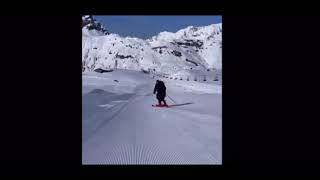
Tom Gellie analyzes Michaela Shiffrin's turns to show when pressure should hit the new ski. Fresh snow reveals a weightless gap between turns where her skis leave no marks. Most skiers press too early, which kills their athletic posture and edge angles.
Chapters
When do we pressure the new outside ski in a ski turn? I think this topic is a really kind of hotly contested one and can be thought in many different ways from different people. Another, when do we switch the pressure or the balance from one outside ski foot to the other outside ski foot, and how is that done, and does it really matter? So I wanted to use this video with Mikaela Shiffrin to highlight a couple of things that stood out to me in this particular run. So we look at the kind of turns she's making, they're like just really nice pure carved turns, nothing too crazy, really rhythmical, very fluid, very easy. You'd say the transition is one that's more of a sort of a slight extension, so it's not a full retraction type turn. And so I want to look at the thing that stuck out to me was this. So you zoom in. Let's find a better one. This one's a really good example. So we see ski tracks from Mikaela being left on the snow just back to here, and then as she's transitioned and then landed on her new edges there they are. We see that there is no marks in the snow through here, so no one skied this run. Mikaela's the first one really down here, or maybe one person before, but you can really see where pressure changes on the edges occur because no one else has skied. So notice where the ski tracks end, like being marked. She's still on her edges Okay, she hasn't gone to a flat ski yet, and then now as she's on a flat ski, there's no mark being made, not even a flat one. And even as she gets to the new edges here, there's no mark being made, so there's no real pressure on the snow until— there we go, down here. And yes, there's some fresh snow, so this makes it easier to mark than the firmer corduroy, but even further along, like here, we zoom in again, see we get closer, the cameraman can see and it's not until here, so there's a whole phase of her turn where there is not really any pressure on the edges in her transitions. And so people wonder, like, when should I transfer my weight to the new outside ski? Well, if your thinking is, and in these kind of like, you know, fairly dynamic turns, that when you change the pressure, say from this foot to this one, that that there should be a mark left in the snow through here, then you're going to miss what she's doing, which is lovely, which is a lovely floating sort of weightless transition which helps her actually develop a really nice position at the top of the new arc. Now if you're trying to press down with this foot, you know, back here, early weight shift, like a lot of people are told to do, and then you're still seeking to press that foot down, what you can do is you can end up extending yourself too straight. So you lose this athletic position, and it's hard to see with her big coat on, but her body has still got some nice angles in it, an athletic posture you could say, going on before she lands. So it's like jumping and being in a flexed position like this. There we go, there it is, that's a perfect example. In the air, so staying like this. And she's doing that without any pressure, as we've seen on the skis as they go from being pressured and on edge, as they go flat and find the new edges. She's not pressing too hard and too early. There's some patience. So that's the main thing I'd like to share and that sort of, you know, caught my eye in these turns is this floating transition, not overextending, but just being able to enter the new turn in really nice balance, place the skis on their edges without having to pressure the new outside ski early and balance completely on it, because she's floating here, so she's actually really balanced against nothing. Which frees her up to then set up these angles early in the turn. So if you're going to go out skiing and have a go at implementing this, my suggestion would be try and get out early like Mikaela has before anyone else leaves some tracks and see if you could actually leave a gap between the finish of one turn and the initiation of the next and do it without overextending, like we've got in this nice turn coming up here. And it's helpful because the snow actually rolls up and over here, so she's staying low in her stance to be able to get, when she wants the pressure on, back here, or forward at this moment. It's easy because she's stayed in that athletic position. Some food for thought, I hope people enjoyed that and it helps bring some new light onto an early weight shift, early pressure in a more sort of high performance turn.