Everything Ski Boots | Master Boot Fitter - Tom Gellie chats with Brent Amsbury
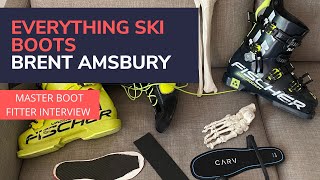
Master boot fitter Brent Amsbury breaks down how ramp angle and forward lean affect ski performance across disciplines. Slalom skiers typically use 12-13 degrees of ramp and 13-14 degrees of forward lean, while GS skiers go flatter. Your ankle flexibility and body proportions determine what works for you.
Chapters
Hi everyone, this is Tom Gellie from Big Picture Skiing. I wanted to share with you a great interview I just completed with Brett Armsbury from Park City. He's an exceptional boot fitter with so much experience, but you know, the thing that really stands out to me is Brett's knowledge and just the way he thinks. He's very open-minded. So in this interview, we discuss materials, plastics, the environment even. We're using a lot of sort of materials that are not really recyclable in the ski industry. So he starts off by talking about new materials that are a lot more eco-friendly. We also discuss ramp angle in boots, forward lean, racers' setups versus the average person's setup. Liners, like a whole host of really interesting things that I think anyone that really is into skiing will get something out of. And I just wanted to do it now to help everyone that is starting the season, maybe getting new boots, or they're going to tweak current boots, because a big message you'll get from this is Brent is a big proponent of experiment. Test yourself. So he's encouraging people to do that because that actually helps him and other boot fitters make their job easier, do a better job. When you've already started the process and investigated like why something is not feeling as optimal as it should, and then you can use them to help you. Because I think boot fitters, you know, really deserve your respect and time, and I think after you see and hear from Brent, you will really get that. So enough from me, let's get into this interview with Brent Armsbury from Park City, and I hope you enjoy it.
Brent, I'm going to kick this off straight away with what ski boot are you in this season?
Oh, which one? So I only— okay, which one?
Which Fuse? No, no, no, no, give us, give us the list.
Um, I'm currently in a Head Nexo Lite 130, and that's kind of a fun freedog boot. I've got a Lang 130 RS, that's, uh, kind of my pseudo race boot. And then, uh, I'm skiing in a Fischer Curve GT, um, that's kind of my newcomer that I'm really turned on about. Super cool boot. And then I've got a brand new pair of Fisher Transalps that just replaced a pair of Fisher Ranger Frees. So a new, a brand new boot from Fisher. Super cool, really lightweight, really cool material design to it. It's actually a more eco-groovy PBAX plastic material that's, you can grow it in a field. It's castor oil. Wow. Castor beans. Wow. So 70% of the plastic is is sustainable and, uh, it's recyclable and it's made from, uh, eco-groovy farms in India, right? Sustainable farms, uh, fair trade farms. And, uh, it's like one of the, the few boots out there that you can say is on its way to being carbon neutral.
So that's amazing.
Yeah, it's— that's kind of a really cool thing is that you're skiing in a boot that isn't harming the planet so much.
Yeah, because, you know, that's one thing about, yeah, the ski industry, right, is, I mean, skis, there's a lot of waste of material. I, I learned in just constructing skis, boots, like people get new boots just about every year. That's a lot of plastic. Yeah. So yeah, that's, yeah, certainly.
And you know, plastic is all hydrocarbon-based, which is fossil fuels. It's, it's oil, right? And so 8 pounds of plastic every time you go through a pair of boots And the, the, the unfortunate thing with plastic is that it can't really be recycled very easily. Recyclers won't take PU. They might take some of the other components, the metal, possibly the liners, but PU ends up in the ground, it ends up in landfills. And it's, it's pretty sad because we've done this for about 40 years. We've been dumping ski boots in landfills, and Europe is finally paying attention to it. Technica is putting a really big push forward to start recycling ski boots. And, uh, so the industry's waking up. They're realizing that they need to pay back. Yeah.
So, and then is— you haven't skied this new Fischer one yet?
Well, the Transalp? Yeah.
Yes, I did, with the Eco Plastic.
Oh yeah, it skis really good. It's, it's great.
Um, I see it has a different feeling.
It does. It, it has a little bit, uh, sort of a snappy feel to it. Um, when you use P-Bax, especially a P-Bax— they call P-Bax Renew— uh, it's not as stiff as some of the classic boots. They don't use any carbon fiber in it, so it doesn't really have a really super stiff feel. But for, for backcountry skiing, you really don't want that. You want it to really be smooth and progressive., and it does a great job of that. Um, I don't feel that there's any downside to the plastic. Uh, P-Bax Renew is actually a plastic that was used about 8 to 10 years ago in a boot from Atomic. They actually used a castor oil-based boot that they brought out based on their, uh, their club sport race boot. And I actually skied that and it wasn't very good. It was kind of an early version of the plastic. Uh, it had a really soft kind of mushy dead feel. Um, and so this, this plastic has been refined over the years and it's come back and it's really good. Like, it's really good. It feels, uh, just as good as a polyamide nylon boot or Grilamid boot. If anything, it's better. It's a little more damp, kind of absorbs vibration better. So it, it feels really good. So, so far so good, you know. It has a nice feel to it.
I'm going to talk to you a little bit later about, about materials, because, you know, when you— all these different boots, like, those materials have a feel, don't they? Like, you know, like, it's maybe sometimes hard to put good adjectives to, to these plastics and materials, but they, they certainly have a, have a feel in it. And, and like, to that, do you find you like— like, in your perfect ski boot, is there kind of like a feel to it? So you mentioned the backcountry one, there's a sort of— you want, you want that more progressive flex because of the sort of variable snow and, um, maybe not charging as hard. Is there for then maybe in-resort like a feel that you really like, or like how would you describe that, describe it in boot?
Um, my personal feeling, right, I— my personal opinion is I like really progressive flexing boots. It doesn't mean that I don't appreciate a different material. Let's take Grilamid, right, which is actually polyamide nylon. Grilamid is the brand name of the plastics that's been used for the last 4 or 5 years in the really ultra lightweight freeride boots like the Atomic Ultra Aux, the Ranger Free, the Tecnica Cochise, the Nordica Strider. Right? These are sort of hybrid freeride boots. Oh, the, uh, the Nordica Pro Machine uses Grilamid, right? Even, uh, Lange tapped into it for a couple seasons with the Superleggera, right? So this really lightweight, firm plastic, but it had a ceramic-y feel to it, right? When you skied it, it felt like a tuning fork that wasn't controlled. Like if you hit a tuning fork and it just vibrates like that, right? That's the way the plastic feels. And you could overfeel everything, like every vibration. Like the harder the snow, the more bad data was coming through the boot. Like you felt every bit of chunk and ice, and it didn't do anything to kind of like tune out the bad vibrations. And, and so the boot could actually make you feel more tired when you ski on it. Like, like certain boots made you feel more exhausted, where like a PU boot, like a race boot, uh, polyurethane is denser, it's thicker, and it dissipates energy. That's why World Cup racers use it, right? Because in World Cup, you're going really fast on a really hard, hard surface, like surfaces that that recreational skiers couldn't even get an edge on, right? It's got the surface of concrete, and that's smoothed out concrete. And so PU does a great job of deadening out bad vibrations but letting good vibrations come through. And that is the stuff that tells you that, okay, I'm doing a— I'm making a really nice turn, right? It's smooth. I can feel that it's— I'm right on the line. I'm right on the edge. And then you make a mistake and things start to bounce. And so the PU says, yeah, good things are not happening anymore, but it doesn't send up such an overwhelming amount of information that you can't decipher it anymore. And so PU, polyurethane plastics, and those type of race boots are actually starting to make a little bit of a comeback because the nature of the plastic is that it provides a lot of energy. A lot of transfer that's easy to modulate, like volume control on your stereo, right? You can really control it well. And yet it's damp enough that it gets rid of the stuff you don't want, the stuff that makes your knees ache, makes your teeth chatter, makes your eyes bounce around in your head, right? It gets rid of the stuff that comes at high speed. And so PU is on its way back. And so I like a PU boot, like a Lang RS boot, or some of the Fisher boots are still made with PU, and it has a good damp but, um, but progressive feel to it. So the, the Grilamid boots, there's nothing wrong with them. You know, the Nexo Lite is Grilamid. I ski in it, it's fun, but it's better for softer days and when I'm just kind of flicking around the woods and the surface is soft and it doesn't challenge the boot. But as soon as it gets hard and really firm, it's, it's, it's a rough ride and it doesn't actually help you anymore. It makes you ski more conservative.
Yeah, I can imagine. So I imagine as part of like the department in, uh, ski boot manufacturers, like, they're— they've got to go out and discover new materials or, or fund discovering new materials themselves and I mean, have you heard, is there any sort of pathway to finding a not such harmful environmental material like PU, but still something that, like, I guess that's the holy grail, right? Isn't it now trying to now get something that has those properties, but is not oil?
Yeah. Well, PBAX Renew is going to probably start to make a stronger comeback if oil prices continue to rise. Like, they've gone down, they're stable, uh, they crashed for a while, you know. And so there was no real incentive for manufacturers to seek things that were more renewable. Um, ski boot business is a business. You, you do it to make money, and so you opt for products or, or materials that keep your costs down and yet still do the job really well. So when I think the biggest control would be— that will be because the, the ski boot business is based out of the EU. And when the EU really starts to crack down on climate change issues, you're going to see probably fossil fuel-based plastics get restricted, and they'll get more expensive. There'll be taxes added on to them. And so products like PBAX Renew will probably come to the forefront. And I mean, this is just a crazy guess, but you know, there'll probably be castor oil-based PUs that will be— eventually you'll be on the World Cup, right? Yeah, maybe 10 years we'll have racing boots that meet the racing standards but are actually much, a much lower carbon footprint. And yeah, maybe alternative blending things like carbon fiber and this and that and the other thing, um, to try to, to make something that replaces a fossil fuel product. So I think the future is pretty bright, but it'll be forced that way. Um, yeah, manufacturers are pretty keen. They're pretty keen on trying new things, um, as long as they, they meet the, the performance criteria.
Yeah, very interesting. Yeah. Hey, so on the, on the carbon fiber thing, like, what do you think is— is it cost? Is it feel? Again, why that's not maybe being like— you see it sometimes in some boots, like, you the ultralight touring boots, and you saw it a little bit in that Atomic Redster at one stage. Like, what's your opinion on why that's not being utilized more?
Well, carbon fiber works really well in large sheet form. Like, carbon fiber, when you start making it really complicated small pieces out of it, it actually gets expensive. Because those pieces either have to be stamped or they have to be manufactured with a significant amount of waste to make a complex shape. The other issue with carbon fiber is it doesn't— you can't really change the shape once you've made it. So ski booting is all about adaptation to the anatomy, and the human anatomical range, the physiological range, is huge. And so yeah, there, there is a manufacturer who's made a carbon fiber boot. But getting it to adapt better to certain anatomies than others is really difficult, and it takes a lot of skill, and it takes a lot of tooling that most, A, ski shops don't have, um, and, and distributors don't have, right? Like, it's really a difficult material to work with in a complex shape. And then you nick it, right? You, you cut an edge into it and it weakens. And so after significant loading, it can break and snap. So carbon fiber is being used more, um, in a sort of a focus form, like for instance, Tecnica's T-spine, that's got a carbon fiber, right? So their Mach 1 has this carbon fiber spine that's bolted into it. And it's a, it's a manufactured product like the Redster product. It's chopped carbon fiber. It's fairly easy to make, and then you bolt it to the boot, and then if it breaks, you can take it off and replace it. In the, in the lightweight touring boots, those parts are selective parts like the spine, but they don't use it for the lower shell as much. And so the upper cuff and certain selective parts of carbon fiber work out pretty well, but the future of the ski boot industry is not going to be carbon fiber. For the whole boot. I think you might see a 3D-printed boot eventually. As the material science improves and the ability to bond materials through that extrusion process, maybe 10 or 15 years, we'll see somebody actually make a true 3D-printed boot that still has capacity to modify and change. And, and then you'll have this kind of a revolution in the industry, but it's not there yet. It's not there.
So, okay, yeah, that's right. Yeah. Okay, fantastic. Hey, so back to like the boots you're excited about, you said the one you're most excited about is the G—
the Fischer— the Fischer Curve GT. Yeah, so GT, it's a 90.
Yeah, yeah.
Why is that? Well, it's a 96mm lasted boot. And 96mm last is kind of a new shape for manufacturers. So World Cup, right, the full-on race boots were 92s, and the club sport boots were the offshoot of those, which were 98mm last. But 98mm last is kind of like everyone during COVID like we sat home and we ate a lot, so we gained weight. Well, ski boots do the same thing. Manufacturers take feedback from their, from their dealers over the years. And so these club sport boots have actually gained weight. They've gone kind of spacious inside. And so the 96 is this new high-performance last that's not as brutal and difficult to fit as a 92 last, but it's got the crazy good performance of like a, like a race, a full-on race boot. And it doesn't, hasn't gained the, the I call the weight or the spaciousness of the 98. And so the 96 is really zippy shape. It's got the heel pocket of a World Cup boot, forefoot space for like having to hang out in the boot for 6 to 7 hours. And it just, it performs. It's, it has, it's just a racing car for the masses and it's really cool. And I think you ski in a Podium GT, which is— I do, yeah. It's the zippier brethren of the Curv GT. The Curv GT is the same last, but because the boot's a little thinner shell walled, um, it's got a little bit more space in certain areas. So it's just a, just a titch more relaxed, uh, than the boots you ski in. Uh, so it's accessible. It's like super high performance that's accessible to those who may have not have skills that are quite so sharp.
Yeah, yeah, very cool.
And it's, it's vacuum? It's vacuum, so it's easy to form and shape. So you can heat it up in an oven, put it through the vacuum process, make it mold around your foot. Uh, so it's a pretty, uh, easy boot to access. So 96 is kind of a cool number now if you're looking for a true carving boot that can ski around the mountain and not take forever to get fit.
Yeah, that's very true. That's very true. Hey, so like with your boots, how much time do you actually spend getting them to where you're happy? Like, say, yeah, I mean, they're all gonna be different.
Yeah, but you know, I'm a little messy, right? Like, so I'm a little messed up. That's why I became a boot fitter, because I was always fussing with my boots. And I don't have particularly narrow feet. My— actually, I'm a double E width. Um, my left foot has a different volume than my right foot. They My left foot functions totally different than my right. So they're asymmetric. So, you know, that's frick and frack, right? They look like each other, but they don't act like each other. So in a PU boot, like if I'm going to set up a classic polyurethane race-type boot, it could take me between 9 and 12 hours of work into that. So it could take me, with the time I have on hand, it takes me all season of fiddling. With the boot, like getting—
where do you start? Where's your first port of call? Brand new Langs RSs, what have you done?
What's the first port of call? Oh, it's, uh, it's, uh, ankle punch on the left, widening on, on the left, significant widening. The right one sets up pretty easily, it's just a little bit of widening on the right. Um, and then of course a footbed and then a custom liner. Right, I usually do a foam-injected liner, or possibly I'm playing with a bunch of the EVA, the Intuition-based liners right now. But I have about half a dozen foam-injected liners that I tap into. And so I use— no grinding? A little bit of grinding around the navicular on the left and a little bit on the right, but that's after I ski it. So the first thing is just get the get the forefoot, get the, get the width just enough so I can ski it. All right, so that takes some time. And then after that, it's just a bunch of little bit of fussing. Oh geez, you know, I come back the second and third. Yeah, the second and third toe need a little more room. That's the third, the fourth. Then I go back and then the base, the heel base on the left usually needs a little bit of grind out. Um, and then I go back to the right and start grinding on the heel base of the right. So it turns into a lot of little tiny things But the first 2 hours is just getting it wide enough and getting the big spots taken care of, and then I can go ski it, put 2 or 3 hours on it, and then come back and get really nitpicky. And then if the remaining hours— you know, it probably takes 4 or 5 hours to get all the punches and grindings and the shapes and things I like done, and of course the canting. But then I start fussing with the footbed, right? I always find something else that I need to play with. Oh, I just don't feel enough pressure underneath my first metatarsal on the left. So I start playing with some tape and this and that, the other thing, and I start digging out the boot board, you know, and then filling it back up. So, um, yeah, I can get a ski boot skiable so that I'm not crying in 3 to 4 hours, but the, the back half is really dialing it in when you're pushing hard, right? Right, you really want to lay it down the railroad tracks, you want to slice the carves, and you want it to feel really symmetric. And that's where the last 5 hours is, is really fussing with the tiny little things, 1 millimeter at a time or half a millimeter at a time. And then eventually you get there, right? And then it's like, these are perfect, um, and you get bored and you go to the next pair.
But, um, yeah, yeah, yeah, I, I'm there. Like, I, I think that these boots, the, the Podium 140s or GT 140s I think I've probably accumulated about 15 hours, maybe 16 hours of fussing with all the different components in it. And, and that's— I just feel like you have to do that because as you make space somewhere, the foot starts functioning a little bit different. So then you get a different movement which wasn't there before because it was blocked by the thing that you felt pain with. And so now you gotta—
right, it's a little bit of a whack-a-mole, right? You do something, you generate something new. But it all pays out in the end.
The dividends are huge. It does. Yeah, I think each time those little finicky things are done, you do feel like your ski turns— there's actually less thought. Like, like, it's— you know, when you really lay it over, it is not going to slip, or it's not going to react funny, or you're not going to feel pain. You feel balanced. So every little thing, uh, yeah, really makes a difference.
Like these footbeds right here, right? So, you know, it's, you know, the left and the right are completely different from each other. Yeah. And that's, you know, that's time spent shaving and grinding and using different colors so you can tell what you did. But these, these footbeds probably took 2 or 3 hours of, you know, fussing with to get them where they feel really good and they're just right. And yeah, um I think for, for skiers out there, that's a, that's a little bit daunting, right? That's a, it's a little bit daunting to think that, oh my gosh, I don't have 10, 5, 10, 15 hours in my life to spend on this. Yeah.
And, and so, so maybe on to that, and, um, you know, because I had a webinar on the other day and I mentioned your name came up and some other people on it mentioned, you know, they get their boots fitted from you And so now all those, you know, people are probably going to now chase you down and you have got limited amount of time. Sure. Okay. And, and these people too don't want to be spending hours and hours. Where do you think, like, do you think there is a, uh, space for the individual that's really into, you know, they're skiing for the season? Where, where do you feel they maybe have a little bit of scope to do some customization themselves? Is that, is that even something you'd recommend?
You know what, I, I do, I do recommend. I think you should, I think skiers should experiment and they should play with things. Um, it's, it's a little bit difficult to explain because a little bit of information can become really dangerous, but, uh, I actually work better with people who are willing to try things, like even if it's crude, like you get some foam or you've gone to the drugstore and you get some of these, these felt pads, or you play with duct tape, or you play with masking tape, and you just use your sort of your gut instinct and you say, well, I tried this, I put 3 layers of tape underneath my big toe or underneath my heel to the inside. Or I put a donut around my ankle, or I put some padding here and there, and it looks crude. And of course, every time somebody does that, they come in, it's like, it really looks bad. And I, I don't laugh, you know, I just go, okay, did that work? Was it helpful? Yeah, it wasn't— it didn't feel perfect, but I thought I was on the right path. And I take that pretty seriously, like, okay, great, you're into this. You clearly can feel things going on. You're putting some effort into the mechanics. So that's great. You've done some of the homework for me. So now I just have to make it work better and be more elegant. And it doesn't take quite as much guessing. So you take— yeah, you know, if, if the customer can take some of the guessing out of it, then it really helps and it expedites the process and it becomes way more efficient. That way, uh, because if you're buying a boot fitter's time, you're buying the good time and you're buying the bad time. The bad time is the inefficient time having to explain everything through your own language, and then the boot fitter has to interpret it, then translate it, and it's about a 50% guessing game, okay, based on their repertoire. So if you've already tried a host of things and you know what works and what doesn't, you cut down, you've cut down a whole bunch of wasted effort. And so the boot fitter can go, you want that? Yeah, that works. Just make it a little bit more. Great. You know, chop, chop, chop, glue, glue, glue, grind, grind, grind. 20 minutes later, you're out the door with it after you've tried it on. It feels really good and you're on your way. So, um, I think that when people put some effort into trying to try things and play with things it definitely helps to make the picture, uh, more clear of where you want to go and what works and what doesn't work. And it, it can really help the boot fitter along.
So that's— that was my— that was my goal, uh, because I just broke it down. I talked about boot boards, liners, footbeds, shells, canting, and just gave some information about— I didn't say like, do this, don't do this. I said this effects this kind of thing. You'll feel this if you do that. And, um, and my hope was at the end people will— because there's a big, big note, experiment, like test some things, get, as you said, like tip your foot with duct tape and change the ramp angle with some, uh, business cards. So that's cool to hear because, yeah, you're absolutely right. They're going to come in already like, hey, I tried this, it felt really good, but there's something not quite right now. My first metatarsal is hard up against the side, like, can you help with that? Instead of you've got to ask 50 questions, decipher their language. Yeah, yeah, okay, that's great. So experiment with some, uh, you'd probably call it like almost like non-permanent type sort of stuff, semi-permanent.
Yeah, semi-permanent, right? Don't go gluing or epoxying it in. But, you know, tape, masking tape, duct tape. Um, you're, you're better off with cheap duct tape because it doesn't stick as hard like the Gorilla Tape or like these industrial duct tapes. Uh, after 2 or 3 hours in your boot, man, that stuff is, is just totally bonded. And then I gotta spend an hour ripping it off, right? So actually, cheap tape, just enough to get it to tack in there, it's good enough. And so I can at least go zip off it goes. I've got a really good idea of the template, I can build it, and then when it's just right, we bond it permanently. And, uh, yeah, it's great. But, uh, yeah, try not to do anything.
I think that also permanent. Yeah, yeah. And I was trying to get across there, like, to you, like, it's just another human relationship when you go to see your boot fitter. If you come in with them like a motive of like I need this done this way and whatever, instead of you coming and experimenting and giving some ideas. Yeah, yeah, the boot fit is not going to get their back up about like, what is, you know, this person just suddenly telling me to do my job that I've been doing for 25 years? Hang on a second, you're going to come in, it's going to be meeting with, you know, ideas. I think it's like anything, it's not just boot fitting, anything, you're going to have a better outcome right, with that kind of mindset.
So I've got a good story about that. Okay, perfect. So I work with a guy, and he was from Australia, right? And he was an old guy, and he had moved to Deer Valley, had a second home in Deer Valley, and he also had a home in Europe. But he lived in Australia, and he made his money in pearl farming. He invented, um, pearl farming in Australia and invented the concept of using helium and oxygen so you could go down longer to, uh, to farm your pearls. So he made a mint doing that, right? And he was really into skiing, but the guy had horrible feet, like really horrible feet. And he's super mechanically minded. And, uh, he came to me and, you know, he came to me in such a way that he needed a bunch of boot work done. And, uh, started working on his boots and, and we did some things and he And he was such a tinkerer that, uh, he always was fussing with everything, even though I had done it. He kept fussing with it, and his feet were getting worse. They got big bunions, they had a lot of pronation, got really flat-footed, and his feet were really causing problems. But what endeared me to him so much was he never, he never quit. Right? Even he would always apologize, goes, yeah, I took your work, right? And now I, I really mucked with it, right? He would come in and he'd apologize, I've really mucked with it, but I think I'm on to something. And he got to the point where he started building his own tooling. He started building his own tools to do his own boot work, not because I wasn't doing it right, because he always was— his feet were always changing so much that he he couldn't always wait in line, right? He would go home, he'd make up his own tooling, start punching his own boots and this and that. When he needed something that was out of his skill set, right, he'd come to me and we'd get the footbeds made, we get the basic arrangement done and the basic canting. But I hand him a bunch of padding and I hand him a bunch of stuff, extra stuff I have, and go, here you go, you know, like, I really love what you're doing, so go play with it. And he would, and he— I'd see him every couple weeks and he'd go, okay, I like what you did, but I, I changed some things over here and over there. And so I would then make it more permanent, and then he'd come back 2 weeks later and say, well, I've played with something else now and we're getting there. And so I think the cool part was the relationship and that he was willing to— not just willing, but was really into it. In terms of going so far to build his own tooling and play with things so mechanically that I was quite endeared to his, his whole process. And, uh, and so we struck up a pretty good relationship. He eventually, you know, moved away and went back to Europe and stuff. He got kind of to the point where he really couldn't ski anymore, and it was an old guy, but, but he, he gave it his all, right? In his, in his 70s and almost 80s, he, he threw himself at the sport like there was no tomorrow, and he wanted to make sure that, you know, he could ski well. And so he was always playing with it but tapping into my resources, and I actually kind of tapped into his because he had a mechanical mind. He was fun to work with, and, uh, and he— we kind of shared a bond in terms of like trying to figure out problems. Yeah. And so it was, it was actually kind of cool. But, uh, yeah, I mean, I think if you want to get on the good side of a boot fitter One, you walk in with a six-pack, and two, you try to learn how to speak their language a little bit by trying your own things. And so at least it shows you're putting some effort and you're not forcing us to guess the whole time.
Yeah, yeah, come on. Yeah, exactly. Coming with some questions, not accusations or trying to prove something. Hey, so on to, on to liners. Like, what, what are some things— because I think some people, uh, just think like a liner's a liner, but, um, I know you work with a company that makes custom liners, so like foam injection. So there's that side of things, which is the shape, but again, materials, uh, fit, like like maybe even you can tell a story of when a problem was not a shell, like there was some sore feet or whatever, the problem was actually a liner problem, not a, not a plastic hard shell problem.
Yeah, well, the— I think the good news out there is there's, there's more liner choices out there than ever before. Um, you've got SeaDoss who makes a foam liner, you've got Atomic now makes their Professional Series foam liner, BootDoc makes a series of foam liners. Uh, ZipFit has their own liner concept. Uh, Intuition, Pallao, right? So when I was in the industry, you know, 20, 30 years ago, we only had a couple liner choices. And now we have— I mean, if you look at the lineup of liners out there, Intuition alone has 15 or 20 different models. ZipFit has 4. CEDAS has 3. BootDoc has 4. Um, Palau has again 15 different models, right? So there's a lot of stuff to choose from. So that's good, right? Um, again, the thing with liners is that every liner has a slightly different feel and fit to it. Liners aren't cheap, so you can't really just keep buying liners to try every one. So you, you do have to to kind of narrow the field down, okay? So I've used almost all of them, right? So I, if you think I have a bunch of boots, I also have more liners. And so I go out and I try and I ski different liners to kind of get a feel for it. And foam injection, I think foam injection is still one of the best, most secure sort of cast-type liners. If you're looking for optimum performance, In, in terms of casting the foot and really holding it in place, foam is still the best. It's a little bit of a risk because you got to work with somebody who knows a lot about foam liners, have been foaming a lot. And so you really have to dial it in and make sure the combination is really, really good. And unfortunately, with foam liners, it's like if it doesn't work out, you kind of eat it, right? It's, it's your liner unless the technician makes a mistake on their end, then they eat it. And then they have to get you another liner. Well, whatever way, but, uh, the foam liner can be— some of my best experiences were with foam liners, and I still have a lot of customers who prefer foam liners. They want a very snug, very tight to the foot fit and feel, right? And, and when people go, well, it's custom and so it must be comfortable— not always. It's tight. Like, like you go out and you drink and you eat a lot of salt, the next morning that boot doesn't fit anymore. You swell just a little bit, that's how snug it is. That's how close it is to your body. So yeah, it, it doesn't, it doesn't work well. Foam liners don't work well for the people who have very strong variations in their life, meaning you ski, you know, 10 days one year and then you don't ski the next year, and then you come back to those same pair of boots they don't fit anymore. You gain 10 pounds, your feet are different, right? Or you, you know, you, you went the whole time being in flip-flops, those don't, don't fit anymore. So like a foam liner is really good for somebody who's on, on their skis a lot of days, like day in, day out, right?
Racers, I must say, I had a good experience with, with foam liners. I mean, I think it actually saved, uh, my, my feet. Like I was getting to the point with a like a, a bone spur on the back of my heel where I was seeing a podiatrist going in like, like, do I need to get surgery? And it was a foam liner that just actually saved it because I stopped having so much movement and spread the pressure around, right?
So a foam can be really good. They're not cheap, but they're really good. Um, I think the next level to foam is the ZipFit. So ZipFit is a product invented by a mastermind of the ski industry by the name of Sven Kummer, who— he was the guy who designed the Nordica Grand Prix, the offshoot of all the World Cup race boots. He worked for San Marco. He, uh, I mean, he worked with the Atomic Redster, right? So the guy's been in the industry forever, but he developed his own liner company back in the 1990s. It was first silicone injection, and then he went to cork, cork mastic. So it's a cork material that's putty-like, um, and so it moves and it flows. So his liner is made up of leather, uh, first-grade leather, neoprene, lamb's wool inside, and then a neoprene liner on the inside with the cork mastic, where you can actually inject more mastic in the tongue and in pockets on the side. So these are hand-built lighters.
They're leather.
They're like a, like a good leather shoe, right? So a little firm at first, like good leather hiking boots, stiff for the first 7 days, and then they start to kind of break down a little bit and get— they kind of follow the contours of your body. Zipfits are really good that way, and they have really good feel because the leather and the cork mastic allow vibrations. You get a really good feel.
Through the boot.
Ah, yeah, yeah.
Okay, okay.
Different to foam, perhaps?
Yeah, different to foam. Yeah. What would you say would be— how would you describe the difference?
Uh, definitely firmer. Like, it feels like you're more closer to the shell. Yeah, okay. Plastic. Like, it's, it's more firm, like a, like a racing seat. Like, foam is good, it feels firm, but it, it doesn't feel— oddly enough, leather feels firmer. Yeah. So leather, even with the cork mastic, the— what you're feeling through the liner actually feels even more direct.
Yeah.
Okay.
Yeah, interesting. Yeah. So that'll probably help someone maybe also go like, well, that's what I'm looking for. Or someone else is like, no, uh, like, that might help them maybe go between that kind of the two liners that the that you're talking about.
So like, if, if you have more normal type feet, don't have a lot of problems, ZipFit works great because it— you only get a certain amount of material. And so they make them different thicknesses, but you only get a certain amount of material. And so I— my best experience is people go like instructors, I look at their feet and I say, these are pretty standard feet, nothing really kooky or crazy. You want the heel to grip good, you want the forefoot to kind of spread out and get good feeling. Great, get a ZipFit. If you got weird feet, lumps, bumps, differences between this, the volume between the left and the right, and they're just weird twisted feet, foam is better because it takes that into account. It fills up the spaces that other liners can't. Yeah, so that's how I would pick between one or the other. Okay, and so the, so the ZipFit works pretty good for more that middle of the road I want really high performance, it's still comfortable, and it probably tolerates, you know, some changes, right, from one year to the next. You can tolerate some variations with you. And so that's a— that's another good alternative, right? And then finally is your EVA, your heat moldable Intuition, Powwow. It's foam, right? It's just— it's, it's, it's foam that you put in an oven It lightly puffs up, you put it on your foot, you put in the shell, and it kind of all molds around your foot. And, and those work really well for kind of like the average skier, right? Like you, you want warmth because they actually make the boot warmer. There's better insulation. They're comfortable because they're not super tight. Um, but they wrap around your foot, right? They feel more connected. To you. And, uh, they also have recourse, which means you could take them back, throw them back in the oven, they kind of lose their shape again, and you start the process over. You can do that 1 or 2 times, sometimes 3 times, but it allows you to, to make changes if you need to.
And, and then feel-wise, like compared to like, say, a little more dampened They're a little more dampened.
And that's the only downside to these liners is that it's all just foam. It's Koozie foam, right? It's the foam you use to keep your beer cold. Um, and so it's a little dead feeling. I mean, nobody on the World Cup races in an Intuition or EVA or Powwow type liner, nobody, right? Because it's too dead, but it's in many ways better than a stock liner because it really follows your anatomy better. And for the everyday skier, uh, it, it's warmer, right? It's a little bit— it's more comfortable, and it provides that sort of next level of better feel. Totally. Even though a little damp, it's a little bit better feel, and they last longer. So yeah, I take a lot of skiers and I put them in those liners because they're, they're moving from a stock liner, which it's good for a while, it's okay, but they break down kind of quickly and they leave gaps and spaces. And then you get them into something that's heat moldable and they go, wow, that really solved a lot of problems, I feel more connected, uh, that's my next step. And then, you know, if they become a much better skier, then you say, oh well, there's the next step, right? We can get you even something even closer, more fitted. Um, you know, more custom, um, and they go down that way, right? But stock liners, you gotta always think of, they're built around an average. It's— they're always built around average. And two, manufacturers, they make those liners so that you buy that boot pretty quickly, like it gets you to the counter to make the sale. Liners today are all designed for people who ski 12 days a year or less.
That's it.
Yeah, not, not for people who commit to more days. If you ski 40 days a year, a stock liner is disappointing. Yeah, unless it's a really good race-type liner, a lace-up race liner. Yes, they're pretty good. Like, you got to buy a $900 boot to get us a liner that will— that meets that level. But a $399 or $499 price boot, $300, $400, $500, those liners, they're basically made with marshmallow material. And that's— yeah, it's really soft and it feels good when you're in the store, but you put 10 or 15 good rugged days on that liner You're bumming out.
You're disappointed. Totally, totally. Now, what about tongue? The tongue? Like, can you think of an example where— a personal example where either you yourself, you've not liked a boot because actually the tongue was the issue? Oh yeah, someone else. Yeah, yeah. Give us that. What's wrong with it? What can go wrong with the tongue?
Well, the tongue can be— it's multiple things. Uh, it can either be too soft, it can be too thin, it can be too hard, it doesn't flex in the right spot, it can dig at the bottom of your shin. Um, the tongue is where you put all the pressure, and so if it's not right, it's, it's pretty— it's very difficult, right? So it becomes— and tongues— now, the tongue of the boot ideally should have a certain amount of density to it. It should be not too soft, not too hard. Um, it should feel like it makes good solid contact, just, you know, disperses pressure, but feel really smooth all the way down over the top of your foot.
Okay. And, uh, like, tell us about the one that you didn't like. What was, what was that? You know, all those things that can go wrong. What was wrong with that one?
Well, the— believe it or not, I'm not going to say who the manufacturer was us, okay? I don't want to throw them under the bus, but clearly the tongue— whoever produced it for them, the OEM— kind of did it in a hurry. It was way too wide over the top of the foot, oddly enough, so it actually wrapped all the way over where the liner was. So it made like these two really long, uh, strips, like strips of death down the top of your foot. So yeah, basically where the liner came up, it met and it went too far down, so it literally put railroad tracks of impressions over your instep. Yeah. Okay, right. That compounded with the fact that the way they built it to the top was too thin, so it's like you were— you felt nothing but plastic the whole time. Oh, okay. So like it was too thin, you pushed into it, you didn't have any sort of initial cushion and then response. It was like you're just slamming up against a plastic wall the whole time.
And you know, on the— yeah, okay. Yeah, it makes sense.
That would be horrible. Yeah. But the design of the shape was way off.
Yeah. Yeah. Okay. Okay. Never done, never repeated again. I can imagine the design.
No. Or no, okay, I can't even find another one from this manufacturer that looks like it.
Okay, it was that. Now, so in, in the two Fisher boots, last Fisher boots I've owned, with the tongue, I've found at the, the point where it flexes, so where the shin meets the, like, the ankle, I found that it's too stiff. And so I've cut out that middle chunk in there. There's kind of like 3 almost bars. They put slits in the plastic to make it flex, but I've found it's too stiff still, right? Um, and I found it's better cutting that out. So that's one thing, like, thoughts on that. And then the second I like about— what I like about Fischer is the tongue is floating and you can move it, correct? And so maybe you want to talk about why that would be good, and, and also flexing across where, you know, where your ankle should flex. Like, you can actually have too stiff a point across there, right? And Correct. The liner can make the boot feel crappy.
So flexing— remember, what works for you may not work for another. Um, I think after working with Fisher boots now for many, many years, it's actually a little bit of their DNA to make tongues like that. Um, remember, they get feedback from their, their racers on this, and they— their feedback is not all day. Right? You go out and you train for 2 hours on a glacier, or you do 2 hours for race day in the boot, 2 minutes on a run. And so racers will, will, are willing to sacrifice comfort for performance. And I know that you're a high-performance skier, but you also have to live in your boot and it may not work for you based on your leg shape. So they have a tendency to make tongues that are a little too stiff right at the transition area. And I know that they play with, you know, putting little slots and things in it, but they've— their manufacturer, whoever makes their aligners, you know, they're on those tongues. That's an injection machine. That tongue shape is a machine. They spend a lot of money.
They're going with it.
Yep. Okay, okay. Now they can fuss with it a little bit. All right, they can fuss with it and say, well, we changed a little bit of this in the mold, that mold, and you get better. But to make it pay back, they can't just like, let's just make a new machine for Tom's. Yeah. A new mold. No, they don't. Right. And if it's good enough for the World Cup racers, as far as they're concerned, it's good enough for everybody else.
Well, and I must say it's good enough. I just modified and it feels for me, I like a lot better, like the— right.
Yeah.
And I'm happy with that because it's not, it's not a hard, it takes like 1 minute. Yeah.
With a sharp knife. Like, the best tongue— like, one of the best tongues out there that I've experienced was the Atomic tongue that was designed by Sidos, which is a foot company. So they paid a lot more attention to the thickness of the plastic, and they made it thinner and softer at the transition area, and then they use different densities of foam. So you have this more— okay, there's cushion, then there's response, and then there's flex. So if you watch the Sochi Olympics, right, they— there was a shot of Ted Ligety with his boots over his shoulder. Well, if you had a keen eye for boots, you noticed his liners and his tongues were from a different manufacturer than the— who sponsored him. Yep. Okay. And that's why tongues are so sensitive. Many World Cup racers, because liners of that that you have. It has a floating tongue, it has a Velcro tongue. You can just tear it off and take somebody else's tongue and Velcro it in. Yep. And this is really common with racers. They will— they have, they have access to other products, and not because they're sponsored, because— but their technicians like, hey, I got an extra set of Nordica tongues, I got an extra set of Atomic tongues, I got an extra set of Rossi tongues. You can play with tongues. These racers, trust me, they go out and they play with their tongue. Um, uh, the gal from Switzerland at the, the, uh, the most recent World Cup, but there was some video of YouTube video footage of her training and they caught her shoving down a piece of neoprene, thick neoprene, down into her tongue of her Rossi World Cup boot. And that's She race trains and races that. She's augmenting that tongue even though the manufacturer— that's your, that's your World Cup liner. She goes, yeah, yeah, thank you. And she's putting in her own customized tongue inlay to make it fit her leg better, to get that contact, to feel all the way down the shin, the transition, and the top of the foot, because her anatomy really doesn't fit the standard liner. That they give her. And she's playing with that, right? She's using that. And she's, you know, out of her backpack comes this set of tongue shims that go down and away she goes.
And that's how she makes it happen. That's the message, isn't it? Yeah. I had to do that in my Dalbellos. I had to get some stiff stick-on foam that I beveled and it fitted so the liner, as it wrapped, there was— it was like a slot wedge of foam I put in there so there was a better transition pushing, like not just straight ahead but on the diagonals. Like, it felt like a better— right, better, better interface.
Yeah, say there. So I would, I would say if, if a, um, if a skier wants to experiment with something, right, that's cheap, and if you're a surfer you're going to be— you're good to go because you've got a piece of— you've got a wetsuit that you don't use anymore, like a 3mm or a 5mm. Yeah, cut the thing up into the tongue shape, right? Cut that thing up, use the, the outside layer to your skin and the rubber to the deal, put it down inside your boot, cut it out to the shape of the tongue, drop it in right in there, put your boot on and close it down, go skiing on it. You might be blown away at how much better response you get with a 3mm, or even like if you have extra space, a 5mm layer of neoprene wetsuit material running down along your shin all the way down to where it transitions. It— you'll blow your mind at how much space was there that you didn't notice was there before. Yeah. And how much more connected you feel with your ski.
Yeah, it's amazing. I remember, I remember Gord Brown, who was what, like ex-Canadian team coach, when I did some work with him, he saw that in my boots and he's like, oh yeah, you— I like that too, I did that too. He puts something he's got, uh, in the tongue there. So you put that between your sock and the tongue? Yeah, that's correct.
That's—
yeah, yeah, yeah, cool. Yeah, simple. There you go, everybody.
Super easy little— yeah, it seems easy, right? Yeah, everyone will be like neoprene And I've done it, I've done it for my two, my boots, multiple, many of my boots. As the tongue breaks in and gets— yeah, you get 30, 50 days on the tongue, it starts to compress, and you can start to feel there's a little gap forming. And most, every, most people's response is just buckle tighter.
But yeah, there's a problem with that, right?
Explain it, explain it. It's called stiction, right? So the, the tighter you buckle, the more the plastic sticks to each other, and it doesn't allow the surface to shear naturally. So the tighter you buckle as it flexes, yeah, the stiffer it becomes and the more it generates sort of this like hingy bendy hard spot in the boot. Yeah, well, you don't want that. You want to be able to just buckle the boot so it's, it's kind of like it closes and it's like a, like a good firm—
not squeezing— but it'll also make the— yeah, will it make that the front of the— like the forward lean angle at the front will become more upright too?
Yeah, as you— yeah, right. If you've over-buckled the boot, it'll make it more upright, but it just generates all this stiction in the plastic. Yeah, okay. And so you— the boot's not flexing naturally, it's flexing like a door that doesn't have a greased hinge. It's just super rigid and it doesn't move when you want it to move. So horrible. By lining that tongue with a, you know, like, you just 5mm neoprene— which, by the way, neoprene The shore density of it is really just a little bit— it's really close to human skin.
So when you say that, what do you mean by shore density?
Well, shore hardness is how you rate hardness of things. So there's a shore hardness for metal, there's a shore hardness for wood, there's a shore hardness for foam and plastic. So in foams, a shore hardness means how how squishy the foam is. Got it. Right. So as when we in orthopedics, um, the, the skin shore hardness is about 18 to 25 shore, right? So neoprene is about 18 to 20 shore. So it's, it's on the end of the scale from 0 to 100. It's pretty soft and kind of squishy. So neoprene kind of matches what your, what human flesh is like. So when you push up against it, it feels really normal. It feels like I'm just pushing up against my body. If you use something firmer, like a 34 Shore hardness, it feels like you're pushing up against like a hard— yeah, a much harder surface. It's unnatural to you. If it's softer than that, like a sponge— a sponge is like 5 to 10 Shore— it's too squishy. It just gives way. So neoprene is this beautiful material that's really similar to your body, your, your skin tissue density. And so when you push up against it, it's really familiar to you. And so it fills up the space, feels familiar, and it drives energy without having to overbuckle. Love it.
Fun stuff. There we go. Well, that's, that's, yeah, that's, that's, that's been so far biggest key, is the most interesting learning thing for me right now. So that's cool. Now, um, respectful of time here, the two things I wanted to maybe, uh, discuss with you are ramp angle and, and forward lean, and more to do with your, your observations on, uh, patterns here. So as in, like, like, uh, say for instance I've got a shorter leg compared to my upper body. At a period of time, I discovered I liked a flatter ramp angle. I, I didn't like as much ramp angle, and I felt the ski— I could feel the ski tip to tail better. Um, and then, but I know other people it's the opposite. Do you find there is a general pattern here? And of course there's exceptions to these rules, but yeah, as a boot fitter, have you observed anything with, with ramp angle, um, and whether that ties in also with that the, the forward leaner will separate them for now?
Yes, yes. Um, there is a lot of— I think there's a lot of hidden information out there about ramp angle and forward lean. It, it's never really trickled down to the skiing masses, but it's always stayed in the race rooms, and it's been self-discovered by skiers like yourself. So it all goes back to biomechanics. Okay, so the reason why you increase the ramp angle in a boot, right? So many boots have about 4 degrees or 4.5 or 5, and, and we're actually getting a little lower. My manufacturer's gone down to, to 4, 3.5, and 3.
I've noticed that with my new boot, it's flatter than Yeah. Okay.
Right. So trend, that's a trend, right? But biomechanically, if you increase the ramp angle and decrease the forward lean, you open up the ankle joint. Okay. So the ankle joint becomes more open and more vertical, but at the same time, you've put a lot of slack in the Achilles, the gastroc soleus, and the Achilles. How do you get forefoot pressure?
Well, you—
tension, right? You have to have tension in the system. So tension comes from the hand, from the gastroc, um, and soleus down into the Achilles tendon. So if you leave it wide open, you have to really keep going like this before you generate forefoot pressure. Okay, so for the general skier If you leave a boot with a fairly low, uh, a high ramp angle and low forward lean, it takes a long, long time before you get a lot of pressure on the forefoot. That is really good. That's a beginner boot. You get a rental boot, it's got 3.5, maybe 3 degrees of ramp angle, and it's got 10 degrees of forward lean. You can push on that boot all day long on the front and nothing really happens. And that's for a reason, because it's, it's kind of like a car with understeering. You don't make mistakes very quickly. You push on the front of the boot and you keep pushing, you stay there, and everything happens in slow motion. Yeah, that's good for a beginner. And if you're just screwing around on the hill and you're on a, on a very gentle slope that slow motion is really confidence building to you.
But if you put a lot forward— let me just repeat that so people, I guess, like, listening can follow. So, so we've got this— say we had x-ray vision on this beginner skiing down in this boot with a very upright cuff. Yeah, uh, like ramp angle. Yeah, yeah. So the ankle is open, it's not really flexed at all. Open.
Exactly.
The Achilles tendon is basically like a floppy noodle. Yes. And then they, then they push, they push, the Achilles tendon still stays quite floppy. So all their weight is just flexing the boot, but then it doesn't tighten the Achilles, which then activates the forefoot through tension. And then bam, now you've got, you've got leverage to the forefoot. Correct, correct. So it's designed specifically so they can't really— it's almost like not allowing them full access to the gas pedal on a car. They're like, they've Try and press it and it goes up by like 3 k's an hour instead of like 100, right?
It's not a snappy response. So that, that's good for a beginner because it allows you to kind of learn the skills slowly and progressively. Um, but if your boots are set up that like that forever, you're never going to become a high performance skier. Now, interestingly enough, in World Cup, right? In racers, they like— for speed, that's the way you would set up a boot. You—
because they don't want the twitchy car.
They don't want the twitchy car. They want a little more upright, sometimes a little bit more ramp angle. They want a little more ankle range of motion. They use a real stiff boot, right, relatively, or a little softer, but they set it up just so that biomechanically it generates a delay as they're pressing forward at 80 miles an hour and go through the turn, right? You want a little bit of a delay so it's really super progressive and you roll through. Okay, now not every racer sets it up like that, but racer— but race rooms know that if you set the ramp angle of the boot a little bit higher and you open up the ankle more with less forward lean, you get more of a delay. Okay, now what do you, what do you do for slalom? Right? Well, for slalom, you're going to drop that ramp angle down because you're going to generate more tension in the Achilles, and you're going to increase the forward lean to give more tension in the Achilles. So lower ramp angle, more forward lean. Forward lean. You're really, really tight. The Achilles is already snug just standing in the boot, so when you press forward, it's instantaneous. Yeah, yeah, like that. Boom.
Okay, yeah, it's boom. And so you've got everywhere playing in between, in between there. And then, and then is there like— what about at what point do you— because you've got your two angles there that can obviously tension the Achilles. Do you have any insight into like playing with the, the shin angle versus the foot angle?
So forward lean or shin? Right, so shin is the front side.
Yep. Forward lean's the back side. Okay, uh, I should say the foot, whatever, how you change the foot angle, and then the— I think I was saying shin load, so I guess how your shank— yeah, fits it.
Yeah, so yeah, at the high-end level of skiing, or any level skiing, you, you try to find the balance of where Ramp angle and forward lean give you optimum balance over the, the middle of your foot. Yeah. Okay. It— there's a, there's a magic place that works really well. So it's a little bit like your fingerprint. Everybody's a little bit different. Yeah. We know that certain things will do certain things. Like if you increase ramp angle, decrease ramp angle, increase forward lean, reduce forward lean, you get certain results. In general, but that doesn't mean that works 100% for, for everybody. Yeah. So yeah, in general, if you drop the ramp angle, you increase forefoot pressure. Okay. Yeah. As long— there's the exception— as long as you're staying on the front of the boot. Yeah. If you don't know how to stay on the front of the boot, your drop ramp angle will send you backwards. Back seat.
Okay, so it's— that's the piece of info I was looking for. Yeah, that was the piece of info I was looking for. Okay, right. So then, any— because you obviously fit some pretty high-end athletes, you don't have to say their names, but do you have some insight into like what they prefer and, and like? Yes.
Can you give us some numbers? Less ramp angle. So, um, pretty commonly a World Cup setup for slalom is going to be about 2, 2.5 in the ramp angle, sometimes 3. Um, for lean, usually between 14 and 16.
Yeah, sometimes. And then getting— okay, yep. And what about, what about moguls then? Moguls, like people who just ski moguls, again, ramp angles are not that high.
Right? There's a lot of mogul skiers who ski them stock, 4 degrees, 4.5, they ski them stock. Um, but they're— they don't like a lot of forward lean. Oh, interesting.
Even though they're all being like, get on the front of the boot, get on the front of the boot, they don't want the front of the boot to be really far away from—
no, because their movement— um, the, the thing with excessive forward lean right, is it reduces, um, it increases rotary movements that are excessive. So a little bit more upright, okay, just a titch. I mean, we're talking 14 to 12. Yeah, okay, 2 degrees, right? A little upright gives you more range of motion to absorb. Like, this is your, this is your shock absorber. So if you're down here, you can't, you can't absorb shock anymore. Yeah. So if you make it just a little more standard upright, you can absorb more shock. And then if you're going to do a trick, right, aerial, you can extend and rotate more, get more height.
Yeah, yeah, yeah, yeah. So they've got, they've got it again. What are they trying to do? Make the boot allow that to happen.
Yeah, yeah, yeah. Like, like aerialists, they want their boots almost perfectly upright. Like, they go 8 to 10 degrees. Wow.
They don't care about the ramp angle, they care about how upright you can make— how the shin— yeah, yeah, because as you see, whenever you jump, your shin goes backwards.
Exactly. So yeah, your shin goes back, you get really extended so you can rotate, and then as you land, you can super absorb and come back up.
But what do you like? And yet, what's, what's your—
oh, do you want, you want to finish that? Um, but it's every discipline. One, there's, there's setups for the discipline and then there's setups for the individual. So you, you see that there's a trend, right? So for freestyle aerials, there's a trend in this direction. Trend for racing, there's a trend in a different direction. Um, for me, I'm a 4-degree-12 guy. I, I like 4 degrees of ramp angle because I'm short, right?
5'7". Like, you haven't— you haven't got—
have you—
haven't got great Achilles range?
No, I don't have great range of motion. I've got about 15 to 18 degrees of range of motion ankle, which is about, uh, 4 to 5 degrees under normal. Um, I'm short in the inseam. Okay, I've got pretty good-sized calves, so my calves are like spoilers already. Yeah, so every boot I have, I have to cut down between 1 and 3/4 of an inch lower. So I take the stock cuff, I take the booster strap off, and I take it to my grinding machine and I make it shorter. So I'm going to show— I'm in a short cuff boot essentially, and, and I make it so it fits lower on my leg, allows me to stand up a little taller, right? And then I'll play with a little bit of forward lean stuff to try to get me a balanced position, but The magic number seems to be 4 and 12, sometimes 13. Like, if I want a race setup, I'll push a little spoiler in the back to give me 13 degrees of forward lean, and that makes it better for GS rotary movements. I really want to— I really want strong rotary, a little bit of that stivet action. I just load the edge, it goes, comes around, it really loads up. But if I'm in the trees and bumps, now that even that 1 degree of added forward lean, it doesn't work. So I, I bring my boots and make them more upright for just free dogging around. All my touring boots, I have to make sure my ramp angles on my bindings are also, um, not as pitch forward. They're more flat level so I can stand up nice and tall and get a lot of extension and retraction. Yeah, because I don't have it in my body.
Okay, yeah, yeah, yeah, you need to make sure you get access to all of what you've got.
Exactly. So you might be very different, right? Your body is different than mine, and so your range of motion and what you're doing— so we tend to find that athletes, um, who increase their range of motion in their ankle tend to reduce their ramp angles a lot.
Yeah, I think that's where that, that, that's the biggest makes the biggest amount of sense because I think like I naturally have, I've quite good ankle range and I think all along in most stock boots I felt a little bit like that beginner skier. I couldn't feel the full Porsche 911 accelerator even on a really good ski. Yeah, dropped it or ramped, gas pedaled my foot, suddenly it was there and, and it was, it was, it was not that the forefoot exactly. I could just feel it more. It was the Achilles tension. So now I've got this class 2 lever in my, in my ankle, right? Like, it's on, whereas before it was kind of mushy.
So here's a, here's a little bit of a crazy story. I've got a buddy of mine who's a tai chi master, okay? So he's trained for many, many years, tai chi master, and he's trained his ankle, right? He's got this incredible ankle range of motion. He has 40 degrees of ankle range of motion. Okay, what do you think his ramp angle is when I set up his boots?
Negative?
Zero. It's flat. Okay, it's perfectly flat, right?
And he likes 16 degrees of forward lean. Okay, and he skis like— he skis like GS turns, everything.
Yeah, he's a great skier.
Yeah, great. I can imagine if he's a tai chi master, he probably feels Everything.
Yeah, well, but he, he knows how to carve, right? He knows how to lay the skis over. And so with that low— no ramp angle and high— higher forward lean, his, his Achilles tendon tensions faster, right? When you have 40 degrees of range of motion, your ankle, it's super floppy. And so he has to have a system that sets up when he, when he pushes forward, something happens right away.
Yeah, yeah, because I measured mine the other day. And I was surprised. I think I'm at about 1.3. Wow. And, and it feels, it feels really good everywhere. And I thought it was more than that, but I properly measured it, like did the rise over run thing and looked it up. Um, and I was like, wow, that's a lot flatter. But now it makes me feel a bit better about knowing what I know about the body, that that's, that's why it's cool there. And, um, yeah, it's good there. Okay. Okay, do you know, does— what does Ted run?
Do you know? I don't know. I, I really don't know. I mean, I know that the boots that I got through some pass-me-down through Head, through an athlete, those were Lindsey Vonn's. Okay, and that boot board, oddly enough, that boot board ramp angle was about 3, 3.5.
Okay. Okay, yeah. Do you find females tend to— or again, it's more to do with the— I mean, because you've got where the hips are, center of mass going on.
We tend to see that slightly higher ramp angles in the ladies.
Yeah, okay.
Yeah, yeah. And even though she's really tall, right, she— I think she's 5'10", 5'11". Um, you know, she— you know, it was a 24.5 boot, um, super tight fit, um and, uh, you know, it's actually a pretty small boot for her, for height-weight proportion. Uh, but yeah, the ramp angle was, you know, like 3, about 3 degrees. And, um, and that, that's, that's what worked. Now we don't know which boot that was for. We don't know if it was a GS or a slalom. Um, it was probably a GS boot, um, that was passed down.
Okay.
Yeah. Yeah. Okay. To this athlete. But, um, yeah, but we've— yeah, but we've seen athletes come in with 2 degrees, you know. I, I don't see— I have never seen a World Cup athlete with less than 2. Okay, so yeah, it's between 2, 2.5, 3, 3.5, 4.
Yeah, yeah, yeah, yeah. That's interesting. Now, uh, Brent, I've have— I don't know if there's a something you want to mention now? I only have one more question, but is there anything you feel is worth mentioning given it's now time people are going to be heading to ski shops more and more as ski season approaches? Maybe as a message to help— I don't know, you already gave a good one in terms of educate yourself a little bit beforehand so your language is on par. Maybe do a little bit of home experimenting with some semi-permanent materials, so you go in already not, not wasting as much time. Anything else you would say advice-wise to people now? Like, okay, I know a bit more about boots, like I'm going to go in and get boots.
Yeah, anything you want to say? Um, I think there's a couple really main things. One is prepare yourself for the experience, meaning, uh, be willing to put time into it. Okay, put, put aside time. It really— time is how these things work. Um, if you have a total of 60 minutes to get set up in a booth, it's not enough. It's not enough. It really isn't. Take the day off. Yep. And be the first one in the door. Okay. And And, and then because you're, you're— and then set those expectations. Like, okay, this guy told me that I should spend the whole day in the shop. Well, then bring your lunch and buy the crew lunch or something, or bring them some food and just become their friend and hang out in the shop. Trust me, we won't mind you there. We don't. Just as long as you're like self-sufficient in certain ways. Yeah, you kind of— you respect are what we have to do. But if you're patient with us, we'll be patient with you. And but if you show the interest and you show the passion, um, we in the industry, you know why we're doing this? It's because we love skiing, right? For the few, you know, for the few times I get to go for a full day or the, the afternoon session, whatever, this is everything, right? And so the people who are in those businesses who are there to help you They do it because they love the sport, and if you show that enthusiasm, they'll do anything for you. Okay, you can live in the shop.
Okay, you can live in the shop.
Well said. With them, and, and they'll help you. So be willing to put in the time, the effort, and the acknowledgement, um, of the passion, right, for, yeah, for the, for the sport. Um, the other thing specifically to boots Um, listen to your fitter when they want you to go a little bit to the snugger side of the fit, okay? Don't overreact all the time. Now, if you just want to putt around the mountain and you're not interested in carving and you just have to get it through the day so you can, you know, earn your beer or your seat at the table don't worry about it. But if you really want to perform, you want to ski and carve, you need a snugger fitting boot. Not a painful boot, but you need to look at boots that are not these recreationally free ridey boots. You need a boot that is like a 96, 98 last trickle-down, what we call a club sport racing boot. Okay, you need a boot that has come from the DNA of the best, like, like a Porsche 911, right? Yeah, that was, that was a race car. Okay, and they make these cars so you can drive them around and have a kick. Well, ski boots is the same way. Get yourself the Porsche 911 of ski boots and, and put the time and effort to get it fit And you— it'll blow your mind what it can do on the hill. Blow your mind. Yeah. Okay, if you're buying a 102 lasted, 101 lasted, love bucket of a boot, as much as that boot gets great ratings in the magazines for being comfortable and okay, trust me, it doesn't turn a ski like a, a trickle-down race boot does. It rips. I mean, it's just amazing. It'll blow your mind what it does on the hill. So be willing to go there if you want to rip, you want to make railroad track turns, you need a boot that can do it.
Yeah, excellent. Yeah, well said. Well, uh, Brent, thank you so much for your time.
Yeah, you're welcome.
Thanks for having me. Yeah, yeah, I've loved catching up. I mean, I don't— people probably don't know, but when I was early days as an instructor in in Deer Valley, you, you sorted me out with quite a new thing, a few things with boots. You sold me a pair of boots, footbeds, uh, my tele boots. I think I figured out you were like— that was the first time I did like a 4-foot varus wedge because— yeah, yeah. And I was like, Brent, I can, I can feel— I can carve these tele skis, you know. So, so I really think that was the first time you introduced me to the world of like getting, getting myself more of a Porsche 911 and, and what you can do to it to make it even better. So thanks very much. And, and people can find Brent— yeah, you're welcome— yeah, at parkcitybootfit.com, uh, parkcityski-boot, parkcityski-boot.com. There it is, parkcityski-boot. Yeah, but, um, yeah, I think you're very busy, so if you want to get in bring, bring treats because that'll go well, and, and book in early. Yeah, I can, I can highly recommend seeing Brandon, and you've already got a ton of information off him. So thanks very much. I'll, uh, I look forward to hearing how your season goes.
Yeah, and I hope it finishes out okay for you. So cheers. Thanks. You're welcome.
Take care.
Bye-bye.
More from Tom



Most skiers overlook how they use their poles. Try these five pointers next time you’re skiing.







