Glutes Workout for skiers
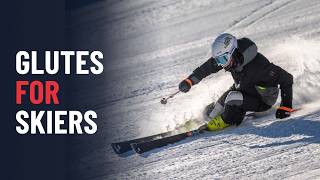
Tom Gellie leads a 30-minute glute workout for skiers, starting with isometric holds and progressing to 3-dimensional lunges that combine hip extension, external rotation, and diagonal loading. He explains how glute activation improves ski mechanics, reduces knee pain, and teaches cues like spine length and hip-chopping to use the glutes on stairs and moguls.
Chapters
Good morning, today we're going to be working on some glute exercises, let's get started. So the first one we're going to do is just a glute isometric, and I want to do this because I want everyone to just, our bodies to start feeling this area. So this is the position, just balance on one leg, take the other leg behind you, and the glutes while we're holding here have a certain fiber direction, like all muscles have a fiber direction, so we're We're going to bring the leg back, the glutes help with that. We're going to turn the leg out a little bit, the glutes help with that, and we're going to abduct the leg a little bit. So see from the side here, the angle, you should look back and almost see that you could balance something on the side of your foot, like this, ugh, okay, but really, really far behind you. Okay, I'm just going to hold that for 30 seconds. Okay, so fiber direction while we're holding here. Your sacrum, or your tailbone, and the very end of your lower back. The glutes, hold on to that, I'm going to have a picture of the glutes up here so you can see that. They also attach onto the side of the thigh here, we're almost done by the way, and then attach into the IT band and the quads down the side, so they run on the diagonal. Alright, we're going to swap sides. So get your balance right, if you need something, maybe finger on the wall, or on something to give you some balance, but even better if you don't use anything to balance. Take the leg behind you, turn the leg outwards, and make it sideways. Sometimes this can be like a little bit like a dog peeing on a fire hydrant kind of feeling. Okay, imagine you could balance something on the back. Outer edge of your foot. That's going to bring in the external rotation. So there, you should really be able to feel that your bum is squeezed and you're holding that position. I find it helps if my front leg has a little bit of bend in it, so standing up straight, a little bit of bend. You're going to squeeze it, you can even put your hand on there to feel the gluteus maximus muscle contract, and it's going to pull the side of the leg, so right here where, where my thigh is, all the way across towards my tailbone and sacrum. So the shorter or the closer those two places get, the more that muscle squeezes. We got a few more seconds left, 5, 4, 3, 2, 1. Back to the other side, thinking of those muscle fibers. So I'm just going to put my hands in the direction, so from here to there, sacrum all the way across here, wrapping and grabbing there. So when they squeeze, this is what happens to the leg. So hold. Absolutely beautiful morning here with the water just rushing up against the sand and rocks. Okay, I want you to see if you can lift the leg a little higher this time. I'm not going to hold for as long. Squeeze that leg so there's a rotation out, a sideways out of the thigh, and a behind you sensation. In this leg. Okay, 5, 4, 3, 2, 1, down. Sideways, behind, rotation out, all those together, that's kind of the full contraction and action of the gluteus maximus. Other glute muscles in here for sure help. In fact, you can't isolate just doing one muscle, and you don't want to either. Talk about that in a second. Squeeze it harder, lift it higher. 5, 4, 3, 2, 1. Okay, brain should be more connected with the glutes now with that easy glute exercise, because we're going to get more into it in, in terms of loading it in a second. But next, we're going to do a kind of a wide squat with a slight V shape in our feet. Okay, so not parallel feet, wider, because again, remember, the glutes kind of turn you out a little bit. So we're just going to get into those a little bit more, and then you're going to chop your hips back. Okay, so slight V, slight wide, chop the hips back. And I feel like my pelvis is kind of hanging down and back between my two legs, like I'm trying to sit between my two thighs. And I just want you to put your hands together, fingers pressing, and have as straight a back as possible. So you're actually going to try and arch your back as well as push your hips back, chopping back here. Should feel as though you sit into this area. It's like your tailbone goes really far back, your two hip joints go really too far back, but your chest goes forward. Your chest is forward and your head and hands are up. We get a way better contraction on those glutes because look at this, this is the opposite. If I don't chop back here, I feel it in my back, I feel it in my thighs, I don't get it into my glutes. We're trying to stretch the glutes so they have to work, we're trying to put an eccentric contraction into it. Another thing you're going to try and notice is you're actually going to take your knees back behind you for this one to wake the glutes up, glutes up, not knees forward. To really help you feel it, push your knees back with a bend in them, fingers together pressing, arch back, Push your knees wider so you can almost sit your hips down and lower. 5, 4, 3, 2, 1. Super important, that one, because I see so much of the time, more with men than with women, that in their athletic stance they are bending lower from their spine., and their pelvis doesn't actually fold forward, the hip joints don't actually work, so they're like this in their athletic stance instead of at the hip joints with way more fluidity and ability to use the glutes. Okay, okay, so now we're going to actually— we're going to do one more sitting into the glutes squat, so slight V, it's like 30 degrees, not quite 45, 30 degrees, wider than your hip joints. First thing you're going to do is like almost brace your back, engage all the muscles along the whole back of your spine, almost arching, and then you can put your hands into your hip joints here where that fold is, push that back, not into the tummy. You should actually feel like your tummy is stretched long, like my t-shirt is showing here, not folded up. Chop back, sit lower, feel all the weight going to your heels because you're really far back. You can press your fingers together out in front to kind of counterbalance. This one's from Foundation Training, a great, great guy called Eric Goodman. The cool thing is it really helps your spine, not only, only your glutes. Again, this is part of a whole entire kinetic chain, a fascial chain of your body that you want working well. Drop the hips back, sit a little lower, feeling like you're stretching the muscles around your bones. You can even kind of poke your hips side to side to kind of feel in and go, oh yep, I got that. Back is arched, tummy is stretched and flat, not folded over itself, upper back is arched, and we really get the hips working. Okay, come back up. We're now going to work on one set of glutes at a time by, you know how we did the contraction, we're going to stretch, we're going to do all the opposite things. So we're actually going to flex the leg, internally rotate it, and actually bring it across, but on the ground. Okay, so I'm going to stand in a lunge position I'm going to bend that knee and the hip, okay, so you're almost in this kind of runner's position to start out with, okay. From here, you're going to make sure your pelvis is again rolled forward over this hip joint. So the first thing, it's not— this is my back rolling forward, okay, this I feel across my belly button folding. I don't want to do that. I want to keep that still, roll across my hip joint, keep my belly button flat and my stomach muscles stretched out. Now I've got some hamstring and glute. Running race position, knees slightly over the toe. I'm going to add the next one. You're going to try and keep your knee over your big toe, even the second toe. But at the same time, your hip is going to go outwards. Okay, so knee's going to kind of turn in, hip's going to go out, and you're really going to try and feel that that stretches further at your hip joint right here. Here's the back view. So there's normal, in with the knee, out with the bum. You almost got a bit of a rotation. I feel like I'm facing kind of that way now. And that really loads up this glute area more. I really feel that what I'm trying to do is keep the pressure on the inner edge of the foot as well as the outer, not just the outer edge of the foot like this, and that should really light up your glutes. Now, last thing is that knee is going to turn in, you're going to rotate your chest and hips and upper body against that. Oh, so this is bringing in the third dimension We've flexed around the hip, we've gone sideways at it, we've rotated around it, and actually there's another thing we can do. See this back leg, if you drop the back knee lower, you kind of get this sideways diagonal angle. You can see here, so it's not level, we're actually going to drop it down, and that gives the final maximum stretch on this glute. And then come out. 3D glute loading, probably one of the best things you can do to help out your glutes. Just before you do the other side, if you're familiar, this might help you with that pigeon stretch, kind of like this pose, and the more you flatten and get twisted up around the hip, you really feel your glute stretch. You're almost doing that standing, okay, that helps. Remember, feeling the fold at the hips. Show this angle. So we lunge forward, but as we lunge forward, we don't round our back, we fold at the hips, hinging at the hips, and really feel like the hip bone almost pokes out the back and our tailbone pokes out the back. So there's our starting position, should already load the hamstrings and glutes. Knees just over that first, second toe. Okay, then we are going to go in with the knee, out with the hip. Okay, in, rotate and keep it in. It's like a vertical tibia. Out with the hip, bend a little bit more. Okay, you won't get any stretching if there are no bends in these, uh, joints of yours. You've got to have this kind of triple bend. Very much what's going to happen with the inside leg when you go skiing or when you go over moguls. You're going to need things to fold up. We're just exaggerating the position to, to get these muscles firing, okay, forcing them to contract. Now we're going to drop that back knee a little bit so we get this kind of diagonal tilt, then we're going to turn against it. We're going to turn the knee in. You can even grab this knee so it's not going out, push it in, and then the back one can help turn this pelvis Trying to stretch around this point by going in with the leg that's below it, out with the part of the body that's above it. Now you could sink a little lower if you want, if you're not feeling, or you want to get it more. Ah, show from this angle. Keep going. You even have a break and watch this come back. So see, I'm going to go into it, out. Into it, sink, and out. Just a slight opposite contraction in between. So balancing on the right foot, take your other leg behind and do an isometric glute contraction, 12 seconds. Should really be able to feel your glute now. After you've stretched it, it's easier to contract it. Last second, done. A little bit of bend, balance, take the leg behind you, straight, neutral spine with a slight forward tilt like in your athletic stance. Okay, this, you can even do reps if you want. Really working this area out, back, sideways. Rotate out, back, sideways. Done. Okay, back onto the 3D glute loading. This is the, the big, the really valuable one. Show from this angle. Hands on your pelvis, so your pelvis Your glutes attach to one side of your pelvis and as well as the sacrum, so you grab that area, you bend the front knee, you tilt this forward and over that thigh, really get a sense of that a few times, a few reps. So as the ankle, knee, and hip bend, see from this straight position, we really end up wrapping up and loading this section, wrapping up, loading it. When you get it, hold it, Take the knee in, use one hand if you want to help, take the hip out further, feel that that stretched it a bit like that pigeon pose, that yoga pose on the ground. So you're sort of trying to get yourself folded, your upper body across the thigh here, but this time, but the great thing about this is you're actually balanced on your feet, so you're working your arch, you're working your quad muscles, your back muscles, everything, your your core. So we're not just doing a passive stretch, we're actually using the position in a way that might be, uh, useful on snow and in real life. Okay, the final one. Yeah, turn against it, drop that back hip. So get a diagonal angle, shouldn't be level. Oh, bigger stretch. Feels like that kind of Greek discus guy, suitable since I'm in Greece right at the moment. Take that knee a little forward, bring everything lower, and we're done. Okay, so before we get onto that other side, just picture in your head where are those glute muscles running from here across to the side of the thigh. Okay, right there. Different from the hamstrings, they run up and down, so different actions. We want to be able to kind of teach our body to use them all and load those muscles. If you load them, you get to use them when you walk upstairs, everyday activities, that sort of stuff. Okay, so from straight leg, let's do a few reps where we try and get into that position of 3D glute loading. Okay, flat stomach doesn't fold on itself, so the spine stays neutral. Put your hands here to feel that. Fold and pivot around that hip joint. Let the knee and ankle bend a little bit till the weight comes all the way to the front but doesn't make your heel lift. Your heel is going to stay down for this one. Okay. Now we're going to take the knee in because that's the inward rotation. We're going to take the pelvis out. Oh, see, if I don't do anything with the knee, pelvis out, see I stand on the edge of my foot, I don't really get that glute sensation. So from here, I have to actively contract my muscles. Don't just use your, your hand, actively contract muscles in here to pull it in. Drop that back hip. Remember, here's level. Even do a few. Level, drop, level, drop, level, drop. Bum out, knee turned in, pressure on the inner edge of the foot spread over the whole entire foot pressing into the ground. Sink lower, almost imagine yourself in the pigeon pose. So you're going to sink, you're going to let go at this point. It's letting go here to allow your body to sink lower into that position. We're almost done, you should feel your quads as well as your hip, it's all working as one unit here, and then come back up. Because if you can get the glutes to load this way when your knee bends, I found in my clinical practice that helped a lot of people with knee pain around the front of their patella, their kneecap here, because The quads do a lot of that work, but the glutes tie into the big strong IT band, which attaches down here. So it helps control knee bending from way back here. Imagine a big sling that runs all the way along and helps protect your knee. So from here you can control knee forward, back from the muscle tension along here, not just the front of the thigh. So important. So yeah, One little tip, if you go upstairs after this exercise, try doing this exercise. So you almost kind of go up and sink into the glutes with every step, and then push off and back in a slow way. So if you've got stairs in your house, on the way to work, whatever, load your glutes on the way up. Looks silly, don't worry about it. Final thing, we're going to put a stretch into the psoas, the very opposite front of the glutes, because if we can stretch that, so on the front here, I'll put an image up of this, of the psoas. We can stretch that, we can help get this contraction better. So the opposite side muscle needs the front to be able to relax or work with it, like a, like guy ropes on a steering a horse, you know, you pull and push one side or you let go and you pull on the other side. If pulling on both, it doesn't work so well. So you're going to stretch the psoas muscles on each. So in that kind of lunge position, except this time you're actually going to keep— as your knee goes forward, you're actually going to keep your upper body back. So remember we were doing this before, we're actually going to do the opposite. We're going to keep the upper body going back, almost like feeling I'm staying with my weight on my back foot. Straighten the knee, so push the knee back as far as you can, heel is ever so slightly off the ground. You're almost trying to drive the heel back down into the ground, but you can't because your hips are so far forward. So it's again, same, same idea. Down and pulling back with the heel, the calf, and the back of the knee. Up in this direction with the torso. Okay, add a next thing to this 3D stretch. We're actually going to turn the back foot out 40 degrees. Okay, now you should feel a stretch on the inner part of your groin. You're going to step a little wider. So see how now there's— I feel like my leg's going out, out of the side a little bit here. Okay, ever so slightly, should feel another stretch here. Oh, drive the ball of the pinky foot, this part, down into the ground. Lift the torso up, lift the same sidearm as the back leg up. Now we're going to get a feeling of stretching from the ball of the pinky and the ball of the big toe all the way up to the palm of our hand. So we're stretching those two away from each other, kind of contracting up and away from each other. I'll show you from this angle. Up and away, down into the ground back here. Up and away this side. So I definitely don't feel straight in my body, I feel curved. And then I'm going to turn my upper body away a little bit, so push back and let go. You may need to do this workout a few more times to get a sense of this, uh, this one, but it's so worth it. You might feel things in the wrong spot at first, that's fine, that's a sign that you definitely want to come back here. If it's like, I don't feel it in my hip, I feel it in my back of my hip, I feel it in my back, that's a sign you need to do this again. Okay, so front foot, we're going to lunge, back foot's turned 40 degrees outwards, okay, it's not pointing the same direction, knees contracted, we're trying to drive this leg long and back, really long and back, upper body long and tall, and almost bring our head up and back. We're not trying to bend back to the ground, we're trying to go away, the foot's going towards the ground, our head is going up and away towards the sky, and we're trying to basically lift away. This is our central point right here at the hip joint, from the lower part of the spine to the thigh. In between there, we're trying to stretch that apart. Straighten that knee. I'm just going to go through the cues. So push that knee back, straight long leg, heel towards the ground but not touching the ground, torso and head up high. We're going to reach this hand up towards the sky and back. I must feel like even though my foot's out in front, I'm kind of leaning back on this back leg, but it's not in my back as much as it's in my pelvis. So hold your core, squeeze your core without crunching over, and bring your torso back. Should feel in the groin Then final thing, wiggle the leg out wider so you've got some space, like you're edging the back leg out to the side, and you're going to reach this hand across and turn. This is kind of the wringing out of the rag, the final thing. Remember, around this point, so rotating the upper body in the opposite direction from the back leg, pushing the ball of the pinky into the ground, lifting up and away, driving down into the ground. Let go. Okay, great. One final glute, uh, sort of hip hinge stretch. So, wide position, 40-degree angle with the feet, okay, straight spine, long in the tummy, push your hips down and back, really feeling that Fold in the hips, really feels like you're sticking your bum out, okay, stretching into the whatever trousers, jeans you're wearing, shorts. Keep the back straight, hands out in front, knees are not forward in the bend, they're bent, but remember you're trying to sit your bum low, you're trying to sit in the hammock of your glutes, your hamstrings, and your spine is just this long tall part of you sitting in there. So let's do that. Show from this angle. Hinge back, you can sit here bouncing lower a few times, pushing back into it, and then we're going to hold. This is the end of the workout. I'm just going to run you through your cues. Spine long, long and strong. Contract your back muscles from the lower back all the way to the back of the head. Chop your hips down and back further, hands out in front, press the fingers together, bounce a little more on the right leg, a little more on the left leg. At the same time, you're hinging back, pushing into those hips. 5, 4, 3, 2, 1, come up. There we go. Glutes-focused workout, okay, really waking up this area. We contracted both sides in 3 dimensions using all the actions that the glute does. We stretched and loaded it as well. We did things in between. Key takeaways: use these hip joints, okay. When our body works well, we can fold up really well through the lower legs, and that brings the energy and the work into the hips, which are built for that stuff, less in the spine and back. So this will really help you loosen up for that, help you with inriggers. In an inrigger exercise, I'm trying to feel the same thing as the glute loading exercise on the inner leg. I can sink down, I've got way more support here, less strain on the knee. Remember, if I can sink into this leg, When I ski well, I don't put much weight there, but I need the mobility to fold it up, and if it's loose, it can. If it's tight, it's all tight, I'm going to do this instead. I'm not going to use the hips because it's all tight here. I'm going to round my body, come back, do this one again. So worth it. Have a great day. See ya.
More from Tom



Most skiers overlook how they use their poles. Try these five pointers next time you’re skiing.







