Hand Drag Drill For High Edge Angle Carving
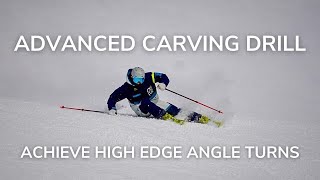
Tom Gellie teaches the hand drag drill to help intermediate skiers carve steeper terrain without losing speed control. You start with a static hand drag on soft snow, progress to J-turns without poles, then link turns while increasing edge angle. The key is bending your inside leg while keeping your outside leg straighter, which builds the long-leg/short-leg feeling that improves carving control.
Chapters
Oh, that's the best car we've ever done. Yes!
Hey, this is Tom Gellie from Big Picture Skiing, and I have a question for you. Do you find you're at the level that you can carve a green slope, even an easy blue, absolutely fine, but you get to something steeper, like a steeper blue or a black run, and you can't control your speed? That carving actually ends up barreling you really fast down the hill, out of control, and it feels like too much power to deal with. Well, you're in luck. Today I'm going to show you a drill called hand drags and a progression to help you build confidence, feel far safer, and convert that gravity pulling you down the hill into exciting speed across the slope. I'm also going to use two real-life skiers who have this issue. They find that they get on steeper blues and they cannot manage the pressure and the forces built up. So if this sounds like you, tune in, take notice of all the steps, and let me help you take your skiing up to the next level. Let's do it.
Is that the best? Oh, that's the best call we've ever done! Okay, so I've got a drill for you coming up, but first of all, I just want you to take notice from the back that on some turns down here, I am progressively edging my ski more and more throughout the whole turn. So progressive being it's tilting more and more over instead of tilting and stopping at a certain point. The reason I need that to happen is because progressive edging means the ski can bend more. If the ski can bend more, it can turn sharper without me needing to skid it. So from behind, I want you to be watching that I'm progressively edging more and more in my turn. So the first step in getting this progressive edging so you can bend the ski, so you can tighten the radius, is to do something called a hand drag. So you're going to get rid of your poles. So you could leave them at the top of the lift, give them to a friend, leave them at the bottom, and you're going to work on the kind of terrain that you are trying to get better at carving on. So here, fairly steep blue, okay, I'm going to do a J-turn. So I'm going to go down the slope, carry some speed, so I want some speed, start rolling my edges on like you're used to. On the inside hand, you're gradually going to let get closer, closer, closer to the snow until it drags. It's really important you kind of put it down like this because your brain and body will feel comfortable dragging your hand on the snow. Even different to with a ski pole, getting rid of it gives you far more confidence to do so. We're going to take like a leaf out of our snowboarding friends' book. You see a lot of them, they've got hands-free They'll put their hand down as a bit of a support, feel-good thing to, yeah, to get confidence going right over. One turn at a time. You're going to watch from over there and then we're going to get our friend to have a go and see if he can feel the hand drag J-turn. Yeah, awesome. Could you guys feel the closer when you got the hand on the snow, the ski really started bending? As it bent, you actually controlled your speed, you went up the hill. It felt so smooth. Very smooth, yeah, yeah. Because part of what I see in a lot of people skiing that is blocking them is they're too angulated. You want angulation, but you also want inclination. So when you reach your hand in it, it helps you guys from being there all the time to bringing your upper body weight in line with the forces. To help with the confidence, if you can get on the side of the run and there's some soft snow, see here's really, really soft, it's a great place to just practice this feeling of not reaching the hand but the whole body moving in together. I'm going to go here, Increase my edge angle, increase my edge angle, and let my hip touch the snow, lovely and soft. See if you can trust letting that happen, guys. Yeah, nice. Okay, I would say the next one, see if you can be not a complete pencil. Go to your angulated position here, here, and then just let the angulated position— yeah, there you go. That's what I feel like. Right there, and see, we're all in the position we want to be in. Can you tell this is foreign? Usually you're— yeah, yeah, squashed out here. Great, so perfect little drill to practice stationary, get in some soft snow, practice, practice. A steeper slope is better because it's not as far to fall on your hip. Soft snow gives you some confidence. We'll try it to the other side. And then start linking it. Woo-hoo! Really fun drill. Yeah, awesome! You guys, you want to practice those J-turns like quite a few times, like really just get, get comfortable that you can pick up speed and you can kind of slow it down by really inclining, progressively edging more, bending that ski, really coming up the hill. Like you could see, there's our tracks coming up here. So we're going to do more both sides. The next step will then be linking it. I'm not sure if you felt this, but when you got your hand closer and closer to the snow, could you feel your inside leg was really bent. Could you feel that? Yeah, so that's a great cue to know you're doing the right thing. If you don't feel this leg bending and people are trying this, they're probably going to fall over. There is a long leg-short leg sensation. To link the turns, you're just going to go long leg-short leg, make the short leg longer, Up and over, gradually start rolling the edges, this one is going to shorten as I touch the snow. So you just want to link, as the hand gets closer, the inside leg is going to shorten even further. Let's try linking some of those turns down here, making sure we check up the hill first, and really finish off the turns, even if the start of the turn is kind of, we skidded a little bit, that's okay, I want you to just feel the progressive edging.
Now this drill is seriously good fun, and getting rid of the poles changes things quite a lot. You wouldn't think it, but your brain feels so much more comfortable. You'll feel far safer to increase your edging, to work on progressively increasing that angle further and further, because you've got something to sort of save you, put on the ground in case things go wrong. So find a really nice open slope. This is really important. You want to feel safe, like no one's going to hit you from behind as well. Good snow conditions also helps. But now, as you're working on linking, you're just going to try and drag the hand on one side and then start moving over and try and drag the hand as soon as you can on the other side. You'll see soon one of the students takes the J-turn too seriously and is only trying to drag their hand sort of later in the turn. But the earlier you can get that hand over, the more you're going to be progressively edging and creating earlier edge angles and making that ski bend higher in the arc, which will mean the speed control will be far better.
So with your first few goes at linking these hand drag turns, what would you say would be helpful to the people trying it? I would say start off with just a little bit and then work your way, get the pendulum swinging, go bigger and bigger and bigger. It really worked for me up there at least. Yeah, yeah, I think, uh, don't be scared to take up the whole slope for the first few goes, just because if you're trying to do it tight, then it's going to be— no. Yeah, we've got a pretty nice wide open slope here. I know some people might not have that, like, that's going to be a key part to success. We've got great snow, good light, big wide open slope. Um, that part, that part gives you some confidence, right? The guys are going to practice down here and we'll check on how they're feeling because this is the slope, this is where you guys would feel usually, uh-oh, like I don't know if I can pure carve this whole thing, I'm going to be going pretty fast. So let's see if the hand drags help.
So here goes AJ, and it's really helpful because AJ does a couple of common problems. One, he's bending both legs to hand drag. You only want to bend the inside one and keep the outside leg straighter. The second thing is he's reaching down to try and touch the snow quite late compared to Eric coming up. Eric grabs the snow, reaches over really early in the turn. So just watch out for these common problems, it may happen to you. Now here goes Eric, and you'll notice the difference between Eric and AJ is Eric is reaching the hand to the snow a little earlier. He's also keeping that outside leg longer and only really bending the inside one. And he's really pulling some pretty tight arcs right here, and you'll hear from him in a moment, he is thrilled. He's feeling stuff he's never felt before. He's getting past that over-angulated position that you saw in the photos before, and what he always gets trapped doing when the runs get steeper.
That was fun. Is that different? Oh yeah. Wow, like massively. Yeah, easier to carve on that run now. Oh, I felt So much control. Yeah, sick! That's pretty cool, hey? Very fun. Oh my God. Okay, so Eric just had a blinder of a run, nailed it first go, and AJ did really well doing, doing the hand drags. The difference between the two is Eric started to try and put his hand down as soon as he transitioned. Yep. So it was hand drag, and he went, right, how early can I start hand dragging on the other side? Okay, yes, so you did a good job. You were hand dragging, you got your hand right over, inclined a lot, but it was always really late. So the greater inclination means the ski bends and turns more. If you can start turning up higher, you're going to control your speed earlier instead of like, whoa, picking up a lot of speed So all you're going to do different this time is try and touch the snow as early as you can, without falling over, but you really got to commit, commit, and then just keep going with it. So next step, if you haven't got to where Eric jumped to, is just try and touch the hand to the snow as early as you can and link the touching with your increase in edge angle.
Here's a great chance to see Eric on exactly the same run, but this time doing hand drags at the top. So what I see is that Eric is able to deal with the forces that come from the turn much better. He's also progressively edging the ski far better, so he's doing it higher up in the turn because that early hand drag touch So like right there, he's starting to work the ski, bend the ski more above the fall line and into the fall line. And as it starts to get steeper here, this is where he would usually get squatted and pressured out, but now he's able to deal with the pressure because he's got more inclination and he's lining his whole entire mass up against these forces.
So you, you had a better run there, and the straighter leg worked. Yeah, I was Absolutely. Yeah. And what did you say the straighter leg also helped you with? I found that it helped me actually bring up my inside leg, get them a bit further apart so I could kind of get a bit lower to the ground. Yeah. Um, would you say the feeling is you really get now this long leg-short leg you've probably heard people talk about? Absolutely. Yeah. Yeah, that's one thing I feel. The hand drags, for whatever reason, I think because you're down here, it really kind of flexes your body in the right spot instead of like here. Sometimes you're upright, you reach down, you want your hand in line with, uh, with your boot, like not behind it, uh, not too far in front, but sort of in line with the toe piece. And, uh, yeah, you really get that folded leg. And, and as you said, the long outside leg helped really feel the short inside leg. Yeah, cool. All right guys, we're at the point of putting the hand drags into your freeskiing. So you've got your poles now, and we talked about how it doesn't feel quite as safe to do that hand drag thing when you've got the poles back. That's okay, because in reality I don't really want to be dragging my knuckles too much. Like, if I do it, it's very, very, very light, and it is with— it is the knuckles part. So we were doing hands down, This one, it is Dragon Nucks. Okay, so like that. So as you go down to the snow, maybe even try this, maybe lie down and just get familiar with, okay, if my hand is going to touch the ground, I'm not going to lean on it, but I'm just going to sort of sense it. You'd be surprised how even just sensing your knuckles will actually make you feel way more comfortable at these higher edge angles. Okay. It's like putting a finger on the wall. When you're balancing on one leg. You don't need to, like, put your whole hand. Just a little bit of proprioception. Even the inside pole basket. I sort of lightly drag that in my turns to simulate. It's like an extension, like a tentacle extension of my hand. I can feel it. Feel it, feel it, feel it, Feel it, Feel it. Feel it, feel it. Feel it all the way down. But remember that you had the best success. Eric showed it, had the airplane arms, he like went in early with the hand. Don't worry if you get on your inside ski, this is all part of like just really pushing like the inclination comfort zone, get that ski bending early on the other side. We've got a great wide open pitch, no one's skiing now, they're all in at lunch, that's another hot tip, yeah, ski at lunchtime while everyone else is eating. Let's just see what happens when we put it in with, with poles again, and we'll wrap it up after that. Is that the best car? That's the best car we've ever done! Yes! Oh my God, how was that? Oh my God, yeah! I felt my inside something on the snow. We're inside that. Yeah, yeah, okay. Yeah. Oh my God. So brand new experience. Yeah, yeah, brand new experience. Oh my God, that was so easy as well.
So controlled.
I'm like, yeah, I don't really know what to say. Yeah, that was amazing. I'm so happy. Guys, what a cool change in your skiing. Yeah, amazing. You're going to be buzzing. You're probably going to remember this for the rest of your life, the day you learned to really carve. I mean, you were both— there was knuckles on the ground, hips so close to the ground. But, you know, like, people sometimes see that and say it just looks cool. There's a functional purpose. Like, you feel it's less effort. Yeah, way easier, way more control. Yeah, like we said before, this kind of terrain, I've never skied that clean before. It's been a bit skidding. I— yeah, I don't really know how else to explain it. It's just— yeah, yeah, yeah, yeah. I just feel So happy right now.
Yeah, yeah, best feeling.
Yeah, awesome. So in summary, first step: static hand drag inclination. Find some soft snow, yeah, and just get used to really falling over. Okay, drag the palm of the hand. We found out, thanks to AJ, once you start doing J-turns, which you'll be comfortable with, to link them you had to to get the hand touching as early as possible. Yeah, okay. Then when we brought back the poles, again, go back to static, practicing where's that pole going to be, what am I going to be dragging so I don't break a thumb or whatever. And it's really light. And as you get better and better, you'll almost be lighter and lighter and barely even touch the hand at all. It'll feel like it's the hips that are dragging if you need to. But it's actually cleaner to just get like the hip a little bit off the snow. So follow that progression, remember to be safe looking up the hill when you're practicing your J-turns, try and look for like a good day like we have, sunny, wide open slope, you want a bit of pitch, okay, too easy a run, you won't get enough speed and forces, and when you drag the hand you'll be doing this, not properly leaning over, you want to get some forces, and remember this is for people who are already pretty good at carving, you can definitely rail the turn from top to bottom, you're ready for that next step. I want to say thanks, guys. Thank you! Yo, thanks so much, man. My pleasure. Look forward to seeing some Instagram shots of you guys just laying it right over. If you're interested in more stuff from Big Picture Skiing, this is seriously a small piece of the big picture of skiing. I've got hundreds of videos, I teach you about moguls, your equipment, body mobility, preparation, carving, short turns, everything. There's tons more on there, go there and check it out and you will be finding the potential to be the best skier you can be, just like these guys. Let's go rip it, boys!
More from Tom



Most skiers overlook how they use their poles. Try these five pointers next time you’re skiing.







