How is Your Ribcage and Breathing Important for Skiing?
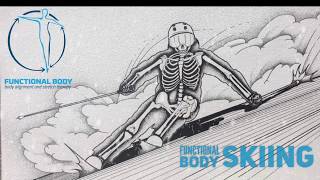
Tom Gellie breaks down why ribcage mobility matters for skiing. Your ribcage moves in three directions: up and down, side to side, and rotational. Each movement links to breathing and specific ski actions like absorbing moguls and holding turns. Test your mobility before you ski.
Chapters
Breathing and your rib cage as a structure is what today I'd like to talk to you about in this video. So why, why are we looking at the rib cage? Well, rib cage, huge structure. It houses our heart and our lungs, so two massive important organs that need to function well in our body. And then second, in my favorite sport of skiing, the rib cage holds a lot of mass, so where it's able to move, where it's able to kind of position itself, can have a huge influence on where our mass and our movement is able to go. So in this video, we're going to look at the movements of the rib cage in all 3 dimensions, how that might affect your skiing for both beneficial reasons and detrimental reasons, and then thirdly, always tying it back to breathing, because I've just discovered that some of my breathing patterns are not as, you know, as efficient as they could be, and I've realized working on them has had some really great tremendous effects on all the sports I do. So first things first, movements of the rib cage. First movement we're going to just test out altogether is a movement of the rib cage up and a movement of the rib cage down. Okay, so when we lift the rib cage up, you'll probably feel this matches with breathing in. Breathing out will match with the rib cage dropping. Okay, so what we're doing in fact in doing this movement is lifting the rib cage allows the lungs to expand a little bit more on the front and the ribs to open. Dropping the rib cage closes that area off and doesn't allow as much expansion. Okay, point to note though is just because one allows more and the other one takes away the lungs capacity. Doesn't mean we don't want both, because we obviously need to be able to inhale, and it's just as important though to be able to exhale and get rid of all that breath. So check in that you can make this movement. Okay, why would it be important for us to be able to do this in skiing? So if we're flexing or moving down for, say, an absorption in a mogul or a low crossover in a turn, Try doing that with your rib cage dropped here, and then flexing. For one, I feel like I hold my breath. Two, I don't get very low. If I have a rib cage risen a little bit, not flared out but risen, inhale, I feel it's much smoother to go down and move. Okay, so there's how we'd relate it back to skiing. Second, we're going to look at the rib cage in the lateral plane. So you should be able to tip your rib cage to the left, which would open all the ribs on the right and close them all on the left. We should also be able to tip our rib cage to the right, which would open all the ribs on the left, close all the ribs on the right. So go to the left again. Take a deep inhale, and just see if you feel that the right side fills up with more oxygen than the left. Okay, it should, because in this position, your rib cage is more open on this side, allowing more air to come into the right lung. Opposite should happen the other way. So here, I should be able to inhale, feel this side fill up more than the right because the ribs are closed and open on the left. Okay, now I notice a difference between my two sides because I've had an injury. I've had cracked ribs on the left here thanks to my good mate Nick at my bucks party. So I've had to work on continually encouraging my body to reuse this area, stretch out all the, the intercostal muscles and other shoulder muscles that attach here to allow me to breathe in more on this side and close strongly this side. So it's not just about being able to open, it's being able to close strongly as well. So test for yourself if there's one side that is easier to do or not. So after that, we're going to look at how would that affect our skiing. So if I'm making a turn to the right, as I shift my hips across, getting greater edge angle to balance inside this turn, my rib cage would be more open on this right side and more closed on this side. Okay, just try doing it the other way. So flex your ribs to the right and try and shift your weight to the right as well, and see how well you can balance and maintain a ski position. It's very hard, whereas if you switch over, open this side, drop the left, you can move over much more easily and breathe very easily, which is obviously super important. So the other way, if I drop my ribs here and try and shift as I was turning left, I get stuck, okay. I need the ability to open, not, not as exaggerated as I'm doing here, but have the ability to do that so I can comfortably move inside on this turn. Okay, so check on yourself whether one side you can laterally flex better than the other, and if not, that's the side you need to work on. Next, we're going to look at the rib cage in the rotational plane. Okay, so if we turn to the left, what should happen first in breathing is the ribs on the left side will open or externally rotate more And they'll internally rotate or close on this right side. So this type of movement, okay. Now you can play with, if you have limited rotation to the left, breathing and encouraging this movement to happen more, open and externally rotate on the left and close and internally rotate on the right to help you get further around. Inhale on this side, exhale on the right, and you should feel you can get further around each breath cycle. As we go to the right, right ribs should externally rotate, left ribs should internally rotate. Check here with your breathing, inhaling on this side, exhaling on the left. To get yourself further around. So why would you want this ability to be able to move the rib cage easily and, and mobile in a mobile way? Well, we need counter rotation in order to balance the action of the legs making a turn, say, to the right. The upper body needs to be able to have some discipline or counter rotate to the left to kind of even off that that balance, so we stay rotationally balanced. So middle of a turn, I'm inside here, balanced, I've got my rib cage in the lateral and the frontal, the sagittal plane well. Try now affecting your balance, if I rotate my rib cage to the right here, which would open these ribs and close these ones, for a start I feel far more unbalanced this way, it's kind of affected the lateral place of my rib cage, versus back in this position, having my rib cage slightly rotated to the left now, which would be opening these, an external rotation, internal here. Taking a breath, for a start, it's much easier, and two, I feel way more balanced. Okay, so you'd want to be able to have your rib cage move in all 3 dimensions really smoothly and cleanly, and 2, be able to feel the effects that that rib cage positioning has on your breathing. Okay, so check in with all 3 planes before you go out, work on the directions and movements that are not so easy, and Use your breathing to help start unlock more of that movement, and then, yeah, take it into your skiing, see how it goes. And again, thanks very much for tuning in and watching another one of my Tom Gellie functional body videos. I really hope to see some of you guys out on the slopes someday. Happy breathing!
More from Tom



Most skiers overlook how they use their poles. Try these five pointers next time you’re skiing.







