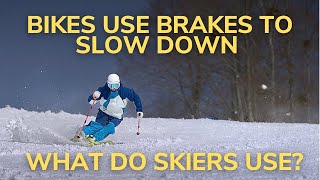
Tom Gellie teaches friction as a speed control tool: scraping your ski edge against snow dissipates energy without locking up. A drill of short rhythmic turns at 60 beats per minute, with friction applied early in each turn, lets skiers carry speed through the arc while staying in control.
Chapters
If you're into skiing, and I mean like turning, not just straight lining, you may want to listen to this. If not, just flick through, don't listen to what I'm about to say. So today I just finished skiing with the Thredbo ski instructors in the afternoon, and the level 4 ski instructors, or around that top-end bracket of ski instructor. And so we were going fast, we were carving, we were making really fast short turns, we were skiing bumps. We had 11 people in my group. I thought, what am I going to do with a lot of people and the conditions are awesome, I mean like there's snow low down here, it's so good at the moment, what am I going to do with these people that I don't make them bored, we can ski heaps because I wanted to ski heaps but still learn something, walk away with something new. So I presented the concept of friction and braking in skiing because I think most people just think about controlling their speed through turn shape., and that is one thing you use. But I think for a long time I've felt and used friction but hadn't really talked about it much with people until Phil Smith, a guy from the UK who runs a company called Snowworks, said, "Hey Tom, I think about snow displacement." So my take on it, and I love his analogy too, so I should credit him. When you brake in a bike or a car, there's friction. So a rubber pad against metal or something against another, uh, two objects, two materials, sorry, rub together. The more they rub, that they grab, and, and things don't move, and it slows things down. Okay, on skis, there's no obvious brake. Okay, uh, but there actually is one. Okay, and it's not really taught early on, it's just turn shape. So what is the braking? Well, it's scraping creating friction, wasting energy, or putting energy into moving things that stop you from going down the hill. So I told people that, I said, we're going to start, and people were like, oh, where was it, where is this going? Because it was a high-end clinic. So we started there. I said, make turns where you try and make a short turn, which always creates some friction on the snow, okay, because you're brushing, you're never like locking your edge. So, and I gave him the rhythm. I said, it's got to be like 60 beats per minute minimum, like boom, boom, boom, boom. So longer than that, not happening. So I said, you've got to do that, but you can't create too much friction. You've got to create the least amount of friction as you turn the ski on the snow, because that's going to leave some energy in the tank to actually like get some rebound and excitement out of your turns. Because like short turns can be really boring if it's just grinding your way along the snow. Way more exciting if it's rebounding side to side, bouncing, getting lots of deflection left to right. So we took that, we played with that all day. We went into long turns and I said, like, you need speed around the arc in order to, like, use that to, like, then incline and have fun, like bend the ski, tip it over. You've got no speed, you, you can't tip over without leaning on the inside ski. So then took it to the other end, it's like, don't create friction to slow yourself down. And then we skied some bumps, steep stuff. Use the friction early in the turn, okay? And just like a biker, if you come into a turn, you don't want to come in and brake in the turn. You want to do your braking almost like as you enter or just before, and then try and carry speed around the corner. So we took that everywhere, and people like eventually started being like telling me answers to things like, Tom, does it feel like this? Tom, is this the outcome? Is it right here? I was like, Hey, if you achieve the outcome, it is right. So we did heaps of skiing. People had breakthroughs, people were confident going faster, they actually had more control because they started thinking about braking in the top of the turn, not through the end, or, you know, not applying too much pressure because too much pressure made it lock in and they couldn't like scrub and basically brake on the snow. So just playing around with that concept. All fantastic skiers, and everyone, yeah, walked away with big smiles, including myself. Great afternoon. I'm sharing this with, with you in case this is something that helps you, like, play with your skiing and improve your skiing. So there are brakes on skis. It's your interaction of edges with the snow. It's friction. It's moving snow. Be aware of that. And also, if you want to go faster, be aware that good turns and like good race car drivers don't have their foot on the brakes. They have it very minimally. Okay, so play around with this application of brakes, not slamming or grabbing a whole bunch, but being really accurate with it. All right, hope this helps you next time.