How To Perfect Your Mogul Line (3 Practical Tips)
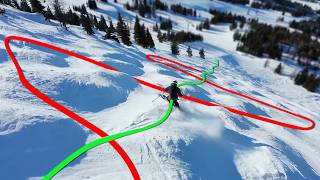
In this instructional video, Tom Gellie and co‑presenters walk viewers through a step‑by‑step approach to choosing and executing a line through a mogul field. The lesson is built around three core tactics: (1) a falling‑leaf side‑slip that keeps the ski tips and tails free by sliding down the backs of the bumps; (2) a delayed‑pivot hockey‑stop where the skier runs straight through a narrow section and then brakes sharply; and (3) a "Tokyo Drift" sideways sideslip that uses lateral momentum to control speed without over‑edging. Throughout the demo the presenters highlight common mistakes such as "bridging" (placing skis between two bumps and getting caught) and stress the importance of visual spotting, line‑selection decision‑making, and repeated drills. Real‑world examples with the instructor’s wife and 8‑year‑old son illustrate how the techniques scale across ages and skill levels. The overarching message is to treat skidding as a controlled braking tool, develop an intuitive sense of affordances in the terrain, and practice the three tactics until the brain can automatically choose the optimal line.
Chapters
Today I want to help you find your line in a mogul field.
Because you get here, it can be very intimidating knowing where to go, how do you pick your line.
So watch this video, I'm going to run through some really simple steps that's going to help you to decide where you want to go, what decisions you want to make, because there are better places, or there are places with certain consequences, and there are other places where you can control your speed better.
We're going to use 3 different tactics to help you get control. The first being side-slipping using a falling leaf pattern. This will help to teach you to not catch the tips and tails, as well as get control through sliding down the backs of the bumps. We'll then work on a hockey stop. So this is going to be used when you need to pick up speed in some spots and shut it down later. Finally, I'm going to show you a sort of Tokyo Drift style turn where you use a sideslip on the edges of the bumps and more of a round turn.
There is a prerequisite, and I'm doing it right now. You've got to be able to sideslip really well and then go into a pivot slip the other way.
So you want to make sure you can master those drills, do those things well, because that's going to help you then to have the skills to choose your line.
So once you've got your side slip, pivot slip skills, let's start with like where not to go. So if I put my skis in a bridging position between bumps, actually I'm just going to slide down here and my tails and tips are kind of contacting two separate bumps like this. Have a look, I'm in this spring-loaded position. You may have felt this before, you're skiing along, you get here accelerate and you get shot onto the, the tails or the tips. So you just want to avoid bridging bumps. Okay, now watch, the simple solution would be instead of being right here, I could either have gone down the back of the bump right here. So now I've just unloaded the ski and I can slide this section, or I could have gone up, come across and slid down this section right here. So your first goal is to pivot slip, even falling leaf your way through the moguls. So I'm going to falling leaf my way and I'm just going to try and get used to spotting where I should slide. So here, turn quickly, I can slide through here. Then I'm going to shift forward. See that? So I don't get hung up sliding here. If I end up going backwards, see, now I'm— whoa, I'm in hung-up Bridgetown. No good. Here, much better. Okay, this one I could even slide out wider. The slower you go, the easier it is to probably stay like on the backside of the bump. Okay, so pivot, this being the backside of the bump right here, as opposed to the berm line around. So going slow Pivot, finding the backside. Now see right here, right here is a classic situation. If I finish at this point, most people panic and they start their turn and you're going to be bridged and then shot out that way. Think about looking ahead, getting used to spotting before the turn is made, where am I going to put my sliding ski, my skidding in.
So our first goal is to slide down and not get our tips or tails hung up on the bump.
So here I go, sliding down, falling leaf to keep finding myself the backside of the bump, sliding down over here, sliding down that section over here, sliding down there. See, I can use the falling leaf to help keep finding the good spots on the bump. Here I got that spot there, or I can turn, slide this bit fully in control.
If you watch closely in my falling leaf here, you'll notice either the tips or the tails become free in the slide. So choosing the spot on the backside of the bump that either keeps the tips free from catching or the tails free from catching is what you're trying to learn to feel and learn to spot where you're going so they stay like that. This is my wife practicing keeping the tips and tails free and falling leafing her way down through the bumps. She's starting to get a good feel of controlling her speed through some sliding, as well as not catching the ski tips or the tails by maneuvering back and forth. See, she kind of found the bridging moment right there, but then there we go, didn't catch the tips and the tails on that one. So Make sure you just spend some time just playing around, sliding around through the bumps, and you'll start to recognize with your eyes where you can do it, and then with your feet how to put your skis so they don't get hung up in the bumps. It doesn't matter what your age either. This is my son Archie, 8 years old, and he's falling leafing his way through the bumps too, starting to figure out when his tails get caught and when they're free. How he can control his line down through the bumps. He really started making improvements with his mogul skiing after we worked on this step of the progression.
Now we also need another tactic which is a little bit gutsy, because sometimes you might end up picking up some more speed and you need to make a decision that is not to sideslip or pivot your skis to sideslip straight away. This new decision is often when you see these long bumps with not much space in them and you come across and you go, well, I don't want to turn too fast. Well, what you've got to do is embrace a bit of a straight run and then pivot, because think about it, if I can place my skis down here in the bump See that? They're not getting hung up. If I put them side to side like this, they're going to get hung up. If I can be patient, almost straight line down, and then shut down my speed at that bit, I'm going to— I'm not going to get hung up. So you've got to be brave for a second, and then you've also got to be really skilled at a really strong hockey stop. So let's see if I can give that a go. I'm going to do the hockey stop. To the left. So here, straight line, whoa, hockey stop. Oh, here's a perfect one, have a look at this. This is exactly the kind of spot that you can get hung up on, and if you don't want to sideslip this bit, you're going to need to put your skis where they fit, down here, straight down, then come to a stop.
So I'm delaying any turning, going straight, waiting until this moment to then shut my speed down all in one go. So there's the straight line section, turn and stop in the open landing pad later.
But practice some easier ones. Straight, hockey stop. Straight line, hockey stop. So you're just choosing to make the pivot later like this, as opposed to turning straight away. Okay, so let's go practice that a little more. Straight line this section, hockey stop. Right in here, hockey stop. Another good one. Turn straight through here, hockey stop. Straight, hockey stop. Straight, hockey stop.
In a nutshell, this whole lesson is really about how to not get hung up on your tips and tails. So you've got these different tactics that you need to go out and practice so you can start to figure out how to fit your skis in the gaps, slide down the backs, and have complete control in the moguls.
Our goal again is to know where the line is you want to choose in the bumps, and these natural ones here are so irregular, there's no rhythm like a World Cup line where it's a bit easier. Here you have to make decisions on the fly, so I want you to get really good at looking ahead and choosing places where your skis fit. Do they fit with a side slip, or do they get bridged? Can you have the confidence to straight-line a section? And, and that's only a good decision if after that there's like a landing pad, an open zone to then shut down your speed. So I'm going to attempt with the Insta camera to just start playing with these two different options of straighter pivoting, straighter here, shut it down, scraping, and so mixing it up and looking ahead to where I could do that. Okay, slide, slide, slide, slide, straight, hockey stop, down, straight, hockey stop. Okay, if I do it well, I don't even need that much absorption. As I get faster, I can use absorption more, sure, but This one's about line first. Slide, slide, slide, straight, Pocky stop.
Our final tactic to learn is the Tokyo Drift Slide, and I've called this because you're trying to get a sideslip happening sideways across the slope a little bit. Because this pushes you out wide on the berm kind of aspect of a bump and allows you to control speed mid-turn without pointing your skis all the way across the hill. A very easy, simple way to teach this is using a snowplow, where the outside ski is the one you feel drifting out wide on the berm. As you start taking it parallel, I think of trying to hang the tails of my skis out over the edge of the bump. This view helps see me scrape sideways in that Tokyo drift at times, so with some rounder turns like here, I'm able to use that momentum to then brush my skis sideways. You can really see it in where the snow gets sprayed out to the sides.
If you start taking a little more of a rounder line, if you happen to like a rounder line and want to get rid of some of the skidding, you can realize that you can actually side slip around the berm. So it only works if you've got sideways momentum. So here I've got sideways momentum, see that? I can side slip up the bank of the berm. Okay, so it only works if the momentum is going left and right, doesn't work that well if I'm going down the hill. Okay, so a bit of momentum across here, I can slide up it Slide up it, bit of momentum, slide up.
You'll see my son about to use this tactic in this varied terrain right there. So his momentum is going sideways and he doesn't try and edge the skis too hard, he just turns them a little bit and allows them to go into that Tokyo drift so he can control speed and his direction. Here in this snowed-over mountain bike track, the same thing's occurring, he's just got the outside ski doing it here and then he gets both skis into the Tokyo Drift to control speed around that corner. My wife usually overedges in the moguls, but once we taught her how to Tokyo Drift the corners like this, she found skiing the bumps much easier. This brings me to the point that skidding is not a bad thing if you make it a technique and a skill and are artful at it like we're working on with all these tactics. You gain greater speed control. Think of skidding more as part of your braking system. If you can scrape snow, push snow around, you can slow down. So let go of always trying to overedge the ski when you do these drills and embrace the art of skidding.
Okay, so let's try and put it together. And, and what you're hoping for, why I really encourage people to work on these drills and spend a long time with it is your brain and your body starts feeling out and spotting where you can actually put this skill. It's called an affordance. You're looking for like, oh, I've recognized and remembered in the past if I pivot and slide down here, it's gone well. Oh, I recognize in the past if I bridge turn too soon and the tails and tips are hung up, it's not good. So you want to really spend time in that zone of learning it, and then you're just going to start. Like, I don't even think, my brain is just going boom boom boom boom boom boom boom, and I get to the bottom, I go, how did I do that? It's because I spent time figuring out what works in what place.
So there is a tutorial on how to help you choose lines within the mogul field. My goal was to help you be better at looking ahead and figuring out what type of tactic works where. So there are 3, quick summary, you've got the side slip sideways one. Now that one requires a very fast pivot of the skis from one side to the other, and the goal is to use the backside of the bump, and often your ski tips are kind of riding out in the air and your tails are close to the trough. You can always use the falling leaf to help practice this on just one side first. Once you start building a bit of momentum, you may need to abort that tactic and you need to straight line at points. So that was where we worked on keeping the skis straight when we got in those big valleys, because we want to avoid the bridging. And those are best when we can straight line for a second and then put the, put the pivot in later. So remember, that's different from the first one. The first one is pivot very soon, scrape down. This one is turn a bit, point your skis straight, and then turn a lot later. You're looking for those really open landing pads, a bit like, imagine you just got to fit down a tight hallway and then it opens up into a big room. That's where we shut down our speed with a hockey stop style maneuver. And then third, if you're making some rounder turns where you're going from side to side, you can use that sideways momentum. You must have sideways momentum, so not down the hill, and that sideways momentum can then help you go into almost a Tokyo Drift sideways sideslip. Okay, this one is really fantastic when you get those big dugout berms. I've taught Archie this to be able to ski the tree trails and the bike trails that get covered in snow, and you can wash off speed through the bank turn. And the difference with this one is often you're almost thinking your tails of your skis are sticking out over the edge, your tips are the thing that's close to the valley or the trough of the bump. So different to our first one. It's never going to be the same for every single bump run. You're going to have to throw in all 3 different tactics, so get out there, work on each of them separately. I guarantee this is going to help you. I've seen people transform in literally like one run, being able to suddenly see, because a big part of it is looking ahead, spotting what tactic to use when and where, then your control is right there. Thanks very much for watching. Remember, there's a bunch of other things you can work on in your mogul skiing. Pole planting, absorption, stance, just to name a few. So make sure you just realize this is a piece of the picture, but it's a super important tactical one, not technical, and I think it's going to make a big difference. Leave a comment if you found it did, and I'll see you on the next video. Thanks.
More from Tom



Most skiers overlook how they use their poles. Try these five pointers next time you’re skiing.







