It doesn’t have to HURT for an old injury to be getting in the way
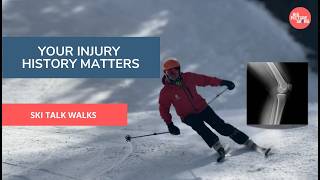
Gary, a skier and coach, had a left-leg imbalance with no pain from a 2020 fibula fracture. A structural integrator released fascial restrictions from the old injury, and Gary's balance and skiing instantly improved. Old injuries can embed dysfunctional patterns in fascia long after pain disappears.
Chapters
When could an old injury to your body be the cause of a technical issue or a weird funky look to your skiing? Well, I want to share a story to help maybe get this across and see if it's applicable to you. In March, we ran a Big Picture Skiing Camp and this gentleman named Gary joined, and Gary, super passionate skier, his kids are in the race club at his local hill, He's a coach himself, he invests a lot of his time and resources into skiing, it's his thing, and he came to the camp really hoping to improve with the help of myself, Jason, and Demelza, the coaches. He gets to the camp, first day skiing he's with Demelza, she sees him come down and they try and work on some things, and by the coffee break in the morning she says, "I think, I don't know if I can help you just yet because there's some stuff going on in your body that you need to address, and I know just the person, Claudia, who you should go see to help that. So first of all, Demelza recognized you couldn't really intervene because she tried drills, uh, things to, to help Gary skiing, but it wasn't really having much of an effect. And that's a really good sort of like giveaway sometimes, not the only reason, but if you're really struggling and she was seeing he was kind of moving around something like trying to avoid because of a compensation. I've got to say, Gary had no pain or anything really going on in his body. It was just awkward movement, especially one side compared to the other, and he was frustrated. He was saying, yeah, like, I'm working with this great physio, I've had this person, I've got a personal trainer.
2 physical therapist treatments, 8 weeks each, and one of the best orthopedic surgeons in US, like head of sports medicine in Stanford.
You know, I've tried working on strengthening, you know, the glutes here are weak and all this sort of stuff. Well, sometimes that's not, uh, where you need to go. So if you're getting at a stuck end, keep listening. So Gary's frustrated, he's also— yeah, I can't change. Right, go see Claudia. And Claudia is a structural integrator, maybe Google that, but it's someone that works with the fascia and She had a huge impact on my life, I must say. She changed my life forever because I became a structural integrator because of her. I, I went and trained after being treated by her and had just my whole body freed up. Anyway, they see things a little bit different working with the fascia. It's a little bit different from the usual physio, chiro, personal training approach, or even massage. Okay, so he goes to see Claudia. Claudia looks at him. Makes, like, gets him to walk around, looks at his alignment, and it's like, Gary, what is going on with your left leg? And he said, yeah, well, that's the problem. I had this injury in 2020.
I was racing GS. I crashed enough and I actually fractured—
that cracked my fibula, but it's all healed now. And she said, well, you're still all twisted up, and I don't think it's, you know, it's affecting your whole body, and no wonder you can't really balance on your left leg in a turn. Because that's what he would say, He was like, I just can't stand on my left leg. He's like trying all these things. She's like, yeah, I could, I can see that. So Claudia gets in there with her hands, fingers, magic hands as people would say that Claudia has, does some work with the fascia.
Literally what she did was grab my leg, had me turn this way, really physically just twisted back.
Yep.
For the first time in about 5 years, Just today, I'm standing on my left ski.
The thing you got to realize, when you have an old injury and it heals, the fascial system kind of sets up in a way after several months. If you— if it's like, oh, this is where you want to be, it'll kind of hold you there. A bit like, uh, like, that's where you want to be, okay, we'll hold you there. So that's why you see old people sometimes with, you know, this posture, and they can't move their head back because they've been there for so long. The body's just set it there. Okay, so she works with his— the fascia, releases some stuff around the lower leg, and then does some really cool exercises from Anatomy in Motion and gets him moving differently on this left leg. He then goes to walk around and nearly falls over, and he's shocked. He's like, I'm so different. My left leg, I can't believe— like, I can't figure out how to walk on it.
Right after this, I had to learn how to walk again. Yeah, usually because I did not have the sensation of being balanced on my left foot. I literally had to walk around the block a few times.
We see Gary the next morning, he's like, his jaw's kind of dropped, like, I just can't believe what's happened, but my body feels completely different. I felt like I had to relearn how to walk again last night. I wonder what's going to happen with skiing. So he goes skiing with me the next day, and I hadn't really seen him. I just heard from Claudia that, you know, he's all funky, and she showed me some video. And first turns he makes, he's like, this is so different, I can't believe it. And, and he, you know, we're working through some drills and different things during the day. He was off in his own little world pretty much because his body was opened up and like behaving completely differently, and he was just like completely enjoying that moment, just like engrossed in his body and just so into it. So anyway, we took some video, worked on some things, and Gary started changing, started getting better. I've got some videos, some stills even, before and after, one day apart with this intervention. And the point here is Gary had this old injury years and years ago, not really any pain anymore, but it was stuck, and physical training, doing your classic exercises, that sort of stuff didn't help it. He needed extra help. So sometimes you might need to find someone like Claudia Sorensen, who's in Silver Star Canada. If you're lucky enough to go there, go see her, she's the best. Go see someone like that, or start paying attention to your body and realize, you know, because when you, when you heal, you always heal to like efficiency, never perfection. So you've got to realize that, and you've got to keep pushing it further. So yeah, make sure you do that. The other thing I want to say is there's a point you can kind of make two decisions. One is you decide to try and fix something, intervene, or you just accept that it's going on there. So I'm speaking to the people that probably have, you know, worn-out knees, things that aren't really— that are much harder to change. Like, you know, you've had a serious break and your bone is not the same way it was before. If it's a hard issue like that, that's harder to change, and the best thing you can do is just accept it and just be like, "That's okay, this is how I am, move on. I'm going to have some conversations a little bit of a weird different tone, and that's fine." But if it's in the soft tissue and there's a way you can change that, it would be a great road to go down and explore because you might discover that it's not the fact you can't angulate well despite trying for hours and hours and hours, it's actually your body saying you haven't quite resolved this issue, I'm still trying to protect it, help me unravel that and then we can move on. So yeah, hopefully that's some good food for thought today about your skiing. Sometimes a technique weird funky issue is not just your own problem, not understanding it, not enough practice time, but it's actually coming from something in your past and maybe you want to go and address that further and see if you can unravel that to help make your skiing keep getting better. Okay, thanks for watching, see you next time.
More from Tom



Most skiers overlook how they use their poles. Try these five pointers next time you’re skiing.







