Making the Most of Small Ski Hills (When Big Mountains Aren’t an Option)
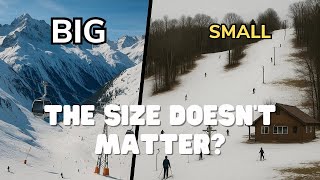
Tom Gellie talks with ski coach Phil Smith about making the most of small mountains and indoor slopes. Technical drills like pole placement and mogul absorption work anywhere, and focusing on smooth, dancer-like form turns limited terrain into a real learning environment.
Chapters
Recently recorded a really interesting podcast with a gentleman named Phil Smith. Now Phil has decades of coaching experience in the ski industry and he's a great thinker. He sort of challenges the norms and it's a really good episode, I'd highly recommend you check it out. But what it really kind of, one thing that really got me thinking was small ski resorts or small zones of skiing versus big ones. So, for example, an indoor ski slope in England versus the huge vast areas, say, in the European Alps, where you can ski moguls, couloirs, go backcountry, really steep, less steep. The differences are huge, and the affordances, the things that you can do in that terrain, are so much more varied than the indoor slope, which has got a short pitch, it's not that steep, and the snow is pretty much always one particular way. Feel is really, is like, you know, after spending a lot of time on technical skiing and always sort of focusing on technique, like, oh, your ankles aren't flexed, or you're not angulating, being in the environment he's in, the French Alps, he was able to switch to more all-mountain focus where it's all about exploring, traveling on the snow to different places, making it a real adventure. And I was like, that sounds awesome and everyone would love to do that, but not everyone has the ability to do that. For me in Australia, my locals local ski resorts, sort of 6 hours away from me here, some great skiing but nowhere near as big as the European Alps, and the snow is different, and the average ski day, you know, maybe is not great for off-piste skiing, exploring, you're sort of stuck to the piste. It got me thinking, because, because I've been exposed to that, I actually really find a lot of enjoyment out of Like, sort of being constrained by that, and instead, like, so say you ski a blue run, it's a certain length, you do it until you're really comfortable, what's next? What do you do next? Well, like for me, I've pursued technical skiing, refinement, and like working on the small things that a lot of ski instructors do give feedback on, like, oh, you could be, you know, a little more forward at the beginning of the turn, or you could have your outside arm a little bit lower. And while these things, a lot of them have a functional purpose and will create, you know, more grip, maybe more rebound, a quicker tempo, I think there's something that a lot of people don't maybe talk about, and that is the aesthetic side of things. I really enjoy trying to actually look good on snow. Just look at that, look at the ocean out there today. Really nice waves this morning, but I'm out taking Teddy for a walk. Anyway, the aesthetic side of things I think can be a really fun and rewarding sort of challenge and route to go down when you don't have the ability to go and ski in, you know, couloirs and bigger longer runs and steeper stuff. And I think so, here's some— here's other things I've enjoyed over the past few seasons in Australia where it hasn't been the best season. We've been sort of given less snow, less than ideal snow conditions, and not as much as maybe normally. There's been some good periods, but overall less. And so I've enjoyed refining where I have my hands, how my poles move and how that ends up looking on a video and to other people. In my mogul skiing, I've been trying to refine my absorption. I've always had pretty good range of motion to sort of absorb a bump, but I've pursued, you know, when there's moguls at the end of a day, all these slushy moguls build up, I've pursued making that absorption far more precise and accurate, so not putting my head forward I'm not bringing my head down to my legs, but my legs up to my body, and constantly checking with video that I'm achieving these things. So I guess my point is here, depending on where you live, the affordances, the environment you've got, doesn't matter if you're on an indoor slope, somewhere on the East Coast of America where you've got a small little hill, your local hill that you love, or you're in like Revelstoke, Canada, Colorado or you're in the European Alps around the St. Anton area, I think you can always find something to make your ski day enjoyable and challenging and continue pushing yourself to learn something. There's so many different ways you can go, and I think the adventure route, the all-mountain skiing route, I love what Phil's saying about that, but I guess it got me thinking, not everyone has that ability. A lot of people members of Big Picture Skiing on the East Coast of America or in England in indoor ski slopes, it's just not something they get to do. So what do you say to those people? I say to you, don't worry about that other side of things. You can really challenge your mind, challenge your physical skills on easier slopes if you take a technical skiing approach and really embrace, yeah, almost like trying to become a a better dancer, like looking really good, not just focusing on what most of the world is sort of always talking about in terms of like bringing it back to ski racing or performance there. It's really fun to make the performance like a visual performance as well. Anyway, that's my thoughts after the, uh, the recent podcast, which you should check out. On Spotify, Apple, and YouTube. It's big, some big light bulb moments for people about speed control and how that relates to snow displacement, which Phil shares with us. So check that out. But that's what it got me thinking about, and I wanted to share that with the community. So yeah, don't get down if you can't get to the big places. Embrace technical skiing, embrace the, the visual, the aesthetic side, the kind of the dancing side of things. 'Cause personally, that's what's kept me going, and I love doing that. If I had to be like, "Hey Tom, you don't get to travel to Canada anymore, you're stuck at," well, there's soon to be an indoor ski slope in Sydney, that's your only place that you're allowed to ski, what would I do? This is what I'd do. I think I would still enjoy it, I think I'd still love it, and I think if you have that right mindset and you know what to focus on, you keep giving little challenges, things to work on, yeah, you can enjoy more days on snow, because that's what it's about. When I go down to Thredbo and Perisher in Australia, and I'm there and I'm skiing, and maybe it's raining, or it's June and there hasn't been much snow, and I've just got this one slope in front of me, what am I going to do to really maximize and feel like that day has been a really fun and awesome one? Anyway, leave your comments down below what you think about this small ski slope area versus large vast ones. I'm sure there's people from, uh, that, you know, their, their accessible ski area is at one of those ends or maybe somewhere in the middle. And yeah, what you've enjoyed approaching. Maybe like Phil, you've sort of really swung away from the technical side and you're right into the adventure all-mountain, embracing messy skiing, which I think is really cool. Or maybe you're at the other end and, you know, you're at a small here on the east coast of the States, and you know, you've enjoyed pursuing more sort of precision and perfection and a visual appeal to your skiing. Love to know what you're thinking. All right, I'm going to finish this walk with Mr. Teddy here. Teddy, let's go, hey? All right, thanks everyone, see you next time.
More from Tom



Most skiers overlook how they use their poles. Try these five pointers next time you’re skiing.







