Olympian Erik Schlopy on Carving, Gear, and Coaching Smarter
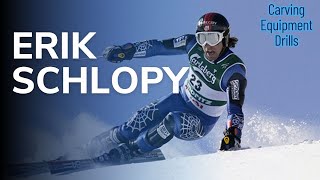
In this episode of the Big Picture Skiing Podcast, host Tom Gellie interviews former U.S. alpine ski Olympian Erik Schlopy. Schlopy discusses the physical and psychological traits that separate elite skiers, recounts his early life and family influence, and explains his pioneering equipment innovations such as "double stacking" lifters, boot board modifications, minimalist footbeds, and shell side adjustments to improve power transfer. He reflects on his own lack of feel for equipment during his career and how greater sensitivity could have enhanced performance. Schlopy shares coaching philosophy, emphasizing innovation over imitation, and details his work with his son Spider, a tall first‑year FIS racer, highlighting equipment scaling, biomechanical alignment, and the challenges tall skiers face. The conversation also covers specific drills (edgy wedgie, power wedge), the importance of timing, projection, and carving as a dynamic motion, and promotes a summer ski camp in New Zealand for racers of all ages. Additionally, Schlopy reveals an upcoming intensive training trip to Austria with his son, planning 10,000 turns over ten days on a glacier, focusing on one or two specific drills to reinforce technique. Promotional segments for Tom's Big Picture Skiing platform are interspersed.
Chapters
In this episode of the Big Picture Skiing Podcast, I speak with former Olympian, bronze medalist in World Championships, innovator, Eric Schloepie. Now I've spoken to Eric before in the past, but it was sort of an impromptu chat where I just put my phone on the table, hit record, and the sound was not great, although the information and the knowledge shared was top shelf, so inspiring. And so I wanted to get Eric back on the Big Picture Skiing Podcast to share some of the same sort of insights he gave there, but more. And as I've evolved with this podcast and learned to ask better questions, I think I'm getting more out of my guests, and this one is no exception. So I feel always inspired after chatting to people like Eric. My goal is for you to feel the same. So what are you going to get inspired about? Well, let me tell you, Eric is going to share some insights around ski boot setup, footbeds, boot board, side of the shell, what he's looking for in modifying that boot so he can perform with his feet and make a great turn. You're going to hear if he thinks that there was certain advantages he had, or great skiers have, that make them better than other people, whether that's psychological, physical, technical, that sort of stuff. So you hear his thoughts on that. We discuss his son, you know, things he's learned because he's quite a lot taller than Eric. So a lot learning to see things through the eyes of someone with a different type of body, and how he's helping to share that when he's coaching other people. I also asked him what he would say to the general public and a lot of skiers out there in terms of what he's seeing them do on the mountain, and I think that's a really interesting and fun part. So he's got some recommendations probably for you right there on what you should do for your skiing, some of his favorite drills he likes to use to help himself and others really get the feel for, for a good turn. So there's lots in this episode. Well, thanks Eric for being on the show, and thanks to you for listening, watching, and being a supporter of the Big Picture Skiing podcast. Really appreciate it. It's starting to get cold here in Australia, so I can't wait to get on snow. But in the meantime, those in the north, those waiting for it, hopefully this is something to fill in that time and keep your skiing mind frothing and looking forward to the next time you get on snow.
Do you think that there is something that you have as an advantage over other skiers? So people that get to the top of the game, maybe it's psychological, maybe it's strength.
That's a really good question and one that there— I don't know if anybody's ever been able to break it down. You know, I think there's certain, certain levels that top World Cup skiers have Physically, let's just start with the easiest one. You have to be very strong. If you're not super strong, doesn't matter how, you know, how good your touch is on the snow or how strong you are mentally. If you can't hold 800 pounds on one leg 60 times in a row and just, you know, hammer anaerobically, you're not going to— you're not going to make the World Cup. But to be honest, that's— that's the easiest thing. Is so tangible. You can get in the weight room. You know, I think there is a certain genetic component that allows people to get to a certain strength level faster. And it might, you know, it might be impossible for some. It's certainly the easiest one to address. There's nobody on the World Cup that started skiing— skiing, not ski racing, but skiing— after age 4. So I put skiing in a category with golf, Surfing, even gymnastics is such a technical sport. And there's so many little nuances to the sport and so many variables. And you can make it so complicated that if you learn the sport and you can't remember learning the sport like a language, then that's sort of the key to the foundation of success. I don't remember learning English and I don't remember learning how to ski. Anything I remember learning, I'm not great at. I can be good at it, but I'm not great and certainly not world-class. So, you know, you've got, you've got that as well, the touch and feel on the snow, balance, understanding the fall line. And then as you progress through the ranks and as you get older and into, let's call it World Cup age, sort of 20, 22 to you know, the end, end of your career. I was 37 when I retired. That's when all the details matter. That's when all the little things matter. You know, I know there was a study on, uh, and I don't— unfortunately, I don't know all the details, but on, on British cycling team. So they were trying to make 1% difference in 100 different categories. And I, I can really relate to that because 1% in 100 different categories totally changes things. It changes the big picture. And, you know, it's like laying a sheet of paper on a table. You can't see where the sheet and the table separate. It just looks like it's all one. But then you start to stack them up and you get 100 sheets of paper and it's way off the table. So every little detail is like a sheet of paper and you lay it on top of each other and before you know it, it's a material difference. I think that's what separates the great athletes, is that they pay attention to every sheet of paper.
So then back to the born basically on skis part, or skiing from a young age. Do you remember your coaches, or do you remember your friends having a certain— like, were you always mucking around on jumps? Were you always trying to do just go as fast as you can in a straight line? Any things like that?
100%. I remember ever since I was little, skiing was— it was in my blood. It was part of the— it was part of our family. My parents were ski instructors. My sister was a skier, actually. She was a great skier. She was NCAA giant slalom champion. And so we— and we were lucky. We grew up in Buffalo, New York, just outside of Buffalo. And my mountain until I was 12 wasn't a mountain. It was a hill. It was 400 vertical feet. So just over 100 meters. Nothing.
Yeah.
However, when you're 4 years old, you get very comfortable very quickly on a hill as opposed, as opposed to like a super ski resort like Park City. You know, you go skiing at Park City, it's wonderful experience. But when you're 4 years old, you can get lost fast. There's a lot of people, it's crowded, there's chairlifts, there's miles, 4,000 skiable acres. I just would go up and I knew where the hot chocolate was and the marshmallows, and I'd go ski and I would look for every jump. And actually, one of, one of the stories that my parents love to tell is one of my first races, it was a slalom, and I'm coming down, and slaloms there with that short a hill are 20 seconds, even when you're 5 years old. So I'm coming down this long hill and I, and I knew there was a jump off to the side because I helped build it. So right in the middle of a slalom turn, I just arced right outside the course, hit the jump, nice spread eagle. And then I came back in for the last couple of gates and I was like, wait, how come I didn't get a time? So I was all about skiing, not just racing, but hitting jumps, going fast, going through the trees. Uh, I mean, even silly stuff. I mean, in the '70s, ballet was still a thing, so I would enter freestyle competitions and do ski ballet. So, you know, just anything on skis and just to become a better athlete with boots and skis on.
Do you remember then, on the 1% things, do you remember when you started going, you know what, These boots are rubbish. I need some better boots, or these skis are too soft.
Oh man. So, so when a fellow Olympian, Dane Spencer, who we'll talk about later, but he, he always complains about me because I never complain about equipment. And I honestly think that I should have more. I was an innovator, so I I came up with double stacking or, you know, I was always doing stuff with my equipment, but I never dialed in the small details because I didn't— I couldn't feel the difference. I just make it work. So, and so my teammates also would make fun of me. They would say, you're all touch, no feel. So that meant I had really good touch on the snow, but I couldn't feel the difference if my cant were off or if my bevel was off. And I've gotten better at that. Honestly, since I've retired and I look back and I'm like, man, that would have made a huge difference if, if I could have zeroed in on small, small things like that, still being innovative, but really taking care of the perfect bevel, the perfect canting, the perfect boot setup. But I was lucky enough where I could get on anything and make it work. So that— so kind of ultimately it was a disadvantage because I wasn't sensitive. I just— I'm like, oh yeah, I can make this work. These, these feel good. So yeah, it's kind of funny. It was kind of a— there was like a catch-22, double-edged sword, you know? Yeah. Like Dane gets mad because like, oh, it doesn't matter what you ski on, you can go fast and make it work. And, and but then I'm like, well, Yeah, but had I been a little more sensitive, it would have forced me to pay a little more attention to—
you might have been consistently fast, the fastest.
Yeah, could have made a huge difference. And at the World Cup level equipment, if you don't have the right setup, it doesn't matter if you're the best skier in the world, you're not gonna— you're not gonna be dominating.
Double stacking? Yeah, yeah, because I was watching a video, a classic history one, because I was just, you know, always doing a bit of research. Your name on YouTube, and, uh, that someone, yeah, was talking about some accolades, and they're like, the first person to double stack. So can you— that was sort of a new— I think I have a bit of an idea, but explain it. How did you come up with it? Why?
Yeah, um, okay, so I was, uh, 19 years old, um, at that time. It was, uh, 1992, the, the, the end of '92 winter. So I was going to turn 20 in August. So we were still on 210 giant slalom skis and I was on Dynastar skis and they were good. But I noticed when I get it way tipped up and I would start to pressure it, I would boot out. So I tipped the ski up and the snow was hitting the bottom or the inside of my boot, sort of by the navicular. And pushing the boot back off the snow. So I was losing pressure. And so I thought to myself, I was like, well, what about just going up? And then I can go over more and have more leverage and it'll take my boot further off the snow so I can get a higher edge angle and it won't— the snow won't get in the way because we were grinding our boots. But I mean, that was like you get a millimeter out of that.
Yeah.
So I threw on— at the time we were on the— on a plate called Derby Flex, one of the greatest innovations of ski racing in the history of our sport. It was a metal plate, might have been aluminum with rubber, and then you would screw the front and the back. And it was really one of the first lifters and dampeners out there. And so we were all using Derby Flex. It was sort of this new innovation. Been using them for maybe a year or two. And, and then in slalom, we were using just, uh, just plastic lifters that were probably 5 centimeters high. I mean, they were high. Maybe— no, probably 3 or 4 centimeters. 5 is pretty high. 3 or 4 centimeters, but high. So I took my slalom— I got an extra set of the slalom lifters, which are just plastic, super light., and I mounted those on top of the Derby Flex, and I was having an okay year, but this was in February. I tested it and I was like, oh, game on. So I go to, I go to Europe. Every single race I entered from that point to the end of the season, I won first place. So, so your Europe FIS races come back. I win back-to-back Super-G giant slalom US Nationals at age 19., then go to NorAms and I win GS and Super-G.
And this is beating some big names at the time.
Yeah. Oh yeah. I mean, in Super-G, you know, we had AJ Kitt and Kyle Rasmussen and Giant Slalom, you know, there were guys that were a couple of years older than me at the time that were on the World Cup. And then the NorAms had a good field. And so that double stacking really worked for me, even though everybody caught on and started doing it. I don't know if it was because I was the first to do it or because it just suited me and, and the extra leverage really worked for me. It kind of kept me ahead of the competition, whereas, you know, maybe I was here, then I went here and but then everybody went up and but I didn't fall back to here. It just worked for me.
So, um, yeah, so no one had really done that before?
No, no, it had never been done apparently.
I'm sorry, is then— did then— did Fiskar go, hang on, no, we're not allowed to allow us this much height?
Yeah, so I mean, some would say I'm responsible for the max height rule. Yeah, because at the time, I mean, I was probably— now the max height is I think 50 millimeters. I was probably 65, 70 millimeters off the snow. Wow. So it was like this thick and, you know, you could really lay it over. But with 210s, you can— I mean, it was like the more the better.
And, you know, I don't know when— feeling— I've never been that high, but do you just feel like way more grip and power as well? Like, is it not just booting out?
Do you feel like Oh yeah, no, uh, grip and power goes way up. Okay. And the cool part of this story too is, you know, uh, my roommate and housemate in Europe, and like a brother to me, is Bodhi Miller. And he's 5 years younger than I am, but he tells the story of— so at the time he was 14, and he caught wind of the double stacking, and he told his he told his coaches, I want to, I want to double stack. And they're like, you don't need to double stack. And so he just went and did it himself. And this is when he was 14. I didn't even know who he was. We, you know, we didn't meet till several years later. And, and it's just, it's kind of fun to know that he wanted to double stack and it was something I came up with. And he's very innovative himself and I think part of the reason why we get along so well is because we're both different and sort of unapologetically different. It's like, hey, this way I'm doing it, and I don't care what you think of me. Like when I play golf, I one-arm chip and everyone gives me a hard time, but I'm like, hey, that's what works for me. I don't care. Do what you want. But when I golf with Bodhi, he's like, yeah, go for it. You should one-arm chip. It works for you. You know, so it's like, you know, we're both very open-minded and also not afraid to be different.
And that's probably an advantage.
Yeah, isn't it?
Back to that first question, I think in some ways, yeah, that is because you, you go and explore things that, you know, what if, if Bodhi went, oh, my coach said no, and so we just didn't do it? Exactly. Like, oh, no one else is doing this, so I'd better not do it. But you just like, stuff it.
Well, and here, so kind of dovetailing a little bit here. My son ski races. He's first year FIS, just finished first year FIS. And, you know, if his coaches say something or somebody tells him, oh, that's how the Norwegians do it, or that's how the Austrians do it, my response is, hey, that, that's great if you want to be second place. If you're going to copy someone else, you're always going to be second place. You have to innovate and create a way so other people say, that's the way Eric Schlope does it. So then that— so that means you've created something that other people want to emulate. But if you're going to emulate, you can never be as good as the original. So you're always going to be just behind. So that's my concept, is like, hey, if you want, if you want to like just be right behind somebody, then yeah, do exactly what they're doing. If you want to beat them, find something that's better.
Okay.
Now part of the reason I wanted to chat again is because the original conversation we had at George's house, I had my phone on the table, hit record, like this little dodgy thing, and the sound wasn't great. So I wanted a chance to do it, have a redo here. But say now we're talking about innovating in boots and playing around with stuff. You went through and you laid out to me, even starting at the level of the binding, then the boot board, the footbed, the shell. What do you think? Uh, I, I found, I found the boot board part really interesting. So can you start there, what you, what you played around with, with your boot board?
Uh, yeah, it's funny, coincidentally last week I, I did a I don't know, it was a podcast, but it was a live Q&A with Harold Harb. So it's, I think it's Harbsky Systems. And Harold and I go way back and he's with an Aussie, Peter Stone. So they work together. So I hopped on there and we talked about stuff and Harold Harb, kind of similar, you know, he sort of innovates his own stuff. He comes from a very scientific background and approach. And I met him probably when I was in my late 20s, 27 maybe, and, and really appreciated how deep he would dive into boots. And I have a very rigid foot. So this is my right foot. My arch is very high and is very rigid. And if you look at Bode's foot, he's got a very flat foot and he's got double joints. So he's got wide ankles, flat foot, and he can really line up his ankle, his foot, ankle, tibia, fib, tib fib, knee, hip, everything to sort of stack, stack his, his skeleton, skeletally stack himself for like really good strength. And with a high arch and a stiff foot,, it's kind of like a sprinter's foot really. And so it's good for just straight ahead. But as soon as I want to do this, there's so much pressure and it's the equivalent of, and we may have talked about it last time, it's like a light switch. It's either on or off, on or off. And in skiing, you know, for me, I wanted a dimmer switch. I wanted to be able to sort of start here and then like crank it up as I'm turning. And so one of the solutions that, you know, or one of the ideas we had, and Harold helped me, was we routed out the medial side of the boot board. So if this is my foot, this is on, from here to the outside is the lateral side. Medial side is this side. So, yeah, big toe side. So right down the center, we went 2 millimeters down and then we put foam in. So all of a sudden I could just sort of push down into it. Now, I've thought since and recently, interesting to try the lateral side for different reasons. Yeah, for different reasons, because it's that inside edge engagement.
So, yeah, that's when that grabs hard, like a light switch.
That sucks, doesn't it? Yeah, yeah, yeah, totally. Yeah. So like thinking about it, I'm like, You know what, actually, I wish, I wish that I had tried the opposite. It, I mean, it was nice on the medial side, but I'm like, I wonder if the lateral side would have actually been better because like, if you're turning this way and it's on the lateral side, then you, then you get a little cushion and for almost a better, smoother inside edge.
Um, on that too, I just like my thoughts too. It wouldn't be interesting if you also from like front to back changed it, right? Right. You know, like, so when you— because you, you know, you can be on the front, but when you really drive, the heel hits down. So yeah, that'd be pretty, uh, cool to play with both, both those ends of like the dimmer switch.
Yeah. And I like your thought because what I'm starting to learn is actually from the binding to the tail having a lot of power there is a good thing. Less power up front. Yes. And so as you lay it over, so you don't get that sort of like jacked over your tips feeling where you can keep pressing. And then once you get to the front of your binding, that's when the power comes in. You can— and then you can really push because it's— you're not going to get jacked over your tips at that point.
Sorry to maybe change paths here, but one thing I've found is like so many people are like seem to emphasize like you've got to get the tip biting and, you know, working. Like if you bend the tip like early, like that's great. But when I make a good turn, that when that happens, I feel like I can't progressively get into the turn. I don't want that to happen at that moment, right? That top part is all set up Yeah. So is that kind of what you're almost talking to there?
Yeah. So think about the tip of the ski. Like, think about how flexible, how flexible the tip is. Like, if you flex just the tip, it's, it's like, wow, wow, wow. And, and then it's thick under your foot. And so if you go too hard into the tip, that's, that's going to create a lot of, a lot of friction. So, meaning it's gonna bite. And I mean, skiing's all about friction. So the less friction you have, the faster you go. So if you're, it's like hitting the brakes in a car when you push too hard. People, a lot of people overpower their skis and think that's good. It's actually, you want the least amount of power to make the radius you want. Now, a lot of times it takes a lot of power to make the radius we need, especially, you know, in racing. So you really got to be really be resisting a lot of forces. But if there's an abrupt— if there's anything abrupt in skiing where there's too much force in too short a period of time, you are decelerating, not to mention getting out of balance because you don't have that smooth transition in. And honestly, Yeah, like I want to be up and over it. I want my sternum to come up over, over my pelvis. And I, and I want to be like laying into the tip, but only for a fraction of a second. It literally just bites. And then, and then it's like you almost move back just like just a tiny bit as the skis go out. And then, I mean, within like a couple feet, you're already moved that far down down your ski, the pressure from the tip to, you know, let's call it like this far in front of the binding. And then it goes through the ski in a matter of tenths of a second from tip to tail. So you're at that, you're only pressuring and you don't need, you barely need any force to get your ski tip to bend. Once your ski is bent, and it's tipped up, it will pull radius. You're not relying on the tip anymore. Your ski is bent like a bow and, and it has sidecut from, you know, this far behind the tip all the way to the tail. There's sidecut. So if you have pressure on the ski and with the sidecut, you only need the shovel of your ski for maybe for Uh, you know, 30 centimeters. Yeah, going 60, so it happens fast.
Yeah.
Okay, okay. So are you allowed to discuss an experiment you're doing? I don't know much. I don't know much. I don't know anything about it.
I just—
George is like, Eric and I got this like kind of crazy experiment, so—
Oh. Yeah, probably not. Okay, probably not because I'm not the only one doing it, so.
Okay, okay, cool, cool. All right, well then let's move on to the footbed and maybe this— yeah, there, and then this, and then the side of the shell. Because when I chatted to you, I was sort of also playing around with that, that part, and then you discussed Bodhi, what he was doing. So you want to talk to why you started— yeah, maybe the footbed and then, and then the— why did the side of the shell?
Yeah. So footbed, I think we talked about this. I would prefer, and this goes for Bode too, and Dane and several other World Cup guys. I would prefer to have zero footbed in my boot over a posted custom footbed. Back to that whole light on-off switch. A posted footbed, it's just too much. You want your foot to— well, personally, and a lot of the top guys want their foot to articulate in the boot as opposed to be posted. Like, let's say that again, this is your footbed at this— if this is— and it's posted under here, it's like this. It's like you're either on or off and it's just too much pressure. So I want my foot to actually relax and articulate through the turn. And I think about my toes coming up like this, you know, so I can't make my hand do it, but yeah. So like this, uh, let's see if I can do it like, like that, you know. So I want my toes to kind of go like this in my boot, like that. And so I, the other thing, um, so either I'd go with just the stock footbed, which is nothing, it's like a piece of cardboard, or I'd get a custom footbed with absolutely no material under it. And then I actually cut off, um, cut the end off the footbed. So it was, um, like if this is my foot, Let's see if these are my toes here. The footbed would only go to here. So then my toes in the boot could do this. Yeah. Okay. Yeah. So I could basically wiggle and pull my toes up and then I just had like just a little, you know, a little support. But that footbed could actually roll inside my boot.
And then, and then so that then brings us onto the side of the boot because you wanted those joints in your foot, you just want access to them. You didn't want to post up and then just have an ankle and a knee and a hip. You wanted that articulation. So then, because the foot can roll, yeah, get closer to the side of the boot, you started also being really meticulous about, about how the side of your foot fit against the, the medial side of the boot.
Well, so meticulous as in I wanted room in the navicular part of my foot. So sort of the ankle bone, your inside ankle bone, and the navicular, which is just front of that, wanted— I wanted space to be able to turn that over. Now, I, I can't take credit for that. That was, that was a Bodhi, and, and I think Dane got— and then, you know, we talked about it and I tried it. I'm like, this is awesome, I love it.
Um, so for a moment, can you— what, so you, you, you tried it first and you're like— and what did you notice?
I noticed that skeletal alignment in my boot. So I just had, I had more control, less effort. Yeah. I mean, that's a tough one because when you're going 60 and, you know, you're making a really clean turn, it doesn't feel like anything's easier or less. It's everything. It's like more force because now I'm going faster. Okay, so I wouldn't say it was less effort. I would say I had just more controllable power. Yeah. Okay. So my power was being transferred into the edge of the ski as opposed to sort of— we call it like a buck, like when your knee starts to do this. Yeah. So that's like pressure, no pressure, pressure, no pressure, pressure, no pressure. And you just want pressure like through the turn, like and it's like smooth and it's like you can just feel it like build and then release and it just snaps you out of the turn and you just, you know, as long as you keep snow contact, you get used, but you have this like massive lateral energy that you're transferring into the next turn and it's just like there's no loss of energy.
And that's—
I think that this is an area so many people that are in a more performance type boot don't realize because they're almost like, oh no, I don't want to touch the shell, I don't want to like ruin it or whatever. And but they might not realize they're just, they're hitting straight up against with their ankle bone and then navicular. There's no pain, doesn't have to be a pain-inducing— no, no, that's the difference.
You had no— it's not a fitting problem, not at all. It wasn't like, oh, my navicular hurts. I mean, it was like, oh, if I had more space to get my foot skeletally aligned with my, you know, ankle, tibia, fibula, knee, femur, all of a sudden that transfer of power is, is, um, yeah. And again, back to just all the little fine-tuning things. Um, and, and it felt better. I mean, it was more powerful, but also it kind of hurts your knee and your back when you're, you know, you have 600, 800 pounds of force and it's going like in and out, in and out. So it felt better too.
Hey there, I hope you're enjoying the conversation. Just wanted to say I'm not just a YouTuber or someone with a podcast and an obsessed skier. I have a learning platform, so bigpictureskiing.com, and an app attached to that is where I put my best material for those of you who are looking to really improve your skiing. So intermediate to expert level, I put all the insights I've learned around Technique, equipment, mindset, everything that I think, you know, that I take on board, that I go out and actually work on to make my own skiing better, and how I help others is what I put right there. There's a community, really engaging community, where people can ask questions, you can leave comments that I respond to. If you're looking for a really reasonably priced way to improve and have access to a coach like myself, very easily, just basically in from your pocket on your phone. Check it out, bigpictureskating.com. I hate doing these self-promotion things, but if I didn't, I'd have no business and I couldn't keep doing what I'm doing. So for those of you who already have been there, uh, thank you very much. And those who haven't checked it out, there's a 7-day free trial. So I know it's not for everybody, but if you're struggling or you want some new ideas or consistency and be able to cover all types of skiing all over the mountain, then please go ahead, check out bigpictureskating.com. As a listener, you can get a discount of, uh, 25% off using the code PODCAST. Okay, back to the show. Thanks very much.
Would you do— I don't think I even asked you, did you change much around the cuff area? Like, did you have a certain flex you liked? Did you—
yeah, um Yeah, I mean, I definitely messed around some. I mean, I grew up in the '70s and '80s and it was like, you know, the better you were, the stiffer your boots and all that stuff, which obviously changed. And Ted, Ted, you know, his big influence on softening boots. I do think it's very, very personal style-wise, anatomically. You know, somebody like Bode or Nyman or Bryce Bennett, you know, tall guys, they've got so much leverage that they actually probably need to reinforce their boots beyond any of the stiffest boots ever made because they're so long. And then you add this, you know, a lifetime of training and good genetics and then, and then top-notch skiing, and the forces that, that those long guys can create are insane. So different for me, you know. I mean, yeah, I'm strong, but I'm not 6'3", or, you know, Bryce is what, 6'8"?
I mean, it's like, it's ridiculous how tall he is. Who we are, taller, shorter, you know, style, sort of how we hit the boot. Do you— so I guess that's a consideration But for you then, were you looking for a sort of a certain feel, like it to really stiffen up when you hit a certain point but be sort of able to get you there, like the ankle to flex a little bit? You know, I know like Ted, when I, you know, chatted to him, I didn't realize how much he really liked to cock his ankle, like really set himself up forward and soften the boots to get there.
You see, Ted, I mean, his most successful time in his career was after I retired and they went to 35-meter GIs. So they were basically going back to what we were on in, in 1989 to basically 210 GIs. They were— we had 210s with a little bit of sidecut and then now they went to like 193s with no sidecut. And so I don't think it was the same. When, when we were on 27, 28-meter skis, um, you know, they were— they turned so much easier. And, um, so I didn't play a ton with the flex. Um, again, man, I wish— I skied for almost 20 years in the World Cup, and I look back and I'm like, I really wish I had more time because there's so many things to So many, so many things that could have dialed in or tried. Yeah, um, flex of the boot, you know, back to sort of, uh, all touch, no feel. Uh, I was lucky I could kind of get on anything. Um, yeah, however, I probably should have paid a little more attention to something like that.
Do you think, you know, you mentioned that really great Technica boot that you skied faster in straight away. Yeah, and I was trying to ask you like Why was it better? Like, have you thought any more about that?
Do you think you've nailed down like, oh man, I mean, so Ted, Ted also thinks that boot's amazing. Bode, Dane, you know, there's like a Formula fan club and it's for those of us who skied on it and realized how much power, how much power was in that boot. It was basically a one-piece boot., and, um, we also had the guys that made it for us, actually the lifter on it, besides being very high and thick, it was, you know, pre having, you know, the boot height limit was different back then, would go higher. So the, you know, the boot lifter was super thick. Um, it was one piece and it was, uh, ultra high, uh, molecular density material. I, I'm probably not saying it right, but essentially it's like crazy dense. And so I think the, the energy transfer, back-to-energy transfer in the turn, the, the boot just, it just transferred all the force you had, some sometimes too much. Um, like, I think the, the flaws of that boot was it, it was certain times too powerful, so you get in trouble.
So it was probably— you wouldn't go take it on a powder day?
Uh, I mean, I have, but I wouldn't recommend it. I would not recommend it.
It would be a little painful. Okay, okay, interesting. Yeah, yeah. So then how is your son going, Spider? How and what— what I'm interested to know, because being a dad myself Like, has going through sort of helping him and seeing him pursue racing changed or enlightened you in any way around your coaching?
Um, I'm gonna start with reinforcing my love for the sport. And it's funny, um, you know, you hear the cliché is, oh, you know, people are living vicariously through their children. I'm the opposite. I'm like, I want him to experience what I experienced. I will. So I want, I want him to, to just because I had so much fun and I appreciate my time on the World Cup. I don't have to live vicariously through my son because I did it and I just want and I want to share that with him. However, regardless if he does or doesn't, our journey has been so much fun and it kind of ramps up as he gets older. Just like a quick overview, he learned to ski when he was 2. He skied a decent amount, but he, he, both my kids sort of shied away from the junior programs. They wanted to ski with me, but I, you know, my time was limited when they were little. And so, you know, we'd ski and they were both great. And then they did part-time race programs. And then we lived in Spain for a year, didn't ski at all. And then we came back, Spider did a part-time program, and then he realized, oh, I really love this. And he was 13. So he was kind of late to the game of ski racing, but he's been skiing since he was 2. He doesn't remember learning how to ski. So I'm like, okay, Buddy, if this is what you want to do, I'm all in to help you however I can. And knowing that, I have to remind them that, hey, your peer group, a lot of these kids who are doing really well have been training and focused on racing since they were 8 or 10. You were 13, so you're behind the 8-ball a little bit. You can catch up because you have all the tools. And then, and then he grew like a weed. So I've been consulting with the tall guys. I talked to Bode and Niman. Hey, what's it like to be tall and a ski racer? Because I don't know what that's like. And same. Yeah. So my son is 6'3". So he's 190 centimeters tall and he gets different leverage than, than I did and most people. And so it's been fun to learn as I'm watching him and trying to help him and looking at it through a different lens going, okay, he's going to do some of this differently than I did it.
Because he's built totally different. I would love to know because I, I'm curious because, you know, coaching others and you get tall people and you can see that they're trying to figure out how to do it. Would there be one or two things you'd say that are kind of key to help?
So that speaking to the tall people out there. Yeah. So real quick before we get to that, Spider was first year FIS this year, had an amazing first couple races And then he got mononucleosis in February. We didn't figure out until March he'd lost 20 pounds. And so his season was basically only 3 weeks long. So poor guy. But at the same time, mono's— do you know what mono is? No, I don't. Okay. Yeah. So mono is— well, they call it the kissing disease. And essentially it gets transferred typically with high schoolers. And the only way to transfer mono is through kissing or saliva. You can, you could get it through somebody's spit or something like that, but typically you get it when you're in high school from kissing. And so, and then what happens is it's basically your immune system shuts down and you have no energy. So you literally are lethargic for months and there's nothing you can do. So, and it goes away. It's in your system. It's like Epstein-Barr. It's like, it's a part of it. I think Epstein-Barr is an iteration of mono, if you've heard of Epstein-Barr.
Yeah. Yeah. So it's not, he's not like going to be like this forever.
Oh no, no, I got it. I told him, I was like, hey, you could have got, I got it Olympic year. 2002, and I didn't know it. And I was having a horrible season. I would be fast for 20 seconds and then, and then slow the rest of the time and the whole season. And then I finally figured out I had mono and it totally blew my season. So better to get it when you're 16 and then, yeah, then Olympic year. So, okay, so back to Spider. Being 6'3" or 190 centimeters, whichever, if you're metric or imperial. So one thing I learned when he was 14 and he started out the season skiing well and he goes to school in Vermont. So he goes away for a month or two at a time and I don't see him. So we can do things over video, stuff like that. But at the time it was like, hey, just go be with your crew, listen to your coaches, have fun, I'll check in with you. And all of a sudden he just sort of fell off, fell off with his performance. And I thought, what? Like, why? Why is this happening? Like, how do you— how do you go from skiing well to not well and not change anything? And then I showed up at a race in person and he came down and the light bulb went off. I was like, oh, I needed to see this in person. I know what's happening. He outgrew his equipment. He all of a sudden his skis were too soft and his boots were too soft and there was back to energy transfer. And I said then, so the analogy You know, there's a lot of analogies you could do, but the one that I used for him was like, Spider, you're, you, you're like an F1 car with go-kart wheels on it. Your engine has gotten bigger, but soft boots and skis are now like go-kart tires with a big engine. You're just— the energy transfer isn't there. It's not returning what you need. And so you're just blowing through the equipment. And there's no— and the energy is just dissipating into, into the snow or into space. What I realized, and then he came home for a break. I put up actually, you know, I put him up here, my boots and my old ski, like World Cup skis. And it was like instantly 2 turns. He was just snapping off turns. I was like, that's it. Oh my God. I just totally learned something. Just because you're a kid doesn't mean you should be in soft boots and soft skis. It really depends on who you are. And at the time he was 14, but he was still 6 foot tall and he was on junior equipment that was really good for a kid who's 5 foot 5 and 100 pounds. And he was 6 foot, you know, 150 pounds. And so, and he has that leverage. And I was like, all right, well, this all makes sense now. So I really learned that is kids don't necessarily always have to have soft boots, soft skis. Sometimes it works against them because if they're long or if they're incredibly strong at an early age, then you want that energy that you're putting into the ski to be returned back to you.
Yeah, okay. Would you say there's anything tactically, technique-wise then?
So there was an equipment thing Yeah, I mean, the other one I think is just what— that I can think of right now is one that I'd say most people understand and talk about is that when, when you grow that much at that age, you just don't have the proprioceptive awareness of, of, of other, other kids who haven't grown that much, or of course adults who are used to their body. All of a sudden your center of mass went from here to here. So all of a sudden you don't know where you are in space anymore. So I call it the— it's like baby giraffe syndrome, you know. It's like, you know, these long limbs just kind of just going everywhere and— excuse me— and, uh, and the center of mass, you don't know where it is. But, but once you grow into that, there are some major advantages, especially in I mean, in every event, but in slalom, you think about in slalom, your center of mass now travel can be an extra 6 inches inside the gate than anybody else or anybody like normal height. And 6 inches times 55 gates, that's 25, 30 feet. 30 feet to a second and a half. So if you can, if you can harness that and you can be comfortable with getting your center of mass further inside in slalom, that's a huge advantage. Now, GS might work a little bit of a disadvantage because all of a sudden the rut or the groove is close to the gate and now you don't fit between the groove and the gate. So you get— it might be a little awkward. So you have to learn how to deal with that. But you still have more leverage.
So I mean, wow, just the— that bit, because I'm, I'm definitely taking more of an interest of late, what is termed like affordances. So like how you interact with the terrain.
And I think a lot of the time, another advantage of a tall guy like a Bryce Bennett, Stephen Nyman, there's the— there's, there's a reason why they do well in Val Gardena. Because the terrain, the Chasselas in particular, has these undulations. And when you're 6'5" or 6'7", all of a sudden you've got way more shock absorber than anybody else because you've got travel that— wow, you could stay on the ground with those long legs. And so yeah, there's so many advantages to being—
but yeah, just even like in the, in the race, the GS course, if, if you're training with a bunch of 5'8 dudes and you're 6'3 and they're all running the course, that's really going to suck for you, right?
Yeah, because all of a sudden you get pinched. You got to learn how to— how do you deal with that, you know? And honestly, I, I have to help somebody deal with it without knowing what it feels like. So that's why I talked, you know, that's why I talked to Bodhi and Niman, these guys that were tall. It's like, how did you make this work? I mean, there's probably a reason why Bode, when he came down on GS course, half the panels got blown up because he's taller. So he wanted to be in the groove, you know, and his body just happened to— instead of hitting the gate here, he had to hit it here because he's that much taller.
So, you know, there's— so you're still involved doing quite a bit of coaching?
Like coaching? Yeah, I help. I help out. Spider goes to Burke Mountain Academy, uh, and it's been really fun for me to join the FIS men's group. Last year I went to Mount Hood, and then I went to Belgium, I went to Europe, I went back to Burke, and I got to know all the guys. And, and, you know, when I go work with his team, I'm not working with Spider individually, I'm working with everybody. So he's just part of the group, which is great, but I also have to look at it fairly and say, okay, I'm here with the group. It's not with my son now. Yeah, I might create something or go skiing with him one-on-one some other time. Of course I do that. But when I'm helping his team out, then everybody I'm helping as much as I can. And so, yeah, I helped him out. Dane Spencer was doing a return to ski program with World Cup skiers. So 2 winters ago, I skied a bunch with Nina O'Brien and Katie Henson, a couple other ski team athletes who were coming back from injury. And that was exciting because Nina and Katie, you know, we skied a lot with them and Dane would have me come out to do demos or have them follow me. And and then to see them come out and get top 5 and sold in first race back was so cool. Like, I really felt like I had— I was part of that. Yeah, small part. But, you know, spending time on snow and giving them feedback and doing drills and talking about, you know, not just the skiing portion, but the lift ride portion, I think was very impactful, you know, because we would talk about World Cup and being, being an athlete. And Dane and I have been there. And so for them to have two guys who had been on the World Cup for, you know, combined time over 30 years, it was a good resource for them. Plus, it was just really fun. And they're wonderful folks, you know, Nina and Katie and everybody else I skied with just really enjoyed it. So you have a camp coming up. Yes. So I've been talking a lot about Dane Spencer. He's, he's same birth year as Bode, 1977. So 5 years younger than I am. But we skied on the U.S. ski team for a long time together. He's an Olympian as well. Amazing skier. He had some top 10 World Cups. One of the smartest people I know, but also like a brother to me. So Dane and I are— we've got a small camp in New Zealand. I sent you the details. I think it's—
we've—
it's July 29th is when we land in New Zealand. We're going to do some free skiing up in Round Hill area. Oh, I love that place. Just focus free skiing drills, also being athleticism on skis type of stuff. And then we'll— then we'll relocate down to Queenstown, Arrowtown area. Get some gates going and then a couple races and then finish with a block of, you know, high-quality gate training. Late July to, I think, August 17th are the dates. It's in New Zealand. Dane and I are the coaches, and we actually have one other guy who was on the US ski team in the '90s who's made also amazing guy and one of my closest friends. His name is Ryan Smalls. He's a ski instructor in Aspen, and his kid Luca ski races. So they're coming down, and, uh, should be a type of person—
because I think I was asking before, uh, it's, it's kids, FIS kids between sort of the age of like 16 and Yeah, yeah.
I mean, I think there might be one, a couple U16 kids going as well. So maybe one year before FIS and then, and then probably up to, I don't know, mid-20s maybe. I mean, if somebody was 30 and they loved and they're ski racing and they wanted to join us, absolutely. There's no age requirement. I would say, you know, it's nice to have a mixture men and women, ages, you know, also different skill levels because it's nice to have that. It's because then you have camaraderie. If everybody is super good or everybody's struggling, then, and then it becomes like almost like this competition. Whereas if you have people who are just, you know, they're struggling or not super fast, but they want to be. And then you've got the fast kids. The fast kids will help the kids who aren't as fast, and, and then it becomes more, um, and they kind of look up to the fast ones, so the fast ones get confidence, and, and the fast ones can help coach the ones who aren't as fast. So it's good for them because when you coach, you actually learn. It's good for your ski racing. So anyway, we've got a couple slots, uh, open, and I sent you a PDF with the info.
I'll put it— yeah, I'll put a link in the description there so people can check that out. Yeah, I think we've got 5 slots left, um, and, uh, yeah, we'd love to. Are you still on, on the— you love your drills, you still pull like— yes, trying to change it all since last time. I think last time it was like one ski, uh, sort of like— I can't remember what you called edgy wedgy sort of turns, like, yeah, like a sort of a skid to an edge setty sort of feel.
Yeah, edgy wedgie. And then actually, Dane kind of opened me up to a version of an edgy wedgie called a power wedge.
It's hard to explain it.
What's the intention behind it? Power wedge is— it's kind of an extension drill and also a line drill. Let's see if I can— I'll try. So an edgy wedgie you, you basically get your angulation and, and pressure at the top of the turn and you just go from edge to edge like this. Power wedge, you actually get, you keep the inside ski flat. So instead of like going like this, a power wedge, you keep the inside ski flat and it comes across the hill like this. And as you're coming across the fall line, then you tip it up. And then, then actually it stays flat. Same, same thing, kind of stays flat. So edgy wedgie like this. Power wedge is like— is—
I can feel it. Do you get people to do like a lot— is it more, uh, power wedge longer kind of turn rate, like, or you hold it longer?
Yes. Yeah. So definitely more across the hill. More time to feel that, uh, extension and projection. But it's also good— power wedge is great. Again, Dane introduced this to me. Power wedge is great in the course. So like before you start training, you get in the course because it actually makes, makes it really kind of shows you where the line is, the ideal line. Because you have to come across the fall line and you have to pressure. And instead of pinching, you've got to give yourself space and then you can pressure and come across and your ski's flat. So the tail of your ski kind of just clips the gate or just barely misses it. That's what you want. So you want to feel that line and an edgy wedgie.
Great.
Yeah, that's a great— like, if someone's not getting it, they're not going to be able to not get it with that drill through the course, right?
Yes, you're forced to give yourself a little room, a little space. So many different vocabulary or words that resonate with different people. So, but I think you understand what I'm saying is you have a little space, a little room at the top of the turn, and then, and then you can pressure and you, yeah, if you pinch it, then you're just going to hit the ski like in the gate like this. Yes. So one ski drill is just timeless classic because you got to be balanced. You got to be quiet upper body. You can't be sitting back. You can't be leaning in. Like you have to be balanced. You have to be active and you have to also be quiet with your upper body.
Otherwise it all goes to—
you can't do it, goes to hell. So yeah, yeah, you gotta, um, so I love one ski, um, and, uh, okay, here's—
maybe this will help with the other. So maybe not just— maybe you could speak to like the races, the, the ones that, you know, uh, in the middle of the pack or, you know, bottom, and maybe the general public, like it Puxi in Deer Valley who just love their carving. Common problem, what do you reckon you see? What if you're like, you had a whole 200 of them and you're like, everybody, I don't know why you're doing this, what you're thinking here or what you're doing there is, it's not the right thing, maybe try, try this, or anything there?
Um, yeah, well, not anything. There's too many things. So I actually don't watch it on purpose. I mean, of course I'm on the lift and I cheer people on. I'm like, yeah, sweet, like going for it, like trying to make a good turn as opposed to straight lining. Straight lining just drives me crazy. It's like it hasn't snowed in 2 weeks and somebody's up there on 120mm under waist skis. I'm like, what are you doing? Like you can't ski now on those skis. So one thing I'm seeing is straight lining and it drives me crazy. It's like skiing, turning is the heart of skiing. It is what we are meant to do on snow is turn. And of course, yes, glide and all that stuff. But turning is how we control our speed. And it's also the hardest thing to do in skiing. So I want to see more people putting effort into turning better. And then when I do see people putting effort in, typically, man, there's so many different directions I could go. Timing is one thing. Timing is a big thing. People like dive in too fast. I would say timing, trust, and projecting, really. So, you know, I would say there's certain levels. There's the people that aren't quite carving yet that just need to trust themselves more. They're just not trusting that they're going to put the ski on edge and it's going to bite and then they can push through the turn. And then the next level up I see people who are— look really good, and I'm sure they feel good because they are carving, but not the whole turn. And that's because they now— they're trusting how to carve, they're trusting their skis, they understand what the feeling is, but they're not putting it all together, especially moving through the turn. And so they might just get a big angle and then switch the angle, as opposed to like dancing. You know, you're moving through the snow. And, you know, tell one of, you know, the most successful U.S. men's coaches in history, Phil McNichol, who's a good friend of mine and was inducted into the U.S. Ski Hall of Fame because of his coaching. He would tell people, skiing is a movie. It's a motion picture. It's not a photo. So a photo, you just sit there. You're just stuck in this position. And a movie is a motion picture. There's motion and there's movement to it. And when you're carving, if you're not moving with it, you're not going to get the most out of your ski and have the cleanest turn and, and also look really good.
So yeah, because there is— I don't think that's part of it. Yeah, I think the style part, why some people look so good and other people like, yeah, they're carving, there's two lines, you know, in the snow, and they're tipped over, like maybe their knuckles even dragging. The difference between that and, you know, people talk about like working the ski, which is maybe another way of talking about like putting energy and actually moving along length and projecting But that's, that's the main difference, because if you're standing there and rather than just being a passenger, like on a seat on a roller coaster, you're actually trying to like move more with it and do more than just what this piece of wood and metal kind of does. Yeah, that's, that's the difference. And so then with those people, uh, I think like that's where your slopey drill— that's why you like you liked that one for yourself because it really got you extending and, yeah, being more correct. Yes.
Yeah, it got— it really got me, um, it did a lot for me. I mean, it really— I exaggerated that pinch, you know, rib cage to pelvis pinch, which, you know, and now I've, I've looked at that a little bit differently. Sometimes I try and actually inclinate at the top of the turn, and then, then I, then I can, um, angulate like from the apex. And that's really the most important is basically apex, apex in the bottom of the turn to get angulated. The top of the turn, I've been messing around with really inclinating in and then, and then angulating. Because if you angulate too much, at the top of the turn, you're too disciplined. It doesn't let your feet go out as much. So, but the slopey drill doesn't stop you from doing that. As long as your hand's on your hip and you can feel where you are with that inclination, angulation, and your hand starts here and it pushes forward, projecting down the hill and your, and your leg's doing the same. So again, in unison, you're dancing. And your arm and your leg are extending together.
That's the main point of the drill. Yeah. You know what I've found, uh, is also a good, like, indicator that someone, even before they've made a turn, is probably gonna try and be static in carving, is that they can't skate. They get off the lift and they, they walk, they just step their feet like this, and even they try and skate and they're like lifting the tip up and they can't glide.
I'm so glad you brought that up because when I work with kids, even when I was coaching the U.S. ski team guys for like 6, 6 months or 8 months, I would do skate drills and I'm like, guys, if we're going to do a race, we'll do a relay race. When I, when I have kids that are like 10, 12, 14, I mean, I would do it. It's fun doing a relay race, whether you're 10 or 50 or 80, doesn't matter. It's kind of fun. So I'd line the kids up, put two poles 50 meters away on something that's dead flat or close to it, maybe slight incline, take their poles away and then say, okay, ready, go. And then, you know, and they're racing up, they go around the gate, come back. Tag, and you can tell the good skiers are the ones who skate the fastest because they know where the power is and they can drive off that. And I'm so glad you brought that up because skating— and I've also, I've told, I've told Spider, my son, his coaches, I said, groom the soccer field and then go play speedball or rugby. On skis. So just have some rock skis, 2 teams. I guarantee the kids are going to get a good workout and they're going to come away better skiers.
Yeah, because it's hard to find those drills that really, you know, take that element that it's hard to kind of articulate. Like you said, like, it's— there's a timing element, this, this projection. There's all these words we use. If you go and try and skate It's like, it's like that. So see how you can't go from A to B very fast and I can? Get good at that and trust me, just then start feeling that in your turn.
That's the difference, right? Yeah, yeah. I'm so glad you brought that up. Skating is a big deal with— yeah, and without poles. Yeah.
What was the last one? Sasha was a big, big one on that. Oh, okay. Yeah, yeah, Sasha Rurik. Yeah, he's—
yep.
Skating. Yeah, yeah, on the soccer field, like, yeah, get them out flat terrain.
Yeah, cool.
Well, I don't want to take up too much more of your time, but, uh, Eric, great to catch up again. There's some cool little nuggets in there for, for people and some takeaways. If, if you've got a kid or, you know, you, uh, you know someone younger that's interested in getting some extra race training in and wants to go to New Zealand, I mean, I think even just the The trip to New Zealand, if people haven't done that, it's just incredible. My favorite place to travel to. Yeah, yeah. Because even on the down days, there's—
it's just— that's my— that— and that's actually a huge part of the, the— our concept is, um, you know, we've trained everywhere in the world, and this time of year, summer training, New Zealand, Chile, glaciers. Um, Chile's really good training, but where you're sleeping at 10,000 feet and you never leave the hotel because you're stuck on the side of a mountain. New Zealand, you're sleeping at almost sea level and there's grass around you, and you drive up to the mountain, you train, and then you come down, and then you can go play soccer, play golf. On days off, you can make— go to the coast and go surfing, go to, um, wineries. Yeah, I mean, on and on. And so from a life adventure standpoint, because that's, you know, it's like, hey, you got to look at the big picture. We all want to be faster skiers, but you got to enjoy life too. And New Zealand is just a wonderful spot to have a ski camp because there's a nice life balance in there.
Yeah. And I don't have US dollars, but US dollars to NZ dollars right now.
Yeah, not too bad. Okay, that's good to know. I haven't even looked.
We're just doing it. Eric, thank you so much again. Yeah, thanks, Tom.
Hey, good luck to, uh, Spider.
I hope he's feeling well soon and gets back into it. I'll be interested to hear where that goes.
And yeah, well, we're heading— we're actually heading to Austria, uh, he and I are flying to Austria. We're gonna ski in Hintertux or one of the glaciers, uh, for 10 days, just one-on-one. But just gonna do— we're gonna pick 2 drills, try and do 10,000 turns focused on 1 or 2 drills, and that's it. Nice. Yeah, awesome.
Can't wait.
Okay. Yeah, good to see you, Tom. Thanks for having me. All right.
More from Tom



Most skiers overlook how they use their poles. Try these five pointers next time you’re skiing.







