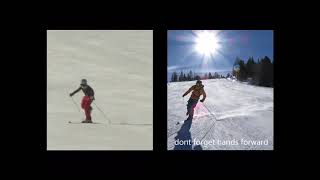
Tom Gellie breaks down the one-ski drill by comparing two skiers, showing why hip control and pelvis leveling matter more than balance alone. The Burke Mountain athlete demonstrates superior form: inside leg flexion, outside leg extension, and an upright spine that mirrors full-turn mechanics.
Chapters
Getting the most out of your one-ski skiing, or if you're going to be doing this drill, like, how can you make sure the movements translate more into what is really going on mechanically, biomechanically, in your body when you make a ski turn? So that's what this video is about. I'm just going to pause it here so you can see Both people have taken their right ski off and they're only skiing with their left ski on, but the shapes they create and what the skis do are very different between the two. I personally would be doing the drill to look more like this than this. Okay, so to start off, first of all, big thanks to Miro Miro, M-I-R-O M-I-R-O, on YouTube for this video, and he's got someone doing this drill really well with great balance, but I'd say sort of that's the main thing you're going to get out of doing the one-ski skiing the way this guy's sort of doing it is better balance. But the mechanics of this person, this young ski racer from Burke Mountain Ski Academy, which is from the Burke Mountain Ski Academy YouTube channel, mimics like the same mechanics that she would be doing if she had both skis down. So let's just pause it here, and you can see that this is the kind of skiing I would want to be looking like, not like this. No angulation going on whatsoever, so you're going to get better performance by copying this. So what's the main difference? Well, for one, it's very hard to ski on the pinky toe side of your inside ski alone and have nothing, no support here. So it's really hard, and what the body will want to do first like how the two initiate, and let's just stick with that mostly. This person allows their legs to separate laterally and allows their shin to fall, their thigh to fall, and this area to relax so they can create angulation. So the pelvis can be a lot more level here as opposed to tipped in, which will make the spine also tip more in. And so you can see what this person has done to start is they've shifted weight from up here over in first without any— like, this is late to the party. Okay, and then there is no real letting go of the muscles around the hip here so the pelvis can level and so the spine can be more upright and mimic what's going on at this moment. The next thing I'd like to draw your attention to is the difference in the flexion of this inside leg. So as you start a new turn, this inside leg must flex, must flex. And so the difference is this doesn't really flex, this one does, and it's more obvious around here, and the outside leg stretches. So you can see a real difference in leg length. This looks like two legs the same. Pelvis is going to be across here. This, we've got a shortened leg and a longer leg, which is going to give you a more level pelvis, more upright position. So to wrap this up quickly, when you're doing one-ski skiing, the first thing— I mean, yes, you can work on it for balance, but then the next thing you want to do is really try and mimic the positions the mechanics that you would be doing with both skis on, because then it's going to translate across far better. And this young girl from the Burke Mountain Ski Academy is like a shining example of really fantastic mechanics here, biomechanics in, in her body. So I'd be trying to do it more like this. And even if you watch this video, search one ski skiing on Burke Mountain Academy, watch, there's a girl who also does one ski skiing, but doesn't develop the same picture as this young one does. It's a little bit more like this. There's not as great hip control going on. Finish up going a little further so you can see it one more time. Here they go coming past. So it's at this point here you'd want to be able to— like, this muscle should be stretching so the upper body and torso can be more towards the outside, like as is demonstrated here. Hope you guys enjoyed that video and it would help. Again, reiterating, when you do something, the exercise should really get quite close to the mechanics and the same things that are going to be going on when you stop doing an exercise. There's no point really doing it if you're doing all this other weird stuff that when you ski you wouldn't normally be doing.