Ski Boot Talk - Fischer Boots Product Manager Christoph Lentz
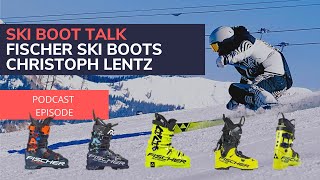
Christoph Lentz, Fischer's ski boot product manager, explains how fit and confidence shape performance, and details the company's Vacuum polymer technology. It offers superior vibration damping and temperature-stable stiffness compared to conventional materials, and requires expensive shell molds that demand coordination across sales, logistics, and marketing.
Chapters
Welcome to the Big Picture Skiing Podcast, and on today's show we're going to talk with Christoph Lenz. Now Christoph is the product manager for Fischer, and he's in charge of the entire boot range from little kid ski boots all the way to World Cup athletes. So he has an incredible wealth of knowledge for that whole entire range, and so great to hear from someone that understands what goes into boots of all ability levels. Now I think of real interest in this chat is Christoph's personal story. He was a ski racer, and you'll hear about how he came across the Fischer brand and how it actually led to some success. You'll hear about boot testing, prototype testing, and also like the fact that Christoph skis in all the competitors' boots as well as his own, and so he has a really like detailed feel for what sort of plastics, buckle placements, cuff alignment, all sorts of things, ramp angle, how that affects and creates a different feel in a boot. So I think it's amazing to speak to someone with such, like, experience across such a wide variety of boots. On top of that, I think it's really interesting to hear about the technologies Fischer uses to develop and sort of get their own cutting edge with ski boots, as well as find out that some of the best skiers in the world are not using super, super stiff boots. Anyway, I'll leave the rest for the show. I hope you enjoy this episode with Christoph Lentz, product manager for Fischer.
Christoph, product manager for Fischer boots, thank you for joining. Hey, let's just get stuck into it. Like, what's, what's your background? How did you end up being in that role? What's your involvement? Where'd you start in the whole ski world?
Yeah, first of all, uh, thanks for inviting me on. Um, Nice to chat. Um, I used to come from a racing background growing up in Park City, Utah, um, and I got involved with the Fischer brand in late 2009, um, when I made the switch from Nordica originally. And that's, uh, was looking for a, a new brand to work with and was drawn to Fischer because of the skis primarily, and primarily the slalom skis. It was a bit more of a slalom specialist at that time. And, uh, yeah, I had a lot of success with the skis, but at the same time, uh, I was advised by my coaches to really not take the Fischer boot. And this was in the, the early days of the first real Fischer race boots, uh, the RC4 Pro., and they, for several reasons, basically advised me not to. And that ended up with me being in, uh, a Lang boot, um, and skiing in a ZB/ZC kind of mixture, um, Frankenstein boot, uh, for one year before I got introduced to my first Fischer boot. And there was a local race rep, um, it was around the time that Fischer was, coming to market with the, the vacuum technology. And he offered me a free boot, um, basically to practice, uh, the vacuum fitting before he was doing any of the US ski team guys who were also based in Park City. Um, and I always found it a little bit embarrassing to be skiing a, a blue Lang boot paired with a black and yellow combination. And so I was immediately, of course, jazzed to, to get into a yellow boot. Um, all, I mean, free product is cool, but there was also kind of a, uh, a desire to have something that looked and matched optically better. Um, and so long story short, I got this boot. The coaches were kind of like, eh, it's risky in the middle of the season to make a switch. And, uh, a few weeks later I won my first slalom race, scored my first sub-30-point FIS result, and After that, it was never a question. And so that to me, even then with still being an athlete and not having any aspirations of being in the industry professionally, made clear to me that the product worked, but also emphasized that there's some of these stigmas on the market that really can, can prevent and limit the success of a brand and, um, also limit athletes from getting onto something that might work just because there are some preconceived notions. And, uh, yeah, maybe some things aren't understood. Um, fast forward about 10 years. Um, I had raced in college. Um, I skied for Williams College, raced NCAA, did a stint working in finance. Um, in the tech area, lived in Manhattan and San Francisco, and yeah, made good money but wasn't feeling so fulfilled, let's say, and decided I wanted to make a switch back to something where I felt more passionate about, and that being for me skiing. Aided by the fact that my mother is German, she's from Garmisch-Partenkirchen, I have German citizenship, I speak German. So there was a lot of things that kind of came together and it was a fateful, fortunate, pretty spontaneous switch where there was a role open. I was interested in moving to Europe. I had a ski racing background and was a passionate skier. And luckily the Alpine division leader here in Austria took a chance on me and Yeah. Um, the rest is kind of— that was about 3 years ago. And so been cutting my teeth on the other side of, of things now since then. Yeah. Cool.
I think it's so interesting, that story about like a changing equipment and you suddenly, you know, could found, found your feet and you, you won a race. Like, that's not unusual. Um, I mean, you— and I think it really isn't speaking to, you know, one brand being better. It's just that when people have stigmas about certain things, it might be because that, you know, everyone's different and that shape just doesn't work for them, but they shouldn't be projecting that on, on others.
Yeah. Um, I mean, there's, there's certain— I know you're a, a tech nerd and like, like the, the, the details and the, the technical side of things, and there's certain— some elements. Um, every brand is doing a little bit different and has some, some unique things that may or may not work for a given athlete. Um, but there's— and then of course when we're talking about ski boots, I mean, fit is critical. Um, it is the, the, the most direct piece of equipment you're in contact with, and that's your, your, your control, um, of the whole system. But on the same side, for me, I think there is a bit of a a mental game and dare say a bit of a placebo effect there of, I feel confident with my setup. It might not be the empirically fastest, best setup, but if I am standing there in the start gate saying, this is, I've got something good, this works for me, I'm confident, I'm liking this. Um, that is a tangible effect that'll, that'll make you ski faster. So for me, that was also like, I was standing with my chest a little higher being like, hey, look at this. I got like, everything is color coordinated now and watching and like, I feel good. And so then you're going to take the second run with after a good first run and you're saying like, watch out everybody. Like, I, I got this. And there's no really doubt as it, yeah. Am I in the right setup? Is the equipment working for me? So I think you, you see it on both sides. Um, yeah.
Do you think, do you think though, have you thought back now that you know a lot more of the technical side of boots? There are actually some more tangible things that, that the Fischer boot perhaps worked in favor for you, or the Lang didn't?
Yeah, I mean, um, it's hard, hard saying. I mean, from the fit, um, I got along well with the, the Fischer last at that time. That was the original 95mm, um, last that they had developed. Um, I had— I got some pretty bad instep bone spurs that unfortunately exist to this day from being in the Lang for those 2 years. So it just didn't work perfectly for my, for my foot. Um, but on the other end, um, I think one of the big things was, was vacuum plastic, um, that, that existed at that time, which I know some of the, the race coaches were a little bit skeptical of. Um, and it was a, a new, new technology that Fisher had developed. Um, it is a little bit of a different feeling, has a different bit of a rebound, um, and for me, I'm a tall, generally skinny, lanky guy, and I'm not a full power skier, um, and I skied a lot with, with touch, um, and so the ability to be dynamic, flex, move through the boot, um, definitely, uh, was a benefit to me. And looking back on it too, I think that that was a plastic, that was a boot that especially going from flat to steep rollovers allowed you to be dynamic, get over the ski. I think if you're in a concrete block of a boot, which some coaches are, are, are convinced is the best, best, best thing to be in, it does limit the, the ability of some athletes to, to, to be dynamic and, um, ultimately ski their fastest.
I remember you were in a conversation before, we were talking about you, you, you speak to some of the Fischer athletes on the World Cup, and you're not going to mention names or anything, but you know, they're— do you want to maybe speak to some of them and what they like in some of their boots?
Yeah, I mean, the standard PU has been on the World Cup and has kind of been the core of what gets skied across most brands. We do have Fischer athletes that have had success skiing with derivatives of this vacuum plastic. And yeah, really the takeaway for me in talking with them and especially their servicemen is to— is exactly what I just said here. Um, the ability to, to be dynamic, to flex, to get a boot that works, um, that has got some movement, some cuff rotation, um, instead of the kind of standard or, um, really typical, really stiff where there's no movement and you're pressing against something that's, um, giving absolute no no movement or marginal movement. Um, and I've been blown away when I see some of the mixtures being skied that are, um, I dare say in the direction of a 110, 120 flex where you would expect a guy of that power. Um, and with that kind of real World Cup success on some of the hardest tracks out there, um, that they would be skiing something much stiffer. I think that's kind of a stereotype we build in our heads. And a lot of the coaches—
and just so we're clear here, like what discipline would that be in?
Uh, especially in tech. Um, we, we had some, some, some guys doing it, which is a surprise. Uh, the general rule is that the tech boots are stiffer than the, than the, than the speed boots. Um, speed wanting a little bit more of a supple, uh, glidey feel with, uh, less direct hardness, but even in these tech disciplines, and especially slalom, to see that some guys are skiing, um, softer than you would expect, um, and, uh, also skiing these, these vacuum-based mixtures that, that do allow, um, quite a bit of movement. So I think there's, there's quite a bit, um, yeah, more detail in that, that happens there. And the, the common stereotype, the better you ski, the stronger you get, the stiffer your boot needs to be. I think unfortunately there is a lot of people who are skiing in a, in a, are overbooted and are skiing something that doesn't allow them to be as dynamic as they could be. And it's an actual detriment to their performance and ultimately to their speed.
I think I was surprised. I mean, it's not just people competing on the World Cup. You like, there's athletes that have podiumed one in these setups we're talking about.
For sure. Yeah. Yeah. Yeah. You wouldn't really necessarily expect it, but yeah, I mean, that's kind of one of the, the privileges of my position and one of the things that's been really fun for me as an ex-ski racer, as a passionate skier and wanting to be, um, I've made peace with the fact that my, my athletic career is, is, is gone and that I am, I will not be winning any World Cups, but to be in proximity and chat and kind of understand enough and have enough context to see like what it concerns. And for, for those guys, I mean, I think this placebo effect or just this general confidence that comes from, hey, I'm in something maybe different than other people and that gives me an advantage. Everybody else is sticking to kind of the script and maybe let's try something different. And that, that is, that also has maybe a mental effect. Yeah.
And also partly what, like why you're not allowed, why you can't mention names because part of that is like this sort of secret, but like maybe secret sauce kind of stuff that, and if it's placebo, who cares?
Placebo is great. Yeah, I mean, I need to kind of respect the race R&D guys. I'm not yet in the, in the core of the race boot development. My goal is a little more to commercialize and help the rest of the market understand and to help the brand at large. The race department has one goal and only one goal, and that's not to build nice boots, but that's to make athletes go fast and win. And they're constantly, constantly tinkering. I don't know the latest info of what was being skied on the glacier last month, but they're constantly iterating and trying out new things. And we definitely make a ton of prototype boots and athletes test a lot of wild ideas as well. And most of them don't end up coming to market or don't end up being the, the thing that, that brings them further. But in, in a number of cases, yeah, there's, there's things that, uh, run contrary to maybe the, the common understanding or these common beliefs that, uh, stiffer, narrower, um, always PU, um, that is the tried and true way to, to win. Um, and so it was for me eye-opening to see that there are Um, certain, certain athletes that have found success with something that, um, that people just don't see. And at the end of the day, they're all yellow boots coming out of, uh, same or similar molds and the modifications. I mean, uh, it is a, it is a competitive sport and there is also the, the, the goal to keep things, uh, yeah, keep things confidential to make sure that, yeah, we don't give up all of our secrets.
Yeah, yeah. So then let's jump into like more what you're involved with, like the bigger section of skiers that like— that probably a lot of ones listening here. So you're involved in developing, testing that sort of boot, correct?
Yeah, um, I mean, my, my, my goal, my mission, my, my assignment is really to bring to market a successful international ski boot collection, which means I'm not developing for one market. I of course have American roots and I'm working for an Austrian company, but this means balancing the needs of North America with Central Europe and taking into account really what can we do to to, to promote the brand and really bring, bring a successful collection. This spans from kids' boots, and we've done quite a bit in the last years in terms of innovating in this area, all the way up to taking what is being developed by our World Cup R&D team and bringing this to the masses, having conversations with folks like yourself to, to increase the understanding and promote the brand. But on a day-to-day, I sit in the headquarters in Ried im Innkreis here in Upper Austria, which is one of the main ski factories, or where we have the location of one of our primary ski factories. And I, yeah, sit between all the other divisions within the organization. So that includes sales, making sure they know what we have, what to sell, coordinating the samples, the order schedule, making sure that everything is defined so that when the sales orders come in, this can be made with the operations, logistics, purchasing departments. And especially in current times with supply chains being what they are, I mean, there's a lot of work and things happen extremely far in advance in terms of planning for raw materials, reserving production capacity, and really trying to, to organize a plan to make sure that the boots arrive in the store as intended. Sitting with marketing to say, here, we've developed something cool and new. Here's what we can talk about. The marketing folks are not necessarily so in detail on all the nitty-gritty product things. But at the same time, we're tasked with having a market overview. So viewing what is happening on the competitors, who is bringing what, what is working well, and then also having a connection to the market and to the dealers to say what, what has been selling well, what has been, what is, what troubles are out there, what are the problems you are facing dealing with the end consumer every day, all the way through finance and, and really the whole invest side. And I'm grateful to work for a company that is so committed to the investment on the boot side. It's compared to, to ski production. I mean, the molds we build for a ski boot are very expensive. And so there is quite a bit of trust and commitment from the, from the brand to to spend this money.
You'd like to say what, what, like a, you know, one size, like a 26.5 boot mold, new one to create roughly costs?
Let's say it's at least 10 times more just to make a shell than it costs to make an entire ski mold. And you're talking really just there about the shell mold. And we're talking tens of thousands of euros. Where every other little part, whether it's the water protector mold, whether it's the zeppa, the boot board, all of these are then separate tools that need to get built and then need to be injected to be used to produce the actual piece that that, that, that arrives in the box. And then keeping in mind that we have size runs of 9, 10, 11, 12 sizes per a given concept. So it's not just a one-time investment you're making this, then you've got cuff molds, you've got to develop buckles, there's the strap, and then of course, everything that goes into a liner. So I, having spent most of my life in eBoots, seemingly, and never really given any consideration to how does this thing come to be. And yeah, we're, we've got a lot of things in the pipeline. But when you sit in front of the computer screen, and we're, we're drawing in 3D, the, the new concept, there are dare say thousands of decisions that need to be get— that get made is, do we need a half a millimeter more here or there? And so to really kind of coordinate the whole organization to say, this is the target, we are developing something for specifically this group, we're competing against these boots, we need to hit this price target, we need to have these features, or Often not even we need to have these features. These are the problems we are trying to solve. So yeah, it's massively more complex than I ever thought, but I am not bored.
Good fun, fun challenge, right?
Yeah. Yeah. It's, it helps that I enjoy skiing. I enjoy the sport and I really enjoy the community and the, the, the people who, the core team who is really engaged about it. Um, I'm invested in trying to bring the sport to, to more people and ultimately develop boots that fit well, that make for a better, more enjoyable ski experience. Um, and so exactly my role is, uh, gives me the ability to do that. But, um, yeah, it's, it's not given that that just happens automatically.
Yeah, I must say, like, I've had a great experience in being in a, in a brand. And then, uh, tried the Fisher vacuum, that, that 150 Flex 95mm one, and had an immediate great sort of experience with it.
Like, my—
all the things I was trying to do technically as an instructor suddenly became easier. And then on, like, down the line, being able to modify it and, and make it comfortable was really simple. So I thought the vacuum plastic was, was a really cool innovation. So maybe you want to speak about, you know, the, the history, because you mentioned it's not just— wasn't developed just to be customizable and moldable. There are other factors at play there, and maybe even where that technology is today versus when I first got those boots.
Yeah, um, I mean, uh, Vacuum is the, is the commercial name that we've given to this, this polymer, and it's a high-tech polymer that we've developed, and it's exclusive and proprietary to Fischer, um, and really intended for use in ski boots. And we focused on really emphasizing and developing something that had in our opinion, superior material properties. At the time it came to market in the late 2009, 2010, 2011 stage, as we were rolling it out, Fisher was not as, let's say, did not have such a wide collection where we had lots of different concepts with many different lasts. So one of the key goals was to develop something that was customizable. If you only have one fit and you're trying to fit a wide range of feet into it, the, the rather innovative and clever solution was to find a material that was easily adaptable to make that boot fit as many feet as possible. And to that extent, we targeted something that had a low temperature for, for thermo molding, let's say, with a high degree of memory effect. So there's certain materials that do not hold a shape so well, and we've, we've managed to develop something here that has a very good memory effect that will hold a shape.
It is— yeah, it's incredible. Like that, I I have— sorry, but I have to say that, that part, like, yeah, it's incredible. I've never seen a boot that can do that as easily.
Yeah, um, uh, you see a lot of other materials, some of the lighter weight, um, really stiff polyamides, PAs, being used in touring boots have exactly not this property, um, where you have a hard time getting it to hold a punch. You need to be very diligent to get that to work. Vacuum is, in contrast, yeah, has a strong memory effect, helped by the fact that it has a low— it becomes moldable at a relatively low temperature. So we communicate about 65 degrees, it starts to become thermomoldable. All of our standard vacuum ovens to heat the boots are set at 80 degrees, but this is well within the working range of where it becomes thermomoldable. But once you cool it back down to room temperature, it does hold this shape very nicely. So this was kind of one of the first goals, was to do this. In the process, we tried to reduce weight as well. So we managed to reduce weight, let's say, by about 15% compared to a conventional PU, which was a nice benefit and can help make a difference. Part of what has made the material successful on the commercial market as well. To some of the, to our earlier chats or a few minutes ago talking about, yeah, being able to move, we find that this material really has better vibration dampening. So it has a different elasticity that translates into maybe a different, different flex pattern, but it is a very dynamic plastic that, that works, works well, but might take a little bit of getting used to. And one of the kind of second results or final results that we noticed coming out of it as well is that vacuum compared to a conventional PU has extremely good temperature stability. So when we look at the E-modulus, or basically the, the, the hardness of the plastic measured empirically at, let's say, 20 degrees Celsius, we're similar. And that being a very warm temperature, warmer than is usually being skied. We have about the same stiffness as a, as a PU, the same E-module. But as you start to decrease the temperature, once you get to, let's say, -5 to 7 degrees Celsius, the difference in E-modulus between a vacuum plastic and a conventional PU starts to become much different. So the, the PUs get much, much harder as soon as it starts to get cold. And if you look at -20 degrees, we have a pretty small range of increase in hardness through that temperature change, whereas a conventional PU becomes really, really stiff. Seen the other way, that's why you see on the World Cup a lot of the people skiing the standard plug PU boots when it's warm out need to get that coldness and they wrap their boots in snow to really to get it to stay cold enough. And so, yeah, the temperature stability in short and in layman's terms means that the flex of the boot stays much more consistent over a decrease in temperature whereas a PU becomes progressively and progressively stiffer as it gets colder.
And have you found that— because I know, uh, like, there's been some changes more recently in terms of, I don't know, the durability, or how—
where—
what's hap—
in different parts of the boots, I should say. It's maybe modified so the boot lasts longer.
Yeah. Um, I can't say exactly, but I mean, we're on at least iteration number 7 of this mixture. Um, it's something that we compound ourselves and are constantly tweaking with. Um, initial boots did have, uh, um, the downside of being rather prone to ripping and being not quite so durable. So we've done a number of things including adding glass fibers to, to reinforce it. And so we feel like we've gotten the durability and any kind of these shell ripping problems that plagued earlier reasons very much in control. And which is why we feel very comfortable putting this into our commercial boots and mass market boots that, that, yeah, where it doesn't concern hundreds of seconds either. But because of all these benefits that were really developed, um, with, with World Cup racing in mind. Um, so this is continuing to be a process. We continue to iterate on it and it's a, it's, it's one of, uh, our, our areas of innovation where we want to, yeah, continue to, to raise the bar there. Um, to the point that I started on where we had one last 10 years ago, 15 years ago, and we needed to be incredibly adjustable. Um, we're now offering boots, um, and especially commercially in many different fits for many different target groups. And so the ability to have a huge degree of adjustment has become less emphasized simply because our boots fit better out of the box. We don't need to compensate, let's say, as much with a material that is as adjustable. And so we can go for something that is, that has perhaps a little bit less adjustability, but maintains these lightweight, temperature-stable characteristics while still being moldable, but that we don't need to, to go overboard in terms of the vacuum process, let's say.
Yeah. And yeah, what's your— are you allowed to talk about the, your current little project, which is sort of a bit of like one for you, isn't it? Like the, the, the boot you may be looking at developing. Are you allowed to talk about that one?
Um, me, not quite. Um, okay. Well, yeah, we've got, we've got a number of things in the works. Um, what I can say is we are committed to the, the vacuum plastic And this is something that we see as part of Fischer's DNA, and it's something that we're, we're proud of what we've achieved here, and we've gotten good market feedback here. But of course, yeah, we're working on new concepts, trying to learn from past models and, and, and stay in line with the market. But yeah, we are targeting boots that enable high performance skiing. That are, that fit well and that, that really strike, strike the balance of performance and, and an all-day enjoyable ski experience, which in the past might not have always been a strength of Fischer. But other than that, I'd say, yeah, stay tuned. There's, there's a lot of things in the pipeline and I'm super excited to, to to, to present a lot of new stuff in the, in the coming seasons.
What's it— what's the boot you're— you was— you've been skiing in, uh, in the last maybe couple of seasons?
What do you like?
Um, since I should say, how do you ski now? Like, are you— do you ski just off-piste now, or what do you—
what do you like? Do you still like to rip a groomer? Uh, I mean, I love to rip a groomer. I, I think if If, when, whenever we get the chance to go on snow, I definitely cannot hide the fact that I have a race background. And, um, yeah, you won't mistake me for a park skier necessarily in terms of trying to maximize edge angle. Um, in my role, I, I mean, I ski every boot in the collection and I ski every boot from all of our competitors, um, just to, to, to, to have that internal benchmark. I have a Podium RD race boot that I use when, when especially here in Europe, when it's cold and the piste is, piste is great and maybe it hasn't snowed in a while. But since moving to Europe and being in the Alps, I spend a lot of time in our touring boots as well. We have two very strong touring boot concepts, the Traverse and the Transalp most recently. Um, the Traverse being very uphill-oriented, under 1,000 grams, and the Transalp being a little more downhill-oriented. Um, when you look at what we have in the backyard here, um, it's a lot of, uh, very technical, um, steep and generally long tours, um, with quite a bit of alpine exposure. So that's been really exciting for me to maybe spend a little less time in race boots and kind of push these other boundaries. But I also have a Ranger, which is kind of our 50/50 multi-performance boot with tech inserts that strikes this, this balance between skiability, walkability, and above all enables compatibility with, with the most number of bindings. So yeah, I have the luxury. Yeah, that we are also constantly—
choose it for what it— what actually that you choose the best boot for the day, right?
It's not— yeah, I don't ski the same boot back to back that often. So we are, yeah, constantly changing. I think to a large degree, I, I look at, I mean, are we going touring or are we riding lifts? Um, what ski am I taking? What binding am I gonna take? And then, uh, what can I, what can I learn from this day of skiing? Whether it's a new, new liner, a new modification on a liner, whether it's a, a new plastic mixture, whether it's a new buckle closure, um, configuration. I'm constantly trying to use every, every ski day to, to, to check something out. I love to ski a, b different boot on the left and right.
Oh yeah, I've never done that. That, that must be a very effective way in like really discerning the exact like differences.
Yeah, I think there's different opinions to it. Um, depends on, I guess, kind of your experience and your baseline. I think if you're very used to one particular setup, it might be a little bit strange. Um, it's definitely a pretty cerebral experience. I think you have to think, um, and be pretty mentally, uh, tuned into what you're feeling. And then, um, for me is also not basing, um, not making, jumping to conclusions based off a single day of trying to say we ski, I ski this. Um, in these conditions, it was this, this temperature out. Um, I'm often skiing with a, uh, a digital temperature gun measuring shell temperatures to say. Um, but there's so many little unique modifications and, uh, we have a number of kind of, uh, spare part or accessories to customize, whether it's a volume reducer or whether it's, uh, an adjustment to the boot board. Whether it's a liner modification, even if I don't need it, to understand the impact this has and again assist me in kind of helping communicate this to the, to the wider audience.
Yeah, I mean, I'd imagine like that you being the boot guy, you, you probably find it very hard to not be out there skiing and thinking about the elements in the boot. Just like when I go out, I'm always thinking about technique and looking at other people's technique. You must be stuck there with, with the boots. Like, you'd probably have such good feeling of just getting like, oh wow, this buckle is, is lower than, you know, the previous one because I can feel it in the flex. And oh, it's actually like taking my leg in this direction. All these things that people that don't ski a variety of boots and think about it would just Miss.
Yeah. Um, there's, there's a huge, huge rabbit hole of things. And I mean, a lot of, uh, things being tried from other competitors and whatnot, but I'd say similar to like your example of you're always looking at different, different techniques and kind of tuned into that. Um, when I stand in the lift line, I am constantly just looking at everybody else's boot and to the detriment or probably to the annoyance of the people who go skiing with me where I'm always, oh, look at that, look at that, that's a Strolz boot. You don't see that every day. Or that's a first generation Hawx, like, wow. Yeah, very cool. And so yeah, for me it's, yeah, trying to constantly absorb.
Maybe one thing, you know, with, with, uh, with my GT Podium boots, I can change the back of the boot, like the spine, this one too, and I can put in a different insert here to have the cuff, uh, rotation sort of sitting on a different angle. I haven't really played with that, but what would I What would I expect? Like, would I feel the— where my tibia, like my lower leg tracks, will be quite— like, it'll be noticeably different between the, the 3 different settings I can put it on?
Yeah, um, I mean, that generation of boot, I must say we don't have it in all of our boots anymore. In the latest version of the, the Podium, um, we've, we've gotten rid of that, um, for certain reasons. The, the concept there was to basically have the rotation of the cuff available in addition to the tipping or the cuff canting, let's say, the cuff alignment. The goal was, and I, I can't really make some general statement to what it does for everybody, it has a lot to do with your lower leg. Anatomy characteristics. And so if you've got a certain amount of knock-kneed or bow-leggedness, it's something that we, we had original success with to try to match that. And if you think about doing a shell fit and having the, the leg centered within the cuff, it was definitely an addition to an additional lever you can pull to, to try to adapt it. We found that with that generation of what we called sort of 3D cuff alignment, to be able to rotate in addition to, yeah, tipping it. Yeah, exactly. Um, it was a little bit complex, and as I think this, this, this conversation might allude to, or this, this comment, I mean, it's hard to explain exactly what it'll do writ large. Um, it's one of those things that needs to be checked. Um, we have a lot of people that prefer it, um, and that have found that it works for a specific problem and maybe especially in a, somebody with an injury or really, uh, a big difference left and right, um, of, of a way to adapt further. Yes. But in effect, the latest generation of the Podium boots with a simple double rivet in the back, we found that for racing purposes, this offered the maximum power transfer. And in effect, having that backbone, that metal insert, resulted in a huge negative space in the plastic which even though the piece is made out of metal, uh, we're losing a little bit of the directness, the precision, and the power transfer. And, uh, the goal of the latest version of the RD development was to, to reduce tolerances and make it as tight and as stable as possible. Another big difference you'll notice is the boot you have in your hands has a big gap right here. Yeah. Yeah, which was required to make that cuff be able to turn. We needed the clearance to accommodate different positions. And what we found and has been validated on the World Cup, that the fastest skiing was actually achieved through having this gap closed. So on these boots, it is completely seated against itself. And that provides above all stability to the rear and reducing tolerance. So yeah, I mean, speaks to kind of Fisher's innovative DNA and the willingness to try new things and go in a different direction. But yeah, it doesn't mean it was a bad idea, but we've, we've moved on from that now. Um, for—
yeah, in a particular style of boot. Yeah, correct. Yeah, yeah, because I remember listening to Bode Miller talk about like in a turn, like through the end of the turn, as the boot is flexing, it's actually making the ski— like, like a boot's flex will either make the ski go more on edge, create higher edge angles, stay the same, or actually reduce it. So I'd imagine those things will effect as it's flexing, you know, do you get more edge? Does it, does it reduce? Does it stay the same? So you can probably play with that if you—
Yeah, I think when we're, when we're developing a boot from the ground up, I mean, there's a lot of consideration given to where you, where you mount the cuff, um, and how the boot drives as you flex forward, um, depending on what you're in, I mean, and depending on your anatomy, but Um, our, our kind of rule of thumb is to try to develop something that drives over the big toe. So slightly, um, in, in which, um, has been proven really from World Cup experience that this is what has given the most power control, um, power transfer. Um, whereas some other boots will, you'll notice will collapse or drive a little bit more outside. Um, yeah, yeah. Our, our philosophy is that, but, um, like we say, we kind of are constantly iterating that and who knows what the, the latest set of prototypes that the, that the World Cup guys are, are trying. And yeah, I mean, they, they also get custom made things to, to try maybe something new.
So I don't think many people know about this, and even myself, it was a more recent discovery. So this part of the boot, which we'll call the rail— I think I've heard that's what it's called— it's bottom part that inserts into the binding. Where that is placed relative to the rest of the boot, and so where my foot would be sitting, brands and even within a line of boots, that can be different.
Right?
It can be— you can either have more big toe basically hanging off or little toe hanging off. Would you be able to speak to that? Because I know you will have skied in boots, you've tested competitors' boots, all that stuff. Like, what effect does that have for you feeling-wise, or what, what might people experience with that?
Yeah, um, I rail, also sometimes referred to as the lug. And we're talking here about essentially where the boot is positioned relative to the ski. And especially, I mean, the leading edge of most boot development here is, at least in our world, centered around racing and power transfer, grip control. And then generally the, the agility. Yeah, hard injected snow. Um, so it is something— it's not a modification that most boot fitters do. Um, in theory it can be tinkered with, but that's, uh, it's a, it's a pretty risky thing, and you can risk really trashing a pair of boots and taking it outside of the binding norm. So The, the shape of the, the lug or the rail is defined by the ISO norms. We of course need to respect those to make sure that the boot fits and is, is, is safe with, with the approved binding type. But the general position, it can have a big effect. We, we know from evaluating and testing other competitors' boots, there are certain brands that tend to put the, the lug more medially, or more with, like you say, more big toe hanging on the inside, which you can imagine just intuitively. The more the boot is standing off to the inside of the ski and the binding, the quicker you can roll it over. But Conversely, you can move this in the development further out, having more pinky toe off of the outside edge of the ski. And here you increase the leverage and increase the, the amount of potential power you have to, to, to tip, tip the ski over, but you lose a bit of the quickness. In ours, we found a solution that works for us. And this is different per boot line and is more or less calibrated to the target group we're, we're, we're going after with a given development. I mean, it goes in a similar line, and I definitely have to probably mention the word SOMAtech, which was one of the initial Fisher innovations. Um, in this regard, um, there is the lateral, uh, shift. Where do you position this? Um, and then there's also what angle is it at. So is there any, um, abduction to the stance? Um, all boots are abducted slightly, meaning, uh, toes are out. You're not standing completely parallel to the ski. You're always, and I mean, if you stand and you get into any sort of athletic stance, you realize that you are not standing completely parallel straight. There is a bit of toe out. That's just how our bodies have developed. Fischer, back in the early 2000s, really came with this Soma Tech innovation, which was to keep this toe out, which was not an innovation, but to, to tinker a little bit with where we turned the, turned the lug from. So most manufacturers at the time were turning from the bottom of the heel out, and Fisher's innovation was to turn from the center of the boot, which in effect put a little bit more of the heel inside. And again, it needs to be said that we're talking here about millimeters or even fractions of millimeters. And but it does have a big effect and that kind of flows through the whole boot and it even impacts kind of when we're talking about cuff alignment and where the boot drives. If, if this is a— this is something that's set, everything else is, is built on that foundation. Um, and to, to link back to my story at the beginning of the, of the chat with Lang, I mean, and the coaches advising me not to ski a Fischer boot. Um, this was probably one of the main reasons, uh, the, the race scene and at least the coaches that I was working with at that time were not fans of the idea of Soma Tech and this, uh, heel-in. Maybe it was a communication problem. For me, it worked very well. And so we've reduced it in our communication and, yeah, reduced some of the most extreme instances of it. We basically say we, we are including it in our development to, to the appropriate degree. So, um, like I say, we're calibrating kind of this position per, per boot concept to make sure it fits the target group. But, um, it's an interesting point to think about, especially for a consumer or a boot fitter. Um, and even if it's just a theoretical, um, thing to think about, but, um, to keep in mind that Yeah, try different boots. May work for you, it may not work for you. Um, if you're, if you're, uh, I dare say a hater or don't like the idea of the, the Somatec, rest assured, uh, we've definitely dialed it way back from the days where it was a super polarizing topic, and I don't get many questions about it anymore. But to some fundamental degree we are baking a certain amount of this into it to really get empirical answers and to know per boot model, you really need to do some comparisons and do some measurements to figure out what it is. But yeah, I think the real message here is it's not something that needs to be considered in the buying position, in the buying decision. It's something that we've done a lot of homework on and, and tinkered with to get it to a place that we think works for the widest range of skiers, that fits the needs of that boot, to make that ski experience as good as possible.
Yeah, I've been— I was pretty fascinated by it because I just like getting into the little details. I think I was telling you how I was playing with just rolling like a piece of like wood that had a curve on it, and I was playing with like where I positioned my foot on the rail, and, and then also the heel, if the heel was overhung a little bit, or the ball of the foot. And it's like, uh, in that little experiment, I could totally like feel it, like the millimeter difference. And it's just leverage, right? Just where's the pivot point and where's the load. And, uh, so I think because I got rid of canting in boots since I got— went into Fisher Vacuum boots, and I'm pretty sure those 150s, when I look at them, they're— they've got a decent amount of, of that heel in. And I think that, that allowed me— and again, maybe it's just your anatomy, where my heel is relative to the rest of the foot— I think it just put my heel in a better spot on the edge so I could just stand there without doing some weird movement. Bam, pressure to the edge, my— the tails just stopped slipping out. That was as simple as it was. Like, my tails just gripped without me having to lean, really press hard. I could just stand centered and, and it gripped. So, um, yeah, I think it's probably got to— so if you're the kind of person whose heels, I don't know, whatever, skinny, or sits really close to the edge already in a boot it's probably too much. You can't, you know, the tail, maybe you can't even release it. Um, but yeah, I think it's just interesting for people to realize that in boots, between brands, between models, that is played with.
And, and because of leverage, that, that has an effect on how that boot feels. Absolutely, absolutely. And I— it was something I hadn't given much thought to until, yeah, you're kind of sitting in front of a blank canvas and Yeah, you get the question of, so how do we position this thing? And, um, in our, in our, in our role, we have the ability to, to try different things out. And of course, um, I'm not the only person skiing or testing these boots. We have a wide panel of international, um, skiers of all ability. And so we're constantly trying to get feedback there. And, um, there's definitely, uh, too much of a good thing. But I'm really happy with the boots we have in the collection today and the new boots that we have in the pipeline that, yeah, we've considered this and it's not just a copy and paste necessarily always of what's been, what's been done in the past that we're constantly reevaluating this and looking at it in context of everything else that has changed in the mold set, in the, in the, in the shell geometry.
Yeah, great. Well, Christoph, I think that's, uh, covered a lot of just questions I had anyway about ski boots and, uh, the sorts of things that are involved in developing a Fischer boot in particular. I don't know if there's anything else you wanted to, to mention in, uh, in finishing up.
Um, no, I enjoyed the chat. Um, I'm always Yeah, happy to talk ski boots. If I don't know the answers to given questions, I'm in a position where I can help figure them out. I also, to, to your audience, to, to other boot fitters out there, to other consumers who are, have questions about this stuff, yeah, happy to assist and I live and breathe this stuff pretty much every day all year long, and I'm happy to do so. So I'm on social media and mainly on Instagram, Christoph Lentz. If you've got any questions, want to chat boots, feel free to reach out. Don't be shy. And yeah. Hopefully we can, I would love to come down under one day. Um, yeah, we'll see, uh, when we can, when we can get that on the program. Uh, it'd be fun to make some turns together. Um, if you ever find yourself in Austria, I'll show you around and take you to the, to the boot factory. Um, love it. And yeah, at the very least we, we should go make some turns, but yeah.
Um, pray for snow. Thanks for your time, Christoph. Yeah. Yeah. Well, it's been a good start to the Aussie season. It's. Like best in 20 years or something. So I think we're gonna have, have a good one here. Same with New Zealand, they're getting absolutely nailed. So lots of skiing ahead. Thank you again for your time, Christoph, and, um, yeah, have a great summer.
Thank you, you too.
More from Tom



Most skiers overlook how they use their poles. Try these five pointers next time you’re skiing.







