Ski Boots - How Pain Came To Dictate Performance
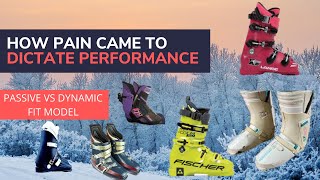
In this interview Tom Gellie talks with master boot fitter and podiatrist Brent Armsbury about the history and evolution of ski boot design, focusing on how pain has driven technological and fitting innovations. They trace the transition from leather to hard‑plastic boots in the 1960s, the painful early plastic models, and the industry’s reaction with rear‑entry boots, custom footbeds, canting, and other orthotic solutions. Two contrasting fitting philosophies emerge: a "passive" model that maximizes motion control by tightly bracing the foot, and a "dynamic" model that seeks to preserve foot muscle activity and allow controlled motion. The conversation covers the rise of orthotic materials, the influence of modern shaped skis, and the need for skiers to experiment scientifically with their own equipment—removing, adjusting, or adding footbeds, punching, and testing balance—to find a personal balance between comfort and performance. Personal anecdotes (e.g., Tom’s own boot‑fitting journey, Brent’s pronation issues, and early barefoot experiences) illustrate the practical implications. The interview ends with a call for skiers to adopt a data‑driven, iterative approach and hints at future episodes on DIY boot modifications.
Chapters
Hi, my name is Tom Gellie, and you're about to listen to an interview with Brent Armsbury. Brent is a master boot fitter and owner of Park City Ski Boot in Utah. Brent and I have been friends for a long time, and we caught up recently in Park City and just chatted about some really, you know, what he's up to. But he looked at my ski boots, and if you've heard anything about what I sort of think My thoughts on ski boots, you'll know that I sort of have some different opinions and views on how to set up your ski boots, and they're perhaps against the, the average or the norm in the industry. So Brent, after seeing the reason why I'd set up my boots and understanding a little better, said, let's get it, let's get in touch, let's do a podcast now on how pain came to dictate performance. Because the reason is there's history behind why ski boots are sort of modified and why there are custom insoles and those sorts of things. And you'll find out in the history, a lot of it has to do with dealing with pain. Ski boots were really uncomfortable when they went from leather to plastic. Anyway, I'll let Bren explain a whole lot more here. He has a lot more experience and knowledge on this whole thing, and it's Fascinating. So with this interview, I really hope you gain some insight into perhaps a newer model or a newer way of thinking and looking at your ski boot setup. We don't want you to throw away anything currently, like any custom insoles or anything. We just want to pique your curiosity and interest and maybe do some scientific testing yourself. Go through the process of what happens when you change a few things, and you'll learn a little bit more about As Brent calls it, the model of more passive model, where the foot is supported and really securely locked in place inside the ski boot, versus a more dynamic model where the foot is allowed a little bit more motion, it's not sort of controlled as much. And so I'll leave you to be the judge of what you think of this and what you do with it. It's just information at the end of the day, and I hope you find the conversation with Brent Armsbury and myself Really interesting.
So after catching up with Brent in Park City in March, we had a good conversation there and sort of got the, the cogs turning in both our heads. Brent reached out recently and said, hey, why don't we do a podcast discussion with the title being How Pain Came to Dictate Performance? And we're speaking today about ski boots. Okay, so that's the topic. You've got a really kind of a nice place to start this whole kind of discussion, which is where, where did this all begin and why have you chosen this, this kind of like topic of pain dictating performance?
Hi, Tom.
You too.
Um, I think this all started off you know, where, you know, we've been seeing some very interesting outcomes from your, uh, from, from your website, from Big Picture Skiing. And, uh, we're seeing some things that, uh, are kind of counterintuitive to what this industry has built up over time, sort of the— there's cat— they're counterintuitive to some of the cornerstones that the ski boot industry and the boot fitting industry has set in, is set in place. Okay, and it made me, it made me think, you know, I looked at your boots, right? I saw what you had, you had done to your boots, and it was, it was really cool to look at how you'd set up your ski boots because it wasn't always addressing pain., right? It wasn't like, oh, these punches or these shapes or what's going on inside this boot wasn't all just saying, hey, I'm just trying to make these things comfortable. What I was seeing is like this really well-crafted approach of how you could get the maximum performance, right, out of the boot, knowing how you balance the best, knowing how you have figured out what works the best for you. And definitely some of the things I saw in there were not what this industry promotes, okay? As a baseline, like you go to a boot fitter and he's like, I'm going to mold this boot and I'm going to punch all the spots where you're probably gonna get pain and they're gonna put you on this custom molded footbed, full support, you know, Ski Thotic or footbed. And then we're going to line you up and do canting and all these things, right? And that's not what I was seeing there. And so that got me really thinking, and how did we get here? How did we get to, um, setting up equipment in a way that's now actually become a little bit counterintuitive to what we're seeing this industry promote all the way across the board? Absolutely. I'm coming from the perspective of not so much boot fitting right now as from being a certified podorthist and working with runners, working with skiers, working with people who go hiking, speed skaters, I mean a whole slew of athletes and people who perform in sports and seeing what all they've been doing, right, and how they want their equipment set up, and taking that as a culmination of ideas and how they're getting maximum performance. And yet, even in, in their side of the sport, whether it may not be skiing at all, they're doing things that are completely counterintuitive to what that sport has said you're supposed to do. For years.
Okay, excellent.
Yeah, really interesting to see that using completely different modeling, different types of approaches, actually can generate really interesting outcomes.
Yeah, so, so take us back because you have the life experience of, of going through the, the period of, of leather boots, like leather ski boots into plastic ski boots. And would you say that's a great place for us to now talk about? So we go back, like, where did this, uh, model— yeah, current model come from?
You have to start right here, right? You know, right? The plastic ski boot was, was introduced in 1965, and this was the baseline of really setting a new performance standard compared to a leather ski boot, right? Leather was stretchy. It had stiffening components. They were putting in fiberglass. The things are reinforced, but it was a lace-up device that when it got wet, it got softer. It changed shape as you were skiing in it. So if we were looking at it as a performance device, it wasn't very good, right? Huge, not a lot of motion controlling to it. I mean, you could dorsiflex and plantarflex and, your foot could roll around in it and it was constantly changing. And so you had to have this incredible level of athleticism to make a leather ski boot work. Yeah. It was pretty amazing. And then boom, there's the plastic ski boot, right? The hard shell. Everything that you hated about leather was solved with a nice hard material that didn't warp, didn't change when it got wet. And when you pushed on it, it sent information to the ski directly.
Boom.
Yeah. But there was one— there's one thing that happened with the plastic ski boot that wasn't happening with the leather one was you're putting a soft tissue, right, human anatomy, right? Think of these bones covered in muscles, you know, all the muscles of the foot and the tissue and all that, and you're taking it and you put it in a hard a really hard environment. And then you use these leverage buckles and you squished it down into this foot binding situation, high compression situation. And if you talk to anybody from that era, right, over the years of boot fitting, I've spoken to many, many clients who have talked about the boots they had in the 1960s, right? They said, oh, I got one of those first plastic boots. And they always tell a story about how painful these boots could be, right? Super painful. And they got— they were bleeding and they got shin bang, mainly shin bang, right? And they got all sorts of lumps and bumps and it was painful, but they were willing to go through it because the performance had increased so much that they were willing to— they were willing to trade that off., right? Sure. And it didn't take long after 1965 before you see a complete response to that pain, right? There's a, there's an immediate reaction to what the early plastic two-buckle, uh, the, the two-piece multiple buckle boot did. And that was boom, less than 10 years later, two guys leave Lang and they come up with the Hanson rear entry boot, which is a completely different move. It's a complete reaction to the pain, right? They're still using plastic, but now there's no buckles over the top of your feet.
It's a slip-on.
Yeah, in the back it's got maybe one buckle, maybe two, but the first ones had one buckle, and your foot is just being held in by this neoprene booty And it exploded. It was crazy successful because you have this high-performance but painful device, and the reaction was, I, I want comfort. I want to get rid of this pain. All right. And so boom, that first reaction to pain was the rear-entry ski boot.
Was that ever skated by taken up by racers, like at the highest level?
Much later, much, much later. The last era of the rear entry boot, and there's going to be people in this audience go, yeah, of course, Mark Ghirardelli. Boom, right? He raced World Cup on Salomon SX90 boots. They were rear entry boot. But, um, Hank Cachua Yeah, he raced on Hanson Spider boots, right? And, uh, so it took a lot of time before rear entry, you know, the rear entry boots developed themselves that were being accepted, um, by the, the racing class.
But, but I'm guessing there's— there was still people were not happy. I mean, the general public much happier with comfort, but then performance-wise people like, no, I still think in general we can get better performance out of the, uh, the shape we see today, right?
The two-piece, um, overlap boot continued, always continued to dominate performance, you know. Yes, racers in Europe, just think of Franz Klammer's 1976, you know, uh, Olympic-winning downhill run. Right? He's in a buckle Dynafit stiff, you know, classic racing boot of that time. And think of Vingegaard, Denmark, 5-buckle caber boots, right? I mean, this is what defined performance at the time.
And so when did—
I'm sorry to interrupt you there.
I was going to say, when did you start seeing, say, that also the look into custom orthotics supporting the foot, limiting motion to deal with— or maybe I'm jumping ahead— it's saying that was to deal with also pain in these plastic boots, right?
So you've got 1965, you've got the two-piece plastic boot from Lang, and then 6, 7 years later you got rear entry boots. But only a few years later you've got Peterson Bill Peterson making the first direct mold footbed for skiing, right? He's an ex-US ski team member, cyclist, right? He's a biomechanics guy and a CPAD, you know, an orthopedic guy who basically says, hey, here's— we still have problems, okay? You still have a problem. It doesn't matter whether you put it in a rear entry boot or you put it into a 2-piece boot, the foot still has this ability to collapse, right, to go through maybe a range of pronation or to supinate, but the foot is still mechanically capable of deforming inside the boot. And so we also have to take a look at ski technique at that time. I mean, what were we doing? I mean, I was an instructor in 1984., right? And I remember my clinician, right, saying, hey, you've got to brace yourself, right? I'm, I'm actually A-framing, tucking my downhill knee behind my uphill, right? Um, only I'm setting it on edge and I'm standing on that foot like I'm bracing against it, right? That time was you were bracing yourself against this ski. And so immediately everything you're trying to look for inside that boot fit is motion control.
It's supporting that foot so you can just stand on it and brace against that ski throughout the turn and almost like create a more direct, like, lever that when you— when your leg goes sideways the boot goes directly sideways, the ski goes sideways, and so it's, it's like completely, uh, sort of uniform as possible as can be.
Like, that's the thinking. Yep. Yeah, everything that you're trying to do to deal with the compression that the boot is putting on your foot, and from the technology of that time, right, where we've got to think that also in parallel with what's happening in ski boots. There's sports medicine, right? Sports medicine is expanding. Plastics, plastics are coming into sports medicine for foot orthotics, right? So now you can mold things around plaster casts or casts of the feet, and you can come up with these, these really easily achievable devices to support the foot in something that's trying to crush your foot.
Right?
And at all the time you're trying to make your foot a better lever, all right, to brace against the forces that are happening underneath your feet and onto the ski.
Yeah. And so that's—
so that's the— that's now we're entering— that's the, the ideal setup is, is put the foot in this, this sort of brace position don't allow it to move, because where our thinking is, yeah, direct leverage, control the ski, easier dealing with, with the forces. And, um, and so then custom, custom insoles are now like really what people are—
yeah, you're— it's just this natural progression from a plastic ski boot who generate— that generates a lot of compression around the foot and can take a mobile-type foot and really bend it and really torque on its muscular structure and make it pretty unhappy. And so that natural progression is, hey, if that's crushing my foot, let's put something underneath it, underneath the arch, through the heel. Let's limit that motion as much as possible and support that foot as much as possible. And of course, the results were really good. At that time, if you were putting it in the context of bracing yourself against the ski. I mean, I know that my first pair of Superfeet full cork footbeds, I mean, these things were firm cork, like almost rock-like, right, with a thin fabric cover. These were great, right? 1985, this was like a massive, uh, enlightenment for me because I have pronated feet. I'd had foot orthotics when I was a teenager, um, running track, right? And I always have pain in my ski boots, right? Pain, pain, pain, pain. Boom, I get a ski orthotic in my boot and it's truly enlightening, right? It's, it's a huge leap forward, but I'm not skiing like I'm skiing now. I'm not doing the technique that we've evolved to. I'm not looking for high edge angles, okay? I'm bracing against a 200-centimeter slalom ski that's 63 millimeters underneath my foot, right? It's got a radius of 37 meters. Yeah, I mean, everything that I'm doing is to brace my foot in that boot up against that ski So, and so, was that, was that when you—
was that around the time you decided to go into boot fitting at all, by the way?
Well, I was already boot fitting at the time. I was working in a ski shop, and, and, and, and boot fitting at that time, there wasn't a lot of tools. I mean, tools were just coming out, little expanders from Superfeet, other tools like a Scott press. You could do some basic stuff. We were doing some shapes and trying to get— but, but boots were still not—
they were so like, you couldn't do, you couldn't do the kind of like accurate punches you do in your shop now back then, right? So, so you had an uncomfortable navicular, uncomfortable medial malleolus, lateral malleolus, the, the fifth metatarsal, like you just— so then also cut comes along and a custom insole limiting your foot from those bony bits pressing as much, correct, against these. And so instantly less pain. And, uh, and you know, if you're just enjoying skiing around the mountain, just, you know, not cranking it, suddenly you ski all day compared to maybe stopping and unbuckling and taking your boots off in the restaurant kind of thing. Yeah. So then people like, you've got to get this.
You got to get this. And the pain reduction was massive. But here's what's funny. I had skied from the early 1970s up to 1985. You know, I was a junior racer, you know, and I was always fussing with my boots and fiddling and fussing. But there was one thing that never ever happened until I got footpads was canting. As soon as I got footbeds, I then had a canting problem. Uh-huh. Okay, I got rid of the pain, but because I had realigned my foot, the way my knee tracked on one side of my body was completely different.
Uh-huh.
Yep, I remember going down— I think that road— that's— do you know what, it's just something— it's just clicked too. I remember when I got made a pair of seatass highly supportive footbeds. And it was when I'd switched to this, like, Dalbello boot, and suddenly I'm like, hang on, my knee's in the wrong place. And I'm going down the road of canting up to 3 degrees out on my right knee to make me feel like my knee is in the right spot. But then Yeah, seeing some strange things like skiing down a black run and I suddenly get this sewing machine leg where my knee's going in and out like crazy. And, and like having some big crashes because these forces, I couldn't actually really— when they got really high, my knee was not in the right place.
Yeah, when performance was asked of me.
Yeah.
And so, so interesting. Again, pain dictated the priority, right? I reduced the pain, but then I started to realize over time that I had a new performance issue. I got rid of the pain, right? But now I had another performance issue, was now on my left side.
I couldn't get my knee to track.
Yep.
So you're going into canting, and I suppose the, the rest of the ski boot world is now also finding this as well. And so people are coming up with, okay, well, the sports medicine world says knee tracks over second toe. Yeah, we'll, we'll, we'll change the, the soles to, to get us back to that point again. Would that be fairly safe to say?
Yeah, it's becoming fairly accurate in, in a description because one thing is leading to another, right? We're responding, we're generating this motion, you know, this orthopedically driven, sports medicine driven at the time, motion controlling, support, support, support, um, and control that motion as much as possible. And of course you're getting really good results because you're getting rid of the pain. I mean, when you go to into a ski shop, you work with a boot fitter. What's a boot fitter really trying to do for you?
He's triaging the pain. Yeah, that's what I remember coming to you for that, for that exact reason. I wasn't coming to you for performance. I found out a few little tips and secrets, uh, you told me, like, of what people would do to, to help with that because I was starting to chase it. But I came to you because my ankles were killing and my fifth, sixth toe area was killing.
And yeah, so yeah, well, we'll get back to that later, how this has come full circle, Tom. So it's, it's, it's good you brought that up. But we'll all that at the end. So you, you can see where we're going with this in terms of like we're constantly responding to pain in terms of that relieving pain is what improves performance. Okay. This has been the cornerstone and the foundation. And in general, it works still pretty good, but we're not, but we're, we're talking about a different level of performance. If you go into a shop, and you're a recreational skier and you just want to be set up so that you can go up and down the mountain with whatever technique you have, okay? Not Tom Gellie technique, okay? For big edge angles, you're not looking for racing, you're not looking to balance on one foot, right? You're just looking to get up and down that mountain with some carving and some pivoting and some, a little bit of leaning back every now and then, and you're having a good time. The model that we've built in this industry works pretty good.
But then you could even, you could even say that the, the modern skis also have adapted to make that very easy, very fine, skidding everywhere and having a great time going fast. Right.
So yeah, yeah, 1990s, and all of a sudden the shape ski comes out. The rear entry boot's dying, okay? It's dying off because from a performance standard, it can't keep up with what's happening underneath your foot with a ski, okay? It just, it just doesn't. Um, you've got deeper radius psychos. I mean, I remember the first time I stepped onto a, a Lawn SCX with about 10-meter sidecut, this wacky-looking ice cream spoon of a ski, and making a couple runs on it. And by the third run, it was amazing, right? Like, it didn't take any angulation to get that thing to start digging trenches in the snow, and it was a sensation I had never felt before in my life. Yeah, even though they were super unstable going straight, I mean, they were like having two squirrels. All right. And then both those squirrels were going in different directions. Took a lot to keep, but once they were on edge, it was really pretty amazing. And that's when the first, like, hey, I can actually feel myself rolling up on the edge and making these really crazy trenchy type turns. And it started to develop with like, oh, wow, canting is like, oh, geez, I really need to pay attention to how I'm balancing over these edges. Okay. Yeah, yeah. To realize they need to start being way more— and there's, there's people who tried those skis and they couldn't get them up on edge. And you can just imagine if their boots were set up in such a way that they couldn't get that foot to roll to that— and even remotely roll to an inside edge. Yeah.
I mean, you hated the skis. Yeah, yeah, yeah. Much easier on a straighter ski to just be more in charge of where that thing is steering to. You want to steer, you have to turn your foot. These things are, you know, tipping more, they're turning more, and they're building centripetal forces like very quickly.
Yeah. So yeah, you go— I mean, if you, if you're so used to this bracing model that your foot is completely super supported inside that boot and you're completely braced, you can't— I mean, getting up and onto, or getting onto that round radius of ski was not a friendly feeling. And this is about that shift, right? So we're looking at this passive model, right? This, this we call— I like to call it a passive model because that is when you put your foot right, onto a supportive device, right? You've got this foot on basically an arch support, and you've got all these, these bones positioned in, in their most neutral position. All the facets are lining up. The heel is as vertical, right, as possible. It's in a neutral position, and you've got this foot now just completely encased right, from, from every angle, um, this, this becomes passive, right? The muscles in here don't have to do much, right? The, the, the foot is actually kind of saying, just go to, go to sleep, you don't have to stand on it, right? And if all you're doing is kind of going back and forth the front of that ski with a little bit of angulation You're, you're, you're in a very passive state with that foot, right? And you can generate some, you can generate some, um, motion, right? There is the ability to kind of overrun that foot a little bit, but you're so contained in that device, it's— you're not going to be able to evert and you're not going to be able to invert, right? Yep. It's great for bracing, right?
It's great for breaking. I think, I think right here, can I, can I jump in now? Just speaking a little bit of like Tom Gellie's timeline and his sort of— because, because I'd started out going with, uh, footbeds, just following what everyone else was saying, and canting, and I've made the Australian demo team and things are going really well. And then life is like, do you really want to keep skiing for the rest of your life because you've met this woman who you're going to marry, you're going to have kids? Is it going to be enough? And I've decided no, it's not. What am I going to do outside of that? I find— I discover rolfing, or structural integration. And this lady in Canada, Claudia, she did these series of, of fascial kind of realignment, really firm bodywork sort of sessions on me. And I'm finding my body loosen up, feel better. I'm like being taught at the same time by her about, well, you know, you should— like, if everything's working well in your body, your muscles are all alive, and the foot muscles are all working. I particularly remember the foot session, you know, feeling— just really noticing how my foot sits on the ground and where the weight is and So at this point I go, that's what I'm going to study. I go to Salt Lake City and I learn this stuff myself. And I'm interested in going, well, this doesn't fit. If, if these people are saying your body is built to balance properly when all the muscles and the bones are all working, and there's all these examples of great, you know, athletes and people that don't use external devices, I'm questioning my own footbeds. So I go home, hair dryer, and take off the glue, take the first layer of, uh, reinforced arch bit off. So the shape's still there, but there's, there's less— this is less stiff. Ski the next day at Brighton and go, I just, I feel more, and I'm noticing more what's going on in the snow. I kind of like this. A few days later, hair dryer again, flatten further, uh, take more shape out and, and feel more of these things that I'm learning about in school and working on other people's bodies. I'm getting my body worked on and feeling like my whole entire system is getting more woken up. I'm skiing better, I'm skiing more symmetrically. So at that point, I'm finding out this other, I guess, perspective, this what you kind of described, this dynamic model, I guess, of looking at, you know, if you stand on your feet well, those muscles are sort of reflexively kicked in, your arch stands up on its own, and you can kind of— it's got some adaptive adaptability to it. So I thought I'd throw that in there. That's where I started, and, and then now I ski just, um, Yeah, with, without, because I'm really trying to work on being, uh, allow my body to do as much of the work as possible, right?
And right around the millennium, right, we go to year 2000, there are studies in Germany that are being done at looking at a new model, right? Like the Germans were like, they're the orthopedic gold standard when it comes to foot orthotics and supporting the foot and arch supports. I mean, if you look at, um, foot orthotics, they have like the highest per capita penetration in foot orthotics of any country. Like 25 or 26% of the country wears some type of foot orthotic that's prescribed, right?
Interesting.
Uh, you also find that in Australia. You guys have a huge podiatry foot orthotic industry, right? Yep. And you find that in developed nations, there's really high penetration. And even the United States, a lot of people are running in— have running orthotics, right? Prescription, firm acrylic or carbon fiber, really firm foot supports. And so right about 2000, this new model is starting to become more evaluated and saying why we still have this really strong record of injuries. We've got running shoes and we've got cushioning supports and we've got orthotics, but how come people are getting injured still? So much. And so the thinking is, what, what are we doing wrong here? And so this dynamic model starts to evolve. I mean, in 2006, we get a guy who writes a book called Born to Run and says, hey, there's this whole tribe in Mexico and they can run 100 miles with just a thin piece of leather on their feet. Right? No shoe orthotics, no shoes, no Nikes, no whatever. No motion-controlling Brook Beast shoes, right? They're running 100 miles. And so this whole new dynamic model is starting to form around the idea that maybe, and I'm not saying this is 100% correct, but maybe we're over-supporting. Maybe we are making our muscular structure too passive. We're just trying to control motion way too much. Okay. And so, I mean, I'm going to just click here for a second. Yep. A warning shot. So I'm reading Ski Magazine from 1983. This is Ski Magazine, October 1983. Okay. Yeah. And there's— they're talking about, uh, ski orthotics. Okay. And they're talking about— they say something about this Insta-Thotic is a hardcore composition insole, you know, and, uh, it's like an orthotic, right? It's really firm, it's super supportive. And here comes Bill Peters and he says his orthotic is made of multiple layers of foam plastic And, um, and, um, and here's his quote: Bill Peterson feels that traditional ski orthotics, including the one from his competitor, the Insta-Thotic, are, are too rigid. He chose the foam material because it allows him to build a rigid heel cup and laminate it to a more elastic arch support. Um, and he goes on to say it prevents excessive pronation but allows— here's the, here's the word— it allows the articulation necessary for precise skiing, right? This is 1983, okay? And what's interesting about that is that here's a biomechanics guy, and he's already kind of seeing that if we just lock up the foot completely, it doesn't really produce higher performance.
Yeah, yeah, yeah, that's cool. I've looked at a few of those old ski magazines, uh, online. There's some really interesting stuff. I actually remember finding one about—
they looked—
they were looking at boot modifications, and they had like Giardelli, and they had all these people, and they showed you pictures of, you know, like some of them bolting more material onto the back of the cuff, making the cuff higher, and It's actually really— I guess my point is it's really interesting to go back in time and, and look at some things because, yeah, there are little hints that, you know, a trend started to happen and then why did it shift away? Like, uh, there's, there's always reasons in there.
Yeah. So as we're progressing into this, we now have these sort of two— we're building up these two models. We have an older model that's built on of full support and motion control, right? Now a new model that says, let's take into account the muscles of our lower extremity and let's see if we can figure out if we can improve the outcome by building up these muscles and not completely 100% relying on some type of passive support underneath our foot. Okay. And so we're changing that paradigm and we're also looking at a shift in how equipment works. Okay. Let's, I mean, look at how Hirscher and Ligeti and Shiffrin and Vonn, right? Look at the edge angles these World Cup racers are able to achieve. And then take, go back to 1980s and look at how Stenmark and the Maier brothers were skiing. Okay, it's not the same. Okay, yeah, now it's still racing, they're still fast, but it's not the same scheme. Yeah, they were not getting crazy high 65-degree-plus edge angles. They weren't doing that. Yeah, they weren't on that edge, um, like you're doing now at much slower speeds. Go ahead. So something has changed, right? And, and the thing that's changed is the equipment has changed so much, right? The radius of the skis, the way the skis are built, um, the way boots are produced has changed too. Yeah, you look at, at a modern— like, if you look at a modern racing boat, right? This being a Fisher Podium, and it's kind of hard to see, but if you look at how it's so sculpted underneath the arch, right? It is tucked way underneath. Now just think of what would happen if you packed in some— think like this footbed right here. Look how thick that is. Yep, super full support motion control. If you could figure out how to pack this this thing in there, what do you think that boot would feel like in terms of like being able to balance in it and get that foot to initiate and roll onto that, that wall, that boot? Yes.
I don't think it happened very well. Yeah, yeah, yeah, yeah. I remember you showing me those boots that there's a lot more shape going in into that area already.
It's, it's already there. So the equipment has changed quite a bit in terms of the performance and how it's being modeled, right? 3D modeling and CAD/CAM and all this stuff. We— you can make these boots that are so much closer to the foot. Yeah. So we really have to sit here and kind of question, you know, how much motion control we really need now in some of this equipment to get up onto the edge to activate the radius of the ski and to dynamically make it go through its, its, its optimal ability. Yes. Yeah.
And so I guess we gotta go into here now, like, why we started this conversation, where, like, I guess a message, I guess, we're trying to get across is there's probably some level of, of balance here of First of all, like, have a look at your own feet, have a look at your own setup if you've already got a setup, and see what it's giving you. And then, you know, go from there. Like, what are you after? If there's some pain, does it need to be— how could you solve it? Does it need to be done with a foot, you know, something that's blocking motion, or, or do you want to allow a bit of motion and then you look at other ways of like, like punching and grinding to, to get your comfort as well as performance there. Do you maybe want to speak to what your message would be about this, um, you know, finding, finding this middle ground?
Yeah, I, I think the first thing is don't throw out your custom footbeds right away, okay? Yep. Let's not send a message of just whitewashing and saying 'Cause you are, you have people who work with you who have taken their footbeds out of the boot and they've improved their performance right away. But to just say, throw away your footbeds, isn't really where we want to start. Your footbeds are a reference point, all right? And so use them as a foundation of what you currently are on, but be willing to, take them out of the loop if you're trying to deconstruct where your, your equipment in terms of where you're interfacing with it and say, okay, I got this high performance boot, I got this high performance ski, I've got these hot, you know, these supposed high performance footbeds and look at playing with like, hey, what happens when I take those out? What do I gain and what do I give up? Okay. Yeah. For me, I'm a pronator. I've always had foot problems. Not deformed by any means, but they mechanically, they're the classic, you know, when a podiatrist looks at my feet, they're like, oh yeah, you got a forefoot.
You step out of the pool onto the concrete and it looks flatter than someone else's.
Yeah, absolutely. You got rear foot compensatory pronation, etc., etc. You know, my heel bone's everted. And so of And of course, a footbed for me, you know, it helps, but even myself, I'm saying, you know, hey, how do I get the balance more? And I find that my footbeds have changed. Okay. The foot, those Superfeet corks I got in 1985, they were great, but they were great on that equipment of the time. I'm finding that I'm changing my personal prescription as well. You know, my, my arch support in terms of the arch feature is softer.
Okay, you know what, I, I'm just gonna jump— I, I think what's really cool is, because I learned this from one of my mentors, if you're already— you've lived most of your life pronated, pronated, not— yeah, so you're there And we're talking about— we want— we're talking about this dynamic model that's allowing motion. If you're already stuck in one place, you're also just as good as being stuck in neutral, right? So, so for you, you add a little bit of motion change or positional change. Now you can actually— when you load up the foot with balance, with, with ski forces, motion occurs. Muscles react, things happen. So I'm just saying, I think you're like probably speaking to those types of people. You're— the, the orthotic is, or the custom insole is helping you experience a motion that is really helpful in, in making a good ski turn, right?
And you should take your existing equipment and use it as a reference point to then compare it to something completely different. Like, if you take your footbeds out of your boot and just put the stock one in and go ski on it, what, what changes, right? You feel like you can engage better? You can— you feel like you can roll or evert onto the wall of the boot with more, with more emphasis or more engagement? Can you You can use supinate or invert to the uphill edge better. Do you feel like you're flatter? Do you— I mean, you— what are the things that you're benefiting? And then one of the things you notice, hey, I can go out and ski on my boots without footbeds. Yeah, but my result at the end of the day is I got some pretty achy feet. The muscles are, for me, they're overworking. But do I want to build some super rigid foot orthotic to completely to counter that? And the answer is no. Now I'm modifying, um, my gear over time based on what, what is happening with the rest of my equipment, like my skis and stuff. And so I'm not just throwing things out and eliminating them, I'm rebuilding, I'm reconstructing the foundation, that I've had before. I'm tearing it down and then rebuilding it back up. Yeah, it's not a complete replacement or elimination. It's taking what I, what I've— works for me and then modifying it and then taking some stuff away and putting some things on and then finding where I'm balancing. Yeah, so get back to you, like you learned some things from me way back when we worked together. But then I learned something from you just recently. I watched your video about balancing in a boot. And so of course, you know, I'm in my boot and I got my footbeds in there and I'm bouncing up and down and standing on one foot. And sure enough, on the medial side of my left foot, my foot is hitting the wall of the boot. And I'm noticing all season I've been having some trouble with a little bit of engagement, having to make a little bit extra compensation on the left side. And sure enough, when I'm standing in the boot, I'm hitting it and I'm not balancing as well. So off to the back room I go, I put a nice, even, long punch across that medial side of the boot. I jump back into it and boom, my balance is instantly better. So I learned something from you too.
Come full circle. Yeah, yeah, sharing it. Like, I mean, I'm learning stuff this, this podcast. It's, it's great. And I think that's, I mean, I think that's probably our main message. It's there's some great information out there. Be scientific about your process. Don't be like just, uh, like a zealot just going, right now I'm in this camp. Oh, now I'm in this camp. It's like, just test what, what, what comes from doing this, what comes from doing that, and then how do they compare? There's going to be negatives and positives to both things, and you got to like weigh up like what's your goal. Are you looking to be the next, uh, Ted Ligety? Are you looking, like you said, to just ski into your old age? You don't really care about how you look or what you're doing, you just want to be comfortable.
So yeah, I mean, yeah. Strictly for pain-free, then it's going to dictate your performance. If everything, your equipment is just like, no, I want it to be 100% pain-free, then you're going to eliminate a chunk of performance out of it. There's no ifs, ands, or buts. If you're willing to be comfortably uncomfortable sometimes, right? Meaning you're trying to get the best possible connection, and yet, and you still put up with things that might not be, you know, really 100% comfortable, you're gonna find how to get the maximum performance by slowly carving, sculpting, shaping, getting rid of those little edges of annoyance, right? Just finding those little things that keep your foot from, you know, your feelings to be, you know, totally uncomfortable, but getting to a point where you're like, man, I can still really generate the motion I need and still be comfortable enough that I can do this all day long.
Yeah, and you know, on that, because I think it's going to speak to what's coming in the future from, from you and I, which is at home, some simple steps, some things you can do with your current boots to start this process. Because the current boots I've got, there is a lot of hours tinkering, adjusting. I mean, you just adjusted your boots again the other week. It's, it's— there's a process. And so we would like to share some more info on some of the steps, some of the little tricks and, and things with, with really simple materials that people can do. So do you want to speak to, to that part? Because I'll finish up. So basically, if you go down this road, you're going to have to need to invest some time either yourself or paying, uh, you know, the time with a boot fitter to, to also do these modifications.
Correct. And there's things that we're going to talk about in the future or show examples of how you can figure out how you— how to find the best balance underneath your feet, right? Um, and, and how to do the diagnostic, because what's important here is that when you do you go into a fitter to do some of that work, right, to maybe make it more elegant or to interface in your boot better, right? What you're saying is, I'm looking to get maximum performance out of this equipment, not, hey, I'm looking to be pain-free. Because what we've built in this industry over and what we've already gone through in terms of this chronology is that the overwhelming paradigm we've set in this industry is how to be pain-free. Okay. And not really saying, how can we be performance maximum? Yes. And so when you go to fitters and things like that, we are, we are basically biased, trained, and pushed towards complete pain-free. Okay. Not, hey, Mr. Fitter, look at my setup and tell me how I'm going to get maximum efficiency and maximum performance out of it. I get very few clients who come to me with that knowledge of saying, how would I set this up? And how would— looking at how my feet work and looking at how my boots are currently set up and looking at my footbeds and everything I got here, what could we do to to make it better from a performance standard.
Yeah, yeah, excellent. So that's— yeah, and that's something that, that will be coming right in the future after you've had a rest of boots for, for the whole of winter in Utah. And so I think—
but learn— I look forward to that. Yeah, if you, if you gain some— if you start experimenting with your own gear, you're actually gaining knowledge and building their own language that you can then translate to somebody who can then implement it in your gear and go, great, I know exactly what you want.
Boom, boom, boom, boom, boom.
Right? Yeah, exactly. And you haven't tried it, you're really at the mercy of what this industry has put into motion over decades and decades.
And that's all.
Yeah, yeah. Hey, I've got one piece I just wanted to share. Being a sort of a fairly recent father— my son Archie's 4 and a half— if I think back, like, I'm glad I knew what I knew before he was born, because ever since he's been born, I've got his feet like barefoot all the time, as much as possible. Different textures, different surfaces, and stimulating his body to respond to, to the environment. And I know, you know, in mothers groups and other, you know, friends with kids similar age, when I compare like even foot shape and foot structure with Archie versus someone that I know, like the kid, he had— he got really sick early on, and so he kind of missed a lot of movement and early developmental sort of phases. And I remember when he was about 2 and a half, you know, he's sort of walking. His parents like, uh, this is a friend, wow, his, his feet are really pronated. And we realize he can't even like jump very high. And so his feet, all his whole muscular system hasn't been stimulated from really early on. And so the result is like, yeah, the motion has never been sort of forced into the system. The muscles haven't had to react. So early on, this guy, this young guy, that's the result of it. So I guess two things: if you're a new— you're gonna be a parent, or you're a new parent, or even, you know, you've got some kids, I think you can help this whole situation if you're going to move towards, you know, not motion controlling but allowing it. Get them bare feet. Lots of movement. Just pretty, pretty simple, simple story there. But then even as a, like, an adult, like, like yourself, you probably do things like— now you're more aware of it— spend time—
don't—
like, am I fair to say you in summertime, you, you now do things maybe different than you used to back when you were a 20-year-old?
Yeah, believe it or not, I wear flip-flops a lot more. Yeah, there's this whole thing about like flip-flops are bad for you, and yeah, they're, they're not really the type of footwear you should do what we call foot loading, which is picking up like something heavy, right? In a flip-flop, you shouldn't be like trying to go hiking with a backpack on, but like walking the dog where you're just pacing across the ground, it's actually made my feet stronger because it requires my toe muscles to work harder, okay? And it requires my plantar fascia to basically work a little bit more in a controlled way. Yeah, it requires me to play with my posterior tibialis to keep my foot more inverted, not just pronated all the time. There's these these things, but it's just short periods, 20 minutes, right? 20 minutes of walking the dog with, with flip-flops is, to me, been more— has been helpful, right? Yeah, trying to do it, but it's like my feet feel like they're more dynamic by giving them the ability to work out a bit during the day. Correct, correct. Just wearing a rigid supportive shoe all the time.
Correct.
Yeah.
And so it's— so the message, that it's never too early and it's never too late. Yeah. Because you, you know, we, we—
you've seen—
we see stories on YouTube of people transforming their bodies. Like, your body adapts to what you do with it. And so get it out of that environment. And like your story, you could start with literally 5 minutes. But, but I, I really think it's important if you if you're looking to go down that road of performance, you're probably going to need to do some work with your body. And all the people that— the students that I've encouraged to make this transition, we've done a lot of work on technique, how they're moving their body, dry land exercises, all sorts of training. So then when the orthotic is not there, what do they do? Do they just let their foot go, or are they actively doing something? And so that's, that's the difference between You know, we talk about this process as you're going through it. There are things you're going to need to do. If you take something away, what are you replacing it with? But the first place would be just spending more time barefoot and actually giving your feet a chance to work out is great, I think.
Yeah, the key thing is barefoot on softer surfaces. Um, you know, again, coming back, you know, I had visited this German, uh, footbed or insole orthotic factory, right? And it was really interesting because they like to make their footbeds really soft. They like PU foams that are fairly soft and very cushiony. And, and, and the, the guy who ran the factory goes, hey, think of it this way, you know, basically as a species we walked barefoot, right? And we walked barefoot on soft, leafy, foresty ground. Right? If it could have been sand, it could have been forest-covered or grass-covered. But we're actually designed to, to walk on cushioned, you know, semi-firm, but not concrete. Not concrete. No. Geez, we're not supposed to be— I mean, we just don't work well when we're on a hard floor, on a hard surface. And so we do ourselves actually a favor by going out and walking in grass or walking in sand, or, you know, like a flip-flop that has some, some cushiony, and, and doing normal things for short periods of time where we teach our feet to be more muscularly adept to the surfaces around us. I mean, it, it makes a lot of sense, right, that a hard piece of plastic underneath your foot all the time or a hard asphalt surface all the time is, could be, you know, very likely to be detrimental. But if you go through different types of terrain, like different types of surfaces, and you allow your foot to adapt and learn how to control that or adapt to that, you think you're basically training you know, you're training your feet. At the same time, what's been really interesting is watching how different types of feet work with ski boots. So when I work with people who wear hockey skates or climbing shoes or speed skates or soccer shoes, when they actually foot bind, have a period of foot binding, they relate, they actually understand the ski boot a lot better because they're used to binding. They're, they're used to binding for a period of time and then releasing, binding and releasing, binding and releasing, which is really interesting. Some people, like, they don't, they don't ever have anything contained around their feet, and then they jump in the ski boot.
Their eyes pop out of their head.
Yeah, right.
Yeah, I guess it's a tolerance thing, right? Same with if you're, yeah, used to walking in soft shoes all the time and then you go walk barefoot and you're like, ow, the ground is spiky and hard.
And yeah, I think the diversity is important in that. Yeah, yeah, your feet in both directions. And that is to understand what it is to be in a compressive environment, how to respond to that compressive environment through muscular control, right? And then to release it and then get new sensations of where you're having to use your feet and your lower extremities to compensate for different surfaces.
Yeah, great.
Yeah.
All right, so there's the, there's the story of uh, how pain came to dictate performance. And I think it was, it was really interesting to hear, especially the backstory. And I hope that helps, you know, just provide some insight into where the two of us are sort of coming from and approaching ski boot fitting at, at the moment. And I really hope it gives people, skiers, boot fitters out there, some, some inspiration, I'd hope, to just start exploring these things themselves. And, you know, it's fine to say we don't like it as well. You can take the information as it is and do what you want with it, but we wanted to put it out there. So I appreciate your time, Brent, as always. Thanks very much. Yeah, and I look forward to our upcoming sort of series on, on what people could do next. Some, some at-home boot modifications and tests to see where, where you're at and what you could do to, to improve that, that fit and performance.
Looking forward to it. So there you have it, the interview with Brent Armsbury. I hope you enjoyed that and it really sort of piqued your interest and got the cogs whirring and maybe thinking about your own boot setup and what you've done. You heard that I've been on a really sort of, uh, long journey of going from supportive and playing with canting and really experimenting with my boots to the setup I have today. And so yeah, I hope it's maybe intrigued you to just think for yourself and also maybe dig deeper. And at the end of the day, we said like, what do you really want out of your skiing? That's going to dictate where you go with this ski boot thing. Because remember the title, how did pain come to dictate performance? Where, where do you want to be on that spectrum? I invite you to go visit and check out Brent at Park City Ski Boot in Utah if you're in the States. He's a great boot fitter and has a really open mind and will love to help you get your ideal boot setup. So on that, resources: my site Big Picture Skiing, that's where I put all the best content, all my ideas on how I set up my boots, what I what I do with my strength and mobility over the summer, how I teach carving, moguls, short turns, and my co-coach Sam Robertson, who is an ex-world championship ski racer, he also has videos and information on there from the ski racing perspective. So we're really just trying to be the best resource out there for people that are really, really passionate about their skiing, you know, be the best skier they can be. Anyway, thanks very much for tuning in, and I look forward to seeing you on another podcast episode.
More from Tom



Most skiers overlook how they use their poles. Try these five pointers next time you’re skiing.







