SPEED control through SNOW DISPLACEMENT - Not Just Technique
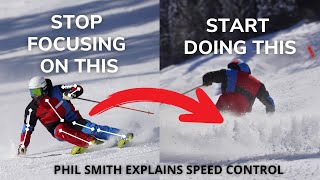
Phil Smith, founder of Snowworks, explains how skiers control speed by displacing snow rather than relying on technique alone. His three sons, Luca, Freddie, and Zak, have risen from free-skiing to World Junior and Youth Olympic podiums. The episode covers coaching versus instructing and how to teach skiing through video.
Chapters
Welcome back to the Big Picture Skiing Podcast. I'm your host Tom Gellie, and today my guest is Phil Smith, founder of Snowworks and a coach with decades of experience skiing and teaching in the European Alps. In this episode, we dive into Phil's background, his early days in the ski industry, but what really stood out to me was his light bulb moment around speed control, the realization that controlling speed or teaching people about controlling speed really comes down to snow displacement. And so this was a really eye-opening moment for him. He tells a great story about how he sort of came across this concept. It was one that really resonated with me. I'm excited to go out and explain this to the people I ski with, and I think it's really going to resonate with you. So look out for this in this episode. We also chat about the difference between judged versus measured skiing and Phil's move towards more all-mountain skiing and coaching and teaching people about sking open and the whole entire mountain. And this is fascinating because he goes on to explain the difference between an open or closed sport and how skiing is an open sport but is often taught to people in a closed sport sort of way. So instructors, coaches, please keep an eye out for this section. I certainly had some really good reminders about how I approach ski improvement with guests depending on their goal. Now I think everyone is going to enjoy this episode, right from the avid skier to the weekend warrior to the seasoned coach. Phil's experience in the, in the industry, he is a great thinker. His family is fully involved in ski racing and the whole other side of skiing, all-mountain skiing. His wife is a former Olympian, his children are on the way to the World Cup. There's a lot of interesting points Phil brings up. It was certainly a really enjoyable conversation for me. So without further ado, let's get into this latest episode of the Big Picture Skiing Podcast with Phil Smith. Phil, it's great to meet you. I've heard from quite a few colleagues that I think we, we both know that I need to chat to you about skiing. So I don't know what your background is. Were you born on the slopes? You've got a British accent, so give us some context.
Okay. Well, there was no skiing where I was born, that's for sure. I was brought up in a small town just north of London, one of those new towns which were built, which surrounded London area. And the idea of the new town was that it was the overspill population. It was to pull people out of the London area. So, and we had a local sports center. In fact, In fact, I was born just down, not far away from the sports center, about 400 meters. Um, and I remember seeing this mound suddenly developing, bulldozers just dropping off earth in our— in an area in our local sports center. And I just saw this mound grow and grow and grow, and they were building an artificial ski slope. So this was probably around '72, '73. 1972, '73, and I became fascinated by the growth of this earth mound that was eventually going to become a ski center. And I was a canoeist at the time, um, you know, I used to go down to a local canoe club regularly. And the manager of the new ski slope arrived, and he needed people to help lay the matting. And I'm not sure if you're familiar with all the surfaces in that day. There was a surface, it was like a plastic molded surface called ski mat, which hexagonal sort of shaped pieces which slotted together like a jigsaw puzzle. So all us lads from the— and lasses from the canoe club went up and we sat on that slope, helped laying this matting, putting it all together. It was only about 80 meters long at the time. And from that, we were invited for free ski lessons. So we all headed— in fact, I don't think I ever took the ski lessons because in between our school happened to be running a weekend trip to Aviemore in Scotland. And I went on that. It's the first time I skied. And from the moment I put those skis on, I went, wow, this is crazy. In fact, I almost got banned from skiing because myself and a couple of others, after the very first lesson, all the kids were headed off to lunch. And I sneaked out from lunch, put my skis on with a mate, and we just skied off. We had one lesson. So we skied off outside of lessons and just couldn't believe it. So exhilarating. We got caught, we got grounded. But when I came back, then I started skiing down the dry ski slope and then went from there. And then as soon as I left school, you know, I wanted to just head to the Alps. So, and the easiest way to get skiing was to become a ski instructor. So ski instructing was a way into skiing for me, you know. So at 18, I went and did my first season. I'd had a couple of skiing trips, but not many. So 18, you you know, I managed to get my first ski instructor's license and headed out to Italy, head out to the Italian Dolomites, and that was it. And been out in the Alps and Dolomites ever since.
So, uh, a couple of questions. I've never skied on a dry slope, so I want to ask about that for one. Did you go back, uh, at all? So let's start there. How much— have you done much training on a dry slope? And is it a helpful thing to get you skiing better?
Oh, you know, for somebody thinking of going skiing for the first time and you're based in a place like the UK or there's some snow domes or dry slopes around where you're based, go and do it. Just get on that dry ski slope and learn to ski because, you know, my first ever time on snow I could ski everywhere, absolutely everywhere. Myself, a few mates went out, we bought a cheap flight. I can't remember, we stayed in a hotel. I remember the area was called the White Highlands, Gustad, Châteaudet. And we just skied everywhere, having never been on snow before. So if you're thinking about going skiing for the first time, get on those dry ski slopes and learn to ski. Because it opens up the whole world once you go skiing. Yes, I have gone back because I did a lot of training after that. Once I got all my ski instructor certifications, it was a good way of earning money in the summer when I was back in the UK because I was living in the UK in the summer months. So I would be traveling around all the snow domes, all the dry slopes, running courses, running lessons, and ski racing. You know, there's a whole ski racing circuit on artificial ski slopes, and I got into that as well. So Okay, it's good fun because it's all very enclosed. So yeah, you know, watching a race in the Alps where zoom, zoom, you know, the whole thing is enclosed around a 200-meter slope. So everybody's there, there's a lot of chat that goes on, um, you're watching everything. So it's a sport, almost a sport unto its own. It's really good fun.
And I've heard that, yeah, I've got that.
Most famous British skier of all time. And my wife, Emma Kerr Canson, you know, she started at Hill End in Scotland. So she, and then she went on to be a professional ski racer as well, same as Dave. So, ski racers, that was the start of their journey.
Yeah, I mean, you, yeah, you've been really involved in the ski industry and still to this day you have, young boys who we're not going to talk about them today, but they're basically headed to the World Cup. I went to the Olympics. You've trained and examined people in the, in the British system. I've heard help written the manual. So what are some really, uh, like prominent moments where you went, oh my gosh, this is, this is an important learning? I've sort of been going through not really understanding this for several years. I've really got it now. Can you give us one?
I guess the first thing was putting on snowboards for the very first time. And that sort of, and then the, when snowboarding started, you know, we were right there at the start of snowboarding and how the snowboarding influenced skiing and how we taught skiing and specifically ski design. So I guess the very first moment was when myself and a few mates got some snowboards out and went snowboarding and went, wow, this is fun. Okay, this is fun. And not long after that, you know, the skiing, ski designs started to change. You know, skis became shorter and they became wider. You know, in my time, I don't know when you started, I did a bit of research on yourself, Tom, I can't remember when you started skiing the year exactly, but I, you know, when I skied, my slalom ski, to give you an example, I just skied on slalom skis all the time, was 2.3 meters long. Yeah, and you know, we went through the SkinStruxur system, which was very rigid, very strict. Um, you bought into it, this is how you skied. Uh, you know, we analyzed each other constantly, uh, analyzing our technique, how we skied, etc., etc. Then snowboarding came along, and these people on snowboards just didn't care, you know. They just, they, they were having so much fun. There was no structure because it was a new sport. And all these sports that started to come in— BMX biking, you know, windsurfing, uh, you know, surfing, these free sports, these creative sports. And so I guess that was the real change of how I started to think about skiing. There I was going through my ski instructor exams, very rigid criteria, very strict, you know, would watch skiers skiing down and everybody was trying to ski within a framework that had been created, which we might come on to discuss, but this framework, and we were trying to get everybody to fit that framework. And all of a sudden there's this other sport that came along, nobody cared. They were just whizzing around on these snowboards having so much fun. And that started to get me thinking about skiing and what we were doing in skiing. But there were a few eye-opening moments after that, um, which started to get me questioning what I was doing, what I was teaching, the structure that I was working within, and my background, how I'd been trained. So I can come on to those at any point. I've got— there's just so many stories, as you know.
Yeah. Okay, how about if we go this way then? Um, if you discover that, you know, people were kind of being, you know, boxed in with, with this framework, were there patterns you started to see that, uh, were really obvious that this was not helpful for people? And so maybe that led to you, you know, people weren't getting it, or that, you know, they would keep repeating trying to pass things, or yeah, they were skiing in awkward ways because of this, you know, technique. Was that going— was that what you observed?
That started to go on. To begin with, you know, I had from very young, I had been training as a ski instructor. So all my training, my discussion of techniques, um, ski performance was all, all based around ski instructor training, although I raced as well, um, to a certain level, um, it was all based around ski teaching. So I had bought into that fully, you know, I was quite young, I was, and I absolutely loved it, the idea of watching somebody and critiquing their performance, you know, and analyzing in precise detail exactly what they were doing and what they should be doing. And people were buying it, everybody was buying into that. This is the way to ski, you know, get an instructor, they watch you against them, they compare you to a model, that they've been taught and trained with, and then you're critiqued against that model and given the feedback, and then everybody moves towards this model. And I vividly remember, um, we were running a Mogul clinic, a bumps clinic. I probably had 40 or 50 people on this bumps clinic. It was in La Clusaz, um, and in those days— this is going back a long time ago, Tom— I must have been It must have been 1990 or something like that. And in those days, this, believe it or not, this still happens. But in those days, you would divide people into groups by watching them ski. So everybody would arrive for the lessons and you'd have the famous ski-off, you know, we'd have 40 people and I still see this today.
Yeah.
But bearing in mind, this is going back to 1990. So I was there with another 3 instructors. So I think there might be 4 of us. 4 of us rings a bell. And we had, well, I probably just under 40 people. We were dividing into groups of about, in those days, about 10 people per group or something. I know it's a lot less now, but in those days 10 was a good number, you know. Uh, local ski schools sometimes had 20 in their groups. We had 10. So we'd watch people ski down and we'd put them into the various groups watching them ski down a piece that everybody can ski down. Bearing in mind everybody can ski down this piece, so it's purely our judgment, right? You're there. Oh, bottom group. Oh, that's not bad, top group. And these two lads ski down. This memory is so vivid, you know, what are we talking, 55? No, 45 years ago. Yeah, yeah, or something like that. 35 years ago. This memory is so vivid I even remember these two lads' names. Philip and Simon. This is how much impact it had on me. They skied down, they were quite young, and they were terrible. The worst possible skier you could possibly picture. Feet absolutely locked together, just swiveling, swinging the tails from side to side, cha-cha-cha-cha-cha, in a sort of a slight pivoting skiddy action. Arms all over the place, leaning slightly back. Shoulders upright, leaning back slightly, and to top it all, they had their coats undone, flapping around in the wind. They were everything you should not be. Everything. Their posture, the way they stood, the way they used their skis, everything. So of course, you can imagine they went straight, both of them, straight into the bottom group. And we divided the group, and I, at the time, I had the top group. And these were guys going for their top-level ski instructors. Exams because I was working in association. So we'd get people that would come to us for training. Philip and Simon went off, the instructor went off with them, we went off to do our clinics. Came back at the end of the day, one of the instructors that took Philip and Simon said, come to— he said, Philip and Simon, they're gonna have to move up the group. I said, are you sure? I watched them, they were terrible. He said, no, got to move up a group. I said, okay, have a chat with Dave, I think it was. Um, so they went into Dave's group. End of the second day, Dave came up, Philip and Simon up a group. You know what's coming. And this— they went through every group day by day. And on the 1, 2, 3rd, 4th day— bearing in mind we've only got 2 days left— on the 4th day, the instructor that was taking the 2nd group, who were trainee instructors, said, oh, Philip and Simon are far too good for my group. They're going to have to go into your group. So I've got people going for their top-level international ski instructor award here. How can I possibly take those 2 guys? I saw them ski. Said, Phil, you're going to have to take them. They came into my group and they were the best skiers in my group, still skiing the same way that I saw them.
As the first day.
And I thought, this is crazy. They're doing everything that I've been trained to teach people out of, but they were going down moguls like It was nothing.
Absolutely nothing.
And that got me thinking, that got me thinking, I must be doing something wrong. Or I'm not seeing the whole picture. I'm not seeing the whole picture. And then this kept on happening. I'll just tell you one other story which comes back to the ski-off. Later on, a lot later on, we had ditched the ski-off because when we moved into off-piste, which we'll probably talk about, we realized that doing the ski-off was absolutely pointless activity because we couldn't actually see what people were capable of. So they'd arrive, we might have had a questionnaire before they arrived on the course, and then we'd just go into the hotel or the chalet and then chat to people, you know, what's— how fast do you like skiing? What sort of terrain do you like to ski? What are your aspirations? How much soft-piste skiing have you done? And then we divide people into that first day groups, you know, just on what they told us. And at the end of this one week, this was a number of years later, a group of people came up to me and said, what a fantastic week we've had, absolutely incredible, one of the best weeks skiing we've ever had. I said, that's fantastic. And then they said, you don't remember us, do you? And I said, no, I'm sorry, I don't. We came with you about 4 or 5 years ago. And their perception, we did the ski off, their perception, you didn't like the way that we skied. So you put us in a very low group. That was their perception.
Yeah.
We didn't like the way that they skied. We put them in a low group and they were bored, disinterested, they never came back again. But they decided to give another shot. And this time when they come back, we just chatted to them. And on what they said to us, they went into a very high-level group, same level skiers. Mm-hmm. From what they said to us, we now put them in a high-level group. 5 years before, from what we saw, we put them into a low-level group. So the difference was unbelievable between what we were seeing and what people were capable of. So that was real eye-opener. That was a massive eye-opener to me that, you know, I've got to talk to people, listen to people, not go on YC, you know, and This was a big thing. We see this all the time, you know, like we'd get— I was training in our association, I'd have skiers training, and I'd have a very competent skier that I knew wouldn't fit the template of a ski instructor. And then I'll have a not so competent skier, as in skiing around the mountain, who fits the template of an instructor. And we knew exactly what would happen when they went for the ski instructor's exam. It wasn't about how competent a skier you were, It was about whether you fit the template of a ski instructor. So the more competent skier would often fail because they didn't fit the template, and the less competent skier would pass because they fit the template. But bear in mind, Tom, this is going back a long time. You know, I think all associations have moved on since then.
Okay. Yeah. But still, I guess, say if that is, I think all ski instructors, we still can fall into the easiest thing is if you don't look like what I know, then I will try and make you look what I know. Like, that, that's just the easiest, you know, least amount of energy. So if that, if that's not the best way, how now do you approach? And do you like to take a day of skiing with people? Are there, are there different, uh, you know, say you've given— they've— you've got goals from them Is there a different approach you take now to developing their skiing?
Oh, very much so. Um, the biggest thing— I mean, this will come into one of our philosophy philosophies that we had to, um, incorporate into our courses because of the direction that we took in all-mountain skiing and skiing the whole mountain— was prior to that, it was all about judgment. You know, we'd look at a skier and we'd give our judgment on how they skied and how they needed to develop and what skills they needed to improve upon. So it's all us watching. But now, or then, it became much more measured, a much more measured activity. You know, we'd take people into an environment where it was more— the outcome was more measurable rather than judged. Are they able to get down? Can they control themselves, you know? And the, the environment that we were moving into on our courses was an environment where, um, you can— it's all about control and whether you can get down or not. Moguls, steep slopes, ice, bumps, slush, bad visibility. So that became the defining factor. And when Skin Strikes came into work for us, um, to begin with, everybody struggled with this. Because everybody was so used to watching a skier and giving their opinion on what they need to develop rather than watching a skier, looking at the control that they had and what they needed to develop to get more control to move into a more complex environment. Okay. Yes. So it became measurable. And we use the high jump analogy a lot. You know, you have your bar set at a level. If the guy can jump over the bar, The bar goes up.
Yeah, you don't try and fix it.
The bar goes up.
Oh, yeah, yeah, yeah.
And so we keep raising the bar. So our courses became very much like that. It became raising the bar. Can you ski bumps? Easy bumps on a blue run? Yes. Okay, let's go and find some bumps on a red run. Can you ski easy bumps on a red run? Yes. Let's go and find some more difficult bumps on a red run. Can you ski a black run? Okay, well, let's go and start the process of getting you to be able to ski black run bumps. Whereas before it was like you had the high jump bar, people just keep jumping over the same height and you'll be teaching them how to jump over it correctly, even though they're clearing the bar every time.
Yes, yes.
You know, so that's the equivalent of ski lessons, or it was at the time. People ski down Red Run, which they can ski.
Yes.
But they stay on that Red Run working on their—
Fixing their pole plant, fixing their legs.
Even though that they can get down it. So our courses became, well, if you can ski Red Run, what are we doing here? You know, let's go find some blacks. And if you ski blacks, okay, let's start the journey into off-piste. And if you can ski, you know, light powder off-piste, let's go and find some deep powder or steeper slopes or gullies, couloirs. So it all became the high jump bar being raised. So it became—
I think this is, this is a great segue, I think, because we chatted just briefly beforehand a bit about the, especially your, the environment you are now in. You're not at the dry slope. Or even the Scottish, you know, shorter slopes. You've got these endless ranges, slopes, changing terrain, difficulty of conditions. And so that opens up those places to explore, to challenge the skier and create excitement and fun. And I was saying to you, but like with Big Picture Skiing, I have so many people from the East Coast of North America, and their local mountain is really short. There's not much vertical, often not really much different snow. It's, you know, either slushy or it's really rock hard. And so they don't have that chance to go ski the couloir or the double black or that sort of stuff. So I guess I wanted to bring up, like, I know you said you found this like challenging because I guess where you are, you— that's not something you have to worry about. Yeah. What are your thoughts then about if, if you— I said, Phil, I've got this contract for you, it's great, you've got to move your family to the East Coast, some, you know, New Hampshire and this little hill, and that's where you've got to ski for the next season or two, nowhere else. What would you do different? What do you think?
Would you go back to like I don't know. You know, that is key. I mean, we came to this area, it changed how we, uh, taught skiing. Everybody that comes to with us, you know, they, they want to ski the mountain, they want to travel on their skis, which we'll come back to at some point, I'm sure. Um, and I have never really gone back into that, okay, here we have a 200-meter slope, 300-meter slope, the terrain is consistent, you've got skiers, and your job is to teach them. You know, we still have those skills that we learned, so we can do, you know, I can look at skiers and think, okay, well, what is the idea here? Is what, what we're trying to develop? We don't have bumps, we don't have off-piste, we don't have ice, we don't have slush, you know, it's indoors, we don't have bad visibility, it's a consistent gradient which is pieced every night, it's flat. So what is the objective? And, you know, we've often thought that You know, like many sports, like if you take ice skating for example, I mean, there's offshoots of ice skating. You've got speed skating, you've got figure skating, you've got ice hockey. Um, so there's 3 different sports that use the more or less the same mechanism, ice skates, and they're completely different. You know, figure skating and ice hockey both are incredibly skillful, but they're completely different sports. And you have people that coach figure skating and people that coach ice hockey. And you know, there's been some great programs, some great films made about this, where I think it was a hot ice hockey player was injured and ended up becoming a figure skater. So we use that analogy a lot. And what is skiing indoors on dry ski slopes? Is it more akin to figure skating? Whereas skiing a whole mountain in the area that I'm in, is it more akin to ice hockey? You know, the skills that you need as an ice hockey player are different from the skills that you need as a figure skater. But I try to, you know, I've had to wrestle with this in my mind. I've become an ice hockey coach, but there are still people that coach figure skating, and both have their job, both have their needs to fulfill in the market. And the skiers, they probably don't realize this, you know, what are they involved in on a dry slope or snow dome? Is it more akin to figure skating than it is ice hockey, you know, and we know it is because if ice hockey, nobody cares how you perform in ice hockey. You just got to get the puck and score a goal.
That's right. Yeah.
You know, leaning back, who cares? Nobody cares.
You know, they care a lot in figure skating if you can do a perfect pirouette with your arms in the right place versus all over the place.
Like high diving, that's the same thing. High diving, whatever it is, trampolining is another sport like that. You know, so there are sports which are technically precise sports, are within a model of framework, and there are other sports where the object is to just score goals or pass the ball or tackle or whatever it happens to be. And so skiing, although it's been lumped together as one sport, there are different offshoots. And we've seen that now. We've got people that specialize in mogul skiing, people that specialize in the snow park. People specialize in freeriding, you know, those are accepted. Whereas in— for people that are coming on holiday, they're still lumped together. So for people coming on holiday, what is your objective? Is it to become, um, more competent within a framework, a design framework, on slopes that you can ski anyway? Or is it more about going traveling and using your skis as a means of transportation to move from A to B across a mountain landscape. So the different spots— so I could quite— I can quite easily fit back into this, um, uh, sort of technique, technique. Yeah, so many years of doing it.
Yes, of course.
So it's easy for me to latch back into that. Don't get me wrong, I can quite enjoy that as well. Once you get into, you know, looking at the finite detail, how much, um, you know, where is the lateral movement coming from— ankles, knees, hips— how much flex in the ankles, knees, hips, you know, what is the rotate rotation require rotation to lateral movement, all this sort of stuff. So it's easy to get into that, and so I could easily get back into that if I wanted to. Yeah, yeah, go on.
I was just gonna say, yeah, I just think it's a really, uh, I've just become really aware of that because I think it's quite, quite a privilege that I get to go to some great ski resorts in Japan with powder and North America, you know, with where you can ski off-piste and it's fairly, you know, safe in inverted commas, you know, you don't need a guide. And but then I'm reminded of, of people that, that are in these other places that don't get to do that, and, and that's maybe not affordable or a great option, and, and but they love skiing, and so they've got these shorter slopes. And even I think of the Australian season I, I'm— I feel we're probably both fortunate in that we can realize that given the environment, you can still have a lot of fun. Like on Friday Flat at Threadbo, which is a beginner run on a slushy day, I can still spend a whole entire day there with a group and people can be completely engrossed because of trying to be precise with something or challenging. You know, challenge isn't always speed. It could be balance in a small, you know, on a small point or whatever it is, or spinning or whatever. So I just think it's interesting that we have to, yeah, sometimes consider the whole world of skiers and, and that, yeah, there's people that get to really explore the environment and then others that are constrained in their environment. And so to keep it novel and interesting, because that's the end— you don't just want to go up and down and straight, that gets too boring. So how do you make those environments fun. That's where you get into like the tech.
So I mean, that you can also use them as preparation to what you may be doing in the future. So one is working on technical precision, um, on easy terrain that people can ski anyway, or the other is to develop movements that they not necessarily need to use there but will use if they go somewhere else, you know. So I mean, rotary movements is classic example. You don't need much rotary movement skiing down, you know, very gentle, well-prepared slope, you know. So generally it's worked, so, you know, people will work on the curvature that the ski takes, you know, nice clean curve, etc., etc. And you won't get many people sort of herring down the mountain doing big skiddy sort of turns with lots of rotation. So consequently, but if they've never done that, then they're— and they're going on holiday somewhere, say someone from the UK, and all they've worked on is this nice curved turn. Yes, they're going to be restricted. They're going to—
perfect segue. Perfect segue to then that we've got these people, they've saved up their money, they're going to come on a camp with you, Phil, and they've— they see these steep, huge slopes, you've taken them right up, and they're like, how do we control speed? You have a story, I believe, around helping people understand or helping explain, especially to instructors, a really important mechanism of speed control. So Can you, can you tell us the story behind that?
Yes. Um, and it's, well, let's start. I was skiing in Verbier actually at the time, and, um, you know, I'd come from the sort of the ski teaching background, technical background, um, you know, where we looked at edge control, pressure control, control of rotation, balance, movements, etc., etc., all the stuff that we do as ski instructors. And I was in this environment, a good level group Good level group, competent all-mountain skiers, competent off-piste skiers. It was a good level group. I was skiing in snow. It snowed overnight. There was a lot of snow around. It had been tracked out. It was in trees. Visibility was coming and going. There, there was narrow sections, wide sections. If you took an environment and mixed it up as much as you possibly could, that was the environment I was in. There was no consistency from one turn to the next. There wasn't two turns that you could do which had a repetitive movement pattern, any consistency whatsoever. Nothing, nothing was consistent. They were sort of managing, but they were struggling and saying, Phil, come on, you got to help us. So I'm in the environment. I'm not out, you know, I'm not doing exercise drills out. I'm actually in the environment, we're stuck in there, and they want some help. And I'm going, well, where do I, what do I do? Well, how do we get better? Well, the environment is so mixed, there isn't a specific thing that I can give you. So all the stuff that we talked about in the past, rotary skills, edge control skills, pressure control skills, you know, flexion, extension, rotary, lateral, you've got to use all of this. You know, you've got to use everything that you've got to get down this mountain. So we're starting from this concept, but it's— they— it still wasn't working.
Yeah, I mean, I can even think of it now. It's like, but, but Phil, how much of this and how much of that? And people want to know that, and you're like, but it just takes time. And you, you know, like, so anyway, you just got—
you— there was no structure to build, and there was no common ground, nothing. I couldn't get a handle on a common thread from which they could start hanging things on and get some kind of template to work with. It just wasn't happening. So I said, okay, what is the com— what is one thing that we have to do when we're skiing around here? One thing, just— and this was a group discussion, it wasn't me because I, I was lost as well. Um, I said, give me one thing where, where, wherever we are, whether we're skiing through the powder, skiing through the tracks, uh, the bumpy sections, through the trees, off jumps, whatever happens to be one thing. And everybody said, well, we've got to control our speed. Okay, so we've got to control our speed. So that became the defining thing, we've got to control our speed. So we started to discuss this, well, How do we control our speed? And we know that in ski instructor terms, you know, when you're working on open areas, it was all about turn shape.
Round turn shape.
It's all about taking the curve and coming back round up the curve at the end. We can't, where we were, that just was not possible. So that ruled that out. Okay, so turn shape is out here. You know, we're narrow, we're chopped up, we've got trees. You know, you take a nice curve, you're going to end up one ski either side of a tree. So the general concept of using turn shape was completely thrown out the window. Okay, well, what else? Well, skid. Well, there's nowhere to skid. You know, we're in soft snow, tracked snow. There isn't anywhere where we could create skid to control speed. There's nowhere. So then we started again, well, how are we actually controlling our speed? And we started to talk about snow. The actual, the, the one substance that we use to control our speed is snow. And that seems to be the missing link. Crazy, isn't it? Here we are, we need snow, and it talks about it. Yeah, we talk about speed control as though it doesn't— that snow doesn't exist. You know, turn shapes, where's the snow in that? So we started to talk about snow, and then we talked about moving snow. Yeah, we've got to move the snow. We've got to— because we all know that when people ski, snow sprays up. So there's obviously some kind of movement going on, that play between you and the mountain, you and the snow. So we started to talk about snow, and it, you know, we were coming off these jumps into thigh-deep snow. So we immediately got snow, you know, our thighs pushing through the snow, which controlled our speed. And there's other times where, you know, we'd have to shove it with our bases, um, and all sorts of things. So And it was actually one person in the group that came up with the word snow displacement, you know. So, and I said, yeah, that is the word. We are moving or displacing snow. We're constantly moving or displacing snow. And we started to get into that, and their performance, once they got linked into the snow and the play between their skis and the snow and their shins in the snow and their thighs, because it was quite deep in places, thighs in the snow, and the base of the skis in the snow. When we hit an icy patch, the edges of the skis in the snow, we got into this whole concept of snow displacement. And then that went from there. And in fact, after that, I was making a film. It might have been before. There's a few things that came into play. I was making a film with a colleague of mine, and we were working through the skills of skiing, which was edge control, pressure control, and control of rotation. And I was looking at pressure control. And he said, and I was doing this to the camera, he said, well, what actually are you doing here? And I said, well, I'm working on pressure control. And he said, well, are you pushing the snow sideways or just applying pressure to the ski? And I said, well, it's the same, isn't it? And this was another guy. I said, no, no, it's completely different. One is actually your edges of the skis are moving sideways. And there's a displacement of the snow. And the other one is the ski is staying in the same place and you're increasing the pressure on the ski against the snow. So we got into the two things were completely different. Pressure control as used in ski teaching, which I was used to, which we just talked about, applying pressure or changing the pressure on the ski, reducing it, adding to it, changing it along the length of the ski or between the skis, whatever. And the actual act of pushing a ski sideways in the snow, which we again, starts to link into snow displacement. And then when I got into snow displacement, I just couldn't get away from it. Yeah, well, it's all about—
I've got to tell you, because I was like, you know, but I've been like, okay, you got to interview Phil Smith. He's gonna be a really interesting character. Okay, sure. Who is this guy? So YouTube, Phil Smith, searching. Oh, look, there's some video. Oh, look, he's got some, some webinars. All right, let's hear about what he's got to say. And I think that was the first one I clicked on, and it was during COVID so you had all this time and you were chatting skiing, and you brought this topic up. And I would say this, I just realized at that moment, I was like, right, I think I, that's when I sent the email to you. I was like, Phil, I need to, like, I gotta, I gotta interview you because this is one of those moments I went, this is helping me to have a better explanation for those days when I'm with skiers and they're not getting it and, and they're wanting like how much leg rotation to make, or what about how much edge angle here. And I'm like, I don't— like, you have to kind of give them a bit of it. You feel like you have to give them an answer on something. It's like, no, you have to kind of figure this stuff out. But this, a bit back to your snowboarding thing, is like the snowboarders without— and this technical stuff just would have figured out this, like, oh, you throw the tail this way and you push the snow like that, and then this happens, and And so this snow displacement idea is—
now what we've got, Tom, we've got, we've got a system built up on technique. So the amount of snow that is displaced, um, nobody knows it. Nobody is working with that. They're working on technique, and their technique displaces a particular amount of snow. Um, so therefore, um, they have to— they all— have you noticed how skiers always travel at the same speed? They— unless you've become competent, very competent, you know, they all travel at the same speed. They don't travel at different speeds. So on our courses, we used to divide people around on the speed that they travel, not their technique, because we— as long as people traveled around at the same speed, we could work with differences in technique, but we couldn't work with differences in speed. So of course, it was based on speed of travel. As opposed to technique. But once we got into, um, uh, snow displacement, then all the edge control, pressure control, rotary control all fits together because it's all good and it all becomes the amount of snow. And then you start working on the amount of snow that you can move, how quickly you can move snow, which part of the turn are you moving snow, are you moving snow at the start, middle, end, do you want to move more at the start, less at the end if you're a ski racer or whatever, or less snow So it came into ski racing as well. Snow displacement wasn't about just moving snow, it was about not moving snow as well. So you had this whole system where what I suddenly realized, which is quite interesting, that took a journey into ski racing where I would get racers to control their snow displacement to reduce the amount of snow they were displacing in order to go faster, you know, which I'd never really got into. In such detail before. So consequently, I could suddenly get ski racers traveling a lot faster than they'd ever gone through a course before, simply by them being aware of snow displacement. Yeah. And then we were able to take people into places they never dreamed of going. You know, we could teach people to ski moguls in no time at all. And this is the key thing— how many people, you know, when you look at teaching moguls, all about rotary control, power plant, the way the upper body faces is flexing, extending, but none of that controls your speed. None of it. It helps you to control the amount of snow you move. Um, so yeah, flexing, extending helps you to stay in the snow so you can move snow. Rotation helps you to get your skis across so you can move more snow.
Yeah, in a certain direction.
Yeah. And so all this stuff that we were teaching, um, was missing something.. And the, the one main thing, if you like, was being learned subconsciously that nobody knew about. So we took that subconscious snow displacement and we turned it into a conscious teaching, and people becoming familiar with it. And the place that we could take people were just crazy, unbelievable.
I, I can— yeah, I— yep, I can absolutely imagine that. Now, if we take that concept and now we've got to run this clinic on the dry slope. The common— I mean, we can all probably, uh, you know, make the mental leap that, you know, there's sort of frictional energy conversion. Yeah, going on. Um, yeah, have you thought about that explanation?
Well, going on to a dry slope, or—
yeah, where there's no snow displacement and we're not displacing like the bristles or whatever, they can kind of fold sideways a bit.
But okay, so it comes into— I mean, snow displacement, there's a lot of things that we try to describe it differently. So obviously, snow displacement can be a skid, you know, is theoretically a skid. So because you're— the edges are going sideways, they might be going sideways half a centimeter or 1 meter. By the edges, basically the skis are traveling sideways. So if you're doing a skidded curve, you know, where you're getting some form of speed control, so it's not a pure carve, you're getting some form of speed control around that curve, they may just be going sideways half a centimeter, you know. So on a ski slope, you know, on a dry ski slope, we would do a lot of skidding. So then we— and this is something that I don't know if it's in the ski instructors' syllabuses now, but something we created to bring it into the Ski Instructor model, if you, if, if that makes sense, was we divided skidding into momentum-based skidding and strength-based skidding. Okay, so most people, they know about momentum-based skidding. You know, you turn your skis and the skis across your line of travel and they skid sideways, whereas we in the snow displacement can be momentum-based skidding, but you know, if you were to do that in soft snow, I'm going to skid, I'm going to turn my ski sideways across my direction of travel, boom, you'll just trip yourself over. So therefore, we introduced snow displacement in ski instructor terms, if you like, is strength-based skidding. Rather than using our momentum, we're literally physically pushing our ski sideways. So you could do this on a dry ski slope. You could do a lot of momentum-based skidding. So we get the idea of speed control using momentum-based skidding with the skis traveling sideways. And, you know, is the ski still traveling sideways across, across the bristles? So you still got that, or you could literally push the ski sideways. So you can— I guess that pushing and skidding exercises, but the bristles bend. They don't displace sideways.
And I guess the common felt sense there is, you know, whether you're brushing on bristles or brushing on snow, is this pushback— is this pushback feeling. So you push a lot and move the snow, like, yeah, I guess you're kind of moving your skis and creating that friction over the bristles. That's sort of dissipating energy. It's slowing you down because it's going—
if you look at other sports, look at the hockey stop in ice skating, you know, it's a classic example, and the ice breaks up. You know, I've done a lot of exercises. I've had some great fun, you know, where I've run a little competition with the group where I put two poles in, drew a line across. Okay, our job is to go down here and we're going to stop between the two poles, and then I'm gonna see how far you can spray the snow down the slope, and then I mark it. You know, how far they sprayed the snow. And some people can come down and they spray the snow 4, 5, 6 meters, 10 meters, and some people can't even spray it, you know, 30 centimeters. Yeah, you know, so you're working with this, the movement of the snow, how to move that snow sideways.
Hey, just a really quick word from me. If you've enjoyed this episode of the Big Picture Skiing Podcast or any of the other episodes I've put out, could I ask a small favor of you, please? Could you please subscribe or follow on whatever channel you're listening on, whether it's YouTube, Spotify, or Apple? That really helps support the show and helps me bring on great new guests so I can share the information with you. All right, thanks very much for helping me out.
Let's get back to the show. You know, we talked about that. I mean, every form of transport you have has a braking mechanism. Every form of transport— cars, bicycles, you know, they've all got brakes. And the brakes work by, you know, creating some kind of activity between two surfaces. You know, if it's a bicycle, it's brake pads and the rim of the wheel. Okay, if it's a car, discs and brake pads, or whatever it happens to be. So you've got to get that, you've got to get your mindset into what is the braking mechanism in snow, you know, in skiing. Yes, you've got to have two surfaces, or braking mechanism two surfaces. So we've got edges or bases and snow. So we've got to create some kind of activity between those two surfaces to develop a braking mechanism. So it's all there, but it's not really taught like this is some kind of magical thing. You know, skiing is taught as though you're on a bicycle with no brakes. How would you control your speed? First, you'd have to turn your bike, and you'd have to go back up. Yeah. Yeah. Or you'd have to try to push the back of the wheel out sideways, you know, and then you'd start using a braking mechanism with the rubber tire pushing across. Yes. But it's still as though, you know, it's, it's taught as though we're riding a bicycle with no brakes and we have to try to find some other mechanism. Whereas we've taken that braking mechanism and saying two surfaces activity between the two surfaces. Let's make it happen.
Let's— and you know what, activity going. And you know how ice can be, you know, that everyone's like, how do I control my speed? Like, that's the one. I mean, you— I don't— if is it— yeah, if there's a choice, I will not choose to ski on ice, right? Same with you. It's not, it's not a great feeling.
We go out search for it because we know, you know, ice is one of— in on our courses, we've actually taken every conceivable snow texture terrain and embraced it. So we actually advertise, you know, a lot of my marketing is ice. You want to learn to ski ice? Come on the course with us, we'll teach you how to ski ice. Because it's the same, you know, there's still the, the, um, the snow displacement on ice. Yeah, you won't realize this, but it's— well, ice skaters do it. Yes, hockey, hockey players.
But it changes it, doesn't it, from, from thinking you're trying to get like grip, you know, because of the feeling you, you, that's very different is you don't have any grip, but it's because you're not really able to displace much snow, ice. So yeah, so it really changes with your intention on what you're trying to do with the ice.
Yeah, grip doesn't control your speed. No, it'll change direction.
Yeah.
So if you grip on ice, you're not going to slow down, you're just going to cross the slope at high speed. Yes. So again, can you move— can you literally move the top layer of ice with the edge of your ski? Now, you know and I know that if I could— if I'm going to go out and paint the wall outside, you know, I want to scrape the paint off, um, you know, I might have a nice shiny new paint scraper with a nice sharp, sharp edge and the paint comes off lovely. I might have some old paint scraper which has been lying in the drawer which is blunt as hell., but I'll still be able to go out and make an effort, and I probably will be able to get some paint off with a blunt paint scraper. Ice is the same thing. So if you've got nice new sharp edges, yeah, the chance you'll be able to scrape that surface quite nicely. If you've got blunt edges, it won't work so well, but you might, you know, with effort, be able to get some kind of scraping action. And that's another word that we used, you know, because You know, as you move around from piste to off-piste to, um, ice, the sensation of snow displacement is different. So snow displacement in off-piste is very much a pushing sensation, whereas in ice it's a scraping sensation. So, and snow displacement still, you know, it's still there on ice. If you want to control your speed on ice, you've got to displace ice, you've got to scrape the top surface off. Which is possible, which you can do. And if you can't do it, then you can't control speed. You can skid and just look for some soft snow somewhere and just go sideways, which again, if people can't get any kind of snow displacement on the surface of the ice, then we have to obviously resort to that. Okay, we're just going to slide across the ice. But it's interesting because even though you might not be getting much snow displacement, you can still get some directional control as you slide across the ice. So there's other stuff that comes into play, but snow displacement is still the, what, um, the con—
the concept, like the— yeah, yeah, yeah, absolutely. Okay, good. I think that's going to help a lot of people, and I'm certainly— this Australian season, I'm going to take that. I've already been just thinking about all the things that— how I explain it, and now bringing this in.
So thank you. Can't get away from it once you've got You're so tuned into your relationship with the mountain, you know, brings a whole different ball game. It's you and the mountain united to work as one. And we use one sentence as we're skiing around the mountain, which determines what you can ski. And you look down a mountain, you look down a slope, you look at the snow, and you say, can I move it? And the answer is, if you can move it, you can ski it. Yeah, if you look down the slope and think, I cannot move it, then it's not possible to ski. So this is good for off-piste because you're looking at snow texture, looking at the depth of snow, and think, am I capable of moving the snow when I move into this environment? You know, you could even give a little tester on somewhere safe. Okay, yeah, I can do this, I can move this snow, right? Let's go. If you can move the snow, control how much snow you can move, we can ski this run.
Okay, yeah, I think Yeah, it makes me think of this term affordances, which they use in this ecological approach of explaining how we learn. And affordances, they actually use it in design as well. So when they design cars and cups and stuff. So when you see a handle on a door, you know, that affords you to open it, or you see a chair, you know, that affords you to sit your bum down and have a rest on it. I mean, and creative people, you know, breakdancers might see the chair and go, I can do a handstand., you know, and twirl my legs on it. So anyway, these— our environment offers us these sort of places to interact. And I think as good skiers, what we've learned to develop, and maybe is hard to explain, like that day with the group in the, in the snow and everything, is that we're looking and we're like, oh, that's where you'd go, because I've, I've skied through that type of— I can recognize it with my eyes, and I've been here before, that that's gonna— I'm gonna have to push it this much, or I have to push it at all. It's— I just kind of— momentum runs into it and it'll move enough to control my speed. But I think like this idea of exploring displacing snow would get people realizing, as you said, like, look at this slope, look at the texture today with the sun on it. That's, that's going to afford you to, to control your speed this amount by doing this action. And And then you don't have to think anymore.
You just, you know, that's why. Yeah. Yeah. Bumps, the same thing, you know, what, where can I control my speed? Where, where have I got the space to grab my edges and displace some snow, you know, and then everything opens up, you know, there's different places to control speed. You can control, okay, on the back downside of a bump, there's a nice flat area on the downside where you can get speed control. If you haven't got the speed control in that flat area on the downhill side of the bump, then you're going into the hollow, which is a limited area. If you're skillful, you know, can you control your speed in, in that little—
yeah, that little valley?
Yeah, exactly, which is what we're doing. Yeah, exactly. So, and then, you know, you know, we get good at this, but no one's really described it. We get good— haven't— so if we come into a hollow in a mogul field and the— well, I've got a 1-meter space and I grab my edges and go, and the edges go sideways, I will move a certain amount of snow. But the next bump, I'm going to try to remember I'm traveling at the same speed. So I've displaced snow over 1 meter, and if I'm in control at the end of that, that means I've displaced the right amount of snow over a meter area. I go into the next section, the hollow is half a meter. Okay, now if I've got the same technique, I'm going to go too fast out of the next because I've used the same technique. So now I have to displace the same amount of snow over half a meter as I did over 1 meter the bumps before. I mean, in good skiers, this is all happening subconsciously, so they're not aware of it. So they, like an instructor, will scoot down a mogul field, um, or take a top mogul skier with all this variation and snow displacement, grabbing the edges, pushing the skis a bit faster across the snow to displace the right amount of snow. And you go up and say, okay, what's the secret? And they say, strong pole plant. That's how you've got to get a strong pole plant and face your shoulders down the hill, because that's what they're aware of. But all the stuff which is getting them down the mountain is all done subconsciously. So we've had to take all that subconscious stuff that good skiers have that they don't even know they're doing and teach it to people that don't have those skills. Yes. Yeah, we bypass years of subconscious learning in a short period of time. That's why some people can come with us on a— and we can take them into places after a few hours or a couple of days, which for other people that didn't get that would have taken them years.
Yeah, I bet. I bet. I— yep, I can, I can just imagine. Honestly, it is like what— like you said, the thing I can't unsee it or unknow it now. I'm just thinking of all the times where— same with like you, the day I'm like it's just going to take you time, everyone. You know, like, we've worked on these things, and because it has with us, and we haven't had, you know, this idea brought to us, we just had the mileage and played around with it.
But it's yet to— mileage, that's what we all had when we used to go to do our skin strikes assessments. The most common thing when people didn't pass was go and get more mileage. Now we know what that meant.
Going—
now I know what it meant. At the time I thought, what the heck, that's just a cop-out. What am I doing wrong? Well, you need more mileage, you know, go and do a couple of seats. Yeah, but what do I need to work on? Just need to get more mileage, you know. That, that was the most common feedback for ski instructors that didn't quite have those subconscious skills. And what it meant was you need to go away, your subconscious needs to get all these skills, um, in your armory that doesn't have at the moment. And it's the subconscious skills that we are now helping people to develop over a much shorter period of time.
Yeah.
You know, I only have 1 or 2, 3 weeks skiing a year, so we don't have to get— you know, we don't have 30. For one, somebody going away for a season, let's take a 20-week season, just condense it, 20-week season. Okay, so they're getting 20 weeks. For somebody doing 2 weeks a year, that's 10 years. Yeah. They don't have that time. So the concept of snow displacement, working with the mountain and working with the snow, has condensed what they would have learned in 10 years down to a couple of weeks.
Yeah, all through just explaining snow moving. Yes, it's just like what hasn't been really brought up.
You know, we're taking people, people who have gone to extraordinary places that you're talking about, like the snow in the Sekko, you know, waist-deep powder in the secco, intermediate skiers. I mean, an interesting, uh, Tom, we get people, instructors from other ski schools, local ski schools, think, what the hell are these people working on? What are they doing? How can you take these people off-piste? They can't ski. Their concept, they cannot ski. Yeah, but we're— and we're skiing them down the steepest couloirs and the deepest snow you've ever seen in your life. But stick them on a blue run and the instructor will think that they can't ski. But they can ski everywhere.
Absolutely everywhere. Yeah. Yeah. It's cool. And I can really see now how, you know, you've really shifted your mindset is really in this world of, I think we haven't talked about it yet, but open skills and not just sort of demonstration skiing. But, uh, yeah, so maybe do you want to, do you want to go there next? Explain.
Yeah, that was the sort of biggest overriding philosophy. I can't remember how I really got into— I went to college when I was late 20s and got into— it was a coaching, a diploma in coaching, um, a full-time course. It's one of the first ever for coaches, a full-time diploma at sort of university college, one-year full-time course. And what it did, it had— it was not sport-specific. So on my course, there was 4 of us. One was a middle-distance running coach, one was a sprints coach, we had the swimming coach, and I was the skiing coach. And the 4 of us got together with our, you know, the lecturers, and we would discuss coaching and performance and development, and for a whole year, and never talk about ski technique. At all, you know, for a whole year, you know, all day, every day for each week, talking about performance and development. And as a group of people who are involved in different sports, it was a real eye-opener. So I came away from that with my mind completely open. And what happened was we— our association, the British Ski Instructors Association, British Snow Sports Association, needed to upgrade their syllabus and their sort of model of training ski instructors. And the guy at the time asked me if I could look into it. And I was with a mate of mine who I was working with. So we had a group in the afternoon and in the morning would sit with a flip chart. And our job was just to say, what can you do on a pair of skis? With no perception of how it should be done. Just what can you do? Okay, and that was the start. So we took edge control, okay, and we took what are the variations of edge control, and we looked at every variation possible. This is good. This is now going back, let's think, probably 30 years. Yeah, every variation of edge control. Okay, you can change the amount of edge, as an example, from tiny amounts of edge to maximum amounts of edge. So we brought in, uh, range of edge control. And then, okay, what other, uh, variables are in edge control? The speed of the adjustment of the edge. Yeah, how quickly you change the edges. So we had the speed, so we had range, and we had speed, which we called rate. Eventually we had range and rate. Okay, what else can you do? And then we had, okay, well, you can change the inside and outside ski. So they don't have to be the same. You can have more on your outside ski and less on your inside ski. And at the time, you know, people were obsessed with making sure both skis were doing the same thing. I mean, you imagine it, you know, people were failing their skin structure exams because they skied in an A-frame. You know what? They were the best on the mountain. Yeah, but because their knees were closer than their feet, they would fail the skin tricks exam. So we had this variable, you know, being able to control the outside one and the inside one different. Um, and then it came on to not so much with edge control, like rotary control. Okay, which part of— so we still have the same thing with rotary control: the speed of rotation, the amount of rotation, whether you're rotating one ski or both skis, and the axis of rotation. Are you rotating around the tips, under the feet, between the tips and feet, around the tails, etc., etc. So we had all these variables and we did every single thing we had in skiing. We looked at the variables, variables, variables, variables, and that we had no limit to the variables. And we created this system, which meant that the skier at the end of the day would be able to do anything at any point, anywhere on the mountain. And that was our intro into open skiing. And then we started to match this with environment. Okay, so the more open the environment, the more open your skills have to be in order to be able to adjust the environment. And then we started to look at the difference between open and closed sport. Okay, so, and describe the difference between open and closed sport and how they— now here's something really interesting. So we would discuss with our customers, okay, we'd talk about open and closed sports. So let's take, um, High diving, for example, it's indoors, okay? So you don't have—
in—
it's the board is the same height, the water is the same. So it's a closed sport. It's a very complex closed sport, but high diving is a closed sport. The movement is very repetitive, you know, they practice refining that movement pattern and repeating it, repeating it, repeating it, repeating it. Other sports, trampolining, the same. You have other closed sports like running in lanes. Swimming in lanes, where the movement pattern in swimming is very specific. Now, when you're looking at swimming, the movement pattern is so specific, they're given names: breaststroke, front crawl, backstroke, butterfly. And nobody looking confuses butterfly with breaststroke. Yeah. Okay. They're very specific. So they're very closed. It's a very closed sport. And then we've got other open sports like rugby, football, you know, surfing where everything is changing all the time. In football, no one is ever in the same place, you know, and I find that immense when you, you can only kick a ball once and you'll never be able to kick it the same again. Okay, maybe Beckham got pretty close to that. That's why he practiced. He was a dead ball specialist. But, you know, more or less, you've got this sort of stuff going on all the time when nothing is ever the same. So then when I asked people, and this was in the early days, I'd ask our customers, okay, do you consider skiing open or closed? Everybody would say open. I never, I don't think I've ever had anybody say skiing is a closed sport. It's open. The environment is changing all the time. And so I want you to look at your perception of how you've learned to ski. Is it open or closed? Everybody would say closed. Yeah. I had this conflict where people were learning closed to perform in an open environment and it didn't match up. Okay, so that was the first instance where we had this.
That's the first time, because I've, you know, all the instructor stuff, you have to learn about that. What's an open sport, a closed sport? And yeah, okay, great, I know that, passed my exam on it. The first time that you've actually put that together with people coming along And saying, you know, recognizing and now, yeah, recognizing that it's being taught a lot of the time.
So it's like freestyle swimming. Yeah, yeah, exactly. And so look, what I say, okay, butterfly, breaststroke, front crawl, backstroke. What does a water— what stroke does a water— somebody involved in water polo use? Yeah, it's a whole mixture. One arm might be doing a breaststroke whilst the other arm is doing a backstroke. Yeah, you know, going like that, like that, and into a front crawl. And the whole thing is they can do all these 4 strokes, but they're all jumbled together and mixed up. So anyway, the conflict in skiing, um, because the difference here is that people are learning in, you know, the way skiing has gone with the piste machines and the rating of the piste and everything They learn in a closed environment, or as close as they can make it. Pieced in, when the piece machine's going out here, they don't piece the black runs, they piece the nursery slopes and the blues. And then if they've got time, they do some of the reds. And once a week, they might do a black. So we got people learning in closed environments. So it's all about their posture, how they stand on their skis, you know, their, their technique, etc., etc. But eventually They get to— then this is a very interesting thing— they get to, from the blue run, they go on to the red run, still having learned relatively closed, and they can manage easy reds, easy reds that have been pieced in, and there's not too much variation. But as that, those variations start to increase, the bumps start to form, ice starts to appear, you know, some loose snow left on because the piece machines haven't been out, they start to struggle. So that's when— so people start to struggle as they go from closed to open. Now the big thing here is, um, and I think we're the only people that have actually said this is where it happens— everybody talks about it— the intermediate plateau. The intermediate plateau is where closed meets open. Close skills meets open environments, and you've got the intermediate plateau where people have learned very repetitive movement patterns that they're unable to adjust to a changing environment. That's the intermediate plateau. So consequently, if people were taught open right from the start, there would be no intermediate plateau.
So, yep. Yeah, do you know what, it's, um, One thing I would say, I, I feel like I've shifted the way I teach of late, or, or movement analysis. So, you know, as a ski instructor, you're taught movement analysis, and you, you build up that skill by sitting in a room with a television and, and a trainer and everyone else, and they put on a video and they watch them come down, and you watch them 7 or 8 times. Okay, everybody, what's wrong with their stance? Oh, too much bend in the knees? No. Oh yeah, okay, yes, that's right. No, look, see here, I draw this line, and okay, next. And What's wrong with this skier?
Rotation.
Yeah, so, so everyone as a ski instructor is trained that same way. Trained, everybody. I would say a change I had was, uh, actually taking a break from ski instructing and learning a form of bodywork. So I became the structural integrator, and, and so I'd use my hands, and people were coming to me with pain, and, um, and I'd often like watch them move and I'd think, you know, rather than just thinking about like they haven't got movement or something, I'd go, what, what is— there's something they're not feeling that I can feel is, is fine. So I just want to give them the feeling back. So my ski instructing changed. So now when I watch a video of someone, I, I imagine, I go, what are some things they've never felt? Like, like now I would say, oh, they've never felt like a huge amount of snow displacement. They're sort of They've always thought, I'm never allowed to push my skis. You know, that's, that's a common thing. People, oh, you don't push your skis. No, no, that's bad technique. You know, so I'm like, oh great, that would be something brilliant. I don't care whatever. I want to give them a new felt sense, a bit like, like this, this, this open idea. You need to have like all those variabilities. What can you do? You're allowed to make a turn where the outside ski dips more than the inside. It's okay, you know, the police aren't going to arrest you. Um, yeah, so I, I, yeah. Very cool to bring that up. But yeah, so interesting to just— the, the gap that I'm being made aware of is, yeah, sure, a lot of people maybe even speak about this open thing, but when it comes to delivering the on-snow lesson experience, that's why there's a whole bunch of people at this plateau.
It gets— and it gets— it's quite difficult for people to take on board, you know, when people if they first come on our course and they've learned traditional— I say traditional, but, you know, things are changing all the time, you know, different systems, you know, the most of the ski teaching systems are skill-based now. But I think they're still skilled, they're skill-based, but they still have a control element. They're still working within some kind of framework. So when people are coming on our courses, you know, they're, they're expecting something concrete, you to give them something concrete. And when it— there is nothing concrete, they struggle. You know, they've got all this stuff going on their head. How the hell am I meant to ski? You know, I just don't know how to ski anymore. Which is the idea, you know, that's exactly the idea, because great skiers don't know how they ski. It's all about focus. You know, what they're doing is they're skiing down their mountain, they know where they want to go, they know the speed that they want to travel at, and they use their skis to go at that speed and to go where they want to go. So it's output-focused. So, but everybody that's learned, it's generally input-focused. Hold my hands here, shoulders face this way, angulate like this, use this amount of knee pressure here. It's all input-focused. And to let all that go, okay, well, let's focus on the output. Where do you want to go? How fast do you want to go? How quickly do you want to slow down? Do you want to accelerate or slow down? All this sort of stuff is hellishly confusing for people. So we have to be careful. You know, so we do realize and recognize that it takes a bit of time to get your head around this stuff. Some people, it's no problem at all, and I've had some amazing, amazing examples. You know, some people that arrive that have never really got into this sort of technical analysis, they just straight into it. They absolutely love it. Oh my God, this is amazing. It's how I've always wanted to ski.
But people that have been brought up through technical analysis It's a struggle to see.
Very hard shift. Let that go, to actually let it go. Interesting, you were saying about watching people ski down and giving feedback. You know, I must be a nightmare. I remember somebody— people do this, don't they? They post themselves up on a video on the internet, um, and in a group chat or Facebook page or something, and just skiing down a flat piece like a blue run, doing these turns, and say, give me feedback. And the comment list is huge. Okay, too much flex, not enough ankle flex, too much pressure at the end of the turn, not enough pressure at the start of the turn. And it's like 1,000 comments. So I wrote a comment, I can give you some feedback, but first of all, I need to know what you want to do. And he said, well, and he came back, he was really into this, came back, said, what do you mean what I want to do? I just want to ski better. I said, well, do you want to ski better in bumps? Do you want to ski fast or slow in bumps? Do you want to venture off-piste? Do you want to ski steep terrain? Do you want to get better at skiing ice? So it was all measurable activities. And he said, and he came back, said, no, no, no, no, I just want to ski better. I said, I know, but I need to get an idea of what better means to you. He said, so he then came back, said, I want to ski like a ski instructor. And I said, do you want to ski like a French ski instructor, an Austrian instructor, Swiss ski instructor? I mean, that by that time he had given up. I said, because if you like an Italian ski instructor, I would give you different feedback to if you want to ski like a British ski instructor. Bear in mind, this was going back a number of years where, yes, nations had their style of skiing. Yes, Britain had its style, uh, and I hope it doesn't have a style anymore. Theoretically, what I really want to do to bring into ski instructor training was, um, which I never had a chance to because I sort of left and started on our own journey, was to bring creativity and individuality into ski instructor training and assessing. So we'd have all ski instructors skiing differently, not the same. Every ski instructor would have their own style, their own interpretation of the sport, their own way of doing things. That's a difficult mind shift. In ski— when you're, when you're training a ski instructor or assessing a ski instructor. And Tom, what was interesting, I wanted to bring in into our ski instructor training, we brought in but I never got a chance to develop it, was what we ended up calling the performance threads, which is tactical, technical, psychological, and physical skills. Now we know the majority of ski teaching in my time was based around the technical skills. So you're assessed on technique. So, but for all-mountain skiing, when I say to people, I talk about technical, tactical, psychological, and physical, and where the balance lies in those skills. I say, okay, weightlifting, what is it? Well, it's very physical. Agree. Okay, snooker, what is it? Well, it's technical and tactical, possibly psychological. Okay, it's not very physical. Agreed. Yeah. And I go for all these sports trying to get the balance. And again, I say How do you consider skiing, or mountain skiing? Technical, tactical, psychological, physical? And now everybody, again, it's a bit like the open environment, say equal. Now our association at the time was— and then I say, okay, so it's 25% technical, 25% tactical, 25% physical, 25% psychological. Agreed? Yeah, yeah. How do you rate your learning based on those 4 things? And everybody would say 90% technical.
Yeah.
90% technical. Yeah. And if I run a technical, sorry, a tactical session and this is what we're dealing with, people would go away thinking they've wasted their money, even though they learned more in that session than they probably ever learned before. Because they're used to technical lessons. Yes. Yeah. And what I wanted to bring into our association was to equal that balance between those 4 performance threads. Okay, so the balance becomes equal: tactical, technical, psychological, and physical. And then from an assessment point of view of ski instructors, before, in the past, if you had a very physical ski instructor who was very tactical as well, but technically was a bit lower, they would fail. They'd fail the exam. Whereas if you had a technical ski instructor who physically wasn't very capable and tactically wasn't that astute, they would pass. So I wanted to try to bring this pass rate with all those in mind. So you have a base pass rate of technical, physical, tactical, and psychological, and that balance between each could vary. So you have a base pass rate. So as long as they're above the base pass rate— but so if you had a very physical ski instructor, they'd be up here, technical down here, they would still pass. If you had a technical one, less physical, they would still pass. If you had somebody who was emotionally very skilled, you know, um, psychologically very skilled but not very technical, they would still pass. And that way we would create ski instructors who would ski differently, and also be able to deliver what was needed to customers. If you had somebody who wanted to work on the psychological aspect more than the technical aspect, you're there.
You had exactly, you would have that, that, that instruction to give to that person.
Yeah. Yeah. So that was really interesting. So we had to bring all this in, but still to this day, if we have people coming on our courses from previous experience, they will be expecting technique. That's what they're expecting. Yeah, I'll just tell you this one story because it's one of these things with me. I went out, I was coaching, um, a group who were from, uh, artificial ski slope, group of ski instructors, good skiers, and I run this bump session which was tactically based bump session, and it also, uh, dealt with, um, you know, Moston's, uh, teaching styles. You know, the Command to Discovery. So it's more around why— what we call, um, inclusion style, an inclusion style learning episode where people come in at their level, they learn to, uh, find their level of performance and join the session at their level of performance. And bumps is a great place to do that because you got so many lines down the bumps. Okay, if you need an easier line, move to to the side. If you want a more difficult line, to move to the inside. Okay, we've got all skiers. If you want a difficult task, select somebody to follow who would give you a difficult line to follow. If you want an easier task, select someone to follow who would give you an easier line. You know, all skiing with each other. I run this session and it was amazing. There's a lot of development. I thought it was fantastic. And I got back and one of the instructors, um, back of the shuttle, said, how did your session go? And I went, You know what? I think it was the best lesson I've ever given. The best lesson I've ever given. I was so pleased with it. The evening I was dining at the chalet with a group of instructors. And as I walked into the chalet, the head instructor who was responsible for the group came over to me and said, Phil, can I have a quick word? I said, yeah, yeah. He said, I just want to talk about your lesson today. And I was expecting, I was getting ready for all this praise about how amazing it was. The interaction between everybody, interaction between everyone. And he said, it's got to be the worst lesson I've ever been in. And I did that, I laughed, I thought he was joking. Yeah. He said, no, it's not a laughing matter. He said, I'm serious. You didn't give us one bit of technical feedback. Not one bit. If my lesson, if one of my instructors delivered that lesson, And bearing in mind, he's talking to me at the time I was, you know, right at the height of my career. He said, if one of my lessons, instructors had given that lesson, I would have sacked them. So this is the kind of perception that we're dealing with. Technique, you know, technique for the sake of technique skiing. So the next day I said, okay, I'll see what I can do. I went out, I did a standard run-of-the-mill lesson where a couple of exercises, you know, chained a series of exercises together. Okay, right, we're going to start with this movement, then we're going to add this movement to it, then we're going to add this movement to it, then we're going to add movement. A bit of feedback came up to me. Nobody had improved, but they'd delivered a good lesson. Fantastic. And interesting enough, people's perception of what is a good lesson— because people aren't very— generally aren't very good at this in skiing. And there's a reason why. When you deliver a lesson, they listen to the feedback that you give them. They listen to how they like your delivery, the interactions, and then they rate their lesson on that. And it often has nothing to do whether they improved or not. Yes. Because when you're skiing, the improvement, if you're skiing down a red run, or a blue run, how do you know you've improved or not? Because whereas tennis, the result of your action is so obvious, you know, it hits the ball. And golf is the same, you know. In golf and tennis, you go and hit a golf ball and it goes off to the left, and the guy gives you some feedback, and your next golf shot goes in a straight line. Wow, that's amazing! I can see the improvement. But in skiing, that's not quite so tangible. Now, it is on what we do, because we're taking people into bumps, off-piste, you know, ice, steep slopes. So it becomes— the, the improvement again becomes more measured, whereas generally in ski teaching, improvement is judged. And how often does this happen to you, where you have a client after lesson, have they come up to you and say, have I improved? Yeah. And you go, well, of course you have.
Amazing.
Yeah. Yeah. Yeah. Yeah. And then you don't actually know whether they've improved or not. Yeah.
The, their thoughts, their beliefs on something. Oh, I've, my instructor told me to never, you know, put any weight on the inside ski. And so I won't ever do that. And so I'll shy away from that and, but miss out on, on understanding how to use that part of the, part of this, the ski.
Yeah, going open isn't just about the open environment, and that's what I've got more into. It's a way of thinking. It's actually a way of life as well, you know. I've, you know, people going away, business people going away, saying, I'm going to take that back to my business, you know, going open, you know, looking at the variables, um, problem solving, you know, going over problem solving, not, not going like that, you know. We call it going convergent, you know. For so long, I feel skiing has been taught in a convergent way rather than divergent. You know, yeah, what can you do? Can you do this? Can you do that? You know, I'm looking at that photo. Is that that in the background, just on the big picture screen?
You know, that's a ski—
it's a skiing skeleton. Yeah, yeah, exactly. And, uh, you know, yeah, you know, a number of years ago, that would— you know, how many people say put weight onto the outside ski? And that one description, which is probably the biggest cause of plateaus in skiing because everyone moves their upper body in the opposite direction. They try to move their upper body over their outside ski to put more weight onto it. Yeah. Now, now this is something which is lost in translation, you know. You know, people in, uh, continental ski schools, you know, will think weight and pressure are the same thing. You know, weight is a way of applying pressure to your ski. You know, it's one way out of many different ways. And so all this stuff just confuses the hell out of people. We've got an industry built on people trying to lean outwards. Yes. Yeah. People skiing around the mountain 90% of the time and they're trying to lean outwards.
Yeah. Yeah. Because of the language that's used and the way it's explained.
Yeah. And, you know, one thing we did do because I felt pretty, it was getting quite difficult. And, you know, from a professional point of view, You know, you, you don't want to say somebody comes in a course, say, my instructor last year told me to do that, and you said, no, that's wrong. I mean, that one, it downplays the role of that ski instructor. It's come secondhand from somebody. Um, they've also invested money into those lessons. Um, so to say, well, that was wrong. And yeah, when I was younger, I admit I was probably responsible because you're hot-headed, you're going, no, you don't do it like that, you do it like this. So we needed to encompass everything, everything that anybody does, and bring it into the big picture. Okay, bring it into the big picture scheme, which is, okay, everything has its place at a time in a particular environment. So every, every exercise, every drill, every bit of feedback you've got has its place. Yes, within the big picture. So we tell the story of the three blind men a lot. You know, the three blind men, they wanted to go to the zoo. You know the story? Yeah, went to the zoo, they wanted to see the elephants. And when they all went to the elephant's cage, when they came back, they were discussing. The first blind man said, I never knew that an elephant was like a snake feeling its trunk. Second blind man, oh, my elephant felt like a wall feeling its side. Third blind man, my elephant felt a tree trunk feeling its legs. Of course they're all right. Yeah, but the big picture is everything. And so we ended up doing, uh, you taking on board philosophy which talks about drills and skills and playing the game. And more or less everything that everybody is taught more or less can be thought of as a skill, a drill or a skill. Is a drill or a skill. But when you go out and play the game, anything goes. Okay, and this is where I think skiing is often different. You know, if you can break that down, okay, then that's what we do in our courses, because people like skills and drills. It gives them a template, it's tangible. Okay, I'm going to rotate my skis, so I'm going to push my skis, I'm going to do one ski then the other, I'm going to work on my hands or whatever. It's a skill, it's a drill. Now, like, if you go for volleyball practice, that's exactly what happens. You know, football, it's the same. You know, rugby, the same. The training session normally starts with some skills and drills, and then after an hour, half an hour, an hour of skills and drills, right, shall we have a match? All the skills are left and drills are left to the side. Nobody thinks, right, I need to do that in the match. They just go and play football, or they go and play rugby. And sure, that somebody might be giving a bit of feedback on positioning or something, They've done their skills and drills practice, now let's go and play. So we do that in Skin Okka, we're going to do some skills and drills, and then we're going to go and play. We're going to go and play the game, we're going to have a match, we're going to— now our opponent is the mountain, and we're going to play the match with our opponent. So we do that, and that way we've been able to encompass more or less everything everybody has ever been taught by any instructor into the skills and drill setup. Okay, it was part of it. Let's do some more, you know, like you said there, you know. Okay, I was taught to keep my outside hand higher, my— sorry, my inside hand higher, my outside hand lower, so I get my weight. Okay, great, that can be useful at times. Why don't we do the opposite? Go around and touch the ground with the inside hand, and then halfway in between, or whatever. So we got, yeah, everything encompass everything, and that way we've been able to resolve conflicts, sort of.
Yeah, hopefully. Yeah, fantastic, Phil. I think it's a good point here to wrap up. There's a lot of great takeaways for people. It's got me thinking. Um, I hope it's got the listener really thinking. Anything— I know you're not— you— I don't think you're doing snow works anymore.
Can people do a course with you? Oh yeah, it's as big as ever. We've got— and because I moved into the ski racing recently, um, there's also the option of me coming back. Um, some of the instructors, um, that were working have taken over running of the, the company of Snow Works. They've taken over running the Snow Works. I mean, all the instructors worked really closely together. That's taken over, you know, organizing all the courses, destinations. Because it's a worldwide destination program, you know, uh, that we have. And so it's still running, and I have a lot of involvement. I'm on the phone, you know, we have staff training at the start of the season where I come along. We have an end of season wrap-up. Um, sometimes I think last year I did a, uh, I actually did a course, you know, and this year we might have time for me to come in and out. Uh, you know, it's pretty flexible, but I'm still as passionate as all-mountain skiing and snow has ever been.
And people can find out more about those, they just go to snowworks.com.
Yeah, snowworks.com and all the courses. But you know, I love what you're doing with Big Picture Skiing. You know, I've been on to your website and your videos, it's fantastic. I've watched a lot of stuff. Um, you know, when you contact me, I thought, okay, I better have a look. Uh, it's seriously impressive, you know, very, very impressive. Um, oh yeah, thanks. Thing needs people like yourself, you know, going out and going in a divergent fashion more and more, you know, what's out there, which is really good, rather than this sort of converging into a finite point.
Um, so can I tell you one thing that I'm really enjoying about it? Because, uh, you know, I'm talking to you from Sydney, Australia. Uh, it's still, you know, it's, it's 4 and a half, 5 hours for me to get to the snow Um, and you know, we don't have a long season. It's a long way to travel for, for, you know, skiing overseas. But I'm trying to see the positive in that. And the challenge I really like at the moment is, can I teach just as good a lesson through a video as through, through being in person? Because we're all trained and we're all, it's, you know, it's easy to be interacting and then, oh no, sorry, I didn't mean it that way. I see you trying it and no, I meant this. I'm really trying to figure out and do my best job at If someone only has like 15 minutes to watch a video on improving something, like, how effective can that be? So, I'm enjoying that challenge because I've spent a lot of time on snow doing it in real life, but trying to do it that way is really fun. Yeah, it's sort of expanding, and I think it's helping my teaching because I'm having to think about the visuals, the audio, you know, engagement and predicting what they're going to do wrong before they've done it a bit. And just, if you, if this is kind of happening, that's okay, and you just got to whatever it is. But anyway, I just wanted to share that.
Well, I think that's really important because, you know, I've often said, as you move through this, um, process of, uh, teaching and coaching or instructing, uh, whatever people choose to call it— I mean, I've been doing a big thing recently which is trying to, uh, explain the difference between instructing, teaching, coaching, you know, moving into a more coaching role. You know, instructing is delivering um, some instructions to somebody. That's all, you know, what you're doing is you're giving instructions. Where coaching is much more from the history of coaching, the background it's come from, is you're there to aid a journey. So I often say to people, you know, I don't actually have to come skiing with you. I'm going to go and sit in the restaurant and just pop in every now and again, have a chat with me, tell me how you got on, what you felt you did, you know, what wasn't going so well, you know, we can discuss it and you can go out there. I don't even need I see you. You know, we're so reliant on our eyes to see things, whereas take those eyes away and then everything else starts coming into play, you know. And I often say that the blind man can see more than the seeing man. You know, the seeing man is tunnel vision, they're not seeing much. Um, so yeah, it's what you're doing there is absolutely fantastic, you know, talking to people, discussing stuff, and quite often you don't need to see them.
Just answer their questions. Yeah, and, and just this stuff here, I love being able to have these conversations because now I've got new information. I'm inspired. Uh, yeah, so I mean, this morning I was chatting to a guy, the leading expert on ski bindings. This guy knows everything right from the— he was involved with the committee that decided on what the DIN, you know, ISO settings were going to be and how it was, you know, that you had to involve boot length and, and height and age. And but he's now trying to develop a better binding that sort of, uh, helps prevent, you know, the— what some of the main causes of ACL injuries. And just fascinating. So I just love— it's really cool to be in this position, to be sharing knowledge, finding new information, and, and, and really being across the whole industry.
Yeah, yeah, very lucky to— well, you've done it yourself, but to be able to talk to so many people and again a whole cross-section of ideas and thoughts.
So hopefully next I'd love to chat with either your wife and your boys or just your wife or something, because, you know, I think that would be good. Yeah, for next time. If people don't know, Phil's sons are really on their way to becoming World Cup— I mean, can you give us a quick Hint at wet, like weather.
Yeah, I mean, Emma, my wife, she comes from a racing background, you know. She, amazingly, what she did at 15, she was Britain's number one skier, uh, 15. And she realized, I think she went to a race and suddenly she realized, you know, I've got to do something here. So she went to her parents, I think she initiated it herself, she talked to somebody who's at a ski academy in Schladming in Austria. And she went to her parents, said at 15, I want to go to school in Austria, in Schladming, to the ski academy. So they flew out, they saw, they met the headmaster at the ski academy. I think Emma might have had to do some ski tests, they had to look at her results, etc. And she was accepted. She didn't speak a word of German, and she went into the academy at 15 years old. And within 2 years she was— or a couple of years she was speaking fluent German. You know, she had risen to great heights in her own skiing. She was a World Cup ski racer. I think she did 4 Olympic Games. So we met just towards the end of her career. And then our children— she's had a huge involvement in the training of our children. She continues to do so now. That's why she's not here at the moment. She's with 2 of the— well, they're not children anymore. Two of our athletes, I guess I should call them, in Austria at the moment. So she's over there. So she's, you know, she's followed their whole career and they've risen to the top. At the World Juniors this year, Luca, the oldest one, was third in the World Juniors. He's ranked third in the world for his age. First British skier ever to podium in slalom at the World Junior Championships. So he's made history there. First podium for a Brit skier in the World Juniors since— get this right— since Graham Bell, which was a number of years back, who podiumed in Super-G or Downhill, I can't quite remember. So he walked away with the bronze medal. He's about to enter into World Cup possibly next year. Freddie walked away with World Champion Under-18 in both Slalom and GS, which was incredible. And Zak had a couple of incidents, the highs and lows of ski racing, at that. But prior to that, last year he walked away with 3 medals at the World Youth Olympics, uh, 1, 2 silvers and a gold— no, 2 golds and a silver. And this year he walked away with a bronze. So he's got 4 Olympic youth medals, and they're all moving next year. Um, they all might get a chance at World Cup, but they're definitely at the Europa Cup level, Europa Cup, World Cup. So they sort of progressed through.
So incredible. It's amazing that all three of them, you know, you hear, you know, sometimes, you know, they might all enjoy skiing, but one took it really seriously, the other was in golfing, and the others—
but they're all three right up. It was never our intention. Emma and myself, we never thought our children were going to become ski racers. Never ever thought that. Really? They were born in the mountains. Two of them have dual nationality, uh, French and British. The other one is, uh, was born in Britain, but in the process of working for his French nationality. Um, we were— Emma had retired from ski racing. We were into all-mountain skiing, off-piste. Emma was doing some commentating. Um, and so what happens when you're in the resort, um, you know, they join the club. They're in the club because when you're teaching, um, so on the days off, they're in the clubs to get looked after. Into the club, we were skiing with them a lot. Didn't get into involved in ski racing, But a lot of free skiing, massive amounts of free skiing, huge. Um, we're just skiing everywhere, absolutely everywhere, all mountain, off-piste. In fact, I don't know if you've got a couple of minutes, funny story. I was in, uh, one resort where we were living at the time, and Luca was really young. Um, I had to take him into the ski school to drop him off, and the ski school were doing snowplows down the nursery slope. It was test day, and I had come from skiing down couloirs with him. Okay. And this particular couloir is called the Grand Couloir, which is in Courchevel, the Grand Couloir, very famous couloir, which is a massively steep off-piste run. And I dropped him off, and for his age, everybody's doing snowplows on the nursery slope. And I came to pick him up and I said, how'd you get on? And the instructor came to me and said, I'm sorry, he didn't pass. And I said, what do you mean he didn't pass? He said he wasn't able to bring his skis parallel at the end of the snowplow because we obviously haven't done all this stuff with him. And I said, okay, well, never mind. But I'll just let you know, this morning he was skiing the Grand Courtois with me. And her face just had this look on it. What? I said, yeah, yeah, we ski everywhere. I just needed to drop him off here because I had work to do. So yeah, but Emma would love to talk about her journey. With the 3 boys because she's been involved in their coaching journey right from start to right where—
I love that. Okay. We'll arrange that time. Phil, thank you so much again. I'm sure we could keep chatting, grab a couple of beers and maybe that'll happen when I make it finally to ski in France one day.
Okay. Well, it's been a pleasure. Thanks very much and keep doing what you're doing.
It's absolutely fantastic.
Awesome. Thanks, Phil.
More from Tom



Most skiers overlook how they use their poles. Try these five pointers next time you’re skiing.







