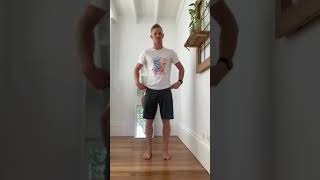
In this instructional monologue, Tom Gellie explains that the quadriceps group consists of four muscles: three (rectus femoris, vastus lateralis, vastus medialis) insert on the top of the femur, while the fourth (vastus intermedius) attaches to the ilium/pelvis. He argues that isolating the three femur‑attaching quads allows knee extension without pulling the pelvis forward, preserving freedom of hip rotation and movement. Applying this to skiing, he notes that a strong, extended outside leg keeps the hips over the outside ski, maintains forward pressure, and enables effective counter‑balancing because the body can move forward using quad‑driven extension rather than glute‑driven extension, which would otherwise rotate the leg and limit hip mobility. Gellie recommends assessing and training the three femur‑only quads to improve knee extension control, hip positioning, and overall skiing performance.
Chapters
I created a post talking about how 3 of the quadricep muscles insert into the top of the femur, and only 1 of the 4 quadriceps inserts into the ilium or the pelvis, and why this would be important to know and perhaps train for yourself for whatever sport or activity you're doing. So here would be 1 really good reason. So if I'm able to isolate quads, the 3 quads that do the knee extension but don't attach to the ilium, that means I'm going to be able to extend my leg with the quads being engaged and not feel it be pulled forward or strained by this front ilium-attaching quad. It'll also mean that I can internally rotate externally rotate, abduct, adduct, without the quads or the knee extension movement up to here pulling my pelvis with it. Because if I associate knee extension and contraction here with locking in and pulling on the ilium, it means whenever the knee moves, the ilium is going to need to move with it so it doesn't break the knee extension that's happening. So I'm a skier, love skiing, so I'm always thinking how this applies to skiing. Well, in skiing, the outside leg needs to stay strong and long in order to manage and build up against forces created through the outside ski. And so this leg When the quads can contract, they can keep your hips over the top of your outside ski more, so keep you forward. And second, if you're able to do, uh, extension or move your body forward through using the quads, as opposed to just using the glutes, then you're going to be able to create some counterbalance more easily. Because counterbalance requires your glutes on this side to actually let go a little bit. If you are getting your extension through not so much quad activation, but actually glute, then the glutes also externally rotate this leg, or if I do it with a fixed point here, this is where my body ends up. With extension of the outside leg. Rotate it in when the glute fires. If I can just get my body and mass moved forward from a flexed knee with the quads, then I'm free to counterbalance, to place my pelvis and use my hips in all these other planes without affecting the strength holding this knee Straight. So that would be why working on being assessed and training the 3 quads that run up to the femur only to control knee extension would be an advantageous thing to do and look at. So there you go, hope that helps. Let me know if it does. See you later.