Two Check Points For Skiing Balance - Tom Gellie Presentation
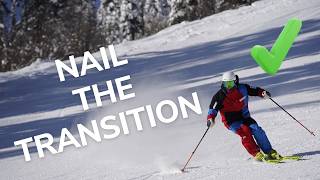
Tom Gellie breaks down two balance checkpoints for better ski transitions. First, get your body perpendicular to the slope during the turn. Second, keep your fore-and-aft balance aligned as the slope angle changes, like a half-pipe rider. These positions let gravity work for you instead of against you.
Chapters
I just want to share with you some ideas, what I'm going to call kind of key checkpoints to help you nail the transition, so that zone in between one turn and another. And there's, you know, lots of people talk about this, different countries talk about it in different ways, and they say, oh, this technique works better for the transition, and 'Well, this works better for these conditions,' and that type of thing. What I want to do today is hopefully get through more of like a real fundamental, which is this balance perpendicular to the slope as a concept. No matter what technique theory you have behind you, you sort of agree or maybe see why I think this is a really key checkpoint. What we're aiming for in this transition zone between turns One is to be perpendicular to the slope angle and balance with that. So if we take the— say that's a slope, my ski, which would be like a 75-degree really steep slope. Your body in the transition, you're trying to balance perpendicular to that angle, not gravity. And this is something I've come to realize. Many people especially beginner skiers, because what are we used to every day? Right now I'm balancing against gravity. Even when you go hiking across an 80-degree, a 45-degree slope, I work against gravity, I balance myself there. But in skiing, what you'll find, all the best skiers, the steeper it gets, this key sort of fundamental, this checkpoint comes out more and more. They end up balancing perpendicular to that, just like a snowboarder in a halfpipe, a really good skateboarder in a halfpipe, that sort of thing, perpendicular. Most people balance like this as their checkpoint in the transition, so they are feeling this point, because if you've got grip with that, with that ski, you feel like you're balanced and you're ready to start the new turn, but you're not really. You're actually still in the old turn because you've got to flip your world on a different angle and aim for this point, not that one. And doesn't matter what the angle is, that's, that's a really good checkpoint to aim for. So that's why I've got those lines up there to show that one. So that's one thing you want to, uh, today I want to get across pretty clearly. Another thing that is tricky once you start aiming for this checkpoint is to keep an athletic stance or position in this transition. So say you're aiming for this point where you are balanced perpendicular to the slope, so maybe I'd be like this, you know, I'm on a 15-degree slope like that. What tends to happen at that point, people freak out and their stance goes all out the window. So the next thing you want to check after you're going, you're skiing through and you're thinking, right, I'm balanced, ski base is flat against the slope, everything's balanced against there. Am I in that stance that we teach to all our beginners and work on ourselves, that athletic position? Because that gives you access to moving your joints, getting into the next turn. It's going to show that you're you're ready to be prepared to also be balanced for the next perpendicular to slope point I'm going to talk about. But an athletic stance is really, really important when you go out, whenever it is, tomorrow or the next day, and try this. So my aim is to just talk about those two and then why they create great skiing. So I put this video in here, I'll just let it play. To just show you something about balance in motion, that pole is not balanced against gravity, it's balanced more perpendicular to the base of my ski. The second checkpoint I'm going to talk about briefly that's a little bit after the transition is to do with this checkpoint here. As the slope gets steeper, the next thing you want to aim for is being balanced perpendicular to the slope going down the hill. So there's two perpendicular to the slope checkpoints, in my book anyway, that I think are really key to getting right, and that's what I hope you guys get out of this chat. So balance in motion is different to static balance, so that's a key thing why it's new and a bit different. Because if I stood there freeze-framed like I was, I would fall over. I wouldn't feel balanced, I'd feel like I'm losing balance. So balance in motion is very different, and it's what you're aiming to do. And I just put that there to help you understand, like, well, why does it not feel like balance in a way? So when you get it right, it doesn't necessarily feel balanced because it's this fleeting moment you, you go through. If you hit this checkpoint, it'll feel like you are starting to almost have free energy, a slight free fall, like a small sort of toppling sensation as you move into the next turn. But I think a lot of people miss it because they rush past that point and they never kind of train just noticing that point. So they, they lose patience, they rush things, they don't allow the start of the turn to be setup. So it doesn't necessarily feel balanced when you go out there. In fact, it feels almost a little bit the opposite. You'll notice it feels like you're sort of free falling, like gravity is taking you, a bit like you're dropping out of an airplane, that sort of thing. So why that's key, it's because it's allowing gravity to work with you. Gravity is what sort of drives us down the hill, and the best skiers work with gravity. They don't fight it too much. Harness it, capture it, and utilize it to accelerate around the curve of a ski turn. Yeah, just gets more difficult the steeper the slope gets. Yeah, the final thing, there's definitely a minimum speed you need to be able to achieve this, because if you wind it back to if we all went out now onto Sumitral and I said, right, everyone stand perpendicular to the slope, feet flat, shoulders square with that, you couldn't do it. You'd all fall over. But if you get enough speed and you do it, we can find a moment where we hit this checkpoint and we run through that, that particular point. So practicing this, it's an essential thing at all levels of turn. And so when we go out and you work on demonstrations or you're working with guests, at this point it's just a good checkpoint to I guess assess. So we will have a look at this one here. So even if you have got a snowplow, you are just trying to put your snowplow and your athletic stance. Ready, transition now. You can kind of use your, your imagination to sort of draw a perpendicular line coming off the slope to see, see if I hit that checkpoint coming up. So here we go, transition, perpendicular to slope, snowplow, balance for a second, start the next turn. Before we move on to athletic stance, does anyone have any questions around this? Cool, who thinks about this as a checkpoint in their skiing? Yeah, yeah, who's never thought about this as a checkpoint in their skiing? Cool, awesome, and the rest of you are just too shy or tired to put your hands up. So athletic stance hitting this checkpoint is, I would say, the next key key point. Once you start being able to do it and recognize it in lower-end turns, the faster you go, and say even in off-piste and moguls, this is quite a good one to still be aiming for. And so after you get it, I think you should really then, I'll say at the end, but I think you need to get a friend or a partner to video you from the best vantage point and check your transition and what your stance is like. And you know, you can on an iPhone and most phones now, you can screenshot it and you can get the little drawing thing out and draw lines and have a look at yourself. But just see if as the challenging terrain gets, or as the terrain gets more challenging, as the pitch gets steeper, how's my athletic stance? So in this one here, I'm demoing like a retraction extension turn. And so even though it's a different sort of lower transition, Things look pretty good. There's even sort of flex in, in the joints. The shoulders run through the hips, run through the knees, run through the feet. There's a moment of just letting myself, yeah, be balanced perpendicular to the slope. So I think everyone here understands why a good athletic stance is important. So yeah, just check that you have it. So there are two perpendicular balance checkpoints. So once you nail the lateral one, the one we've just been talking about in the transition, the next one that I think is just worth putting in there since we're talking about balance perpendicular slope stuff is fore and aft, is in the fore and aft plane. So basically, who's heard of the virtual bump in skiing? Yep, so I'll just draw it and you feel free, the people that can't see the board, to stand up and come around and see it. But essentially, when you are making turns down a hill, so say this is a bird's eye view, at the start of the turn here, the skier is basically fore and aft. If they're 90 degrees to the slope, they're fore and aft, pretty centered. They're not standing on, say they're on super trail, they're not actually standing on the pitch, whatever the pitch slope is. Across the hill fore and aft, they're centered. As they start the turn, it's like they're dropping into a halfpipe. So the run gets steeper when you start a turn until you get to the fall line. As soon as you cross the fall line and you're turning across, the run gets less steep, just like coming up the other side of a halfpipe. So your balance, just like skateboarder, rollerbladers, halfpipe riders, needs to be perpendicular unless you're trying to do something else, but to be balanced with it, it needs to be perpendicular to this virtual bump. So it looks like from there, it'll look like the slope goes steeper, flattens off, and gets flatter there, so that would be the skier going down, down, down, down there. So at this point there is a need, just like if you can imagine dropping into a halfpipe, to adjust your balance forward. On something like Friday Flat, not much necessary because it's really, you know, the change in slope angle is from like 0 degrees, say they're across the hill, and then say it's 10, by the time they hit the fall line there's only a 10-degree change, so it's not really apparent. But if you have a look at the TV, there was a guy skiing, I just happened to see this in the frame, he's balanced in the fall line against gravity. I'm trying to balance more perpendicular to the slope in the fall line, so when I hit the fall line, I'm trying to accommodate for this virtual bump and stand here not there. So the second checkpoint you're looking for, and something you need to predict and move forward, it's like one reason why you need to move forward at the start of the turn, is to just stay balanced with the slope angle. So why is it key in the transition? Like, why is this such an important point for you to get right? Well, it's definitely a setting up for success moment. Like, yeah, I really feel some of the better turns, time almost slows down a little bit at the start of the turn. If you're not feeling that there is time to do things at the start of the turn, that's a really good indication that you haven't hit that checkpoint of being perpendicular to the slope. Because if I can get perpendicular to the slope and chill out here, then I can actually move my feet almost up the hill and work the top of the turn up behind me. But if I'm not hitting that point, there's no way I can't— I've actually got to move my feet to get to that balance point first, and by then I will have already started going down the slope because things happen very fast. And I've missed that moment to actually do something. So it allows you time, sets you up for success to make any steering angle changes, early edge things, look at what the run, like the terrain, the snow is doing up in front of you. Allowing gravity to work for you. I'll digress a little bit, but all the best sports people unless— even if they are using a motorized thing, but any sport where there's no motor or engine or that sort of thing, gravity is your source of energy. And so, you know, most people typically think of like, okay, gravity working to, you know, accelerate you down the hill. It's not just that. Your body works better when you can allow allow it to, I guess, gravity to load it against the ground. So if you want input out of your body, okay, so if you want, if you want to create energy from your body, you have to kind of load it. Okay, and so gravity is what loads it, the turn loads it, and if you don't have it there, then you don't get as much out of your body. And so let me think of a good example. So if I wanted to get a lot out of someone's body, like, okay, show me maximum force, and I didn't put any weight on them, it's hard for them to produce a lot of force. But if I put resistance, weight on there, gravity now adds that weight to their body, and their body has to produce more output to overcome more input in there. Okay, so if you can let gravity work with you, not try and fight it and push up against it, but let it take you, push you into the snow, set up the turn, you actually get more out of your body. And so many people rush and miss that point. And the funny thing is, like, gravity is not that hard to overcome. Like, I just overcame gravity. I just overcame gravity right now. It's not that hard. So a lot of people work too hard to push against it. If you can learn to let gravity take you, so just like right now, standing here, Gravity is not really— it's just loading my skeletal system. If I can allow it to sort of load me in an athletic stance and press me down and take me further, my body responds by tightening, getting more muscular activation, reflexes in your body kick in, all these other really good things. So one of my mentors says, you've got to let the autopilot run. So we've got this nervous system that is amazing, that if you can just be a little bit, not risky, but let yourself go, reflexes that have evolved for thousands of years to react fast, to do things really quick, actually can happen. But if you stop and fight that, you overcome those reflexes which are not as fast, and they're also very defensive. So that point there, it's not just the simple let gravity work with you, pull you down the hill. Think about letting gravity like have you, squashing you a bit into your stance, into the slope, and loading yourself up to really get more out of a turn. And I don't mean to, like, I would say some people think ski instructors sometimes look boring, you know, when they ski. Who, right, sometimes we look around at each other, colleagues on the slope, we look boring because we're not really allowing things to act upon us. The best, like the really fun skiers look like things are happening, there's a lot of input and then a lot of output. They're allowing forces to build up. So speaking now separately from maybe teaching your beginner guests, perhaps more your like Mountain Academy students or race club or higher-end students, you've got to get them and yourself, you've got to allow things to act upon you more to get more out of your skiing. And this one where you get to the transition and sort of be poised, almost falling, that's you running, letting the autopilot run things, hoping it's going to be okay, but there's going to be a bigger, better sort of reaction coming out of the turn if you can allow that to happen. So, yeah, so if you can do this when you make moves with the skis against the slope, there's more of an equal and opposite reaction. So when you press against it, when you're at that point here, right, I'm going to get a reaction that's going to push me more into where I want to go for the next turn. If I was back a few frames trying to start my new turn, I push against the snow, I'm not going to go in towards or work like the inside of that next turn. So does anyone have any questions at this point? Yep.
When you want to be perpendicular to the slope going down the hill, what muscles do you feel you use to get forward again after you finish one turn a little bit Yep, I would say I don't necessarily use—
I wouldn't say I use certain muscles, and I don't think you need to try too hard. I think you just have to have the intention of you're finishing a turn, realize that there is this slope angle change that you need to accommodate for, so it becomes a prediction thing. You just need to actively move yourself in a position to get to that, to get to that point.
Is it more with lifting your feet against the boot?
Nope, I would say for me, I mean, there's— when people talk about pulling their feet back, yep, so the start of the turn, pull your feet back, use your hamstrings to pull your feet back, that's you pulling your feet back. If this is a skier, that's a slope, pulling your feet back to get perpendicular to slope, so that would be one way, but look, I can do it the other way. I can move my top half up and over as well. Or I can spin it from the middle, pull my feet back, move my chest forward, and I get a rotation this way to match it. But I think what I would say is a lot of people just go, I'm going to pull my feet back, or I'm just going to move my body forward. What I'm saying now is you actually have like, like an actual target. It's like if that's the slope angle, try and progressively match it. If that's the slope angle there and you're coming across the hill, you're finishing a turn and it's really steep, in the transition you're going to try and feel, train for a while to be perpendicular to that slope running, running across it before you start your next turn. So yeah, does that make sense why now it's not muscles in particular? At the moment, I'm working on really feeling my, my big toes because— everyone stand up, try this, stand up, don't fall asleep. Okay, so when you're standing, here's the thing, a centered stance, so just get in a little bit of an athletic stance, ski stance, okay. A standard stance, you feel even on the heel and the ball of the foot, toes pretty light. Okay, your big toe particularly is, is a brake for your body. So everyone now just lean your body forward to the point, but don't fall over. See how far you can get before falling over. Everyone's big toes should be pressing down like crazy. Yep, can you feel that? And there's a point where your heel starts lifting, so you're bouncing the ball of the foot and the, and the big toe. Okay, so I'm trying to feel, maybe not all the way there, but I know I am shifting my balance forward enough that I'm in forward kind of motion if my big toes react by pressing down. So now stay centered, push your big toes down. That's not what I'm feeling. That's what some people try and do. I'm trying to make my big toes, so relax them, go forward until they have to press down. 'Cause now watch, if you lift them up now, yeah, you move forward. So yeah, you can all sit down, but that's something I am using as a gauge to kind of help me know, yeah, how forward I am. Yeah, exactly. Exactly. And you had a question? No, no, no. I will. I will. Yeah, I will. Yeah. Yeah. Any other questions? That was a good one. For me personally, I like solid, like, you know, how far forward do you have to go, Tom, until you reach perpendicular slope? How far do I need to cross over Well, until I can get a snapshot of you perpendicular to the slope, shoulders, hips, knees, feet in the snow plow, doesn't matter what it is, if it's even, balanced there, it's a checkpoint. That's something I can go out, I don't need anyone else except if they've got a camera so I can check that. I really like those things as opposed to like, move forward how far, move laterally, crossover how much, when. It's a good hard one. So on that, I don't think people get enough video of themselves. I think I was really lucky back when I started working at Thredbo, Paul Lorenzen and Riley McGlashan were here and we used to go out skiing all the time. If we didn't have a lesson, we would change out of our jacket and we'd take video cameras and we would just film each other all the time, and so I got in a habit of constantly analysing my own skiing, looking at my friends' skiing, we'd talk about it. But without the video, it's that feel versus real. So you need to have it there and constantly keep checking, I think, in order to really improve. So I just encourage you, it's easier these days because phones, you don't have to take a big camcorder, you can just take your phone out and it's good enough. So just make sure you make an effort to go and get video as much as possible. I went out with Cam the other morning. Where's Cam? Yeah, no, but we, we videoed like top section of High Noon, bottom section High Noon, watched the video straight away, went back up again. We talked about what we would change. We went, we tried changing it, videoed it again, looked at it. Did it look better? Did it work? Yep, great. Go and do it again. Video it. Keep it improving. You guys have got to be doing that to really, really improve. And I think with your guests too, your guests will appreciate that so much more. Again, if like humans, we need a reference point. So, the human— like, we speak in metaphor and analogy. Humans, if you listen to a conversation, most of the time in about a minute there are almost 4 or 5 analogies or metaphors that are made. It's because we're always trying to help the other person understand our point of view. So a video is like that. So you can show someone and say, "Look, see, this is where you are." It's not you, but it was a video of you. That's where you are. They're like, wow, I didn't think I was there. I thought I was wherever it was. So use it with them. They'll really appreciate it because words, I think, more often than not get very confusing. There's just different interpretations. Everyone has background experience, blah, blah, blah, that certain words can mean different things. But a video It doesn't lie. So tomorrow I've got a training session and some trainers are going to come out and help me. We're going to start early morning, 7:50 on Friday Flat. We're doing some static practice of an athletic stance being perpendicular to the slope in transition. So we'll take our skis off, check that. I'm going to get interactive so you can help each other. Again, you know, you might think you're perpendicular to the slope and then someone will move maybe a shoulder or a hand And I want you to get really— if you're with a partner, like, get really detailed. Get both hands perpendicular. Don't let someone get away from one shoulder being up or down, or their head, or, you know, whatever it is. Try and just, like, give them a new sensation of that. At that point, this is where you are trying to get your body. Now we're going to do some snowplow turns. So we've got a wide base of support so we don't have to do flat bases against the snow. To feel it, do it at slower speeds. We'll take our boot buckles and undo them on the next run so we can really feel maybe the feet and the toes reacting, see if we can get sensations through the feet so we've got those to go by, not only video. Then we're just going to go faster and try and nail it with parallel turns. So that's the plan. So any questions about the topic today? Well, are people— do people have— let me ask this: do you feel a bit motivated and inspired now to go try it? Yeah, yeah, yeah, yeah, right? Do you feel it's quite a simple concept to go out and experiment with? Gives you enough open-ended sort of play to go there. And the cool thing is it could be whether you are a Level 1 person or a demo team person, you just pick where you're comfortable and then start pushing the barrier. Like today, great for it, going up, trying to ski in that pretty tricky snow on steeper stuff, trying to ignore the fact that your skis are getting knocked around, still trying to hit that checkpoint. Because if you do, that snow is going to get easier to ski. You're going to be able to do more at the top of the turn. You're going to be balanced at these certain points. The ski is going to work the way it's designed to work. And yeah, so cool. I'm excited to come out and take some runs with some people tomorrow. And please, during the rest of the week, I've got to go back to Sydney on Wednesday, but if you see me in the locker room, let me know how it was and ask any further questions. If you haven't seen my website, Big Picture Skiing, it's really good. I know there's a few people in here Jimmy and Mila think it's pretty good. And if you like the skiing skeleton hoodie, you can also get that on the site. So what's that? Yeah, like and subscribe. Yeah, thanks very much for coming along.
More from Tom



Most skiers overlook how they use their poles. Try these five pointers next time you’re skiing.







