Ultra Performance Ski Boots with Brent Amsbury
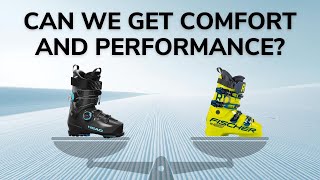
Brent Amsbury, a master boot fitter, explains why ultra-performance ski boots around 96 mm last are gaining traction. Narrower, stiffer boots like the Atomic TX and Dalbello DRS give better edge control than the overstuffed comfort boots dominating the market. Proper fitting takes multiple sessions and skilled modification, but these boots last many seasons.
Chapters
Hey skiers, are you looking for a boot that provides ultimate comfort whilst also being very high performing? I certainly was, and this was one of the first boots that I got that kind of fit that category. Now my guest today on the podcast, Brent Armsbury, a master boot fitter with tons of experience, he calls these boots ultra performance boots. So it's not quite like a race plug boot, and it's not like an all-mountain 130 flex high performing boot. It's sort of almost in between there, and he's seeing a resurgence in boots this year in that category, ones that have good angles that sort of don't stand you too upright. They help you get forward and be in a dynamic position. They're quite snug fitting and, and close fitting. You need to do some boot work often if you don't have that narrow sort of European type of foot. And so on this podcast, I wanted to get Brent's ideas around this. I want to have a discussion with him around this ultra performance type of boot So, if you're that person, you're that kind of really obsessed with technique, you really want to push the game, your level of skiing up, but you know, you don't want a full-on plug boot which takes a lot of work and is heavy, but you don't want sort of one of these sort of almost like gone too towards the comfort end, not giving you enough precision and drive through the ski, well, this podcast is for you.
Alright, without further ado, let's get into it with Brent Armsbury today. Hey Brent, I've got you on today because I really want to help the viewer. A lot of the people that are on YouTube watching ski videos, they're looking a lot of the time for a performance boot that still is comfortable. And I know there's a lot of boots coming out you're aware of now that, that fit this bill, and you're seeing maybe a little bit of a trend. And interestingly, this trend we're seeing come back is kind of related to a conversation, the, the rental boot thing. So I was, I was, I went to Dubai just for, for fun and to, and I didn't take ski boots. I used the rental gear and I was shocked. Made a video about it, about a lot of the, a lot of the angles were like, just made me feel like I couldn't ski well. Give us your perspective, what, what that made you think about in terms of ski boots and angles and trends?
Yeah, so, you know, you really got me thinking about not the rental boot per se, but like, have we possibly made, you know, have the trend of boots possibly made them too easy? Like too easy to ski? Have we moved almost to the point where It's like we've made them almost a little too, like, easy to be comfortable in them and easy to stand in them, as opposed to the boot challenging us a little bit more to be more on our game. And I'm not saying, like, the boot has to be, like, really brutally hard. I'm not talking about the old days of Lang Bang and people getting bloody and painful. I'm just saying that maybe we've over-commercialized the boot a little bit, like, just made it a little too creature comforty. And now we're possibly seeing a resurgence back to boots that kind of say, let's, let's put some more horsepower, more torque, more energy into the ski. And yeah, they might shock you a little bit at first, but you can— you learn how to become better.
Because you, you in the shop, had customers coming in saying, I'd bought this boot recommended, it was the bee's knees kind of all-terrain style boot. And what sort of feedback were you hearing?
Oh yeah, like this, the start of this season, I probably have more customers who've come in and said, well, I bought this boot on a recommendation of a website or like some marketing videos. And I went and skied on it. They said they went and skied on it. It was just like really lackluster, you know, like really didn't make the ski want to really roll over an edge. They would always say it's like maybe a little too soft feeling, right? Like there's just way too much play, you know, going into the front of the boot. You know, they were like, it was comfortable, right? Like they always say it was comfortable, but Right? Like, like as if they had misgivings about buying a car that was like, oh, it was comfortable, but boy, it gave me no joy to drive it. Right? So like, we're seeing some people, definitely some customers who are coming in and saying, man, I bought this boot and it was comfortable, but I had no joy skiing it.
Okay. Yeah. So this is leading into where we're sort of going with this? Because now, what are you, what are you seeing? You're, you're privy to like the new boots, the, the new models coming out. What's, uh, what's something, yeah, you're seeing?
So what we're seeing, or I'm seeing at least personally, is that like to start a season, we're, we're putting more people into this new 96mm lasted Resurgence boot. Right. And there's some manufacturers who have really kind of jumped out like the Head, the Head Raptor WCR has always been 96, but we have more people moving to that boot because they tried like the recreational versions of other boots and went, I need more boot. And I'm like, here's more boot. And they're like, great. You know, Dalbello DRS, like, oh, they made this 98mm last, the DRS, but now they made the 140 in a 97. So closer to the 96, like, wait a minute, we're making that boot even, even more edgy, right? And then Atomic. So you got Atomic who had the Redster CS, which was a 96mm lasted boot, but kind of lived in the shadow of the World Cup boot because it was a Redster. And now they made this whole new line of 96mm lasted boots like the TX and the Remedy. So you gave it a new name, a new shape. It's a 96mm boot that everybody just kind of kicked to the side, and now everybody wants a 96mm boot because they put some GripWalk soles and some little bit more creature comfort into it, amped up the liner, and now all of a sudden it's the star of the show and people want it. Like, it was neglect— it was an orphan. Now it's the star. And it— and it's, you know, these are great boots, the, you know, the Technica Firebird and the the Kessley KX series. These boots have been around, but all of a sudden we're seeing this shift back to these more strong, powerful, torque-driven boots because I think people have tried the more hyped freeride, easy-to-ski boots and just went, meh, this isn't doing it. Like, I really want to ski boot that pushes the edge?
Because I, with experience, like now into my 10th, 11th boot or something, I know now that I, even though I have a wide foot, like over 107mm wide and a 26, I still go for really narrow. So I want to bring up this conversation that because now it's really obvious boots— that, that last is stated on there. I think more people are aware that it moves up and down with the sizes. Um, but I guess, can you help give some insight there that just because you might have a little bit wider of a foot or something, that you don't need to shy away, but you do need to consider boot work? You know where I'm going with this, so help us, help us out with, yeah, you know, not scaring people but making people aware of, of this fit and maybe the benefits.
Yeah, I think, you know, when you look at the marketing and they say the last, I say it's narrow, and he's like, oh, I need to have narrow feet. But no, you don't, you don't need narrow feet. What you need is quality boot fitting to take a boot that really should be called ultra performance in its last which is that really is close and hugs the anatomical features. And what you need is quality boot fitting to nudge and massage, you know, this performance last around your anatomical uniqueness. Right. So if you're wider, I mean, you're, you're not likely to be wide everywhere. Yes. I'm not wide everywhere on my foot. You know, like I have a wide forefoot, but my ankle and my heel are actually pretty tapered back. So I'm gonna be pretty happy putting my foot in a 96 boot, knowing what I'm gonna get out of it once I start pushing, nudging, massaging, grinding, punching, shaping. And it takes time. You know, there's a, a bit of a relationship aspect to this, but what I'm gonna get is a boot that actually makes my skis feel like they're sharper, like the edges are sharper, that I can really trust the rail.
So I liked how you reframed maybe the last being about the foot width, which, which is probably a good way to view it if you're maybe a skier that's not doing as many days and you just don't want to spend a bunch of time in the shop. You just want the boot to fit and you know, you're not serious about improving. That's the thing. But if you're beyond that, this, this 96mm last— I like how you said it's like ultra performance. So you're actually choosing— the last is kind of guiding you into the kind of performance you're going to get out of a boot. Um, so these people that they're looking at it now, uh, maybe— well, let's go next. Can you describe the boots you know and the different brands in this kind of 96mm and maybe help help, uh, like the 3 categories, like the person that is a narrow foot, which of the, of the ultra performance ones go well there, the person that's kind of in the middle, and then I'm gonna say like the wide lower arch. Like I have a few like Asian friends and they have like a wider foot and it's lower, kind of low but wide volume-ish, like yeah, yeah. So maybe guide us or talk us through what you feel is in the range currently between the brands in this category?
Well, like, like specifically to, to like brands and models, you know, if we start with Atomic, we've got the Atomic TX and the Remedy, um, the Dalbello DRS, even though it's 98, um, you know, it's, it's closer to that ultra performance in the 140. They make the 97. Um, if we go to Tecnica, we've got the Firebird, right, the Firebird R. You can get the World Cup version, but like what you see on the website, the Firebird is the '96 last. You know, Lang, you know, they tuned their new Lang RS, which they brought out last year. It's a '98, '97, but really, you know, it's again steers more towards that '96 style of boot with a thicker shell wall. We have, you know, the Kessley KX series that's always been, really narrow and really tapered, almost, almost to a fault, because you need a good boot fitter to make a Kästle fit right, like to really not want to bite you really hard. Okay. You know, Fischer, they built a '95 last, '96 last boot a while back, the Podium GT. It went away again, kind of lived in the shadow of its World Cup brethren. And so they don't have a boot in that category right now, but I would imagine they will eventually soon because of its kind of coming back. If you've got the Doberman, the Doberman 5, which is, you know, 95/96 last, like that's a really powerful boot. And I've recommended like that boot to a lot of instructors because there's a lot of room to work with it and you shouldn't be afraid, afraid of that boot. You know, K2, you know, they built this, a new boot with double Boa, right? And it's a low volume last, but they put more aggressive angles on it. It really, it's like a comfort but aggressively, you know, stance boot. I don't think it really falls directly into the 96 last, but you know, they're saying with the Boa, it kind of pulls the last in. That's a little bit controversial, but we see this trend, like there's this separation, right? So these manufacturers are saying, look, these LV boots that we made, these 98mm lasted LV boots, the comments have been, oh, you know, these boots need to be comfortable. So they kind of just kept pushing them out and like making them more commercialized. Well, now they look more like the mid-volume boots and they're like, really, they stand up taller. They're really easy to ski. And so you, you kind of like these— some of these manufacturers even drop those boots. Dalbello, like, no, we don't even make the, the Krypton Cabrio in a 98 or 97mm last anymore. So they got this big gap. So we're seeing manufacturers go, well, we've had this 96mm category all along. And now we're kind of killing off some of these LV boots. So '96 is like the new LV, and yet on steroids, right? It's got more power, more performance, and we're seeing people gravitate. Like, I want more performance of what's out there. And so by just adding a little bit of creature comfort, it's kind of become alive. It's like it's resurging. You know, Dalbello even makes GripWalk soles for their DRS. Like, you can just— oh, what sole do you want? You know, do you want an easy-to-walk sole that's got better grip, or do you want the racing, slick racing soles? But you can take one boot and turn it into a little more SUV-ish, and you take the same boot and make it, you know, more of a club racer just by the sole you put on it.
Okay.
And that wasn't available before. Yeah.
Would you dare to kind of categorize, like, bunch a few of these boots for those 3 stereotypes or the, the kind of groups of foot types? So they, you know, if they're— if they are in that, that's kind of my foot, I need— I want to go search out a shop that at least has one of those in that range. Would you, would you be able to help kind of, yeah, dare to do that, like, kind of group them in what you feel would, would suit them better, or no?
In those type, in the 96mm last, I'm very comfortable with putting a wide variety of feet in them because they do hug the foot so well. So if you're wider and lower, you know, these boots are already lower in the instep, so I can just make width. If you're tall and narrow, I've got these really good boot boards. I can lower your foot all the way down in the boot to give you more roof height.
That's a really good point. Yeah, do you want to just explain that? Because I think some— like, explain the pain point that person might have been experiencing and then gone to a high-volume boot but lost. Yeah, just explain that one because that boot board adjustment thing, I think that's important.
Yeah, so like a lot of the, the high-performance 96mm elastic boots have racing-style boot boards. Some have a little a little softer, but you can grind them, right? You can, they're thick and you can grind them down. So you can make vertical room in the boot. And not only that, because you got a thicker shell, I can grind and localize that high foot. Like there's a point where that high foot, that tall narrow foot hits the top of the boot. I don't need a high volume boot to deal with that. I just need to isolate that area. And recontour it, and I can assure you, you're not going to have that pain point anymore. But you get the narrowness and the, you know, the performance of the, of the anatomical fit, um, but just using the boot board and recontouring, you get it comfortable with all the power.
Brilliant. Okay, good. So now I sort of interrupted you there. So we're saying you fit you're happy fitting a lot of kind of shapes of feet into these types of boots because of that. Any other reasons? Maybe expand on, like, with the boot fitter working with the types of plastics that these are made out of, does that make a difference? Do these boots often give you more modification-friendly materials to work with?
They do. Like, they, they flat out do. They're thicker shell wall. They use high-level PU. Polyurethane, polyether constructions. And because you have more material to work with, you can make more contours. And there was this drive towards these thin shell wall boots and thin shell wall boots make, you know, they're lighter. So there's like this attraction like, oh, they're not as heavy. They're easy to contour, but you got this thin shell wall. But a thin shell wall has limitations. As soon as you start monkeying with these thin shell walls, they start to distort, they start to get funky on you. And so you end up with a boot that has kind of run away from you in terms of like the contour plus performance. They've just kind of— if you work them too hard, they give up, right? Where the thicker shell wall, like in these 96mm lasts, it's like, man, it's— these are box-framed racecar-type boots, and you have so much more to work with. And so, like, high-quality boot fitters, for sure, even within my colleagues, if I asked them, hey, what do you like to work on? I mean, what would you like to work on every day? They're going to talk about these boots. They're not— I mean, they rarely go, oh, I like a really thin shell wall boot that's just kind of just like doesn't challenge me what I'm doing. They're like, no. Give me thick PU plastic, right?
All day long. Being scared when I was doing some work in a boot shop, when you had like the boots and the plastic partway along would change, so you'd have like where the two plastics had to join. If you had to punch or whatever there, that was scary. This is like, that's where it's going to break, so you heat and mechanically push at it.
Right, like by injected boots. Yeah, like the two different types of plastic joined by a, by a physical bond, right?
Yeah, yeah, yeah.
They were kind of scary.
Yeah, exactly. So then expectations-wise for these people going, okay, this sounds like what I want, I want more edge grip, I want more performance, do they need to expect like a longer time process, uh, revisits? Felt differences that maybe before they would have gone, no, that's not comfortable, next boot, please?
Yeah, I mean, your expectation has to be that you're going to spend more time to get these set up. And if you expect these boots to be 100% comfortable going out the door, no. You should, when you put them on, there's going to be some clear spots that are making your brain go, get me out of here, right? But with a good boot fitter, they start nudging. It's called the— we call it— I call it the low-hanging fruit, right? So it really hurts, let's say, on the navicular, and it really hurts on your ankle bone. It really hurts on the sixth toe. Like, these are like searing. And then you do these three punches, and like the picture starts to clear, right? It clears. Like, oh, there's relief there. And then all of a sudden there's like these little niggly little things like, boy, this ankle pocket, like the Achilles feels a little aggressive. And boy, my big toe could use maybe a little more room, but when I flex on it, it seems to be better. Like that's the stuff where you go, tell you what, go ski it, right? Go ski it, let the liner break in. And some of those will remain and some of them will go away. So maybe there's 6 little tiny things that you go, hmm, will these go away or not? But like 3 of them will go away when you ski. So when you come back, you just have this little short list of 3 things, and maybe on each boot where a boot fitter can just take it and grind it a little bit, just knock this down, knock a little here, knock a little there off, and then boom, those are gone. Right? So one session to kind of get the low-hanging fruit out of the way. Second session to deal with the little niggly stuff, the little details. And now you've got a boot that's, you know, 95, 96% there. Right? Like, little things could show up after you ski it a while, but for a third visit, but it's not a deal breaker.
Back to our— back to our trend of, like, maybe when almost too comfortable, Uh, with, you know, the whole range of boots, it's almost like a red flag in this category if it's like, this, I could ski this right out of the box, is almost a little bit.
It's almost a red flag, right? Like, it's like, no, if you have ultra narrow feet, it might be a slam dunker.
Yes.
But then when I do have ultra narrow feet in these class of boots, then I go right to like a zip fit liner. It's like, okay, they come with a little bit of a thin dense liner and if it's got enough grip, it's like, okay, sorry, we gotta upgrade you right to a zip fit that engages that ankle even more in this frame. And it, boom, it's like, wow, okay, narrow feet, very happy now. Mm-hmm.
Would you say, I think you kind of mentioned before with the types of boots you'd like to work on, But a boot that has the ability to be ground, not just only punched, gives you so— like, well, one, it's quicker, right? You don't have to heat it, stretch it, wait. You can go in there, mark it. You can be very precise, can't you? So a lot of the time, these boots, if you can get that in the type of boot you're looking for, you, you then allow your boot fitter far more opportunity to be really precise with like snugging in and fitting these little bony patches and—
Yeah, I mean, it's quicker to an extent, but the nice thing about a grindable boot is you can go in and just take a little bit at a time. So, okay, I made a punch, but that punch, yeah, I could punch it, but like each shape is a, you know, the shape is like, that's the shape. Yeah. And so you can overshoot, right? Like when you punch, you just, you just like, oh, I tried to nudge it, but it overshot a little bit. And now you got to figure out how to get back. And with grinding, it's just easier just to be like, take, like shaving, you know, the zone. You need to expand it or make it deeper. You can do it a little bit at a time and the boot goes on, boot goes off, but you can just get it to right where the point where you're really satisfied with it. Carving, you know, scalping, right? As opposed to like, huh, you know. One spot put, and then you might have overshot. Like, it was, it was, it was just about good enough, and then now it's kind of like too open. Like, there's almost too much room.
It's just so hard. I mean, you, you with your all your experience, that's helpful. But to stretch a boot and know the, the how much it's going to come back, and every plastic, even probably every year, you, if, if they make a new boot and the plastic has changed the color you're, you're not 100% sure that it's going to come back the same as the old Atomic did, or if it's going to go right. That's, that's the tricky thing with the stretching. But the grind, as you said, you can see if you're taking half, 1, 2 mil away, it's more— the measurableness of it makes it really, uh, workable.
Yeah. And the grinding boots, you just get the shape that you want. Like, if it's really oblique and really weird Like, you can, you can make that shape exactly what it looks like as a reflection of the body, as opposed to just a general area.
Yeah. So if someone's moving up into this, they've, you know, been a wide foot, they've always bought a high-volume wide boot, uh, that, that foot, that kind of boot, and they're going, no, I'm going to step up, and they try a pair of boots on, what would, uh, what would you expect their reaction or feelings to be?
If you've been in like a, like a higher volume boot?
Yeah.
Well, of course you're, you're, you get a shock of how snug they are, right? And especially the ankle and the heel pocket in, in the midfoot. Like, boy, this thing is really— it's a cramped cockpit.
Yeah, right.
But And, but you, you gotta give it a chance. You, you've gotta trust your boot fitter that they, they have the skills and the knowledge to work that boot and massage it. Because trust me, just because you think you're kind of freaking out in there, like I look at people when they come in and they, they get in these boots and I go, look, I, I can make this thing pretty wide. Like I could really open this thing up. It's like, like I've seen people with triple E width feet and we get them into these ultra performance lasts. It's, it's doable. It may take 4, 4 sessions, but it's doable. And then these boots tend to last longer. They have— that's a really good point. Hardware. Yeah, that's a very good point. Yeah. Like all the people who I set up in these boots, I may see a boot that's come back after 7 seasons of skiing. And it's still intact. We put new soles on it, replaced some buckles. If it hasn't cracked yet, like, these boots keep going. I've seen Langs, like, that have cracked, and we've repaired the cracks, and they just keep going. Like, the crack just kind of dies away, and, like, they just keep going. You think these boots would split in half, and they go another 3 seasons with a little crack in them, and they just keep going.
Yeah, I'm in that camp. I'm— I don't— I've got my podium boots dialed and I'm— I just don't want to go— like, it's taken a while, but they're— because they're so solid. Yeah, I broke a buckle this season, just replaced it. That was fine. Yeah, I've got a zip fit in it so that, you know, if that eventually dies, you know, I, I'll just get another one of those. But yeah, I think the longevity part of it, this investment early on, more time to get it right. You do kind of get that back a little bit later on versus the, the other way around.
Yeah, like these boots are like the story of the, the person who drives a Porsche for like a half a million miles. Yeah, they replaced a bunch of parts and they— but it went a half a million miles because they love the way it drives, right?
Yeah.
Yeah, like other cars that are more creature comforty and electronic-y, you drive them 200,000 miles and just junk them. Like, you're just like, it's not even worth repairing them, right? So that's kind of like the, like the recreational performance category is like, yeah, we can go about 150,000, 200,000 miles and then you just junk it, right? Or like the '96 class boots and in the World Cup boots, these are the half-million milers, right? Like, they can keep going. You can keep the nut— as your foot changes, you just grind a little more. Yeah, right. Yeah, you know, make changes as you go.
I should say too, a lot of the things in this boot, you can't feel in the shop how much of a change and effect it has on the actual snow experience, which is tricky, do you know what I mean? Like, yeah, and if you've not experienced that, it can be hard to like get the buy-in to spend the time, spend the money with the boot fitter getting it right. But holy cow, yeah, when you, when you get the snow experience with and you realize that we're not just talking crap here, like it edges better, you can go faster, and you don't feel like as unstable you just charge through chop like nothing else. Um, I was talking to Ski Joe Dunn, Ski Dad, and he's— he said, you know what, I prefer my race boots in the powder to the, um, the Full Tilt boots, which you'd think would be the other way around. But it's because it just holds him so solid that even if he gets a bit back and wheelies, like, the boot just brings him
More from Tom



Most skiers overlook how they use their poles. Try these five pointers next time you’re skiing.







