Virtual Ski Coaching | Students Experience
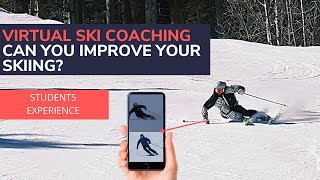
Ski instructor Leanne describes Big Picture Skiing's virtual coaching program: weekly Zoom sessions, video submissions, and personalized analysis. She lowered her pelvis and refined edge angles, which eliminated knee pain. She emphasizes boot fitting, anatomy knowledge, and attending all three weekly sessions.
Chapters
Can you really learn skiing online or virtually? My name is Tom Gellie and I'm the director of Big Picture Skiing, and I believe you can. Today you're going to hear from one of my students, Leanne, and her experience from the last season doing the Big Picture Skiing Academy program. Now in this, you hopefully will have some answers to what exactly is in the program, what you can expect to get out of it, the insights you'll gain, and how it works. And I think Leanne is great because she gives you some tips on if you do the program, how to really get the most out of it. Now Leanne is a ski instructor, but we also had many students on the program that weren't ski instructors, they just enjoy and love their skiing and want to get better. So I hope you enjoy this chat between Leanne and myself, and it perhaps intrigues or sparks some interest in you in that online coaching, skiing virtually, having your coach on the other side of the world does not matter. What matters is getting results and you really understanding your skiing and taking it to the next level.
Leanne, it's great to see you again and chat with you. Now, for people, you know, who don't know who you are, can you please give us a background on you and your skiing?
Sure. I learned to ski in Michigan on small little hills, so I did learn how to turn because you get down to the lift really fast if you don't. And I went out to college in Washington State and learned how to teach out there. I got my Level 3 during college, and then I worked abroad for 25 years, so I didn't ski at all. And I came back and settled in Bend, Oregon because I wanted a real mountain with a real town, and it's worked out excellent. So I teach up at Bachelor's part-time in the winter, and then I fly fish all summer.
Excellent. And what— so when did you go through your instructing levels?
So I did my Level 3 back in college.
Okay.
Then we had a, uh, an Associate and a Full. Okay. There, there only had 2 levels, so I, I did both of those while I was in college, and the Full converted to a Level 3 when they made that conversion, when they brought those in.
Okay.
And so, and then how did you find big picture skiing.
So one of our instructors who is an ex-race coach from Mammoth Mountain did it with you a couple years ago, and he would run clinics for us, and he had all this cool new stuff, and it was like, well, where'd this come from, Pete? And he said, well, there's this Australian guy, and I said, okay, how do you spell his name? And I looked it up, and I, and I was— I had Carv at the time as well, and you had a bunch of Carv videos So I started watching those and it's like, whoa, how come I didn't know this? How come I didn't know that? And, you know, I just learned a lot out of it. And so then I signed up for the Big Picture website access and started looking through the videos. And then this last season when, you know, well, I did the body prep in the summer and then when the, you know, when ski time came around, it's like, why not? Let's do this online thing.
Yeah, and so, I mean, I'm, I'm gonna jump into, into that question I have for you because, I mean, coaching skiing virtually like I'm sort of doing, we're doing here, is not normal. Um, I mean, most people would think if you're going to learn to ski, you need to be there in person. So I, I was wondering, like, for people that, you know, that they see it that way Are there any things you, you had concerns? Were you like, I'm not sure, but I'll give it a go?
Or, um, no, I wasn't too concerned, largely because Pete recommended, and he was so good. It's like, it's good enough for Pete, it's good enough for me. But, um, what I think the pluses are— I haven't found any minuses, okay? So what I really think the pluses are, like, if we go out in a clinic and we video each other Okay, if you're fortunate enough to be an instructor and have clinics and have somebody videoing, you may sit down afterwards with your colleagues and watch that video one time. And the clinician may say, "Oh, I see you're doing this or doing that," and that's it. That video is gone. You don't have access to it. You can't watch it again. And with Big Picture, I mean, not only is it there all the time, like I can go look at it as many times as I want, you just get so much more out of it. Uh, you know, when you're doing it in a clinic and you're seeing one run coming down the hill, you can't see nearly as much as you can see when, uh, when I can look at the videos I send in and then the analysis that you put on top of it.
So when, if you give people like an example of the experience, so say you go back to December and we just started and I'd introduced talking about athletic stance as the topic. Um, yeah, how did you take that info and then what would it look like for someone? Okay, what do you, what do you do next? What did you do next?
Okay, like I've taught for the last 20 years and I've always thought that, um, you know, you need forward, right? So you take your ankles and you flex them forward and that's supposed to put pressure on the tip of your skis.
Only by then that makes you turn and—
yeah, right. And by watching the videos and stuff, it's like, oh, that's not really trans— bring much power to the ski. And I don't really want to be standing this tall and just flex my ankle. I want to drop my pelvis down and, and get into a stance where I can use my, my legs more as a lever. And it's like, oh, that really works. So again, for me, it's been just a whole bunch of totally different understanding of what I'm doing. So I changed my stance, you know, I've dropped it down a bunch. I shortened my poles because now I'm lower. And the best thing is my knees don't hurt anymore.
Yeah, I remember you saying that partway through the season.
Great. Yeah. And I've never had a knee injury or anything, you know, but it's like knees would always get sore by the end of the day and it's like that doesn't happen anymore.
Yeah. So that was— I mean, so someone say they join, like we're joining in the academy, you get that information via the— like this, we sort of have this chat and I present information And then it's recorded so you can watch it again, maybe, you know, a couple of days later if you forgot something. Then you would go out and you would just practice. Yes. So, so I guess what I'm trying to get here is, do you feel the virtual coaching definitely puts self-learning front and center? Like you're really encouraged to be in charge of your own learning?
Yes. And But you've got excellent guidance. So, you know, what with the, uh, you know, this year we had 3 Zoom calls a week, and so we'd go over topic X, Y, or Z, but I could go back and look at that again. And, and it's like, oh, or like one thing I liked really well was using the anatomy app or using the skeleton because my knowledge of anatomy is clearly lacking, and So what I got a lot was precision. It's like, oh, well, that's not hard to do, but I never understood that that's what I was supposed to be doing. Okay. And now that, like, you have a video on, on the site about, about dropping into, to the right stance, and it's like, oh, I get it. I'm supposed to use my pelvis more than my ankle. Well, I can do that, but if I don't know I'm supposed to do that, I'll never get there.
Yeah, yeah. And then, and like you said, I mean, I probably wasn't finishing that right. Like, there's self-learning, you're guiding it, but there's support along the way. You can ask a question. I might even give you, uh, like the challenge, can you just send a video back, 10 seconds of you in your house doing the stance? And then I'll send back. And as you saw, like the group, there was a really wide variety even after the Zoom call. And like, I thought I'd explained it very clearly. When people internalize that and do it and then take a video of it, sometimes how that comes out and looks on the camera is not the same. So then we're able to get that, send the feedback back with a comparison, and say, oh look, see, you're, you're actually too flexed in the hips now and you're not enough in the knees. And so you can get refinement. I guess that's what you're referring to with the support part of their guidance.
And you mentioned a good point, and that's that there's more than one person in the, in the group. And so you get to look at 50 different stances and you go, oh. And, and I, I would do, especially on the videos of people skiing, is I'd try to— before I'd listen to what you said, it'd be like, okay, what do I think this guy's doing wrong? And then try to guess, you know, see if I was anywhere close. But because you have all these other members, it's not just you. You get all this opportunity to look at different people trying to do the same thing and what differences do they have and how do, you know, how do people get from point A to point B. And, you know, people have different strategies, but it's just, it's a super way to— it's like, um, what to say, a treasure trove of movement analysis.
Yeah. And I think even if you're not an instructor, I think for learning, that's that's actually really beneficial.
Yes. I mean, yeah, again, you don't have to be an instructor. I mean, you just have to be inquisitive and interested because, you know, we all ski a little differently and we've all come with, with a little or a lot of technical information. But I think even if you're an instructor, most of us are not very good on anatomy. And so we don't really understand what our body's doing and why it's doing it. I think what attracted me as I started to check out Big Picture Skiing was the fact you were a Rolfer. Okay. Because by virtue of being a Rolfer, you clearly have to know your anatomy inside and out. And that is very different than just somebody who's a level 4, even if you're a clinician or an examiner or whatever. Um, the anatomy— you don't necessarily have the anatomy part, and putting all that together with the anatomy, I think, is just a dynamite combination.
I don't know if you've heard this, but I remember being a Level 4, and I was maybe Level 2 examiner, riding up the chairlift, running a clinic, and in my head going, I'm actually not sure when someone says the hips do they mean the hip socket or do they mean the pelvis? Like, you know, like at that level. And so I was shocked at my own education, lack of it. And so then when I'm communicating with people, am I— what am I communicating? You know, it's probably not going to be very clear. That was like back in 2012. And then as you sort of mentioned, taking, taking up rolfing and studying that and like you know, being worked, someone working on my own body, me working other people's, really understanding anatomy. That was a huge leap forward in my ability to, to coach and also my own ability to ski better, because I had this kind of image, this model in my mind of what the skeleton and what the muscles were, were like that hold that all together. And so I could problem solve things, um, a lot better. So yeah, it's great that you You liked that and you're like, have you found that's translated into better lessons that you teach?
Absolutely. Because I just understand what, how things work now in a way that I never understood before. And yeah, it's a lot easier to teach something if you understand it better.
Yeah, absolutely. So what are your biggest takeaways maybe the biggest one, maybe two if you want, but skill-wise from doing the season of academy coaching?
So one was just stance. I mean, standing properly, that, that's huge. You know, if your stance isn't right, all the rest of it's not going to be terribly good either. Um, so that, that quickly, and, and on that, like, is there's quite like intricacies in the stance out there that you learn So for me, it was more understanding that just putting pressure on the cuff of the boot wasn't going to do it. Okay, that just can flex. Last year I had the Carv and I was playing with it and it had a forward balance number and it's like mine wasn't nearly as high as I thought it should be. So I thought the solution was just get more forward, right? Just bend your ankles more and lean out more. It's like I'm almost swan diving over the front of the skis and the numbers aren't going anywhere. Well, it's because I didn't understand, you know, what— how to really put appropriate, you know, how, how, how the body transferred pressure to the front of the ski. So just the whole concept of that the pelvis is more involved in, in your stance, and all the joints are involved. It's not a question of just flexing the ankle. The second thing was pressure along the length of the ski, and that was like using the tail of the ski. I mean, nobody had ever told me that you— again, I thought that you, you know, the— you want to turn more, you want more pressure on this ski, you just kept putting pressure on the front of the ski. Well, obviously, as you come past the apex, your tail is going to wash out, but I never understood that. And like, I've had a coach say, well, you know, you paid for the whole ski, so use all of it. It's like, well, that's not really— doesn't tell me much body part specific, like what I'm supposed to do to use all of it. So like putting pressure on the, on the tail of the ski as you pass the apex, it's like, that was a total game changer.
And again, do you even remember, do you even remember like the detail we got to on where, like, you know, because I also wasn't specific enough until I realized people were maybe not getting the same results I wanted and getting specific with exactly where on the heel. And, and you guys like, oh, and that's even different again.
And then 5 times more pressure than you think you need.
Yeah, yeah.
And what I found most remarkable this year was like none of this was complicated, none of it was difficult. It's really knowledge. It's like anybody can move from their ball of their foot to their heel, okay? I mean, it's not hard, but it's knowing that you need to do that, when to do it, and where to do it in the turn. It's like, oh, That's so cool. I can do that.
What it feels like.
Yeah.
Yeah.
And like, like edge angle that, you know, you can only roll. Most of us think we just roll our edges over and, and use our knees to get over. It's like, well, you can only go so far that way. And it's like, oh, then you want me to do what? You want me to drop down and get that other knee out of the way? Oh, I can do that. But I never had any clue that that's what I needed to do.
So yeah, yeah, excellent, excellent. So that was in skills. What about, uh, because we also cover equipment, and we're gonna change it for next season too, because I mean, I think in my head I was like, okay, how do we check boots online? Maybe not a thing we can do. But end of the season, we started checking everybody in the academy's boots, and that was, that was very, uh, enlightening, wasn't it?
It was pretty revealing. It was, uh, as a coach, one thing I took away I'm going to pay a lot more attention to people's boots than I ever have. Because a lot of, there were a lot of boot issues with people who were pretty advanced skiers. And so, yeah, it needs, I have a pretty normal average run-of-the-mill foot. So, I didn't, for me to be in a ski boot is not difficult. You know, I don't have a lot of hot spots or any of that kind of thing, but just cuff alignment, just basic stuff. People were way off and it, impacted people's skiing so much that once they did whatever they needed to do in their boot, boom, their skiing just dramatically changed. So yeah, that was a huge takeaway.
Um, so you also test boots, uh, sorry, on that one too. Like, I mean, you've got a lot of— and so I think that, uh, that's even going to help you with your feedback for boot testing and stuff. I mean, you just, uh, I know, I know you had an injury at the end of the season, but being sort of around the boot testing at the end of the season, you were really looking detailed at like what the new boots were.
Yeah, yeah. Can you adjust the cuff easily or not? You know, um, is, is the one thing I learned from boot techs is the, the, what do you call it, the, the companies are putting a lot of money in the liners. I think many of us kind of think of the shells, the game, that's you know, you're buying the shell, the liner, you know, it is what it is. But they're spending a lot of money on those liners. And that, you know, there's so much you can do now. I mean, the boots can be heated, the shell can be heated, the liner can be heated. There's so much customization that the companies are trying to build in there. And it's like, I just hope people are taking advantage of it and using it. I found once they were able to cook the outer shell, that I was finally able to get a really tight fit without having to go down to a last that's too narrow for me.
Yeah.
And that was a huge game changer. I could finally have my foot solid in the boot. It's like, oh, this is so cool.
And I, I snug but comfortable.
Yeah.
Yeah.
Yeah. And the other thing for me, uh, one of the things I'm, I'm the designated boot tester for is the big calf. And there are a whole— for ladies, this is a big issue. If your boot's too tight, even on the lowest setting, your foot's going to go to sleep. And so understanding that these cuffs come in different, different widths, circumferences, kind of. Thank you, that's the word. And that there are some adjustments. There are some really tricky adjustments in the back of the boot that I think most, especially if you're people who buy boots online, are never going know that there's, there's filler in there that you can take out. You can expand those, those cuffs, and that's just huge for ladies.
And you're seeing that there's more of that coming out next season in, in ladies boots.
And a lot of it, a lot of it is integrated, so when you look at the boots, you don't see it. But if you see something that's a different color or something, look at where the screws are in the back, and it's probably removable. And, you know, you can get more space there. I had, I had an Atomic on and theirs clicked in, and so it was even less obvious because the rep was there. And I say, great boot, but it's too tight in my calf. He says, oh, just a minute. He popped it out. He's like, oh, okay.
Yeah.
Um, so yeah, then take a look at that.
Yeah. And that's, I mean, that part too, that, that calf fit. Even remember there was a guy, Wiley, his He had really athletic calves, and, um, and so he was having to go further in his performance boots and really like take material away from the actual liner. And because, back to, he knew from week 1 what his athletic stance ideal is more like. And so knowing, having that knowledge, he was, he could be confident in, no, I know I need to do this change to my boot because I know my stance is being affected. And we could see it in his skiing. Um, and so that's like, yeah, it's— I, I'm enjoying the empowering sort of people with knowledge part of the online coaching.
And, and I think on, on boots, if, you know, if a guy has a big calf, he's in trouble because guys' boots are like stovepipes. I, I can't wear them, you know, I can't get in them. But ladies' boots have come a long ways. So if you're a guy with a big calf go try on a 120 ladies. Yeah, yep, they'll, they'll work for you.
I saw a, I saw a, um, boot review from some of the new Rossignol boots coming out next season, and the liner on some of their more high-end, uh, or their sort of performance-paced boots, not race boots, looked incredible. Like, they're getting the detail in, in like putting different, uh, like around the problem areas, like very different foam and very different covering material, heat moldable like to, to a finer degree in these places. I think, I think people are just going to find skiing as much easier as, yeah, as these boots become more customizable.
You know, like the Atomic has a really nice ankle pocket, you know, it, you know, a lot of, um, liners just look like this, right? The Atomic's got a definite ankle pocket. It's like, oh, that's cool. And, and I was able to get a really good snug heel fit. Uh, Nordica Speed Machines have cork in them, like a ZipFit has cork. And once you heat that, you're going to have a much better fit around the heel and the ankle. Yeah, they're spending a lot of money on the liners. Yeah, there's some very good liners coming up.
Yeah, that's right.
Hey, um, how, how can Yeah, one other equipment aspect that was huge for me. I've had a tuning bench for a long time. I have the tuning equipment and I never get around to using it. So this year I actually tuned my skis. I took them in, I got them ground, and I got a, what, a half a degree base and 3-degree side, um, angle level, and Then I put my tuning bench up and I kept up. It was fantastic. I mean, it was a total game changer. I felt like I was skiing on razors. It was so cool. And I would highly recommend folks, you know, paying a lot of attention to tuning their skis. It's— I had a pair of skis that I bought because it had trout pattern and I really bought them for the pattern. You know, I skied them and I thought, yeah, they're okay. And then I tuned them and it's like, darn, this is a really good pair of skis.
So yeah, very cool, very cool. Great. So how— like, what would your advice be to someone coming in doing, you know, virtual coaching with the Big Picture Skiing Academy? Like, how can they get the most out of it?
Um, I think one, you— we had 3 sessions a week this year. On whatever topic. I mean, the topics changed every day. Make as many of those as you can, and then if you miss it, go back and listen to it. You know, don't blow it off. There's just a ton of information there. I crashed out in early March, and I still got a ton. So I obviously couldn't send any more videos in, but I got just a huge amount for all of March, all of April, you know, just, um, still learning, learning the 3, you know, listening to the 3 sessions. And then there are, you know, there's, there's other colleagues in the, in the group, and it's like, look at their skiing, you know, analyze their skiing. It's not all about you. You know, you're going to learn a ton about just watching everybody else progress during the year. And what issues do they have and how did they solve it? And it's like, that guy's really good, you know, what the heck is he doing that I'm not doing? You know, how can I learn from what he's doing to help me, you know, adjust whatever I'm doing as well? So the, uh, just the information is priceless.
Yeah. Yeah. Knowledge is power. Knowledge is power. Hey, uh, and then on, on that, did you, I mean, did you have, other than seeing your skiing transform through the videos, did you have friends or people comment to you on how your skiing progressed throughout the season?
Oh yeah, yeah. And, and there, there are several folks at the mountain who are doing the, uh, subscribe online, you know, to the, to the website, the video library. Yeah, right. And so we were kind of a team and we'd all work together. And, um, yeah, it's like Oh, how'd you do that? You know, tell me how you did that. I can really see that change. Like, okay, your short turns are a lot shorter than they used to be and you're not skidding as much at the end of it. So what the heck are you doing?
Um, yeah, that's a very satisfying feeling, is it? When, when you're getting external confirmation, it's not just you. Like, that's the most important thing. But when you're, you're hearing it from others and you're like, oh wow, they're, they're They're able to see it. That's, that's a very cool feeling.
Even better. So the day I crashed out, we were doing trainers training up at Mount Hood and one of the trainers that I really have a lot of respect for, I was going out with him and he's, he's always telling me, oh, you know, your short turns aren't tight enough, you know? And so I crashed out before I could show him my new stuff. So I took one of the videos that I had and sent it to him. He said, oh yeah, that's really different. You've got it now. So it's like. Yeah, cool.
Yeah, excellent. And you're, you're, you've, you're still going back through the videos that we, we sort of like the 2 to 3 minute feedbacks you're enjoying now, just like if you've got a bit of time, like looking at that. And, uh, because I mean, I don't know if you, you agree, it seems, it would seem so, but you know, learning skiing, learning skiing is like a year-round thing. You don't have to be on snow to be getting better.
Yeah, exactly. And I mean, what I've done is, is I'm just kind of working my way from front to back or back for whatever, starting at the beginning and working my way through and just looking at the videos, folks. And again, as an instructor, I'm trying to guess, okay, what's, what's their error and how does he fix it? Um, but yeah, there's just so much to learn by— I mean, this is a cool— this is where I think the online Coaching is the advantage, you know, should be the norm instead of vice versa. Okay. The stuff is there. I can go back to it. I can look at it. I can look at 50 other people's videos and say, oh, okay. I see why he's doing this or why he's doing that. And there was one other, two other people from my mountain in, in there. So I know exactly what hill they're on and going, Oh yeah, I see what he's doing and wow, he's really rocking it on that hill. I don't ski that one quite as well. And you know, so you can look at all those and the differences. Yeah, having it online is awesome and being able to go back and look at it again. And then the, uh, the 3, 3, the weekly, um, the 3 times a week classes, those are all online too. So I can go back to those and say, okay, we talked about carving and what is it that he said. And personally, I took a lot of notes, um, and so I have those session by session and I can flip back to them and say, okay, this was the key point for me from, from this session.
Yeah, that's kind of good because, I mean, you can go work all day and then it's— so it's not cutting into your day, the time, right? It's in, it's in your evening a lot of the time, or it's in the morning before you go skiing. So it's quite efficient in that way. And, you know, other people were less inclined to look at every single skier's stuff, just themselves. It's just, it's just who, who you are. You don't have to do it that way, right? It's very true. Yeah, very flexible. Wonderful. Any, uh, any final words?
Um, I'll be doing it again next year.
Yeah, I look forward to it. I look forward to it. Well, I Well, I really appreciate your time, Leanne, and sharing your experience with the Big Picture Skiing Academy program. And yeah, I look forward to seeing you in your new ski boots. You mentioned they're going to be a nice upgrade, and, uh, yeah, taking the skiing up a notch again.
Okay, thanks, Tom. I really enjoyed it.
Thanks for watching. I hope you enjoyed that chat between myself and Leanne. If any of this was of interest to you, I invite you to go to my website bigpictureskiing.com, and in there you can check out tons of videos. We have an extensive library, we add several videos every month, we're building a huge big picture of skiing. We cover equipment, lessons, bumps, carving, off-season training, we're trying to just encompass the whole package, so you can come there and everything you need to know about your skiing in order to get better, you can get from Big Picture Skiing.. And if the Academy Program intrigues you, it is an apply-only program. So, you head to the top, on the top bar you'll see Academy, click that link, you can find out a little bit more and apply. We can only take on so many people, so please, if you're interested, we look forward to receiving your application. And you get a free lesson if you, if we think you're the right fit, you know, regardless of the outcome. I hope to see you out there, and I hope that Sam and I can be your coaches and help you take your skiing to the next level.
More from Tom



Most skiers overlook how they use their poles. Try these five pointers next time you’re skiing.







