Winter Olympic Dreams With Benji Alexander | Jamaican Ski Racer
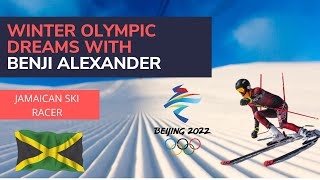
Jamaican skier Benji Alexander started skiing at 14 and is chasing a Beijing 2022 Olympic spot in giant slalom. He credits coaches like Nils and the Shield family for breaking down fundamentals, and upgraded from a 70-flex boot to a 130-140 flex Rossi to unlock new performance levels. Elite skiing, he says, cannot be self-taught.
Chapters
Who doesn't love a great underdog story? Now in today's Big Picture Skiing podcast episode, you're going to meet Jamaican athlete Benji Alexander. Now Benji Alexander has hopes to be making the Beijing 2022 Winter Olympic Games competing in GS ski racing. Now this is a pretty incredible story, like you know, you think Jamaican, Cool Runnings, Eddie the Eagle, there's this kind of Yeah, underdog characters. And it's, it's incredible because Benji only really learned to ski like very recently in the last few years. And so this is a, like, this is such an inspiring conversation and inspiring story to hear for many reasons. But I particularly wanted to talk with Benji around like skill learning, taking on skiing and like with him, everything is so fresh. If you talk to most athletes that are going to the Olympics, they will, like, they're so attuned and so used to what they're doing, they don't really even really pay much attention. But everything is so new for Benji. So coaching experiences, equipment changes you'll hear about here, and how like critical and crucial that is to his progress, uh, how people coach him, and you know, hearing things 10 times, and it's just the slight arrangement of the order of the words or intonation used, that you finally get something that you've heard from the very beginning from everyone. So I really wanted to do this conversation, record this conversation, because I think it will help you, the skier that, you know, doesn't have all the time in the world to be just focused on skiing, because you'll hear from Benji really like number one on the importance of, of having a coach, getting coaching. Like he says, like, that is absolutely critical. Number two, equipment importance. So for him, like, figuring out going from basically like an 80 flex boot to a proper, like, now going into a racing boot, that's huge in, in a very short period of time. He talks about like skis, like the excess, like starting on a, on a twin tip and going to a proper full-blown, uh, proper World Cup ski. So, all these things are super fresh in his mind, and so it's very easy for him to recall and, I guess, give you an insight into that.
You have come from DJing into skiing.
Yeah.
And is it true, like, so you didn't ski when you were a kid, really?
Nope. I had no access to it. Earliest memory of skiing I had is at the age of 14 when all of the kids in my class were able to go on a ski trip to Canada and my parents couldn't afford it. That was my— that was the first experience I had of skiing. And so yeah, it wasn't until much later in life that I really got going.
Yeah, okay. And when was that exactly?
Um, yeah, so I was first exposed to skiing like firsthand by seeing some of my closest friends do it at a heli-ski lodge in British Columbia British Columbia, Canada called Mica. And I was flown out there as, as a friend and as a DJ. So there were maybe 5 of us that weren't skiers. And what they decided to do is have the non-skiers jump in, jump in the helicopter and meet them at the top of the mountain for lunch. And first of all, just jumping in helicopters, it's really fun anyway. But, but secondly, watching my friends put on these skis in this terrain in the middle of nowhere, I'd never experienced even snow like that, let alone being up in the mountains. I spent most of my adult life chasing the sun and beaches. And I just decided there and then that I wanted to be able to do this thing with them. It's an annual trip that my buddy kind of hosts and puts together, and that was the impetus to get into skiing. So December 2015.
That's amazing. I mean, I, I know of Mike at Heli Ski Lodge, and I mean, if you're going to be introduced to skiing, that's about as spectacular as it gets. So you, you then go Like, at what point did you want to, like, take on this— this is like a crazy feat. It is— everyone refers to it as like Cool Runnings, but to become the first Jamaican skier at the Olympics, like, when— what was it, a dream? Was it a bet?
Was it—
what was it?
Well, just to clarify, Jamaica has had a freestyle skier at the 2010 Games, Errol Kerr. So I'm always hot on clarifying that. I don't want to take anything away from there. It was a achievements. But it was a, it was a combination of things. It was attending the Olympics in 2018 as a spectator and realizing that there were only 3 Jamaican athletes. It was putting an end to my DJing career in that very same year. And 2018 was also the year where I really got the ski bug. I did a week in Canada, a week in Nasteko, and then 3 weeks between Argentina and Chile all in the same year. And I just was addicted to the sport. And being mixed race, you always represent the minority of whatever group you are in in that exact moment. So it changes from room to room, right? In Austria, I'm always the Black guy, but in London or in America, I can quite often represent the white person. So, or Carlton, as they would jokingly call me, with reference to Fresh Prince of Bel-Air. So because nearly all of my ski friends are white, the jokes are, you know, thick and fast. Cool Runnings, Jamaican on Ice, you should go to the Olympics. And really, that was kind of the inspiration for digging into the idea and seeing if this idea had any legs. And that all came over that, like I said, that 2018 period.
Yeah, amazing. And so, I mean, fast forward a little bit to now. You are in you're training at Hintertux. Like, it's— how many months away exactly are from the Winter Olympics?
So the opening ceremony is just under 4 months away, February the 4th. I need to be qualified by the 16th of January, which is just under 3 months away. We're recording this on the 19th of October.
Okay, okay. So what are you— you know, because the technical scare in me I'm really interested in hearing what— well, here's my first question. What is the hardest thing about, about getting good at skiing? So what's, what's, what do you think that is? What's been the most difficult thing?
Yeah, having, having an appreciation for how technical the sport is. So I was pretty good at just going fast, right? Any idiot that doesn't have much care for their life or limbs can go pretty fast. And I was that idiot, you know, I really enjoyed hitting like 66 miles an hour in, in Revelstoke just by sending my skis straight down the hill. And I thought that would make a good ski racer out of me. But actually, the two things are very, very different. The hardest thing is it's almost like, it's almost like being taught golf at a late age. And the person that is teaching you has played for decades, and they give you 10 different things to to think about as you're going down the slope and as you're making each turn. And it is impossible for the human brain to be thinking about all of these things at the same time without other things falling out. So things that you may have just held as just being given start to fall out. You start to make mistakes in other areas. So it's just an insanely technical sport, understanding how the ski is working, how to get your body in the right position to make that ski work. And especially for my discipline, um, where it's kind of— there are some speed elements to it where we're going pretty fast, but we're having to get this 30-meter radius ski to bend around some pretty aggressive gates and on some pretty tricky terrain, especially here in Hintertux where I'm training on the frozen wall, as it's known, on the hardcore glacial ice.
So I mean, that comes down to, I guess, edging, really, like refined skills. In edging. Have you had— because it's interesting you mentioned the 10 things thrown at you.
Yeah.
Who's been, or what's been the best coaching experience, or, you know, week or month of skiing you've had where maybe that has been managed better, uh, by either you like saying, stop telling me 5 things, just tell me, you know, or the coach recognize that? Because like, I think that is a really important skill in a coach, and I'm on a quest to like be the best coach through online means, you know, funnily enough, but ever. So I'm really like— your experience, what is— is there, is there an experience or a coach that's given that to you?
Definitely. So, um, the best coaching that I'd ever had was when I came out here to Austria for the first time in May and the initial plan was just to be in Austria for one month and then head to the Southern Hemisphere. And by virtue of being connected with, uh, one of the former top coaches from the New Zealand team, a guy called Nils, he gave me some advice and said that I should come here to Austria. And so I'm working with the Shield family— Marley Shield, Bernadette Shield. Their family have a racing camp called the Shield Racing Camp, and Stefan, who is one of the owners, partners of the business, was the first coach that I really had that said, okay, let's see what you have and then let's just break it down to where I think your level of understanding actually is and not assume that someone's taught you this before. In life, there's always the assumption that you've learned something from the previous guy, especially if you've been able to kind of fake it until you've made it type thing. And in skiing, as you get into more complicated terrain and more complicated conditions, if you don't have the basics dialed, you are not going to get anywhere. You're going to hit a brick wall very, very quickly, and you're not going to progress beyond that. And so having Stefan just break everything back down to like thinking about angulation of not only the ski but like hip flexing, making, um, flexation in the ankles, body position to actually make the skis work, and where my center of gravity was— things that I hadn't really worked on with the coach before because all of my coaching up until that point had been with other races. We just started to break down huge barriers. And what's really interesting, I've had the opportunity in my life to ski with some really, really good skiers, including current US team members, and lots of the things that they told me were starting to make sense. But when they told me, they didn't realize that there were 10 steps on that ladder that I hadn't climbed up yet in my knowledge and understanding. So the advice that it they were giving me was just falling on deaf ears. But as you start to work through those fundamentals and build up, all of those things that people have been telling you for the last 2 years start to click and you're like, that's what they meant. I get it now. I understand that sensation. And that was a really— when that starts to happen, you know, like you have 4 or 5 of these things just clicking into place, that's when you know you're making huge progress. And that was such a great experience. I probably did more in those 22 days of training with the Shield Race Camp than I did in the rest of my ski career combined.
What was going on with your ski stance that they— what did they, what did they correct there? Or, and maybe even to go further, was there— because we capture under a feeling, right? When you get told this different thing, you go, oh right, I feel the difference. What was it? Was there something with your ski stance that you, you fundamentally needed to adjust?
Yeah, there were a million things that were different. So for the listeners that are not watching, the, you know, you just did this hand movement, right? It's like a tree falling forward or leaning forward. And Stefan, you know, after a few days, like, why are you doing this for this tree falling thing? Like, what's going on? I'm like, well, everyone's told me I have to pressure the front of my boot. He's like, yeah, but not like that. You need to be in an athletic stance, and that's how you generate the pressure in the front of your boot. So even something so fundamental You know, when someone tells you put pressure in the front of your boot, if they don't give you the nuances of how to get that pressure there, then actually you— the whole biomechanics of everything else is out of whack and just doesn't work. And so when things like that started to click into place, I'm like, oh, well, now I understand how I can actually make those shapes that in my head look like what the racers are doing. It doesn't look like it in the videos yet, but I'm starting to make progress towards that.
Like, what is your— if you could describe what a freeze-frame side-on view of your stance looks like now compared to before the, say, even the Shield camp, what do you like? Would you see more, more flex in your hips? Would you see more flex in your knee? Like, what do you— what— how would you describe it now?
Well, there's more flex in my ankles, my knees, and my hips are further forward. Whereas before I was kind of leaning forward almost like Moonwalker in Michael Jackson, you know, that moment in the dance scene where he's got that like 45-degree of his entire body. But it's impossible to have your heels grounded on the inside of the boot if you're doing that. And then everything else starts to go wrong because you don't have balance. So we've really, really worked on that and made some huge steps forward. And when you get onto some of these really icy surface, these injected courses, If you don't have that part right, you, you're, you're dead in the water.
Yeah, what happens?
It is just impossible to get that edge in, and what you end up doing, it's almost like, you know, driving analogy, it's like going around a corner where it's very slick and you just kind of have to wait for the car to grab before you can actually successfully try to get that ski to go across to the next gate, and it's incredibly slow and very frustrating. Um, yeah, and so yeah, just finally figuring out how to make that work. And there's still lots of work to do. I'm not, I'm not fully there yet, uh, and I'll probably never be down to like, you know, 50 points like these, these guys that have been racing all their life. But seeing the path to get there is such a wonderful thing.
Yeah. And do you, do you like drills, or do you like just being told something and you've sort of skied a lot doing it. What do you like to work on something?
Yeah, because, because we have such a short amount of time, I actually find it really helpful to just do a lot of drills to, to nail something, whether that's your hand positioning or whether that's just overly exaggerating on something, skiing on one ski to get the sensation of what it's like to be properly positioned, you know, like massively exaggerating by fully lifting that inside ski off of the ground when you're making a turn. I really enjoy the drills because it gives you a quick shortcut to what the sensation is, as opposed to kind of like doing laps where you're not gaining any, any, any kind of knowledge or any kind of that sensational feelings that you're looking for.
Yeah, drills are— I think some people I mean, I guess it's like if you're going to on a ski holiday, uh, you might think, oh, it's not really worth doing some drills. I mean, that would have been you, right? You were like, how fast can you go? That's where you're getting your thrills. Um, but you know, I, I think that's just a good point. It doesn't even have to be that much, right? Like 10 minutes of doing a drill is actually a very, you know, that's probably 2 whole runs even. Yeah, and so it's not that much time really, but the benefit, like you said, of exaggerating the feeling, that's what's helped you start to make some steps towards being, you know, a competitor at the Olympics, because that's a bit— it's a big step. And, uh, yeah, so I mean, I mean, you're now training it on the glacier. There's some of the Olympic athletes you're going to compete against, so they're— yeah.
Absolutely. Yeah, so, um, some of the best in the world are here. Alex Robinson was here last week, Petro Vlahova was here last week. Um, and what's really interesting is when I look at the board that shows where all of the teams are assigned their lanes, I think I counted 20 different national teams 2 weeks ago. So it's just absolutely insane, um, just by virtue of the fact that the Southern Hemisphere is closed for non-residents and that, um, and that there aren't that many glaciers that offer good race training. There are maybe a half a dozen places where everyone has to come to, and that's, and this is one of them. Uh, and I'm very fortunate to be here. And there are many days where the conditions are just so damn hard, like that rock-hard glacial ice. You literally feel like you're skiing on polished concrete, but it's actually really good to train in conditions that are worse than what your race conditions are likely to be. Because training in a, in a terrible condition or really challenging condition and going to an easier race, it's gonna give you a much better chance at that race, which is where it counts. Than training in perfect conditions and then going through a race where the light is flat or, you know, it's a little bit icier than you're used to. So I'm actually getting a lot out of this training in really difficult conditions. I think when winter properly kicks in and there's a lot more normal snow around, it'll be so much easier for me.
Yeah. Are you— because you have to have sharp, sharp, sharp, sharp, sharp, sharp skis— are you tuning, or is someone else tuning your skis for you?
My coaches are tuning for me. The first time I tried to like, uh, get everything set up in Austria, I sliced my hand open. The coach was like, okay, we'll leave that alone for a while. So I have, I have the, uh, the scar right here on my right thumb, which I think is kind of like the rites of passage or badge of honor for all ski racers, uh, coaches included. You know, the very next week my coach sliced this hand on my same, on the same ski, you know, but just like A slip of concentration or tiny equipment malfunction can be pretty, pretty treacherous with these skis just because of how sharp they need to be.
Yeah, I don't think people realize, like, that's like, you know, that you can find a video on YouTube of people trying to ski like the start of the, of the Hannekam. Yeah, and they just, they can't get it like any kind of edge at all. And even like people that go there and I know a friend has marshaled the side of like the run, and even with like a decent pair of sharp skis, you won't really get a grip. So like, there is, there is quite a difference in the equipment you get to use as an athlete on that stuff and the level of sharpness. And when it's bright, it's actually quite fun, isn't it, to ski on that? And like, you, you really feel the snow like for every inch of it.
Isn't that right? Yeah, so what, what I've taken to doing across here is, because the conditions are so firm, like this glacial ice that's been there for 1,000 years plus, plus, plus, what I'll tend to do is, if we, if we're set up in a way that we'll be doing drills or free skiing in the morning to work on things, and then we'll jump in the course in the afternoon, I tend to keep one edge for the morning and for the first two runs in the afternoon. And then when we're ready to kind of like say, well, let's have a look at how fast we can come down, then I'll flip the skis around. So I have that fresh edge and the difference between that second run with the, with the edge that was just tuned the night before, but maybe I did 10 runs and now that fresh edge that hasn't been touched is night and day. As you said, you can feel the contact all the way up that edge, like through the turn. But the conditions here are so firm that that feeling only lasts for like 3 runs.
Yeah, that's amazing, isn't it? Like, 3— think about that, 3 runs. Because, you know, like, like, as an advanced intermediate skier, like, I'm sure people are typing into YouTube how to ski on ice. Yeah, but really, like, it's, it's the same as, as any— anywhere else. It's just magnified and And the best thing is your equipment has to be, as you just mentioned, 10 runs difference, and you basically start to not be able to ski that course. You can't make that, that gate. Um, it's, it's real, it's incredible.
Yeah, yeah. And that's actually something I realized, the mistake that I was making. So back to your earlier point about skiing equipment, equipment is, equipment is, it's so huge. I'm about to I'm about to go into my 4th new boot in a 12-month period because you can't put a beginner into a full-on World Cup race boot. It just, it just doesn't work. And 12 months ago, I would consider myself to be very, very kind of like intermediate beginner level. Um, as with skis, the slightest difference between what I was using initially, which was the old, um, old GS 35-meter ski, which was just the worst bloody ski on the planet, I want to burn that ski, then into like a secondhand, uh, 30-meter GS ski, and then into a brand new ski, and now hopefully another brand new— like, you know, I've made all of these improvements in, um, in, in equipment alongside in my improvement— improvements in technique. And it's been a little frustrating to spend the additional money, but it almost feels like the equipment has leveled up as my as my ability has leveled up, and it couldn't have worked any other way. If I'd have gone too fast, too quick, I probably wouldn't have understood what was going on, and it might have hindered, hindered my, my kind of chances. So looking back at a lot of my races, I don't think that there isn't a single race that I've competed in so far where I've had the chance to sharpen my edges between runs. And that's something I'm going to change in this last— between the first and second run, that is, where all of the World Cup guys are doing that, because you want that perfect edge, right? And that's something that's going to change in this dash towards qualification. Also little things, you know, like I'm a tall guy, I'm 197 centimeters, which is 6'6" and change, and I was using 125-centimeter poles just until last week, and, and, you know, I'm hanging out with athletes that are 30 centimeters shorter than me that are using the same size pole. I was like— and that's because my technique was so bad before but my hands would be down by my side, and I needed the short poles because anything more than that was pushing my hands into a correct position, which I didn't like. Now I've got the 135cm poles, and actually I might have to reach out to Leki again and ask them to give me one more size up. But it's like, it's so crazy, the, the detail, the nuances in all of the equipment, and then all of the, the, the details on exact body positioning and and, you know, how to get that weight onto the ski. It's, it's— I'm blown away by it. And I'll be very honest and say that I completely underestimated the magnitude of the challenge when I first said, okay, let's do this thing.
The, the equipment— I know it's like— and I think you, you make a good point there, going through the steps and like you're building up a, a memory bank of like feelings and, oh right, okay, I'm feeling these sort of sensations from this type of ski. Um, and then now you can be more— you can actually give feedback probably when they give you maybe, hopefully, a few pairs of skis to try, right? And you go, oh, I like this one, this is helping me with my next technical element I'm working on, it helps, it helps my 6'6" frame. Yeah, right, because I'd imagine you're like, uh, Like, for instance, what, what skis are you on now? What, what's the newest one?
Uh, the— I'm on the Rossi, uh, this, the standard FIS GS ski. So it's 193 centimeters, 30-meter turning radius, 65 millimeters underfoot.
And do you reckon from that ski to the one before, could you just— do you think, is it just— is it simply you just have— you have a better feeling for the whole entire edge length of the ski. Would that be fair to say?
Um, I just found this ski, compared to the ski that I had before, which was the exact same ski but maybe 4 or 5 seasons old and secondhand, this ski, whatever Rossignol have changed, it's just a lot easier for me to bend and to make it start to do the things that I needed to do. That was the major difference, and honestly, I didn't even realize that I was putting myself at a disservice so much by having old/inferior equipment. Uh, it wasn't until March of this year that I, that I actually made that change and got onto this ski.
Yeah, okay. So you, you mentioned before, you— did you used to be coached by Nils?
No, I was connected to Nils by, uh, by a friend of his, a mutual friend that we have. And Nils was fantastic. He gave me an hour, an hour and a half of his time and just told me everything he thought he knew, he knows about skiing, and everything he thought that I should know about skiing. And he's the reason I'm in Austria. Uh, he's— he was awesome, such a nice guy.
Yeah, okay, okay. Because I'm wondering at all, um, but like binding placement, like even like, have you played with adjust to the position?
No, no, no, not yet, not yet. That's something, you know, I think it— I think it was one of your podcasts that I listened to, and there was someone that spoke really in depth about that. They had a machine or some kind of way of deciding where the person should be on the ski. And I, yeah, I was very jealous of the people that were able to get access to that machine or that coach. But that's definitely something that I feel might be able to help, and I need every bit of help I can get.
I should put you in touch with my friend Tim Cave, because he— so he represented New Zealand, and Nils was his coach. And he, uh, he's done— he's not the guy you're mentioning, that's, um, that's another guy, but Tim has done a lot of experimenting. He used to coach Alice as well, right? And, and used to actually change her bindings without her knowing to see what would happen with her. So anyway, I might put you in contact with him just to give you some ideas. He's definitely the person of— because you never know, what if that just changes for your right, like, like half a millimeter? Um, because No, I, I, I'm sorry, half a centimeter more. I know when I do that, that's the difference between feeling my athletic stance is naturally there and I'm— and in the middle of the turn, because you know that feeling in the middle of the turn, you feel like you're literally in the middle of a bent ski. You're not like a bit forward of it so it's breaking away, not a bit behind it, but there's this. And so, you know, it's especially interesting what size boot are you? You must be a pretty big—
uh, no, actually I'm in 27.5, but going down to 26.5, I believe.
Okay, yeah, yeah, yeah. Okay, so what— so maybe that's— let's talk about boots because you mentioned like when we— you got in touch that you've actually worked with Brent. Yeah, yeah. So, so can you give us some insight into the journey in equipment from, you know, you mentioned like a beginner or more recreational boot upwards now, like what did you notice?
Yeah, so I started off with a 70 flex Dobello boot. Wow. You know, and I weigh like 90 kilograms, so a 70 flex boot is just ridiculous. I, um, I actually took that boot with me and my twin tips to a glacier in 2019, for my first ever race training at the Mount Hood Summer Ski Camp. And I was in for a rude awakening. Firstly, a pair of twin tips that hadn't been tuned in over a million vertical feet. Um, I had a pair of ski boots with 70 flex. You can imagine there wasn't much happening there. And I still have the DVDs from that session, which are incredible. And even at that, even in that 5-day period, the last day, you know, after day 1, I decided to rent a kind of race ski and on the final day I rented a 120 flex boot, and the difference between that and my DeBello was, was night and day. And the coach was just like, wow, you've improved massively. I was like, dude, I can actually push the ski because I have something to push against in the boot now. But yeah, then I jumped into a Lang RX, not the RS, RX, which also has the walk mode. Did a lot of backcountry in that, which was great. At the start of last season, I jumped into the Head Raptor, but not the racing version, the freestyle boot, accidentally. But again, all of these mistakes I feel were helpful to get me to where I needed to go. And now I'm in the Rossi World Cup CB boot, CB, which is the same as the, the Lang RS, same boot, different colors. And that was, that was under Brent's recommendation. So I'm quite skinny in my half. And so he's like, this boot is going to be more apt for your, for your kind of like your profile. He's like, the rest of the boot we can, we can figure out. And I did listen to the podcast with Brent. He's a wealth of knowledge. And I literally spent the entire day in the shop with him, bounced across to the mountain, came back, made some modifications, walked around in the boot for a while because then the hill was closed. And I think I was in there for 7 hours with him. And I did do as he said, and I bought them, brought them a six pack. Yeah, and just, uh, just 2 weeks ago I was measured up in this fancy machine here in Austria, um, and they're like, I think it's time for you to go down to a 26.5. So that's one more size. My— on the machine it says I'm a 27.5, but they really just feel that that's my big toe and they can blow that out. The rest of my foot would be able to slide into a 25, 26.5 without too much pain. And I mean, Niman is 2 sizes bigger than me in normal shoes, Steve Niman, and he's in the 27.5. So even he was like, dude, you need to be in a smaller boot.
Yeah, okay.
So that's probably the next step.
But what is— is it a Rossi again, the new boot?
I am on the cusp, I hope, of signing a sponsorship with, with a big company. Okay.
So yeah, so I can't say just yet, but, but, but you'll be in a proper, like, you know, where that— like, I know Dalbello, just, they call it a soft, medium, or hard, you know. Like, it's— so you're probably in like a 150 flex type boot now that you'd be looking at something like that.
Well, the ZB is of the range of like a 130, 140 40. The, the next boot that I'll be in probably is going to be in that same ballpark, I feel.
Okay, okay. And did you— you haven't tried this new boot on yet, like even put your foot in?
Not yet. So I'm— the reason I haven't yet is because, uh, I'm trying not to reveal which company it is, but I want to— I want to use the ski first before signing anything to make sure that I'm not hurting my chances. Because I'm on such an accelerated process to the finish line, and as I said, uh, a few moments ago, only 3 months away from qualification, I want to make sure that I can jump on that other ski and figure it out within a matter of days and not feel like it's something that I just don't understand. Um, because if it's going to take away a month of time, I just don't have that month.
Yeah, absolutely. Absolutely. Yeah, that's tricky.
That's tricky. Yeah. In an ideal world, we'd get to— we'd get to test everything through the summer and then make our decisions and then be like, okay, it's good to go. But my first race is going to be the 13th of November, so I'm on the clock.
Totally. Yeah. And I, I think, um, like, I'm just really— I'm eager to hear what you feel in this, in this new boot. Um, because as you know from my podcast and everything, like, I'm really into that, that side of things. Um, yeah, and it— but even to the point of like, so you're starting with a smaller size and then they're gonna have to move the boot out for you. Yeah, even that has its advantages because you, you can kind of move your— this is sort of a recent area I'm interested in move the, like, the inner side, the, the inner portion of your arch a bit closer to— and, and like tinker with exactly where that is over the edge, right? You know, like where it's sitting relative to the edge. So when you stand against that edge on that injected slope and you— and your body is trying to basically stop the ski from sliding out or adjusting too much fore and aft, yeah, you're going to be in the position to be able to just really tweak where you want to sit instead of it saying, no, no, this boot puts you right here, suck it up, you know, you try and, uh, figure it out.
So yeah, you go ahead. What's really interesting as it pertains to ski boots and modification, um, after I finally got everything fitted and felt good with, with Brent, it really took me the better part of 10 days to figure out what was going on, just because the boot was so different to the Head Raptor that I had before. And because for the first time in my life, I had a proper boot fitter slash, you know, orthopedic surgeon— orthopedic, uh, you know, qualified orthopedic or whatever—
podiatrist, sorry.
But Brent is— he— for the first time, I had canting going on in one of my boots. And so it's amazing how when you just change the tiniest thing— and he only canted me by a half a half a degree, all of a sudden I can't like find the edges because the muscle memory, the neural pathways that are, you know, have been built over the last couple of years as to how to engage that ski are now off by half a degree. And it really took me some time, and I, I'll be honest, I hated that boot for the first like 10 days, but I knew it was the right thing and I just had to keep with it and keep kind of like keep pushing through it and Unfortunately, I had— that was the period I got to ski with, uh, with Nyman in Jackson, uh, someone from the board of directors of the USSA. And I was like, I could ski much better than this, but this is a brand new boot.
I don't know how to use it. Ah, no. Yeah, okay, okay. Hey, so what are you— what are your coaches working on with you specifically now? Are you more working on sort of tactically what you're doing in the course, a little bit less technique?
What's, what's going on? We're still very technique focused. Um, I've had the opportunity to train with Sarah Schlepper over the last 10 days here. 5-time Olympian, 4 times for the US, 1 time for, uh, Mexico. She's running a camp out here right now. She's also going to be racing in Solden on the weekend and going to the Olympics. And just getting the opportunity to train with someone that's been there, seen that, done that, and also ride in the same course with her has been phenomenal. And what's really interesting is by working with a bunch of different coaches— I'll be back with the Shield family in 10 days' time— but by working with a bunch of different coaches, it gives you the opportunity to kind of pull the best pieces of information from each of them that work for you and, and forget the rest, as it were. Um, so we're still very much technique focused. And just as I said, it's almost like a drill that when you're on a steep part of the course, the way you lift that inside leg to get it out of the way is almost like— it's almost like you're performing a drill. But actually, by doing that and making sure you have no weight on the inside leg, it actually makes that outside ski grip and work better on these hard ice surfaces. So, you know, that's the full circle of how a drill is great to get the sensation, but then you do the same thing again in, in the actual race course and it just really makes that ski work. So it's, it's been fantastic working with her.
So that was— that was because—
were you skiing today?
Yes, ski with her today as well. Yeah, so that was today. You like— that was an experience you, you really, uh, like sort of putting that memory in the, in the brain, right? Do the drill because you could feel, oh, suddenly you actually grip on that steep section and not you know, you pull your line in a little bit tighter and—
yeah, awesome. And yeah, and it just forces— it forces you to be on that outside ski, right? By doing the drill in the course and almost aggressively lifting the leg up. And it's not— the interesting thing is, honestly, you're not actually having to lift the leg off of the surface, you're just bringing it higher up the surface. And if you look at these incredible freeze frames of people going around a GS gate where they have that outside leg straight and that inside leg is almost— their knee is up towards their chest. That's what they're doing, they're getting it out of the way, and it allows them to just stand and put all of the weight onto that outside ski. And just that sensation is incredible when you get it to work.
Do you think there's any difference because you're 6'6" and, you know, all your limbs and everything a bit different? Like, do you feel that inside leg getting it out of the way? Have you I've been working on some mobility stuff to be more accurate with it.
Yeah, so a little bit of stretching in the morning. Um, not only being 6'6" but being 38 and having my first race ever last year, there's, there's definitely some mobility and flexibility issues that these younger rippers don't have to deal with. But sometimes there are just little things that a coach tells you, like Sarah just telling me, get that inside leg up and out of the way and just stand on that outside ski. It helps make space for everything else because, you know, what's interesting about skiing is sometimes someone can explain something to you 10 times and it doesn't— it just doesn't resonate. And someone comes and says the exact same thing to you but with a different series of words, or orders the words in a different way, or just uses a slightly different analogy, you're like 'But why didn't you just tell me that? That's, that's obvious.' And then it just clicked. And so Sarah just told me that, like, today, and from last week training with her was another big step forward where we're like, 'Okay, right, I get it.' So do you think it was, it was like, because I'm hearing like this, get it out of the way and then so there's space—
is, is that probably the newest thing? Rather than just get like lifted so there's pressure, now you're taking it, lift it there's space, it's out of the way. So it's like, okay, as you're lifting it, where are you putting it? You're putting it here, up against your, against your inside elbow. What, you know? Yeah, I totally get that because there's something about, uh, like, like being able to create space to move like into that position because all these people, these good skiers, and you're probably feeling this now, is like that those positions are created because you're moving into this space. It's not like a forced— yeah, and it's like space inside of the arc, wouldn't you agree? Like, as opposed to sometimes see things and you actually would move more your body outside of the arc because that's probably the less scary way to go. Like, I would imagine that's a different viewpoint too, is early on maybe skiers look for like movements outside instead of creating that position by going inside of this arc of a turn.
Yeah, yeah. Well, that's the thing, when you try to kind of move away from the arc of the ski, you lose pressure on the ski. You, you, you really have— what I'm— what I've been learning, you know, so much over the last few months is that the reason people have always coaching hands and getting those hands forward is because what they're actually trying to do is pull your center of mass, your core, your chest, your, your hips over that ski, and just keep— as opposed to letting everything kind of collapse into the middle of the turn, which for a beginner skier, I thought, I thought that's what you were supposed to do, you know, almost if you were standing straight and not having that upper body, lower body separation going, and it's just impossible to get that ski to do that thing if you don't have the mass, the core of your, your being, your essence, your body over that ski. And that's why you have this upper body separation from, from your lower body. And this is another, you know, tip that I've been told a million times over the last 3 years that made no sense to me until it did. And there might be people out there right now that are saying, what do you mean by separation of and lower. But like, it doesn't make sense until it does. And skiing's so complicated and finicky like that, that it's just like you have to lead people by the hand step by step. And if you miss any steps, you're going to lose people.
It's so true. And I think that's where, like, that part is, is so true. Like, the, the typical phrases that, that you, uh, you hear as a skier, so like the getting forward get over your outside ski, all those things as you're describing, like, yeah, you don't know it until you really feel it. But now you'd just be like, yeah, just get over your outside ski, right?
Right.
But, but telling that to you yourself even like 12 months ago, it wouldn't make any sense. No. And, and so, so with that, people hearing this, you know, maybe they haven't been skiing for 15 years and they still get told by coaches do that. What, what's your suggestion? Like, yeah, what do you think it is? Do you think it is the fact that you've been able to get access to some many different people, and so it's maybe these slight different perspectives that's key? Or is it just part of the journey? Or, or like, what would your advice be to these people who are like you 12 months ago trying to figure out what the F this outside ski, for example, pressure is?
Yeah, coaching is golden. There is no replacement for it, I'm sorry to say. I would love to be able to say that you can just look at a few YouTube videos. You need to have a professional look at what you're doing, and that can happen remotely, right? You can send videos and the guy can tell you something, and hopefully there's a, a very quick high-frequency feedback loop, be that that you get back the very next day at the latest, or maybe an hour or two later.
Excuse me for interrupting here, I just want to do a quick plug for myself, Big Picture Skiing, and my co-coach Sam Robeson, ex-World Championships ski racer, on the importance of coaching. So you heard Benji talk about it, just how, how important that is. And so you can get access to myself and Sam through the Big Picture Skiing Academy program, where we do half-season or full-season coaching or private lessons. And so that can be anywhere, you can be in Utah, I can be in Canada, I can be in Australia, you can be in Europe, doesn't matter, Japan, and you can send videos, you can join weekly classes to cover topics, education, theory, exercise, advisors, just basically everything. It's like going to university for skiing with the Big Picture Ski School. And so yeah, shameless plug, if you're interested, you can head to bigpictureskiing.com to find out more about that. And in the top row, you'll see a tab that says Academy. You can click there to find out more, and it is an application process because there's only two of us, so we can only take on so many people. But if this sounds like you, you'd like a coach to work with you for the whole season and realize your skiing dreams, then head on over there and check it out. Okay, back to the interview with Benji.
Because of how technical the sport is, you're just not going to figure it out yourself. It's just not going to happen. And a good analogy would be, look, you could grab a YouTube video and figure out how to complete a Rubik's Cube, and you could do that in an hour, or you could spend 1,000 hours and still not get the Rubik's Cube figured out. And so at the end of the day, I know coaching is quite expensive, and this is the problem we have in our sport, that the equipment is expensive, the lift tickets are expensive, especially in America, um, and coaching is expensive. But if you, if you want to get better, there really is no other way. You just you just gotta have a good coach that, that knows what they're seeing, because they're seeing things that you don't even understand, and they're going to tell you to do things. And maybe the piece of advice is, you know, I, I finished university studying engineering, so I always work better when people say, do this with your hands or your body because— right? So you've got to figure out if you're a learner like that, if you need to ask that because, make sure you're working with a coach that can tell you the reason why Otherwise, find another coach. Um, and just, just trust in what the coach is saying, right? That's coming from a wealth of knowledge that is ingrained over, over many years, decades maybe. And then that is standing on the shoulders of giants of, you know, coach training before that. It's just, it's, it's tough. That's, I mean, that's the— if there's one takeaway from this this entire conversation. Ski racing and just skiing very well is tough, really tough.
Yeah, this is what— yeah, I can 100% agree. I think it's, uh, yeah, I think it's incredible you're taking on this challenge. Also, I think it's pretty unique you have this ability to, to set yourself that challenge, right? Like, you know, for me Uh, it's like you described. I listened to an interview, like, there is this sort of set— this, this opportunity came up because of, like, who your parents were. And so you can put yourself in this unique position to give yourself this challenge. And I think that's really cool. I don't think, you know, not everyone has to try and race, ski race for their country if they come from another, uh, you know, a non-skiing type country. But I think, I think life is totally about, you know, what are you gonna— when you're on your deathbed, what are you gonna say you did? And, and so, you know, you're mentioning you're burning a hole in your financial sort of like pocket, but what are you gonna do with your life other than find an amazing challenge like this and, and learn? Like, I imagine you've, you've learned so much and grown in a way, you know, that's It's a pretty, uh, typical thing to say, but would, would that be fair to say? Like, out thinking outside of just skiing? Yeah, you've— it's because it's like you've got this life, what are you gonna do with it?
Yeah, I mean, I truly believe that life should be these series of awesome chapters of fun stories. And I say the same thing, that on your deathbed you can just go through these awesome moments in your life. Um, and so getting from never having skied before on a mountain to the Olympics in 6 years is a pretty audacious story that I'll be telling on my deathbed many years from now, I hope. But there's definitely something to be said in the journey of, of, of learning and improving at something and sticking at something. There are many opportunities where it feels too hard or where it feels like Progress is slow, but just the tenacity and sticking at something is, is really where it's at. And one of the interesting things that I hope my story does give to people is that if I can do this in 6 years and, and maybe someone's 40 years old or 50 years old and they've never really gotten off of the green slope, or maybe they've never put skis on, I hope that my story, as you said, doesn't necessarily inspire them to want to go and ski at the Olympics for their country, but can inspire them to become a better skier and get something out of this sport because it's such an incredible pursuit. Um, the sport really doesn't make sense, you know, in the multi-million dollar infrastructure to shuttle people up to the mountains so they can put two planks of wood on their feet to come back down the mountain. And like all of the mechanics and the engineering that goes into the ski boots and the skis and all of that, it just shouldn't make sense. But when it works, It is just one of the most insane feelings, and it's just— it's awesome. I love it.
I, I really love it. Yeah, absolutely, absolutely. Well, if we, if we wrap up, uh, the conversation here, I, I think it's fair to say, like, you're still faced with some challenges ahead, and I know, like, support for you would be greatly appreciated. So I'm— I think we should say on here, like, is there anything you're currently still needing kind of help with? You know, shameless sort of plug or whatever, as you, as you come up, even if it is just people to follow your Instagram or— yeah, what could it be? What could we do to be a part of this, this, you know, crazy journey?
Yeah, amazing. Thank you. So following the Instagram is the easy one, and I try to keep my content lighthearted and, and even with some comedic value. So that's just Benji, B-E-N-J-I dot Ski. And if you type that into your web browser, you'll also find a bunch of interesting links there. Um, I think the biggest support that I need is just if someone's listening to the story and they think it's interesting and they know a company or run a company that might be interested in sponsoring or supporting the journey, then that would be really appreciated. Just those intros and the connections. The, uh, the average Olympian leaves the Olympic Games about $50,000 in debt, and skiing is not the average sport. It's gonna be a lot more than that. Um, and so yeah, I'm just— I'm open to have conversations with companies and brands that are looking to be a part of the story as well. So that's, that's a big help if anyone listening can, can think of anyone that they would like to share the story with.
But best way is, is there an email or what's the best way to contact?
Yeah, so you can get me at, uh, me@benji.ski, um, and everything is at benji.ski. You'll see, uh, you'll see the, all of the links in there, my deck and some fun videos from the BBC and NBC. And, you know, I've been very fortunate to get a lot of coverage by virtue of the outlandishness of the story, the, the Jamaican connection, the diversity angle, um, the latecomer to the sport. And so the ski industry in general has just been really awesome, um, and they've got a couple of really nice sponsors already.
And hopefully with a few more, I'll get out of this, uh, being alive financially.
Yeah, absolutely.
Well, I, I, like, I would love to have the opportunity, what, maybe at some point we can sit down off camera and just even look at some video. Yeah, if you're interested, just to get another perspective again on, on what's going on. Yeah, I would love that opportunity. That aside, because that's just in the forefront of my head, wanted to mention that. But then, yeah, good, like, best of luck. I think it's, I think it's really inspiring, and, and I just want to say thank you because For me, again, trying to find out information to help others get better, like having someone like you is so unique. I don't think there's really many people, especially at, you know, an age where you can articulate things really well, that can describe this process. And, and for me, I think that's great for the people listening. And like you said, the ones that want to get better. The story's been great, so thank you so much for your insights and your time, Benji. That's been, yeah, really awesome.
Yeah, my pleasure. Thank you for having me. It's been great. It's been good to talk about this side of the sport. I don't get enough time— enough— or this side of the learning curve. I don't get enough opportunity to talk about that, so I appreciate the opportunity.
Yeah, absolutely. Well, best of luck in this lead-up. Fingers crossed. That we're seeing you on the TV screen, Beijing 2022, competing.
So yeah, thanks Benji.
Thanks, thanks Tom. What an inspiring story. I'm still pumped up from chatting with Benji, and it's sort of made me really think about what I want to achieve in the next few years in my own skiing and, and lifelong dreams. So I hope that's done the same for you. Now let's all cross our fingers that we get to see Benji on the television at Winter 2022 Beijing Olympics competing for Jamaica. On a final note, I'm just going to say that if you're interested in getting some coaching for yourself or finding out more about skiing, please, I welcome you to check out my website bigpictureskiing.com and the online online coaching section, at the top there's the Academy, you can click on that, find out more and apply to be part of that limited program. But I'd love to be able to be there as your coach, and Sam too would love to be there to see if we could help transform your skiing, and who knows, maybe make the Olympics for 2026. Thanks very much, I hope to see you out on the snow someday.
Bye.
More from Tom



Most skiers overlook how they use their poles. Try these five pointers next time you’re skiing.







