Tom Frazier - CEO, Superdad, Dancer, Coin Flipper
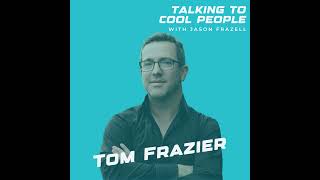
Tom Frazier, former telecom exec and founder of Redivider, flips coins to make decisions and warns that 2022 marked humanity's shift into AI integration. His sustainable data-center startup repurposes waste heat for community greenhouses. He believes AI will make a better COO than CEO and predicts one-person startups will soon hit billion-dollar exits.
Chapters
My guest on the show today is Tom Frazier. This is the second time this has happened in the history of my podcast empire. It's not really an empire, but maybe, maybe it is.
I don't know.
So I had Tom. So the way Tom and I know each other I actually had Tom on my tech podcast and we talked about some really cool stuff that he's doing in the green data center space and really cool stuff that sounds good for the world, good for businesses. And then we geeked out a little bit about both being former telecom people. We— Tom spent a lot of years at a big red company that provides lots of infrastructure for the US and elsewhere. And I spent a lot of years in telecom as well. And I remember saying to Tom at the end of that interview, after we wrapped up, I said, hey, like, I really want to have it. I want to get to know you on a personal level. So it's like almost like in a very friendly way, we've had like a great first date and I'm like, all right, time to go like get to know you more time. This is the second— this is our second date, I guess. But yeah, so Tom is somebody that I got to know from a business context. And today we're going to get to know you on a little bit more personal thing. So, Tom, welcome. Thanks for being here.
Thanks for having me. Yeah, I'm excited to chat again. I mean, what you do is, is so important in the world. I think, you know, how we communicate between people and a podcast is such an awesome medium for it.
So it is low stakes. Yeah, low stakes. You're, you are where, where are you joining us from?
Seattle. I'm at home today.
Yeah, you're at home today and you were just telling me about some horses and some blackberries and kids going off to school and everything. And, and that's what's so cool is we can, we can do that. And Tom and I were just talking about, we both have kids in school, like how we can do that and be, I don't know, you sounds like you're a super dad. I just call myself a dad, but we do that. But then we get to come on and do things like podcasts and work on our businesses and all that cool stuff. It's, it's really cool. So I'm really glad you're here. So Tom, we've got a lot to talk about today and I think we'll just start with learning something that you nerd out about. So what's something that you nerd out about?
Well, I would say the thing that defines me, which is what I would nerd out about, is learning. Like, my absolute passion is like, I want to, I want to learn everything in the entire world that's possible to learn. And, you know, obviously that's not realistic, but that's what I nerd about the most. You know, my wife will come home and I'll be watching something, you know, some crazy physics thing on YouTube, and then she comes home the next time and I'm learning how to build a drag race car. You know, there's just always— my brain goes down these rabbit holes, and I just, you know, try to experience the world.
Yeah. Were you like that? Where have you always been like that? Like, as a core part of your personality from as a child, where you're like really curious and wanted to know a lot?
Yeah, you know, it's funny, well, talking about kids, because I see those same traits in my daughter. I have two kids, a daughter and a son. My daughter, I And I see that in her as well, where she just wants to learn about something. And I've always been that way. And I think I got it from my dad at a very young age. He's very similar. He's got one of those garages that you walk in and there's all these things in there that you're like, I don't even know what half of this stuff is, but it was all created for some purpose.
Yeah. So let's see, since we have you and you're a learner and you're always learning something, What is something you've learned recently that you think we would find interesting? At least some of us, myself and people listening. And what's something interesting that you've learned recently?
Well, I spent a lot of time right now, obviously it's also my job, but I spent a lot of time researching and learning about AI and the different aspects of AI and what that is going to mean, not from a productivity standpoint or, you know, just the technological basis. but how AI is going to impact humanity. And the thing that I haven't been able to shake in the past maybe 9 months is I very strongly feel that 2022 was the last year humanity existed in isolation. You know, from essentially ChatGPT was the moment, not the product, but that was the moment that unlocked the world to integrating AI into everything.
Yeah.
And, you know, I'm really learning about how the philosophy of coexisting with technology at a very fundamental level. And it's very interesting, you know, no one knows where we're gonna end up. And there's polar opposite views, you know, regulate it because we have to put it in a box to, you know, it's gonna turn us into, you know, slaves and it's just trying to make paperclips, you know, there's all these different aspects of AI and I just, I love it because We are writing that future together as humanity right now.
Yeah, it's cool. I, I saw, I think it was LinkedIn yesterday. Now LinkedIn has a little news stories in the top right. And I think one of the news stories was next job for AI CEO. That was the headline.
Yeah.
And they got a lot of people giving feedback on it because like a lot of what a CEO does is delegate and have to represent and present and sort of things. Yes, being a CEO is obviously very artful, but a lot of the day-to-day is like AI can delegate. AI is probably pretty bet is arguably better at delegating and managing than people would ever be because there's no emotion attached. You're just like, what's the way to maximize the productivity of this thing? Now it is, that is frightening, but also at the same time, really interesting.
Yeah, I think we're for things that are very, you You know, if you, I look at the, as a CEO, I look at the lens of things and there's 3 buckets, there's people, there's process, and there's technology. And those are like the 3 core things. AI will never deliver on the people side of that kind of triad ever. It's just not, you know, empathy is a very hard thing to teach a computer and it's, I mean, it's hard to teach another human being, much less a computer. So I don't think AI would be a good CEO. I think AI would be a great COO, right? It's going to operate the company. But at the end of the day, as a CEO, like, ask any CEO, there's some portion of the success that's due to luck, some portion that's due to empathy and that decision-making of people. I don't know. I'm not sure I buy into that, that job.
Yeah, or either— well, we don't want to put you out of business or me out of business. You're, you're a CEO of a, a number of companies, and I'm the CEO of Army One over here, so I don't know. We'll see. We'll, we'll see if at some point this podcast becomes—
yeah, that, that's— sorry, that's one more thing about AI. Like, I think when you look at the history of creating companies, you know, Silicon Valley was started and it was hugely expensive to start a tech company, tens or hundreds of millions of dollars.
Yeah.
And then it became 10, $1 million. And as AI gets closer and closer and it does more and more things that are not people-related, I think we're going to see an absolute decimation of the venture capital industry because one-man show, one-woman shows can do all the things. So, these bootstrap companies of one-person empires, I think, I don't know when, but I think we will see a billion-dollar exit to a one-person company. I think that will happen.
That would be—
wow.
Tom, is it going to be you?
I mean, if—
is it going to be you?
Are we—
yeah, I'm like, I wish too.
I wish, but you know, we'll see. It's really great at writing software. It's really great at doing tasks and procedures.
Yeah.
And the more you can lean on the process and technology side and keep the people side just to the founder, I think we're going to see a huge wave of startups that are going to happen and solve major problems of the world and do so at a cost that's negligible, you know, and ultimately that's going to change the concept of money.
Yeah, that's— I had a good client of mine, he was always like, man, this management thing would be so much easier without people involved. Like, wouldn't it?
Yeah.
With their emotions and their needs and their wants and all the things that can happen in their life that have them not be able to show up fully at work. I'm like, yeah, that is, that is a benefit to artificial intelligence. It doesn't have any of those things. So Tom, let's talk about your comfort zone and let's talk first about something that you know about yourself that is definitely inside of your comfort zone that is most definitely outside of other people that you know. So something that's inside your comfort zone, then, you know, people like, they're like a, that's a hard pass. That's a no.
I think it's uncertainty. I think I am very comfortable with uncertainty, which as an umbrella includes change or, you know, all kinds of unknowable things. And just as an example, when I, when my wife and I, we've been together, I don't know, 17 years or so, we first got together. This drove her crazy and now she's accepted it. But when I travel somewhere, if we go away for like a 2-week holiday, my preference is to pick the starting point and the endpoint and every major decision we flip a coin. So, we go to London, we land in London, heads we go to Spain, tails we go to Italy, tails, boom, we go to Italy. Where are we going to eat? We'll flip a coin. Will you take the third restaurant on the left or the third restaurant on the right? Like that, that whole idea of uncertainty, like, is fuel for me. I absolutely love it.
Wow. Yeah, this is a good example. I am, I have a little bit of agita just hearing about this right now. So I'm like, I don't, I'm trying to, you know, I'm thinking about that for me. I love the restaurant idea. But the flip a coin to go to a different area, I'm like, no, that is definitely not comfortable for me. Because I want to know, I want to know when we're going to be there. I want to know some of the things we're going to do. But the food thing is cool. I like that. I really like that you're traveling, you're just like, hey, let's flip a coin, we're going here or here. Interesting. You remind me of— yeah, if you're a comic book, that's what— isn't that what Two-Face does in one of the Batman movies? He just flips a coin to make decisions about like, we're gonna flip a coin to kill this person or not, or like, I'm gonna go and make this, do this crime or not. I like that. It's kind of like a mastermind. I like that.
Well, the reason I love it is when you plan, again, just staying on the holiday kind of idea, when you plan a trip, I so many times I've been disappointed from the expectation I had going in. Right? So it's like, I want to go to, oh, I want to go to Paris and see the Eiffel Tower. Oh, actually the Mona Lisa. I want to see the Mona Lisa at the Louvre. And you think you're going to have this quiet moment of inspiration seeing this great piece of work. And instead you're surrounded by 500 people with iPhone cameras taking pictures of this.
Don't forget selfie sticks too.
Yeah. And selfie sticks. Yeah. But when you flip a coin, you're like, okay, we're going to go to do this or do that. You have no expectation. And so anything from when you arrive there, even the journey to get there, you have no expectation. And so everything you're more open and receptive to, and it makes it, at least for me, it allows the idea of like this unknowable joy to come into my life and experience things with a smile instead of the stress of kind of being disappointed.
See, this is the, the, this is one of the many reasons why we're here again, because that is brilliant. It reduces the stress and the expectation, and instead you just You have to kind of, it's almost like release the control. That's so you can just enjoy the moment, which is, oh man, I love that. I'm not gonna go any further on that right now, but I think we might go back into that. But I'm really interested to hear next, what's something that is outside of your comfort zone that you know is inside of other people's?
Something that's outside of my comfort zone that's inside of other people. I, I, I'm really not good. It's, it's ironic who I'm married to, but it's— I'm really not good with blood and injury. And my wife, we were talking before, you know, my wife runs a clinic at a cancer center, and her whole job is blood, like, as a profession. Yeah. And I really, I really struggle with it, you know. And having kids, like, my kids get hurt I can put on my— there's an emergency mode and do like a super dad thing. But inside is like terrifying for me. You know, the idea of like something puncturing my kid's skin. Yeah. It's really hard for me. Really, really hard.
That is a really fascinating— that's such a fascinating dissonance between your answer to what's inside and what's not. 'Cause I like, 'cause I would say, I would say that one of the things with like injuries, especially as a, as a parent is like, it's never, it's obviously never planned and it's not like you're ever gonna plan for your kids to get hurt. But then, but the thing that's funny about that is you actually know exactly the outcome. If they scrape their knee, you know that they're gonna bleed. Now before we move on, since two dads here, are your kids similar? Do you see these two things that you just listed? In your kids about the like less planning, more kind of like freedom? And then also like, are either of your kids like deathly afraid of blood? More, even more so than most kids just generally don't like it, but that I've seen. But do you see this in your two kids?
Not really. You know, I, I think I, I very actively try to not make my problems their problems. You know, I think that's easy to do as a parent is just make it, you know, to pass on the, the failures of, of your, yourself. But my kids are very different children. My daughter started reading at a very young age. She's super academic, but she couldn't jump when she was little. You know what I mean? Whereas my son, he's the opposite. He's such a physical, outdoorsy kid, but he's not that interested in traditional learning. So I don't see those things being passed down innately in my children. But you never know. Yeah, you never know. They develop so differently over time, right?
Yeah. Yeah. So now let's say that I was able to give you 5 minutes and you got to speak to the entire world on anything you wanted to. What would you spend your 5 minutes on and what would be your call to action for us at the end of it? And everybody in the world gets to hear this.
Well, for me, that's an easy one. I literally have one tattoo and it's on my hand.
Tattoo. And I'm gonna, I'm gonna give this to the audience. It looks, it looks like a D with a dot below it. That's what it looks.
It's actually—
what is that?
It's, it's, it's an old— I'm a typography nerd as well, actually. You can see—
I see that you've got a Helvetica book behind you.
Book behind me.
A book, type book.
Yeah. So that my tattoo's an interrobang. It's an old symbol that combines a question mark and an exclamation mark. And that is like the philosophy of my life, which is I don't know where I'm going to end up, but I'm very excited about the journey. And if I was to give a speech to the world, it would be about taking journeys and same with flipping a coin and it's all interrelated for me. But have these life experiences over time, my call to action would be Everybody in the entire world should go take dance classes as an adult. Uh, you know, I started, I started learning how to do swing dancing and tap dancing when I was maybe 19. I got to, you know, a world stage level, I would say, and I've taught dance all over the world. And you can have experiences with people that you never thought was possible. So, you know, for example, if you're in a bad mood, you don't go out to go dancing and socialize with people.
That's right.
Yeah. And so, anytime you do go, you're surrounded by this great energy of people, and it's the most simple social equalizer. So, it doesn't matter if you're a Wall Street banker or a parking lot attendant, everyone has the same social capital and everybody chooses to be there and chooses to have experiences with other people. So, that would be my call to action is just be excited about the journey.
Don't worry about the journey. I love the dance thing. I actually have something similar. I don't know if it'd be my 5 minutes, but I have something similar. Every adult should go take an improv class. Yeah, similar, right?
Similar.
Lot of similarities, right? Chances are you're not going to be perfect on the dance floor. There's no such thing as perfect in improv. Like, what does that even mean? You're going to have to interact with other people, and you quite frankly don't know exactly how it's going to go in dance or in improv because you're, because you're always with a partner, with a team of some type. So I really love that, man. I got, I've got a bunch of good questions when we come back from the commercial break, so we're going to do that right now, and we're going to be back in about 30 seconds.
The Talking to Cool People podcast is brought to you by Jason Frizzell Coaching. Jason works with amazing people who are looking to find and develop their passion and purpose and create their journey to wherever it is they want to go. Check us out at JasonFrizzell.com, Facebook, or on Instagram. Jason loves hearing from anyone who thinks it would be cool to connect, to be coached, or to be a guest on our show. Email him at podcast@JasonFrizzell.com or DM him on Facebook and Instagram. And now back to some more amazing conversation on Talking to Cool People.
All right, Tom, we are back and we're learning a lot about you. So what do we know so far? I'm just, I'm thinking about this. What do we, so we know you're a world-class dancer in a few modalities. You are not a planner in some ways. I am a planner.
I definitely am.
You are, you are a planner.
Planner.
You are a planner. Can that, that was one of the things I was gonna ask you about here is, well, when, and we know you're a dad, we know that you're afraid of blood and your wife is a doctor. And works in medicine. Works as a nurse and works in medicine. Perfect. Love that. I was going to ask you, and we talked about this on the other podcast, but you held some pretty high-level positions at a big Fortune 100 company and ran teams and ran big things. That attitude of we're not sure where we're going isn't always, in my experience, an attitude that is always given a thumbs up by, in certain industries, I would say most industries. So I'm really curious if you'd be willing to share with us, how did you balance like being a senior leader and a tech executive, telecom executive with kind of like that natural philosophy? Because my experience is a lot of that is very controlled and here's the 5-year thing and here's exactly how it has to go to get there. So how did you balance that altogether? In order to do a good job, but also feel like you didn't lose yourself?
With high confliction, I would say, yeah, short answer. But, you know, I, how I ended up at Verizon was through a series of acquisitions. So I was working for various US government agencies doing computer security, kind of got burned out, decided I wanted to move to another country and experience more of the world. I settled on Australia because The lifestyle's amazing. And as a Western country, it has daylight access to about 80% of the world's population. So I don't know if that makes sense, but yeah, it does. Yeah. So Australia is the same physical size as the continental US, but if you put it underneath, you know, basically China, you have this like huge access to all these different cultures. So I settled in Australia so I could travel a lot. And then I, that company got acquired and then that company got acquired and that ended up being how I ended up at Verizon. And what I noticed as those companies kept getting bigger, that the freedom got smaller, right? Because it's a lot of boxes and that's, but I was still very aspirational in my career. I'm like, yeah, I'm going to keep climbing the corporate ladder and I can't wait to be the boss. You know, I was so set on being the boss. And, you know, I was, I remember being 29 and I was running, you know, I had a pretty big number at Verizon, just shy of a billion dollars as my kind of number. And I remember having this feeling of like, I can't do this anymore. What's the problem? Like, I'm finally getting to the place that I've wanted to be my whole career. And it hit me one day, I've climbed the wrong ladder. Like that phrase specifically. Stuck in my brain because of the things you mentioned, like very procedural 5-year plans, 3-year plans, 1-year plans, 1-week plans. You know, it, it didn't allow for any creativity, didn't allow for any freedom of expression. And so I quit. And that's when I got into startups and I started my first company and haven't looked back since.
There you are. Yeah. They, and now you're an entrepreneur and with small companies, and that makes a whole lot of sense. Cause you're like, I don't know, what do I want to do today? Let's create something. I don't even know what's going to happen, but that's great. And I don't have the— don't have all the standard operating procedures, or you get to create the operating procedures, which can be fun. So, Tom, what else? At this point, what else do you want us to know about you?
Look, I love the idea about what— when you look back, when someone else looks back on your life, what are they going to remember you by? What is that legacy? And a lot of people, that legacy is success or fame or fortune. And through all of my experiences and going to so many countries around the world and so many cities and different cultures and everything, I kind of feel like humanity is not on a path that is going to be better for the next generation. And I think that's been true for multiple generations now. Really? So I really want to focus my time as that's what I'm doing with Redivider, right? This idea of a sustainable data center company, but how can we bridge the gap between humanity and the technology that we so desire? And that gap is getting bigger. So for example, if you use, and I'm not picking on ChatGPT, it's just an example, but you know, the average chat with an AI consumes about a water one of these water bottles of water in computing resources. It has a carbon footprint of X, you know, and this, this data problem is growing like 5x in the next 5 years. And so what do I want people to know about me is I really care about people on the planet, and I'm going to use all of my resources to try to make that better for my children and your children.
I love that. Yeah, we're gonna, we're gonna talk a little bit about Redivider because it is a interesting idea and outside of the technology part of it, it's something that I want people to know about. So we're going to talk about that in a little bit. Before we do that, this is the part of the show where I have my guests ask me anything they want and I will answer it. I have no idea what's coming here. So Tom, what would you like to ask me that I can answer?
One thing that I'm always amazed by, for, by people in your position, you talk to people wide range of abilities and skills and success levels and interests and domain expertise. If you were to sum up the kind of one or two things as character traits from all the people you've interviewed, every person you've ever talked to in your whole life, one of those few traits that are common among all of your guests, Yeah, man, this is such a timely question.
I was thinking about this and I, I'm gonna shout out one of my episodes from a few weeks ago. I interviewed Stephen Matthew Clark. He's sitting in a maximum security prison in Maine for— he's a convicted murderer and I interviewed him and I was thinking about— and then the next week I released an episode with, with Sri who I think you may know, who's the CEO of Craftsman, right? They own the, like, the Craftsman intellectual property. And what do they have in common? And it's really simple and it's going to sound so rote and routine, but everybody I've ever talked to in the 1 hour I've spent with them, or sometimes multiple hours, they're genuinely good people, like seriously good people, like at least how they represent themselves, Tom. That's what I would say. They genuinely care about what they're doing now that can make a difference for others. And yeah, a lot of it, a lot of it comes from commercial success. I've talked to CEOs, I've talked to startup founders, I've talked, like you said, I've talked to college students and everywhere in between. They're all good. Like, I would ask to say, like, this is a person I'd like to have a beer or a coffee with. Like, I'd like to continue the conversation. The other thing I would say is that at least how it appears to me, the majority of them have landed on something in their life that they should be doing that has some sort of meaning. I really, if I was to go back and man, I mean, to be honest with you, this is probably episode about 185 on this podcast alone. I've got about 20 episodes on the other one. So we're talking over 200 interviews just on a podcast, on podcast. I have yet, I've yet to find somebody who I don't believe is somewhat passionate slash doing something they're meant to be doing from the interview. Now, some of the people I don't know at all, never met, probably never talked to again. Some of them are my dear friends. I will, I am going to caveat that of course people can show up for interviews in any way they want.
Right.
It's like going on The Tonight Show and you'd be like, oh my God, I'm so energetic. You're like, no, I'm actually a total introvert and don't talk to me ever again. But I would say that that's the first thing they have in common. And the second, well, I guess that's the second thing. The third thing is, and it's the reason I do this, is that they all are interesting. Everybody's got something really unique, something interesting to share. Something about either like their life or their story. And I know this is such a, this is such a, like a common thing is like, you never know until you walk in somebody's shoes. Everybody's got his, we, we never know about other people's stories, but even in an hour interview, I'm always blown away by what influences what people do, what they talk about, what they care about. And it's just, it's really cool. And like, that's where the title comes from. And the title Yeah, I've had a lot of people ask me where did it come from? It came from Krista Rizzo, who was guest, I think number 5 or 6. And we'd, I'd recorded like 8 episodes and I'm like, Krista, I don't really know what to call this show. She's like, yeah, it's talking to cool people. And I find that the people I talk to are cool people. So thank you Krista. 'Cause I was like, I don't really know what to call this.
Thank you Krista.
'Cause some, well, somebody gave me like a business kind of thing. I'm like, that doesn't, and then she is like, that's perfect. So yeah, that's, that's my answer is I, I would say the 3 things are people are genuinely good people, at least they appear that way and what they talk about. The second thing is that they are doing something that matters to them that we talk about. And the third thing is that they're cool, literally cool people. And I'm not just saying that cuz I don't really wanna talk to people on this show that I wouldn't wanna spend time with outside of recording them with them.
Yeah.
So that, that's what I got.
And a, and a quick thank you. That was a beautiful answer. And a quick, quick bonus question from me.
Yeah.
What, what do you get out of doing this podcast?
Oh my gosh. So many things. Let's talk about the, let's talk about the what's in it for Jason first. Let's talk about the what's in it for Jason. And I'm gonna be totally honest. It's good personal branding. Having a podcast is good. People can learn about me.
Yeah.
I've, I've driven business through it. That's not why I do it. People go, oh, I, before I hired you, before we talked, I saw your podcast. I listened to a couple episodes. Listen to the episode of Tom, really liked what you had to say. Good, good there. It allows me to connect with people that would— I would never connect with otherwise because I'm— I kind of view it as I'm offering a service where Tom can come on and we can have a cool conversation. Hopefully it's beneficial for you and it's always beneficial for me. And then the last thing, and this is— these are the things that are just for me, is— and Tom, you already called it out about what you like to do. Do you understand how much I learn about the world and topics that I might not learn about otherwise if I didn't interview a Tom Frazier at a murder in prison? And like, just, I learned so much about topics that otherwise I, I mean, I could read about them, but man, there's nothing better than hearing from you about green data centers. Like, I mean, I can go Google that, but like, that's not interesting. Not, I don't have one. I don't really, I don't want to do that. So I just, I just learn a lot about the world. And it's really cool.
Yeah.
And it also allows me to reach out to people that wouldn't, you know, that wouldn't, I mean, if I was like, hey, I'm Jason, I'm an executive coach and a trainer. Like, why would you take my call if you don't want that? But like, hey, do you wanna come on my podcast? It's just like a nice warm, it's like a nice warm way to get to know people. Yeah. And I've, I've made some great friends through interviews and it's just been, it's been wonderful. And, and the last thing through this, it's fun as hell for me. And I think people that listen to the show know I love, I love interviewing people and it's good for my career. It's good for my skillset, for the work I do for money. And I just, I really love it. I wouldn't do it anymore if I didn't.
Yeah.
Awesome question.
Yeah. You get to, you get to meet, you get to meet so many people like that. That's just, that's a great perk.
I mean, the truth of it is, and this is how you and I met, I have a whole bunch of PR people who send, send me people like, that sounds interesting. How would I— I would not meet these people otherwise, most likely. I mean, we might.
Yeah.
But, and you know, the last thing is it's cool. It's cool to be able to highlight great people in the world and what they're up to and getting feedback on episodes. Yeah. Hey, I really like that episode of Tom where he talked about, about why he does what he does around AI and, and data center. Like that meant a lot to me. Like that's, that's cool. Like that's, you know, it's great feedback. Yeah. So it feels good. It's fulfilling. Very fulfilling. Yeah. Awesome. And then the last thing is I now have over 200 people that I could at least send an email to if I ever need anything and be like, hey, like, you know, if you remember me, but actually see you're connected to this person, or I actually have this thing and like, likely the answer will be yes.
Yeah.
You know, likely.
Yeah.
It's like any other sort of networking. Yeah. Awesome question. Nobody's ever asked me that. People have asked me if I have fun with it. I'm like, yeah, of course. I don't do anything unless it's fun anymore. Although I'm too old to like not do stuff that I find enjoyable. It's kind of a, not everything. I hate doing taxes and those sort of things, but most of the time I try to spend most of my time doing things that are are actually enjoyable, which is— I took too long to do that in my life.
Yeah. Yeah.
Well, awesome. Thanks so much, Tom. Let's see, what do I want to— else do I want to know about you? Let's, let's talk about redivider for a couple minutes because it's really fascinating stuff. So if you can just give the audience a quick, like a quick summary of what it is in a non-technical way for those who are not listening, and then we'll kind of talk about the impact and such.
Yeah. So Redivider is a data center company. We focus on a sustainable data center that also has high social impact. And there's a lot of buzzwords. So let me kind of break it down.
Yeah.
If you think of before everyone started working from home a couple of years ago, the internet was kind of rigid, right? You had a, football field-sized data center connected to a really big internet pipe connected to a huge downtown office building in a city. And that was fine. But now that people are working from home half time, three-quarter time, full time, the whole fabric of the internet is different now. So your upload speeds, your download speeds, where your computing happens, where it should happen, and you layer on top of that all these new things that are happening. IoT, smart cities, AI, just Bitcoin, you know, all these different things that didn't exist 10 years ago. And so there's this whole new layer of the internet being built called the edge, edge computing. And that's where you can take computing and put it closer to where the data is generated. So it's a very simple human example. Today's what? September 12th, Apple's announcing new iPhones today. They're going to be these fast 5G iPhones. Well, the phone is only going to be as fast as the antenna that you're connected to.
That's right.
And then it has to compute that data. So the closer you can put computing resources to those antenna, the faster your new phone is going to feel. Yeah, it's not going to be as fast if the computing is not there. So Redivider is making these edge computer— sorry, edge data centers that have computers in them closer to the source of data. And we're doing it in a way that is sustainable and has all this carbon accounting. So you understand the emissions of the facility and all the computing inside, as well as putting them in places that can have a higher social impact. And the idea is to take that new layer of the internet this edge computing layer and do it in a way that helps mankind instead of widens the gap between technology and humanity.
Yeah. It's almost like you've given this as a concept to people before. You've had to explain this a few times as a startup person. I'm sure this is a question you get a lot. Well, Tom, I was really drawn to the example you gave about what to do with the excess heat. So I'm thinking to myself, if we had somebody We have somebody, and I'm sure we do, we have people listening and they go, that all sounds great, but my phone works just fine. And they don't really, and they don't need to understand, they don't care about the technology. I'd love for you to share the example of some of the ideas you have around what do you do with the extra heat? 'Cause I think that is a thing that everybody here and everybody on the planet can totally appreciate is good. So if you, would you mind giving us that example that you gave on my other podcast?
Yeah, sure. I'm going to start by giving an example people can relate to and then explain it. So if you buy something new from the store and you use it at your house and then you're kind of done using it, that's like a waste product for you now, right? So you might go and sell that on eBay or OfferUp or a garage sale. And so it creates this circular economy, right? Now someone else is going to take that and they're going to use it maybe for the same or different purpose. So when we kind of designed Redivider and what we were trying to do with these edge facilities, we took a look at the entirety of the supply chain in the beginning all the way to the end of life of how it works. And one of the waste products that we have as a data center, we have either hot water or we have hot air. As a waste product. All these computers have to be cooled, and that generates stuff. So part of the impact that we think we can do with data centers, specifically edge facilities that go closer to population centers, is that waste product into a benefit for something down the line, which in our case is going to primarily be the idea of greenhouses. So taking that waste heat using it to build a greenhouse with a partner. We're not doing the greenhouse part. And now all of a sudden you're creating a local, like, fresh food source for the community in which our data center operates. And for the most part, we're operating what are called opportunity zones, which is a whole complex topic we can get into if you want. But there's high correlation with opportunity zones and food deserts as well. And so by using the waste product of a data center to make fresh fruit and vegetables, our theory is over time we can help change the relationship that children have with food. And hopefully that's going to help humanity kind of track to a much better position than chicken nuggets every day.
Yeah. Talk about reducing the gap between people and technology. Like something that is obviously required for survival of humanity and using, like I said, using the waste or, I mean, yeah, I get it, it's waste, but it's a necessary waste. It's just part of how, it's just what it's going to be is heat is going to be an offshoot of any computing things. We know that as a fact. How can we reutilize that as opposed to blowing it out through the top or, and I don't even know all the different ways you can do it or having to power incredible, incredibly expensive in energy, air conditioning units, like water-cooled things, all those things are really, really amazing. I would highly recommend that everybody listening just check out Redivider, even if this isn't the space you're in, because it's really interesting how you're marrying, marrying these things together. It's like impact for good while also providing a service that companies need. So everybody check that out. Yeah. Super cool. You have some cool videos on there and like the concept and I know you all been at it for a while. Just very, it's very cool. So that Tom, thanks for sharing that. I'm glad we took a little, took a little segue there cuz I wanted everybody to understand what it is you do and, and yeah. So let's, let's now go in deep into the therapeutic hole here. I'm gonna ask you the tough question.
Let's go.
Here we go. Let's see if we make you cry. We're not gonna make you cry. We're not. If I wanted to make you cry, I'd cut my finger right now and just show it to you so you can do, yeah, that'd be fun. I, I would never do that. Probably not.
It would stress me out.
It would. I'm like, Tom's— yeah, like for those of you here, Tom is like, you're a very like calm, cool, collected guy. I'm like, watch this. And you're like, oh my gosh, wait, is that blood? That's— I wouldn't, I wouldn't probably, I would probably not do that on this podcast. So Tom, what's—
you know, a movie, a movie scene that, a movie scene that gives me nightmares. Yeah. It was in an, I think it was the Ashton Kutcher movie, something like the Butterfly Wings or the Butterfly Effect.
Oh, the Butterfly.
Anyway, there was this Yeah, Butterfly Effect. There was a scene where this young kid, you know, those like at cash register restaurant where they have that stick and they put receipts on it.
Yeah.
Like the paper receipts. And this movie scene, this kid takes his hands and does that onto those spikes. And like, that scene has haunted me forever.
But yeah, no, like, why would you do that? Like, just to prove he was tough or jeez.
Yeah, it was epically bad. Yeah. Anyway, sorry, I derailed. What was your question?
No, no, my question, Tom, is what's something that you're afraid might actually be true about you?
Oh, that's an easy one to answer. So the core philosophy that I've really come to in my life is I want to be surrounded by great people, period. You know, it really resonates with me when you're talking about what you get out of doing the podcast. And, you know, surrounding yourself with great people, you just end up in a place where it just finds its own direction, right? So I really love that. And part of that is rejecting people that are kind of the a-hole category. And so we have a very strict policy on that. And, you know, one thing I'm afraid of, I would say, is as CEO, you have to make tough decisions sometimes. And I fear that people put me into that a-hole camp because they may not know or understand the context of things, even though my, you know, constant mantra is like, surround yourself with great people. And yeah, so I, I, you know, I worry about that from time to time, but at the end of the day, decisions have to get made and sometimes everybody has to be in that sort of position. So yeah, even when you do have those, those moments, you know, you try to look through them and make sure the person underneath it is the great person and it's not situational, you know?
Yeah.
That, so I do fear that.
I do fear that. Yeah. That makes a ton of sense. And I asked, I've asked this question to a lot of my guests and we all have a multitude of things we could say here, but what's really apparent about this question is then how people index that, or I'm not even gonna say overcompensate, how they compensate for that fear. So what I hear for you is that makes a ton of sense that you're gonna operate that way because you're afraid that somebody's gonna think you're an a-hole. Or they're gonna pigeonhole you into this thing because of what you do. You're gonna be very clear about what you stand for. I love that. I, I, I, I love that as an answer. People know what you stand for so that they can go, well, are you being an asshole? Are you, or no, you're not being an asshole, but here's what I stand for. No asshole policy. So know that I stand for that for myself as well. Like, that's what I, that's what I'm envisioning for you is like, you stand for no ass— hopefully stand for no asshole policy for yourself as well. Most of the time. I think everybody has the ability to go there, but that's a different, that's a whole different podcast.
Yeah. And I've been called out on it as well. And it's very self-reflecting. It's like, actually, I need to kind of reset because that I actually was, and I take accountability for that. And it's not about needing to be liked. I really don't need to be liked.
Yeah.
I'm not an alpha person. I'm more of an omega person where I just, I'm going to do my thing because I believe in whatever I'm thinking or doing. So it's not about being liked, it's about doing it in a way that's better for everybody.
Yeah. Oh, great answer. That's, that's super cool. Well, Tom, we're going to start to wrap up here. Before you do that, love to hear how you see the world. In other words, what's your life, what's your philosophy, how you see the world?
Well, like I said, I think it's the tattoo on my hand. You know, it's, I don't know where I'm going to end up, but I'm excited about the journey. That is definitely how I see the world in, in all aspects, from business to family to friendships to, you know, why I live on a little country farm. You know, I, I love the idea that there is things to explore in every, every aspect of the world. Like, I, I don't see the world as I want to have the same day every day and clock in and clock out. Like, I've had that in my life and I realized that's what I don't want. And for me, part of how I see the world is also filtering out things. Not— there's not one sole attractor, but there's a lot of things that are detractors. So it's about filtering those away.
And that's, that's so, that so resonates for me. And that's something that I didn't really, I didn't really, wasn't present to was a possibility for me until about 5 years ago. And it's made a huge difference in my level of satisfaction with life. And I don't know if this is something that happens as people get older or what, but man, it took me a long time to understand that I actually had a choice to filter out things. Because I was always about like, what can I bring in? What can I bring in? Because I don't know, like, I guess maybe it's not the way I was raised, but that was my mindset. I was like, oh, what could I do more of? To feel good. But I'm like, oh, actually, a lot of the things that point to me being much happier now is things I've thrown away or given up or don't worry about anymore, man. That might be the thing that I would do my 5-minute speech on. You asked me why I do this podcast. It's like all of it. But moments like that where I'm like, oh, man, that meant a lot to me that you just said that. And that's a good example. I know that about myself, but having you say it, I'm just like, oh, that's a big aha for me that is something that I've been practicing. And I can acknowledge myself for it.
Yeah, it's super cool.
Yeah, man.
Yeah. And you can, you can be proud of yourself for those moments too, right? Like, there's this, there's this mental framework called the conscious competency model. So just really quick, there's 4 layers to it. There's unconsciously incompetent, so you don't know what you don't know. There's consciously incompetent, you know you don't know something. There's consciously competent, where you actively know something. And then unconsciously competent, where you don't even know that you know it. Like breathing, you know how to breathe, but you don't think about every breath. And that whenever I find something, or like, I really hate this, I assess where I am on that framework. It's like, okay, well, I'm, I'm consciously incompetent, so I need to just go one layer. Like, you can only progress through one of those filters.
That's right.
So when you learn something, you've got to go through 4 filters, right? You have to go, I don't know anything about it, to I know I don't. It's, it's a lot more effort to add something to your life than it is to take something bad away. And so if you want to add something to your life, you have to remove all this negative stuff to make room for you to go 4 levels instead of 1. Man, yeah, that, that's just a little skeleton of how I frame it in my brain every time. It's like, do I hate this? Yes. Okay, I'm going to take one step to stop hating this, and I need to do this thing, but that takes 4 steps, so I'm going to go build a system to go do these 4 things.
Yeah. You're bringing me, you're, what's reminding me of this philosophy is I, I've seen this called the Johari window too, where it's like, you're, I don't know if you ever, like a couple professors, it's, it's, it's the similar, I don't know if they took it, but it's like, you know what you know, you don't know what you know, or it's actually, it's actually Johari window. It's people's like perception of you. So it's like, what do you know that other people know about you? What do you not know that other people know about you? What do you know that others don't know? And, and then the The last one, I'm like, well, if you don't know it about me and I don't know it about me, what's left to do there?
But it's like, why is it there?
Yeah, why is it there? But Fred, for me, what I think of this is strengths-based work. Like if you're doing assessment work, like doing a CliftonStrengths, StrengthsFinder, or you're doing strengths-based work with people, with a team, it's like, well, what are you already good at that you're probably gonna enjoy learning more about that's gonna have you be really impactful versus And I think most companies have figured this out by now that like trying to get people to improve on things they're not good at or they don't want to do is like a lost cause. Most of the time they're gonna quit, they're gonna leave, they're gonna be mediocre in the middle versus like, well, what if we just gave you more responsibility doing more of the things you're already good at? And I, and I would, and I just to wrap with this one, the incompetent consciousness, or maybe it's the other one. To me, the things like, if you've ever, have you ever taken CliftonStrengths or StrengthsFinder? You know, get your like 34 things, 10 you strengthen, the other you manage.
Some, some time ago. I, I, it, it rings a bell, but I, it's not, it's not something I'm proficient in.
Yeah. Well, but, but the reason I bring this up, Tom, is one of the things that I like to say when I do that work with people is the top 5 things in that list, they don't feel like work to you. And they're the things like, Tom, how do you, Tom, like, how are you able— like, you seem like a real visionary. Like, Tom, how are you able to see that? You're like, what do you mean? Like, doesn't everybody? It's like you get into a bias of like everybody has the same way of doing it because it feels so natural. So I love that. It's like, it's like, it's like I'm unconsciously so competent in this thing that for me is like getting up in the morning and breathing. And for others, like, how do you do that? Like, and every human on the planet has somebody go, Hey, how do you do that thing? And they're like, what do you mean? What thing? I just do it. Like, I don't have to think about it. I love that. Like, what's that thing? And here's my strong advice. Invest in that thing, whatever that thing is. It's like, I do that in my— I can do that in my sleep and it feels so fun and so natural and the energy is only positive. That's the thing. And I, you know, like, this is a little soapbox, but man, I hope I can teach my kids that because, man, how much time do kids spend on shit that like is not easy or they want to just to be like mildly proficient at the thing they just don't care about.
Yeah. That's tough. Yeah. Especially when it's in, in contrast with the education system.
That's right.
You know, I think my, my wife and I don't really fight a lot. We have like this great, great, great relationship, but you know, I'm pretty firm on one thing that we, we very much disagree with.
Yeah.
And you know, I, I pretty much will forbid my children to go to higher education. I do not want my children going to college or university unless there is a function they want to do that requires regulation or certification, right?
Right.
You want to be a lawyer or a nurse or doctor. Okay. You've got to go through—
You've got to have it to do it.
Make sure it's safe and whatever. Other than that, the idea of the education system was born for making factory workers. You sit at a desk and do one function over and over again.
That's right.
It doesn't involve a creative mindset. So, like, the standard classroom is broken. And higher education, you get one of two things. You're either going to get a network of people that you'll have for the rest of your life. Go to college for that. Great. Yeah. But just going for skills, first of all, knowledge workers have their— our days, me included, our days are limited with the advent of AI. And so it's really going to be about experience and decision-making and the people part of that people, process, technology triad. So why would you go to university? Like, you're going to start out burdened with hundreds of thousands of dollars of debt as opposed to not. So I don't know. I just, I think that the things we teach our kids matter from day zero.
Yes, they do.
And this is one where my daughter wants to go to university. I'm like, you can totally go. You just have to explain why it's valuable and why you care when you're 8 years old. Like, you shouldn't be thinking about university.
You're like, I picture you like, it's some Yeah, sure. If you could show up with your, with your pitch deck and the numbers to back this up and all the quantitative analysis you've done, dear, we'll, we'll, we'll have a discussion. Then we're gonna have a board meeting about it.
Yeah. Yeah. But schools should be talking to, you know, about university prep, you know, like, in my opinion, it's, it's like, we should be focusing on the education content, not the process of education.
Yeah. Oh man. I think we have another podcast in our future, Tom. We got a lot to talk about. Let's see.
Anytime.
Yeah. So to wrap up for today, I'd love if you would leave us all with some short and sweet word, short and sweet words of wisdom. You may have already, you may have already dropped it, but I'm, I'm curious where you're going to go with it. Something that like words to live by, something that's very short, like a sentence or two at the most. What do you got for us? For us?
Love yourself. It all starts there.
That's what I would say. It all starts there. Tom, thank you. It has been awesome to get to know you in this way after I got, got to know you as a CEO and business person. It's been a delight to have you on. Can't wait to have you back on again. Best to you, the family. Hopefully no blood in your future of any type. I don't want to see that. And, uh, I, I, if you figure out how to do that with an 8-year-old, you let me know because it seems like we have a lot of scraped knees and you know, cuts and stuff going on, like little stuff. But yeah, best of luck to you, the redivider team, and we'll have you back on here soon to talk more about, get to know you even more. So thanks so much for your time.
Always great to be here. Thank you.
Thanks, Tom. Pleasure.
Thanks for listening to another episode of Talking to Cool People with Jason Frazier. If you enjoyed today's episode, please tell your friends. Follow us on Instagram and Facebook. And give us a shout out or take a moment to leave a review on iTunes. If something from today's episode piqued your interest and you'd like to connect, email us at podcast@jasonfrazell.com. We love hearing from our listeners because you're cool people too.
More from Tom
How Tom Frazier is Fixing the Massive Sustainability Problems with Data Centers