Emotional Intelligence is the Key to Success | Dr. Travis Bradberry
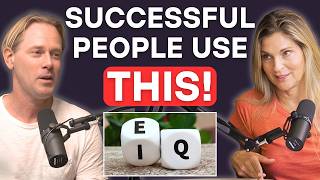
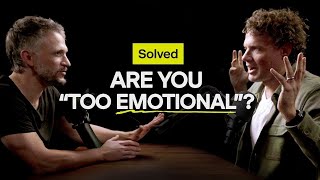
Dr. Travis Bradberry explains why emotional intelligence matters more than IQ for success at work and home. He breaks down the four core EQ skills: self-awareness, self-management, social awareness, and relationship management. People experience roughly 400 emotional events per day, and unlike IQ, EQ is trainable through concrete practices like the anger funnel and reflective questioning.
You have to be able to understand where you're going to draw the line. People think that emotional intelligence is being a pushover, is being kind all the time. And it's not. It's not at all. There's a lot of situations where being able to bite your tongue and not overreact, great. And serves you. But the highest EQ response is knowing when to speak up and how to do it in the right way.
I think I read in one of your books, it's like only 36% of people are even aware of their emotions.
Yeah. Our house can accurately identify their emotions as they happen.
How is that possible?
It's strange because.
Hi, everyone. Welcome to the show. So, for most of our lives, aptitude was measured almost exclusively by iq, our intelligence quotient. But over the past few decades, thank goodness, we've seen a powerful and necessary shift. The concept of EQ Emotional intelligence has really taken center stage. And in today's turbulent world, I think we can all agree it matters more than ever. I'm going to wait for the common sense movement next, but that's a different show. So my guest today has been at the forefront of this movement, helping people understand what emotional intelligence really is, how to cultivate it, and why it's essential in every aspect of our lives. He's the chief People Scientist@Leadx and the author of the New Emotional Intelligence. Please welcome the brilliant and emotionally dialed in Travis Bradbury. This podcast is brought to you by Vionic. I mean, besides my friends and family, I really believe the greatest thing that we all own is our health. And for me, a lot of that health starts from the ground up, literally. So I've always had this kind of love, hate relationship with shoes. I used to be a size 11, now I'm a size 12. And I could find great shoes for training easy, even if I had to wear boy shoes. But when it came to everyday life, kind of no chance. I mean, it was like, get the shoes first, find the outfit to match. And comfort usually meant sacrificing style. So that is until I found bionic. I've been wearing bionic shoes for years. They feel like recovery sneakers, but they look like chic flats or beautiful loafers. And they've completely changed how I move throughout my day. They just help me feel grounded, support, supported and confident. Plus, I just like to look down at my feet and see them. And I want that for you too. And I love that. Bionic starts with science. Their shoes are built on something called biomechanics. They finished with Thoughtful, beautiful, versatile design. I wear them when I'm with Laird, my husband, my friends, maybe when I'm traveling. You know those airport feet, how much that can hurt or just running day to day errands. And for me everything starts with intention and most days that begins in a movement. Practice bringing mindfulness to how I want to move throughout my day. And asking do you feel grounded? And how do you want to move throughout your day? And because just like your nutrition and your rest and your mindset, what you put on your feet really does matter. I mean there is nothing worse than, you know, those aching feet. So if you're interested in bionic, use the code Gabby G A B B Y at checkout for 15% off your entire order. All you have to do is go to vionic shoes.com that's V I O N I C S h o e s.com and when you log into your account one time, use only bionic shoes. They're wearable well being for your feet. Travis Bradbury, welcome to the show.
Thanks for having me.
I love today is more of a family affair. I love that you brought your wife with you.
Yes.
Yeah, we're giving her, you're going to be working, she's going to be in spa day. So you know, we've heard since probably, I would say the 90s, I don't know, maybe it was before or after about emotional eq. Yeah, emotional intelligence. And you know, I've been with my husband almost 30 years and we joke that before we had kids or even when we started, we have three daughters. I'd rather have somebody who can figure it out then. Like I have straight A's in school.
Yeah.
I would take it all day long or common sense, you know, things like that. And I think EQ for me almost I feel like you and I work in almost a similar field where I want, I'm like telling people like you should take care of yourself in the long run. This is going to be so good, you know, and when you're selling something or communicating something that is foundational, but it's just very quiet and almost the better you are at it, probably the more quiet it is.
Yeah.
So why did you get into this field of study? Because I almost feel like everything comes from our childhood.
Yeah, yeah. Well, I like, I like how you mentioned that. Right. It's this quiet managing of yourself. And for me I was straight a kid, like really good grades, smart kid. And I started college at UCSD and this professor showed us kind of the seminal emotional intelligence Study and said, you know, there's this idea, this separate aspect of intellect, which is how well you understand your emotions and manage them. And I was like, that's what I need. That's the thing.
Why did that resonate with you?
Because it was something in my home growing up, we didn't talk about a lot. So it was like, my mom grew up on a farm in South Dakota, so the mentality. And her parents went through the Great Depression, so the mentality that she grew up with was, pull yourself up by your bootstraps and get out there and work. Right. And that was kind of the focus of my house. But there's this whole other side to how we think and manage ourselves. And a lot of it is driven by emotion because you can be very intellectually smart and know what you should do, but you might not have the motivation to get there. You might have something, you know, emotionally getting in the way. And so that spoke to me and. And I realized, well, first of all, that's what I need to master. I need to work on this. And then it became, well, as I moved into my career, into my PhD program, I said, well, I need to study this. I need to teach this to other people as well, because I'm getting a lot out of it.
I can't help. But when I, like when I think about, like, eq, it's almost like in certain ways, philosophy, or the idea of even trying to have a place, to have a health practice, it almost feels like a luxury in certain ways, in the sense that once you. Your sort of basic needs are met, like, hey, we're safe. Right. Because if you think about your grandparents, it's. It's sort of like hierarchical of needs, of, okay, we're safe, we're fed. Then in a way, it's almost this opportunity to evolve to these next places and navigating that. And. And so I sometimes wonder if it's. If it's easier. Like, do you see it in certain groups where they have the opportunity to do it? Where other groups, like people who are working three jobs, like, they don't get to do it? Or it's like, no, you're sort of born with it. I know you. You said in what I think I read in one of your books, it's like only 36% or something like that. If people are even aware of their emotions.
Yeah. Or how can accurately identify their emotions as they happen.
How is that possible?
Well, it's just we're not very good at it. And it's strange because our Brains are wired to give emotions the upper hand. You know, emotions are the primary driver of our behavior. That's just it. Your everything you experience passes through your limbic system where emotions are generated first. And that's, you know, that's a survival mechanism. If, you know, caveman days, a saber tooth tiger jumps out from behind the bushes. You have this emotional fear reaction. You get out of there, you survive. And that's a learned behavior. But our brains still work that way. So there's this sort of knee jerk automatic reaction. So let's say a survival type thing. Like my grandparents, there's a blizzard and they need to bring the cattle in to save them so they survive the winter or something. That's a quick reaction kind of no thinking kind of situation. But then there's spring comes and you're trying to decide when is the best date to plant the crops. Well, now you have time to think. So you might be in a survival type situation, but there's a lot of processing that goes on.
You've worked with tons of companies and I wonder what motivates people more? Personal relationships or their work environment? The ability to be more successful in work.
Yeah, it's interesting. It's interesting. I've worked with people that are very people focused. So they like, you know, they, they want to be better at this stuff, you know, the people pleasers. But some of the people that are terrible at it are just really used to people finding them a little acerbic and they work on their EQ for whatever reason. Maybe they're motivated by that or maybe they want to get ahead. And then they see how people respond to them better and they're thrilled, you know, because the folks that have that struggle with this more get more out of it when they actually have a method to work on it, you know, versus the folks that do this naturally, they're kind of just kind of sharpening the saw a little bit.
We were just joking with Laird in the kitchen about, you know, a male brain and a female brain. And I know it becomes, I find it funny to think it's even taboo to talk about that the brains are different, but they are. There's, you know, data and science and just like the hormones are different and the systems are different, and I always think even in the space of wellness or trying to be as, quote, healthy, that when we connect with our biology a little bit, it also helps us understand the fuller picture that there's things in there that make sense, why they're there, even if sometimes they work in our Favor and actually sometimes they don't work in our favor.
Sure, sure.
And so I'm wondering if there's things that they're biologically there, but they don't really work in our favor when it comes to the discussion of eq.
Well, there's two things that come to mind. So I talk about how the brain is wired to give emotions the upper hand. Well, there's situations where that knee jerk reaction helps. Talking about Laird, you know, and surfing big waves and things like that. I'm sure there's been some sort of very quick emotional reactions that served him well. But the same mechanism when you're in a meeting at work and someone says something stupid and you light them up, you know, it can it. So there's, there's a lot of nuance to that. And being able to read when it's serving you versus when it's holding you back, that's kind of emotional intelligence in action. People are really good at that. Now the gender stuff, you know, I haven't done a lot of focus on brain differences, but I have on behavior differences. And women, you know, are, they score much higher in the social side of emotional intelligence. So awareness of other people and their emotions and managing relationships. But both genders are identical in self awareness. And this is something where a lot of men will say like, oh, I don't think about that stuff. It's like it's not true. There's, there, the scores are identical.
Wait, like give me an example.
Well, so if, if you, if a man doesn't want to talk about his emotions, so there's kind of this stereotype a lot of people lean on, say, oh, we don't focus on this stuff. But the, you know, my research with millions of people shows that men and women are able to read their own emotions identically on, on average. So when I think of the, the social side of things, there's probably some socialization that women experience, you know, to be caretakers and things like that, that society wants them to be a certain way. So there's, they're a little bit better at those skills.
So there's conditioning. Right. We, we sort of will encourage us. I find, and I grew up as a girl that oh, if you're going to be a good person, then connected to that is sort of a nice or making other people feel comfortable.
Yeah.
And what, what I hope to do is say, listen, be kind, be polite, always honor yourself. And I wonder in what you've noticed is so you have natural personality, you have, you have a child you know that they come in certain ways. How they come.
Yeah.
And then there is the environment. So what do you. Is there a way that you are able to sort of detect how much is just the way the person arrived, how aware they are and how much was their environment as a kid?
That brings up a really good point. Personality, right? Personality is distinct from your emotional intelligence. I say that personality is the vessel through which your emotional intelligence is expressed. And they've done longitudinal studies where they follow people across the lifespan. And people our age have seen this. You see a little kid, they're very extroverted, and lo and behold, they're 20 years old and they're the same. Personality is seen at an early age. And personality is how you derive energy in the world. People just are sapped by being around other people where others just get energy from that. Right. So these are the personality characteristics. And it's a distinct area of the brain that's very fixed and doesn't change. Whereas EQ is an area of the brain we call as plastic. It's flexible and adaptive to change. So it's important to know your personality type. I actually wrote, years ago, I wrote a book on personality just because it was a good match for my EQ book, right? To know both. And I think that's important to know that, and that's an aspect of self awareness, is to understand what your personality is. But you bring up another really important point, and that's boundaries, right? It's understanding being able to have that juxtaposition of your own needs and other people's needs and saying, okay, where am I going to be kind, but where am I going to draw the line? And that's a big focus of my new book because the big book I wrote in 2009. Since then, I constantly, you know, everything I write about boundaries, about dealing with toxic people, dealing with difficult people, just people eat it up. They want more and more and more. So I focused a lot of that in the book. It's called the New Emotional Intelligence. And the idea there is you have to be able to understand where you're going to draw the line. Where you say, I understand what's going on with you. I am a kind person. But I'm going to stop right here. And I'm not going to let you do X, Y and Z, you know, because people think that emotional intelligence is being a pushover, is being kind all the time. And it's not. It's not at all.
So IQ and EQ work very differently even within the brain.
Yes, absolutely. So iq, like personality is fixed at an early age.
So that's very sad for me.
But it's, you know, and it's, it's. I had an interesting experience with that too, because in high school, you know, I was a big fish in a small pond. And then I went to the University of California, San Diego, and I said, wow, okay, here's where all the smart people are. And I'm not one of them.
You know, they can't tie their shoe.
Right. But there's, and there's nothing you can do about it. And, and IQ is measured relative to your peers. And they follow people age 5 to age 50. It does not change. And that's because that brain region is very fixed, you know, unlike the EQ region. Here's the thing, IQ and EQ don't occur together in any meaningful way. You can be high in both, you can be low in both, high in one, low in the other. But the really high IQ people that are be really low in eq, I mean, they stand out like a sore thumb. Right. It's just so obvious and it's kind of like nails on a chalkboard, some of the stuff they do. And I think that bridging that gap and working on the EQ stuff goes a long way. But yeah, a lot of, there's this misconception that you can't have both because these really high IQ people that are low in EQ are just like, it looks like they're everywhere because they're so visible.
Yeah, yeah. So let's talk about work for a second. And it was funny, in reading one of the books, I was like, surprised that a lot of CEOs oftentimes they're effective. They don't have the highest EQs, you know, middle management people into, you know, concerned about people do. But actually the CEOs that have both crush it. Those are the crushers.
They do, yeah.
So maybe we can just, you know, talk about EQ and relationship. First to work and then maybe personal. Because there's sort of kind of four ways people, I wouldn't say navigate their eq, but there's kind of phases, like there's myself, you and I, you and I in the situation, all of these things.
Sure, sure. Well, you know, at work it's a really important skill. It's tied to job performance, it's tied to company performance. You see that even in low level positions. So there was a pretty well known professor that said, I'll just say who it is. It's Adam Grant. And I love Adam and he's great, but he said, I don't want to choose my mechanic based on his eq. Well, I would because I want the mechanic that's good at fixing a car and isn't going to come in and forget to put my lug nuts on because he's having a bad day and he's not able to manage his emotions. And that literally happened to me one time. I got my brakes done and I was driving down the coast highway in San Diego and my tire flew off and thankfully my truck didn't flip as I was back when I was a teenager and I had a lifted truck and it didn't flip. Right. That's the mechanic who wasn't managing his emotions that day. He wasn't aware he was a space cadet. So my point is, the research shows that EQ is a big predictor of job performance from the most individual entry level position all the way up to the CEOs. But what companies do is they reinforce this skill from middle management. So they say, oh, here's Janet, she's great with people, so we're going to promote her. And so you see that EQ scores go up into middle management, but above that, it's a ski slope all the way down to the CEO, even though the top performers are those who also have eq. So the companies that buck this trend, that say, okay, we're going to hire this person because this is an executive that has the business experience and the tenure and all these skills we want, but it's also high in eq. Those tend to be the really top performers.
Have you ever experienced a company that has like almost, I don't want to say co CEOs, but one that's sort of the people person and one's the idea because they have that too, right?
A lot. Yeah, a lot. Yeah. You'll see that in the C Suite where there's the CEO who's the visionary and is setting the direction. And then there's kind of their. It's funny because it's someone. It's like a C Suite executive. It might be the chief marketing officer or the chief people officer, and they kind of soften the blow and deliver the message and they kind of work together. I do see that a lot.
I often love that because you go, that makes the most sense. This podcast is brought to you by Maui Nui Venison. I have been a longtime customer. It was first given to me as a gift, showed up at my door, and I don't know about you. But I'm always in the market for clean, high protein snacks that actually taste good. So I'm excited to share with you and tell you about my regular. Go to. It's Maui Nui's venison jerky sticks. These are amazing. They live in my car, my gym bag. I throw them in my suitcase. Just the perfect clean fuel between workouts or when I'm on the move in between meetings or maybe you just get stuck in a moment where you don't have time to eat. Each stick has 10 grams of protein, but that's just with 55 calories and they're made from wild axis deer harvested on the island of Maui. There's no fillers, no artificial junk, just pure nutrient dense protein that works with your body and not against it. I really like the peppered flavored one. It's bold, savory spice with just that right kick and it is sugar free. But maybe you're in the mood for something a little sweeter. The original is so delicious and it has 2 grams of brown sugar. And what makes this even better Maui Nui is they're on a mission. They're mission driven. Every bite supports ethical stress free sourcing and helps restore balance to Hawaii's ecosystem. It's protein with a purpose and it tastes amazing. So right now Maui Nui is offering a free 12 pack of their jerky sticks with your first order of 79 or more. All you have to do is go to mauinuevenison.com Gabby and you can grab yours. That's mauinuivenison.com Gabi M A U I N U I V e n I s o-n.com Gabby for your free Renaissance stick starter pack, go try them out. Are all of your. Because you have a. You have a test that's free with the books. Is it which book specifically or is it a few of them?
I've done some different tests, but there's a new one with the new book, the new emotional Intelligence. And this test is. It's the first test I've written in 20 years and I'm excited about it because it's really hard. It's a self assessment but it's really hard to fake good.
What's different? What?
What's different is when you think if you're gonna say, well, I just can't tolerate, you know, it's on a 1 to 100 point SC 75 is average. It's kind of like a school grade, like 80s. You're starting to move up. If you're in the 90s, you're really doing well. And on a lot of self assessments, it's kind of easy or semi easy to go. I think that's the answer they're looking for. And answer that. And this test is a lot trickier than that. And a lot of times when people try to do that, it actually lowers their score. So I really focus on areas of emotional intelligence that are counterintuitive. And if you are actually doing it, you're going to. You're gonna say it and you're gonna get the score that you deserve. But if you're trying to fake it, it doesn't work.
That's really interesting. I. What is the difference of a, of, like, let's say a high EQ and somebody who doesn't react or who, who, who doesn't bite the hook? Right. Like, they're, they're just not. Because sometimes I think maybe if a person was thinking about it, they'd think, well, if I just stay calm or I'm cool, yeah, that's half the game.
Right.
What's. What's the downside? Because that's a form. That could be maybe a form of shutting down.
Yeah.
Right. So where's the dance?
Okay, so let's, let's talk about this in relation to the test. Right. And the test. That's hard to fake. Good. So the assumption is that always biting your tongue is the highest EQ response. And that's a gross generalization. Right. There's a lot of situations where being able to bite your tongue and not overreact, Great, it serves you. But the highest EQ response is knowing when to speak up and how to do it in the right way. There's an Aristotle quote that's in the jacket of my book. It's to be angry is easy to be angry with the right person at the right time in the right way. This is hard, right?
Yeah.
And that's the idea, is I understand what's going on. I'm taking a step back, and I'm not going to overreact. And this is my moment to act. And this is where I'm going to call this person on this. And this is how I'm going to do it in a way that they can hear, and that sets my boundary, and then I can sort of leave it there and they can choose their path going forward.
For me, again, in my experience, in at least in this life is in a female body, as a mom, as a wife, and in business, okay, I'm a woman. I don't really think too much about that because I'm not in those kind of climates. I'm more of an entrepreneur, so I don't have to be in an office, you know, or a boys club, if you will.
Sure.
Even being 63 is probably not the worst thing because it's a neutralizer.
Yeah.
Energetically. It's like, hey, it just is. I've experienced that, and I've had to be more sensitive to that where when I'm visiting with other females who are in a working environment and they're, you know, maybe not as physically tall or they don't come even from athletics, where it's just like a different environment.
Yeah.
I, I, I don't actually understand what they're going through.
Yeah.
But what I, I wonder is, is there two different kind of EQs? Because I have a different way I approach it at work versus in this nuance of emotional relationships.
Yeah. Yeah.
So when you have people, male or female, coming to you, what, what does that conversation look like? Because in a way, the rules are different.
Yeah. Yeah.
And talk about being able to sort of expand your, your skill set.
Yeah.
It's not that it's more cut and dry in work, but there's just a lot of nuance that goes into being in emotional, familial, or friendships.
Yeah. I think it's about translating your behavior to the situation. So if you're working on your eq, you're ultimately working on understanding yourself and your emotions and understanding who you're dealing with and what's going on with them. And you get aware of a lot of seemingly small things that matter, like your height. You know, I love that because, like, I'm 63 and I met you, I shook your hand like we're eye to eye. I knew you were a volleyball player, but I never, I never spent time to think, oh, she's probably tall. And I don't know, it makes me think of a story. I hired this intern one time. I'm not used to people being my height or taller, and he was seven feet tall. And I met him and I shook his hand, and he's the worst intern ever. But I felt like I wanted to hire him. You know, it was like I was that knee jerk. Yeah, yeah. Something about that, about the height. But, but the point is this nuance matters, and being aware of it is important. It's also important to be able to translate it to your situation. So I think people get a little hung up on, should I be working on this at home or at work? And I just say, well, focus on you. Because when you're in that setting, that work setting, you're going to translate it to that. And then when you're with your partner, with your kids, you're going to translate it with that and you're going to have different motivations. I mean, I think that I am at work. My, My ability to be high EQ is, is. Is pretty good with my team. Right. I mean, I sold my company five years ago, but I had a team for a very long time. Now I'm working with another company as sort of a. An advisor. Well, my team, I was really good. Same thing with my family unit, my team, you know, versus my competitors. Maybe not as much, you know, but there's motivation there. And I think what happens is some people. I've had people say this, they say, well, I'm good with my team, but I go home and yell at wife and kids. It's like, well, okay, so what's the issue here? It's motivation. Are you motivated to be a model for your family? You know, because a lot of people don't understand that the emotional tone that they said at home, their kids just absorb that like a sponge. You're creating a model that they're going to follow the rest of their lives.
Yeah. It's funny how I've often said if. If when I'm, you know, when I leave, if I can have gained the respect of my children and what I have attempted to do, sometimes better than not. But I. I really attempted to. I don't actually speak kinder to anyone than I do to Laird because I thought if I could start there every single day, even when I didn't feel like it. But it makes me wonder how much gratitude has to do with part of developing your eq. Because the minute I can stand back, even from somebody I see, I'm fortunate enough to see every day and be reminded about what's special or unique or how fortunate I am to be able to share space.
Yes.
I wonder if there's ever conversation around gratitude being something that helps us expand our eq.
Yeah. Because gratitude's all about perspective. Right. And perspective is what changes your behavior. I think with kids, you have this constant reminder that you're modeling for them, whereas your partner, they're fully baked already. Right. So it's kind of like it's easy to. Like you said, you just habituate to that sort of co. Cohabitation situation. And I just think it makes perspective harder. You actually have to work at it a little more and step back and say, you know, I'm really glad this person's here, but when they're going to be there tomorrow, it's, you know, you really have to do. You have to step back. I think that's important because without perspective, we kind of fall to our own devices, right?
Yeah. Well, we get accustomed to things. That's what the brain does.
Yeah. Yeah.
It's even like success, like, I'm here. That's cool. That was great. Now, you know, it's the new car. It's all the things.
Yeah.
And I, I, I think training, physical training and that discipline has always helped support me in being able to get on top of my perspective. Because in some way it's like an exercise.
Yes.
You think, oh, I could spend 15 seconds going, running a list of, like, I've, I. This person I'm with is, you know, really has a lot of vitality. They're passionate about things. I'm attracted to them. Like just running these exercises that keep reinforcing this perspective, that just actually makes it a lot easier.
Yeah. Yeah. Well. And, and your eq, because that brain region is so plastic, when you work on a new behavior, your neurons respond and they're growing and changing. So it's a lot like working out and building a muscle. When you do an exercise every day, you create sort of a habituation and create a strength where you might do a different type of exercise, but your bicep and your triceps are strong, so they, they serve you. It's the same thing with eq. When you're doing that work, it tends to serve you. And if you kind of, I don't know. Let's think about. In the context of training, you get lazy or maybe you get injured. Right. Maybe there's a setback that can happen emotionally as well.
Yeah. Like somebody passes away in your life, you're just, it's not going well.
Yeah. You have some trauma or, or. I don't know. We were talking about my son being depressed six months ago.
Well, kick your ass in a real way.
Yeah. There's a lot of focus on him and not as much focus on myself. And that's why that's really trying for a lot of relationships. A lot of couples that go through that. Right. Because they're so focused on the kid. But again, it's. It. Working on your EQ is kind of like working on your physical body, too. It's an exercise. And when you're doing the exercise and putting in the work, you're getting the results.
Yeah. When you. Because I've gone through things with, of course with my daughters, like patches of time, sustained periods of time where they were going through something and man, you gotta like ride it out. Especially teenagers, you know, there's the sleep deprived years of little kids and all of that, which is hard for a different set of reasons. It's pretty straightforward though, in a different way. But I think teenagers have a complexity and they, and they go through things that you, you don't want them to have to, but they, that's their deal.
They will.
Whether it's they're depressed. I, I've had a myriad of adventures with my girls. How did you, as somebody who has all this information and you've been doing this for years and years, written books, helped people. Where did you go within yourself to reinforce that perspective? Because I think that, you know, we all, we talked about, and you talk about this a lot. It's easy to be cool when everything's cool.
Yeah.
And it's like sports. You. When do you learn when it sucks and you're losing? Nobody ever learns anything when they're winning.
Right.
Companies aren't really learning when they're just, you know, growing year after year.
Yes.
They just think they're so smart. So in the moments when it's like, it's not that you're losing but you're getting your ass a little bit. Where do you, as a person who has all the knowledge, how did you reinforce those perspectives?
Yeah. And I'll tell you what. So I've been doing this about 25 years and there's this one, I feel like a comedian in the sense that I love comedy. Right. And there's certain stand ups, they'll, they'll do a joke and they won't laugh and they'll say I don't care, I love that joke. I'll keep doing that joke. For me, I love that there's this message that I've been delivering forever and it's the biggest mistake people make when it comes to self management is they don't understand that positive emotions need to be managed too. And I speak to an audience and every time I share that, I'm just getting blank stares. It just does not register. And I'm not going to stop because. And you just spoke to that. When you're walking on water, when you're winning, you're not learning, you're not learning a thing. It's when you're being challenged is when you learn. And so when you're going through trials and tribulations you need to change your perspective because what you don't know is what's holding you back. So in the case of my son and his depression, you know, when we were chatting earlier, I was mentioning that, you know, my wife and I were pretty kind of. We see naturopaths, we see western medicine, Western medicine, doctors too, but we're not going to just pump our kid full of pharmaceuticals the moment he gets depressed. So we were a little late to the game because that was the. What he needed to get where he needed to go. So it's that thing where your perspective, what you don't know is what's holding you back. And so when you're being challenged, you have to be willing to look outside yourself and say, what am I missing here? Right? What's holding me back? And I think that being. And my wife is a psychologist too. So when we're dealing with a depressed teen, we knew. Well, we also need to focus on our relationship, right? But we also are saying, what books should we be reading about teenage depression? Because we know a fair amount, but we don't know everything, right? So it's that challenging yourself, you know, lean into what you know, trust what you know, but also look for what you don't.
This podcast is brought to you by Timeline. You know, for me, taking care of myself, it's a lot of things and it goes deeper than just working out and eating clean, even though these are first principles. But I have added something new to my daily routine. Might appear Gummy gummies from Timeline. I love Timeline. They're the first ever longevity gummies powered by something called Urolithin A, which is a powerful ingredient that does so many amazing things. So these gummies, they help improve energy, but at the cellular level. So instead of chasing those short bursts of energy, you're building it from the inside out. So I've been taking them for a few months and what I've noticed is I'm just feeling a little bit more like myself, myself, you know, I'm feeling stronger, more steady, and a lot of that is because I'm able to recover faster. And that's a big one for me. It's a small daily habit that's making a real impact and might appear. Gummies from Timeline. They're vegan, they're gluten free and super easy to work into your routine. I keep them, you know, you can have them on your kitchen counter. You'll never forget them. Plus, you know what, they really do taste great. But it's sort of like a. It Almost feels like a treat. So if you want to stay strong and energized now and as you age, then you should check out these mitrepure gummies. My friends at Timeline, they have a great offer offering you 20 off just for my listeners. So head to timeline.com Gabby to get started. That's timeline.com Gabby T I M E L I N E.com Gabby your cells will thank you. So if somebody, let's say they didn't get this, this skill set, it wasn't encouraged. Their parents, maybe, you know, single parent or just whatever, different culture, different type of person, and maybe not organically sort of leaning to this. And now they're an adult and they sort of go, you know, this is interesting to me. What, what, what are the first steps? Like, what is, what's the conversation one has? They can get your book. And so what, what does that look like? What does that journey look like?
Sure, I'll, I'll tell you just real quick before I dive into the process that I've got, dedicated my career to those people. So I started my first book, came out when I was 26, I think in my mid-20s.
Yeah, that's courageous to think you can write a book at 26.
I know, I know. Right. So let me tell you. Exactly. And so I had this massive. It was pretty successful, sold a couple hundred thousand copies.
You started a business with like one of your teachers, right?
Yeah, I did. Yeah.
Come on.
I was our intern and we started business together and I was at. So I had this. I was. The book came out when I was finishing grad school. And you know, in grad school for psychology, you're supposed to be a researcher and a thinker and you see these professors writing books that are real research driven. And you kind of think that that's all that matters. But how to is where it really, really matters. And I finally embraced that and I wrote this really how to book. And I was at a trade show and it was the first person that came up to me and they said, your book changed my life. And it was one of these, looking behind me, I'm wondering who they're talking to. Because I felt like I was pretty psychologically minded. So the book didn't feel really advanced to me. But not everyone has a PhD in psychology, right. And these steps can take you a very, very long way. And so that was a real aha moment for me. I'm like, I need to do more of this. I need to listen to these people and like, like, bring it for them. So that's the process. The process is get in a. First get an objective picture of your emotions and your behavior. And that's why the test comes with the book, the New Emotional Intelligence. You know, it's a test that we sell separately for $50, but you get it for free with the book. Because I would be a hypocrite if I didn't do that, because my whole method is based on this idea. Test yourself first, get an objective picture of your behavior, and that then points you where to go. So the book starts with kind of a brief introduction to eq, why it's important, how it works in your brain, and then it has you take the test. Once you take the test, you get a score profile. You get a score for each of the four skills, but it also points you to which of the book's 60 strategies will increase your EQ the most. So it's like, hey, you can start wherever you want. But based on my analysis of your score profile, these are the three behaviors that you should work on.
First, is it possible for somebody to be pretty strong in one of the four? Maybe. Maybe we can just define the four.
Sure.
And not great in the others.
Oh, yeah.
Really?
Yeah, yeah.
Like they're really aware of their feelings.
And they're socially unaware. Yeah, yeah, yeah.
Is that the most common? Well, okay. First let's just share the. The four kind of areas of. Of eq and then maybe we can play around in there.
Sure. So the. For the first skill, self awareness.
Ye.
Then self management. So self awareness is awareness of your own emotions and your tendencies. And then management's what you do with that awareness, how you guide your behavior to get the result you want, depending on how you're feeling. The social side is social awareness, which is awareness of what's going on with other people, not just emotionally, but how they see the world, what the world looks like through their eyes. And then relationship management uses those first three skills in concert. So in an interaction with another person, I know what's going on with me. I know what's going on with you. And I'm managing myself to get a better outcome. Outcome. So you get an overall EQ score. You get a score for each of those skills. And yes, you will see people who are, let's say, people pleasers. So they're higher in social awareness. They're very focused on other people. But maybe they're low in relationship management. And then you see that they're also low in self management. Right. So they want to please, but they don't know how to manage themselves to a better outcome and manage the relationship. Or you'll have people who are really low in self awareness, but they might be really high in relationship management. So they're kind of more focused on other people, but they're not self focused. So you do see an imbalance. It just depends on the person, though. Some people are like, you know, 82s across the board. It's interesting, you know, like snowflakes, you know, no two score profiles are identical. But understanding your profile and your strengths and weaknesses is really important because what you want to do is you want to build new pathways. So the book, these, you know, the 60 strategies, they, they range from about 5 or 600 words to maybe 1500 words per strategy. It kind of tells you what it is and how to do it. And then it stops there because you need to go practice.
Yeah.
And that practice is like building the muscle. Your neurons reach out to each other. They, they, they ease the flow of information. Your brain loves efficiency. If you show your brain that you want to do something new, it will build a pathway so that you can do it without thinking about it. And once you catch yourself doing it without thinking about it, that's when you know it's time to move on to another skill. So a book with 60 strategies, you're going to work at one, two, no more than three at a time, and you're going to work your way through the whole thing addressing all of your need areas. Let me give you an example. Let's say you're a yeller, right? Maybe at work with your team, maybe with your kids, maybe with your partner, and you don't feel good about it. But when you get worked up, you have this knee jerk reaction to yell. So there's a strategy in the book that teaches about the anger funnel. And people that yell often funnel their emotions into anger. So some people argue. Researchers argue that anger isn't even a real emotion. It's a substitute for other less tolerable emotions. So someone does something that makes me feel vulnerable, it makes me feel threatened, I feel unsafe, and I get angry at them and I lash out. But the real emotion is fear, right? So the anger funnel teaches you to understand that. And once you understand the real feeling, you're less likely to react that way. So in the beginning, it's kind of like biting your tongue, right? It's like, okay, I know what I'm really feeling. I'm not going to yell. But as you do that habitually, you'll find you're in this situation and you don't even think about it. You don't even have the urge to yell. That means you formed a habit and you can move on to the next behavior. And that's the method in the book. It's this, the behavior, habitual behavior.
Do you ever get people to ask themselves, like in that moment, a question, you know, like when you say that I'd be like, what are you afraid of?
Yes.
Or what about this is true? Because I learned to do this maybe a few years back where when I'd have a strong feeling I'm not a yeller, but just even a kind of a lean in feeling like I'm leaning in, which means I'm afraid. Yeah, I lean in when I'm afraid.
Okay.
Oh, what about this makes you so uncomfortable? Or why are, why, why do you have such a strong reaction? I would ask myself. Because it was either too close to home or somebody was saying something that was like making me uncomfortable about something I maybe had to look at about myself.
Yeah.
And so I started asking myself the question when it got pointed out to me about this. Well, what, what? Like either what are you afraid of or what's the truth in here that's really bothering you?
Yeah.
And it was really powerful because it gave me something to do other than my normal reaction.
Yeah. There's two things. So that's part of the anger funnel exercise. And I use an example there where I'm. When my son was younger, I got cut off on the freeway and I'm just fuming, you know, like just contemplating road rage kind of a situation. And for me that question really mattered. Why, why am I, you know, this person cut me off, it's over. I'm not in an accident. Why am I so angry? Well, I had a little kid at the time and I had all these paternal instincts kicking in where now, because, you know, when I was younger I used to, I'm a bit of an impulsive person. We'll talk about my EQ weaknesses later if you want. But driving fast was a big problem for me when I was young. I really like auto racing, fast cars. I just really enjoy it. But when you're a father, it's not the smartest thing. You don't want to be going, you know, 140 miles an hour up the freeway on Camp Pendleton, which may or may not have happened at some point for me. But so, so you get cut off and you have that paternal instinct kicks in and you feel this, this new sense of danger and being Asking yourself why matters, Right? Because it gives you a better understanding. But there's asking yourself why is a self awareness exercise. And there's another one in the book which is one of my favorites and it's called, you spot it, you got it right. And the idea here is there are people do things that are potentially annoying all day long, but certain things get our go, they really get us wound up. And you have to ask yourself why? Why is that getting my goat? What does that show me about me? It might be something I'm not aware of, that I need to work on. It might be something someone struggling with, something that I know that I also struggle with. And seeing them flounder just makes me feel completely uncomfortable. But being able to ask yourself those good questions, that's how you increase your self awareness. So the book has a lot of those kind of exercise teaching you how to go through that mental exercise that you know, asking yourself the right questions to increase your self awareness.
So if somebody was a soldier, they're at work, they're not the boss, they're not even the manager and they've really bought into this. Is it enough to influence your environment to have the practice yourself?
Is it enough to.
We talk about corporate culture, right? This is, we have, we have a company, we own a food company. And you, you hear culture, you, you work with companies. How important companies can great companies that could kill it get destroyed because they've got a bad culture?
Yeah, yeah.
So if I'm, if I'm a, an entry level employee and. But I, I believe in this methodology and I want to influence not only for the people around me, but really for myself.
Sure.
This kind of positive change. Is there something about one's behavior that that's sufficient enough like for them to impact their environment?
I mean, I think as a soldier you can have some influence. You can have an influence on your team, your interactions with your colleagues. I don't know that I would do it for that. I would do it for me if I was in that situation. Because it's going to improve my life and it's going to improve my job performance and my career trajectory. So that's why I would do it. It's really the leader's responsibility to create the culture. And the way a leader reads and responds to emotions and not only their own, but those of other people, it trickles down into everybody else and that sets the cultural tone. But this idea that your emotional intelligence influences your job performance, I mean, I've studied this, right. So I did this, this this project with the Thermometru Doors, a division of Fortune Brands. And we started with the senior leaders and we did emotional intelligence training. Then we measured how much they worked on it. And the more they worked on their eq, the more their bottom line performance improved. So these metrics, you know, operation. I'm in charge of manufacturing, operational efficiencies. I'm in charge of sales. The performance of the sales team. The more they worked on their eq, the more those things improved. And they did. They. They moved that study all the way down through all the layers. Senior leadership, middle management, all the way down to line employees and saw. So working on your EQ might help you with your spouse, but it also help your next performance evaluation. And I feel like that's motivation enough. I don't want people to feel like they need to change their company's culture. It won't hurt, but it's really up to leadership. You know, I mean, my advice in that situation would be to put a copy of the book on your boss's desk. And a lot of people do that because a lot of people, they're just not aware of this stuff. It's much more prevalent than it was 20 years ago, but it's still. There's. There's lots of room to grow.
Do you ever talk to people about the importance of, like, let's say, sleep, for example? Because I do think when you feel better or rested, it makes all of this taking this on a lot easier.
Yeah.
So is there ever conversations about that as part of the practice?
Absolutely. Absolutely. I've got a couple strategies on sleep.
This podcast has been brought to you by Laird Superfood. I know it's not fair. Laird's Superfood was started in my kitchen. So, yes, I'm excited to share it with you. It was started about 10 years ago. Not only does my entire family consume it, but Laird and I work on every product. What goes in the bag, the testing. We have really strict guardrails, but forget all that. It is so delicious. We've got coffees, Peruvian high altitude, low acidic coffees. We've got delicious creamers bars, greens. But the thing I want to share with you today is our instant category. Now, a lot of times people think, oh, instant, believe me, not only do we not sacrifice on ingredients, but it is so delicious and so convenient. So let's say you're on the go. Maybe you're working in an office or traveling on an airplane or maybe heading to college. I love our instant category so much because all you have to do is add hot water. If you like to ice your stuff, you can easily do that too. But it's so easy to use. It has high level coffee ingredients. With our creamers we've got instant latte, instant mocha, our latest instant vanilla latte. It is so delicious. I'm not a real vanilla girl, but I love this instant vanilla latte. Why? First of all, we use real vanilla. No natural flavors, no artificial flavors, no weird ingredients, just incredible ingredients. MCT oil. So really nice for your energy that, that sustained energy. You don't crash and kind of get like caffeine up and jittery down. Just a nice smooth delivery. Again, it's so simple to use. All you do is add hot water wherever you are. So if you've never checked out Laird Superfood, by all means see if what product suits your lifestyle the best. But I want to tell you I love our instant products. And actually pretty soon in about two weeks, we're even going to have our instant pumpkin latte for those of you who like that little spicy bit. And if you're not a coffee drinker, I even have Instant Matcha. Really, really trendy. And Instant Chai. And if you want to head to lairdsuperfood.com and if you put in the code gabby20 so it's L A I R D S U P e r f o-ood.com and don't forget to use the code gabby g a b b y 20 check out for 20% off your entire order. I promise you will find something that not only you love, but will make your life just a little tastier, easier and more energized.
Cleaning up your sleep hygiene is essential. I mean, one, I focus on why getting sufficient sleep and sufficient quality sleep is so important to your mood and your ability to manage your emotions. But a lot of people can't do that. You know, you've got three kids under the age of five, you've got a job. It's like you're not going to sleep more, but you can sleep better. And there's so many killers of sleep hygiene that people aren't aware of. So I really break them down in the book Blue Light, people are starting to learn about, right? But the big one that people don't realize is sedating yourself to sleep gives you much worse quality sleep. So a lot of people have their Ambien or their Benadryl or two glasses of wine or whatever they're doing to go to bed and you're killing your Sleep cycle cycles, your body isn't able to move through the sleep cycles properly. And the problem is when you're awake and your neurons are functioning, there's these toxic proteins that build up in your neurons. And the reason you can't pull an all nighter without feeling just confused and cruddy the next day is because these toxic proteins are clogging your brain. They're impairing the function of your neurons. When you sleep and your brain goes through all the stages, it cleans up all these toxic proteins and removes them. So if you're, if you've had too much caffeine late in the afternoon, that'll influence your sleep. Anything that sedates you, that'll influence your sleep.
Isn't that funny? Anything that sedates you.
Yeah, exactly, exactly. So you so weaning yourself off. That is so important. But yeah, sleep hygiene is crucial. I just, Yeah, I spent a lot of time on that because I just think it's so important.
Yeah. Culturally, we are at a time where everyone really is deep in their feelings. And I know at work it's, it's sort of like performance and metrics are always going to be a part of it and working hard. I think that that's probably understood. But I wonder because some of EQ feels like an exercise in Pause. Restraint, assessment. You know, just, just taking a beat.
Sure.
In, in this time, are you seeing anything different with people? Because they're feeling all their feelings and I love, I mean, I swear if I don't hear the word triggered anymore.
Yeah.
In my lifetime. And I respect that there are things and people have gone through things, but that is getting thrown around like gluten free, organic, you know, triggered. It's like, it's an interesting. Obviously it won't be here forever, but I'm wondering if that's altered it, the way you've been able to communicate to get people to take this ownership, to be in pursuit of a higher eq.
My take on it is this intolerance of making mistakes is really holding people back. So this world that is becoming hypersensitive to certain things is very unforgiving. And you know, I'm not saying you can't feel triggered. I'm not saying microaggressions don't exist, but.
Oh, micro.
Right.
Yeah, yeah.
It's probably really a thing. But the idea that someone can't do something that rubs you a little bit the wrong way without being canceled. Right. That is not productive. That is just me having too thin of skin. So I can't tolerate anybody else being anything less than perfect. You know what I mean? So, yeah, if you're going to Epstein island, you should be canceled and you should be put in jail. But if you say something rude to someone, or maybe you don't understand them very well culturally or you make a judgment, you make a mistake, there should be room for grace and opportunity to improve. And that's. So that's what really gets me about that is people try to paint EQ as this holier than thou kind of thing and I'm perfect and everybody else is flawed and it's just, that's, that's just the wrong way to go about it, in my opinion.
And I think the reminder for me would be is to remind people it goes back to what you've originally said. You do all of this for yourself. And so when people are going, you know, policing everybody, in the end we should really only police ourselves. Yeah, I think, yeah, I, I feel that all of this practice should be because it's, you know, it's going to make your life better.
Yeah, the whole, I just feel like the whole holier than thou thing is a dangerous mentality. And that's what I see with a lot of this is, oh, I understand triggers. So I'm going to go point out everybody else's flaws. Now you're no longer looking within and if you're really self aware, then you're going to understand that you make mistakes and everybody else does too. And we all need a little, a little grace there.
So you said earlier that you're working still on things in your own, you know, armor of your own eq.
Yes.
Where do you, where do you think the spots are that you're, you're working?
So yeah, I'm a very competitive person and I, when I get really competitive, I can get really counterproductive. So is that like a really good.
Way of saying kind of. Yeah, I can get super counterproductive?
Yeah, I can be. Yeah. Let's just call it for what it is.
Everything like board games to sports, to driving to everything. Or is it certain things?
When I was younger, yeah, it would get into board games and stuff.
Brothers?
No. Sisters. Yeah. Yeah.
Okay.
But it's like, it's interesting to me. I'm really into sports, but I'm not super talented or anything. No one's ever going to pay me money to play a sport. But man, I go out there and just fight to the death, you know. And it's interesting to me, you know, you had a really big athletic career and I watch athletes and it's like some people have the talent, but their mentality is what holds them back. And I'm just kind of like, thank God I don't have any athletic talent because I'd probably be a wash up because I'm so hyper competitive. So, yeah, that gets me with actually with surfing, which I think people that don't know a lot about surfing just think it's just the Zen thing and everybody's sharing waves. But it's a very competitive sport.
Yeah, it's pretty aggressive.
And the analogy I try to explain to people that don't understand it would be like if you have a tee time and you're walking up to tee off and some younger guy just comes up and kind of pushes you out of the way and hits your ball and goes and play and you got to sit there and watch. That's kind of what it is. Right. So there's a very competitiveness and, and yeah, sometimes I do, I overreact out in the water.
Are you breathing deep? Are you, are you, what are you doing to work? What do you grab yourself?
Yeah, for me, I think it's just trying to, to put it into perspective, you know, that we're talking about where, where someone's you and you're like, you need to react. Then I have to ask myself the question, am I reacting or am I overreacting? Because there's certain etiquette and protocol and if someone crosses the line, I've sort of, as, I've sort of worked through this and matured a little bit. I've decided I'm comfortable going up and talking to someone in a calm manner like, hey, you know, you didn't wait your turn or you paddle on the wrong side of me, took that wave. You know, that's not okay. And I leave it at that. Whereas in the past it was. I might be really angry, and I still do get angry. But I, but I try not to, not to.
You try to just communicate it.
Yeah, but I'm very. People give me a hard time for being the EQ guy if I blow up on somebody in the water, because it's the one area of my life where I am a yeller. Otherwise I'm really, I'm really good with my kids. I never yelled at my employees or anything like that. But it's like I, I sport is, it gets me.
I like it. You have someone who comes to you, they're 70 years old and they had a grandkid that said, you know, I was reading this book and it's really interesting. And they think, you know what? Thought there's time. I want to try it.
Yeah.
Can you change the brain? Can it be different through these practices?
Absolutely. Absolutely. At least this aspect of your brain, you know, that IQ has been the same, like I said, since you were five. But the EQ you can work on and you can do new things. And the beauty of being 70 or 50 or even 35 is you have wisdom that you didn't have when you were younger, and you have perspective, and that's kind of fuel to the fire of. Of making that change.
So, yeah. Yeah, it's scary. Change is scary.
Change is scary.
Yeah, it is. Justin, do you have any questions? Justin has a very high eq, by the way.
Oh, I don't know. I just like that you're triggered by triggers. We should talk about that. Triggered by triggers. That sounds like a book title.
I'm just. I'm triggered by, like, crybabiness.
Yeah, yeah, yeah.
And. And, like, it's not fair. It's like, oh, did you. Did nobody tell you about how life is? Life is not fair.
Do you feel that social media, Instagram, everyone being so involved in themselves, is just taking everyone's EQ way down? And is there hope? That's a great question. There's so many aspects of social media that are complicated in terms of. For me, the big thing is mindfulness. So, you know, and being an older guy that wasn't on social media when I was younger, you know, the first time I went to a concert and saw everyone watching it through their phones, that was wild to me. You know, you're not living in the moment, so that's an aspect that stands out. Being mindful. I think being mindful is always really, really important. And as it connects to your eq. The other thing is the social media is all about this idea that comparison is the thief of joy, and it can really sneak up on you and create an uncompromising situation. So for me, with the surfing, and I'm sure you're aware of this, the waves are always good somewhere. You can't be everywhere at once. And social media will tell you every single day that you should be in Nicaragua today and not, you know, Los Angeles. It can drive you insane. But for me, surfing is the motivator. For other people, it's different things, you know, So I think that kind of really works against us. And I. I enjoy social media. I go on it. But I. I think some of my smartest friends delete their accounts to be.
Honest there doesn't have it.
Yes.
At all. Like if you said get on Instagram on your phone, he wouldn't even know how.
I, it's more strategy genius.
Do you think it's rewired their brains? I, I joke that often only because I don't know how else to face it. And people will say all the time like, what's your strategy as a parent with social media? I go, I have blown it every which way. My whole thing is I used to tell my daughters because I don't track them and I used to say, and you, you said something really important that I want to highlight you, you said self management. I used to say to them, my, I'm here, I'm not here to control you, I'm here to teach you to control yourself. And someone pointed out to me that the idea of managing yourself would be a better word.
Yeah.
That control had a different sort of connotation to it and I thought, oh, that's a great differentiating point. So I used, then I change it and I said, I'm here to teach you to manage yourself. I'm not going to be in your pocket.
It's.
It's your life, you know, and to do that. But I, I joke oftentimes and it's probably because I don't know how else to approach it. Especially my youngest daughter. I'm like, she's the experiment.
Yeah.
You know, she's just graduated high school, she's 17. And you wonder if the brain's different. Which then also going back to that EQ part. Right. Even this eye to eye contact that they have. Hey, can I ask you a question? You know, to a total stranger, could you help me? I need directions. Could I get this in a medium? All this seems to have gotten a little bit harder for this generation, which I understand. And I'm curious if, kind of alluding to Justin's question, if like the brain, their brains are just a little bit different.
They are. There's some really interesting studies. One of them is on dual screen time. So it's people that are watching television and they're on their phone and they've found structural changes in the brain. Right. Because you actually have a strategy on multitasking. Multitasking is one of the worst things you can do. Your brain is wired to do one thing at a time. Stanford has researched this. When you try to do two things at once, your performance is less than one thing at a time. And people who think they're good at multitasking and therefore do it More are actually worse at it than people that don't multitask. So if you take someone that doesn't multitask and you have them multitask, they'll perform better than a frequent multitasker because they're rewiring their brain. And screen time is something very similar. The incidence of teen depression is through the roof. I'm not the only one that went through a depressed teen. And I think that having your face, you know, buried in a screen is playing a big role. There's a lot of research coming out on that. The problem is the screens are so prevalent that we're not, they're not going away. And you know, I don't have the answer, but I can tell you that when he was going through it, he wasn't getting a lot of time with his phone, you know, and it, and it helped a lot, I find.
Like, they don't and I know they're using it different. Boys are gaming that has a social aspect. Girls are more on social media typically. And my daughter said to me once, I could care less about having any of this. It's just that my friends have it.
Here's, here's a distinction that I see personally. It's, it's focused on a screen activity versus numbing out. So let's, let's say gaming, you're on a screen, on a headset, talking to your friends, playing Fortnite.
Right.
Okay. Probably not the worst thing. Definitely not as bad as watching YouTube and scrolling Instagram at the same time.
Right.
At that point you are so checked out and you don't have any mindfulness or conscious awareness of what you're doing. And there's, there's nuance to it. And I think that understanding that distinction is important.
Do you think that the self awareness practice also would give young people the ability to, to then start to understand, oh, this, this, this activity is not good for me.
Yeah.
You know, like even I was thinking about this like this reading your book or doing that because I, I will give my daughter books. And they, it goes in, you know, people are smart whether they're 15 or 25. And I know there's different, you know, frontal lobe development, but it's almost like if you give them drop off the idea like you're saying with your son that they might be in a situation and be like, this isn't it doesn't feel good.
Yeah.
And I think this is another way, a backdoor way, the EQ conversation to getting them to know also how to navigate even something as Difficult as. As phones and social media.
Yeah. And he and my wife both are pretty smart about. They'll just. They'll just detox and delete their socials for a while.
Yeah.
Or are deleted from their phone so they can't constantly check it and check it on a laptop. You know, I use it for work, so it's kind of like this constant temptation. See how my post is doing. And then, oh, let's see what the waves are like. And wherever. You know, it's just this rabbit hole. So I'm like. For me, it's like this constant fight. Whereas detoxing is, Is. Is a, Is a. Is a pretty smart one. So I. I love that he does that.
Yeah. Gives you a reference too.
Yeah.
So if there's any last. I mean, people can have. I mean, five, six. How many books now are we at?
Well, I've written nine.
Nine.
But I've only. I've only. I've only written a few on eq, so I've been pretty selective about those.
Yeah, but are we on the eq? It's like. Is this the fifth book? No. Wait.
No, this is the third.
Third. Okay.
Yeah.
Maybe just remind people all the places they can find you. And then if there was something that I missed, that feels really important. Wait, I love that. You said once, 400 emotional experiences each day.
Every single day. Yeah. Primary driver of our behavior. And you're. There's a diagram in the book, the New Emotional Intelligence. It just shows how everything you experience goes to the base of your brain first around your spinal cord, and it travels right through your limbic system. So you have an emotional reaction before the signals get to your frontal lobe, like just above your eyes. Right. And that's where you think rationally. So we're just constantly reacting emotionally before we're able to think rationally. And that's why emotional intelligence is so important.
I often say that when growing up, the way I grew up, I used to say, I think I'm. I think I'm starting to get. Get aggravated that I would really. It would. I would really get this. Whatever was going on and immediately try to put it in here and think, what is this experience that I'm having? Instead of just straight out feeling it.
Okay.
And that wasn't always the best either. So it was like trying to bridge the two a little bit where it's like, oh, I'm feeling these things, but how do I want to react?
Yeah.
Versus. Huh. I think I'm. You know, this is fun. This is nice. You know or this person. Yeah. I think I'm starting to get angry. So it was interesting because I almost went the other way, which had. Has its pluses. But then I think it keeps you from fully kind of immersing.
Yeah. So sometimes. Right. Sometimes you get sort of the analysis paralysis, where self reflection is actually becomes a tool to kind of keep you where you're at versus just understanding what you're feeling and kind of sitting with it.
Yeah.
Sometimes it's really powerful just to be like, huh, I feel sad today. You know, that type of thing.
Yeah. It's been an interesting adjustment. So. Yeah, just. If I. I forgot something. People can take the test. They're in the books. But if there was an invitation or just something you wanted to remind the listener before we. Before we head out.
Yeah. I think the two places people could find me, you know, I am on Instagram and I post how to's and motivational stuff. It's Dr. Travis Bradbury. And then I'm very active on LinkedIn. That's where I have my biggest following. And I write a weekly how to article. Some of it's workplace focused, but a lot of it is really just kind of managing your emotions. It kind of translates well. So. And I think. I think I'm Dr. Travis Bradbury there, too.
How do you not run out of ideas? Like, writing a weekly is tough.
Yeah. Yeah. I don't know. I just feel like there's always something interesting out there. Right. There's always something new coming down. And I think, too, there's different ways to slice it. Right. I can write a lot about setting boundaries with toxic people. Right. And I just kind of. If I write something and people gravitate to it, I say, all right, let's take another. Let's take another look at this. Let's. How can we.
A different way.
Yeah. Yeah. And it's taken me into some interesting topics that I wouldn't necessarily write about. I've done a lot of writing on likability, which sounds a little cheesy, but it's really kind of approaching people in a way that gets the response that you want, which is kind of. I've had a lot of fun with that. That's something that people really.
Wait, give me an example.
Well, okay, so likability strategies in the book, you know, it's focusing on maybe something simple like using people's name when you talk to them, but also understanding their perspective of a situation. So people, you know, if you don't understand how they see the world, then you're not going to understand how they respond to you. So the little, little bit of new.
Is that different than empathy?
I mean, it, it, there's empathy is an aspect, but it's, it brings your own. Yourself into it too. Right. So it's understanding how you're perceived. And it's hard to be really likable if you don't understand how you're perceived. I mean, you can be naturally likable, but maybe there's that person that kind of. You, you can tell, you rub them the wrong way. You don't understand why that understanding can be powerful.
I often say too sometimes, like if you're feeling pretty good or you're somewhat happy, you. Let's just say certain people, that actually is going to annoy them.
Oh, yeah.
So it's an, it's like even. That is an interesting moment where you realize, like, oh, they're just annoyed that I, I seem somewhat happy and, and.
And recognizing that and being able to let it go.
Yeah.
And say, okay, this isn't about me is, is. Well, that's power in that.
That's half a life.
Yeah. Yeah.
I might have my favorite Byron Katie quotes. What you think of me is none of my business, but I think it is important to be. I think there's never a harm in being sensitive to another person's point of view.
Right. And, and that's the thing is if I talk about likability, it sounds cheesy, like all I care about is what people think of me. But the, the real issue is understanding how you're perceived. There's power in that.
Yeah.
You can do with it what you want. Maybe you don't want to alter yourself for other people. Great. But why would you not understand that? You know, having that understanding.
Yeah. It's that sensitivity of maybe what you, what, what you could represent. So what would come with that? So what would somebody feel about that?
Yeah.
Whether that's you or not just being aware and not taking that personal, but being like, I could represent all these things.
Yeah.
And how would that make that person.
Respond and pretending that it doesn't exist.
Yeah. Well, that's, yeah, that's, that's naive.
Yeah.
Travis, thanks for your time and I really, I really appreciate this conversation because I think the thing about EQ for me is it's a real tool that can enhance someone's life, period, full stop. No matter where you were born, how smart, you know, IQ you were born, it is such a very useful tool that, like you said, it just enhances your life in every way. And for me, I, I love work, but the idea of enhancing personal relationships is just like the best.
Absolutely. And yeah, I, I just for me it's, it's, you know. Yeah. I focus on the workplace, but I also on personal life. It's like they're intertwined.
Yeah.
And, and being able to touch both with one skill set is, there's a lot, it's great. I, I think it's really important.
Yeah. And, and the thing too, to remind people is when we are trying and we're actually trying to be showing up in the way that serves the greater good, I think we feel proud of ourselves and it's quiet. Right. So it's self esteem building for real.
Absolutely.
And that is a really important thing. So thank you.
Well, thanks for having me.
Yeah. Thanks everyone.
More from Travis
Top Emotional Intelligence Expert Gives Practical Steps to Improve EQ (Dr. Travis Bradberry)
How to Use Focus to Control Your Emotions | Dr. Ethan Kross & Dr. Andrew Huberman
The Surprising Benefits of Negative Emotions | Dr. Laurie Santos & Dr. Andrew Huberman