The Value of Emotional Intelligence-Travis Bradberry
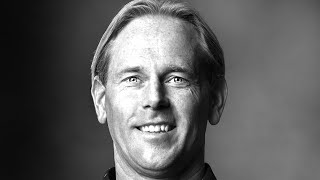
Travis Bradberry explains why emotional intelligence matters at work and home. Most people miss 64% of their emotions as they happen. High-EQ workers earn about $37,000 more on average, and simple practices like the "you spot it, you got it" exercise can measurably improve yours.
Questions this video answers
~400 emotional experiences per day.
36%.
10 million people.
About $37,000 more on average in annual salary.
1995.
All right, Travis. Travis, you are a PhD in psychology?
Yeah, I have a dual. I did a dual PhD in clinical psychology and industrial psychology, which is the business side of things.
And what is your specialty now?
My specialty is emotional intelligence.
And that applies to everyone. Or is work related or relationships or what?
It's certainly both. I mean, the. What I write about is geared towards all walks of life. And for many years, I ran a business that did training for corporations to try to teach leaders and people in management to have EQ skills.
What about this field made you want to pursue it?
Yeah, it's interesting because I first heard about emotional intelligence as an undergrad. There was a study that came out of Yale which really kind of a guy named Peter Salovey did the study, kind of set the tone for it. And it really appealed to me, I think, because of how I grew up. My mom grew up on a farm in eastern South Dakota. Sandy soil, not a very easy place to farm. Her parents, you know, lived through the Great Depression, and it's a very pull yourself up by your bootstraps kind of mentality. So I think as a young man, as I was navigating the world, experiencing, you know, strong emotions, when I learned about emotional intelligence, I said, oh, this. This is what I've been missing. You know, I wouldn't say that emotions were dismissed in the home I grew up in, but it wasn't something that was given a lot of emphasis.
And it's a fairly new term, right?
Absolutely, absolutely. When that study came out, that was the first book came out around that time, it was something that, you know, it was on Oprah, it was on the COVID of Time magazine, and people were just starting to learn about it.
It's such a great skill.
Yeah.
To have my. My youngest daughter shows. Like, I was really surprised when she had a really young age, showed me, like, she has so, like, so much ability to help her friends and process emotions and all this. Like, where'd you learn that?
Yeah, yeah. And it's. It's interesting because in the late 90s and when I started doing this around the turn of the century, people said, wow, this is. Aren't you afraid that people are going to lose interest in this, that this is just a fad? And I heard that, you know, decade after decade, it just continues to gain steam, the oppos. I think people have increased their awareness of it.
Why is emotional intelligence so important?
There's a very big reason, and that's because our brains are wired to give emotions the upper hand. So everything you Experience in the world around you. It enters at the base of your brain and it travels through the limbic system where emotions are generated first. This means you have an emotional reaction to the world around you before you're able to think rationally about it, before the signals travel to the prefrontal cortex where you think rationally. And we have 400 emotional experiences every single day on average. So the way your brain works is it's just sending you these bursts, these floods of emotion. And emotional intelligence teaches you how to do something effective with that, how to be aware of the emotion, really what it is. Like I said, Only 36% of people really understand their emotions as they happen. So you need to understand what it is, where it came from, before you're going to do anything productive with it. And a big mistake people make is they think that they can stuff their emotions down, that emotional intelligence is stuffing emotions down. It's not. It's just channeling emotions into producing the behavior that you want. You can't turn them off. But if you understand them, you can let them fuel a positive outcome in spite of how you feel. So emotional intelligence is so important because it actually builds this brain pathway between the emotional and rational centers of the brain. So when people work on their eq, when they actually develop these skills, they increase the flow of information between these two areas of the brain. And you can go from a person who has rutted country road to a five lane superhighway where information flows back and forth really quick. People become faster at reading and responding to their emotions and in turn more effective at dealing with them.
And your life, your life at work and your personal relationships will be so much smoother and better.
Yeah. And it bleeds into everything you do. So we call emotional intelligence a foundational skill where because emotions are the primary driver of our behavior, when you work on your eq, it's like watering a tree. And the branches are all the different things you do every day. So you find, wow, I'm better at dealing with stress, I'm a better public speaker, I'm better in my relationship. But I wasn't working on any of those things. I was just working on understanding my feelings, understanding other people's feelings and perspective, and trying to do something more productive with that. It just bleeds into everything you do.
You work as a therapist?
No, no. So even though I'm trained as a therapist, I went the business route. I went into business with one of my professors in my PhD program and we started writing emotional intelligence tests. Emotional intellig books and we made a training program that teaches emotional intelligence.
For your employees?
Yeah, yeah. For business people mostly. Yeah. Although we do. We would train nonprofits and it's just the businesses have the money to pay for training, so that's kind of how that works.
That's where the money is.
Yeah.
What kind of things do you help people with? What's a typical case? What do you see? A lot of.
Yeah. So I think the big thing is you're looking. Anyone can benefit from eq, even if it's something you already use. But people. Yeah, yeah. Eq, like iq? Yeah, that's kind of. That's the shorthand emotional quotient. But I think that people that aren't psychologically minded, this opens massive doors for them. So if you maybe aren't particularly self aware, you haven't given a lot of thought to why you do what you do. Emotional intelligence is an approach that helps you to really understand your behavior and how you respond to the world around you, what your triggers are. And it kind of, like I said, it opens a lot of doors because it gives you a new way of seeing things.
And typical. Like men from 50, 60 years ago would be like, fuck that.
Yeah, yeah, exactly.
What the fuck are you talking about? What's the most misunderstood thing about emotional intelligence?
The most misunderstood thing? Well, there's probably two. One is around gender. You know, I've. So I've been doing these tests for 20 years. I've given my test to 10 million people, and men are just as aware of their emotions as women are. So that's kind of the stereotype is men say, well, I don't think about this stuff. I don't do this stuff. It's like not true. You're just as aware as women are. The other thing that I think people misunderstand is that positive emotions need to be managed too. So just because you're feeling good doesn't mean it's sending you on the right track. That's when we make a lot of mistakes. When we tend to think we walk on water. That's some of the worst decisions that people make.
What are like blind spots that people have very often.
Yeah. So of all those people I've tested, I find that just 36% of people are aware of their emotions as they happen, are able to accurately identify them. So the vast majority of us are letting our emotions drive the bus, particularly when we're triggered. So when something generates an emotional reaction in you that's outsized to the truth, to what you experience, that Outsized emotional response, that's a trigger and people get flooded. And when emotions drive the bus, they can take you right off the cliff, you know, and that's, I think, the biggest factor.
Are there techniques like how will you teach employers or employees or people in general to learn and improve?
Yeah. So to really improve your emotional intelligence, you have to have an objective understanding of it. And that's why I started with the test. That's why anytime I publish a book, I include a passcode to go online and take the test. Because you need to know how you score. You can't just guess and say, oh, I should work on this or I should work on that. When you take a test, it gives you an objective picture of your behavior. You see your strengths, you see your weaknesses. And when you're aware of those shortcomings, you get outsized gains by working on those need areas. So, you know, and that's something that we do like in the book or in the training or whatever is. It's the test points to the actual strategies that you should be working on because they're different for you than they are for me. We have different needs.
Are there, like, for. If you're considering hiring someone as a leader of your department at work or whatever, what are the things you'll look for or look to either hire them or decide not to use them?
Yeah. Well, you certainly want a high eq, but I think that as a leader, you want someone that sets a positive emotional tone in the organization. When you're managing people, everything you say and do trickles down to everyone else. So if you're, you know, short tempered and you have a hard time understanding where other people are coming from and understanding their needs, that's the kind of tone you set. And everyone models that behavior. And then you have a really toxic culture.
The conversations at the water cooler get really interesting.
Exactly.
You don't have much emotional intelligence.
Yeah. And then your star performers leave and people don't like working there. And it's really often in. In the control of the person who's. Who's in charge.
Right. When did emotional intelligence really kind of take hold? What time was it? What year was it?
So the big. The big. The Yale study was early 90s, and a book came out in 1995 that Dan Goleman wrote, and that was. He was on the COVID of Time magazine. He was on Oprah twice. That put emotional intelligence into the vernacular. I think that, you know, I've been doing this about 25 years, and I would say in the early days, around 2,000, far less people had heard of it than now. Now you see it everywhere. People will put it in their dating profile looking for someone with a high eq and they just assume that people know what this means. And there's been this kind of just gradual adoption as the years have gone on.
Do you recall an instance when you were able to transform someone's EQ in a help the dynamics in the workplace?
Yeah. So this business that I started early on, there's training and consulting that happens, and I was a part of that. But as the business grew, I moved out of that and I was just writing and managing the business and doing those sort of things. But one of the first people that I coached, she was an executive at a telecommunications company. And we gave her a360 test. So she got to see the most objective picture of her behavior. The360 compares what you see to what everybody else sees. And all the research shows the most accurate representation of your behavior is not what you see, it's what everybody else sees. Right. That's the truth. And so when you give that to a leader and you say, wow, you think you're great at considering people's input before you make a decision, well, guess what? Everybody else says you're not. And that's not something you do. It's very eye opening and it's hard to refute. So you have a stubborn leader like this woman who is. She's your typical kind of just hard driving, bull in a china shop kind of thing. And we're going through all this and she would talk a lot about. She was a softball coach and she would talk a lot about, you know, her daughters, how good they were at softball and how far their pitches break and all these specifics. And I was, you know, I'm into baseball, so I was curious. And she comes to me one day and she says, one of the dads came up to me during the game and, you know, he puts his fingers on the fence and he says, come here. And I come over and he says, you're getting coached, aren't you? You have an executive coach. And she said, yeah, how did you know? Did he tell you? And he said, no, I can just tell by how you're treating the girls. So she and I only worked on how she treated her employees. But emotions are the primary driver of your behavior. Our brains are wired so that they drive the bus. When you work on your emotional intelligence at work, it impacts how you are at home.
So what kind of skills did she develop? You think?
Yeah. So for her it was being socially aware, right? Considering people's input, hearing what they had to say, really being present, more focused on the other person than you are on yourself, that translated to her being more patient. So when she, you know, when she would get impatient and it was kind of a frustration and emotion around it, she learned how to take a step back, be aware of it and slow down. And that had a big impact on people.
And what is the cost of having low emotional intelligence either in the workplace or into relationships too?
Certainly there's a lot of research with relationships and people with low eq. It's hard, makes it very hard. They fail in the workplace. People with low EQs tend to be low performers. So one of the things we find is that people with high EQ make about $37,000 more on average in annual salary. And when people do these tests and every point they improve their score by working on their eq, their salary actually goes up. So there's kind of a performance basis to it and how it makes you more effective.
Do you find with your training where you're trying to help these people that they are able to follow through with your direction and your suggestions?
You know, I do. Not everyone's motivated to do so.
Some people are not capable of change.
Yeah, some people are not capable of change. They're not interested in it. I try to. That's why the focus, I focus so much on assessment too because it's kind of hard to argue with something that's objectively telling you what you need to work on. You can dismiss what I teach in the front of the room as foo foo, you know, tree hugging and all that, but it's kind of hard to say, hey, this is what everybody says about what you do and why they don't like it. It's like if you're going to ignore that, you really don't care. Maybe you shouldn't be around.
That's pretty brutal to accept when everybody in the office says you're an asshole.
Yeah, exactly. Exactly.
What do you think holds people back from that kind of growth? Is it just like being closed minded and just like stubborn?
I think people are afraid of change. Certainly we all are to some degree. And I just find that really successful people, it's incredible how much they're willing to suffer to get ahead. But when it comes to increasing their self awareness, they put the blinders on. And that's because they've been taught that what you have is what you have. And with a lot of things that's true with iq. It's true. Your IQ is fixed at an early age and it doesn't change. But the pathway in the brain that's responsible for emotional intelligence is flexible. It's plastic, as neurologists say. And that means that as you work on new behavior, your neurons reach out, they branch out to each other, they build new pathways to reinforce that behavior. So people don't understand that leaning into their discomfort, building that self awareness is actually going to help them. They just assume that's focusing on your flaws that you're stuck with.
So for instance, a person like the woman you were talking about, she might have to work on her emotional regulation or suppression or things like that.
Yes. And she thought she was great. So I let her tell me how great she was. And then I said, let's look at your 360. Okay. You are great at some things, but there's some other things people really want to see differently. And for her, that was all the motivation she needed because she valued her team. She just didn't know how to connect with them. And that's what I see the most often, is that people care. They just don't know the right approach. Like I said, they're not necessarily psychologically minded. And not everybody went through a PhD program in psychology like I did. And it's an opportunity for me to give them that.
How do you present your findings to them? That's gotta be tough.
Yeah. So going through a PhD program when I was young, I finished my degrees when I was 26 and I felt like I needed to be this kind of highfalutin sort of academic and present things in a very sophisticated way. And I found that wasn't very effective.
Right.
It didn't land for people. And it took me a little while to get over the ego around it to be willing to meet people where they were at. And when I started doing that, I became. Well, my message landed. I became a lot more successful. People started reading my books, more people started taking the tests. It's like, so that's what I'm looking for, is to try to hit people with information in a way that they can understand and absorb it and use it. Because if you hit them over the head with it, they're just going to go back to doing what they already do.
Yeah. They close their minds off to it. Yeah, yeah. What's it called the sandwich thing that you're supposed to do? You give somebody a something, a compliment and then you work in some constructive criticism and then you'll get, you'll end with, finish with. Yeah, yeah, that works really well. I use that all the time.
Yeah, it does, it does. And I think that when it comes to eq, you know, there's four skills, right. It's self awareness and self management and social awareness and relationship management. If you can break those down in simple terms in everyday behavior, you get a lot of mileage out of it, then people can kind of run with it. And if they don't run with it, they're not going to go anywhere. Right. If they're just depending on you, then they get stuck.
What kind of problems do you see in the workplace with people that need help with their emotional intelligence?
Yeah. So I think the biggest issue is around self awareness. So people don't understand how they're perceived. And this leads to the kind of bad behavior where employees don't feel heard and they don't feel valued. So it could be a peer, it could be someone that reports to you. When they're not feeling valued, they're not feeling recognized, they're not feeling heard, then they don't want to work for you. I think the other thing that people do that's probably the biggest mistake is this just pushing too hard and just trying to focus on the task at hand rather than considering that you're working with people and you need to understand how to, how to address their needs as well as your own.
How often are corporations using help like yours?
Yeah. So they're using it more and more. I wrote this book in 2005 and I published this graph where it showed that emotional intelligence scores as you climb the corporate ladder, so you go individual contributor, supervisor, and then they peak in middle management, and then you go above that. It's just this ski slope down to the CEOs who have the lowest EQ scores on average. Yeah. And that graph just, just got a lot of mileage. I wrote some LinkedIn articles that got millions of views because it was true. Organizations put people in middle management because they're good with people. So they see that and they go, we're going to promote you. And then once you get there, they say, you're not getting to director level, you're not getting to VP level, you're certainly not getting to the C suite unless you have tenure and short term financial gains. What have you done? But within each of those job categories, the highest performers are those with the highest levels of emotional intelligence. So CEOs have the lowest EQ scores on average, but CEOs with the highest EQ scores are the top performers. So I actually have seen that graph change over the last two decades. And I put this in my new book because it's not true anymore. So some organizations are still that way, but when you look at them as a whole, it's leveled out and people are really starting to change.
I've said probably in some of my videos before, and I've said this personally with people that, you know, in schools, they're teaching trigonometry and all this, you know, crazy stuff that doesn't really. Isn't really that useful in our lives once we're out of school. But things like emotional intelligence or how to handle money or just how to make friends, how to build trust, things like that are just never taught. And families aren't really doing a great job either.
Yeah, we learn the three R's even the US school system is based on a 18th century Prussian model that was designed to produce, you know, sort of docile subjects and factory workers, not leaders, not people who know how to connect with people. But more and more you see it. I mean, when I visited my son's elementary school back when he was in elementary, they were teaching about a growth mindset, which is an EQ skill, Right. Growth mindset is you're looking at setbacks as challenges to be overcome rather than personal flaws that you're stuck with. So there's some of that mentality is starting to creep in. I think it just depends on who your teacher is or where you're going to school.
As far as romantic relationships go, this is probably the most useful tool you can have, right?
Absolutely. It's very important. One of the things I write about relative to EQ and relationships is John Gottman's work the Four Horsemen of the Apocalypse. And what he discovered is that the amount of conflict that exists in a relationship is not indicative of the success of a relationship. It's how you approach conflict. And people who try to initiate repairs, who try to meet their partner where they're at sort of meeting in the middle, how can we compromise? Tend to have much higher quality relationships. And that's an EQ skill, because if you're not aware of the other person's emotional experience, if you're not aware of how the world looks through their eyes, you're not gonna be able to meet them where they're at. Likewise, if you're not self aware, if you don't understand when your emotions are derailing your behavior and sort of taking you off the deep end, you don't know when to pull back, right? And you really can alienate your partner. So EQ kind of plays its strongest role in conflict in relationships.
It seems to be very much about being able to see things from the other person's perspective.
It is, it is, because really the emotional intelligence skill is understanding emotions in yourself and understanding them in other people. And then what do you do with that awareness? How do you let that awareness drive your behavior? How you respond to them and how you act?
And change is not always easy for some people.
No, no. But if you have data to go from. Right. And that is just sort of what the other person in the room is thinking and feeling and what you're thinking and feeling, you can choose a new course of action.
What would you recommend as an approach to dealing with like an emotionally charged conversation where everyone's. Yeah, everything's being escalated, the tension and everything.
I think that first of all you need to.
Because when someone can stay calm despite you're talking about something that normally people would be screaming about, it just changes everything, doesn't it?
Yeah. And I think the ability to stay calm comes from focusing on delivering your message in a way the other person's ready to hear talking, so people will listen. That's what I talk about, and my book is that if you don't deliver your message in a way that they can absorb it, you're not going to get anywhere. And usually that's when you're being overrun by your emotions. So if you're not self aware, if you're so fired up that you just hit people over the head with it, as I said before, that doesn't work, that doesn't land. I think that if you don't understand the emotional state of the other person, if you don't understand, if they're triggered, you're going to have a hard time doing that.
Are men or women typically better at this kind of stuff?
Yeah. So women do outscore men slightly in emotional intelligence. The difference isn't necessarily statistically significant. You know, it's maybe a point or two. But the interesting thing is that even though the genders are equal when it comes to self awareness, women outscore men in relationship management, that fourth skill. And there's probably a socialized component there, right, where women are socialized to be more nurturing and more considerate and caring of other people. But it isn't because men lack the capability to do so because they have really similar levels of self and social awareness.
And younger generations are now much more tuned into this kind of stuff, right?
Yeah, yeah, absolutely. I mean, I Look at my parents generation versus my son's generation. There's different expectations for how you act in a relationship.
It's wildly different.
Yeah.
And does that bode well for society? It should, right?
I think so. Yeah, I think so.
I would think it'd be one of the biggest things.
Yeah. I'm not certain the patriarchy is doing a lot for us. So if a man is willing to be as nurturing and connected to his relationships as women are, what?
Yeah.
Who's only good comes from that?
Exactly. It seems like men get such a. Like lately they've gotten such a bad rap for just being men.
Right, right.
And these are the kind of behaviors, this lack of emotional intelligence is what is like the central point in all of that negative reaction they get.
Well, and it's interesting, if men could.
Improve on that but maintain a lot of their other behaviors, they'd probably fare nicely.
Yeah, I think because it's not like.
People don't like men, they just don't like men that are assholes.
Yeah. Or you can still be a man, a very masculine man, without being socialized into this little box, you know, like what the patriarchy has sort of told you to do versus what you want to do.
And what kind of suggestions can you make for us in general just as we go through our lives with friends, family, work.
Yeah. I think that the number one thing I challenge people to do is increase their self awareness. And there's a little game you can play that's called you'd spot it. You got it. The idea here is there are all day long around us, people are doing all kinds of annoying things, all kinds of things that could potentially get our goat. And there's only certain things that really irritate us and drive us crazy. And that's only because they reveal something about myself. So maybe it's something that I know I'm working on and I see someone else working on it. So it kind of triggers me. Or maybe it's something that I'm not totally aware of, but it's a real need. So the you Spot it yout Got it game is a real fun way to increase your self awareness because you can actually see. Okay, that triggered me. Let me figure out why. And once you figure out why you're increasing your self awareness. When you increase your self awareness, old pathways in your brain will actually die off. So let me give you an example. If you discover that you're a yeller, right. When there's conflict, you yell. And it doesn't necessarily have the Best outcome, you have pathways that reinforce that. So every time you get angry, every time you get triggered, your brain loves efficiency. It doesn't want to build a bridge. Every time it cross or every time it crosses the river, it builds a permanent bridge. It makes that, that pathway easy. When you learn to bite your tongue and stop yelling, those neurons will actually, the arms that branch off and reach out to each other will wither and die. And you will find yourself not yelling without even thinking about it. A new pathway will be formed that will reinforce the more constructive behavior. So you can only do that by opening the door with self awareness. And once you open the door, repeat the behavior until you catch yourself doing it without thinking about it. And then that's when you know you formed a pathway, you've made it habitual and you can move on to step the next next one.
Excellent. So the you spot it, you got it thing, I think is especially pertinent to social media commenting. So there's comments on my, on a lot of my videos, I see this all the time where you'll see somebody who's doing something, they have some vice that they're engaged in, and that's what a lot of my videos are about. And there'll be a commenter saying what a fuck up or whatever, you know, something very negative, right? Instead of having compassion and empathy and saying something maybe a little more encouraging, they'll criticize this person. And to me, I always go to what you said, if you spot it, you got it. Because you're guilty of something. Not necessarily the exact same behavior, but some other vice that can be traded, whether it's gambling or drugs or laziness or whatever, you name it.
Well, and it's really interesting too when you consider your channel, right? These are people that are showing their soft white underbelly. And to jump on that shows that you're clearly triggered by it. And that's probably that commenter's soft white underbelly that has been revealed by the video.
That's exactly right. I wish the other commenters would jump on their backs when that happens, but they seem to usually let him go.
Yeah, not always, though. I'll tell you one more thing about relationships too. A thing that people can do, and it's something that I teach, and that's quit winning the battle to lose the war. This is something we do where we're always just trying to prove in the moment. We're so tempted to prove that we're right that we may do so, or we may feel that we prove that we're right. But the overall quality of the relationship erodes in the process because the person that we're interacting with doesn't feel. Feel heard. They just feel kind of bullied and bulldozed. So if you want to be effective in your relationships, you have to know when it's not the hill to die on. I'm not going to win this battle on purpose because I want to win the war. I'm going to lose this battle, but I'm going to win the war. And being able to seed ground in a relationship like that is a very advanced emotional intelligence skill. When I've taught people to do that and they actually use it, they are floored by how people respond to them. And that's this idea with self awareness is when you increase your self awareness, you start treating people differently because you see yourself and you see them differently, and it blows people's minds. Like people that know you really well, like I said, if you're the yeller and all of a sudden you're not a yeller, they just for a minute, they don't know what to do. They're floored by it.
And then in weeks they'll forget that you ever were a yeller.
Yeah, in time, they certainly will. They certainly will. And I think that's why when I first started doing this, the first time someone came up to me, I remember I was at a human resources trade show and I did a book signing and a woman came up to me and she said that my book changed her life. And I got. I mean, I was gracious, but inside I felt really uncomfortable. I got this just massive dose of imposter syndrome. But what it taught me, and this was like 20 years ago, right. I was still in my 20s. And what it taught me is that people need this stuff. They need it broken down for them and given to them. And it really can change someone's life. Because for me, it felt at the time maybe like I wasn't doing this at PhD level or academic level. It was more how to level. And that actually showed me this is who I am, this is who I want to be. I want to help people use this stuff.
There's nothing better to help people with than this, I think.
Yeah. Yeah. So that's kind of when I really. When it really hit me and this, this became a lot more my calling.
Yeah. I mean, I find in my life, when I am able to. Let's say you have a friend who's cheap, they'll never. They'll never pay for Dinner. But they're a good friend. I've had other friends go like, she's so cheap, or he's so cheap, or whatever. And they're, like, trying to, like, make me aware of that one negative quality. But. But they're a solid friend, and they really just have so many other great qualities that, you know, no one's perfect. We all have something. Yeah, I'm sure I do, too. And it's like you. If you can accept that one negative, all the positives make it all worthwhile.
Yeah. And it's. It's interesting because, you know, our brains are wired.
Shut up about it.
Yeah. And. And I think we do that because our brains are wired to focus on threats. You know, it's kind of your brain's job is to keep you alive. And with other people, it can really erode your gratitude. So you have this great friend who does all these amazing things, and because they're cheap, you're just fixated, laser focused on their cheapness. And it's easy to do that with yourself too. Right. You have all these great qualities. We all have our talents, and we have things we're just terrible at, and we focus on that. And they did this really interesting study at UC Davis where they had people. They called it cultivating an attitude of gratitude. So. So they just set calendar reminders five or six times a day. The reminder went off, and the subjects had to stop and think about something they were grateful for. And that was the experimental group in the control group. The calendar reminder went off, and they didn't tell them what to do. It just. We're gonna have this calendar reminder go off. The people who paused to think about something they were grateful for, their cortisol levels, the stress hormone, it went down by 23%. So again, self awareness, shifting your thinking, you tend to focus on flaws, you tend to focus on threats. But when you're aware of that and you put yourself in a new direction, focusing on gratitude, you can actually, you know, there's chemical changes in your body that you experience as a result, and it affects how you feel.
And then very often those flaws that you once were upset by, the person learns and they change.
Yeah.
And they're gone.
And you start to feel better about the things that you're good at.
Yeah. And you saved a friend a friendship.
Yeah, absolutely.
Yeah. Travis, thank you so much for enlightening us on what's going on with emotional intelligence.
My pleasure.
What is your book again?
My book is called the New Emotional Intelligence.
And you do speaking engagements about this as well?
I do. Yeah. I speak at conferences and things like that.
Excellent. All right. Well, thank you so much.
Thanks.
All right. When I was designing the first Soft White Underbelly book, I realized that there were so many great portraits that weren't going to make it into that book. They just wouldn't fit. And once I saw how well that first book sold, I knew I'd have to design a second book. This second book is finally ready to ship. Like the first one, this book has a collection of some of the best portraits from Soft White Underbelly, accompanied by a quote from that person's interview. This book features another group of Rebecca portraits, as well as a collection of color images of the Whitaker family and plenty of others. You can order yours for $125 or $150 for a signed copy at softwhiteonderbelly.org Again, like the first book, once this book is sold out, I will not be printing more of them. The portraits are what Software Underbelly is all about, and these two books contain the best of all that work. Thank you for.
More from Travis
Top Emotional Intelligence Expert Gives Practical Steps to Improve EQ (Dr. Travis Bradberry)
How to Use Focus to Control Your Emotions | Dr. Ethan Kross & Dr. Andrew Huberman
The Surprising Benefits of Negative Emotions | Dr. Laurie Santos & Dr. Andrew Huberman