Talent & Culture Drivers in Accounting with Trisha Daho
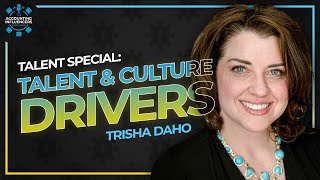
Podcast interview (Accounting Influencers) with Trisha Daho, founder of Empowered, discussing talent and culture in accounting firms. Trisha draws on Big Four experience and advisory work to explain drivers of change (Gen Z/millennial expectations, COVID-enabled remote hiring, talent shortages), the industry image problem, DEI challenges (retention of women and underrepresented groups), leadership gaps, partner compensation tensions, and the importance of intentional hybrid-work design. She recommends firms be self-reflective, reimagine hiring criteria, invest in leader development, and act now to align employer brand with inclusive culture; measurable benefits appear within 18 months and more clearly over 3–5 years.
Chapters
It's the Accounting Influencers podcast. And with another of our Talent in Accounting specials, we have got a wonderful guest with us today, Tricia Dahoe. Hello, Trisha.
Hi, how are you?
We're splendid. Lovely to have you with us, Tricia. For people that haven't come across you and the wonderful world that you inhabit, tell us a little bit about what's going on.
Well, I own a firm called Empowered, and we do culture, people, strategy, dei strategy for mostly accounting firms and law firms.
Now, accounting law firms, are they a little bit different from the rest of the world? Do you think they're pretty unique or are the problems you've seen there amplified everywhere?
Well, the way they measure themselves is very, very similar. Their business models are very, very similar. If I was to cite one large difference for how we interact with them, it's that lawyers, frankly, are way less hierarchical and how they make decisions, and that makes it more difficult for us. Accounting firms are easier in that respect.
I get that. In terms of professional services, is that any different to any other industries or sectors that might.
Oh, I think it's actually, I think. And I. Maybe I'm just biased. I think that when you are a service provider, the culture and people stuff is a lot more complicated.
Okay.
And this, this will resonate with you because you're. You do employer branding. You can't be inconsistent with how you show up every day when your people are the product. So you must think, breathe, speak, do on brand all the time for it to make a big impact. And I think that makes it a lot more complicated and makes it way more important that your culture starts stuff is right. Like if I was selling you this phone, the phone can. The phone and its attributes can speak for itself. When I'm selling you my team, way more intricate and complicated and complex than has to be right every time on how you, how you interact.
So it's an important point. And when we look at the nature of accountants, lawyers, professional people like that, super smart, highly qualified, they think that their job merely entails doing the work, churning out the hours, billing, billing, that chargeable time, serving the client. But in actual fact of what you're saying here is they have additional responsibilities to represent the brand, be ambassadors of the firm, to show up in interactions with people inside and outside the firm. Because they're always portraying the brand of the firm.
Yes, absolutely. And people do not buy you. Companies do not buy you and your services because you do the work, simply do the work. They buy you because they trust you and they want to work with you and they want to spend time with you. And those things are way more about culture and how you show up and how you consistently do the right things than if I was selling a phone.
I'm tempted to echo what many accountants that I know might say, Tricia, I haven't got the time for that. I'm so busy dealing with clients. You want me to do all of this branding stuff as well and be a representative of the firm? I do with my clients. But you want me to be on social as well, or you want me to go to networking events and always be on. I mean, where does it stop? I'm busy enough as it is. What would you say to them?
I would say it's not that much time. When you're being authentic to who you really are and making sure that's represented in what you're doing every day, it becomes a habit. It becomes who you are and what you believe in in your firm.
Tell us a little bit about your background, Tricia, and what gives you the credibility to talk to professional firms about things like talent.
Yeah, so I spent the first half of my career at Big Four accounting consulting firm and made partner back in 2006. Have been doing really culture building, leadership development and DEI work since about the year 2000 when I moved to the Detroit, their Detroit office and have done kind of been in charge of those initiatives in all the different regions of the country. They had me. So I jumped out in 2014 and started my own firm doing all culture, all people, all DEI stuff.
It's terrific that you've got such a heritage in the corporate end of accounting firms because those big four firms particularly have such a driven culture, don't they? Have put in the hours, get the work done, serve you time, almost churn you to a desk and milk you dry. Would it be unfair to say that or is that what you experienced?
I would agree with you. I think they have enormous resources available to them for a lot of this stuff. Yeah, they are grooming the best of the best a lot of the times, but it is a very hard lifestyle. I did not have a personal life until I left, for the most part. So, you know, there's great things. Being surrounded by that many really motivated people all the time is amazing. And there's things that they really need to work on and even though they have the resources are still not figuring it out, like how to handle stress, how to handle, you know, career pathing and stuff like that.
Tell us about the price you ended up paying to become partner there because, yes, I'm sure you were remunerated very handsomely for what you were doing, but that's not an easy career track, is it?
No, it's not. And I didn't think we were going to go this deep, but I will, I will be completely forthright with you. I wanted to have children my whole entire life and never got the chance. I was so focused on working 75 hours a week and doing what I need to do in that firm that I just never got the chance to do that. So, yes, I have a very personal price that I've paid. I'm planning to make up with it for it now with my life and how I'm going to live my life.
That sounds great.
Yes.
I didn't mean to probe so deeply into that, but I know there's a cost to be paid even in your, your health and your state of mind. Because yes, money isn't everything. But let's zoom out a little bit, Tricia, and talk to us about the big trends and the big movements going on in things like culture and talent in professional services. What are the key drivers and things that the themes, if you like.
Well, let's just start with what is the stimulus for firms to actually engage in this kind of work? Younger Gen Z's and millennials are way more interested in this kind of stuff than we've been historically in the past. I'm Gen X. We pretty much took the boomers way of life and got in line and did what we needed to do. Most millennials and Gen Zs have no desire to spend their entire lives in front of a computer, at least not working. So there's that stimulus. Clients are now saying, we'd like you to have more of a focus on this. Talent acquisition is huge. So talent acquisition and retention is probably the number one reason we're engaged with firms. How do we keep them? How do we get them? How do we decide how we want to get them? Because there's such a shortage of talent that fits the very narrow cpu, CPA route or equivalent overseas. And so we've been asked to come in and help them reimagine what skill sets they actually need, build the proper onboarding for coming from different backgrounds, and then retain them. So career pathing and culture building and.
Everything else, what drivers have pushed this shortage of talent? I know we've been through Covid, but back when you were at this top four firm, you'd probably have fought very hard through multiple interviews and a rigorous recruitment process to land that very prestigious job. These days, it almost seems like accounting firms are crying out for talent, and they'll almost give anybody a job. And it's not as rigorous at all. So what are some of the drivers that are pushing this shortage in the labor pool, Tricia?
Well, a lot of accounting firms are experiencing a lot of growth, but the people are not there to fill it in. So there's a shortage of typical accounting background majors and stuff like that coming into the space.
Taking graduate courses, aren't they? In accountancy?
Yes. Degrees. Yeah.
Okay.
Yeah. So there's a shortage of people coming into the lane. And so reimagining how the lane can be expanded to include very similar technical backgrounds just show up in an accounting firm is what people are doing now. It's also gotten a lot better. Well, I think it's gotten a lot better because of COVID So the pandemic taught us a lot about what we could do and not do around onboarding and teaching people that come into our firms and they can exist somewhere else outside of our geography and still do that. So that for, let's say, a regional middle market firm, we can now look more expansively at other places in the country, et cetera, to find talent. And it would actually effectively work with the culture we already have. We can make that work.
We hear about quiet quitting and the great resignation, the great recalibration. Does that have something to answer for in turning off many millennials and Gen Zs of a career in accounting, or even those that have come into it, they're now, is this what I signed up for? Is that in play?
It is in play. It's absolutely in play. And in fact, it's in play at two ends of the spectrum and probably in between. So older accounting accountants, usually the partners in the firms are, during COVID having conversations with themselves about their exit. Do I really want to keep doing this? Do I want to reimagine a whole new way of living in a firm than I did two years ago? And so they're making crossroads decisions about their own path and, like, exiting and doing something completely different. And then you have the younger people coming in and saying, well, 80% of us at some point want to own our own companies. We want to be entrepreneurial. Is this really an entrepreneurial track? Can I reimagine how a firm is innovative to meet those kinds of needs for my own people? It's changing the entire conversation around how we actually do the work, how we actually create career paths for people, how we actually brand what we do. So that it draws the right kind of people to us, because frankly, given what you do for a living, there is very little employer branding that is very differentiated. And those firms that can actually say, we're innovative in how you engage with us to get the work done and here's how are going to win the talent.
Well, we're looking at the, the bigger drivers here in this episode, but I'd love to get you back and deep dive a little bit into the culture of a firm and what employer brand looks like. Let me ask you, do you feel the accounting profession at large has an image problem if people are. You're straight in on that one because absolutely. People are looking at it as a career choice and they might start at a higher salary in legal, you would know about that as well. But they're attracted out of accountancy into commerce and industry and fintech and everything else. The career path for accountancy is perhaps becoming less desirable. So that has a part to play in the leeching out. But also those senior people that have been in it a while, as you said, they are saying, is this the work life balance that I want? Is this what I signed up for? So perhaps the profession does have an image problem.
It absolutely does. I've had so many conversations with firms around the world that are trying to get their national accountancy organizations to rebrand what an accounting career looks like. I come from a very unconventional background. I took two accounting classes in 1991 and I went to law school and went directly into a big four. So I come from a very unconventional background, did very well very quickly. So there are, you know, I think we're finally finding a changing of the minds and the mindsets around what can make a great career and how varied it can be even within an accounting firm. We do all kinds of things in accounting firms that we didn't do 20 years ago. And have we even begun to communicate that and message that to the people, people who most want to work here? I don't think so. I think we have a long way to go.
I read somewhere that with the baby boomers going off doing their thing, there are more people dying or leaving the accountancy profession at the top end than there are coming in now. Accountants, when you speak to them, are less concerned about that because they feel that technology and automation and AI and whatever it is will pick up the slack. But with more and more entrepreneurs coming into the world, more and more people starting their own businesses, there's going to be an increase in demand for trusted advisors and accounting services. So automation and technology is not going to take up all of that slack. We are going to need more accountants in the future.
We are, absolutely. And we should be looking for them in, in places we haven't looked before. You know, this is like kind of the diversity discussion. Can we, you know, let's just take that for a second. In almost every country that I've looked at, women are joining the accounting industry at equal, equal measure to men. But by the time they get 10 years into the careers, they're leaving the industry to go somewhere else, do something else. So the issues are different. The issue around more diverse candidates like black accountants and Hispanic accountants and I don't know, veteran accountants, disabled accountants, that's. They're not even on the radar. You know, they're not even thinking accounting might be a great career for me because they see these all old white male spaces on websites, for example, and say that's how am I ever going to fit in there? So there is a definite branding problem. There's a definite, not just a firm branding problem, but an industry branding problem that I think needs to be changed dramatically with. I don't see it ceasing. I don't see us finally having a respite from needing more talent than we have available to us. I think it's going to be a long term problem. It has been, it's been a problem for 20 years as far as I know.
Indeed. And the accounting firms that don't get a handle on this and build employer brand and again we'll dip into that in another episode. But what's going to happen to them?
Right? They're going to get either going to just leave the industry altogether and close down or they're going to get folded up into other firms which was see a ton of over here.
Some of the marginalized groups that you spoke of. Let's take women for example. We did a series on our show of 14 panel episodes with some prominent leaders in female leaders in accounting and fintech and some interesting themes came through. Childbirth came through a lot and rearing kids and having that role. The menopause came out a little bit. What happens when you hit 50 and all the things you're going through and on the record, my wife's going through that right now, so I'm experiencing that from the other side. So there's lots of issues there with these underrepresented groups that have a lot to offer and we hear the business case for diversity and diversity not just of personnel and gender, but thinking and approaches now. I will come to a question. But they say accountants only change with two drivers. One is a mandate from law, legal regulation, government taxation. The other is a demand from clients. So if you look at the client base now, you, if you're a 25 year old entrepreneur, do not want to be served by a 55 year old white guy. If you're black and a single mother at 25, you want representation in the accounting firm of people that know your world, appreciate your problems, speak your language. So, so many things going on here with the diversity in a firm. Talk to us a little bit about that.
Well, it's, you know, at least in our country, George Floyd's murder a few years ago had a huge impact on firms. Actually starting to take a real look at this, right. Go beyond the performative, you know, statements around what's important to them and actually do the work I have. This is the crux of a lot of the work that we do. We are seeing accounting firms want to make differences in having greater diversity for the outside world because clients care now and their younger people are demanding that be the way it is. So it's being fueled from a couple different perspectives and a couple different stakeholders. I guess the real challenge though is that there isn't some magical basket of diversity waiting to come work for your firm. It's more complicated than that and it's going to take a longer term than you probably like. But you got to start now reimagining the unconventional backgrounds that can be easy, easily plucked into your firm and be successful. They exist. You know, we have lots of finance people, legal stuff it and mis and stuff like that. Those things are very powerful when they're applied to accounting and we've seen the results of those and that they've been very successful people. It hasn't translated to, but where am I looking for those people? How can I be expansive and specific about my criteria, expansive about where I'm looking and very specific about the criteria I'm using to figure out whether they're going to be worthy of a job here. That's the kind of work that we do. And then the second, second half of that is employer branding. How do we draw them to the firm based on what we're saying and doing every day? And it's a challenge. It's going to be a challenge for at least the next 10 years because it has to shift.
We've done a couple of interviews with two very interesting gentlemen. One is Herschel Frierson. He's a partner at Crow, but he's Also the chairman of the national association of Black Accountants. And another is Professor Anton Lewis, black accountant, who speaks into diversity and social inclusion.
And.
And both of them talk about the fact that when they were coming through the ranks, there was nobody like them. So if you want to attract a diverse talent pool, you've got to start somewhere, haven't you, and get those people in the ranks so that they're representative of your employee base, then other people are going to be attracted into that.
Yeah. And if you can hire laterals, find the laterals to bring in so that you're starting ahead of the game and having some people in leadership that don't look like old white guys. Yeah, it's a challenge. But, yes, you have to start. Now we're talking about how do we, you know, the other thing is cleaning your own house. Are we ready to have diversity and treat everybody with the same inclusion experience based on what they look like and what they bring to the table and their specific things? You mentioned women and having children. If we provide, I'm a big believer that accommodation is actually relatively easy. In almost every instance, if we give people what they need to be successful with us, they will stay. And I don't think we've had a long enough conversation with ourselves on how we're not cutting it for people when they decide to leave. Because it's really, really easy to say, well, she wanted to have kids. Well, men have kids all the time. That responsibility does not usually negate need to have some kind of income. And if we can make it easy for someone to stay, stay with us and thrive with us without really that much change in what we actually get out of them, productivity wise, then why wouldn't we do that? Why are we making it so easy for people to say, I'm not cut out for this?
It needs some very honest conversations. Talk to us about the business model of accounting firms, the traditional partner compensation model and equity, and you buy in and people coming through the ranks will feel that they're just working long hours to fund the retirement part of the more senior partners. Does that need to change, Tricia, or is that fit for purpose?
I think it needs to change. But I was at a big firm where they, they. It was crazy to me that they made so much money off younger people to fund what they were paying the partners. Sure. Completely unnecessary. You know, at some point it's just too much frosting. So I do think that needs to be reimagined. Do I think it will be in the short term? Absolutely not. I think There's a tension right now on the old guard wanting to protect what it has.
Yes.
Wanting to keep it the way it is because it serves them to keep it the way it is. And I'm a big believer that you make the pie bigger. You don't take a bigger piece of this existing piece. But I'm not sure that's completely resonating with everyone yet. I think we're still a little far away from changing the business model of how that happens, but absolutely, I don't believe it would affect how well we resonate with clients. It would resonate hugely with our people and it would help a retention problem quite a bit.
What kind of problems would accounting firms be having for them to say, goodness me, let's get Tricia Deo in here right now?
Well, we're called into less often culture crisis situations where we have some problematic leadership or we have problematic employees or problematic things happening at work. Those things happen. But to be honest, most of what we get is our culture seems lackluster, it seems stale. We have talent acquisition issues, we have leader development issues is a big one. We seem to have a lot more leader development stuff going on now than we did in the last three years because we're coming back from pandemic and they're focusing on that and retention is a huge one. So we're getting called into firms that usually already know they have some kind of issue around diversity, equity, inclusion, culture building, retention, talent acquisition.
How easy are those problems to fix? Presumably yours is a long term retained arrangement. You've got to get your head under the bonnet and change all kinds of things that have been happening for years.
Yeah, we probably are with our clients between 12 and 18 months before we're kind of put to pasture in monitor mode. But I can tell you if you're going to do a massive work around your culture building, you start to see the results of it in 18 months, but you get to really reap the benefits of it in three to five years out from when you start.
When you talk about these problems and issues around culture and talent, how do they get started? What problems, sorry, what causes are at the front of these? What are accounting firms getting wrong and leadership getting wrong to create culture problems?
Well, they keep leaders around that are not very good at leading. So accountants usually go into the industry because they want to be really technically great at accounting. They don't typically come in to be great business leaders or great people leaders. There's a gap in understanding and acumen around leadership, which has an enormous Impact. It's actually the number one impact for people and why they decide to stay or not is what their leaders are like and how they interact with those leaders and how much of an interest those leaders take that person's career path and themselves as people. They typically are focused on clients so much they forget their people, which doesn't make any sense because the only way your clients get anything from you is because of your people. So there's some mindset shifts that have to happen there. They just can't get the talent in and they need help figuring out how to do it. They can't retain the talent. By the way, you get lousy data when people are exit interviewing with you. Like, don't even bother because they're not telling you the truth of this stuff when they're not engaged anymore with what you're doing. So you need to get that stuff now. You need to get them while they're still engaged and figure out what you need to do. They will tell you if you ask them. So taking an interest, being focused on being self reflective is the number one reason that they're successful or that they're doing. They're engaging in the work in the first place. If we can't get you to be self reflective about what needs to be different, how people need to experience your firm differently, it's going to be a very long hard road. Like it's. You're not going to do it. So we usually see the best success stories in those firms that are willing to be self reflective and that's why they engage us.
Yeah, very good, Tricia. We'll put your contact details in the show notes and I'm sure our listeners will want to reach out to you and have more conversations and you're very open to that. A couple more questions here. What's coming up over the next three to five years in culture? What's going to separate the good firms from the great ones?
The good firms are going to master hybrid workplace and leading people through a hybrid workplace with the same levels of inclusion for people who are largely remote or not often in the office and the people who are in the office all the time.
It's hard to drive culture in a hybrid working environment.
Correct. But your people will show up for things that are emotionally compelling for them to show up for. Okay, so if you can have people come in. Offices are not defunct. Like offices are not useless now offices. The reason to be in the office is not to be productive on your individual work in front of your computer by yourself. We Know that is not the case anymore. That's over. But seeing leaders model behavior, learning, you're still an apprenticeship model in accounting industry. So learning, understanding, figuring out how I interact with everybody else. Important culture building activities happen all the time in firms. So if we can focus on the days of the week where we want that stuff to happen and compel our people to come for those interactions and those experiences, they will come. But I haven't yet seen firms that are focused on that yet. They're still trying to figure out some of the stuff about guidelines on what they want to do with hybrid or not. Those firms that are really strict about we want you all in the office all the time are going to lose everybody. And those firms that are fully just be remote and do whatever you want are going to lose culture in a way that is not compelling for people to stick around. There is definitely a happy medium in how you do that, but being intentional about it is what, what's most important. And I think firms are waking up to that reality really quickly. I think it'll take us three to five years to actually realize how we can do it in a really effective, meaningful way for everyone involved.
And finally, Tricia, what would be your call to arms, your warrior call, if you like, to the leaders out there that have a voice in accounting firms? They can shape culture. They perhaps might not feel an incentive to do so right now, but there is a tsunami coming up, whatever that looks like. What would you say to them in terms of driving through change, getting the buy in from their fellow leaders to make their employer brand and their culture more attractive to the younger generation?
Yeah, I would say if you haven't had the storm yet, it is coming. Cleaning your house is going to make the employer branding so much easier and so much more compelling. And now is the time to clean your own house around cultural issues and how people get raised up in your firms. Because that's the things you message to people you want to join you. So you don't really have time to put this on the back burner for much longer. The good news is once you've been intentional about it, it becomes the habit of the firm. It becomes ingrained in how we interact with each other. And then what you're speaking every day is what you want your potential candidates to hear. But it takes work. It's not going to happen automatically. And those firms that are intentional will see will reap the benefits of that. We see statistics that those firms that are intentional about culture building and employer Inclusion experiences have 800% better results on the bottom line and top line stuff than other firms.
Wow.
This, this is real money.
Just this is fascinating. Let's get you back to talk about inclusion and diversity and employer brand and culture and get into the nuts and bolts of that. But for now, we really thank you for your passion and your insights.
Thank you. Thank you for having me. Sa.
More from Trisha
We are launching a new way to master leadership by mastering the self and its history! Check it out!