We are launching a new way to master leadership by mastering the self and its history! Check it out!
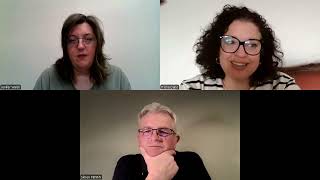
This is a recorded YouTube conversation (June 4, 2025) hosted by Trisha Daho with Jennifer Walsh and Simon Penny about a new intensive approach to leadership development that centers deep self-work. Key themes: conscious leadership and ego development (moving leaders from an "achievist" mindset through "Catalyst" toward "synergist"/strategist thinking), the role of trauma-informed somatic work and embodiment in removing blocks to leadership, alignment of personal values with leadership behavior, psychological safety and vulnerability, and translating inner development into practical team/culture strategy. The speakers describe a practical offer: a two- or three-day intensive for leaders or leadership teams (estimated ~80% inward/self-work, then translating that work into strategy/people development). Participants: Trisha Daho (runs consulting firm Empowered, culture & leadership development), Jennifer Walsh (trauma‑informed somatic coach, uses IFS and compassionate inquiry), Simon Penny (leadership/culture practitioner based in France).
Questions this video answers
June 4, 2025.
A two-day intensive or a three-day intensive for leaders or leadership teams.
About 80%.
Trauma-informed somatic coach and author; uses Internal Family Systems and compassionate inquiry.
She runs a consulting firm called Empowered focused on culture building and leadership development.
Chapters
We are going to talk about what we do first. Why don't we talk about introducing each other, actually introducing ourselves, I suppose. Jennifer, why don't you go first?
Okay. So I'm Jennifer Walsh. I am a trauma informed somatic coach and author and I work with clients basically on childhood wounds trauma. I use an internal family systems informed perspective as well as a compassionate inquiry perspective in my work and tackle things like polyvagal theory and all of these things kind of help people move themselves forward in a more embodied, centered way.
And Simon?
Yes. Hello everyone. I'm Simon Penny. I'm based in France and I've been here for 30, 35, almost 35 years, working in different companies on different cultures. Came to France with Disney back in the 1990s and loved the culture so much that I have stayed here and really worked a lot with transforming cultures, bringing cultures together, using different mythologies such as Myers Briggs or typology to help people better understand and work to get better understand each other and work together. And I'm really excited to be with Jennifer and Trisha working together and bringing new insights into leadership.
Awesome. Thank you. And I'm Tricia Dow. I run a firm called Empowered and we are a consulting firm around all things culture building and leadership development. And we primarily serve service based firms in that process. So the reason we've come together, the reason we've been decided to come together and collaborate is because we were seeing needs that were not being met in the leadership development space. And so we've developed a program over the last several months that gets into a much more of an intensive approach to leadership development. Why don't we start with the question of why do we think that something was necessary be different around how leaders are developed currently? Who wants to take that first?
I'll go, if that's okay with you, Jane. I think that. And we see it as each week goes by in the world in which we're living the political, economic world. Change is so present in every, every week, every month that goes by. There's so much that's changing that we have seen that in order to be able to lead people in this very difficult world, we need to have leaders that can lead sustainably. And that's one of the big things that we've seen is this notion of sustainability. Some people call it the strategist or the synergist, leadership style where they can tweak systems because everything is so complex today that we really need a new level of conscious leadership. I think that was one of the main kind of lessons that I've pulled out of my different research and experiences.
In terms of what does conscious leadership mean to you compared to what people are usually doing now?
I think there's a new discovery in the psychology of leadership which talks about ego development. Of course, we probably all heard about ego development, but there are actually, if you look back in the history of humanity, there are different stages in the development of humanity where the humanity's conscious development has adapted to the environmental situation that has become too complex for humanity to survive. And so there's a change of consciousness. The notion of the tipping point, 10% kind of spreads all over all different cultures. And I think that as you go through humanity, we've reached a point now where the old way of doing things just doesn't work anymore. We've tried to bring humanity with values and looking at things relativistically, that's not working. So we need a new mode of thinking. And I think it's really a passage from knowledge to wisdom. And it's really. We're going from third person perspective. We can see everything from a, you know, a detached view to seeing everything through ourselves as individuals and collective teams. And I think that the real power today lies in leaders being able to bring their teams to alive, not encouraging and engaging their teams to achieve objectives through goals, but actually working from inside the teams to see what emerges with. Because that notion of collective knowledge, that's where the powerful answers are to the complexity that's faced for future leaders. And so it's really from the inside taking people to another level. That's my way of seeing it, Jen.
Yeah, so yeah, I heard every word you said. And that I think is very true. And I almost liken it to kind of revolution. There's like a necessary revolution that needs to happen here. We're sort of looking at old guard versus like a new embodied way of being that a lot of people don't lead through. And as we look at the work culture, the work from home to work at the office to hybrid, that type of thing, this requires a whole new set of skills for managers, executives, everybody to be able to lead by. Because we've seen the backlash of trying to bring people back into the office when they have some agency and autonomy at home, they can certainly complete the work, get it done. And it's really important for their leaders to be able to embrace a new and different way of being.
Yeah, I like the term being. Having been in leadership for so many years now and been adjacent to people developing their own leadership skills for A long time. I see leadership as we've been beating the drum of authenticity for a long time. I don't think most people are authentic with themselves in a way that is meaningful enough to them to then be able to lead other people through that journey. That seems to be to me, the big hole in exceptional leadership skills versus just simply having semi effective leadership skills. And it hasn't frankly been safe in most places to be truly authentic in the way you both show up every day and then lead other people to showing up every day. And I think we're finally at the tipping point of not just saying we need you to be self reflected to be a good leader and not just slap skills on top of that. This is a much deeper exercise to undo a lot of stuff that is holding you back from being the leader you're really authentically supposed to be. And that is, I think, the difference in what we're talking about collectively with each other and how we develop people going forward versus the way that the industry has done that for many, many, many, many years.
Yeah, and just in reflection to what you just said, I actually heard something recently that kind of brought this concept home for me a little bit in the way of kind of being. And who am I as a leader, as a person? Someone was mentioning the quote about Michelangelo and how Michelangelo created David the statue. And Michelangelo was said to say something in summary, like David was always in there. I just removed everything that was not David. And I think that is that thing that you're talking about in Embodiment when we start to remove all the pieces that aren't actually us. But you can't do that without the deep work.
Yeah, you can, you can think about it, but you can't really undo it that well without some deep work. And probably some deep work that includes someone else to do it alone is a tall order that is, it takes a long, long time to get there.
I think that you're absolutely right. There's a lot of work to be done individually. But I do think if you, if leaders are able to create a safe space within their teams that they're leading from within, that that create safe space creates a bubble that will allow things to emerge between people, which is the collective with that we're trying to cultivate, that will enable leaders to do more incredible things with their teams because there'll be a whole different new emerging energy. And also the ideas and solutions to very complex problems will be part of that. But in order for that to happen, the leader and the team need to Be part of the same need to be moving, emerging together. And that's where the big challenge is, because to get to that, you have to do the inner journey, the hero's journey inside to. You know, we spent the first half of our professional careers kind of inventing ourselves from the outside in, you know, from going to school and then doing the different jobs we do. Now it's time to lead our lives from the inside out, to reconstruct ourselves. And once leaders can do that, they have a capacity, they have a very, an unusual capacity to be able to see the different systems that are in operation and tweak them and make changes here and there. And that's, it's that ability to create sustainable solutions. Leading up with the team and being able to step back from the systems is this whole notion of increasing consciousness, which is inherent in man, because the consciousness of man has always increased. I think this will be the sixth or seventh major increase in human consciousness in the history of humanity because of the complex problems that humanity has tested, say has to face. And, you know, their current way of thinking just could not solve them.
Well, and that's part of the thing that you just said to that current way of thinking. A lot of times I think it's amazing when I speak with clients, a lot of times I'll say, you know, what do you feel about this? And the automatic thing goes, I think. And I'm like, but I'm not asking you what you think, I'm asking you what you feel. But a lot of that can't happen unless they actually know how they feel. And so many people are not connected to their nervous system, to their embodiment, because they haven't been able to be. So unless we can bridge that gap, that's the gap that needs to be bridged so that they're able to operate from an entirely different space than they ever have.
Absolutely.
So to that end, I think I've lamented to both of you a few times, at least, that in the work that I do, which is a lot of culture, strategy development, leadership development on a more broad scale across a team or a company, that in the implementation and execution stages, I often get frustrated because there are what I call blocks to the person getting it done, like not moving through and actually following through with what we're saying you need to get done. And it's affecting the progress and the status of the projects that we're doing. So, you know, given that, I think there are blocks, but I am not the one to explore what those blocks Are. I would love, Jennifer, if you would talk a little bit about how helping someone understand their own what I call blocks, what you call trauma, allows us to kind of alert the leader as to what they need to work through, what the self work is there so that they can show up authentically in a leadership space.
Sure. Well, and again, everything about this I feel, at least in the work that I do, comes from usually protective mechanisms within ourselves. And again, you know, I know trauma is a big buzzword that, like, a lot of people don't like, but the reality is we all have trauma of some sort. Right? It might be scalable, that's fine. But everybody has to be able to look at what happened to them. And I think there's a lot of people very resistant to looking at what happened to them. And those blocks, as you say, are protective. They're there because they were built at a time where we were not able to handle what was in front of us. And so it's really kind of taking people backward, having them, I like the phrase, tell themselves the truth. It's why do I behave this way? Why do I do the things I do? And just people aren't aware of what they aren't aware of. And one of the biggest pieces of this and why, probably, Tricia, you've had a struggle and frustration with this, with the people, is this is one of those approaches where it's really difficult to be super present without our own stuff getting in the way. Right. And so it takes somebody who's actually currently consciously working on their stuff every single day to be able to sit in front of somebody and sort of reflect to them kind of what's happening. And again, it's a lot about changing language. It's about talking about feeling. It's about somatics, it's about getting into the body. And a lot of people have a lot of trouble with that. Mostly what I deal with is intellectualizers, people who already know. Right. But the fact is they don't know. So they're operating from a space of belief that they know. And then when they sit and they're forced to kind of go into the body, different things happen. So I think that's probably the piece that's missing. And yeah, it takes somebody who's very willing to do that work.
So, yeah, and often willing without really understanding fully what that's going to entail at the beginning. 100. It can get. It can get scary on the way through, and you got to be willing to stick it out for that. So, yeah, I would call myself an intellectualizer. A lot it took, it's only in the last few years that I've started to understand how to move from intellectualizing into emotional, you know, reason, I guess, emotional reasoning instead of intellectual reasoning. So I actually think that ego is often protective as well and is usually a blanket for insecurity. Simon, you talked about ego a little bit. I'm curious as to how the way you do conscious focused leadership development or consciousness, I mean, you move someone out of the ego space into more of a higher level of consciousness.
Yeah, I think if we look at the majority of today's leaders, they're at what's called the achievist, the achiever mindset. You know, they can run businesses across different countries. It's more, more and more, they want more and more and more rather than less and less and less. And I think that that mindset is like being on a treadmill. And at a certain point people, leaders think, well I, you know, I have the same objectives next week and next month and next year. And it just keeps going on and on. And where they, there comes a point where they have to ask themselves, you know, how can we go on like this? And that's where this notion of conscious development, self awareness, developing oneself comes into effect. Because in order for them to be, to achieve a larger level of consciousness, to think more deeply, more caring, to be able to solve the complex problems, they have to increase their own conscious, develop themselves from within towards the world's problems. And that can only be done by going through self development. Increasing our own conscious mindfulness is a very good example of just being present and being aware. If we're talking about increasing one's conscious, it means increasing one's awareness, one's awareness of self. If everybody is just being more aware of self, that's increasing consciousness. And it's a difficult thing to do because we're all in this, you know, world of ever, ever changing things. But if we are as a, as a human race, especially as leaders to lead us into the future with all the, what they, what they call wicked problems, health, climate, et cetera, et cetera, we need sustainability. And to be sustainable, leaders need to have a good self awareness, be aware of themselves so that they can lead from within and lift others up to that, you know, that 10% tipping point. The more leaders we have, it's what they call synergist or strategist, the sooner we have, you know, we only have about 10% of senior leadership today is at this synergist level. Between what we call the achievist and the synergist, there's another level called Catalyst, which is what we also call early fourth person perspective. This is where people start to think, okay, well, I've got the car, you know, I marry with kids, I've got everything I need, but there has to be something more. And there's a certain, you know, midlife crisis, certain people start to look inside of themselves. But what really happens then is people start to get. Leaders start to get lost. Because you are now in a percentage, that's not the minor, that's not the majority, but you're still having to deal with everything around you. And what, what we're planning to do with the work the three of us propose is to build a framework to take leaders on that journey and provide them with the individual and collective guidance through the different stories and frameworks that we plan on using to take them from that achievous mindset, through the Catalyst mindset, into the strategist mindset so that they can lead with greater complexity, greater consciousness. And it just continues on and on. But that's, there's a, there's a shortage of leaders moving into Synergist. You've got 10% of achievers move into catalyst, 1% of catalysts move into synergists. And so there's only like 9% of, and that's over 10 year period each of those moves. So there's a great need to help people work on themselves, become more aware, give them frameworks, methods, individual coaching without forgetting the day to day business that has to go on and perhaps even building their strategy into that movement. Because the strategy giving them things to look forward to, evolutionary values and purposes that carry them into the future as the present emerges. It's a whole different way of looking at things.
Right. And I would ask both of you, I would love to hear this answer from both of you and maybe Tricia first. Talk to me about what an aligned leader looks like.
So alignment is a pretty important concept. I, during the pandemic, for example, was always telling leaders that you have to have alignment conversations with your people about what they want for themselves and how that actually aligns to what you want them to do in the firm, what they're hired to do. If they're not aligned, they're leaving or they're miserable and making everyone else's life miserable. Right? Alignment. So a lot of people, and I'm sure this is a very famous quote, and I don't know who said it, but people say depression Is living unaligned to your values, what your personal values are? Being unaligned as a person means suffering, in my opinion. So alignment to me in the context of being a good leader is. You know, I actually ask this question all the time in leadership, in leadership conversations with people that we're developing. Would you rather have a leader who is sometimes just absolutely wonderful to you and sometimes just absolutely awful, or would you rather have a leader that is consistently awful and 99.9% of the time people say, I would rather have someone that is consistently awful. And that is because people need consistency. They need to be able to plan for what to expect in a way that they can respond effectively. And being someone who went through some seriously rough things as a child, I am exactly that person. I don't like to have some people be nice to me sometimes and some people be awful to me sometimes.
And it's very important. Yeah, what you just said is hugely important. Because this is what we see across the board in humans, right? That hyper vigilance, acting that, you know, unpredictability creates an instability in the nervous system that does not allow them to embody themselves. They're already dissociated. So that is a hugely important concept.
Right. So I think aligning. If I'm just going to speak about myself as a leader, if I am fully aligned in who I am, what I stand for, who I know I am, as far as what I've been through and how I've worked through that, and how I want to be that person who invites other people to do the same thing, that, to me, is my purpose, and that is how I'm fully aligned to what I want to accomplish. I think about the layers that I've put on leaders of what you guys do most of your time and what I do most of the time. And I think about how it's a seismic shift in.
Impact.
If we can make. If we can help people go deep on themselves and resolve some of the serious things that they've done all their lives, but never really connected their minds to their feelings around then all the things I do with emotional intelligence and alignment of values to everything you do and how you actually assess your success as a person in the firm based on those attributes. If I can. If we can tie those two things together, it would be a huge impact on how emotional intelligence is actually played out in a workplace, how people are holding each other accountable to it in a way that says, Simon, you're not yourself today. You're not what I know of you to be what is going on. Inviting people to call in each other instead of calling out each other on behavior is huge. And I teach this stuff teach. What we're talking about now is actually going deep on the person so they can be transformative to themselves first and then be transformative to other people.
Absolutely. And I think if I can just kind of click onto that in terms of alignment when we talk about this movement, this transformation needs to take place from the achievist leader who everything's about roi, achieving the objectives and it's just like being on a treadmill to this more synergist prestigious mindset which can step out of the which is less is better kind of thing. I think that it's more about moving from. From positional authority to mutual power to sharing the power to sharing the responsibility with everybody. And from moving more from competitive, the team being competitive together to more of a kind of a collaboration and then for more the leader's self interest to more ecocentric. Not just the team but the environment including everything. Because it's. It has to be sustainable. The notion of sustainability has to be in this notion of alignment. And I think that a leader that is, you know, more of a strategist leadership is in a leader that is aware rather than a leader that's really on autopilot just dealing with the stuff that they have to deal with because they know no different. So you know, your, your achievers leader was, is a uni system leader whilst your strategist leader is a multi inter system. And there's this notion of vulnerability. Leaders have to be if you're going to expect people, the people you lead to open up. You have to open up and share with yourselves, with others. And I think there's this whole notion of when leaders open themselves up that creates this psychologically safe space where other people say well hey, he's a human being like me. If that happened to him. Well it could happen to me. Let me. And there's this, this whole notion of sharing something that's collective to humanity arises and that's what allows people to gain a greater level of consciousness. Because with your an increasing conscious comes an increased level of care. Care about each other as people. And this is what for me, you know, we're moving from. A leader needs to move from more to better to less is more and finding that balance in everything. And for me that's what alignment is all about is. I mean it's something that constantly is moving like the rudder of a ship, the ship instead of trying to Instead of imagining an old warship trying to change direction, it's really like a sailship that's adjusting to the environment very quickly, like a shoal of fish, really in terms of making the decisions that needs to be made within the team to kind of provide the leadership, which is situational, contextual changes is changing all the time.
Well, and, and just what you just said about the boat, right, the, the fact is we're moving from kind of any port in the storm to more of a. I can navigate this no matter what happens because I have the self trust that I'm going to be able to lead through this because I know where I am and where I'm going. And it doesn't matter what else is coming, right. I have a vision forward.
I've looked into myself. I've become self aware. I've seen that, okay, that happened to me, but it could happen to anybody else. I've done the work to shed the light, shadow work, put light on those different things that are taking up some of my energy to release new energy to emerge with new ways of looking and being that are deeper and more caring. And that's how we increase, you know, our consciousness conscious ability to, to solve problems together. But I really, I really think that the notion of collective, notion of collective has always been important because we went from individual competencies to collective competencies. And now it's about humanity, human beings, teams, people, us leaders and the people that they lead working together to see what emerges as a human species. Feelings leading from the heart, listening to what's going on, helping each other. That's the new way forward in leadership.
And I think I have, I've been, I've been kind of obsessed in recent years around. In fact, it's even in my email signature block. The notion of being intentional is really important and I wholeheartedly think intentionality is important. But being more interested in impact, like how am I impactful in the way I want to be? Obviously you start with intentions, but what is getting in the way of your intentionality equaling your impact? It's probably doing the deep work on yourself to realize what is in your way, your way, so that you can be intentional about how you handle other people.
I agree with that profoundly. And one of the things whenever we talk about this kind of thing is we talk about charters, right? And triggers is a big, big buzzword in the world. Except that I don't think a lot of people actually understand what triggers are. And part of the thing is understanding that I like the way Dr. Gabor Matei explains it. He talks about a trigger as when you think about a gun or a weapon, what is the trigger? It's the smallest part of the weapon. What is actually the thing that causes damage is the explosive material inside. But what people don't understand, it's not about the other. The explosive material is what is inside us. And unless we start to understand why that's present, why it's there, how it got created, there's no way to reduce that explosive material. And what you were just saying, Simon, you know, it's like that whole thing of operating in the collective is huge. Right. But if we are operating in a world that we feel is unsafe, no matter what happens, we're going to be looking for exits, we're going to be looking for ways to compensate. Whereas if we believe the world is a safe place because we've already worked on all of our stuff, then we show up in the world in an entirely different way.
Yeah, absolutely. And I think that one of the unique things about what we're going to be, what we're able to bring to leadership with our, with our different experiences, there's some different frameworks that manage, that leaders and managers can use in their teams to help bring some of the common understandings that different leadership courses that have done. I'll take one for example, the MBTI or the DISC or all of these different essential motivators, all of these different informations that managers and leaders have that they put in their desk draw after these uplifting courses that they go to, that we are actually going to provide some frameworks, some different satellites that they can actually use that information or learn new information to apply to these frameworks that will allow them to make this journey both individually and collectively by providing them with the different resources and knowledge to make this knowledge, this transfer from knowledge to wisdom. Because it really is, we're moving away from the old days of acquiring knowledge because knowledge is everywhere, everybody has it. And leaders can no longer use knowledge as a way to say, hey, I know more than you to do what I say.
Yeah.
To wisdom, which is the ability to guide and inspire from within.
Yeah. And wisdom, I mean, I would bet that wisdom takes self understanding.
Absolutely. Absolutely.
Yeah. Because if you could be a great leader just by reading one of the 17 million books on the subject, then everyone would be a great leader. But I can count on, after almost 30 years of working, I can, I can count on one hand the really great leaders I've had interaction with.
Well, and just what you're saying you Know, and, and Simon, I, I was getting a picture when you were saying this material that gets put in the desk drawer. Why is that? Right. Because people are being asked to work on this stuff by themselves. As Tricia said earlier, the fact is most of this work cannot be done by yourself. It has to be done with someone else. And this is sort of the strength in what we provide. Right. We're going to allow people to work with us and it just creates a safer space and a, a way that they can move forward and move through rather than just picking up a piece of paper, checking off a checkbox, checklist. That's not really what this is about.
Yeah, it's more, I would say it's a kind of a transformational coaching where leaders actually where people participate as individuals before their leader and follower. Because as we're human beings and there's something that connects us that's beyond anything we could ever imagine. And that's what we need to tap into in order to deal with these Vuca volatile, uncertain, chaotic, ambiguous times that we're in because they don't seem to be getting any better. And if self awareness and self knowledge and wisdom is the solution, we've got a lot of work to do and we need to get to it. And I think that's, that's a very unique approach to leadership. And by bringing our various different talents and experiences together from different cultures, I think that we, the three of us together, can really help companies move forward on this journey of self awareness. From achievous mindset to the synergist systems thinking mindset that leans into complexity to tweak the systems to do what's necessary to assure sustainability.
Nice. That was well rounded out into a nice little package. Thank you. Just to touch a little bit on what we're actually doing together, I'll put out that we're doing a two day intensive, three day intensive with leaders and leader teams around all of this. So I would say if I had to estimate, if you love numbers, it's probably 80% about you and how you explore yourself in a way that gets down to what is really driving you away from ideal leadership or your authentic self to a more sustainable leadership model that actually helps other people do the same thing and how we translate all of that, once you've been through that journey into the stuff that most people are more comfortable with talking about, like strategic development, leadership development, people development going forward. So if you're interested in that, let us know, let one of us know and we will get you a call with us to talk about it in more depth for how it would affect you and your company. Any last thoughts?
I think that what we can bring to a company and to a leadership team is that we can take your leaders through the journey that we would accompany your leadership teams on with their leadership teams, etc. Etc. So that we're actually shifting the whole company culture towards a future state of visionary purpose, evolutionary values, and actually increasing the consciousness of the entire leadership team so that it can pull everybody else up behind it.
Yeah. And I would say to that. And also it's about building capacity.
Right.
We have to build capacity in people to be able to meet the challenges. And they can't do that unless they understand themselves first very well. So this scaffolded approach is very important and very foundational, I think.
Absolutely. And again, it's not an easy thing to do. Vulnerability comes into it. But that's why we've teamed ourselves together to accompany you with the Red Carpet White Glove service on this journey of.
It's a very worthy thing to do. It's. It's a incredibly impactful and worthy work. So thank you both. This was great.
Thank you.
Thank you.