Birth to Net Worth with Chris Naugle
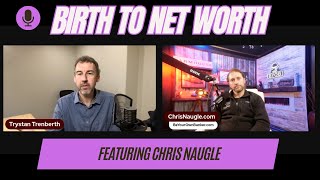
Chris Naugle went from saving coins as a kid to snowboarding professionally, then lost everything in the 2008 recession. Now he teaches Infinite Banking, a financial strategy built on disciplined saving and compounding, and posts daily videos on YouTube to share what he learned.
Chapters
Join us as we unravel our deep-rooted relationship with money, from earliest memories to eureka moments and building wealth. Birth to Net Worth with me, Trystan Trenberth. Good afternoon and welcome to another edition of Birth to Net Worth. Today we have an amazing gentleman from New York, ex-pro snowboarder, went to Wall Street, HGTV presenter, and turned into public speaker, author, and now as he's known, the Multiplier of Money. Welcome, Chris Naugle. Thanks for joining us, Chris.
Hey, thanks for having me on. What an honor.
Of course, of course. Well, Chris, give me a little bit of background before we get started. I've given you a little introduction, but, uh, share a little bit more about, you know, your past, where you've come from, and, and we'll get into the future once, once we get going shortly.
Yeah, so, you know, I grew up in a lower middle class family out in a small little town in Buffalo, New York called Lockport. And, uh, you know, the only thing I remember about the upbringing is my mom always taught me to dream. She, she was really big on just kind of letting me flow, letting me do what I wanted. She couldn't really fund anything or afford to, you know, give me anything outside just what we needed to survive, but she always, always, always allowed me to dream. And that's what allowed me to kind of get to where I'm at today and all the different things from, you know, early on, one of my biggest things I wanted to do was be a pro snowboarder. I remember I was a She said, probably 10 years old when I got the idea. I watched a video with Craig Kelly and I just was like, I want to do that. And when I told everybody else, you know, teachers or other family members, they said I was crazy. But when I told my mom, she's like, well, what does it take to be a pro snowboarder? What do you have to do? And I said, I gotta get to the mountain, I gotta snowboard, I gotta practice. And she said, well, we can't really do that because, you know, it was like an hour drive. She couldn't take me there and she couldn't afford to take me there all time. So we improvised, and there was— by where I grew up and by my school, there was a country club in a ravine. It was like literally an escarpment. And, you know, when you look at it, it goes down pretty steep, and there's sand traps. So what I learned is I can build a jump out of a sand trap, hike up to the top of this, this little ravine, drop in, go down in the sand trap, and it just made this perfect jump. And I would watch the videos I'd pull out the magazines that I would, I would study, like Snowboarder magazine, and I would have tricks every time I went there that I wanted to dial in, usually like 2 or 3 tricks. So I'd go there and I'd hike the hill, you know, because I only had from after school, so let's call it 2:30, 2:45 until it got dark. It usually gets dark around 5, so I had a short window. So what was the hardest thing about mastering this is I got tired, and we were just talking about running, and, and I remember I would get so exhausted trying to learn these tricks. Mom would— I'd hear the car horn beep, I'd run over there, and I'd get home, I'd catch my wind, eat. I'd go out in the backyard, put these big boots on, and run up and down the backyard to get like my wind there so that the next day when I went to the little ravine, I could run up the hill instead of just walking. And I did this over and over. And then the summer, I got a trampoline. That was my birthday present. And I went out there, taped the edges of my snowboard, and I bounced on that thing for hours. If any of you have never bounced on a trampoline for any period of time, you will know it is one of the most taxing things to your lungs and to just— it just takes everything out of you. Now strap a snowboard on and try doing that. And I got in such good shape, I could bounce on that trampoline with a snowboard doing backflips and all sorts of tricks for probably hours without even getting tired. And, uh, you know, those are just a couple of the things about growing up. But let me Since the name of the, the show is, you know, Birth of Net Worth, I want to talk just about one particular story with Mom. And, uh, you know, one of the things that I watched, and this is one of my most vivid memories when it comes to money, and probably my first memory. My mom— I remember we had this lawnmower, we had about an acre and a half of lawn, and to mow it we had this riding lawnmower, but it was probably from the '70s. The thing barely ran, and it would take hours to mow the lawn. And my mom had this idea, and had a magazine, a Sears Craftsman magazine. She wanted this new 12-horsepower riding mower, and she fixated on this thing. We talked about it all the time. But my mom, we'd go to the grocery store, we'd go out shopping, she'd have change. This is back when actually had pockets full of change. Her purse would always have a bunch. She'd come home and she would show me— she had this big glass, like, I don't know, jar, huge jar in her closet. And she would just take the change out of her purse and put it in there. And I'd watch this, and I remember vividly the sound of the change dumping in this thing. And this happened almost every day. She'd put change in it, and I'd watch this, this thing fill up. There became— there came one day, it was a spring day, where my mom said, hey, come here, can you help me roll this change? She dumped all the change from this thing out on the ground, and we started rolling and rolling and rolling. And lo and behold, she had roughly $800 in change that she had saved up over the course of that summer, or I'm sorry, that winter. And we went out to Sears, bought that tractor. And I remember she showed me how to use it and I got to mow the lawn. And I fell in love with mowing lawn that summer. But it was, you know, people listening, you're like, are you crazy? No. But when you don't have something and you, and then all of a sudden you see the hard work, you know, that my mom went through to get this thing, this riding lawnmower, no big deal to most of you listening, but to me, That was a monumental step to my mom. That was a monumental step. And that's one of the most vivid memories. And I, I use that throughout my life, that, that saving mechanism. My mom got me a little box. I still have it. And if you watch my TEDx talk, uh, it's called Rethink Money: A Letter to My Daughter, where I, I basically kind of go through teaching my daughter all the things I learned when I was a child through parables. And that story is in that TEDx, but also this little black box with a slider top that my mom got. I would go work on the farm, I'd go around shoveling driveways, mowing lawns, and I'd get a couple bucks. And I'd come home, I'd put it in that little box, and I'd close the top. And my mom held on to the box so that I wouldn't take the money and spend it. So if I needed money, I'd have to go to my mom and say, hey Mom, I need a couple bucks for the minibike, or a couple bucks for fuel for the go-kart, you know, whatever it might be. And, uh, I was fixated on this KX 125, and I, I just wanted this thing so bad. My mom took me to the dealership, it was called Hebler's. I rode two dirt bikes, an RM and a KX 125. I settled that I love the KX. But listen, this was just like an exercise. I didn't think anything of it. I thought it was literally an impossible task for me to get this dirt bike. So after I got done riding them, I'm just expecting, you know, to get back in the car and go home and keep dreaming about this thing. But I was so fulfilled because I got to ride it. The, the owner of the place, Joe Hebler, let me ride bikes on the side. They would never do that in today's world, but back then it was allowed. But before we left, my mom said, 'You— would you like that dirt bike?' And I didn't know what the heck she was talking about. And I said, 'Yeah, of course I'd like the dirt bike.' And she said, 'Well, you've saved enough money in that little black box. Let's take it home.' So that was, uh, that was just one of the stories that kind of came about when I was a kid, you know. And I don't want to spend too much more time on my story. I mean, there's a lot to it, but, um, you know opened my first business at 16, clothing line in my mom's basement. Took that clothing line, and then I had the next big dream at 17 to open a chain of— I wanted a chain of skateboard snowboard shops, but I wanted one store. This is 1993, if I'm gonna date myself, and, um, I needed $70,000 based on the business plan to open the shop called Fat Man Board Shops, P-H-A-T. And I went around every bank, went around everybody in my family trying to get money, and everybody told me I was crazy, kind of like that movie Kids, You'll Shoot Your Eye Out. But more, kid, you'll lose all the money. And I found a bank that would give me a loan, but they needed collateral. So I said to them, now remember, I had a KX125. I said, what is collateral? They told me. And I said, oh yeah, I've got this KX125. I've got a Buick Skyhawk. I was driving at this time and I got a wicked baseball card collection. What do you say? And they said, no, kid, we're thinking more like a piece of property or something with significant value. So when I told my mom this, I thought it was over. I thought, this is it. I'm never going to be able to do this. But my mom put her house, our house, on the line. The same house she lives in today. It's a 2-bedroom, uh, it's a little more than it was, but back then it was a 700-square-foot 2-bedroom house, and she put it up for collateral so that I could open that store. We opened Fat Man Board Shop in the Lockport Mall, November of 1994, and that transitioned into just one of the greatest periods of time in my life, uh, where I was a pro snowboarder. I owned skateboard, snowboard shops. I expanded those shops, and everything was like a fairy tale until the first recession, which was the dot-com recession. Where I needed to get a job because I couldn't, I couldn't keep going. I was going to lose the shop, I was going to lose everything. So put my resume out, and that's where the story of Wall Street comes in. And in the intro, you had mentioned Wall Street. So I did, I spent 16 years as a high-level financial advisor in the Wall Street world. I, it was, uh, home office was 51 Madison in New York, New York. I live in Buffalo, New York, so I would hop a plane, go there for meetings and, and stuff, but do mostly the business in Buffalo. I did that for a long time while doing a— I was still a pro snowboarder while that period was going on. So I wore a suit during the day, and weekends I'd have a beanie and all my snowboard gear on. Still had my shops, uh, so I was still doing everything. I was juggling a lot. And then, uh, things were going pretty decent. I started getting into real estate in 2006, 2007. I bought a strip mall, a dilapidated paint store that I was going to convert into a strip mall. In 2008 took me down hardcore. 2008, the Great Recession, brought me to my knees. I thought I was going to go bankrupt. This is the first time where literally I'm like, it's over, you know. I'm not a quitter, but like, this is the first time I threw the towel in. And, uh, I remember I came home one night, my girlfriend who's now my wife, Larissa, just moved into my house at that time, and I said to her, I said, I'm gonna go bankrupt, I'm gonna lose everything. And I said you know, is there any way you can help me pay the mortgage, help me pay the utilities, and I'm going to move 2 people into our house? I'm going to move Pete into that bedroom and Jessica into the bedroom upstairs. And lo and behold, she actually did. She stuck with me and helped me through. That's the reason I didn't go bankrupt in '08. That transitioned into '09 through '14 where I bought apartment buildings. That's all I did in '08— or sorry, '09 to '14, bought apartment buildings, lost them all in 2014, had to sell every one of them. And that's where the flipping business kicked off. Again, I'm still a financial advisor at this time, but I had sold Fat Man, the board shop, in 2010. It's still open today. And then I sold the strip mall in 2014 to kind of fuel the next phase, which was flipping houses, which led to the TV show, which aired on HGTV in 2018. And, uh, a lot more, you know, happened, but I think we'll get into this— some of this stuff. But, um, some unique things happen with that TV show And we didn't go on to series, which literally that door slammed in my face. But that door also prompted me to leave Wall Street because I couldn't do the TV show and be a financial advisor. So I decided to sell the practice, the financial advisory practice, to chase this dream of being a TV show star. And then HGTV, after we aired 6 times, uh, they were bought by Discovery, and Discovery shut down all new shows. So I didn't, I didn't know what to do. I was kind of like burned the boats. And, uh, that's what led me down the path I'm on now. I started learning about the Infinite Banking Concepts, I started using it, and then now today I'm known as America's number one money mentor. And we, we run the largest, uh, IBC shop, Infinite Banking Concepts shop, in the country. And that's all we do is teach people how to take back control of their money.
What a great introduction. Thank you so much, Chris. That took us through most of, most of your, your life and career. What is— what an amazing support your mom was and what an influence she was in the sense that she encouraged you where so many people— this Friday I'm doing a TED-style talk in Tempe and the topic is your circle of influence will make or break you. The people you spend most time with are the people that are going to determine what your future is. And, you know, had, had your mom been one of those people that you mentioned 'Yeah, you shouldn't do that, you shouldn't take a risk.' Where would you be now? I don't think we'd be talking to each other right now. And having that from your very, very early days, even just with the mower, the discipline of— and I could hear the money clanking in the empty jar and getting thicker and thicker as it fills up. And, you know, counting that sort of money, we used to do it in gallon whiskey bottles or that type of stuff. And, you know, just the time going through that process and it We know that it takes time. That taught you patience. It taught you the discipline. And obviously, she encouraged you when you had the black box to put your money in there, which may have been dollar bills rather than pennies and nickels, to bring you down the same road to, well, you know, you can afford this motorcycle because you've worked hard and you're not really paying attention. And we come back to the compounding effect, whether it's running or money. You didn't realize what built up in there because you didn't pay attention to it. You were just consistently looking at the lead flow, not the, the cash reserves. And I think that's where a lot of people get lost in business, is looking at what's in the bank and not focusing on the next opportunity coming along to put more money in the bank. And continuing on the pipeline side of things will, will keep that, keep the cash flowing.
So I want to make a comment on that. I think another big thing, and I kind of didn't want to spend too much time on on my story, but in there, I don't know if you picked up on it, folks, but there was a point where, you know, I was basically kind of getting ready to transition out of the shops. I had nowhere to go. It was during the dot-com crash, and that's when I entered Wall Street. So I didn't care at that point if my business failed because I just had nothing left, right? It was, it was kind of just like, all right, I gave it to my, my employees. I said, you guys, you know, run this. I got to go off and I got to make money to be able to live. And they did. But what it forced me to do is something I, I just gotta tell you, as an entrepreneur, I don't know if I could have done this without this exterior force happening. And, and I truly am a very faithful person, very faithful man, and I believe this happened for a reason, as everything does. But when I went to Wall Street, it forced me not to work in the business because before that, in my shops, I was there every single day. I could grip a skateboard better than everybody. I could fold shirts better than everybody. I could assemble a snowboard better than everybody. I could tune a board better than everybody. I was the master of everything in my domain, and I didn't think anybody was capable of doing it as good as me. Now all of a sudden I'm putting a suit on, I'm going to the office at 7 in the morning. I'm not showing up to the shop. So I thought things were just going to be completely— you know, they thought they were just going to fall apart because I wasn't working in the business. That's lesson. I wasn't working in the business, I was working on the business. So when I was in Wall Street, when I wasn't on calls or doing paperwork, what I was doing is I was focusing on what events could we do. Maybe we should do a snowboard team, a skateboard team. Maybe we should create a video division. And my team was so excited about all these different things. We were having a lot of fun, and the business flourished. It literally did better than it ever had when I was working in it. Because I was working on it. And I don't think a lot of entrepreneurs and business owners ever get to that point.
I, I think that's a key thing. I mean, from 2019, reading Rich Dad Poor Dad and the Cashflow Quadrant, absolutely I can relate that to the, to the S and, and myself, is, is the delegation, the outsourcing of those things which may not be our key skill. We don't realize it because we're stuck in the blinkers of I need to do everything myself, I'm the only one that will do it properly. When even if somebody's got 60% of the skills but are coachable, that's when you've got the opportunity to bring them in. And when they have the enthusiasm and the vision that we have clear, then it's a lot easier. And, and letting go is, is the, the big grown-up step to do, is letting go of those things. And, you know, I've even got a teaching tool which is like a pyramid. We're on the top of the pyramid, the horizontal is the time, and the vertical is the, the income. We want to be spending as little time as we can on work and outsourcing the thing that takes us personally the longest time with the least return of money. So that way, if we go through the pyramid step by step and start outsourcing those things, which you obviously did in the sense that everyone was excited about doing these different things, you were reviewing, working on the business, you were in your most efficient and you were in flow.
100%. You couldn't have said it any better.
So absolutely, this is about your story, so feel free to embellish and, and, you know, walk through everything that you want to share with us. If a topic comes up, and feel free to flow. This is, this is the show.
So I'm good at doing that. Well, I'm sure we'll catch our stride a couple of times.
Yeah. So for, for the younger people watching, um, you've just shared an amazing piece of knowledge, which is sort of the delegation, the outsourcing, just to sort of wrap it in a nutshell. What other things did you learn in your younger days? Getting capital together to start those shops was a challenge. What was it that enabled you to put the business models together? Did you— I mean, we say about self-made millionaires, nobody's really self-made if they do it in the true sense. There's always support around us, whether it's your mum encouraging you, whether it's a friend or a family member or a banker that helps you put a business plan together. How would you look to advise people on putting those early ideas together when they maybe don't have the track record? I know that in real estate, I'm no spring chicken, but I collaborated with like Chris Bisib on my first flip. That then gave me a track record leveraging somebody else's experience to go in and get hard money, these sort of things. In, in the realm of starting any business, what, what would you advise the younger generation to do?
Yeah, you know, I'm gonna go back to another part of my life. I think it's just the easiest way for me to tell it. So this is back when I was in high school. So I started working, you know, at a very young age, just odds and ends jobs. But I, I worked on a farm at 14, which is how I afforded— you know, I, I was big into dirt bikes and four-wheelers, and that's how I actually got to the farm. I would ride my dirt bike, and that's what paid for fuel and just anything else, uh, you know, whatever a 14-year-old, you know, wanted to do. But I kind of graduated out of the farm and I started a job, and it was like my first real job. I was 16 years old. I remember I had bought my first car. It was a 1986 Buick Skyhawk, two-tone, because it had been hit, so it was two different colors of blue. And, uh, I was working at this restaurant. I was so excited about it, and I, I moved up from— I think I was, uh, dishwasher, and then I moved up to prep cook, which was like an increase in pay. I don't remember what we made back then, $4, $5 an hour. So the problem with this job was the owner of the business treated everybody horribly, and especially me. Remember, I'm a prep cook, and the owner's— the owner's son— sorry, the owner's son was a mean person. He was the cook, so I worked directly with him. So I took the grunt of everything every day I worked. And he would just play sick, sick games with me and like send me to get something that wasn't where he said it was, have me running around. When I come back, he just like scold me and then go and get it and be like, oh, it wasn't even where I told you, my mistake. But at that point, I was so beat down and degraded. And this went on day after day after day, and I just kept putting up with it, putting up with it. But you know, when you're, when you're treated like that chips pieces away of you. And, and I lost all my confidence. Like, I used to be pretty darn confident up to this point. I had no confidence. I'm like, oh my God, if this is what the working world is like, that this is really my next phase, like, I, I can't do this. Like, so what I started doing, folks, is at school, you know, there was things that I loved and there was things that I hated. But one of the things I loved is my art teacher, Mr. Mahalsky. We would always draw, and it was very artistic, and I was always doodling graphics and I was a snowboard, skateboard kid, so I would draw like t-shirts with graphics on them. Like, I'd be making my own shirts, but just on paper. My art teacher noticed this, and he was the guy that printed t-shirts for the schools. So he would, after school, he had printing presses there, and he invited me into this thing. I can't remember what he called it, where I was printing shirts for all the, the school activities. And I remember he said to me one day, he said, you know, "You got all these great designs. Have you ever thought about, you know, like actually making shirts and selling them and starting a company?" And I said, "I'd never even thought about that, but that's a great idea." And I had kind of been familiar with this in the skateboard realm, you know, like you see all the different shirts that I wanted growing up and I'm like, "Yeah, that would be awesome." So, I spent a whole bunch of time like drawing up catalogs and different designs and had a friend, Chris Crenshaw, who I skated with who did this. And I remember one day I can't— when I Quit the job. So that bad boss, I quit one day, but I didn't just quit and not have a plan because I didn't want to come home and disappoint mom and say, Mom, I just quit my first real job. So I actually had a plan. I came home that day I quit, kind of tail between my legs, saying, Mom, I just quit my job, but I've got this idea for this clothing line. It's going to be called Phat Clothing Company. Check the catalog out. Mr. Michalski and I are going to print these shirts at school, and I'm going to sell them to all my friends in school. And then I'm going to get them to sell them to their friends. I'm going to take them to Snowboard. I mean, I'm just a blender with its top off, just going off about this idea. My mother saw me light up about this, and I remember she helped me go to, uh, it was called Federal Credit Union, the credit union. I'm trying to think, Federal Credit Union, whatever it was. We went there and I got a $500 loan. Uh, my mom co-signed it, a $500 loan. I used that $500 to buy a dozen shirts and all the stuff I needed to print them. I printed those dozen long sleeve shirts. I remember I still actually have one, the graphic, the logo, everything on it. It was two colors. And I sold, I sold them out of my backpack and I sold them like within a week. I took the money from the sale of them and then I bought two dozen shirts and I bought two different colors and I did two graphics now. And then I sold all those. Then I bought two dozen shirts and a dozen hats. And this is how I kind of built this thing up. And I just kept taking the money and turning it over, taking the money and turning it over. I didn't need a lot of money to live. I was still living at home. My car was bought and paid for, so I had insurance and a couple other little things. But I would take whatever I needed to live, and I was a thrifty little guy too. I, I remember, like, anybody that wanted to drive in my car and go to school, they had to pitch in for gas. I know these things don't happen today, but back then this is just how it was. And, uh, that's how I paid for gas in the car. And I would take a little bit of money from the, the sales that I sell, the shirts that I sold, and I would use that to pay for everything. Everything else rolled into the business. And then I got the business to the point where now I was making multiple seasons of clothing, and I was selling that to my friends, and my friends were then selling it out of their backpack so they could earn a free hat or a free t-shirt. So I had this whole thing going on in the Lockport High School. But for all of you young, like, I want you to understand something. I I didn't become an entrepreneur at this point because I wanted to be a millionaire. I didn't do it because I thought I was going to be filthy rich. I did it because I wanted to do something I loved and because I just needed the money to get to the hill on the weekends to snowboard. That's all I cared about. I wasn't thinking, oh my gosh, I'm gonna have a Lambo, I'm gonna go get that Gucci thing. None of that even crossed my mind. Couldn't care less about any of that. When I had money from sales, I bought more product that I was going to resell, and this became the norm. I did this, and I literally then hired two seamstresses. My mom was sewing some of the clothing for me, but obviously she outgrew that, and she was just making prototypes that we would test, uh, with our— I had a couple guys that skated for us, and I cut a couple snowboarders. Remember, I'm just letting you all know, I was 16 years old when I started this company, and I was 17 when I had what I'm telling you right now going on. So we're talking about a 1-year time frame, and I, I was wholesaling my clothing to various shops. And how I met the shops is when I was snowboarding in these contests, there was always a sponsor of the snowboard contest, which was always a skateboard, snowboard shop. So I was always wearing my gear. I would be talking to the owner because I was, I was a really good snowboarder, so I would usually win the contest. So therefore I got to know these people, and I'd say, hey, could we set up a time, maybe on the drive home or maybe the next time I'm up here, where I could show you my clothing line, and maybe you guys might want to carry create in your shop. So then I would start pitching my clothing line for wholesale, and people were buying it. Now, back then, a $500 wholesale order, like, that would be the shop buying $500 of clothing. That's not a lot. That's like, I don't know, a dozen shirts, couple hats. That was huge for me. Like, if I got a $500 check, man, I thought I struck the lotto. And I would take that $500, I would put it into the business checking account, and I would buy more goods.. And I just kept doing this over and over, and I started advancing and making new things, and we were having so much fun with it. But here's where the, the story kind of got interesting. I went to this one shop in Canadagua, New York, and I was on my way to a snowboarding contest. The owner of the shop's name was Tim, and I vividly remember this. I, I showed him my line, and this was like my best line. I, I had just gotten new computers that my grandpa bought me, a laser printer, and I could print really cool catalogs. And I had just spent so much time in this line, this catalog, and I— this is my first person I presented it to, and he placed a big order. It was like $1,500. And I, I literally was just— I was in on cloud nine. But I remember after he did the order, he said to me, he said, hey Chris, do you want to go snowboarding? And I kind of looked around, there was nobody else in the shop. Like, he was the only one running the shop, and it was like maybe 11 o'clock in the morning. And I'm like, yeah, I'd love to. What time's the shop close? And I already knew it closed at 5 or 6 o'clock. And he's like, no, we can go right now. I'll just close the shop. I, my mind couldn't handle that. I was just thinking, wait a second, you're just going to close the shop so we can go snowboarding? And it was like nothing to him. He's like, yeah, let's go ride, man. Let's get some, let's get some turns. All I could focus on at that point is I needed my own shop. Because here I am making all this clothing, taking it on the road, selling it to all these shops, which is taking time away from me snowboarding. And then this guy stays at his shop, somebody brings the clothing, he buys it, he resells it, makes more than I was, and he can just close the shop and go snowboarding anytime. I need this. And that's where the idea for Fat Man Board Shop came up. And, and I, I was in, um, I was in college at that time. I went to a community college. I'm not, like a super highly educated man. I, I didn't go through like Ivy League schools. I went to a community college. I, I'm self-taught, and you said self-made, so I'm a self-taught, self-made man, I guess is the terminology. So in college, most people go to college, you know, they kind of have an idea what they want to do. They go, they take their curriculum, people help them, and they just have a good time. I went to school because I needed to learn things for my business. I took all the courses that were like business law. I took business math. I took economics. I took anything that had to do with business so that I could take the knowledge and I could go home and apply it in my business. And one of the things, one of the classes I took, they taught us how to write business plans. And I was literally writing the business plan at that time for Fat Man Board Shops because I had this idea of a shop, right? And my teacher, Mr. Nemi— notice how I know all these teachers' names. So you had said something earlier, you know, everybody has, you know, everybody's self-made but they had mentors. My mentors are all these names that I'm dropping. I mean, I'm 47 years old, I graduated in '96, but these people are so important in my, my journey that I, I remember all their names. I don't even need to think about it. It's not like I rehearsed this, but Mr. Nemi, he was this short little guy, he was like an economics teacher, but he ran the Small Business Development Center. And he invited me in and he personally mentored me. I guess that's what you'd call it today. Back then, he was just a teacher. And he, he helped me write that business plan, introduced me to the heads of the Small Business Development Center. And that kind of is how I got that whole thing done and was able to take a business plan. I'm 17 years old, folks. Take a business plan to banks and present them, you know, present this idea. Now the problem was I was 17 years old, so a bank and all these other people, they just didn't take me serious. But they looked at the business plan and like, this is actually pretty freaking good, kid. Like, tell me more, how'd you learn how to do this? And I didn't tell them, oh my, uh, you know, my teacher Mr. Nemi taught me how to do this. I just said, well, I got this business, I've been doing this, and told them the story. So I, I might have went down a rabbit hole on that one, but the reason I said that is you said younger folks, and I just wanted to preface I was 16 years old. I had no clue how to open a business. I had no clue how to run a business. I had no clue how to do bookkeeping. Hell, I didn't know how to do anything except for skateboard and snowboard and draw. But I found the people on the journey that taught me. In high school, I'll never forget it, accounting class. You find me one kid in high school that loves accounting class and I'll give you $100 because you won't. But I loved accounting class. Mr. Crawley was his— is the teacher's name, and he taught me how to do debits and credits. So just imagine my learning curve versus just a normal kid in high school at this stage. I'm going to school, and I didn't like all classes. I, I sucked at some of the classes bad, but I was brilliant in others. But I was brilliant in the classes like economics, history, because I loved history. I was very good in business law. I was great in the accounting class. Why? Because I was going there with a preset notion of, I have to learn this because I'm going to go home tonight and I'm going to do this. Like, I just did this order, I sold some shirts, I needed to learn debits and credits so I can put them into a bookkeeping order. And back then, all my books were done in these giant— like, picture just a giant Excel spreadsheet. Back then, we didn't have Excel. Well, actually, Excel was probably around, but it was like, it was underground. Like, we had these giant accounting books. There was debits and there was credits, and you would figure everything out. And you'd write all your expenses and checks on one side, you'd tally them up, all your income went in on another side, and it would show you, here's your net income, here's how much you made. And then you would do assets versus liabilities, the, you know, all the things you had, all my inventory. And then I would add it all up, and then I would take all the, the inventory minus the people that I owed money to, and I— that was my net, that was my equity. So I learned all these things at 17 years old in high school without a mentor, without some fancy course. They have money for any of that stuff. Every single person out there, every kid out there— I'm just going to call you kids from here if you're listening, 16, 17-year-olds, you are a kid— you can do the exact same thing I did. But you have a huge head start over me because things are much faster now. All that you need to run a business Everything you would ever need is on YouTube. The accounting courses and the accounting software, it does all of it for you. You don't even need to know what a debit and a credit is like I did. So what's, what's everybody's excuse? Like, why are you not chasing your dream? And the only answer I can come up with is because most people out there are conforming to some preset notion that they have to do what they're told to do, or what their, their parents did, or what their friends do. They're, they're conforming to somebody's failed idea, somebody's failed dream, and they're not creating their own dream. Sorry about that rant.
I love that. I mean, it comes back to the circle of influence. If you're hanging around people that are holding you back, you're going to get that resistance and the lack of ability to see that future. But one of the big things that stuck out to me, Chris, was you were inspired because you had a direct application for it. There was a context for you. With the other kids at school, they didn't have anything to apply those things against, so it didn't mean anything for them in the sense they weren't trying to build a business, so they couldn't sort of see how that would impact their lives. But clearly it impacted you because you had a direct correlation between what I'm learning and how I apply that to my business and how I grow from that. So yeah, I think these things are so, so valuable. I was going to say, yeah, I definitely relate to the hotel management. I did hotel management, was my sort of college back in the day, and it was There were some great times and there were some terrible times as a training manager. Yeah, we were the dogs' bodies. We were the ones that worked all of the hours when people got sick and little or no pay, that sort of thing. And I very much relate to that negativity that you see in the workplace. People have got egos. Again, it's a lot of insecurity in the workplace, and it comes back to that mindset of growth or fixed mindset. What else did I note here? So, um, but yeah, just also what lights you up. It lit you up because it was something that you were passionate about. It related to your pastime, and the fact that you could find a business that happened to be related to your pastime that bridged the gap, that allowed you to build the relationships by being a successful snowboarder and then work with the people that sold the products. And vice versa that built your reputation with them, your credibility, and they wanted to deal with you because they knew your performance on there. That was how people would get to know the products that they may be selling for you and everything. Everybody elevates each other in those situations. I'm sure there were some store owners that didn't elevate each other, but your memory of the store owner closing the store, it kind of reminded me of my conversation with Greg Hurley when he went and met his girlfriend's dad on the driveway at 2 o'clock in the afternoon on a Tuesday or Wednesday, whatever it was. It wasn't that there was a boat and a mansion, it was the fact that he was at home at 2 o'clock in the afternoon, and that was what inspired his life change. So that's what I want, is the freedom of life.
So yeah, I know Greg's story well, and that is, uh, that is, you know, it's kind of funny, you listen to these stories from whether it's my stories or Greg's stories or your stories, and And it's like you can almost— if you're like, when I'm listening to Greg and he's telling the story with detail, I envision that site, that mansion, the car, the boat. But also the fact that this guy's home at 2 o'clock, and then it just sets in when he says this. He's like, oh yeah, that's not the norm. Most people are in their office working, you know, they're, they're at their job. They're not able to just be home enjoying all these things. But this guy had reached a level of success where literally he had freedom of time. And, and, and that's what we relate to. But, you know, the other thing too that I was saying about, you know, creation versus conformity, you know, what Greg did at that point is he decided, I'm going to create a life that emulates and mimics what this guy's life is. What is the path? And he had his mentor. This guy was his mentor that he was going to find out, how did you do this? But so many people— and this is, this is a huge pet peeve of mine— is when I do an event and people come up and they say these words, and I want to know what you think of this. Can I pick your mind? When I hear that, instantly I shut down. I don't want to talk to you anymore. I don't want you to pick my mind. That feels awful. Just so everybody knows, if you're listening, never say that to somebody, whether they're successful or not successful. You're not there to pick their mind. You might have a question for them, but what really fires me up is when someone comes up to me out of the blue and they say, you know, your story really motivated me. How can I serve you? Like, how— what can I do to help you? Now, typically, on the, on a fly, I can't think of something. Like, and if Greg said that to that, that guy, you know, let's say Greg was with that guy and he said, hey, can I pick your mind? How did you get here? That's not a good talk. That's not a good intro. That's not going to get you where you want. But let's say Greg went to that guy and said, hey, listen, I love what you've done, and I love the fact that you've created this freedom. How can I help you? What can I do that would serve you? Is there anything I can help you, any problem I can help you solve? I mean, you know, you've got time, but what could I do that would help you do more? You know, and then all of a sudden you put that person on, on, on, you know, the spot, and now they got to think of something. Most people are going to say, well, I can't think of anything now. But you know what, they'll never forget that because there will be something they'll need. Like for me, The biggest thing I don't have today is time, and it's a struggle within. I'm not that guy where I'm home at 2 o'clock, and it's not because I can't be financially. It's because I'm just, I'm chasing some huge things and I'm working on some big things, and I just, it sucks my time, and I'm on the road traveling. So if someone came up and said, what can I do, how can I serve you, the first thing that comes to my mind is how can this person help me buy back some of my time. But if they ask to get paid, they've ruined it. So think of this. If that you were Greg standing in that driveway and you wanted to know how this guy did it and you wanted to learn and you offered to solve his problem and you expected nothing in return except for learning, you wanted to be a fly on the wall to see how this worked, what would your life look like? Well, I mean, just watch the episode with Greg Hurley or, you know, listen to what I'm saying because it's always the same. You have to solve somebody's problem, and when you do, your problem gets solved.
Yeah, absolutely. It— picking your brain, it feels, it feels intrusive.
Um, terrible.
It was like what the aliens are supposed to do, do you know what I mean? Really?
Yeah, you think of someone coming in with a thing through your ear.
Yeah, yeah. But yeah, it's, it's kind of like, how can I bring you value? That's another very generic question people ask is Well, I'm in real estate, I buy properties, I want deals. So how can we ask somebody, how can I bring you a deal? And like I did with Chris, what kind of deal did he need? I knew kind of what he was looking for. We got to know each other very well and I knew what deals he was looking for. So I brought him a deal and I earned while I learned because he brought the capital and the contractors. That was the first flip that I did. That's the very best way because I learned on the job. Fortunately, it was a position that I could make money with him, but I wasn't getting paid up front or wholesaling the deal to him. He was gracious enough to let me work through the process and teach me along the way. I made other contributions of time and effort during the way, but I totally appreciate that. You can't just say, "Oh, can I pick your brain?" It's just, well, that feels uncomfortable. And what gain is there unselfishly for me to justify providing time to you at no cost? You know, bingo. If it's, you know, I want to bring you value and learn what deals you're looking for, whether it's referrals for life insurance, infinite banking, whether it's a real estate deal or a multi-family property. I've got this deal, I need a partner on it. Is this something you or one of your team might be able to look at with me to share with me if I'm seeing what you need to see and that we could maybe partner on it if it's something that would work for you? And, you know, I'm willing to give up the farm to learn the process because I want to do it over and over again. Most likely I'm going to give that equity to somebody in that situation as long as they're putting effort in along the way. If they're not, if they're just learning, you know, pay them a finder's fee, not a problem. But it really is— picking your brain is— it just makes me cringe, really.
Yeah, me too, me too.
So, so yeah, it's definitely— it's definitely— we're a— we're in a team sport. You know, whether we like it or not, in life, in real estate, in equity investing, it's not just one person. At what stage past your business plans and so forth, you gave the business to your employees? And hopefully, they, you know, they still own the business. It just sounds like, is that right?
No, I actually, I sold the business after the Great Recession when I was on my knees. I sold it to a family, uh, that I snowboarded against their kids. So they had two kids, Robbie and Frank. Frank was on his way to being a pro snowboarder. I was the, the pro, you know, so like I got to know them well because he was like the up-and-coming kid, but he didn't ride for my team. And I always wanted him to ride for my team, but he was loyal to this other team, the Boardroom. And, um, we'd always be competing. I got to know his parents really well because they were very active on the hill. And I don't remember how the the conversation started. I think word got out that I was looking to sell because I was going to my competitors and I was talking to them, hey, if you guys are interested, you know, you want to have a discussion, you know, I'm thinking I might want to sell the business. And I was having those discussions, and Bob, uh, the father of Frank and Rob, you know, kind of was in this loop. And I think him and his wife were looking for a change, and they said, you know, we might be interested. And the one reason I gave them a shot is because I knew that they had kids that snowboard, so it kind of, it kind of was close to the heart. The other company I was talking about that wanted to buy my shop was a Canadian company that was looking to bring operations into the U.S., but I knew— well, they would have paid me more money than what I ended up selling it for, so that was one good thing, but I knew for a fact they would have just taken my business, absorbed it into theirs, destroyed everything I created, destroyed the culture destroyed everything I'd worked all those years. I don't even know how many years it was. I mean, '94 till 2010, so you— somebody can do the math. But, uh, I knew that they just wanted to have one less competitor in the market and absorb my client base, my customer base. And that just— I didn't want that. So I got talking with this family, ended up striking a deal. I ended up holding paper on the deal because they— I had to get payments from them, which they paid every single payment to me. You know, but, uh, I made the deal work for them. I took a little less money than I would have, but the business is still owned and operated, rider-owned and operated. Frankie went on to be a professional snowboarder for Jones and, and Volcom and a couple other companies that he is very well known in the industry. And now he's the one who runs the shop. He just had his first child, him and his wife. So it's like a family-owned and operated shop. And they're still doing well. And anybody that wants to look up the shop, you can kind of track it. It's very easy. It's Phatman Boardshops, if you kind of want to get a little glimpse of that, that history and what it is today. So what a legacy, right? You know, I, I can't say that I, I could pass it on to my daughter, but it's just such a legacy to know that I created that thing.
Fantastic. Well, let's come forward a few years to Infinite Banking. That's been a huge you know, part of my life in the last couple of years, and certainly yours. Tell me how you discovered it and, and what got you—
Yeah, so it's an interesting story how it got started. So remember I said I was getting into real estate, we were getting into flipping houses. When we're getting into flipping houses, we had to meet— we had to borrow money for some of these flips. And you mentioned Greg Herling. So back then I had met Greg Herling and Mike— I'm not going to use Mike's last name But, uh, I met these two guys at a real estate convention. Greg had been lending me money. Greg then introduced me to Mike because Mike and Greg lent me money on my deals. So I'm in Utah snowboarding at Brighton and the Bird, and I, I had remembered Mike lived there. So prior to going out there, I had called Mike and I said, hey Mike, I got a deal that I'd like to show you, but I'm going to be in Utah these dates. Is there a chance we can meet up when I'm there? And, you know, it'd be nice to catch up. He said, sure, meet me at Cheesecake Factory downtown Salt Lake, which I did. So I met him there, I pitched, showing him the deal, and then all of a sudden, I don't know what came over me. I was a financial advisor, and this is probably why I was just curious, because I knew Mike was very wealthy. I just said to Mike, I said, so Mike, how do you lend all this money? And I'm thinking he's going to say, oh, self-directed IRAs, because he was friends with Greg and this and that. And without a flinch, he says, I lend from my private banking. System. So he said, I lend from my private banking system. Now instantly I'm taken off guard because I thought I knew something I didn't know. And I'm thinking to myself, holy crap, Mike has a bank! Like, I did— I thought he was wealthy, but like, now I'm like, how rich is this guy? So I say, Mike, I said, hey, after lunch, let's, let's go over to your bank. Is it down here somewhere? And he says, no, I don't have a location. And I don't actually have a bank. I just mimic what a bank does. And I, you know, I'm curious now. So now my brain as a financial advisor is trying to figure out what this is and fill some boxes in, right? That's how we work as a financial advisor, especially I'd been doing it 14 years. You think you pretty much know everything there is out there. So what I'm trying to do at this point is now close the gap on what is this private banking thing Mike's doing. So Mike starts telling me about it, doesn't tell me what it is. But starts telling me, you know, I changed where my money went first. I don't put it in banks, I put it in this other, uh, place, which I don't know if he had told me what it was or not, but I'll get to that in a second. And he said, this place pays me guaranteed interest on my money. Now instantly I'm like, guaranteed interest for how long? And he says, for my entire life. Now that instantly took all my belief and threw it out the window because I didn't know any place you could put money where you could get a guaranteed interest rate that stays the same for the rest of your life. Every guaranteed interest rate as a floating rate. Okay. And that's actually what it was called in Wall Street, floating rate. And then he says, then I also get dividends every year. So, okay, I'm like, I'm thinking, what pays dividends? Companies, stocks, you know, mutual funds. And he said, the interest and the dividends pay to me tax-free. So I never pay tax on any of the interest and dividends. So the box that first opens up is this must be a Roth. But I'm like, he makes too much money to have a Roth. So I'm like, can't be a Roth. So now I'm— all these boxes that I was like thinking are just gonna be check, check, check, none of them were checking. I couldn't understand what the heck this thing was. But then he drops a bomb on me. He says, and Chris, when you bring a deal to me, here's how it works. So I asked him, how does it work? He said, you bring a deal and I lend money to you, but I take a loan from my bank and I give the money to you, and then you pay me 15% interest, and I take the interest you give me and I put it back in the place where the money came from, which is repaying the loan. But here's the kicker. Remember I said I get guaranteed interest and dividends tax-free? When I take the money out and give it to you, let's say $100,000 just for numbers— this isn't what it was— but if he put $100,000 in his private bank and he took $100,000 as a loan out to give to me, what would all of you think is left in his private bank, right? If he started with $100,000 and he gave me $100,000, what's left? Zero, because you're thinking like a regular bank or any other account we're used to. But he tells me, I still have $100,000 in my account earning guaranteed interest plus dividends in a tax-free environment while I gave you the $100,000 and you now pay me 15%. So he said, Chris, I earn uninterrupted compounding interest effectively in every transaction that I lend money on. I'm making money twice. On the same dollar. I was floored. I was like, oh my gosh, what did I just find out? Because if, if I can figure out what this thing is— because in my mind I wanted this, I wanted a thing. We all want to buy a widget that does all this, right? We're like, where, where, where's this thing? And I'm like, I need to know what this thing is because I can go sell this to my clients and make Millions of dollars. It's the first thing that came across my mind. And then I asked him, I say, so Mike, what is it? And he says, well, it's a process first. But he says, what it is, it's a specially designed and engineered whole life insurance policy from a mutually owned company that pays dividends. Dead silence. I was in Cheesecake Factory, so clearly it wasn't silent, but I heard nothing because what he just said was complete opposite of everything I would have ever in my wildest imagination dreamt that this thing was. Because to me, as a financial advisor, whole life was the worst place you could put your money. And whole life, no way would do these things that Mike just said. And I kind of questioned him on it. I, I don't remember how I said it because it was a while ago, but he, he basically stopped me and he said, Chris, if it doesn't work that way, how have I been doing it? And I said, Mike, teach me how to do this. Like, I've never heard of this. This is crazy. And he said, I can't. I learned how from this guy Brent. And I said, well, give me Brent's number, darn it. So he gave me Brent's number. On the drive home from Cheesecake Factory, drive back to the hotel from Cheesecake Factory, I called Brent and I was like a blender with its top off, rattling off everything Mike just said. Brent stops me abruptly, like mid-sentence, and says, have you watched watched the 90-minute video. And at this point, I didn't know anything about a 90-minute video. So I'm like, no, what 90-minute video? I'm an advisor. Like, why do I need to watch a video? Like, I just need this thing that Mike just told me about. And he says, I'm going to stop the call. How? I'm going to send you the video. When you watch the 90-minute video, call me back and we'll book a call. I wasn't excited at all. I was actually kind of put back. I'm like, all these years as an advisor and this guy tells me I got to watch a 90-minute video. So, but I reluctantly, on that Sunday when I got back in my, my house, I took a big cup of coffee down Sunday morning and I clicked play on that video. And all I can tell you is 50 or 90 minutes went by like it was 5 minutes. I had 4 pages of notes, and I swear to you, this is the closest I've ever come to literally thinking I found the Holy Grail, because I saw something in that video that changed everything. It changed the way I think. It changed everything I knew about money. And all I had done is watched a video, but that video unveiled the secret that I was looking for. I immediately told Brent, you know, I got a call with Brent. Brent invited me and my wife out to Mexico. He was putting an event on. We sat in the front row. I started my first specially designed and engineered whole life policy right there. I started applying it to this process called the Infinite Banking Concepts, which is a process, not a product. And I started doing what Mike had told me, but I didn't do it with lending money at first. I did it to pay off debt, and then I paid off cars, and I, and I, and I never stopped. So, you know, when I said earlier a lot of my success was because of dreaming, consistency, and persistency, the success path for what I'm talking about here— because there's a lot of imagination for the Infinite Banking Concept, but a lot of the success people have with infinite banking is sheerly by consistent and persistent action. I learned something and I apply it just as I learned it, and that's all I've done is kept doing the same thing over and over again, mastering the skill, getting better and better at it, learning other ways to apply this process, and that's got me where I'm at.
I love it. That's an incredible story. And, uh, yeah, Brent's— Brent's been on my radar for quite some time through, through your business, I believe, through Chris. Um, so that's, that's incredible. So a lot of people have heard about infinite banking. I like the way that you describe it as a process, not a product. Um, can you give us a little overview that's not 90 minutes that just kind of outlines how— we've got an overview of the whole life side of things. How does the process kind of roughly works, it gives people an idea. And I'm sure we can send them a 90-minute video or— yeah, but some of your content to kind of take a look.
The 90-minute video, you know, we still have it, and you know, it's on my website, it's on my YouTube channel. Like, it's, it's a mandatory— like, nobody talks to me or my team unless they've watched a 90-minute video. But what I want to do here is, you know, some of you are going to be listening to this, some of you are going to be watching this, so I'm going to do both. I'm going to do visuals, and I'm also going to kind of talk through what I'm doing, because the Infinite Banking Concept, the process I'm about to teach you, is very simple. But what's not simple is this, this process is 180 degrees different than what you've been taught about money. It is the opposite of everything you've been shown about money. And that's why it's difficult for people, because in theory, it's all you're doing is you're mimicking what a bank does every single day. You're reversing the order of what a bank does, and you are becoming the bank which effectively, if you become the bank, you take back control of your money and you take back the banking functions in your life. So let me kind of give you the— I don't know how long it'll take me— 2 to 3 minutes. So the first step we have to understand is all of us go out there and we make money. So I'm holding a, I don't know, a couple bucks in my hand here. We all go out and we earn money in one way or the other. And when we get this money, we have been taught and conditioned to conform with what our predecessors have done or what everybody else has done. I don't know, predecessors is the wrong word. And we take this money and we put it into somebody else's bank. And then from there, the bank takes our money and makes it work for them. They take our money, they lend it out at a higher interest rate than what they're paying us. So just imagine this: you deposit money in a really good bank that pays you a good interest rate. They're paying you maybe 3% today at the most. And they— if you go back to that bank for a car loan, how much are they going to charge you for a car loan? It's about 7% now. So they're paying you 3 and they're charging 7. They're making what? A spread, making a couple point spread in the middle. So they're making that spread and they really didn't do anything because it's not their money. They didn't work for the money. You did. You just gave them control of your money. Just let that sink in for a second and think of like if anyone, when you were opening a bank account, said that. If you went into the bank and you said, I want to open a bank account, and you said, how does this work? And they said, okay. What you're going to do is you're going to go out and work your ass off and you're going to make money. Then you're going to take the money you just worked your butt off and you're going to bring it into us and you're going to give us control of your money. When you give us control of your money, we're going to pay you a couple percent interest on the money. Or some banks would say, we're not going to pay you anything on your money. But then what we're going to do, Mr. Client, is we're going to take your hard-earned money and we're going to make it go to work for us. And we're going to send that money out to work. We're going to lend it out. We're going to make a whole bunch of money. How much money, you would ask them? Well, we're going to make 400% to 1,300% more than you do on the money that you just worked for. What do you say? You want to make a deposit in this bank? But that's not what they say to you, but that's exactly what they do. Like, go to bauerfinancial.com. That will show you that there's not a bank in this country that makes less than 400% to 1,300%. So now that you understand how backwards that is, how— but I just told you what you do every single day, but you never thought of it that way. And now you want to become the bank. So what you got to do is you got to take that hard-earned money and think of how much money you save every month, right? Because we're not going to take all your money and change where it goes. We're going to just take the amount you save. So out of the money you make, you're going to take the money that would normally go into the bank and then go back out of the bank in bills. And we're going to keep some of the money in a savings account. I want you to think of that, right? You would— this is your savings. Now what we're going to do to do the Infinite Banking Concept is we're going to change where your savings goes first. I'm holding like $110 in my pocket or my hand. This is my savings. I change one thing. This money now does not go into their bank because now we know how their bank is going to use our money. This money goes into a specially designed and engineered whole life insurance policy from a mutually owned company. Now that whole life insurance company is going to pay me guaranteed interest and it's in a contract. They're going to pay me dividends each year, which are not guaranteed, but they've never missed one ever. And I'm going to earn that guaranteed, and I'm going to also earn that every single year, and it's going to compound. So now, are we doing better than the bank? And I'll give you some numbers too. Let's say the bank pays you 3%. If the insurance company would pay you 6%, would that be better than 3%? Dumb question. I'm just making sure everybody's paying attention. So now the money's earning a higher rate of return than it would in the bank. Our money now is growing in a tax-free environment. Our money now is protected against judgments and liens in most states. And I know you guys aren't probably going to say this is important, but I can tell you this is the most important thing. If you died tomorrow, your family gets a tax-free death benefit. All of that is done just by changing where your money went first. But we're not going to stop there. Now what we've got to do is we've got to identify opportunities to make money a second time. Because we— you're never going to get rich by saving money. I've never met a single billionaire or multi-millionaire in my life that got wealthy or became a billionaire because they saved money. That was a starting point, it was the first step, the first law, but it is not the final destination because you can't get wealthy putting money in a whole life policy. I'm just telling you, it's just a better place to put your money than a bank account. So now we got to find a place where that money can go to work a second time. So I always tell people, and this is one of the most important things everybody listening or everybody listening or watching this needs to pay attention to, the fastest way to build wealth is through your own debts and expenses. Let me explain. Think of your, your bills that you pay every month, your, your loans that you have out there, your credit cards you have out there. Every month you make a payment to these credit card companies, these car loans, okay? These mortgages, you make these payments every month. You don't even think about it. What is the interest rate on those loans? Credit cards are about 20%. So let's start there, okay? Because how many of you would love to make 20% on your money with zero risk and you didn't have to work any harder or any longer? Everybody. There's not a single person that would say no, I don't want to earn 20% of my money. So listen, here's how you do it. You change where the money goes first. You put it into that specially designed whole life immediately in the first 30 days when your account is opened and funded. What we're going to do is we're going to go to the insurance company and we're going to take a loan from the insurance company because the insurance company's got our money. So let's just, uh, let's call it $1,000. We put $1,000 into the whole life and now we've got a credit card over here that we owe $100 to. Okay, let's just keep numbers that way. So we got $1,000 in our account in our whole life and we have a credit card that we owe $100 to. We're paying $10 a month to them and they're charging us 20% interest. Everybody's got the math. So we take a $100 loan from the insurance company, we pay off Visa. So now we no longer owe Visa $10 a month. But where did the money come from? The money came from that whole life. But let's change the way we think. The money came from our banking system. We started this whole life to create a banking system. So now when we took the loan from our bank to pay off their bank. We are now not going to stop there because every month you used to make a payment to their bank, the credit card, for $10, which was 20% interest. So what you're going to do is you are going to set up a bill pay, okay, or you're going to write a check every single month for $10, the same amount you gave to Visa, but on the check the name is going to be your name, and you're going to have that money come back around and go right back into the whole life where the money came from. From. So all we did, folks, think about it this way if you're listening: the money started on the left side of a circle. So picture a circle in your head. The money was changed, we put it into this whole life, which is the left side of the circle. We immediately, in the first 30 days, take the money out of the whole life as a loan to pay off the debt, the Visa. So the money went around the top part of the circle, we paid off Visa. Now we take the $10 we used to give to Visa, which represents a 20% interest rate and we pay that $10 back to the policy as a loan repayment. So think, money went around the top part of the circle, hit the opportunity, which was the Visa being paid off, went around the bottom part of the circle, which is the recycling and recapturing of the money you were giving away, which represented 20% interest. Now, how much money every month do you have in that whole life after you make a $10 loan repayment? Well, if any of you said $10, you're absolutely right. You kept control of the $10. You paid it back to yourself. But the whole time, remember, we started with $1,000, we took $100 out. Most of you would think there's $900 left in the whole life policy earning interest and dividends, but you're wrong. There's $1,000 in the whole life earning interest and dividends, like Mike said, because the, the $100 you took out to pay off Visa was not your money. The insurance company loaned you $100. And they took it from their general account. They then collateralized that loan with your $1,000, or $100 of your $1,000. So now there's no risk to the insurance company because if you don't pay them back, then they've got your money and they're not gonna— they're gonna take their $100 back. But here's where people kind of lose me, so pay attention. All we did is did a circle, but now all the money we were giving away is now coming back, and effectively you're making money how many times? Well, let's go into this. If your policy was paying you 6%, which not all companies pay 6%, but we do have companies that pay more than 6%, so I'm just gonna use 6% as an example. Okay, if they pay you 6% and the insurance company charges you 5% simple interest to borrow the money from the insurance company, are you not doing the same thing that a bank did? If a bank paid you 6% and charged you 4%, wouldn't you be thrilled to make a spread of 1%? You would. But that isn't how banks work. The bank would pay you 4 and charge you 6. Okay, we're reversing the order because now you're the bank. You're the bank and you make the spread. So let's call that the spread number 1. But then you took back control of 20% interest that you were giving away to the credit card. So you effectively made money twice in this process. But it gets even better. That money that was in your account, that uninterrupted compounding interest effect, on that $1,000 means next year you don't just have $1,000. Next year you have $1,000 plus the interest and dividends you paid earning interest. It's compounding even though you got to use it. And you could do the math. You could say, I put $1,000 in, or I had $1,000 in cash value in the policy and I took $1,000 out. Most people would be like, $1,000 in, $1,000 out means there's nothing left. No, you have $1,000 left in there. You borrowed $1,000 at a lower interest rate than they pay you. So you are making money on every penny, even if you're using the money. Now, I just did a credit card. Let's keep going with that. Imagine if you took money, saved it in your policy, and paid off your car loan, or bought a new car, and then made the same car payment you were making to the car finance company. But now you paid the car finance company off. You make that same car payment back to yourself, because why wouldn't you? Because every car payment you pay back to your policy is money you have in your policy the next day. You lost no control of the money. You lost no access to the money. You're just applying a process, and that process is called the Infinite Banking Concepts. And that process allows you to take back control of your money. So remember I said this is all just part of your imagination, this creation process? I just did a credit card. I did a car. Why couldn't you do this with real estate? Why couldn't you do this with stocks, bonds, mutual funds? Why couldn't you do this with business ventures. You could do this with anything and everything. And why wouldn't you when you understand the rules of banking?
It's, it's one— once you're enlightened, once you've seen it, you can't unsee it. That's the, that's the, uh, that's the expression, isn't it?
Yeah. And so people start saying, oh, that's too good to be true, there's no way it could do that, there's no way it works that way. Great. I have, I have 16,000+ clients That means I have 16,000+ people that will tell you that it works exactly how we teach it.
Yeah. Yeah. And the amount of money that can save people on credit card debt, like you said, from 20% to call it 6%, they're saving 14% a month, which means they're holding on to 14% or paying another debt down more quickly because they're holding on to 14% of the interest that they were paying to somebody else. And that compounds in itself the effect of that, the benefits to us.
Yeah, but so everybody's doing it the opposite way. They're, they're giving compounding interest away to the banks and the credit card companies. But I'm just teaching people how to like take back control of that compounding effect. And it doesn't require— everything I just said doesn't require anyone to work harder, longer, or take on any risk. It's just what you do and how you think about money. That's all it is. Nothing hard about it.
Absolutely. Well, I appreciate that. That made things very simple for a lot of people that haven't seen this, I think. Caleb Gilliam's book is a really great read, The AND Asset. I thought that was a very good breakdown, and it touches a fair bit on life insurance, but it does take you through all of the other products that people are familiar with and has the introduction to the end. I very like that, very much like the approach too. I think he's going to come on for us in, in the next few months. Um, and yeah, I, I think that that's awesome. So let's, uh, let's begin to wrap here, Chris. I know, you know, I want to respect your time. Let's, let's do some sort of shortfire things. What, what sort of 3 books maybe can you, can you recommend for people to— not necessarily Infinite Banking, maybe it's mindset, maybe it's Infinite Banking, maybe it's other things. What 3 books have been most beneficial and impactful on you?
So The Richest Man in Babylon, super easy. Well, it's not an easy read, but it's a short read. Richest Man in Babylon would be book number 1. Think and Grow Rich would be book number 2. And the third I'm going to give you that I think is going to be even more impactful than any book you can read is Earl Nightingale's The Strangest Secret in the World. It's a video you can just watch on YouTube. A lot of people love watching YouTube videos. If you just listen to The Strangest Secret in the World by Earl Nightingale, you will literally understand what you need to do. But then I challenge every one of you, just like Earl will challenge you, listen to The Strangest Secret in the World for 30 straight days. And every single day, write down one takeaway that you got from listening to it. Don't think, just write down the first thing that comes to your mind after doing it. So, Richest Man in Babylon, Think and Grow Rich, and listen to Earl Nightingale's The Strangest Secret in the World, and do that 30 straight days.
Fantastic. So tell me about, um, the 3 greatest failures that you've had that have impacted your growth because you've learned from those failures, or maybe otherwise?
Failures— there's so many. That's the hard part.
You can pick one.
One of the biggest failures, and I think probably the one I talk about the most, is 2014. I'd made it through the Great Recession without going bankrupt. In 2009, after reading lots of Warren Buffett books and, and just studying his, his material, I started buying real estate, apartment buildings to be specific. And just think about that, like some of you are too young to know, but in 2009 when I started buying, real estate was off, it was down about 30 to 40% here in Buffalo. So literally, to blow people's mind if they know what I'm talking about, you could buy an apartment building for $18,000 to $20,000 a door. I bought an 8-unit for, I think it was like $75,000 or $80,000. It needed work, but I bought an 8-unit apartment building for $75,000. Just, just let that sink in. I did that over and over and over again from 2009 to 2014. I got up to 36 units. Just imagine that if you're in real estate, what would have been the best time in our lifetimes to buy real estate, 2009 to 2014, exactly when I did it. And I bought multifamily apartment buildings. I bought them pennies on the dollar. I improved them, you know, with my sweat equity and what money I could put into them. So what is the biggest failure? Well, I failed to understand banking. So when I bought these apartment buildings, remember I said I had that strip mall. And I almost went bankrupt because I borrowed money from hard money lenders in 2008. Well, there was a bank, it's called First Niagara Bank, and a banker named Greg who helped me out of that situation. So when my wife, or my girlfriend back then, helped me pay the mortgage and do all those things, and friends moved in, that stabilized me. But then I was able to get a loan, a refinance, from this bank, First Niagara Bank, and this guy Greg helped me do that. So literally, he saved me single-handedly from bankruptcy. I still am friends with Greg. So when I found my first apartment building, who do you think I went to? I went to Greg. And Greg asked me, and I remember he asked me, I wish he would have slapped me, but he asked me, he said, do you want to borrow in your name personally, or do you want to borrow in the company name? Because I had a company, Syndicated Development. And I said, well, which one's cheaper? And he said, well, if you borrow in your name, the rate's cheaper by about a percent and a half. And I said, well, let's just do that. Now, I did that the first time, no big deal. I did that the second time. I did that third time, fourth, fifth, up to 36 units. I borrowed and took mortgages out in my personal name until I got to the 37th door. I remember bringing that door to Greg at First Niagara Bank, and I— he went through the whole thing, and he came back and he said, we can't approve this loan. I said, why? And he said, because you don't fit in. Basically, you don't fit in the square box. Your debt-to-income ratio is off. I said, how can that be? I'm making more money than I was before at the financial firm. You know, I've got all this rental income coming in. I've stabilized all these buildings, and why wouldn't I? I mean, I should be able to get this loan, no problem. He said, yes, but every time you've taken on a new mortgage, that's counted against you. We can't count all the rental income toward your actual income portion. We can only use a percentage of it, so we can't give you this mortgage. No big deal. So I just kind of said, all right, I won't buy that property. But then not long after, Greg called me up and he said, hey, I got some bad news. That line of credit that we issued you back in 2010 or whatever it was, we have to freeze that. I have to freeze your line of credit because your debt-to-income ratio— and I had sent them all my financials and tax returns and everything. And when you have real estate, folks, one of the beauties of real estate is you don't show as much income on your tax returns. Because there's all sorts of depreciation you can take. Well, that sounds great until you go to get a loan at the bank and the bank looks at your tax returns and basically says you're broke. But you're like, I'm not broke, here's my income. But your tax return doesn't say that. So all these things hit a head in 2014 when they froze my line of credit. Now what I didn't know— what I knew, but what Greg didn't know, is I used that line of credit literally just to fix all these apartment buildings. So I had a bunch of units that weren't finished in this new 8-unit I just bought that I planned to use that line of credit to remodel these things until I stabilized them. Then I'd pay the line down. I no longer had the line. That spiraled. Now I didn't have that. I started getting behind on some mortgage payments because some tenants weren't paying. It's real estate, folks. This just happens. And all of a sudden, I call it the death spiral happened, and I started spiraling out of control. And then all of a sudden, I ended up having to sell by force all of those apartment buildings. So in 2014 to '15, I sold off 36 doors, and I made money, but I sold them all off, and I can't even imagine how much they'd be worth today. And I, and I made the mistake because I just didn't pay attention. I didn't learn how banking worked, and that stripped me of all those units.
Wonderful, but not, you know, but not—
but it was a very good learning lesson.
Yeah, yeah. So you're learning, if it had been in a business, would that have worked out different?
Yeah, so if I just, you know, because he offered it, if I had just taken the loans out in the company's name, you know, commercial, they would have been commercial mortgages, which are at a higher interest rate. And, and the reason I probably wouldn't have griped about the higher interest rate, but it was Personally, I could borrow for 30-year amortizations, but in the, in the commercial loans, they were only 20 or 25 years, so my payments were more. So I made less money if I did it that way. So obviously, most people, if they don't know what they don't know, that's what they would do. They would go for the cheaper payments because it's a longer amortization schedule and a lower interest rate instead of going with the commercial. But they would immediately hit the, the debt wall. And I— it is, it's debt wall. You would literally get to a point where the banks will not lend you any more money. So I should have just borrowed in the commercial name, in my business name, and then personally guaranteed the loans, and I'd still be going.
Great, great breakdown. Thank you so much. So in the next 6 to 12 months, what is it you're focusing on, and how can any viewers, you know, bring you deals or leads or opportunities to, you know, bring to you to maybe partner with you if it's a bigger deal? Or how should people approach you and what should they approach you with, you know, wanting to sort of get into your world? Tell us a bit about your education platform perhaps.
Yeah, so there's basically two sides to what I do. So there's BYOB, which is be your own banker. Uh, the company name is The Money Multiplier. So the, the 90-minute video, you can watch that at chrisnoggle.com, and then if you were interested in it, you could book a call. But there's another opportunity there is get other people to watch that video, like teach other people how to solve their problems. I mean, everybody wants to make money twice on the same dollar, so show them the path and you will be rewarded for that. And, and that's the secret, right? The secret is, is if you give, you get. And that is absolutely that. But you don't have to give money. You can give knowledge, you can give, you know, advice, you can tell people where to go. So that's one. But the other opportunity and what I'm really focused on right now, I mean, BYOB is a big company. We have big operations, a lot of people, but I've got this other company called Private Money Club, which I started a little almost 4 years ago. Private Money Club is the first of its kind. I found a problem. It was a problem I had. And this goes right into that last story. When I sold off all that real estate, I had some money. And but that was the second time I sold off all my real estate. So this would be 2008. 18, 18, 19, I sold off all my real estate and I had a bunch of money and I wanted to lend because Greg Hurling had told me before, the ultimate in real estate is being the bank. So I wanted to lend money. So I tried finding borrowers to lend money to. I wanted to find people that were like me because I never defaulted or didn't make a payment on all the private loans I ever did, which was like 270 of them. So I wanted to find people like me, but I couldn't. So I kept thinking to myself, there's got to be one place, like a, a community, like a, a site that I can go to where people with money meet people that need money. Like borrowers and lenders come together. It's like a dating site for money. And with all my research, I couldn't find anything like this. There was no one place that served that one common problem for two different people. Because really, if you think about it, like, to make millions if not billions of dollars, what you got to do is find a very big problem that's, that's a problem for a lot of people. Well, I found a massive problem that is for everybody because there's only two types of people in the world: people with money and people that need money. And I figured out how to bring them together in the first of its kind, which we always like to call it the first dating site for money. It's not— you're not really dating for money, but you're going there because there's people with money, private lenders, that want to lend money on real estate deals that a borrower, somebody that needs money, has. So I created that We have a great affiliate program that anyone can get into. So if anyone wants to solve a problem for people— in one of two problems: people need to raise money for the real estate deal, or people have money for an inheritance, or maybe they're just independently wealthy, or they just have some bucks in a self-directed IRA that they want to lend, they want to be the bank— it solves those two problems. So privatemoneyclub.com is, is where it is. You could inquire by going to support@privatemoneyclub and ask about the affiliate program. There's going to be a tab up on the site soon for affiliates. We rebuilt the entire affiliate program with our new design, but you can make 20% of any Premier membership. And it's, it's basically— Premier memberships have different categories, but it's anywhere between $1,000 a year to as much as like $3,500 a year. So you could just tell people about this. We will create a link that you give them, and as soon as you give them the link, if they go to that link and sign up for it, then you get paid because that link is tagged to you. So this is a great money-making opportunity for all of you. It's for something that everybody needs or probably wants. So just tell them, go to Private Money Club, and by the way, here's a link, and you know, get started. But here's the other thing, folks. Private Money Club is completely free for everybody. You can go to Private Money Club, create a profile, list your deals, post your deals, lend on there, no cost at all. But you'll be limited to how many deals, your storage will be limited, It won't be super fluid and easy to use for a free member, but for a Premier member you get all these other goodies and it's super fast, lots of storage, and you get to be certified. So you're a certified borrower or a certified lender, which people take you more serious. And that's another— that's just— that's the biggest thing I'm working on now.
Brilliant. I think that's an amazing tool for people. Um, I've just seen so many sketchy situations out there with people. I lent $20,000. One of my lessons in the last couple of years was doing a $20,000 loan in third position on a flip. And, um, third, yeah, sorry, that was the lesson learned. And no pri— no personal guarantee. But also I found, after it had been, or close to it being foreclosed, is that he had sold his personal property previous. Um, and, uh, it was a friend of mine who runs CapFundOne, they were the first position lender. They weren't in a position to negotiate. It was 2 years ago when interest rates were starting to creep back up very quickly, and, uh, it was, uh, it was definitely the lesson that I needed.
Well, here's a good one, and I deal with this all the time when we teach people about private lending. Like, all of you have probably seen the movie Talladega Nights. Remember Ricky Bobby? Remember Ricky Bobby's dad came to school that day, he was drunk or high or whatever it was, and, and, you know, he gets thrown out. And when he gets thrown out, Ricky's like all upset and His dad turns back and gives him the best advice ever for real estate lending. He says to Ricky, he says, son, if you ain't first, you're last. That's all you need to know.
I love it. I love it. Well, Chris, this has been an hour of great pleasure, an hour and 20 minutes. Wow. Of great conversation and great learning. So thank you for joining us today. I'll sign off here in a moment. We'll just catch up before we finish. Thank you. We'll put your bio underneath the video here. Um, people will be reaching out to you and your organization. And where can they— where's the best social media for them to follow? Because you've got a great presence on a number of—
I'm on all social platforms, but my YouTube channel, we do a video a day and they're really fun to watch. So it's @TheChrisNoggle, so just my name but put the in front of it, and you can watch all my videos. And that's my give to the world.
Brilliant. Thank you so much, Chris, and thank you for all joining us on Birth to Net Worth. We'll see you on the next episode.










