Birth to Net Worth with Steve Valentine
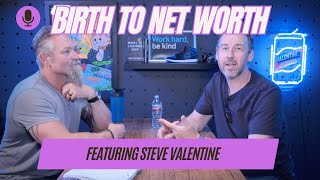
Real-estate strategist Steve Valentine grew up in a family business that missed opportunities due to poor financial literacy. He shifted to investing after his father's death, later joining Real Brokerage for its stock-compensation model. Valentine emphasizes three principles: purposeful relationships, financial literacy, and continuous self-awareness.
Chapters
Join us as we unravel our deep-rooted relationship with money, from earliest memories to eureka moments and building wealth. Birth to Net Worth with me, Trystan Trenberth. Welcome to Birth to Net Worth. Got another exciting conversation today with my friend Steve Valentine, author, real estate strategist, husband, father very experienced real estate professional and associate broker at Real Broker, one of the up-and-coming brokerages that is slamming so many other teams out the way with its forward thinking, its innovative approach to team management and team growth. Steve, welcome to Birth to Net Worth.
Thanks for having me.
Thanks for spending the time with me.
Looking forward to it.
Tell me a little bit about what you've been up to in recent years.
Oh, well, the career is traditional real estate, you know, up until about 2015, did a lot of the REO business And then, um, we ventured into the investment side after my dad passed. And so that's really been— so the, the company has just transformed over the last couple of years into— we do traditional real estate, you know, representing you on the buy-sell side, and then we do a lot of the investing strategies for our clients, for ourselves, and with other real estate agents. So doing a lot of mentoring in that side and partnerships with a lot of different people on the flipping the rentals and coaching and mentoring agents and clients both into their investment and their future.
Fantastic. Yeah, fantastic. So that's how we kind of met, was a couple of years ago through a mutual friend of ours, Shiraine Dora. You kindly came on a panel with me. I think we were talking about the real estate market as 2022 sort of got into its second half and what we could do to sort of help agents, you know, shift their mindset, shift their perspective on the market and how the market works, and also hopefully get into some investing. So, you know, your mentoring has been obviously very powerful for so many people, but let's get back to the genesis. What was your first memory of money, and how did that shape your relationship with money in your early years of childhood?
You know, what I saw when I was raised was that money was always tight, right? And that was— it was always something, you know, we couldn't afford certain things. My parents didn't drive nice cars, but they were in the real estate business. I mean, they were in the business for 40 years. And so money was, I would say, more so the money thing on my mom's side was a little different than my dad. My dad was a good old boy from Tennessee, so he grew up with nothing. And he, I almost want to say, like, he never felt he deserved anything, right? So he would earn money and give it away, or whatever the case may be. So it was always, I don't want to say, it wasn't negative. And my Money was— my dad was very generous with money and with people, and then he also didn't do a lot of investing either, you know, when I was younger. So I didn't know anything about money and finances. I mean, my dad really didn't either. In fact, he took me to my first Dave Ramsey seminar when I was 20, right? And that was really my first education into the financial side of things.
Yeah, and it sounds like your mom might have had a different perspective on money, and we find that a lot where Parents have a different approach. Sometimes they're in complete alignment. Sometimes they've got their own different background and first memory of money experience.
My mom was just a spender, right? It was just a spending piece. Yeah. You know, she wanted nice things. She worked hard. My dad didn't believe in spending money when it came down to especially spending on yourself. It wasn't about leveling up or having nicer things or feeling like you've earned or deserve those things. So he just wouldn't spend money on that stuff.
So were there, were there instances that stick out in your mind, sort of, you know, through your school days where you thought that, well, that's, that's unusual that you saw outside of your family that either conflicted or were opposing what you sort of saw? Was there— obviously it sounds like there's a little scarcity in the thought towards money.
There was scarcity. I mean, we lived in the real estate business, so it was scarcity, right? I mean, what, what I put it this way, I didn't realize it until later on life what was really happening. And so what I realized, my dad did a lot of lease purchases in the houses that we lived, and he was constantly moving and trying to make something happen. Would never focus on making sure the credit, the income, the bankability was, was on point. So we were constantly moving, doing creative deals for leases and lease purchases And there was only one house finally when I was 18. Scary thing is, right? So when I was 18— actually, I take that back. It wasn't until I was 22 that they actually bought their first house, right? The house that, you know, that I grew up in as a teenager. But all the other houses were lease purchases and different things. And so it was a weird anomaly over that time that they sold real estate but didn't own anything. And I think it was really just a lack of financial education and moving things around and understanding, like, you're, you're a 1099 person now, and these are different ways you can do it. So I learned what not to do. And so what it was is my dad didn't surround himself with a lot of education, a lot of people, and talk to a lot of people about that stuff. And I went the opposite direction. I wanted to know everything about it and learn from people and figure out like where not to make those mistakes going forward.
Brilliant, brilliant. So was there kind of an abundance and a different mindset in some of your friends or people that you are exposed to at school that kind of gave you, hey, that's different to what I'm getting? Not making one right or wrong.
No, here's what, you know, the abundance thing didn't come until later in life. When I was growing up in school, I was always jealous of the kids' parents that were constantly buying them things because my dad's motto was, if you want something, you work for it, right? So my dad wasn't going to buy me nice shoes, he wasn't going to buy me a nice car, It was, here's the budget I'm going to give you as your father, and whatever you do over and above that is up to you. Yeah. So it was— I was taught very early on, work for what you have.
Yeah. Yeah. Fantastic. And a very traditional, hard-working approach too, it sounds like.
Yeah. So I, I did landscaping in high school rather than going and working at the local pizza place. So my friends were making $3 an hour, I was making $40. Yeah. Because I was mowing a lawn after school.
Yeah, fantastic. So Dave Ramsey in your early 20s, how did that impact what you knew to that date so far? Because obviously that debt-free, yeah, you know, no credit, what did that change about your education and perspective?
I remember leaving Dave Ramsey and being really excited about what was possible. And, you know, at the time I was a mechanic just getting into the real estate business. My wife was in the restaurant business. And so I was really excited about getting out of all this debt. And so my wife and I sat down and we went through it and we started cutting up credit cards and pinning them on the wall. And we, we worked through the Dave Ramsey process to get rid of all that crappy debt from when our 20s. Yeah. And we did, we got debt free. And then, you know, being in real estate, I also learned that Dave Ramsey is great for those of us that have a set income and we're trying to move mountains a little bit at a time in consistency. So So it created a lot of great financial habits for me. And then I started to change in the leverage and started to understand, well, okay, I understand what Dave Ramsey says, but now, you know, in order to make money and look at leverage and investing and these types of things, you know, the thing I disagree the most with, with Dave Ramsey, you know, save the 20% to buy a house. So if you looked at COVID and you're like, oh, well, I can't buy a house because Dave Ramsey said I got to save 20%. And you were in 2018, you could have bought a house with minimal. Yeah. And you finally got your 20% and the houses are triple the price and triple the interest rates. So, you know, I disagree with a little bit of that, and I believe that you just have to learn how to leverage smarter when it comes down to it and not spend more than you're making.
I think it's getting away from the consumer debt mindset and getting into debt as a tool. Sure. I think that's the big shift that we all have to see and understand. And like we were talking about a few minutes ago, assuming other debt as well, there's other cunning ways that we can, you know, leverage what we have, what exists, without printing money for the banks and, you know, falling into their habits. So, you've got a couple of kids, one is in the room with us now. Yep. How have you been, I mean, let's go back a little further before we go down that road. You mentioned your dad. I heard some of the story about how you had a big shift around 2008, 2009. Obviously there was a big, big change in the real estate market and that made it, made a huge difference for your dad, not in a good way, right, in his business. So that was a turning point not only for your dad but you and your family and your perspective towards life and business in itself. Tell us a bit more about how that impacted your family and the lead-up to that.
Yeah, so, um, this was before it was popular. My dad wanted multiple streams of income, and at the time we had a property management company. So what I learned not to do was to go start ancillary businesses with two guys in a truck without some sort of business plan and somebody to actually run that company. Dad had great theories, right? The theory was we owned a property management company, we did real estate for investors, and if we owned the construction entity piece, we would have customers for life, right? And it would just revolve. What happens when you do that and you start getting into multiple companies? If you just hire 2 painters, somebody has to manage the painters, right? And somebody has to watch over that. Well, that ended up being one of the 3 of us— either my wife or my dad or myself— which took away from the real estate business. Well, I guarantee you we made way more money in the real estate business. So what I learned from all that was, if you're going to go into an ancillary company You have to have a manager or a business partner that is going to help you run that company. Yeah. Trying to keep the pie all to yourself is really ignorant when there's so many people that are like, great, I have support here and I can run this company and build it while I have support with a partner, rather than I'm going to try to do real estate and then this painting company is going to be over here, and not taking count that The painters were screwing up our reputation in the real estate business.
Yeah.
And it was costing us money because when the painter screwed something up—
because it was Valentine Property Management— Valentine Painting, Plumbing.
Yep. So when the painter screwed something up, we had to pay them hourly with our vehicles, with our stuff, to go back and fix things. And what happened was the client was happy with the real estate business, they were pissed at the after. And so we ended up losing clients over it. So my dad had a huge disagreement there's this, this story that he always told, um, where I learned it to seek wisdom, right, in the business side. And the story is, is, you know, you have a family in California that struck it rich with gold, and they're all the equipment, and they lose the gold vein, right? So the gold vein gets lost, and they dig in all different directions, and they can't find it. So the guy gives up, sells all the equipment, the land, for pennies on the dollar. The guy that buys it simply hire— and my dad would always say, this is the funny part, my dad would always say, I'm not going to quit 2 feet from gold, right? All these companies were always 2 feet from gold for years, right? So what happens is, after my dad dies, I hear the rest of the story, kind of like Paul Harvey thing. Yeah, the rest of the story was the guy that bought it hired a geologist. The geologist tracked the gold vein, and it was 2 feet from where they were digging in the wrong direction. The point to that story is wisdom is everything, right? Going to find specialists in certain things. And sometimes as real estate agents, business owners, we'll go to one person to seek advice that they really don't specialize in. Yeah, like we didn't go to a guy that owns a painting company to say, hey, is this a good idea? What is your profit margin? What can we expect on this? Yeah, right. It was We're just going to figure this out and do it by the Braille method, which is really expensive to do. And people don't realize that at the— and in the end that it would have been cheaper to hire somebody to learn from. Yeah. And so I really learned those things in the business too. It sounds really good, right? So we have informed, informed happiness and excitement, or uninformed happiness, excitement. Like, it sounds like a good— and then you get into the Or you go in and now you're informed. So asking the painter and he's saying, "Oh, well, this is a really bad idea." Now you're informed and you either get to make the decision to move forward because you're still excited or you get to drop it. And too many of us like just start it.
Yeah.
And then we go, "Oh, we're halfway into this. I've spent a bunch of money and I don't like it." Yeah. So we've learned a lot. So, what that's done for me is kept me very focused on one direction which is all in real estate. Now, that shifts a little bit in the dynamic and what I'm doing, but it all is surrounded in real estate.
Yeah, I love it. It makes so much sense. Sounds like your dad was a great visionary but didn't have the integrator or the implementer to come through with him and kind of guide and, and correct for— forge the direction steadily and slowly. Yep. Perfect. Now, auctions, that was another thing that I think was a big shift in the family as well and changed the direction into more of the investment side of things as well. Can you tell us a bit more about that?
Yeah, I never, you know, we had two career paths. My dad went into the auction side and messing at trustee sale at the foreclosure steps of the courthouse. He did that for years, had a lot of investors he served and did very, very well with it. I went the other direction and went into servicing the banks in the REO phase, right? So we were both making very good money during those times. I wish I would have gone in his direction. And here's probably— when, when you look at things, it's kind of fascinating as we have this conversation with Christian in the room. There was one thing that used to frustrate my dad, or used to frustrate me with my dad, and it was we would butt heads on things because I wanted to try something new, and because it was, you know, he had done it for so long, this is the way it was, right? So I tried to give Christian some free range of doing things based on what his knowledge is from that generation. My dad wouldn't give me that free rein. And so what happened was we ended up, you know, just splitting apart from that standpoint. And had we come together from those decisions and he would have given me a little bit more free rein and I had stayed, the investment side could have been so much different. Yeah, right. Because I could have seen things differently. And we didn't talk like we saw each other at family things for about 5 years. We didn't talk much about business, right? Because we had split our families and all the things. And, um, I was pretty jaded because I ended up with $1.2 million in personally guaranteed debt when we left. And so it took us a long time to heal that relationship. The piece was, is that we weren't— we didn't have a true partnership. That was the hard part. I had my dad and I had invested a bunch of money into my dad's companies, but it wasn't investing a bunch of companies that we owned together. Yeah, right. So that was, that was a big learning experience then.
Yeah. And with the auctions, he didn't invest in buying the property. He didn't buy anything, you mentioned.
Yeah. So he, you know, and I didn't buy any REOs. Like, both of us were so knee-deep in trying to earn income because of the debt we had created that that we lost track of what truly was possible. Yeah, there was a huge opportunity. And the biggest regret of both of our careers, um, because I look back at him like, well, best time to plant a tree is now and 20 years ago. So when 2015, when my dad died, and I looked at things, I'm like, well, I need to start buying houses. Like, I need to figure out what he was doing because I missed it. Yeah. And I learned because I spent 9 months in his brokerage when he was sick.
Yeah.
Trying to figure out what is going on in here, which was a lot of fun No doubt, no doubt.
So moving towards, you know, now you have a portfolio of properties and obviously strategies change over time and direction changes over time. What are you now sharing with the, you know, the older agents as well as the newer agents that you're now becoming involved with through now Real Brokerage? I know they're very forward-leaning and very supportive investment. How has that changed from previous brokerages and their ways of working in the past versus what you're able to do and share with these people?
Real Brokerage has been an insane game changer for me and, and a lot of other people. They are so forward-thinking in what they're doing and the way the company structure, you know, everybody wants to compare it to other brokers and things like that. And people talk about downlines and recruiting and all these things. So let me just give you my take on it. When I came to Real almost 3 years ago, uh, my life coach Kim Ryan, she came in, she says, here's what I'm doing, this is what I've been doing for the last 9 months, I vetted it. And I'm like, okay, sign me up, right? Like, there was no questions because Kim has been such an instrumental part of my life. So it also gave me a chance to do more with Kim at the same company. So I made that change not from the standpoint of what most people look at and lead with, like, oh, you can go attract agents and you can do all these things. I looked at it sheerly from the investor mindset and said, if this structure was available for every real estate agent 20 years ago, the real estate community would have a much better retirement. They'd have a much better shift, right? There'd be so many things that changed because of time.
Yeah.
Right? And this is where we get into investments. It's time, right? Too many people want to invest and they want instant gratification. That's not how it works. It's time. It's small financial habits and things that we do early on in our lives that make the biggest difference at the end. And a lot of us try to play catch-up, right? Like on this podcast, right? And you know, you get into your midlife and my kids are older now. I'm looking at like, how do I like speed this up? Because 20 years has already gone by. You're raising kids and families. Now if I go back and I said I could have devoted 5% of my commission to invest in these things over that time without missing it, if I would have just created the habit. So here's where I— with Real Brokerage. So one of the things that I just looked at was just the investment opportunity, which means if I can produce real estate like I normally do I can get stock awarded to me. Yeah, if I teach for Real Brokerage like I do anyway, yeah, I get stock for doing that. Okay, just the things that I do on my day-to-day life, I get awarded for. Yeah, and the production piece. So in 3 years, this is what's changed. I've been issued stock for hitting my production goals. I've hit— I've been issued stock for attracting a few agents. It's not a big thing right now. And when you start, you can opt to invest 5% of your commission to buy company stock. Yeah, up to your cap. And then after that, you can continue to do it. So there's a total contribution of about $15,000 that you can put in. Yeah. And there's specific matches that they give you in percentages of that. I started that day one. I'm like, look, this is like a 401 company match, like whatever they're going to give me for free. Is going to have infinite return on value. Absolutely. Right? Because when I was issued that stock early on, when I started 3 years ago, it was 97 cents.
Yeah.
So, the stocks that they issued for my performance that are now worth $5 a share, it's pretty significant for just doing what I'm doing, right?
Yeah.
Not talking about any other ways that you can earn income in real estate. Just doing what I'm doing. So, I waited 2 years before I really started talking to agents about what is possible. And one of the reasons that really excited me was just looking at my brokerage account and going, oh, there's enough money in my account to pay for my brokerage fees for the next 30 years, right? That's what I've received in stock.
Yeah.
And it's purely vested, come, you know, in 3 years. So on my anniversary date, it's vested, I can pull out. What's fun now is the goal of, okay, I want to keep doing this. How long is it going to take for that to hit a mil? Right? And it's just sitting there. It's just turning in the background for doing what I'm doing. Which I haven't paid to work at Real. Real's paid me to work there.
Yeah.
Right? Because of production. So, that was the big piece when I started was just the investor thing. Like just to be able to invest my commission and get some stock in return, that was great. Because that is the mindset we should have is like, "Oh, there's an opportunity here for me to do business and get something in return for it." That's where I want to be. The bonus came when Sharon came, which was almost a year after I joined. And Sharon is by far the best hire in this industry in a decade. Like, when you look at how deep in the weeds he is with us as agents on a daily basis, there's no president nationally or world in the real estate businesses doing what he's doing as far as deep with his agents. That's been a huge bonus. So For me, Real has been that, and we've started to go through and all the coaching, training, and mentoring I was doing, you know, and paying for, I just decided, you know what, I want to go back in and focus on the agents and just bring them alongside me. Yeah. And so a lot of people talk about, well, it's got downlines. No, here's the deal. I'm— if you're attracted to the way I do business and the things that I've done and accomplished, I want to help you succeed in that area. And I'm bringing you alongside me at Real. I'm not putting you in my downline. That's not what we're doing. I'm bringing you along.
It's almost like devaluing of people below you and you pay less and less attention to somebody 10 levels below.
Now downlines come into play when, you know, my friend Trystan Trenberth joins next to me and he just starts to build his people. Well, yes, they're one level below me, but there he is building out his sideline now. So the big epiphany I had with Real over this last you know, 6 months was I have struggled building a team, right? I'm like, just flat out, it's just always bothered me the way things are and the splits, and everybody's like frustrated with things for lack of clarity and fighting with people. So when I decided to do this, I'm like, look, if I bring other agents at Real alongside me, then I have a team and I almost have a brokerage without being liable for anybody.
Yeah.
But I do have all this help. So just an example is like yesterday, I was busy, I was out in the field, I was doing something, and I had a client call, they want to show a house. I'm like, cool, let me get someone from network to open the door for you. Yeah, no problem, done. Client service, right? Now I can work with that agent, or I can have that agent work with that person and not have to fly my flag. Yeah, right. They don't have to be Valentine Group, they can be their own person. They're part of my network, and that's how I'm selling it to my clients, is that I have all these people on my team And they really are, right? So that is what I've really truly enjoyed in that focus of making that change so real. And their innovations are just outstanding. Yeah. When it, when it comes down to what we're doing.
And he's on a lot of the calls on a regular basis too with everyday people where many of these other bigger groups that have either split from, you know, some of the gigantic groups that have become gigantic they're not necessarily as closely associated with the, with the overall structure.
I think, I think that the structure is back to, you know, where people lead is the wanting to do the attraction side, right? It's a great lever to pull when you feel you're ready to support people.
Yeah.
See, a lot of people pull that lever and they're like, hey, Trystan, come on over. Yeah. And then you're just on your island. You're like, hey, who's helping me here?
Yeah.
You call the person that brought you over and they're like, I'm busy, like, you just go on the website.
You're looking in the starlit sky, there's all these people in there, right? You can't quite reach, right, who it is that you need to talk to.
So when I started this, I was very, very intentional when I started talking to agents about it being clear and looking whites of eyes meeting and wondering, is this person— do they align with me? Do they align with my values? Are they builders? Do they want to build? To like I don't want to attract people that are just here not being productive, that don't want to grow. Yeah. And that's not just growth in business. We're talking about mentally, spiritually, physically. Like, all of these pieces have to align in order to have that alignment with your network. If you're just going through and shoving people in that are breathing, you're not ending up with a very solid community at the end of the day. Now, it doesn't mean that somebody can't join Real, right? Wherever. I can give you the referral. But I'm very, very intentional about what I'm doing and who I want to do it with. Because part of this building this sideline for me is going, you know, earlier, I'm the visionary, right? So, I have crazy squirrels. And I want to look at my network and the people next to me and go, "Hey, I have this project. Do you want to come in on this?" Right? Like I have one girl that is just focusing on land and manufactured homes for for me. We're doing that partnership together because I don't have the time to do it all. Now, I get to start looking at who's with me that I can help succeed and help them start showing. And the goal that everybody has to commit to, they have to be willing to do it for the next person. Yeah. Right? That it's a ladder community. Everybody has to be willing to reach down and help somebody out when they need it. Not the other way around where we've typically seen this business and brokerages is like, It's me if you need me, right? It's this closed-in circus that doesn't, um, bring community to everybody. Yeah, you know, I recently heard on a podcast a lot of the agents out there feel like they're on an island because if you go into the brick-and-mortar brokerages, it's like death warmed over. There isn't a lot of collaboration happening. It's there— I hate saying this, but those buildings are like kind of becoming malls, right? They're just slowly but surely depleting from people because the people have no desire to go in there because there's no culture, there's no collaboration. Well, if that person's over there at the, you know, call center, they're just doing their calls, but they're not having open conversations about what's happening.
Yeah. I mean, I love what I see. You know, Steve Trang's got his own group within Real, Tanya Tolliver's with the House of Real, I believe they call it. And I just love the feeling that I get from you know, looking at these people that are in this group. Obviously know a lot of other realtors in other groups and they got their, you know, their shticks and what they do.
But it's just— And the nice part about Real too, they were really big on this at the beginning was you can't build silos, right? Which means everything I do is here and I'm offering you here if you're here and you don't get it if you're not. Real is very intentional that if I want to go hang out with Steve and his community, I'm always welcome, just like anybody's more than welcome to hang out in my community, right? In certain aspects.
Yeah. I mean, coming back to the stock, I read the other week that if you'd spent the same amount as an iPhone cost on every one that's released, that you'd be a millionaire pretty much now. And yeah, it just comes back to those habits.
The habits are everything, right? And so you have to look at when you go to real, it's, it's kind of like when people look for jobs. A lot of times the instant gratification and the human in us is just looking at the top line income number but not comparing, well, this company is a lower top line, but I have health insurance, I have a 401k, I have these other tangible things that are going to mean more later on in life and could save me money. To where, yes, I get more money here, but let's calculate the long-term but my Marketplace health policy is worth nothing, right?
And it cost me everything out of pocket.
And right, so it's— you have to be able to compare those things. And I would think that you brought up real brokerage. I think all of us in the industry have been head down for the last 7 years between COVID and interest rates. It's been like feast or famine, and everybody's looking around. I think there's a time and space right now where people are peeking their head up and going where— what's out there? Because I'm not liking what's happening now that we're not as busy. There's not as much, you know, inspiration, motivation happening. It's like there's a cloud. Yeah, that's all of a sudden happened. Like, the market's doom and gloom, and just depending on where you go, right? I mean, you know, my good friends in the business, you know, Blake and Carl and Brian, you go to any one of their brokerages and everything's alive, well, kicking, motivating, like those types of things. You go into some of these other places, it's like What are we going to do today? Yeah. And it's just a lack of education when it comes and a lack of community.
Yeah. Yeah. So what have been the biggest changes through that you've seen in yourself through your early days in the career to now? And on the personal growth side of things, you know, business is business. We've obviously talked about a lot of the growth there. Where have you seen the greatest growth within yourself and How, how has that awareness grown over time? Because I think it's always a growing awareness. And yeah, and it might be a grain of rice in your shoe that you notice instead of a rock, but that grain of rice can be more impactful on you once you're aware of it than the rock was 10 years ago when you really didn't.
Yeah. So the change for me actually in a lot of things in life, it's almost where death happened and it's happening twice. So 7 years ago was when I got into the influencer space, right? It's where I met my mentor Chris Harder and Lewis Howes. And I spent a lot of time in that space. Masterminds, events. Crazy awesome community of people. Like, Chris knows how to like put a room of people together that are just amazing. And some of those people are amazing friends that I still have today. And I was in that mastermind for 7 years up until 2023 when I hung it up. And that was an amazing time because I saw a lot of different things. It also gave me a lot of squirrels. Yeah. So, it was both good and bad. I went originally to see what the influencer space was doing so I could bring it back to the real estate business. And instead, like my dad, I repeated. It was just different. I'm like, "Oh, I'm going to do coaching and a podcast. We're going to monetize all these things." And in my free time, I I'm going to own and operate a real estate company. Yeah, right. Yeah. And so I started going down and I gave myself a lot of anxiety, right? And I put a lot of stuff on my plate and I was trying to— what I found out is I was trying to compete with the people that were in the room that that was their only focus, right? They were building online businesses.
I'm competing with 7 people in the room when they were only competing with themselves, right? Because it was one.
And that, that's on me. And so during that time, we were still hanging and banging real estate. We were doing 100 flips a year. Like, all these things were happening. I had taken my eyes— so if you're following similar paths to my dad, I took my eyes off the real estate ball.
Yeah.
And things, they didn't fall apart, but I definitely made some mistakes because of things that were happening. Because things were not dialed in the real estate before I decided to go over here. I didn't have a partner or a manager here to keep this running. I was trying to do both. Yeah, and you just can't. Like, I don't care what anybody says, the whole multiple streams of income— you have to get really good at one and then offload it to somebody that can manage it if that's what you want to do. But if you're going to try to manage multiples, it's pain in the ass. Um, so I learned that. What I did learn, and it took me almost 7 years to learn, was I had the sex— this success wasn't going into my head, but it definitely caused some problems with my ego, and it caused some problems in my family and my marriage and my staff and my friends. And I had to take a really, really hard look inward at myself last September. And so last September, you talk about awareness, last September was a lot of hard conversations and I made the choice to go rehab for 30 days in October. So I disconnected my life completely. Um, if anybody's going through a midlife crisis, like, rehab is, is, uh, it wasn't so much about the drinking as much as it was what was happening on the inside. And I needed 30 days to figure out who the hell I was supposed to be. Yeah. And so the awareness was I need to figure myself out and I need help with this. My circle isn't going to do it, right? I mean, I've had all these conversations with people. People are like, you're drinking too much. Like, not that this is a problem, I was completely functional, but I wasn't functional like I am now. And so that was a journey. That 30 days was the best 30 days I spent and the best return on life investment that I could have ever spent on. And I went to an executive men's center and I spent, you know, 14 sessions of therapy every week and different activities, different groups and private, working through things. And what I realized in that was that I had created— I was the hero. I had a hero syndrome. So from the time I was a kid, you know, I was the golden child, right? My brother couldn't do anything right in comparison to me. I was always there for my mom when stuff was happening. Always trying to fix things for the agents in the market when problems were happening. Always trying to like— always taking on everybody's monkey. And at night, in order to turn those monkeys off, I would drink. And then I would get up and do it again. And so, I was trying to turn myself off. But I realized like, I have to get out of the hero syndrome because there's nowhere to turn to when you're the hero. And the bottle was my turn to. And so, You know, after that, it's been 6 months of just sitting quietly after that to figure out like, where am I going? And the vision and the clarity and things after about 6 months started to come back. And I was working, I was here, I was doing my thing. I just wasn't clear. And the energy was so much different. And somebody came to me and they're like, my wife's very much into the woo-woo. She calls it practical woo-woo, right? And a lot of my friends are into it, so we've talked about it. But somebody told me, which totally made sense, is that things happen in sevens, right? And so, your skin cells replace themselves every 7 years. And so, that 7 years of Mastermind died in October. And I made space for whatever the next 7 years is. And it was pretty powerful to sit in quiet And the day I got out of rehab, I went and had a tattoo put on my wrist. And I, I live by this, and I coach by this, and I tell people, like, if it's noisy, you have to pause. Like, you literally have to pause and be quiet in order to identify whatever you're feeling, whatever you're thinking, and then you can respond to it. Because what we normally do is when we get welled up and we have anxiety, like my drinking, right, my instant reaction was to drink, not to sit quiet and respond and listen correctly and feel my inside come to the top, right?
Yeah.
So understanding how much impact that had on me, and then looking at the coaching and the teaching and the things and going, you know what, I want to build a community that I get to divulge all of this to, because success will fuck you up. Yeah, like it just will if you don't— if you're not aware. And you brought that up, like awareness of where are you at in these stages. And it was such a huge awareness, and I had such great friends have really, really hard conversations with me beforehand. Things that I didn't realize, things that I didn't like, things that I was like, all right, I just need to stop, right? And it was really— it was really hard to go that 30 days and go, I hope everything doesn't burn down. And by the grace of God, between my wife and my staff, everything was fine. We made it through it. It was a good time to do it.
Yeah, right.
Yeah. And so that was, that was my awareness experience.
Incredible. Incredible. So, you know, I think moving towards the end of this conversation, next generation, your son's here, your kids are around you. How are you change in the paradigm that you, you experience? Obviously we've talked about all of these things. Are there specifics that you've had conversations with them? Are there— obviously kids don't listen to what we tell them. They do what they see.
They're caught up in what they see.
Yeah. How have you aligned the two of what they've seen, what they now hear, and what they feel now?
I think from a father's perspective, when you're trying to teach your kids financials, it is getting them involved. I'll give you a great example. When they were younger, we would do these memory trips, right? So, we would go on a cruise. And when we went on a cruise, the first time we did it with them, I think they were 8 and 10. And we said, "Okay, what do we want to do for this memory trip?" And so, we planned the vacation together. Then we knew what the cost was. And we said, "Okay, we have 18 months to save $10,000." This is how much a month we have to save, which means in order for us to do this cruise, you have to help make sacrifices to get here.
Yeah.
So it was kind of a game of did we meet the goal every month?
Yeah.
And it'd be like, hey, should we go to pizza tonight? And you'd wait to see if one would chime in. If we went to pizza, how much is that? Be $100 for dinner tonight. Maybe more because I was drinking back then. Right. So we would take that money. We are okay. We're going to go home and eat cereal. And that got put towards the cruise fund. Yeah. So now they understood, you know, the gratification of like, okay, I can sacrifice pizza to go on a cruise.
Yeah.
And I know it's gonna take that long to get there. So we played that game with them so that they knew, yeah, the value of money and how much it was. So they didn't know like, oh, you guys just wrote a check and we wanted to cruise.
Yeah.
They didn't see the credit card bill that was, you know, $20,000 from from the cruise or what we had saved or how hard we worked to get there. That's a great way to do that. And I think the number one thing, no matter where you're at with money, that, that we taught them was we never told them we couldn't afford anything. Even when we were broke, it wasn't in the budget. Yeah, but if that's something you want, here's how you would save for it. Yeah, right. But it's not in the budget this month. Whenever we go down the road of telling our kids we can't afford something You are breaking their spirit. They instantly go to, "I'm poor." And then when their friends say, "Are you coming this week?" They're like, "Oh, no. My parents don't have any money. We can't afford that." Yeah. You break a child's spirit by doing that rather than saying, "Hey, you know what? It's not in the budget." Or, "How do we get there? What do you need to sell to do this?" Right? So, we're making them learn through that process with money for the things they want. We did the same thing with cars, right? We'll match whatever you save. For your first car. Yeah, we went through that process. Um, I don't know, Christian, what's the, what's the biggest thing that, that you take away financially from all the lectures and learning? Oh, um, I don't know, there's a lot of lessons that I've like learned. And one quick, uh, dude, the matching cars thing, like that's something I'll end up doing with my kids, is like, I'm not buying you a car, but if you you're willing enough to save, like I saved like $5,500 for my first car. They almost broke me.
Yeah. Yeah, dude. Yeah.
If you're willing to save, like they're willing to do it with you.
Yeah. Yeah. Yeah.
Yeah, so the kid thing is involving them in the finances, right? So if you're going through things at home, if they know what things cost, then they understand it, right? If all we're teaching kids is swipe a credit card, Where's the money come from? Yeah, right. They don't see the work that goes behind it. They don't see paying it. They don't see the interest rates. So making sure that the kids are just educated on things, and the kids are gonna be super annoyed with you. Yeah, right. My kids are always annoyed with me because I'm always teaching things into a business lesson, or, you know, just the simple things like, yeah, hey, 45 minutes in line at Dutch Bros to pay for a $10 coffee is stupid because 45 minutes is an hour of time and And if my time's worth $1,000 an hour, that was a $1,010 coffee. Yeah, no thank you, right? So it's the little lessons in teaching them.
Yeah.
And so they're learning all those things.
Yeah, it was— I saw John Cleese thing the other day where he was talking about closed and open, um, modes, where being closed, you know, telling kids you can't afford it versus— it wasn't in that context, but relating it to that, then being open that how can we afford it? You know, Kiyosaki put it that way, was it's not that we can't, but there is a way. But there's, there's a path to, right, learning and positioning and prioritizing what's important to you to get to that point.
Yeah, 100%.
I shared with my youngest, my eldest, yes, a couple of days ago, two of my friends have just been to Guernsey in, in Europe for 3 months pet sitting. They're now in Ireland pet sitting. They're now, they're just hopping to different places. All they pay is the travel between and the cost to live there, but they get a free place to live. They look after a cat, a dog, a budgie, whatever it is, for 2, 3 weeks, 2, 3 months, and they're getting to travel the world for a very low cost. And, and I was saying to my, my eldest, sent her the link, I said How do you want to go and look after animals and get paid for it and minimize your cost to travel around the world? Now we just need to find you a way of finding some passive income so that that can just kind of pay for the day-to-days. And, you know, both of them are artists in different ways, and I think that both of them could, you know, do coffee mugs, t-shirts, that type of stuff on Shopify, do a little bit of paid advertisements through Instagram, Facebook, people go and order. Maybe it's one a week, maybe it's one a month, maybe it's 100 a month. Who knows? But until you get it out there and start promoting a little bit with the right audience, then you can pick up, you know, the, the audience, the like audience type thing where— and in the same concept here, whatever it is you're looking for, there's a way. And it doesn't always mean 8 hours harder hard work every week, right, in for promotions, waiting to you know, exceed minimum wage and all these things, right? Again, focusing on one thing for a month, it's, it's the key.
Well, I think it's the new school or the new way of thinking. It's, it's funny because my wife even said it last night. She's like, you know, I don't remember a time when I was in my 20s that I didn't have two jobs, right? And so two jobs now doesn't look like it did back then. And that's where people need to change their thinking and the parents need to be okay with the thinking. Yeah. I don't need you to go physically work somewhere, but are you physically working on something? And I think the numbers are so skewed because of social media that people don't put in perspective, right? It's like, you know, when we ask people, how much passive income do you need to live a good life or to pay your debt off or whatever that is? Okay, if it's $10,000, well, how many buckets can you create that creates a little bit of income? 50 cents, a dollar, a a time, $1,000, whatever that is, can you turn those faucets on with something you make at home or whatever you do here or something, some sort of— everyone's called a side hustle, right? The point is you could go through and create, you know, a lead funnel, something that's just getting people to pay you a dollar. Well, if you can get 1,000 people to give you a dollar a month, that's $1,000 a month.
Yeah.
That you didn't have to go wait tables for. Yeah, it's— but it's so hard to do this work. It's easier to just go apply and get a job and do the menial rather than how do I make this work. Yeah. And then how can I make something else work that doesn't—
you get 30% of those people to pay you $10, right? And then 10% to pay you $100.
There's so many options in this world in comparison to the way we grew up. Yeah, right. The way we grew up was you had to go physically work and do something, and now you can physically go sit at at your desk and make $1,000 a day if you want to. Yeah, but the numbers are so skewed on social. Oh, this guy does like all these YouTube videos. You only need a small, small percentage of somebody. Yeah, right. And same thing with real estate agents. There's still 10,000 homes a month selling, which is 20,000 transaction sides, or 7,000, whatever that is right now. There's a— you just need 5 of those.
Yeah.
To do your thing.
Yeah.
Or you need one really big one.
Yeah. Yeah.
And that's just perspective. Yeah. And it's out there.
Yeah. Give me maybe 3 things, Steve, that have been key to your life, getting to this point where evolution and change— those 3 things that have been most important to you, whether it's business or personal.
The number one thing is relationships. Life doesn't operate, and success doesn't operate without relationships. Yeah. And relationships, some of them are seasonal, and you have to be aware when a seasonal relationship— and you're growing past that— to let it go. Yeah. Uh, we tend to hang on to relationships, and we tend to hang on to people when we're trying to grow, and they're ankle weights, right? And so if you're ready to run, you need to go find a new circle that wants to run with you. Even if you're the dumbest person in the room, that's okay. Preferably you are, you know, and get out of the normal places that you are, right? So, um, that would be one thing. Your relationships and your circles, they should always be expanding. Yeah, and there's going to be a small circle of people that are always going to be there, but there are some people that are seasonal, and be okay with seasonal, right? Um, the second thing is just financial knowledge. Like just literacy and understanding how money moves and breathes, interest rates, cap rates, the just the basic stuff. Because if you understand what $50 a month does over 20 years, right? And it's funny, you said earlier, you know, we tell people but then they don't listen, right? Or somebody wants to pick your brain for lunch and you're going to give them 20 years experience and they won't listen to any of it and do any of it. Dave Ramsey, if I had listened to him 20 years ago and started $50 a month or whatever and made that habit, it would have been a big difference now, right? Now the habits are bigger. And by the way, if you don't create those financial habits when they're small, you won't do it when they're bigger. Yeah, right. It's kind of like they talk about tithing. If you won't give $100 on Sunday out of $1,000, you're not going to give $10,000 out of $100,000.
Yeah.
So you got to start small habits. So it's just It's continuous and it doesn't change, right? And the third thing, being aware of, of your success, right? And being aware of the person you are becoming and giving some of your inner circle people permission to call you out. Yeah. And not taking stuff personally. Yeah, right. I mean, my, my best childhood friend, before I went to rehab, he called me out. He's like, I don't know who you are anymore. He said, there's, there's some ego, there's some things, but you are not the same generous 15-year-old, you know, when I met you and the person that I know you to be. So there's some things going on. And that's pretty powerful when you give permission somebody to call you out on your bullshit. Yeah, right. And there's, there's a few people in my life that have that permission and I welcome it. And I think that we also need to be willing to receive those things and look at them. Too many of us want to play victim on that side.
Yeah.
And blame it on something else or circumstances, rather than going, how did I screw that up? And what do I need to change?
Accountability, right?
What are the things that I can control? Because there's always things we can't control, right? Right. But what are the things I can control?
And I think that ego takes us away from authenticity. And then it's hard to see who the authentic character, the person, the traits that we have to allow them to come through because we're in the wrong circles. We're trying to compare and, you know, to people. Yeah. And work in line with what they're doing instead of in alignment with who, who we really are. And we change over time, but it's allowing those changes to naturally occur, I feel, isn't it?
100%.
So, well, Steve, thank you so much for your time today. It's been an amazing conversation and really look forward to speaking more with you. And, uh, guys, we're gonna have another amazing guest. Check out Steve's links in the trailers and in the comments below. Share some nuggets that you got during the conversation. Check Steve out, check out his Real Team, and reach out to him in the comments here. Thank you. Thank you, Steve. Thanks, sir. Appreciate it. Appreciate it. That's wonderful. Thank you so much, Steve. Hope you enjoyed the conversation as much as I did. There are some great links below, valentinegroupaz.com, Steve D Valentine on Instagram, and some other links to social media and Steve's podcast, Real Estate Revolution. Follow him, drop some comments below, and look forward to seeing you on the next edition of Birth to Net Worth.










