Get Creative Podcast | Episode 2 with Trystan Trenberth and co-host Rashell Jarvis
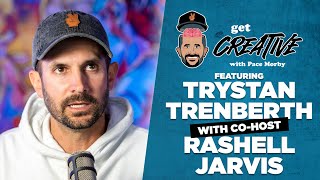
Trystan Trenberth talks about getting into creative finance through mentorship and his first deal: rescuing a seller named Rashida from foreclosure using a subject-to takeover. He credits the Sub2 community and says joining one is the first step for new investors.
Questions this video answers
December 12, 2020
602-300-3295
Rochelle Jarvis (transaction coordinator and mentor)
Chapters
This is the Get Creative podcast highlighting real people doing real deals. Join Pace Morby as he normalizes the conversation about creative finance. And now on to the show. Welcome to Get Creative episode two. A very special, special human being is our guest today. He is one of the highlights of the Sub2 mentorship. The Sub2 family. This is Tristan Trenberth and Tristan is going to introduce himself how he got into creative finance, what he's doing in his business now, and he's going to tell us what led him into real estate in the very beginning. Tristan, welcome to Get Creative.
Thank you. And those are some amazing compliments you just shared with people and I really appreciate those. In the past have had challenges accepting compliments and being able to receive. And the Go Giver book was one of those things that helped me with, you know, something special that you did for me earlier this year, which I'll mention later on, but thank you. So my entry to real estate, like a lot was Rich Dad, Poor dad sat on my shelf for two, maybe three years before I read it. I think it was May last year that I read that. And as I searched on Google, the whole world knew that I was looking at Rich Dad, Poor Dad. So it gave me adverts for Rich Dad Education and I signed up for Elite Legacy, which was previously the licensee for Rich dad education. I spent too much money with them and did a, I think it was like a wholesale course. I did some online content which included wholesale, I think lease options and also fix and flip. And then I went to Vegas to do the wholesale course and then I went to LA in January this year to do the fix and flip course in person. And it was there that I heard the term creative Finance. First of all, I met probably, well, several people I'd met. I also did a program called the Two Day Blueprint with Jason Palliser in November, who I met through the Elite Legacy program and began doing a campaign for tax delinquency with one of the guys to a legacy also for them at the same time. But back to la. I'd heard the expression crazy financing a couple of times and they said, oh, this is an amazing course to do. And it just stuck in my mind. I didn't pay any attention to it. I intended to look into it further, but I had this tax delinquency campaign that I was planning on doing and went ahead with that. And it was around the same time that Batch launched their SMS campaign or their SMS product. I think that was the end of February, early March and I think that was the night I mentioned I got there very late to go and see the batch stacking platform, not sms. I wasn't aware of the other event. I think you, Jamil and many of the other guys I've, you know, now called friends were there. Didn't know you guys, didn't have any clue. And it was around that time that I found your creative financing group. I think there were three or four hundred people in the group at the time and I just engaged with it for some reason. Listening to what you were talking about with subject to taking over mortgages, it just rang so clearly with me. Not that I understood every aspect of it just straight away, but it just made very clear sense and I was locked onto it at that point and I was, you know, religiously watching whatever content that you had. One of the most meaningful pieces of content I think that I saw was you, Jamil and Jesse. Was it you, Jamil and Jesse? I think it was the three of you guys.
Yeah. Jesse and I used to do a podcast on Saturday mornings called Saturdays with Jesse and Pace. Is that what you're talking about?
Yep. And Jamil was on there that day and he was talking about meditation, his journey to. From his kind of rags to riches story, if you like, from. I say that respectfully towards Jamil from his first deal, walking his dog or whatever it was, finding that thing. And I hadn't really thought that wholesaling was something that I wanted to do. And it still isn't up there on my top list of priorities. But I've realized through your course that wholesaling is the haystack in which you find the needles, which are the creative deals that are there. So it's otherwise you're maybe an astro flipper at that point where you go and take deals from other people and take them down creatively. But obviously to form a successful and highly momentous business, you have to be the wholesaler that picks out those deals and hunts for those and sells the deals that aren't so attractive to you to other people, make assignment fees from those to create active income to then fund your passive income exploits. So that's really how I came across creative financing.
Love it. So you find creative finance through elite legacy. I don't want to jump into what you spent on that. I think anybody can Google that and figure out what you, what you spent. What do you get with that? Do you. Is it like a lifetime membership or is it like you get to go for the weekend? What do you get for what you.
Spent well, according to Daniel Chad Moore, or was it Daniel Chad Moore, isn't it, who was a Hall of Famer. You get to spend too much money for one year or whatever the length of the package is that you have with them. And I had a mentor for three days, a guy who's based in Phoenix. I could have picked from any of the mentors that work nationally, but I figured, oh, it'd probably be a good, good idea. There's a mentor in town, he knows the market and it'd be good to work with him. So I had him for two days just before Christmas last year, almost a year ago. And Daniel Chad Moore was one of their hall of Famers, but they kicked him out because he said something about on bigger pockets, you know, about Elite Legacy. When asked about that, he said, well, but you can find all of that information on YouTube. There's no need to go and spend all of that money on there, all of that contents out there. If you're just diligent about what you're looking for and how to find it and really get into a community, which is what we have created, you know, under your direction and guidance. And his final remarks on an interview I saw with him and Steve Trang with Corey was that Elite Legacy is in the business of delivering, sorry, selling education, not delivering education. And I think that says so much from my experience. I admittedly didn't take action. That's my fault. I didn't take action on what I learned there. And I thought that I maybe knew it all or knew more than I did, didn't really take it as seriously, and obviously didn't get any results as a result of that. So that was my experience with Legacy. You got to choose a number, a package which gave you a number of online courses, a number of in person courses, and I've got no reason to complete my time with them. I think it's over now at this point, probably August or September, but I've got no reason to do any of that content because, you know, in six weeks of content from you, I'm seeing way more than I ever would have done through that.
I appreciate you saying that. I think the probably the highlight of that is the fact that we have a community that even after your education, right, you have a community of people. And I would say probably one of the most important parts of the community is that it's other people doing deals. Like, think about the fact that you have access to Rochelle Jarvis, my co host, probably the most special person on this podcast, to be honest. But you have access to her. Rochelle, how long have you been doing transactions?
Oh my gosh, I would say 15 years, some for other people myself and then still doing it a long time.
15 years. 15 years. That is a true mentorship, right? So you have somebody that is accessible, that's been doing something for 15 years at a high level, still driven to learn more and more and more. You have access to that person in a community, not just, hey, you have this access to this person for three weeks or three days or whatever. You have access to Rochelle and our community for the rest of your life, right? They become. This is why I'm bringing up the community, because I feel like it's one of the things that you have absolutely helped us take to the next level. Without you, our community would not be where it is, is that we always intended on building a community, right? And you watch the Creative Finance group go from 300 people to now what it is today, 17,000 in less than eight months. But the sub 2 family is much smaller with way more value, right? It's people that are all on the same page, people that are all like minded. And you know that when you jump into. And you and I had a conversation last night about somebody that has not been allowed to come into that community, somebody that's been trying to get into the community, but they just don't have the same values as we do. And we keep that family very tight knit and we protect it with everything we have. You, sir, have been a massive part of building that. And I can see even more and more in two, three, five, seven years, you being an absolute dynamic leader in that family for years to come. So tell me, how did you get your first deal? Was it a wholesale deal? Was it a Creative Finance deal? And where did that deal come from?
The first deal came through collaborating, squatting up, as we call it, with somebody.
Inside the community or outside the community.
Somebody inside the community. I mean, my first campaign was squatting up with somebody outside because I wasn't aware of this program or it wasn't in existence at that point. But wherever you're squatting up, that's a really important point. This particular deal came from squatting up with Jeremy Hennan, who's one of the. He was at that time. He'd been in the community maybe a week, maybe a week and a half. And he came to the accountability call, which is another massive part of the community. We just had a leaders call yesterday talking about how we can improve, how we can involve those. But he came to the to the call. We generally deal with the top three deals people are working on, any challenges, any problems people have, so we can help each other out and squat up, whether it's a JV or just giving each other guidance. And he had had a text conversation with this seller and she was in foreclosure. And I didn't realize he hadn't spoken to her at that point. So he wanted us to just underwrite the deal as a creative deal just to make sure it was workable. And we did that as a community on the call. There were probably 15, 20 of us on the call. Blake was there, myself and Alex and many others. And one of the things that I enjoy doing is underwriting deals. So that was very early on in where I became more proficient in underwriting deals. And we did it on the screen, on the zoom, and did it together and figured out it was going to be a very small cash flow, but it's still a workable deal. And he asked if I would speak to the seller for him and I did and closed the deal for him. And we ended up taking the deal down. It took quite a while to close on the deal because there were some arrearages to get back to and just see if we could do loan mods, which, you know, I'm so grateful for Rachelle's input there because she was so, so graceful in understanding as a new investor, not, you know, knowing the ins and outs of these things off by heart, guiding us and giving us that.
What was the, what was the seller's reason for selling? And then at what point did you bring Rochelle in?
Her reason for selling was she was about a year or 18 months behind on mortgage payments. She had basically bought the property as a sober living facility. And she had had people living in there, but they hadn't paid the bills and they had really taken advantage of her. But she still gave, continued to give that opportunity to them to improve their lives. And she couldn't sustain it any longer. The bank had decided they were going to foreclose and she needed out.
So what relief did you guys give her?
We avoided a foreclosure for her. We have given her opportunity for a credit history to rebuild and relieved her of a debt and a long term, you know, handicap to a financial future.
Love that this was your first deal is you joined with a sub 2 student in the family. He had a lead that, that you said, hey, let's help each other on this accountability call. I'll help you underwrite it. You had 15, 20 other people on the call, you said, hey, this is a potential deal, depending on what is going on with these late payments and the, you know, the reinstatement amount. Jeremy then says, well, I don't know how to talk to the seller. Will you talk to the seller? Because at that point, you'd been in the mentorship longer, you'd heard all the calls with sellers, you'd been through the practice, you probably had spoken to dozens, if not maybe more than that, sellers of your own. So you got your first deal by squatting up with somebody inside the Sub two mentorship.
Yep. Absolutely.
Love that. Okay, so Jeremy gets the lead through texting. You get on the phone with the seller, you tell the seller, hey, I'm going to stop this foreclosure. We're going to reinstate this thing. If you're willing to let us take over the house creatively, you, this being your first deal, did you know how to do the paperwork? Did you know how to do the reinstatements and all that kind of stuff, or did you need Rochelle at that point?
Absolutely. Need Rachelle. I'd gone through one transaction earlier in the year which failed. Just. It was a change of mind of the seller between me closing him on the phone and the next day. So I'd gone through the contract with Rachel several months before, and that was probably two months into the mentorship. That was valuable, but, you know, my mind was. Was a little cloudy and, you know, I didn't know the thing inside out contracts had changed. I think September 1st was when Sean had got the new contracts for you. So it was, you know, critical. Rochelle could go through the contracts with me, fill them out, make sure that we. Because I think the contract separated to a separate sub 2 document at that point. So that was, you know, critical that I had Rochelle's input and guidance on that. And, you know, when you look at building a house, I don't go and build a house and figure out how to lay the footings. I don't go and lay the sticks. I hire specialists to come in and do that. So same with accountancy. You hire a bookkeeper if you're not going to. And become. One of the reasons I love this is because I've got a full time job. I don't have the time to do that. And that's not a stance of arrogance. It's a literal. I don't have the time. And I would rather build a business around me with resources that can do the work with me and in parallel with me that I can employ and Give value to myself where I don't end up being the business when I leave my day job, I don't want to be learning this to then be able to happen, to do this myself. Having, you know, Rochelle, you know, her caring and generosity and her time and you know that 15 years of experience is. Is priceless. And for the fee that she charges, it's. It's absolutely, you know, makes the deal so much more effective and efficient. And building in these costs now, rather than getting used to whatever you're going to take in in a net through an assignment fee or a deal later on, and then having to start pay people after that point, you're not getting a realistic cost of your business at the early stages. So knowing these things up front and having these efficiencies, because it would cost me more than $400 of my time or $500 of my time to go through and do these contracts, make phone calls to banks, make phone calls to creditors, debtors, title companies. That's going to be a lot less efficient for me to do than it would be just to pay a fee toconstantClose dot com.
Hey, Rochelle, what did you. What was your involvement on this deal? I mean, Tristan saying that he had this seller. What was her name? Rashida.
Rashida, yeah.
So Rashida was a year to 18 months behind on her payments. So what role does a transaction coordinator play in something that late?
Oh, my gosh. It's gathering all of that information. My main thing is, like, we need to have the right numbers. We need to make sure that this is going to be a deal. I'm always looking out for the protection of one. Tristan's my friend, but, you know, my clients thinking, like, are we for sure? Unfortunately, we know sellers aren't always transparent all the time. So it's gathering all that information to make sure we can say, okay, that's, you know, crosses T.this I. So it was gathering the reinstatement, make sure everything was current. We know if someone's behind on reinstatement, they're going to be behind on other things. So the HOA was behind all these other things. We got to make sure and gather that information. Even though the seller, some sellers are not forthright with that information. So that was my main thing. Okay, we got to gather everything that we need in order to make sure that we can close this thing. How are we going to disposition it, all those different things? So that was top of mind. Let's get everything in line so we can make sure that this is going to be A deal.
So Tristan pointed out that there was a potential loan modification in this situation. What did that look like? Actually complete the loan modification, or was there a reason why you didn't?
Not in this case. Because Rashida had been out of work, so she didn't have an income to support a modification. That would have been an ideal solution. I asked Rochelle if I could go through and do that process because I wanted to learn and experience that part of the process for myself. Because sometimes you have to get on the phone very quickly in the future. There wasn't a rush on this one. So I decided that I would make some of those phone calls and discover some of those things just to understand the process for myself. Because, you know, cold calling, you may not need to be an expert cold caller, but you need to understand the process to be able to guide and advise others or at least understand what you can provide for them to make their work a lot easier. So next time I get a loan modification, maybe I'll do that. Maybe, you know, that's something Rachelle can help me with.
Love that. So you get your first deal done. I think one of my favorite parts of the mentorship is that at some point you reach out to me. I then turn around and make a post about this. And you said, pace, I desperately need to move down to Chandler. I need to get my kids closer to a different location. I need to move, and I need to do it on seller finance or creative finance. Can you help me find something? I'm like, man, you want to live in a really nice area that's not really an area that has a lot of distressed sellers. I think we need help from the whole sub 2 family in order to find that. So what's so cool is that it's obvious that you're sitting outside of a home. It's obvious that you're sitting. I know where you're sitting, but tell everybody where you're sitting and where that house came from.
So as Pace says, my ex wife, myself had decided we want to move the kids to the Chanda School District, which is one she and her family have attended. And like Pace says, it's a needle in a haystack down here looking for distressed homes. They are around. I looked at properties through realtors just because I got itchy feet early on. I'd thrown in some offers creatively, but they weren't accepted. They were countering with much higher down payments, et cetera. But Pace was. Pace really blew me away. It was shortly after I read the Go Giver for the first time. And if you haven't read that book, I thoroughly recommend it. It's a great foundation for life and understand a lot about yourself, your own traits. And pace. Basically said to us on a call early on when I mentioned this in a zoom call, let's pull a list for Tristan, let's see if we can find a property. Get 400. There'll be 400 people in the mentorship at that point. Let's have everybody that wants to make calls on properties in Chandler and for probably two, three months, people making calls. And unfortunately with the situation in Chandler and the budget that I was on for my ex wife, we couldn't find something ideal. But I'm still calling that list from time to time because every list has value. Ongoing, we'll still call that list. But one of the other students, Blake, in the mentorship, he's got his own successful wholesale business and came across a deal which he had got under contract. And I remember where I was when he called, he called me and he said, oh, I've just got a property in Chandler and I was going to probably just keep it and cash flow myself. But something just told me that there was somebody that was looking for a property in Chandler and for some reason I thought of you. So I'm calling you. Is this something you might be interested in looking at? And I said, hell yes, of course, that would be wonderful. And I've had some great, great times with Blake. He's a great go giver himself, as you can imagine from making that call to me. And you know, within a few days we'd come down to look at this place and it was a deal that was completely seller financed and it's turned into be a great home which I moved into two weekends ago. So the power of family, the power of network is incredible. I made a few posts on this even before this post came up. The mentorship. I don't think anybody realizes the power of this mentorship as a network, as a springboard to success, springboard through accountability. And I was going to say a little earlier, I think the videos that you've provided for the mentorship, that's kind of like we refer to learning to drive in the uk. You learn to drive with an instructor, but it's only when the instructor gets out the car and you pass your test that you really learn to drive and you're not on your own in that sense. You go through the theory, but it's when you start taking action and putting it into practice. And fortunately there's no car accidents. With creative financ, there could be some dicey situations. But if you ask your network in the sub2 community, you're going to avoid those things. And taking imperfect action is far better than taking no action, which I'm guilty of. From before the mentorship and even partway through the mentorship, I remember our whiteboard session down at the old office, and when you outline the effect of the amount of effort, input equals the amount of success on the other end of things. And that really, really sticks with me today.
Love that. So one thing I know about you is that the community is special to you, right? And you've been able to help us build that community because of your personality, who you are, your beliefs, maybe your own transformation as a human being, as a man, as a father, all of the things that are going on in your life, you are helping build this community. So what I want to touch base on is what are your plans in the future? Let's say here, locally, in Arizona. Let's say I'm a brand new wholesaler. The purpose of me doing this podcast is not to highlight the mentorship, it's to highlight you. And to let every other wholesaler in Phoenix, Arizona or other markets nationwide for that example, to reach out to you and see what kind of help they can get from you. I know, looking at this, this is one of my favorite stories, is that Jeremy comes into the mentorship two weeks into being. Being in the mentorship, I'm not the one that helps him get his first deal done. You are. You reach out. You say, hey, let's have an accountability call. Yes, I set up the theory, I set up the accountability calls, I set up the community and all that kind of stuff. But without you, a real person taking real action and providing real value, Jeremy would. That would have been a dead deal for him. No other wholesaler. In fact, all the other wholesalers that went to Rashida's home, from what I remember, canceled on her because they couldn't deal work.
Absolutely right. Yeah.
So if I'm a brand new wholesaler and I need help, I live in New York, I live in California, I live wherever. How do I reach out to you to get the help that I need? And what can you provide for me in terms of my journey?
I can provide guidance, I can speak to sellers, I can underwrite deals, I can do every part of the process to analyze, to see what entry strategies we can use to acquire property and also underwrite exit strategies for the property. There are at least seven strategies we can use to exit, which will affect proportionally what an entry strategy may be. You know, you can't do every exit with every entry strategy. But we, we can certainly go through that. We can have a quick call, see if there's, see what value we can add for each other and then decide if we want to move forward and, you know, mutually benefit from the deal.
How do I, how do I reach out to you if I'm brand new? If I, if somebody in the free Creative Finance Facebook group, which you are like one of the founding fathers of that Facebook group, by the way. If I reach, how, how can I reach out to you? Is it email? Is it Instagram? What's the best way to reach out to you?
The best way is to text me on 602-300-3295 and you can reach out to me. That way you can find me through Instagram, which is Tristan Trend Birth. And I've got a. Those are probably the best ways to reach out to me.
Okay, so does it matter if I live in Connecticut? Would you still help me?
Absolutely. Absolutely.
Love it. So if I'm going to reach out to you and I live in Connecticut and I need a buyer in Connecticut and obviously you're not a, I don't think, me personally knowing you, I don't think you're a buyer in Connecticut. You can still help me. If I live in Connecticut, I need a buyer in Connecticut. You can help me walk that process as long as I cut you in on the deal. Is that correct?
Absolutely. Of course.
Love it. There's no limitation on location.
No.
Amazing. So, Tristan, again, I have to limit this podcast to a 30 minute interval because I could get carried away. I know you can get carried away and Rochelle will just sit there and let us get carried away. So we're going to wrap up the podcast. If I'm brand new and I'm just starting my journey, whether it's wholesale, creative finance, whatever, what would you say is the first best piece of advice coming from your position in your own journey? What would you give to somebody starting.
Their own Join the. Join a community. Doesn't matter what community is. Join a community. And the Creative Finance Group, the Pacemorby Group, is, I would say, the best community to join. There's Astro Flippers, which are amazing. There's a Disruptors group which meet generally once a month when Covid isn't looming over us. I mean, Jamil, Steve, Trang, Pace, Jesse, Ivo, Annie, all of those guys are such prevalent people that I've met and become friends with in the community. Any of those are all the same community at the heart. They may be different groups, but they're all part of the same community and we're all here to help. We're all helpful towards one another and to support each other and the community is going to be your greatest asset.
Love it. Thank you so much. Tristan thanks for listening to the Get Creative podcast. The full, unedited podcast is available to Sub2 students. Visit sub2.com to apply if you enjoyed this content. Like subscribe and share with your friends.
Sam.










