How To Master Solving Complicated Problems In Real Estate To Generate Profit
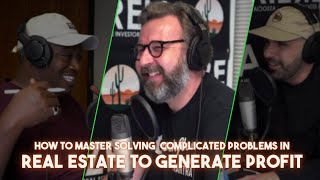
Tristan Trenberth moved from hospitality and tech into real estate by solving messy deals: tax liens, probates, squatters. He buys distressed properties through subject-to deals and seller financing, converts them to room rentals via PadSplit, and partners with others to scale.
Questions this video answers
16% (Arizona)
About 24% (cited as 'maybe' — uncertain)
About $225 per week per room (quoted; speaker corrected mid-phrase)
Converting a 3-bed/2-bath house into a 7-bed/3-bath layout
Interest rate ~5% or below (ideally ≈5.25% or lower), down payment/entry fee ≤10%, cash-on-cash target ≥18%, minimize entry fee including assignment/repairs/holding/closing/marketing
Chapters
I just went and pulled a list. I didn't realize this my career. When they owe a tax lien, they probably got no mortgage on the property because the banks learned lessons in the late 2000s where a lot of, a lot of taxes not paid through escrow. So they lost a lot of debt value by people buying these liens, foreclosing. So they, they married certainly the FHA and BF and they pretty much expect you to collect the insurance and the tax through escrow.
Escrow.
So they know that they're not going to be losing that asset or losing the.
You're listening to the Azria Show. If you're looking for quality real estate investing information that you can trust, you've found it. Stay tuned and join the tens of thousands of members that have already benefited from Azria, you, your home for education, market information, support and networking opportunities that will advance your real estate investing career.
Welcome to another episode of the ASRIA Show. I am your host Marcus Maloney and we have our executive director and co host, Mike Delpr.
Hello. Hello.
And on video. Mike is sitting to my left now instead of sitting to my right. So we have to adjust. But without further delay, we want to thank you and welcome you guys for being here listening to the ASRIA Show. Remember, if you need any great content regarding real estate Investing, go to asria.org but without any further delay, we have Tristan Trenber here today. That's a tongue twister.
Tristan Trent a few times. I think I've got it.
Yeah, he's here today and you know, he has a very unique background coming from technology and now into the real estate space. And we just want to, we just want to have a candid conversation today and just talk about real estate investing in general because we know you do creative, creative deals, all kinds of deal structures. We were talking about pass split earlier. So, Tristan, man, welcome to the show.
How are you? Thank you. I appreciate having me on here. It's been a few months coming, but thank you so much for.
All right, so I know I didn't do your bio and your background any justice, man. So kind of give us your backstory. Who are you? Who is Tristan for sure.
So from career perspective, I started out in the hotel trade, so I started out at hospitality school in the uk. I did a couple of months in Palm beach in 1994, which is my first time in the US and did two or three more years in hospitality after that. And then I went quickly into it. I was very interested in technology back when the Pentium 560 was back in those days when things are this big. And from then I went through, through the hotel industry, in the IT business, through to healthcare, and then most recently the financial business. The company that ran Zelpay, they're based here in Scottsdale. That was my most recent post. As you switched over in the last two or three years into infrastructure security architecture, which was, you know, ethical hacking basically, or some of the team would do that. I wasn't, I wasn't that heavy into it, but you know, it's just making sure the products were safe. So I came to real estate with an idea of how data should flow. Okay. But I'm not an integrator. I, I really didn't really have a great passion for it. The further you go into it, the more you specialize and the more kind of restricted you are. In some ways that's kind of how I felt in that situation. But after having Rich dad pour down on the shelf for a year or two and then actually reading that's Where It'll Be yet.
Okay, so Robert Kiyosaki opened your eyes to real estate. Yeah. So once you, once your eyes were open, what was the next step? What did you do next?
I went on to Google and didn't realize they knew that I was looking for things as much as they did. And then next thing I was Elite Legacy, bless him.
What's that?
So Elite Legacy used to be branded Rich Dad Education. He licensed his name to them for years, but two or three months in he, he pulled that or the license agreement ended. I'm not sure which it was, but I did a two hour intro over at one of the Scottsdale hotels that then led to the, the Next Carrot, which was the 800-3-3-day event where I thought that was where I was going to learn everything. And that was the carrot that led me to the $35,000 upsell, which I still didn't learn much. They were great at selling education.
Okay.
But they weren't really so good at delivering education. I wasn't aspired to take action and I take on a lot of that responsibility back. But getting into this business and then meeting some of the personalities like you guys in town, it's a very different perspective of them trying to teach something to make it sound really much easier than it really is into having people that you want to work with and collaborate with and you know, that was one of the lessons I didn't take on early enough was collaborating with people more. Yeah, did my first deal with somebody, but it's There was a long lead time to getting there because as a lot of people getting into investing, they think they got to wear every hat in the business and do everything themselves instead of just plugging themselves into a conveyor belt. Being part of a process. There you go. Leveraging the skills they have from their background so it's an easier transition.
Oh, no, no, you're good.
Oh, okay. And that's, that's one of the things that people misunderstand when they start out in real estate. Really, when they start out in business, they think that they have to wear every hat and they take a little bit too long in order to see that, hey, you know what? I need to just be plugged into a process without trying to create the whole process. Exactly, exactly. And it's a good thing that you came to wisdom with that process early in your real estate journey.
Well, that's the, that's the L in ideal. Why real estate is an ideal investment leverage.
Right.
Um, and you also just to backtrack a little bit, you mentioned takes work.
Absolutely.
They make it seem easier than it. Thank you. You know, thank you for saying that, man. It's like, yeah, yeah, it could get confusing watching online and everyone's doing five deals a month, ten deals a month. Just follow me, you know, then when you actually go to do it could let you down a little bit. It's a little blow to the gut, you know.
Yeah. And that's, that's kind of when I, I go back to, you know, my, my most favorite saying that I, that I coined is, you know, education without implementation is just information. And that's what a lot of people do. They feel like they need to just go and get all of this education and they can talk about everything. They can talk about, you know, raps and creative finances and subject to you and things like that. And you ask them, okay, well, how many deals have you done? Oh, you know what? I'm just kind of getting started, but you know, a lot of the jargon, but you haven't gotten started, so, man. Kudos to you, Tristan, for just jumping out there and really seeing that, hey, I need to be plugged into a process and then just, just follow the flow, you know, of that team.
So what was that flow for you? So you did, you did the rich dad education?
Yeah, so I did some of that. I was up sold to Jason, his two day blueprint lovely guy used to work for.
So there's another upsold over the 30.
It wasn't technically an upsell, but they were one of the corridor people. But come to love Jason Alistair very quickly. He was a really likable guy. Okay. He was with Damon Remy. He was part owner of REI Black Book originally. Okay. He sold his portion to Damon and then started. You know, he's based in St. Louis. They are based in Florida, I think. But he's got a two day event that he does quite often which, you know, delivers 40 or 50 different strategies of marketing. A lot of home besters go. Okay.
Oh, I think I know who you're talking about. Does he work with like, Sean?
I think so, yeah.
Okay.
Okay, cool. Awesome.
I met him.
So I met a guy called Grayson, Grayson Kupfer before all of this. Turns out he was one of the people that I, you know, met through the blueprint. He was the person I did my first deal with from doing Jason's program. I really kind of aligned with the tax lien strategy of in Arizona, specifically marketing to people that released, you know, three years or approaching three years in delinquency that could be foreclosed in Arizona. The redemption period was coming up. So I did one mailing campaign. We got my first deal. We got three, two under contract. I think it was one of one some guy sold to us. We filed a memorandum of that one three hours before it closed, which obviously didn't index for retirement company. But nonetheless, it was a. It was a deal where I learned not just tax delinquency. I learned about probate, title issues. What else? Negotiated credit card liens. I got about $80,000 of credit card debt down to 17 and a half thousand dollars. Corrected some title issues, probate stuff. David. A small airship. So it was a great intro deal out there. Yeah, a lot of these people that want to have a slammed up, you know, a layup, I think that's a disadvantage to people because it gives them the wrong impression of how it needs to be. And maybe that gave me the wrong impression. I think every deal needs to be difficult because the last year and a half I've been the guy that says, I'll negotiate, I'll negotiate. Yes, I'll take.
That's where the money's at.
Yeah, the money's there often, but sometimes it isn't because it takes so long to. To do it. Maybe I'll talk about this one later on. There's a deal in Albany that took me 18 months to close. I never bought the deal, but I paid the mortgage for almost 18 months.
Oh, yeah, okay.
That's to get a close.
I'm thinking the wholesale brain, right so but real quick, a lot that we can cover there. So first on tax lien, can you just clarify Because a lot of people, they watch the commercials, invest in tax liens. What you said is a whole nother approach that a lot of people might be familiar with. Can you explain the difference?
So you know one of those, I think there's an event this weekend or last weekend that's in town, they come once, twice, once every quarter or something and they talk to you about buying tax liens. So Arizona's 16% interest is the top interest rate you can get paid. But it's almost like a reverse auction. So I see that that parallel valley mansion is owes tax for two, you know, a year. I can go bid on that, that lien to pay 20 grands tax. But the return for those people is a longer term return. So they're looking to make money from the interest they're going to be paid on the money owed. So when the house sells or when they pay off the lien they make up to 16% interest. Right. But if you've got a beautiful house, they've not paid the mortgage, they've not paid the tax property, then you'll probably have to say well Mike's going to turn up, he's going to bid on that one. He's going to bid 15%. Well you're going to turn up, I'll take 12% for that. On the gamble that you can potentially foreclose on the property, I think there's two mindsets in this as well that should be highlighted in the tax lien purchasing or acquisition strategy. You've got some people that I may not align with that just want to buy the lien in the hope that they can foreclose and potentially kick the family out of house and make money or the ones that will just sit on, take the Warren Buffett approach and just wait for the money to roll in when it comes but then be just waiting for that. So then that's the acquisition lien strategy. I think Texas is 24% maybe.
Oh wow.
Varies from state to state. And then you've got different redemption criteria as well. Sometimes you can redeem a house after the auction for a year or two. So that's where an investor may not do any work on the property. They just got to sit on it and pay tax for two years to wait for the previous owner to expire their statute limitations. So they can't buy it back by paying that lien off. But stick with Arizona. So buying the liens is One way. But what I did was to. I just went and pulled a list. And I didn't realize this in my career that when they owe a tax lien, they probably got no mortgage on the property. Because the banks learned lessons in the late 2000s where a lot of. A lot of taxes not paid through escrow. So they lost a lot of debt value by people buying these leads before closing. So they, they now certainly the FHA and VA owners, they pretty much expect you to collect the insurance and the tax through escrow.
Escrow.
So they know that they're not going to be losing that asset or losing the super for that note. So, you know, that's why in this day and age, you see very few properties that have a mortgage and a tax lien. So that's why the level of distress is probably a lot higher. If they've only got to pay a 1500 a year tax bill and they've got no debt on the property, there's probably a serious problem. Yeah.
What do we look for? That's what we do.
And once you see it, Tristan, which is very, very key, you said you learned earlier in your career to work on those hard problems. Because those hard problems, like you said, sometimes there is a lot of money in them, but it can take a lot of time in order to figure out all of those problems. And as real estate investors, you know, that's what we bring to the table, is that creativity to figure out, okay, how can I solve this problem for this homeowner so I can then be able to invest in this property and get the deal? So you guys that's out there listening, you have to understand the majority of the deals, especially off market, they're going to be difficult to close. So don't look for the slam dunks. Yeah, they do happen. Yes. We thank God for those slam dunks. But a lot of them, you know, it's going to take 2, 3, 4, and in your case, 18 months.
Absolutely.
So if you're about to go to the, you know, the hotel tax lien auction.
Right.
Take Tristan's approach first.
Yeah, that's what I would do. And the other thing I dealt with dealing on Illinois street. Think it was 1745 Illinois street and the other thing we dealt with squatters. They had brought a mobile home, which actually an office type mobile home that they just kind of powered their wheels off and everything. And I needed to also hire a company to tow that thing.
Yeah.
With the agreement of the squatters to move it to a place in West Phoenix, turned Out the guy was born in the uk being in jail and stuff. They weren't nasty people or anything. They were nice people. They were just where they were. And again, it's for us to solve problems. It's not necessarily just the seller. And this is a secondary problem that I got to solve. We managed to sell the land, we bought it and paid off the liens, helped the lady pay off some of her other tax liens or other property. And she was lovely. She was very happy about that.
Well, let's talk about that. And I think you just have a story on that, Marcus. When we're looking for problems and then like a homeowner, they're dealing with squatters or a situation, their life's over. It's like, oh my God, squatters. I can't handle this. But us as professional service providers, we know how to work. You got to build that skill through these experiences. You can work around it. And sometimes it's really not as bad as you.
You think it's just relating to these people. Build a rapport. Just say, look, I'm in the middle of this situation. I'm doing this to help this person. How can I help you? Because very often they feel threatened. I think there's been three or four situations where I've dealt with people that weren't invited to stay. And I just deal one right now. We've just helped the guy move out. We bought a. As a probate lead in Black Canyon City, the one I mentioned about. So the, the guy that owned the place died. I think it was probably about a year ago or so now. The. He had a girlfriend, but he was estranged from his family that they hadn't really been to touch for five or ten years. She reached out to them to see if they would sign the property owner. Of course they, they wouldn't. So the probate attorney reached out to me and this is another valuable, valuable relationship strategy. Reached out to us, said, look, we need to sell the property. We don't know what it's going to be like. There's a lady living there that I don't think she's going to want to move out long. The short of it, there was solar on there that was turned off last year because they stopped paying. Okay. One thing we found out, there's no lease, lease or doubt that now because they canceled it. But that meant that a solar bill, electricity bills went up heavily. She hadn't been paying the mortgage. And by the time we got round to closing on it and I, I drove up there Knocked on the door. She didn't obviously know who we were, but just explained, look, you know, we're in the process of buying the property. I know this is going to be a shock. She was quite angry right at the beginning, but by the time she left, she said, thank you for being so good about it. Got her phone number and everything. There was. There was a little bit more frustration, not towards me, but in the situation.
Yep.
But when I. When I talked to her after she had moved out, she was already moving out because it was in foreclosure at that point. We didn't know. There's an auction three months out. Thanks for being so good. Thanks for taking care of the situation. But there was a guy that lived in the shed. This is a guy that was there, by the way.
There's someone in the shed.
Yeah. She didn't give us his number. Initially. We went up there. A couple of us went up there at different times, knocked on the door, of course the shutters, you know, moved and nobody opened to the door. So we set up a landscaper. We'd whack the front yard. And that, again, was a good way to do it because he knew we weren't going to knock on the door. Wonder what was going on. They were able to speak to him and let him know, can we have your number? We want to help you move. Probably need a van. Wow, look at you, truck.
Nice.
So we did that. We rented it for two days. He didn't take it back for five or six days, unfortunately. But in process, he went through and cut the electric cable. They'd taken out the breakers because apparently there's an older one that's a bit more valuable, the units. But he cut the cords coming out of the breaker box. So even though they were jumpered and capped, he just cut them where they come in. So that's probably added 3, 4, 5 grand to the renovation, unfortunately. But we were working with him. I think that may have been before we got in touch with the van and everything else. But people. People are irrational. They're scared. He didn't necessarily have anywhere to go right at that time, but he was a hoarder as well, so he's got. So we three full dumpsters.
Two. Two questions. So if someone. If the solar was canceled, is there a lien on the property?
There isn't, really.
Wow, cool.
All right. That was a bonus. Yeah. Whoever buys it, they can pay somebody for a solar just to connect it back up again.
So they just cancel. They don't come back and Rip them off the house or nothing. Just it works for you. Different.
Different.
Well, Marcus, real quick. So a lot there like. So we were talking about tax liens. You talked about squatters, stealing electricity, all the foreclosures, all these type of things. So it's a human business. It sounds like. Yeah.
Relationships. Absolutely.
Yeah, man.
And, and that's one of the things that I was going to mention to you, Tristan, is when dealing with squatters, you know, they're human.
Yeah.
You know, so we have to make sure that we take that humanistic approach and talk to them and find out what their situation is. Because not all squatters are bad, are bad people. It's life circumstances that happen. And as real estate investors, we have to try and figure out what's the circumstance. What do you need to resolve the circumstance, and then how can we help? And once you start putting that best foot forward, then they see that, hey, this is not going to be a bad transition. Let me see what I can do to try and help these people. Help me, because that's what it's, that's what it's really all about.
Yeah. Yeah.
So what happened next? So you got, you linked up, you, you figured out leverage and joint venturing and following someone's system. Yeah, I know you went off on a couple unique deals. But what kept what, what was the next step?
So I was, I was working my 9 to 5 until early 2021. So I, I, I hired a virtual assistant, Mike. And not yet.
Oh, you virtual assistant.
Actually, his virtual assistant before all this.
Yeah. And I did fine. But y. Had had a cold caller, but it was one cold caller and it wasn't really enough to generate sufficient leads. Working a day job, I was straddling two worlds that I wanted to exit one, but wasn't ready to exit it. Wasn't ready to fully get into real estate either. I didn't have the time or necessarily the experience at that point to train the va. I didn't set him up for success. We got to contextualize these things. I want to talk about VAs briefly as well.
Sure, go for it.
That's a, that's a huge topic. And everything is context and recontextualizing things. Oh, VAs are terrible. Or the data's terrible, the dial is terrible. We got three huge variables, plus yourself in the situation or the training of the va. And again, another human being. Not, not a commodity. They're all human beings feeding their family. We need to be as, as, as supportive and helpful. They'll only succeed if we succeed and we'll only succeed if they succeed. So it's a chicken and egg. Oh, my data is bad. Oh, have you looked at the dialer to see drop calls you've got, you get it. Too many drops, you're not getting enough dial time. I don't understand these systems. I understand the principles behind. Well, okay, your dialer looks good. Well, the VA sucks. How much spend time you spend with them? Yeah, well, I talk to them every day. Oh, how much time do you do? Calibrating the calls, talking to them, coaching and listening to the calls with them, Having them feedback to you what they learned from the call and sharing what you can see on the call as well. Well, I'm not a salesperson. Could be a problem then. How are you going to teach somebody that does laundry to build a house and expect them to do that? You know what I mean? It's like two very different things. How can you get some help? There are people that train VAs. There are services that provide trained VAs. You can obviously tweak the nuances to make it fit your business. But there are many different lead generation sources. And it all comes back to, well, you got shitty data. What, what, what data do you get? Well, I just pulled some addresses from here. I heard that Pace or Jill or somebody said, pull this list. Would you know exactly what you're looking for? Yeah, I think, I think so. What else have you stacked that with? Would you be stacked? So it just all comes back to a big soup. It is. You can have all the same ingredients, but unless you put the right ingredients in the right proportions and whether it's stock concentrated rather than diluted. Unless you get everything together and keep tasting it along the way. Don't keep changing things every two minutes or every two days. Give it 60 days. Start looking at the data. Is things, things improving as your VA gets more experience. Is the dial doing what it needs to do and checking all of these things along the way and get some outside help.
Yeah.
Partner with somebody if you got, you know, I, I, I lead a group here in Arizona. And when, when people come to me, which I try and talk to as many newer people as I can, my first question is to them is, so what do you do in your current career? What was your last career? What gave you joy about doing that? That gives me the first key to. You shouldn't wholesale.
Right.
So give us an example.
What, whatever their thing is, or maybe they should wholesale. You got one, I think Brett Daniels told me this. You got the three t's time, talent, treasury, you can bring one or more of those things to a situation. I've got a full time job. I don't have the time, but I might have the treasury or the funds to be able to hire a VA or pay for leads to come in. And I may not have the talent to be able to follow up and close the deals. Depends on whether they're inbound leads or outbound leads. Another conversation. Maybe if I've got inbound leads, that might not be the right combination. Unless I've got somebody available to pick up those leads and again, partner with somebody. Okay, I've got a $2,000 a month budget, a $1,000 a month budget. I'm going to pay a VA, I'm going to get a dialer, I'm going to buy this data, I'm going to get all of this stuff, but I don't know how to use it. Is it more efficient to give somebody a thousand dollars a month to get maybe 5% of what they're going to generate in revenue or learn from what they're doing or have. First option to buy the deals, if you're buying as well. Right. Put an ingredient in somebody else's soup to improve that one rather than just try and cut carrots with a bottle.
Knife, you know what I mean? So that, yeah, there, there was a lot there, Tristan. And one of the things that I want to discuss, piggyback on what you said was when me and Mike, we do our deal finders club, that's one of the things that we see is people try to throw everything in a box. So we talked about VAs, we talked about what we called ideal seller, Avatar, you know, who are you attracting, who are you trying to find? You know, because a lot of people figure, oh, I just hire va, give them a list uploaded in a dialer and they know what to do. Just let them go. And then they, like you said, they complain about, you know, why isn't this working? Why am I not making $15,000 tomorrow like all of these gurus said?
Or this afternoon.
Yeah, or this afternoon. So we always teach them, understand who your one, your ideal market is. Yes, this is Phoenix. And people say, well, my market is Phoenix. Well, well, within Phoenix you have different areas. So you have the East Valley, the West Valley, the North Valley, South Phoenix, you know, you have Scottsdale. What, what area are you looking in? And then even break it down even further when you looking at each area of the valley. Okay, what neighborhoods, what zip codes you have to dig down Medium price point.
In South Phoenix, median price point in Paradise Valley.
Exactly, exactly. It's so many variables. And then once you understand, okay, this is the area that I'm going to target. Now who in that area am I going to target? Like I always tell people, my buyer avatar is the Johnsons. They're older, they may have owned the house for 20 plus years. You know, the house is probably 1900 square feet, is too big, they ready to downsize.
So now maybe two story.
Yeah, maybe two story. So I always train our VAs to listen for that. You know, listen, try and figure out and find the Johnsons. And if it's not the Johnsons, what variation of the Johnson's is it? And in that way you can learn how to work with them and solve those problems. So, I mean, you hit it right on the head. It's, it's people take this shotgun approach and they just want to say, all right, well I'm hiring the va. And then I don't have to do anything. I can step back and get instant leads. And it just doesn't work that way.
It's like, it's like finding somebody on the street and expecting them to be a plumber.
Yeah. I haven't given them the tools or.
You give them the tools, but they don't know what to do with them. What's that analogy that you hire a plumber, he charges you a thousand dollars for fixing your hot water tank because he whacked it with a hammer on the top person complains, well, why is that a thousand dollars? You just hit the thing with a hammer. It was only $10 to hit it with a hammer, but it was $990 for the 10 years of experience that taught me when and where to hit the hot water tank.
True.
So, so how going back into when you meet, you know, first meet the new person, getting in our business, it's the mindset, right? It's like they even, even to even have them start thinking creative leverage. Because I think a lot of people are trained of, hey, this is like I would, when I would always say, hey, let's split deals to like bird dogs or whatever, I would get a lot of feedback like, this is my deal. Like, what do you mean split it? You know, they like they can't even comprehend just the way they're raised or that that's how you do things.
Do you remember at high school, elementary school? Yeah.
Yes.
Do that on your own.
Stop looking at the other paper, looking at the other.
Don't help him. Yeah, there you Go. And it's bred into the world's culture through education.
So true. It's, it's. You have to figure it out on your own. And that's not the way life is. Life is. You have to, like you said earlier, you got to collaborate. You got to bring your partners to the table. You got to leverage, like you said, Mike, and by doing that, you can go a lot further, faster. But like you said, the educational system taught us, you know, it's you by yourself, you're individual and you. And the only way you succeed is by being an individual. And that's just not the way life works.
Yeah, yeah. This is the scarcity mindset I've been working on myself for since 2008. And I didn't know the depths and levels that I could go to. I mean, I'm, I'm in a couple of them in a really amazing group right now, thanks to Jamil, and there are some incredible people in there. Mike Ferry was a big real estate trainer for the agent side of things. Probably the most well known in the States. His son Matthew used to work for him for a number of years. Went off on a, you know, very much more of a spiritual journey of seeking the answer. And in 2016, he wrote a book called Quiet Mind Epic Life. Okay. She talks about quieting the drunk monkey in your mind. That keeps giving you the doubt, takes the peace away from you, and it really brings it back to the, you know, a few core things, one of which is your opinion is the source of your suffering. Well, that's my deal. Oh, it doesn't sound like your deal unless I help you. Yeah.
Yep.
Well, I prefer if we make it a preference, then it's flexible. I'd prefer to keep the deal. Well, how can I help you get it across the line? Is there something I can do to nudge you along? Great. But it sounds like one of the interview questions is when you bring a JV partner on is. So tell me about the deal. Oh, this, this and this. So where do you think you're lacking? Where are you getting stuck? What do you need to do after that? Well, I'm not sure. And you find out where they're going to get stuck so that you can offer advice from the point they are. Or maybe rewind it a little bit and say, well, if we talk about this and this, may we can do something like that. That might allow us to give a better outcome for the seller, a different outcome for the set, a different option, maybe multiple options. And really taking that scarcity Away and because, like you said, that's my deal.
You're reframing. So you. The nine years of being a plumber.
Yeah.
Is what you're doing right now. So that's good for us experienced investors when you get that newer person that you could truly help, but they just can't see the vision. Reframe how you present it. I was actually. I don't know if you heard of a sleight of mouth patterns. I was just working on those yesterday.
Yeah, yeah, yeah.
So. But it's very helpful, like in therapy. So. So let's talk about that. Man. I like that because we're talking about mindset. Newer people. Let's help the newer person understand the importance of working with experienced investors. And maybe I always get asked. I'm sure we all do.
How do.
How do I work with you? Or how do I find who do I trust? How do I find a mentor? You get all those types of questions.
What do you think? Yeah, I mean, it's difficult to tell who to trust. I was hesitant about real estate in the beginning after seeing some of these closers and, you know, car salesman types that I had the. Maybe I'd seen one and I'd kind of painted the brush that. Oh. Come across a lot of slimy people. Knock on wood. No wood around here.
No wood here.
I've, you know, I think of. I've seen a couple people that have been in my periphery, but I'm not looking for it, so I'm not finding it. Right. I'm looking for good people. I'm looking for helpful people and supportive people. And I'm being that helpful, supportive person myself, regardless of my level of knowledge. It's like, you know, you go to your physician. Well, I got a problem with this. Okay, well, let's. Let's narrow down what it is. Okay. Now you need to see the specialist. Same with real estate. You can get to a certain point of your knowledge, but you've got to be willing to be able to hand it off and JV with another person if you need to. You get to your point of, you know, your ceiling, then somebody else has gone through that before. There's a bunch of people. It's finding that right person that has the mindset of probably can't help you, then give Mike a call. He's the guy you need to talk to about that and just be willing to release things and let go. There's. There's the commitment versus attachment. Heard that kind of theory. You can be so attached to getting every Deal and every penny out of a deal that you won't let one go or many go. Yeah but if there's like you were talking to the ideal avatar, if it's outside your ideal avatar, I don't want it. I don't want it because it blocks you getting another one that is your ideal one from coming along. Another thing with Matthew Ferry, him and Thatch Nguyen wrote a book about networking around 2011, 2012 and they got a four step process called Giving the Gift. First stage is really the wedding friends and influence kind of approach. Let somebody talk, connect with somebody deeply find out about them, let them talk about themselves, what their goals are, what they're aspiring to. The second thing is try and provide some value on the spot. Mike. Oh that's brilliant. I love you doing that. You know, I met a guy at a conference last month, become really good friends with him. He's actually doing more of that sounds like that might be a great place, great person to go and connect to or I actually do that myself. I can help you with that deal. I can do that, that rap or the whatever it is you need done or you know, somebody on my network will know somebody that knows how to do that. You know, let's exchange details. And I always exchange details and take a photograph with somebody at an event. So you got the context. Oh shit. It was a Hasrian. Remember meeting him now that brings back some of the context. But either way you take it on the road with you and then the. So connect with somebody deeply, try and provide some value on the spot. Then generally the person, if they're interested in you and they're genuine person. So Mike, tell me what you do comes back to you. Winning friends and influence people to really let the person talk. Mike was really interesting, he listened to me. But then Mike told. I asked Mike what he did, he told me all about what he was doing. So then you're really giving your buy box. If it's in a real estate meeting, it's giving your. What I'm looking for in my life, I'm looking for an investor to come into a $25 million deal in the Bahamas right now, 120 acre development. And we've got an option agreement right now, shovel ready all of the stuff that we need. Now if I didn't share that with somebody, how is somebody going to think, oh I know somebody in Florida that does developments or you know, would you consider a capital partner on it? Yeah, absolutely. They're not going to know what you want. It's not Always going to turn out that way. But if they got that at the back of their mind, somebody called me on Tuesday or Wednesday last week and they said, oh, is this Tristan? I'm about a project in the Bahamas. Somebody told me, you got a project I might be able to help with. Still don't know who it was that told him. I said, oh, the end of the call, did you mind letting me know who shared my number with you? I think it was in a grant Cardone group or something. Not in a Grant Cardone group. Yeah. But by me giving the gift with somebody and sharing what I am looking for somebody, whether it's. And that's. The fourth law you can come around to is the universal law of reciprocity. Whatever you put out there, it'll come back. It's not a transaction. You give them 10 bucks, they give you a bag of potatoes or whatever. But it just gets out there in the universe. And the more you confidently and clearly talk about that, the clearer you are to the universe for that, to bring it back to you from over there or back here somewhere around. So true.
And a universal law of reciprocity. What I like about it is, is that you don't need it until you need it. If I, if that makes sense, like you said, I don't want to give $10 and then immediately get a bag of potatoes, but I want to be able to give that $10. And then when I really need something, then it ends up showing up, you know, like you said about the Bahamas. So people have to keep that in and in their forefront of their mind because they think everything is so transactional. You know, it's, I give and I get, I give and I get. And sometimes you just have to give without the expectation of receiving anything on the back end. And guess what? When you really need it, something will pop up, like you said, in your periphery, and you'll be like, wow, you know what? This was the perfect time when I needed this with this perfect situation, and I'm doing it with the perfect person.
So, yeah, I mean, let's. Let's talk about the go giver. Brandon Simmons. Yep. The first. The first law is give more value than receiving financial. You know, in compensation, a lot of people are willing to receive, but they're not necessarily willing to, in a scarce mindset we talked about, provide some compensation for your time or whatever. Now you're willingly giving more than you receive. But there is, in that context, some sort of reciprocity there. Right? More of a transactional level. But we can still look at these as transact transformational relationships instead of transactional relationships. Because we build social capital, we build. Some people call it karma, but it's really just building goodwill in the universe by giving to people and never. And step over nobody. If they look funny, they look strange, they sound strange, Somebody may know somebody that by speaking to them and just giving yourself to them as you would any other human being and not judging people, those are the biggest paybacks. You're never going to know who it is or what it is. Yeah, but we need it again. Comes back to the beginning. Whether they're a squatter, a seller, whoever they are, they're human beings. If we can connect to them fully. Everyone. And there's a town in Gloucester in the UK called Lidney, I think it's called. And there's an expression where. Let's compare it to maybe. Is it like Kentucky or somewhere where there might be some common relationships?
Should we say, okay, familial relationships.
Familial relationship, exactly. Kick one in the leg, the whole town limps.
Right.
But if we look at the universe, there's a book by Dr. David Hawkins called Power vs. Force. Have you read that one?
No.
I heard of it though.
So it brings up, you know, ironically, the British Empire being a force that went and forced their way around the world and dominated a lot of countries. But it was the power of energy and the power of Gandhi that overcame the British Empire. So whenever there's force, there's resistance.
True.
I try and push the wall. There's a resistance to equal. Every force is an equal and opposite force. But when we use the power, we're actually being for something, not against it. And if we look at life is always going our way, even when it is, we recontextualize it to look for the beauty in what we're experiencing as an experience. Not a problem. We look at life very differently.
Yeah. Because every experience, and this is one of the things that I always have to remind myself is every experience is working for your betterment. Even if it's bad experience, a good experience is working for your betterment. Because if you have the right perspective and you take the right approach, you'll see how it helps you, you know, down the long run. You know, so for example, you know, a mother losing her. The child at a young age, you know, at the time, that was a terrible experience. But I can guarantee you years down the road that mother can look at that, that experience and say, wow, because of that, I learned this or I gained this Or I learned to use wisdom or taught me patience. You know, it taught me how to look at the next person and learn how to be more reflective in what their situation is going through. So that's one of the ideas that I try and carry, you know, every day is, you know, what did I learn today? And no matter what the experience is, and if people can go about their lives by doing that, it. It eliminates that transactional relationship all the time.
So if I could share my number one sales strategy, that'll make you a million dollars, right? So everyone asked me, what do you do for sales? What is this? I don't go through any of those programs or any of that. If you just take what you just heard for the last 10 minutes or 40 minutes, right, and you approach life that way and people that way, it naturally happens, if that makes sense in some way. Yes, there are sales tactics and things you can do on the moment, but I think that's always been my approach with homeowners. Truly trying to say, hey, how can I get you out of this? You know what I mean? Versus, like, grind, grind, grind. You know, it was a mentor told me, the friction is to motion as resistance is to persuasion. So if you just have that natural law of truly being everything we talked about, that resistance comes down and you.
Just have a good, good flow, you.
Know, so good stuff. Man could talk all day, but we've been on for like 45 minutes.
Absolutely.
I'm awake. I love it.
So what's next for you, Tristan?
So right now, as I mentioned before, I'm buying a lot of creative deals. I'm always looking for more capital partners, private money lenders, et cetera, for entry fees. We've got a great property on 21st Avenue and Adams. We did a flip walk there a couple of weeks ago when I went communities. We, you know, I organize these flip walks. I think we've got one in Scottsdale with somebody in the next two or three weeks, but.
Cool.
We're buying a house that I worked on probably for 10 months. Two separate JV partners brought the deal to me over. The last. I think one was August, one was September, October. We're buying the house subject to the guy who's in pre foreclosure. We're finally closing on it probably tomorrow, maybe the next day, FHA loan. And we've got a. This seller had a loan modification done where he did a partial claim. Money's on the back end, and we're actually turning it to a pad split, which is a. It's a relatively new company, but it's an old concept. There's roommates.com that's been around for 20 plus years, I think. So I think they, they pitch it as you're bringing the multifamily model to single family properties. I like it because we're, we're able to convert a 3:2 into a 7:3 and by dividing the family room into two bedrooms, then converting another area of the property as well. So it means that we've got seven individual tenants. There's only going to be one person in each room. Each room will have a lot, kind of like an Airbnb like midterm rental type thing with nurses where you might rent the property out room by room. So we should never be 100% occupied, right? Or sorry, 100% vacant. Yeah, but hopefully it will be 100% occupied. But it means we're much more flexible. Instead of that binary pattern with a single family where we might make 18, 19 hundred dollars a month gross, we're going to be charging between 2 to 2 25, I think a month on average for the rooms. Sorry, 225 a week per room. So even if we just look at 200 because I'm not great at maths, that should be 1400 bucks a week. That's amazing, man. So if you relate that into 15% service fee from pad split, taking their background check work, managing the tenant relationship but not managing the property and collecting the money, that translates to a huge cash flow probably in the region of $2,000 a month after the private money. And you know, we'll obviously be. I'm going to start out with a 15% vacancy repairs fund just so I can get some capital put away for that particular property. But at that point I'm going to just start funneling money back to the private lender. So we pay down the principal of the, you know, instead of being just interest only, will funnel a chunk of that change through the lender. She's incredible. Her husband's amazing. We're actually starting a business together. Four of us, Ilana, Myra and Cedric. And we've all got very different strengths and experiences, so. And we're all kind of grownups as well. There's a lot of young guys in the game loving to bits, but they don't necessarily have the life experience, not always as relatable.
And don't add a business acumen.
This is right. And to be honest, I missed it. I don't have the business acumen. I come from a W2 job for, you know, a number of years where I got very gray and.
But you have, you have PhD in life. You know how to treat people and do business.
Absolutely. So, you know, you probably notice I'm a very relationship visionary type guy. Love talking to people, helping people, solving problems, plugging people in. And, you know, it's a way that we can leverage each other's skills to, you know, bring solutions to people and have fun doing it. And that's the huge thing. When it's not fun, there's not flow. We're in resistance. When it's not fun. And coming back to your ideal avatar, if you stand in the way of those avatars, you're going to be in resistance. Another of these damn deals that let it go. Be clear on what you want, be clear on what you're marketing for. Let those things come in, Pay a referral fee, Get a referral fee for someone to say, look, I'm never wholesaling these things. I'll give it to you.
True.
Just give me 20, 30. Cause I did the marketing and closed the deal. Or, you know, 5, 10% refer, whatever the deal is, you know, be part of the universe, which is one. Coming back to, you know, Lidney and Gloucestershire, we kick each other, we're kicking ourselves. We are one energy just expressing itself in infinite variety.
And guys, if you want to learn more about Pad Split, what Tristan is talking about, go back to last week's episode. You'll hear from Ellis Tran, the account exec, and he does a deep dive into Pad Split how it's a benefit, you know, for real estate investors and for the community as a whole. So, man, great that you're doing that with Ellis.
Yeah, Ellis has been super helpful and a lot of homevestors doing this where I think they're getting DCSR loans and that type of stuff, which are kind of pricey at the moment. It's a way that they can create some cash flow and, you know, get depreciation as well. The way I'm buying deals is. Is creatively. So I'm buying subject to buying seller finance. So that my yield, even though it might be a 4 or 5% interest rate with, you know, whether it's got, you know, VA loans, I. I started a campaign, we called it Mission Home Base, with a few of my friends, just closed on the house two weeks ago, which is the only one that came from there. Mission Home Base was really to go after low equity VA loans.
Okay.
But then I realized, wow, damn, this payment's really high. That's not really working as a, as a, as a rental wraps are the only exit for those. But now it's opening me up to if the layout of the house is right, cash flow, massive amounts of money on a scale. So yeah, I'm just looking to buy more as low interest rate as possible. Sub 2 deals or seller finance deals at less than 10% entry fee, including assignment fees and, and you know, less than 5% interest rate. Ideally I think we've got one at 5.25%, but the rest are below 5. Awesome. You're just looking to, you know, lap all of these up and if, if you're not aware of how to, to, to work those, you know, I'm here, I'll be a huckleberry, as I think you say over here.
So that's, I'm sorry, go ahead, Mike.
No, I was in there to kind of say how they get in touch with you and stuff like that.
So before we go there. But as you guys can listen to Tristan, you see, he know exactly what he's looking for. You know, it's not a, again, like we said earlier, just a shotgun approach. Said he's looking for, you know, VA FHA loans 5% below, you know, interest rate. Yeah, the entry rate, you know, entry rate, 10% below. So you know exactly what that box is. So if it comes, something comes in that box, you know what to do with it. And if it's not in that box, then you refer it out to somebody else.
And entry fee guys, it's cash to seller. If there is any arrears, because there may be arrears, your assignment fee, renovations, holding costs, closing costs, and any marketing fees that you're going to use on the other end as part of your extra. Actually, whether you're doing a wrap or whether you're, you know, advertising it as a, as a rental or you know, doing your pad split type thing.
Okay, so if you guys were listening, that was the explanation of an entry fee. So we're going to chop that up and we're going to use that because that's the example of an entry fee. So you guys will know what an entry fee is when you're out there trying to do these creative deals.
The other thing I'm looking at is return on investment, the roi, which is how, how soon am I going to get my entry fee back from, from the money put into the deal. Obviously I have a borrow pml and you know, my ROI is infinite because I've got none of my money in there. But you know, I Want to be able to pay that off. Ultimate half cash flow is great, but I'd rather, you know, remove that leverage. Cash on cash return, that's very important. I really want to be at 18% or above after everything's said and done with padsplit makes it very easy. But yeah, those, those are the main things. 5% or below. And so interest rate, down payment. So the percentage of down payment, 10% or less, those are really the four things. ROI, cash on cash, down payment and an interest rate. Those are the, those are all the metrics I'm looking at to see whether it's a good deal.
Perfect.
Awesome.
If we have or someone out there in the world has what you're looking for, how do they get ahold of you?
So. Www.jv joint venture with T tristan.com so JV with T.com or you can find me on social media.
Awesome.
Tristan Trenberth.
Love it, man. That was a great conversation.
Yeah, perfect. We'll make sure we have all of that information in the show notes. You guys know exactly what to do. Get out there to take massive action. Tristan gave you some solid content for you to get out there and make sure you're doing things the ethical way, the right way. And for us here at Ezriel, we want to thank you and welcome you. You're welcome again, Tristan.
One other thing I'll let you guys know. Specializes is probate. Okay. Probate stuff. Working with attorneys and also foreclosures. My Partner, Myra has 15, 15 years experience with Chase. She issued mortgages in the beginning. She went through the whole loss mitigation department. Well, she's done loan mods on the end of the bank, so she knows exactly what we're looking for. And we can help you through avoiding foreclosures. Even if it's like I would say, preferably not less than five days away because it gets. Takes us away from other important work and the chances of stopping some of the auctions are little to nothing. But we've. Last week we stopped an auction a day ahead of an HOA auction that we didn't know about until the day before. And that was after pushing the auction off four times for the property itself through the bank.
Wow.
And leveraging a 12 year old divorce decree to force the sale of the property.
Amazing, man. Good stuff.
Yeah.
I mean, that's a whole story. Yeah.
The whole other hour. Awesome, man.
So. So guys, thank you so much for, for being loyal listeners to the Azria Show. Mike and I, we really appreciate you Guys, thank you. Being here and you get the opportunity, please feel free to give us a five star review. Those reviews really encourage us and let us know exactly what content we need to bring to you all. So always feel free go to ASRIA show, give us a five star review and let us know exactly how we're doing. Thank you so much.
I'd like to say thank you how amazing the transformation of Azria has been. You know, I joined right before COVID so I met Alan and I know Robin Thompson's course.
Awesome.
And you know, it was amazing content then. I remember me and Steve trained down there at the time and Tina and those guys. But the way you've transitioned and transformed this organization is remarkable. So, guys, it's not just five star reviews for the organization, but these two guys right in front of me have done an incredible, incredible job of making your life easier and shortcutting errors that you may have made. You know, make sure you thank these guys for that.
Appreciate that, man. Thank you so much. Thank you for being here, man.
Thank you.
Awesome. Thank you.
Okay, guys, you know what to do. That's it. We'll see you next Friday at 8am so Friday, 8am every Asria show is released.
Thanks for listening to the Azria show with your hosts, Marcus Maloney and Mike Delpried. We hope you enjoyed this episode. If you found this information valuable, head over to asria.org and learn more about our community.










