phxjv - RealTalk - September 2022
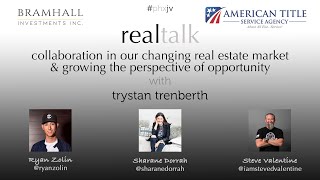
Steve Valentine, Shireen Dora, and Ryan Zolan discuss scaling a real estate business without burning out. Hire an operations manager, bookkeeper, and social media team to focus on strategy and clients. Shireen emphasizes personal assistants and house managers for health and self-care, while the panel stresses buying time without guilt and giving back to your community.
Chapters
Here is your host, Trystan Trenberth.
Happy Saturday, everybody.
Welcome.
I appreciate you joining us today. It's, uh, it's normally the third Saturday of the month, but I had an engagement last night— last week I couldn't miss, and next month it'll need to be the second or fourth. But I'll let you know plenty of time. Last month was really amazing. Who was here last month? Obviously it was a terrible week. But anyway, I think they're taking action on what they learned last month. I'll go with that one. But thanks so much for joining us. I've met some of you at different meetups. I've come to get to know several of you through different communities that I'm part of, and I'm grateful to be part of those communities. Communities and for you guys to be building your own communities around. Today's going to be— it's exciting for me. Two existing friends and a recent friend that I just met for the first time today, although I've known about Steve for quite some time through Shireen. But before I introduce these guys, I'd love to invite Helena to come join us for a moment. Helena is a student star here. I'd like you to say Say thanks for lunch on 3. 1, 2, 3.
Thanks for lunch!
So Elena works for American Thai with Service Agents, and she'll explain half of the things she does because there's so many things and there's not enough time. But I've come to really very much appreciate Elena as a dear friend as well as a business partner. And, you know, she always supports our events, takes care of us, and she'd love to tell you about some of the services that they offer, list pulling and so forth. And I would be your lady. Thank you, my dear.
I'm very grateful for you. Thank you, Trystan. And everybody give Trystan a big hand because these are great meetups, so thank you. Um, I will keep it brief. I work with American Title Service Agency. I'm going into my 10th year with the company, my 30th year with the industry. So many years doing the same thing, which is great. I work with a woman by the name of Eileen Brown. And how many of you know Eileen? Okay, so there are several of you that have worked with her in the past. So I work with the branch that handles investor services. So our escrow services— Eileen knows everything there is to know about any types of creative finance. If there's a question that you have, if there's something that you don't know, if you're working with a company that they're not completely understanding what's happening, reach out to us and let us know. We always stand by your service, and if we can help another escrow professional, to learn how to do something, we'll do that. We want to make sure that we're collaborating with other companies because it's about getting the deals done for you. But if I can be of help, let me know. I'm going to hand it back over to Trystan, and I'm excited to see you.
Thank you so much, Elena. So, um, I've been in the business about 3 years, 2 years more seriously than the first year where I did a mentorship with a company that used to be associated with a very well-known author that most of you have probably read his book. Somehow that licensing agreement fell apart, and I think there was a good reason for it, I've discovered. But I'm grateful for doing it and the money that I spent on that, because it got me to where I am today. And I know all of you guys, out of what I know you so far, and every bit of education that we learn, whether it's good, bad, or ugly, is always a learning lesson and progress to towards another level of success. A lot of us get caught up with social media, comparing ourselves to what other people are doing, what their journey looks like. I would really, really advise you to use that as a contrasting tool rather than a comparison tool, because we're all from a different background, we all have different experience. Wherever you are is the right time. The best start— best time to start was 10 years ago. The next best time is today. So we're all in the right place to take an action at whatever level we can. Many of us have gotten in the industry from different ways. There's traditional real estate, which would mean some of you already real estate agents in here, some just, just investors, some have been both. And, you know, this is all about collaboration over competition. The group was defined from that foundation, and today is an even greater level of need for that collaboration in the market. Place right now. Um, I even mentioned somebody earlier last night that I feel that there was a bit of a rift between agents and investors, whether one felt better than the other and if they felt better than the other one. Um, but we've got sellers at the same time, some love realtors, some don't like realtors. So there's a place for all this in the marketplace. Um, I also talked about the market on the way up, those people that got into the market in the last couple of years That was a normal market for them, which was a hockey stick, which has been ridiculous. But that hasn't been the market for the last 10 years or 12 years. Some say we're 12, 13 years into an 8-year cycle or a 7-year cycle, and it really is. We're in some big change right now. We need to work together more closely than ever. And as most of you guys know, when there's a crash, when there's a depression, that's when the most money is made, really, from the people that are prepared for those things. And we can never know exactly what's around the corner., but we can do the best thing that we can is to prepare each other, leverage each other's skills, and know that we can help each other learn skills and benefit from skills that we have that we can share with others. There's not enough houses out there for either one or all of us to buy together, so we need to bring more people in to be able to save people from foreclosure, save their credit, but also provide housing for those people that are going to lose their homes, whether that's through foreclosure or avoiding foreclosure. So without further ado, I'm going to invite Steve, Ryan, and Shiraine to the stage for this lovely seated stool area. I've got 2 microphones. Thank you so much. So I'm going to ask these guys to introduce themselves a second, but like I said, the purpose of the day is to understand. We're pretty much all familiar with investing, that's what the group was founded on, but many of us are realtors as well. I'd love these guys to give a little background on how they got into the industry, which— whether it was traditional or investing, how they got in, how they've maybe merged and cross that boundary. So, Shireen, you want to get those going?
Hi everybody, um, I'm Shireen. Uh, let's see, so I got into the industry 20 years ago kicking and screaming. Didn't really want to get into it, um, but I had no choice because I had moved to Tucson to be with my husband, my dream husband, and the industry I was in, which was more financial services, didn't exist in Tucson. So got my real estate license, um, and so I started out as a traditional agent. How many people are traditional agents in the room? Okay, how many of you are investors with a license? So not a lot of licensed people. Okay, so I started out as a traditional agent and had some good early success there and sold a bunch of homes. But about 18 months into it, my husband had this awesome idea we should go leverage up the very little that we had— we didn't have much— and, uh, go be investors. So I worked my day job and he worked his day job, and then we went out to start investing. And so, uh, did some creative finance things that were really really awesome and thought we were rock stars, made a shit ton of money and did all the fun things, but we're actually quite conservative, strangely enough, and we're not highly leveraged and we're living in kind of a crappy little house because we were going to make all of our money and then retire really young. And then this awesome thing called '05, '06, '07, '08 came running down the pipeline and I was sitting in a position that I would be willing to bet a dollar with anybody in the room that I was worse off than you are now. So if you're feeling shitty, Come talk to me. So it was rough, and really rough, and we worked through that, and then ended up with about 40-some homes that we came out of it with, with no partners, which is pretty amazing at the time. And we kept those, stabilized them, I managed all of them, and still continued to do traditional work, took a little pause on the investing, and then— I'm gonna try to make this quick— I got real sick. So I spent about 6 years fighting for my life, worked a little from bed, my medical bills were sometimes $30,000 a month, which is a lot when you're coming out of shit and you're not working. So I started fixin' flippin' from my bed, 'cause I knew real estate and, you know, can't be that hard. So that's what I did, and then came back a few years full-fledged, thought I was gonna build another team, threw a big party, had 800 people there, lasted 60 days as a traditional agent, was like, "Yep, no, not doing that." So, you know, I'm squirrely, bottom line. And now where I am is I'm an investor. I trained my brother to be an agent because I realized I had a lot of leads, so he can handle that stuff. And really, but my heart is really to educate and empower. So I do some things around that. And this is getting real freaking long, so I'm going to stop there. The point being, it's been a long haul. I love real estate for the wealth, the cash flow, the freedom.. And I know that's why you're all here, so let's talk about it.
All right, my name is Ryan Zolan. Um, I am an agent and investor. I started a program this April called Agent Investors where I teach agents how to become investors, investors how to work with agents. Trystan Trenberth mentioned at the beginning, I don't know why there's like this riffraff between the two when honestly it is so so much easier working with another agent than another wholesaler. So I started off as a traditional agent. I was 18, fresh out of high school. I had so much life experience. I realized, you know, all the important things. I never bought a car, never bought a house.
You could—
it's only 40% was a good interest rate. Now I'm in like 40%, sounds good. I failed the school test 7 times. Shout out to Randy Elkman.
It's disgusting.
But then I became an agent. I started off as an inside sales agent on a team at Keller Williams. I was putting in 12 to 14-hour days cold calling. The lesson here that I learned was how to work with CRM, how to follow up the leads, and more importantly, how to get over myself and get on the phone. I took that skill set very quickly after 4 months, closed a few deals, went to a guy and said, "Hey, I want to take 50% of my deal and give it to you. You're gonna teach me how to be an agent, and then from there, I want nothing to do with your deals." So he had nothing to lose and everything to gain. That was a huge nugget. Hope you guys got that. I led with value. And then from there we became business partners. I had a team of 19 people by— or 22 people by 19 years old. I hated being a traditional agent. Just show of hands again, how many of us are agents? Okay. Yeah, so I did the 60, 70, 80-hour work weeks, open houses, prospecting, doing all the things I thought was right until I realized I was the hardest working person on my team. It's how it should be, but I was making $130K a year. It was my best year and I felt like I was gonna kill myself. Like it was just—
it was It was brutal.
Life happened, obviously everybody goes through their story. I had a bunch of stuff with family, cut myself off. I got introduced to amazing people. Jamil Bambi's first student, Templeton Walker's one of my best friends. I do a show with Brent Daniels. Steve Trim is my mentor, broker, introduced me to Jamil and all these relationships. Right place, right time. A lot of it was that I got in the rooms, I wasn't an idiot, but also I didn't have an ego. I lost it all. I was willing to go in and be a sponge in rooms like this and take the good, leave the bad. Life is what it is. I became an investor and now we do okay.
So, I'm Steve Valentine. I'm with Real Brokerage, so I'm a traditional agent and I am like Scream. I just do nothing but chase squirrels all day because that's what life looks like. Because once you get into the investment space, everything is a squirrel and everything Everything is like, how do I work this? And a lot of days I end up in the corner with my thumb in my mouth going, how do I get this done? So my story background, I started off traditionally. I got my license when I was 20. My parents were in the business for 40 years. I'm a third generation real estate agent. And again, '08 lost our shit. My wife's in the back and we lost everything. I mean, but there's a point that comes where your life changes. And the point that my life changed, which was, you know, I went down the road, I wrote a suicide note in '08, 'cause we were that bad off, and I'm watching my wife go out to wait tables after all the things that we had in '08, and it was brutal, right? And we had to overcome a lot of stuff. Not only were we financially devastated, but I also broke my neck Thanksgiving that year, and I've got 7 pins in my neck, and we walked through me almost being paralyzed during that time, and then, Opportunity is everything. One of the things that I always tell people is that the relationships you create are the things that will create your opportunity in the future. And the relationship that we had with my broker, Realty Executives, was our way out of the hole. And I was given an REO account with Fannie Mae, and I just said that I was gonna go stick my nose so far up everybody's ass possible, and I was gonna be the best REO agent. And that worked out really, really well for me during that time. I think we went We went through about 5,000 Fannie and Freddie sales during that time and we paid off more than $1 million worth of debt in less than 4 years and never filed bankruptcy. And we ran through it. Fast forward to where I'm at now, my dad was my trigger. So my dad bought 1,000 homes in trustee sale during the '08 to 2012 for investors. And for those of you that are investors in here and for those of you that are agents, this is the one thing that I want you to walk away from today. Well, there's going to be a bunch of stuff. Yeah. We all have to work together to build wealth, right? And that was the thing that I saw from my dad. My dad had one investor that was just a greedy bastard, and he worked my dad to death. And my dad worked for almost nothing for all these guys' promises. And when my dad died in 2015 of terminal cancer, it was very quick, this one investor that my dad like literally depended, his life depended on this guy, and his retirement was gonna depend on this guy, he gave my mom and I two middle fingers and walked away with everything. All 500 homes that my dad built for him on pennies on the dollar. And that triggered me very, very hard. My dad died owning nothing, no real estate whatsoever. 40 years, bought 1,000 homes at trustee sale. He was the most genius man I knew and nothing. And so that triggered me to go into it for myself first. I need to learn how to invest. I need to learn how to do these things so that I can create the legacy for my family. My dad left me with a ton a ton of knowledge. And now, you know, carrying the torch from my dad is really teaching agents how to build wealth. That's one of the coaching programs that I have is teaching agents how to be situationally aware of their surroundings when they're talking to people and understanding how to ask the right questions and really solve the problem. And I think when it goes back to what you said, you know, the battle between investor and agent, so one thing that I teach people to stop using is using the word investor because people have such a bad connotation around it. And so I refer to myself as a problem solver, right? I have the ability to solve the problems and invest in what that is rather than being the investor because it turns people off. So that's really, you know, what I talk a lot about. Actually, I'm releasing a book in October about problem solving in this business. And so for the investors, you know, you guys are investors, just learn to be problem solving.
That's what we want to do.
We want a win-win for all of us. We all make money, we all build wealth, and that's really the legacy that I want to leave behind is that, you know, I can look at guys— I'll tell you a great story, kind of like these meetups. My dad used to do these. Met a young guy who came to our office, and he walked up, he's like, "Oh, you're Steven?" I'm like, "Yeah." He's like, "Dude, your dad changed my life." You know, he's well-dressed, he's driving a 7 Series BMW. I'm like, "Well, tell me about that." He's like, "Well, I quit my job at UPS in California in '08 and moved out here and I ended up in one of your dad's meetups, and he taught me how to wholesale, taught me how to do real estate, and it's like it changed my life, changed my family. And so that's my only goal right now is to have as much impact as possible by sharing the things that we've done, the experiences that we've had, so that you guys can all build wealth, build legacy, and think about, you know, your families and what you're leaving at the end, rather than just being so focused on what money we're making and what material things we have. That was probably really long. Good job! Yeah.
So let's look at where we are right now. What have we seen the last couple years? We've seen an extraordinary shift in market values going up. The values are still up, altering somewhat right now. Interest rates have caught up because people over the last few months— I think Ryan was, you know, somebody said earlier, oh, I don't want to buy because the price isn't going up. But that was the time to buy, even though the price isn't going up, because of the cost of debt. If you'd bought 3 or 4% interest rates over the last 2 years, you'd be sitting quite pretty right now compared to, oh shit, I didn't buy anything and now I can't buy anything because debt service is too expensive in a lot of cases. And that's what consumers are finding. For every 1% of interest, I think it's 18% less affordable the property becomes. I think that's a statistic I heard. I'm not sure how accurate that is, but based, based on the principle interest in the payment, the affordability goes down 80% for every 1% rise. So, um, I think it's Chris Cronin quote the other day, $300,000 house was, um, about $1,400 or $1,500 a month payment. Now with interest rates, it's $1,900 a month payment. So you can imagine how much less property people can afford. So some of you have done flips before. What are your stats on flips. We had a conversation about it last month. Some are still doing flips very gingerly right now. I'm getting out of the flips that I'm doing. For an example, I'm doing a donation agreement on a property where I don't own it, but I'm doing the flip whilst the other person holds the deed. We're listing it for $50,000 less than we anticipated listing it for 4 months ago. So it's a bit of a shift, but we bought it at a good price.
Where, where are you guys stand on, on advising people Yeah, okay, um, just because again, I want to talk to the room. Most of you are investors. How many of you follow the Cromford Report? Haven't? Good. So my advice is watch the data, right? You need to be actually really in the data and in the numbers. This isn't like a go with your gut situation when you're in a shifting market. And what's really cool is we have better data now than we did all the other shifts. It's like so good. So if you're not reading it every day, here's a practical tip. Read it every day. Get the subscription, pony up and be in the data. So what Trystan said is true, right? We've got a situation where we have, we have interest rates. We know they're going to go up. Fed's told us that. We know usually it's built in, right? Usually it's built into the mortgage rate before they announce. But when they announce we're going to do more, That signals there's going to be more interest rate raises for a while. So just be very freaking conservative when you're running your numbers. You've got to figure out the burst strategy is not always awesome right now. So there's a million things I could talk about right now. So I did not— I bought my last property to flip in February. I didn't like the data. I didn't like the numbers. I was starting to hear what was going, and I'm conservative. I was like, I'm out. I'm just going to hang tight and see what happens here. I just bought 2 this week, so I'm back in, but I'm buying differently. So for me, if you're wanting to know what we're doing, I am buying things that are in a price point that still has high demand. So this is low price point. I am selling to a niche market that has a hard time buying, so I'm selling them on SellerCarries in neighborhoods that I know people want them and have cash. Primarily Hispanic, and brings off the notes. That's next-level stuff. But I found a niche where I felt this looks really good and the spreads are really good. That's what I'm comfortable with. So my advice to you is really know if you're gonna be flipping right now, you've got to know your area really freaking well. Perfect example: I live in an area where there's a lot of Paradise Valley downsizers. Downsizers in my neighborhood. And when the market was stable, I know the two stories don't sell as well as the single stories, and the prices get very skewed on the price per square foot. I also know who the consumer is. They're gonna be 60-plus. They don't want the really cool trendy shit that's happening right now. And I saw investors coming in over and over and over again buying these things, regretting their numbers because because they didn't know the neighborhood and they were finishing them wrong. And they would sit there. And they were losing their asses in a good market. So the moral of that story is, if you're gonna flip right now, know where you're flipping like the back of your hand. Because there are areas, unless you're very experienced, Steve, Ryan, they can go flip all over the place because they got a lot of experience. I can probably flip just about anywhere too if I really want to. I'm just being really conservative. But now, The nuances matter. Now you need to really know who the consumer is. Now you really need to know what the difference is if it has a pool or not, or carpet or not, or 2 stories or 1 story, is it school— in the smallest fucking towns, you gotta really know. So just be very, very, very careful. I personally would be buying incredibly deep. Like, you need to be buying these houses at 40 or 50 cents on the dollar. And you can do that because I know a lot of you guys know are also stuff. But if you're gonna do it, buy really deep. Okay, I'm gonna get it done because they're gonna say more, but I have like 27 things on Flipping right now.
Be careful.
Long story short, we are not buying. Um, it's gonna be wholesale only. Anything that is just carpet, paint, maybe changing cabinets. But, um, the days for us of moving walls and doing $250K remodels, I'm not touching that. 10, but 20. Um, I would tell you what our main focus is. I'm like a kid on Christmas because if you guys don't know, I get all my deals on market. We have more inventory available now than ever before. I mean, a good healthy market for those who've been around, um, 20, 31,000. What was that? Never before period.
And I mean, I know, I know how long—
I don't know, I remember like 50,000. Yeah, 50,000.
Got some inventory.
All right, so the agency Showing.
I was center. I was center.
Uh, yeah, so I will tell you that for the last few years, all of us, we've been going through this crazy 2,000 to 3,000 active listing time. It's now 19,000. A good healthy market up here is 28,000 to 31,000. We're still in a seller's market, but buyers have the leverage. So that means that for those that are on the market, you're going to get a bunch under contract. You need to have your buyers lined up. So that's what we're focusing on. We're being a little bit creative, doing some proof construction deals where we're going in able to offer subs to do seller finance on market. The only thing that we're finding is a struggle is that we have to educate agents. A lot of them aren't familiar with the credit side. I'm not the expert on the credit side, so we've got connections that are making all those relationships come full circle. But aside from that, that's kind of what we're doing. Foot off the gas. If the perfect opportunity comes around, great, but hold still for now.
Well, we're still flipping. But I mean, to what they're saying though, it's got to be a deep discount. And you know, my leverage in the flipping world is my wife's in the background. She's flipped 1,000 homes for me in the last 7 years, so she's my contractor. So I don't have to mess with that side of it. So we really have our numbers dialed in. We know what to do, what not to do. But I think also one of the things about flipping is that, you know, we do it in volume, right? I mean, I have the real estate side, but she's got the construction side. But flipping is gambling, unless you're really, really good at what you're doing. I mean, if you wanna go lose your ass on something, do it, right? But it's not fun. And I can tell you right now, I wish I would've had Sherene's mentality in February. I did not pump the brakes, and I got stuck with half a dozen homes that we're probably gonna lose half a million dollars on. But we'll just go make it up somewhere else, right? It's part of the living. But when you get into those, you start looking at, when you're flipping things, is, I have a saying, say yes and figure it out later, right? If the deal is good, what does it do? Do I have an investor list that I can sell it to? Should I flip it and do a lease purchase on it? Should I not flip it and put a tenant in it? So it's just thinking outside the box and being creative and starting to figure out how to solve problems, right? So if you connect the dots with enough people, the properties are the key, and then figuring out what to do with them. You know, it's kind of like I bought a house, which is kind of fun to do. I mean, we've done this a couple of times, and again, it's the creativity side that I really love. Um, we talk a lot about it on my podcast, Thinking Outside the Box, is, you know, we bought a, a single-wide manufacturer. We did a couple of these up in Munds Park where I work, that second home market where you got to look at things from 30,000 feet, and everything's not always a flip. What's the long-term plan with it, right? So we bought a bunch of single-wide mobile homes up there because they're not making any more lots, right? But they're rented. Scary thing is you You could buy a $100,000— well, back then you could buy a $134,000 mobile home, right now for $1,800 a month up there. But what we did is we secured a lot. Now my wife's building a home over top of it, right? We're doing plans for that. We just bought another one where I just donated, which is kind of crazy. Again, think outside the box. We bought a manufactured home with a 2-car detached garage and I just rented it for $300 a month to a 501 that takes abused mothers out of abusive relationships. And they're giving them a project, but they're giving me $50,000 a year in tax donation credit for the rent. And so there's ways to think on how to hold things. And everything in this, like flipping is great until you realize the big checks that everybody got, the cost that they actually paid in taxes and all the things and all the risk, it's not all what it's cracked up to be. And I like to flip things and hold them, right? Because if you can create the value, you know, and this is And this is the one thing to really realize is we own a $50 million real estate portfolio, my wife and I do, individually. We have no partners in that. We didn't have the money to put down on that stuff. But in this market where you're finding deals below market, you know, we talked about the DSCR loans, you know, where it's basically a rental property loan. You can create enough value in a property right now buying at a deep enough discount to secure it with hard money. Repair it, and then refinance it and have zero into it. And that's the way you create legacy. Wholesaling, no offense, wholesaling and flipping and doing all that stuff, it creates income, but the end goal is what are you going to keep? Because I can tell you right now, I'm sure that you guys will probably have some regrets, I do as well. You know, some of the homes that we sold and flipped back in '15 for $100 grand, fuck, we made $10 grand. Somebody else got $300,000 in equity over the last 2 years, right? So our goal when we started was make sure that you're looking at what can I keep every now and again to create that legacy that we want.
I've done 12 flips in the last year, which is my first year flipping. I'm not going to be doing a lot of flips unless I'm working with an experienced partner. I've worked on with an experienced partner on 8 of my 12 flips, so I'm not doing anything on my own. It's not because I'm I'm not a big boy, but I'm a big boy because I'm trying to work with somebody that is a big boy that's experienced in it, and that is what's going to mitigate the risk. I can bring funding, I can bring a deal, they can bring the experience to say no, hold back. And I'm conservative too, I'm risk-averse. I passed up probably a number of deals over the last 2 years that didn't make sense to how I underwrote them. I mean, I looked at one with Ryan the other day, that wasn't a deal for me, but it's a deal for somebody. Somebody will take that on. And again, like Steve was saying, it depends what the exit is. If you're taking that on to hold it instead of selling it at a profit, that's probably a deal for that person. Where, you know, what I'm looking at right now, I'm buying out of Arizona because it's so high in here. We've got two different types of markets. We've got linear markets which stay fairly stable price-wise. You don't make much, you know, appreciation over a 10-year period. Then you've got cyclical markets like Las Vegas, Arizona, um, some of the Texas and and Florida markets. So be aware of the type of market you're investing in as well. Those are going to make huge decision factors in what you do. So thank you for those great, great bits of advice.
Can I add one thing to that too? You guys, if you are flipping, something that got lost over the last several years was knowing what your exits are. So I'm just going to add that as another practical thing. If you are going to flip, you should always be saying, I can't flip this. What are my other exits? If all of a sudden rates go to 9% and we get this 60, 90, 180 spread, like everybody freaks out again because the consumers are emotional, homebuyers are emotional, so they react, right? So when you're running your flips, you should always run, what if I have to hold this? What if I need to— can I— like Steve said, can I sell as a lease option? Can I sell— if I bump the price up a little, sell as a seller carry? Do I have private money that can wipe out that hard money? You know, start really thinking through those things so that if the shit does hit the fan in the middle of your flip, you go, okay, I know I have 2 or 3 other exits. What could those be? So I just want to add that I want these guys to have some real good tools.
Yeah, I really appreciate that. That's very well said. I mean, the renovation in Scottsdale is not great cash flow, but we might be able to wrap it. Best case scenario, might be in the hole for $20 grand for a few months until we get that back. But worst case, we can we can wrap that and sell it. It was, you know, it's obviously a sort of novation, so the mortgage is in place. So that, that's another option we have. Worst case, it won't be the best, but it will save our ass and it won't make a loss, you know. Is there a question? No worries. Um, so let's get back more to agents. So what, what do you see agents are not learning along the way through real I'm not going to say—
You guys want to stay here for 5 more hours?
So, no, I haven't done realtor training. I'm about to, because I don't want to be part of the rush that is just qualified as realtor. It's all going to come. We're going to be agents and investors all together. Some will just be agents, but I think the time will come when investors need to be regulated in some way, whether whether it's joining the National Association or not. Something's coming, but I'd rather be prepared for it than not. What am I going to learn from going to realtor school, and what won't I learn from realtor school that I've learned as being an investor?
I've got so many— I've got so many— I should have passed the mic. Ah, this is my pet peeve. This is why I'm like, I'll just— I'll let him take the air out of it for me.
It's funny because my youngest son son Chase just came to work for me this week. He's 17 and started to go through the process, and I told him, I said, the only thing I remember from real estate school is how many square feet in an acre. Other than that, I learned shit, right?
So do I not need to go to real estate school?
I know that. I mean, it's the basics, right? You're never— you said one of the most profound things for those of you guys that are thinking about getting into the business is that if you're willing to you go give up a piece of what you can earn to somebody to teach you, that is where most agents fail. And it's like, ah, splits, like that is the worst word I've ever heard because people don't look at what am I getting trained, how am I learning to do things. And that is the big thing. If you're experienced in the business or not, if you're an investor, you go get your real estate license, you're not gonna learn a lot. But I can tell you where you do learn a lot, go join a team for a year. Go get some experience in the market. You know, I honestly, hats off to any of you guys that don't have a real estate license that are investors, because I don't know how you do your research and how you know things. Because I mean, I can pinpoint an address, a house, because the knowledge that I've had from the market, from being in it. And I think that that's one of the blessings that I've had being a real estate agent and doing traditional is because I'm hearing from the consumer. I'm in front of more consumers and I'm able to solve more problems by having the investment mindset. So real estate school is like, I'm not a fan of it, we got to do it. I mean, it's awesome. My wife and I play a game every 2 years. We have to do our renewal hours. So next time it's her turn, we literally set up 2 laptops and just time it out and just click things, right? There's zero education. Yeah, right.
I don't care.
All right, so real estate school. Coming from the guy that's fresh out of high school and still couldn't pass. Yeah, you don't learn anything, man. It's all about you can get sued here, you can lose everything here, you can screw up someone's life by doing this, and then you're honestly terrified to go take a test. What you learn in real estate school, as soon as you're done, take it, throw it away, don't worry about the rest. From there, I think Steve hit it right on the head, you gotta join a team. That's what I recommend anybody does. I would agree that most people get into real estate freedom and flexibility, right? This financial freedom we all talk about. Okay, so it doesn't— it doesn't on the agency side specifically. So what I found on the investor side is that you have this life by design. There's a million different ways you can skin a cat. We all are up here talking about agents and investors together, but all three of us have very different models. I want you guys to know, life by design— I went from working 70 to 80 hours a week to now I work 20 to 30, and it's really focused 20 to 30. But I could also I'm playing. I have a long game here today. I'm 24 years old. I've got another 20 years, 30 years before I'm considered to be the average age agent in the state of Arizona. It's 55.
We're not there yet.
We're not there yet.
55. I got 31 years till I'm average. So I want you guys to know, like, play the long game too. I want, like, and it's ironic coming from 24-year-old, but just know, like, agency-wide, I didn't have that. So don't go into be an agent. If you are just an agent, learn how to be an investor. The minute I started adding those tools to the tool belt, I will tell you, this is the last piece here, the agency side. Everyone that's an agent, you're used to 30-day closes, financing contingencies, inspection periods, appraisals. I hope my client doesn't buy a car in the middle of the transaction. You have all these things that can go wrong on top of the fact that I didn't even mention you have to hope your friends and family use you. So there's a lot of variables I mentioned that are out of your control. For the investor side, it's cash as is, Quick close, favorable terms, move on, and let's go. So that deal with Trystan Trenberth, I mean, we sold it, we made 20K, 25, 25, 20?
20.
20. Made 20K, and again, not a deal for him, we had a deal for somebody else, but we're in and out of it. That was a 13-day deal. So just understand that there's ways to do this, build wealth. You learn by doing, and lose the ego. I mean, who cares if your acquisition makes 15%? You're not losing money. 85, you're getting paid to learn.
You're welcome.
How many of you own investment property right now? Buy and hold, not flips. Okay, so you're early in your portfolio. So, uh, I have a group called The Investors for the ladies in the room, and we talk about wealth building because really the ultimate game of this real estate thing is to wake up one day and you got a bunch of assets just kicking off cash without much equity. That's, that's the win. Right? And I think especially in the last market that the sexiness of the quick wholesale hits, the big commissions, all that stuff really took the front light and nobody wanted to hold anything. I had a woman come in who I respect a lot. She's 7, 8 years in the game. I wouldn't say that's young, and she does really well. She's a fixer flipper, and somebody in the room asked her how many properties do you hold? She goes, we don't really do that.
No.
Steve and I will address this. It wasn't my place to say something and I would never say it there, but the real game is to collect the assets. So don't lose sight of that. One of the powerful things about being an agent, for those of you that are agents or those of you that are thinking about getting licensed, also being an agent, is you get to work Steve's model. The model that I wish I could work, but I don't have the patience for it. But if you do or you have the team for it—
Hello!
What happens is, when you're an agent or you hold a license and somebody calls you as an agent, you have trust. You're sitting in their living room because they have asked you to come there, right? So, or you preferred to go there, so maybe they don't quite trust you, but somebody else trusted you. So when you're sitting in that room and they've got a problem or a situation or they don't know what to do, or they don't have a problem, they own assets free and clear. Hello, I think you're You're one of my private lenders, or I'm gonna buy your house on a seller carry. But when you're sitting in their living room, you have that trust. You go in that situation and you can be an agent, you can list it, you can be an investor, you can buy it, you can be a wholesaler, you can buy it, wholesale it, you can do 100 different things. And that's the power of having a license, is that it does give you that flexibility to pivot 100 different ways.. It also creates a funnel. If I was a traditional agent right now, I would be blasting social media about, "Can't sell your house the regular way? Let's talk." And I know my phone would be ringing off the hook, and then I would just start doing deals. So it does give you another, another way to do the business. There is a ton more disclosure. So if you're not being cool with your sellers, you better start being cool because you need to allow them your options. You need to disclose. But, you know, there's 100 different ways to play this game. So you just figure out how you like to play. But for those of you who do know the licensing is coming, you know, if there's any part of you that thinks like maybe you have a— you've got a huge sphere of influence. My brother is a teacher. He's starting his business with a database of over 800 names of people who know him and love him within 3 square miles. Think he's gonna clean up? Holy cow. But I'm teaching him, you're wearing the agent hat, but you're wearing the investor hat every single time. But really, to Steve's point, and he's exactly right, you are there to serve and to solve the problem. When you give people options, they love you. We're all 3-year-olds. We all want options, right? Think about the iBuyers. When they first came out, you probably weren't yet in the business when they first came out, or were you? What year did they come out? Was it 2016? Yeah. And every agent said, "Pfft, nobody's gonna pay them 16%. Stupid." Well, guess they were wrong. People wanted ease and convenience and certainty. So when you walk in, again, I know a lot of you are thinking about getting licensed, and you go up and you go, "Hey, I know you're getting licensed, but I'm really an investor. Can you talk to me?" Give them all their options, and then you win no matter what happens.
For investors, what's the hardest thing to do? Get into their lounge, get into their house, sit in front of them. You're on the phone, "Oh, fuck off, I'm not interested." When you have that referral, you've been invited into their home, you've got a 90% chance of closing that thing if there's a deal to be closed. Really, unless you've done something wrong in offering the options or being shady. You've got the best chance of getting that deal as a deal for you to buy or to sell on the market or to offer the solution. Now you can't go in and say, oh, I buy houses 40 different ways. That will confuse the shit out of these people. But if you— and we were talking about this a little earlier— agents are called because they have a motivated seller. I want to sell my house. The agent doesn't need to ask why they want to sell their house, but the investors, what are we asking? We're asking the 4 pillars. MOTIVATION, TIMELINE, CONDITION, and PRICE. We have to disqualify all the tire kickers and the time wasters first. Then we have to get into the people that might be interested. Then we've got to see if we've got an option for them as a wholesaler, as a cash deal, cash or nothing. Then you bring in Creative Finance. But if we're not an agent, we can't list the property if it's not at a price point that we can list it. Then we've got to find somebody else to pay, which is great. Always good to have a referral network of realtors, as for myself, but know those realtors as well. You need to understand, like last week I think it was Zach was saying, get to know what their passions are, get to know who they are, what they do. But also, more importantly, I wouldn't call Shiraine for a house down in Apache Junction that was a double-wide mobile home.
I want to now, there's some new stuff. So, point to me.
Understand when they change their expertise as well, because Shiraine dealt with high-end stuff generally, so that's what I would have brought to her. But I would have brought some other stuff. But keep in touch with these people. I think it was Mike Hanbright who was saying he uses his CRM not just for homeowners and sales, but his contacts. He'll mark down, I spoke to Shiraine today, her dog wasn't very well, next follow-up is in 2 weeks or 3, 2 months or whatever. Hey Shiraine, been a couple of months. How's your dog doing? Is your dog doing alright now? Oh great, that's better.
Oh, Shane.
Oh, he cares. So all of these things are little nuances you can put in your phone with the contact. You make notes about these people, but know what the people are about, what parts of the market they specialize in, because you want to offer the very best options. I might not be a buyer, but I think they've got a better solution for you. So just know all those things. Once you're in the house, you've probably got the best chance The 8, like they said, the license is one of the most powerful tools that you can have. What's my next question?
I don't know.
So we talk about what we're not learning at real estate agent school. What are the first, what are the challenges that Steve, you found trying, you know, working with agents to educate them on the other side? What are the biggest stumbling points what's the response that you found in— we're not trying to push a rock uphill, but at least if they're open to understanding a bit of something different, what is the thing that attracts them to coming to you to learn about how an agent becomes an investor?
Well, it's realizing first mindset, right? It's a word that is tattooed on my whole family, you know, it's the word limitless, right? And I learned that mindset change from my dad, I believe, that he limited everything because there was no let's get outside the box and how do we solve for this? So that's, that's what we all live by right now. My kids have it tattooed on themselves, my wife and I do, and it's just a word that we live by. And the agents, it's interesting because 90% of my students right now have been in the market less than 10 years. So all they've seen is up and all they've seen is low interest rates and nobody knows what to do right now, right? And so right now is the greatest time to figure out how to problem solve for people. So what happens is I have this funny slide deck presentation where, you know, what real estate agents typically— when a seller calls, they want to sell their house, and when they walk in the door, you know, it's a dog humping somebody's leg. That's just where it starts because, well, they want to sell their house, but they don't ask any other questions. Why do you want to sell your house? Have you thought about keeping it as a rental? Have you thought about doing a HELOC? Have you thought about what your future is? So we start guiding them into thinking about 10 years from now, not right now. And for some agents, it's really hard to bypass that commission and go, I'm gonna give this up. But if I told you, well, if you can guide them to understanding the investment side and they buy 7 homes over the next 10 years when they would have only moved once, you know, you just increased your business. And now you're connecting the dots with the deals that you're finding for people like Ryan and Sheraine. And so, you know, the agents, the misunderstanding is, is that everything you're worth, your value is is only 2 to 3%. That's all the value you have when you're selling real estate. And the other thing too is just that we're so taught in the business that everything revolves around transactions, just the act. Nobody's talking about network. Nobody's talking about what does it look like for retirement? What does my dream life budget look like? You know, we go through this exercise with them, it's like, hey, in 20 years, you're talking, what's your passive income goal? What's your life gonna look like? How are we gonna get there? And then we reverse engineer it. Because, you know, I think last year I think we acquired 40 out of 100 listing appointments. All kinds of creativity-wise. But if we're asking questions, getting to the root of why they're doing it and what it is, then sometimes, like Trystan Trenberth said, oh, you want to free and clear? I'm gonna show you how to invest your money. What do you What are you doing with your money? Because I'm going to take that money and I'm going to go put it on one of my other deals. I'm going to create relationship capital, which is what we have done over the years. I mean, Sheree and I have talked about this forever, is that, you know, through being a real estate agent or an investor, right? Even when you guys are buying something, right? If somebody else is free and clear, why doesn't somebody ask about seller financing? What are you doing with your money? You know, and then you're showing people and teaching them what it looks like. You know, over the years we have raised $20 million worth of private capital. Through our clients, one client at a time. And now I have people that just send an email like, "Hey, I've got $500,000 worth of equipment." And that's all at 7-8%. I don't use traditional hard money because these guys are funding my stuff 100% off a text message. So the more you educate people on what it looks like, you start learning the numbers, and that's the biggest thing that I have found in any industry is talking to anybody. Nobody has taken the time to understand how money moves very easily and how it can be manipulated in different things, right? So I just showed somebody recently, if I, if I wrap their existing mortgage with their equity and they were gonna recast their mortgage, which was at 4%, but I'm gonna pay them 6% on their equity, they're now cash flowing $500 a month. And when I explained that to them, not only are they selling the house $100,000 below market, but it's also gonna cash flow, and I didn't want I got $25,000 commission. It's learning to understand the numbers and also understanding that in this business, well, in any part of life, something that I wish I would have learned early on that I've been explaining to my agents, a dripping faucet will fill a bucket over time, right? So many of us, like we talked about in the last market, you know, it's these big wins and all these big sexy things. Well, guess what? Now we're going to have to fill the bucket with drips. It's going to be smaller things, and we have to be less greedy in our deals and leave meat on the bone for everybody in order to make that work. Ryan, do you have any input?
What was the question?
What agents don't know?
What agents don't know? What have some been able to help the agents get into the investment game?
So the thing that got me to the investment side was not just getting burned out of being an agent. I was, I was poor. Can you imagine, like, dude showing up with a snapback and sometimes a polo and opening doors to other half my— I'm half their age. Like, it was just— I was not a traditional agent. What I will tell you that I was able to realize— this is the analogy I use, and I shared it with a couple people before this— but the hardest part of being an agent is to find that client. The hardest part being an investor is to find the deals. So you have to be able to break that down and tell them that you become the client, you become the buyer, you become the seller. A lot of it, I think Steven read about it, it's a mindset shift. A lot of times because of what they're taught in real estate school, people are told that you need to follow the line. You stay inside your bubble and this is what you do. You can help people by being a buyer's agent or a seller's agent. They don't get there's any gray zone. I will tell you, I don't know if you guys realize this, but in high school financial literacy is not taught anywhere. So I got into this again super young where I was able to realize very quickly no one had any answers. So I tend to find people who are doing deals and I was like, "Hey, you're closing deals. What are you doing?" "You're closing deals. What are you doing?" "You're closing deals." I don't think that people are so scared to ask for help as much as they are just to not sound stupid. So I think you guys need to understand that and don't be afraid to ask questions. Like right here, I'm obviously the least experienced out of these two. You'd be all crazy not to be asking questions all whatever day, all along the —today. Thank you.
That was it.
That's all I got.
That's awesome. I think since it's mostly investors in the room, I'm going to spin the question the other way, like how you're working with the agents and what they don't understand. And I think— so I always use this analogy, um, that, you know, real estate's a huge game. It's really interesting. My husband was a home builder where I grew up, and so a lot of his buddies and contacts are home builders. He lives in the development side. They have no idea have no idea that rooms like this exist. You guys probably have no idea who the guys are that are billionaires in town doing land development deals. There's no buyers. They're not in this room mostly. There's agents. There's a— so like, my analogy is when you go into surgery in a hospital, I want a surgeon, I want an anesthesiologist, I want some people scrubbing people down. It all works together and it creates this amazing ecosystem. Ecosystem of real estate, right? We all just kind of do our things. Some of us play around in different lanes, but for the most part, we're kind of in our spots, right? When you as investors are talking to agents, as you should be, just like Ryan's saying, there's so many deals out there right now, let's start matchmaking. You've got to remember, they're really good at what they do. They might have been an agent for 20, 30, 40 years, and they might be freaking awesome at it, but when you come out and go, what's the ARV? ARV, blah, blah, blah, blah, blah. They may have never actually heard that term. They don't speak that language. ARV is not what agents call fair market value. They speak a different language. When you say, you know, I'm gonna sign it, they have never heard of an assignment. Agents don't do assignments. It doesn't mean they're stupid. And that's the thing that really bothers me a lot of times, how agents are approached by investors that really don't know any better, they forget they're playing a different game. So if you're going to start working with agents, be nice, be patient, realize they might say some things to you that you don't freaking understand. I was in a meeting yesterday with a very seasoned investor, does a lot of stuff, and we're working on some stuff. There's an agent component. He had no idea the red tape that agents have to jump through with their brokers and why certain things weren't going to work with what he wanted to do and what people on his team were not allowed to do. They can't just throw something on Facebook. It has to go in the MLS. Why? There's clear cooperation laws. He didn't understand their world either. So I would just say, you know, for the investors, how to speak to the agents and how to work more is be patient, be willing to learn what they have to tell you because their hands are tied sometimes in ways that you aren't, and they're not always going to speak the same language. But if you realize that you're trying to get to the same place and you reach it— I think Ryan does a really good job of how he approaches the agents that he's dealing with as when he's wearing the investor hat. You have to become friends and solve the freaking problem. So that's, that's what I would say. That's the biggest thing.
Can I add one thing to that? Yeah. I think for those of you that are investors, And, you know, to Shreem's point, it's very interesting when a transaction goes sideways or something, you want to blame the agent. But the investor asks very few questions of the person. You might know them, you might have been referred to them, but as an investor, you should be asking the questions of that person. By the way, like what Shreem's doing, there are so many of us that specialize in different things. Go find different agents that specialize specialize in those processes and work with that person and also understand that you're paying for somebody's expertise. It drives me insane about this industry is that all of our levels of experience, but we all make the same amount of money on a transaction because we connected with somebody or whatever, right? But what happens is the person with least amount of experience is the person that does the most damage to somebody. But it's always on the agent rather than the consumer for not asking the questions. Yeah, you just use your sister who just took 90 hours of nothing and you let her go represent you on the most expensive purchase possible, right? I love what my good friend— he passed away years ago— he said this in a room full of people. He was a big bald ogre, no offense Baldy, but he was awesome. He was like Mr. Clean, he was always grumpy, he was a veteran, his name was Cecil Daniels. But he walked into a buyer broker room and we He was doing a seminar on it and he looked at everybody and he says, hey, he said, so you realize in the state of Arizona it takes 3,000 hours to cut your hair, trim your nails, and all that shit will grow back. You dumb shits in here just took 90 hours of class and you can go screw up somebody's life forever. And that was like his deal was you need to educate and be really good at what you're doing and really realizing what we're representing as a real estate agent when it comes comes down to that. It's so important. Like, we are guiding people. We need to know certain things. Not that it's expected, like, because of the amount of licensees we have in the state, um, the expectation is very low. It's a very low barrier to entry when it comes down to it. So I just, I kind of think that. And, you know, the other thing too, which is a stat from speaking all over the country, it amazes me when you ask, like, sure, you just ask how many of you own investment properties here and you've been in business, 95% 100% of agents don't own investment properties, but when you reverse the question, 100% of them will sell an investor a property that they know nothing about. And I think it's really important to become an investor so that you can educate the investor. And some investors, we've all seen it, right? They come into a Fortune Builder seminar and they, they're told to go find an agent to write 100 offers a day for them at 50 cents on the dollar. I'm like, I want to buy something at 50 cents on the dollar, but do it for me. I'm not doing it for you, right? But we forget that, and that's where these investors are trained in these things. Like, I can go get me a chihuahua or two and tell them to write 100 offers, and then they're going to make a commission and they're going to be great. And that's what we want to stop doing with each other. That's where the collaboration comes in.
Do I have any questions so far? I want to kind of stop, have a break a second, just see if you've got any questions from what we've covered so far, because this is a really interesting topic. I'm loving this. I'm soaking it up. But do you guys have any questions so far as agents or investors. We got this guy over here, he's calling 50 agents a day, having some great experience. I really want to encourage that communication, but also the relationship building as well. 50 a day is great, you're gonna find probably, I don't know, hopefully only 20 that aren't interested. Hopefully we can find 40 or 50 that are interested in time. But it's really, like they said, build the relationships, understand their areas of expertise, and find out how you can add value. Not how can I add value to your business? Listen to them. Be interested, not interesting. Listen to what they're doing. Listen to where they're going. So where can I help you in your business? I think I'm hearing that you're not doing this. Is this some area that you could gain? And build that relationship by leading with value, as Ryan said. That's the most important thing. And this is why I really want to— there's nothing wrong with the, you know, the Asian arrow, you Secret Agent program, but that is trying to just get deals from agents. But let's push it back the other way where we're helping them to bring us deals and solve their problems with their sellers. But let's also try and help them solve their own potential future problems with revenue dropping, with more houses staying on the market for longer, where they can acquire these properties. So just bring them into your world if they're willing to come into it, but also step into to theirs as well first of all so you can understand theirs. Any questions so far?
Not really a question, but like, not really a question, but like I know a lot of agents in town are trying to be investors, so I usually ask people what they're looking for so I can send them wholesale deals. And like a lot of wholesalers don't even try and offer, they're just like, give me a deal, otherwise I'm not I'm not talking to you. But like everyone's trying to— like you guys have been talking about whole properties. So like when, yo, you got a deal for me? No? Okay, I have this wholesale deal. Do you want to buy this? Or they might know someone who does want to buy it too. So it's just like building a relationship like that and adding value to them too.
I'm so glad you're here today. What other barriers have you found talking to agents? What are the reasons for not talking to you in the cases that you come up against? I'm sure you're a great authentic person, so you're coming across as best as anyone could. Where are the challenges you find when interacting with agents and making that outreach?
Peace. I know, I guess it's not happening anymore, but like 6 months ago, like anytime I'd be like, hey, you got any off-market deals? Just like, "No, I'm listing everything, listing everything." But now they're coming back to me and they're just like, "Hey, I have this listing that I can't sell. What price do you need it at?" All right, here we go.
So you do see the long-term follow-up involved. He's gone regardless of knowing there's probably nothing, but he's built those relationships and now those people are calling. That's 6 months, 12 months of hard work. These guys are so hardworking. I'm really privileged to know these guys. They're really inspiring to me. And, you know, I told you that last week, but thank you so much for being a hard worker. Sure. So, Shereen, tell us about your Agent 911 and your investor. Two different topics, maybe we'll cover what you do with your Agent 911 first because that's really something I don't know enough about.
Sure. So, it's really interesting. I started that when the market was really low. Market was so really good, knowing it would probably not do real well, which was exactly right. Agents didn't feel like they needed help, but now they do. So, you know, we're all just problem solvers. We're all doing the same thing. I think Agent 911 is for— you guys are investors, so I won't talk too long to that, but it's really just for agents to have a resource to reach out and not get on to. And one of the things I will say is that if you are not versed in creative finance, you should get first. And the reason for that is, um, obviously the seller carry things we've talked about, that's great. But right now we've got this interesting spread coming up, and we weren't sure if we were going to get there or not. But now with rates going where they're going, this is another tactic that all of you should know, and especially when you're reaching out to your agents, is, you know, now there's mortgages out there at 2.5%, 3%, and we're heading into, you know, for investors, 9%, you know, if you're doing regular long-term hold stuff. So there's a nice spread in there that can be played with for wraps, you know, sub-2s, all those kind of things. Sub-2 is just mirror wrap, but there's a lot of— there's enough room in there to make everybody happy now and create a win. So I'll just plant that seed. If you don't know what I'm talking about, Google it. But if you you do and you don't feel real comfortable, I'd start sharpening those skills. And beyond that, Helena, uh, her office, I'll plug her right now. You know, you don't actually always have to know exactly how to do it. If you have an idea, you could give them a call and go, I think there's something here, and they want to sell it and they're letting us, like, they'll make the payments, but we're gonna make a little bit higher payment than what the mortgage is, and they'll figure it out in the documentation. So I'm gonna say that. So H&I lawyers I'm hope agents solve problems when they just don't know what the hell to do. The Investress is a group meetup for women, agents, investors, non-investors. My passion, just like these guys, is to help people see real estate as a wealth-building tool, not just a transactional tool. And so I wanted to create a space. What I heard was that a lot of— first of all, when I came back to life, there were no women in the room, which was fine. And that's changed a lot the last year, big time. But secondly, it was that a lot of the women felt, you know, there's a lot of egos going on the last several years. When they walked in, someone goes, "How many doors you have?" And they go, "I don't have any." And they just kind of skip on. They felt really, really intimidated to ask questions. And so a lot of times what happens is there's so much data out there. There's YouTubes, there's podcasts, there's courses, there's everything. But what I found is that sometimes people have a hard time putting all the pieces together. There's so much noise that they feel lost. Um, so I too am creating a course. I just wrapped it up. It was like foundations. What is ARB? How do you run a flip calculator? What is a cap rate? Who gives a shit? Like, I'm trying to put all the pieces together. Right? Because you might be like, "Dude, I'm gonna do this all day long," but then you're like, "I'm like a good college level over here, but you just said something and I feel embarrassed I should know that." That's what's happened a lot. So the Investress is a place to ask those questions, first and third Thursday, blah blah blah, course coming out, but really I think right now what I want to share is that all of us have a lot of experience, There are still things every day that I don't know. So I have no problem calling up the phone and calling Ryan and being like, I don't know what this is, or do you know how to do this, or who does that? There's no ego in that. Same thing with Steve, all the time, right? I did luxury for a long time. A lot of people call me on luxury because luxury's a little nuancey and be like, dude, what do you think about this? And I can tell them things they can't see in the MLS. Um, but you know what, market opportunity right now is in— well, for those who don't know, if you want to start investing, building $5, $7, $8, $15 million specs, that market is fire. So go for it. But if you want to be below that, that $2 million or whatever, it's really messy. So I'm going deep. I have property in Maryvale, but I'm not a Maryvale expert. I'm not a Westside expert. I'm not a South Phoenix expert. There's a lot of things about that I don't— I got a lot to learn. So I'll call people up and ask. So I would just say the point of all of it is always be a student. When markets change, you have to pivot, and you might end up suddenly finding yourself in a space that you just— it's new. I've been doing this 20 years. I'm going to spaces that are new for me. I got a lot to learn. It's okay.
Agent Investors. Yeah, the 1.7 GPA came out with that name. I was talking to Brent Daniels and I was like, I was trying to figure out like, what do I call this course? And I'm like, he's like, what are you? I'm like, well, I'm an investor first and agent second. And he was like, well, the acronym AI is pretty cool. I'm like, well, I'm not an agent. And just like, it doesn't matter, your whole focus is agents. So that's my background, how that came to be. Um, Brent was the one who pushed me to do it. And I would say like mine What my whole focus was, was MLS deals. That's where I've gotten all of my deals, was MLS. I did the whole direct-to-seller game. I realized, especially out here in this market, it is just so competitive, and I suck. But I found my specialty in a place where everybody told me I wouldn't. I was told there was no deals on market. I was told buyers wouldn't buy deals on market. Institutional buyers came around, and I sold 3, even 4 deals to hedge funds. Seeing that we had deals of— we did 33 deals a month in our best month. I didn't sell a single deal to a hedge fund that month. Like, we just found the craft and we made it ours. So I teach people how to find deals on market. Remember what I tell you, the hardest part being an investor, find a deal. I at least knew they wanted to sell what was on market. Now it was just a matter of building a relationship and having a conversation and go for the no. I wasn't scared for that. And I also knew, again, agents weren't going to cuss me out as much as a direct-to-seller lead would. So I started going that, nonetheless. Um, and then from there it was just all relationships with agents. Um, just started having a bunch of them refer me deals, and I just had really good connections out here. So I did my first quarter million with 5 buyers, and it was all in Tucson virtually, did it all at the MLS. Um, and then I just realized that the market got really competitive. I'm gonna be competing against 3 to 5 other offers. I might as well be in my backyard. So there's still plenty of opportunity with that. Um, but I just wanted to create a place where people can go to find on-market deals and know how to talk to agents. So that's what we did.
Can you give us another little deeper dive on your program, please, Steve?
Yeah, I've got a couple of different programs. So, um, my best one with agents— we've got about 20 students right now that are agents that are just in there. I call it situational awareness. There was, uh, when my wife and I bought handguns, we went to this course out in Vegas, and one of the things they taught us in that is when you go into a room, you're being situationally aware of your exit and what's happening with the people and the surroundings, right? Same thing happens in real estate. No matter if you're an investor or an agent, right, the people you're talking to is being situationally aware and how to handle all the different situations that they're talking about. And so teaching the agents and giving them a place every Tuesday to come in and go, "I'm talking to the seller. This is what this looks like. I don't know how to do it." And then we go through, we do it, and what's great about it is that everybody's bringing different situations to the call.. So I teach a little bit, then we go through things, people bring things up, and we walk through what are the exit strategies, what scares you. And a lot of my students are like, well, I don't know how to talk to them. I had one student in February, he's been in the business a year, good kid, lots of questions, and he's like, my wife talked to this probate attorney and I don't know how to talk to the seller. And so I get on the phone, we do a Zoom call, like just connect me to the seller, get on a Zoom call and we'll walk through. We walk through, we got the deal done, he made $50,000. Grand in 7 days because I was able to put the deal together for him. We made a couple hundred thousand dollars on that deal afterwards, but it was a way for him to get through that. So that's, that's that. And then one of the things I started doing, which was awesome, is when investors do call, they want to invest. They don't always know why they want to invest. They talk to a neighbor, they talk to somebody at the bar, they're like, yeah, this seems like a good idea, let's just go buy properties. They have no idea what they want or how they want So we do private strategy sessions. I do a 4-week strategy session where I walk through investors and get them to understand like what the life they're creating. That this just isn't buying real estate. Like there's a purpose behind it. What's the legacy you want to leave behind? What are the things you're building for your kids, right? That was always, you know, our passion was how do we build the greatest life for my family when we're gone? You know, the biblical sense is, you know, a wise man leaves an inheritance to his kids' kids, right? And that's the thing. My dad left me inheritance. Of knowledge. And now I want people to understand that because I've done, or what we've done over the years, we have learned how to do it. And now I get to teach people how to do it. And then I get to change their lives, right? I love— we've got a great friend, David and Taylor, that, you know, we were playing dominoes one night. I'm like, "You guys need to buy a house. Like, this is stupid." And 48 hours later, we got them into a house. But I also told them, "We're not buying a house as a house." All right? We're We're not buying a home. You're not going to nest here, right? I'm going to come back in a year. We're going to move you again. We're going to keep doing this. You know, and they've got two very small kids. They just had another kid, but we've helped them create $300,000 worth of net worth over the last couple of years by being able to do that. That's where the passion of legacy comes in, because once you get to do it, you can help other people do it.
Thank you. A friend of mine, Brian, his daughter is about 13 now. And just after the crash last time, he bought a house in Maricopa, 15-year mortgage. That's going to be paid off by the time she's 18. He bought a house when the market was super low. He's had renters in there, they've been paying the mortgage down. She's going to have a house. She can choose to sell, she can rent it. Shall we get— huh? It isn't, but there's options there. And by buying SmartV at the right time, he's now created a legacy for his daughter to pay for college or travel, whatever it is. I've been explaining to my kids, you know, you want to travel? Let's buy a house, that'll pay for your travel. If you want to do something else, we'll buy another house. I mean, there'll be other properties that we buy, but kind of putting it into a— I don't know, putting pieces together. One house will pay for this. Another house to pay for that. And if you put in those building blocks, that kind of helps the child understand what, what the mechanics behind it are. There's a lot deeper through them. I want to ask something on mindset. I think, Steve, you already touched on it. What's been your biggest breakdown, or what was it that was the breakthrough that got you through that deepest, deepest moment in your business's life? Because, you know, life and business very often overlap. Right.
The biggest mindset, you know, was changing that there's infinite possibilities with everything, and you realize that you can't do it on your own, right? The relationships that you create with people— and I'll give you a great example. Like, when I watched my dad, right, he worked with all these big money people, but he never tried like, hey, can we partner on something? I'll do the work, right?. And so that was how we started with, you know, our portfolios. I remember the first time I was so scared. I bought this Zillow lead, but I went out on a listing appointment. Grandmother's house smelled like smoke. The guy came from North Carolina, and we're walking through the house, and I'm walking out the door. It was the first time that I'm like, well, your house is worth about here. I'm like, I didn't even look at it. I'm like, give me $100 grand on the way out the door. I was scared to death. He's like, give me $102,500. I'm out of here. I'm like, oh shit, now what? So we inked the deal on the hood of the car. I didn't have any money. I didn't know what to do. So I have this mentor that I've had for almost 15 years, and I'm having coffee with him after racquetball. I'm like, "Hey, uh, will you loan me $110,000? I need to buy a house." And I'm scared to death too. He's like, "Well, I'll drive by it." And sure enough, he lent me the money, and we bought it, and we still own that house today. But I gave up a $3,500 commission for $7,000 a year in annual cash flow and a couple hundred thousand dollars in equity. But then what happened is we started talking to more people and we wanted to do more flips, but we were like, God, we're kind of like, we only have so much money we can do this with. So we started going out to our retired guys that didn't want to own real estate, but they were willing to put the money up if we did the work and then we split the profit. So being willing to partner with people and learn things and work through things, and I think the first 2 years we did about 150 flips with partners. We only got sued once. Not my partner, but somebody else. But that was kind of the trigger for us where we started partnering with them and then we started looking at rates of return and we started to look at what the investors were offering, what the risk was. I'm like, if we can just get these guys to lend us money, we would make more money. And so that was when we shifted all of these people into hard money lenders. And, you know, again, it's just the partnering. The cool thing, like, we have— we call them the Two Johns and, um, not Jim, uh, Mark. And combined we have $12 million worth of lines of credit with these guys. These guys love to see what we're doing. And their money is a passion project. They might be able to get a better rate of return somewhere, but it's a passion project for them because they're seeing that we're accomplishing what we're doing and it kind of gives their investment purpose. And so the mindset is, is that the conversations you have with people, don't be a salesperson, right? It's the relationships. I tell my students, right, there are 5 people in your sphere that you don't know that have $500,000 or more in the bank they don't know what the hell to do with. And your job is to teach them what to do with it and how to do it. And they will partner with you, they will lend you stuff, and once you prove trust and rapport with those people, they will keep doing it. And that's the goal of mindset, is just realize you don't have to do it alone. You have to be willing willing to invest in yourself 100%, right? And put yourself in rooms like you guys are here. This is the start, right? There's some of you that are afraid to invest in a coaching program or a mastermind or something like that. I will tell you that the one mastermind that I invested in, which I was terrified to tell my wife how much it was the first year, and, um, it was the thing that changed my life because I was willing to make that investment. And I'm still in that mastermind today and has by far paid itself back, you know, 100x. So I think that mindset is just being willing to invest in yourself and being willing to know that there are people around you that will partner with you and bring you up in that.
Mindset. It's a tough one. I think that mine wasn't so much about like— I obviously didn't have the ego, I was willing to give away anything to learn. Mine was the you versus you. I lost the battle against myself. Myself where honestly I was egotistical and entitled getting into real estate. I— my family didn't have crazy money, but I never struggled. And I went from, you know, got my first car, I didn't understand anything about the real world, and all of a sudden it came crashing down. I mentioned earlier, like, I had that stuff with family. I won't get into full detail, but I was literally spoiled beyond all means, and I cut myself off from family. There was an issue that happened, and it was something that for the first time I stood up and said, I do not believe in what happened, and I walked away from my father. I was out on my own, and I told this story just recently because, you know, you get up in spots like this, no one likes talking about the failures and the losses, but I was in a spot where I had like literally less than 30 days left of funds saved up, and I went to Templeton Walker in downtown Chandler, if you guys know him, and I was just bawling my eyes out. I was like, dude, I sucked at being a realtor. I'm a I'm clearly not an investor, I can't go direct to seller, and I ran out of money. So I was with this girl at the time I was living with, and I'm like, I'm gonna have to be a dude that's gonna go to her, 21 years old, and say, hey, can you pay the bills this month? That was not gonna happen. So the alternative was going back to my father. And in that situation, I looked myself in the mirror, and I think this is something a lot of people honestly just can't do. You have to look yourself in the mirror and be like, this is who I am, what am I gonna do about it? I can sit and cry and be the bitch, or I can be the bull and grab the situation the best out of it. So I ended up doubling down on the agent strategy, part of it, didn't have the money, but I ended up pulling a deal with 3 days left, $30 grand, and I was like, damn, alright, mindset switch went off, and I was like, I'm never gonna get backed up again. There's never gonna be anything that will be as difficult as what I went through with that, and turning away my own family, failing, and not having anybody else by my side. In that moment I lost all my family, I lost my friends, they were working for a scumbag, company, talk about you versus you, it felt like it was me versus the world. So it was in that moment I realized, you said it perfectly, there's infinite opportunity. I mean, I could sit up here and talk to you guys all day long about how after this, if you wanted to, we could spend a few hours and go get a deal and MLS every single one of you. That's how confident I am deals out there. So just understanding the abundance mentality, and sometimes you have to go through the losses in order to get to the other side.
So, well said. Dinner? Both what they said! I've got 3 things— one is we always go further together so that's what Steve says all relationships so if you've got money in the room but don't have deals there's somebody else here to partner up with; if you've got deals but no money everything you need is in the room, I know we always say it but it is so true even in this market number two same thing guys heard Megan millions, not one million dollars, back in '08. Worked that out, kind of got back to starting, was like, woo, let's go pro forma, and was like, double down, right? And then I got really sick and spent the next 6 years in bed. A brain tumor, well laid out, really, really bad. And I read a book. If any of you are feeling really beat up, first of all, good for being in the room. You got some deals that are really bad and you're not sure what you're gonna do yet because I know there's people in this in this room that have that situation right now? 1,000%, put money on that. It's a great book, it's called Not What Happened to You, It's What You Do About It. So, and it's a phenomenal real story of a dude that is still one of my heroes. I read that book probably 115 times because I had no money, I was sick with a disease that nobody knew what to do. Everybody I knew that had it was dying. I had a brain tumor I couldn't operate on. I didn't have— it's not always happening to you, what are you going to do about it? What could I control? What could I control? Sometimes it was not much. I could control what I put in my body. I got neurotic about what I ate. I could control my mindset. I became a massive mindset junkie. That's probably my number one skill, is mindset stuff. And started hardcore, like hours, retraining my mind, getting out of fear. So it's not what happens to you, it's what you do about it. Great book, like I said. But number 3, there are always opportunities. Always, always, always. So if you're in the shit right now, again speaking to those of you, you don't have to raise your hand, spend 30% dealing with the problem and then spend 70% looking for what's going good out there. So when the market crashed, I knew the deals were there. I was looking at houses, my houses were worth 20 cents on the dollar, so I knew I could buy something for 20 cents on the dollar. That's what I knew. So I started putting together a performance, and I was like, I don't know where I'm gonna get the money, but I'm gonna go buy everything I can, because everybody was terrified. Unfortunately, life threw me a curveball. I got sick right then. I couldn't do it. But I was like, man— and Steve and I talked about this. Steve was somebody that I reached out to, that I wanted— when I was coming back into the space full-time, I reached out. I was like, who's, who's he's navigating this the way I want to navigate it. And, um, I— we sat in his office and I said, I just hope I get another at-bat. Personally, the market is— I don't think the market's that bad, you guys. I think it's kind of balanced-ish. It feels really yucky to a lot of people. This is not a bad market. I'm so freaking stoked for this market. I've been waiting for it for 8 years as an investor and an opportunist. If it gets worse, even better. There are opportunities in every market. So start training yourself. If your business is not working right now, where— what is working? Can you pivot into it? Because there— the last time we went through a market shift, those are the people you aren't going to see in these rooms. They're off on their yachts doing crazy shit because they saw the opportunities when everybody else was licking their wounds and scared and curled up in a ball. They're like, let's go. So get excited. This market isn't that crazy, but there's opportunities. There are places to go that you can make money.
Those are my two. I appreciate it. Thank you so, so much for your time today, guys.
This has been incredible. Can I do one selfless plug? Absolutely. So if you guys like this conversation, um, October 27th, Ryan, myself— I think you're out of town, I asked you— um, I'm holding a 2.5-hour event. There's room for 600 people, it's free, and it's going to be all of my friends that I know are real, honest, and really freaking good at what they do. And everybody has different different niches, but they're all playing in this market and they're playing in it. And so, uh, my Instagram is @shirleyandloramade, but it'll be on there. These guys will be sending it out. If you like these conversations and you have friends, get them in there because the point of the whole thing is to take down the masks like we did today, get real. We're going to talk about what's working, we're going to talk about what you shouldn't be doing, and it's big because very tactical. It won't be just like, oh, we're all gonna forget it, like, no, tactical stuff. And I'd love to have you all there. It's, it's broker agnostic, it's lender agnostic. It's like, we're just getting in the room. So I would love to have you guys there. I'd love to have your help spread the word. The reason I'm doing it is because that's the event I needed the last time the market shifted, and nobody did. So I was like, okay, I'll do it. So I'm not making any money. But I need your help fill the room with people that need to be there. So, thank you. When did you say it was? October 27th. It'll be at the Tepey Performing Center for the Arts, so right in the little town. Um, it'll start at 9:00 and it'll probably go till noon. Um, and we'll be starting to market that probably next week, so look for that.
It's an amazing venue. I've spoken there before and it's— you'll have a a great experience. They look after you very well. The thing I take away is really the mindset shift is looking inwards instead of outwards. Not looking at what's happening to you, what's happening for you, and how you can change it. I realized about 2 months ago that we've got a mirror in the bathroom. I go and brush my teeth, I'm not looking at myself in the mirror, I'm looking at my toothbrush, my hair, my shirt, whatever it is. I don't look myself in the eye. It's not because I intentionally I actually don't want to, but then I've done some mirror work since. So I went and did a psilocybin trip in Sedona in May, and part of the things they suggested was doing under the influence was going in the mirror and looking at yourself in the mirror and having a conversation. Sounds strange, sounds uncomfortable. It should be uncomfortable. You should get comfortable with that. I'm not fully comfortable with it yet, but there's more conversations to have. And, you know, one of mine was on my financial performance. You need to be very clear on your own financial literacy before you can expect your business to be financially literate. And that's something we really lack. And I'll just plug my podcast, which is Birth to Net Worth, which I think Brian is going to come on at some point. I'd love you both to come on as well at some point, where we talk about how we can affect the next generation by bringing financial literacy to them. For an adult, it's very difficult to get them to talk about how illiterate or literate they are, because they don't realise that they're illiterate. They live from paycheck to paycheck. That's a really good sign that they're not financially literate, because if we knew how to balance the books and how to save, you know, use money as a vehicle— a great book that came out from Michael Coward 2 or 3 years ago was Profit First, which is financial literacy for a business, pretty much. A really nice template. Since then, some of his best performing clients have done proper personal real estate agents, real estate investors, dentists even. There's a whole swathe of these versions of the book, but the purpose is to bring financial literacy to the next generation. We want tools that are going to teach 3, 5, 7, 10-year-olds financial literacy. Parents aren't going to read the books for themselves, but they can read them to the kids and absorb some of that knowledge. Like my money Bunnies was a cut-down version by Michael Calloway, Profit First. Anytime money, sometime money, one-time money, just through the very basics. But we want to really bring that around and help these kids get self-directed IRAs when they're 5, 6, 7 years old, whole life policies in for the banking, so then they can invest with their parents. So instead of building that 10, 10 portfolio house, you know, 'Have a portfolio for them and give it to them when you die.' But Steve said, 'How can we enjoy that money now? How can we create the relay race where we bring the child up to speed on what we're doing, how it all works? By that time they're also helping shovel the fuel on the fire, building that portfolio along the way. They understand how it works. They'll have a much better life.' And what are they going to teach their kids when they're 8, 9, 10 years old? 'Oh, my dad talked about money.' and it seems like he's about money, we'll just change generationally what happens. So listen to Birth to Net Worth, it's on Apple Podcasts, YouTube. We'll have these guys on over the next few months, hopefully sooner. But are there any questions from today? Because if there's something you don't know, there's something that other people don't know in the room. So let me come over with the microphone. Thank you.
So Trystan Trenberth just mentioned Profit First. You guys subscribers? Yeah, and who do you guys bank with? I'm trying to set it up right now. There's no good bank out there.
No. They all suck. So I wouldn't call mine Profit First, but it's a profit-first idea-ish. You know what? I have a step with Bank of America, which— I have a step with Bank of America for that, which is not great because I'd rather have like a private local bank for stuff, but just the ease of moving things between accounts is like quick, quick, quick, quick, quick. I can see it all on the dashboard. I can transfer it instantaneously. So if you're just trying to set it up, I have other banking relationships in town because I do need that personal relationship where they can have deposits when you're doing stuff. But it's really good for just the ease of connecting the accounts and transferring immediately.
We work with Chase just because their online platform is by far the best in the business. Um, we've tried other things and private banks, it just doesn't work because we manage 40 different LLCs with our rental property our flip accounts and our construction accounts. So that's a little different. But one of the things I would say to that, like with Profit First and the operation of that, you know, you mentioned the whole life policies, which is something that we invested very heavily with last year. And, um, it's been a great, a great thing, like just moving forward, creating our own bank and having our reserves tied up in whole life policies and then making the, uh, Cliff notes to that is, uh, it's, it's basically a banking policy. You're investing in a whole life policy and you can borrow from it and pay it back and go through it.
So we started setting it up for our tax account, for our profit account.
My wife's worth like 8 gazillion dollars dead, um, so am I. Um, but you know, it's, it's also just the way we set it up. But these are some of the financial literacy things that we're talking about where don't wait to do something, right? Well, when I get more money, I'll do It is because if you don't create the small habits, you don't create big habits, right? They talk about it again biblically, like if you make $1,000, you won't tithe 10%. If you make $100,000, you're not going to give $10,000 because you didn't create the habit. So we all have to create the habits of creating reserves and not spending all of our money and living— I hate the term living below your means, right? I think that if you're planning things out and you're living on percentages, it's really easy to manipulate when you make money. Like it's the going here, here, and here, and how to do it. Um, the one, like, the biggest piece that I can tell you that changed my life as far as financially goes is realizing that investing in a CPA that really knows what the hell they're doing will be the best investment you will ever make in your life. Yeah, hands down. I'm telling you right now, I hear all kinds of real estate agents, oh, my CPA charged me $100,000 last year. I'm like, I paid $40,000. The reason is because it's like having a full-time employee. I mean, we meet with her once a quarter, we go through tax strategy, we figure things out, and you would be shocked at the stuff that we have done and the things that we've buried legally all the way around. Because if anybody knows, the Bible is like 1,200 pages, the tax code is like 7,600 pages, and it's insane, right? But there's these little things, it's like I don't even know if Sherene knows this yet, but gosh dang it. There's these little things that happen when somebody is really good for you. Sorry, I feel like kissing you over here. There's things like last year when I started my coaching stuff, when we do a podcast. Well, there's an R&D credit out there. It was $140,000 that we got back. What?
Yeah, there is. Thank you.
I didn't know that, but she went through it. She's like, hey, we're going to to do this, right? We also learned 5 years ago or 6 years ago to put our kids on payroll with the job description doing those things. My kids, both in high school, have $50,000 IRAs, right? Because we learned how to get money out of the business. We learned all these different tactics, but it wasn't a long game. How did you find her?
Like, we're struggling with figuring out how to find the best CPA.
It's tough. You know, I can I don't know if she's taking any new clients on. She takes— okay. Yeah, so it's just, it's reaching out, right? I mean, I would look for recommendations. The one thing if you're in real estate is finding a CPA that understands real estate investing. It's so important because if they don't, they're not writing things off, they're not doing the right thing. So it's really, really important. I think these guys would agree on CPAs that it is one of your most valuable assets in creating wealth and protecting you from a lot of taxes.
The value comes to the amount they save you. If you're paying more because they're saving you more, that's the CPA. And always ask the question, how much difference did you save on your client's accounts when they came to you versus what they last had? Those are some of the questions you need to ask.
Yeah, I'll add to that because I know there's some new people in the room. If you're not to that level yet, start now, like Steve said. I have a belief you shouldn't be out taking other people's money if you don't know the hell's going on with your money. And I preach that really hard in my groups and my coaching and stuff. When I ask people— I'm not gonna ask you guys to do it— who knows what, what their monthly expenses down to line items? Less than 5% of them does. Do you know what your overhead is every month? That you like— do you know how many months runway you have for your home and for your business? Again, no shame. I'm not shaming anybody here, but these are questions if you want practical things you want to walk out of this room with, start there. Especially in a shifting market, you need to— I can tell you today exactly how many months of reserves I have for everything. It helps me make decisions. Should I buy something now? Should I not? What kind of stuff should I do? Should I take a private— like, that's what we do. So, um, don't need fancy software. Do a spreadsheet. Break it down by line items. Be impractical, because I know the people in this room are not doing that. Number 2, exactly what Steve said, if you're going to do the profit first, habits become habits. So if you literally can only take $2 and move it to profit, if you're doing profit first, start doing that now. When the money starts coming in, you're like, "I already have it set up. Made $30 grand on that deal." Boom, it goes. So those are practical things. I think we can get really high level, but I know the room has a lot of makes. Like, start with the basics., and you will feel so much better. I know a lot of you, going back to mindset, get real anxious about taking people's money and doing private money. And if you don't, you don't know what's going on, then you're a narcissist. We can talk about that later. But you should feel responsibility. These people are trusting you with their money. This is their money they really worked hard for. Don't fuck it up. So how are you managing their money? Money if you're not managing your money. And I think we're seeing that in this market shift. Some stress in the market is people actually did not know what was going on. They were just putting money in accounts. So I'm done with that rant. Done. I think that's perfect.
Yeah. And even look at hiring a bookkeeper to look at your personal accounts as well. There's nothing wrong with that. If that takes some of the strain off you to pay somebody $100 a month or whatever it's going to be to look at your personal finances, it saves you spending $250 that you didn't know you were spending unnecessarily, pay that person to do it. That will give you the visibility. You look at the dashboard once a month when your P&L comes out for yourself. That financial integrity will give you so much more confidence, like Shereen said. Next question, come on, give us some questions.
How can we add value to you guys? What can we do?
How can we add value to you guys?
Yeah, or how can we collaborate? Go ahead, Shereen, or I'll go.
If you want to switch, sorry.
Adding value, I mean, you know, sharing the content that we all put out, you know, is value that you— because we're trying to grow our audiences for what we're doing, but I also think it's value that you can add to your communities. It's important. I think the other value, like, collaboration-wise, is just what deals can we work together on, right? Where's the problem? How can we work through that? Like, any 3 of us are always looking to solve the problem with somebody. You know, my goal, which, like, these guys— everything's a win-win. Everybody makes money. Nobody's getting screwed. That is the thing that I live by. And same thing with the seller. The goal is, is how do we solve the problem for the seller or even sometimes the buyer? I mean, you know, that's— you don't know what you don't know, and you only know what you know through experience. You know, as much as success is a key thing, your failures are even better. Right? How do you learn? You learn through failures, right? That's what creates success. Because once you fail at one thing, you figure out how to do it better or not do it again, and then you move on to the next thing. I mean, that was the biggest things that we learned. Which I was hell-bent on when we came out of it. I mean, literally, we had lost $1 million in cash and we had $1.2 million in personally guaranteed debt when we lost our house to foreclosure and 2 toddlers. And I was just hell-bent that we were gonna pay this off without filing bankruptcy, you know, to what you said, right? People are trusting me, we are managing a lot of capital, and I have to be really clear on what we're doing, and it's really important. And Sherine's right, if you can't manage your own money, you shouldn't be managing somebody else's, right? And so creating that mindset of, I failed at this, what happened? In fact, there's an accordion file in my office, and I'll share you a little background. Be careful with what you do in this market. There's things where, again, squirrels, don't chase all the squirrels. The squirrels will get you in trouble. The reason we lost all that we did in that market was because I was 25 years old and my dad thought it was a really good idea to go start a painting company and a plumbing company and landscaping company and all the things because we were real estate agents, we had captured audience. And so we were really smart by putting our last name on all these companies and then we would ruin our real estate relationships because the painter screwed something up and then we get stuck paying for that. And you know, it's It's just part of our story, but the failure there created what happened next. So some of you may be in a story that you don't like right now, but know that that story may not be about you right now. It may be about somebody you can impact down the road. And so our failures actually create our greatest successes, but we have to learn to look back through them. And I look back at it now, like what we manage now capital-wise, what we own, back then, we were trying to raise a measly million dollars to keep us out of hawk, and we couldn't do it. We didn't know how. And so I keep that accordion file to remind me of all the things that we went through and the dumb decisions that we made so that we don't make them again. So, you know, if you don't learn from the first mistake and you do it again, right, the definition of insanity. You know, and the greatest book that I read at that time— you guys want some, some great insight— is John Maxwell's Maxwell wrote a book called Failing Forward, right? And it's a ladder of failures that keep taking you to the next success. It's not falling down the stairs, it's going up the stairs. And you take each failure, you learn from it, and you move it on, you do it better. And so just— I don't even know where the hell I was going with all that.
How did it rebound to you?
I think, yeah, I don't know if it was in that book or not, but fear not failing, but fear— hang on, what was it? Don't fear failing, fear not failing. So you've got to fail to succeed. Success is a series of well-managed failures. That's it. It's as simple as that.
I mean, that's, you know, with real estate, anything, right? You're going to have some failures, you're going to have some losses. And, you know, we learned early on, I mean, when we were doing flips, there were some of them that I'd get the P&L at the end I'm like, what the hell happened here? I thought we made money, right? We weren't watching the numbers. But you know, when Wendy got Buildertrend, which is our construction software, everything's dialed down like within $1,000 in budget. And then we do full P&Ls on every property that comes out because I want to know at the end of the year what we spend on cabinets, what we spend on kitchens, and so we can dial things in and move things around. And everything's about knowing the numbers, right? So So that's really important. So sorry I went long-winded to your question. No, that was awesome. The whole point to that is that we don't know what we don't know. So you reach out and you figure out like, hey, how can I partner with somebody? What's the value? I will say this, this is the one tough part. I don't know about you guys that I struggle with is that I always want to add value, but there's only so much time, right? Oh my gosh. So going back to Ryan's point, what he made earlier is that if you're if you're going to go to somebody for help, what are you willing to give up for that help? Like, hey, I've got this, can I give you a referral fee? Like, make it worth their time because if you're just, I will tell you the worst thing in the world, you guys both get this, DM, I don't know this person, hey, do you have time to pick your brain or can I buy you lunch? Like, it's just not possible. But if you're bringing value and that value is education to you, the good news is, It's a pretty cheap education. If you get to put that deal together, everybody makes money, and now you've learned something you paid for. So that's— I think that that's one of the most important things. And you guys are mentoring, those types of things. What value are you adding or bringing to the table for that knowledge and that time?
I think that's well said. There's a lot of joint venturing I've been doing the last year and a half, and people just want the answer to the question, but then you uncover many more questions and shortfalls in their knowledge and experience. And they don't see the value that going through that process and giving up some of the deal is going to enable them to make tens, hundreds, thousands, millions of dollars in the future by being able to do that on their own, or getting further down the path and coming back and learning the next stage of depth in that type of, whatever the situation is. And that's where we— there are so many people living in survival right now, financially and in business,— we're getting into a state where more people are getting that mindset. Having financial integrity in place is going to allow you to rise above that, to thrive, and enabling others around you to do that. I circle back to the purpose of the day. How can we enable agents to thrive with us and get out of the survival? Because with more properties on market for longer, they're going to get worried like they were when they were listening to this for the last 2 years and they couldn't get a deal done. They couldn't get an offer accepted. They've been struggling for 2 years now, maybe 3. So let's, let's do whatever we can to unite, bring us together, work together, and bring value to them as well as that value can make the way. So, Ryan.
Yeah, uh, semi-dudes, and I'm on this mission to like, I want to change the game of real estate. Um, obviously we all already here want agents and investors work together. That's why I created the program. So I'm trying to bridge that gap, um, and then just make a difference. I mean, I saw the competitive mentality rather than the collaborative on the traditional side, and then I went to the investment side. Unfortunately, everyone talks about it, but in whatever reality we are, it's all still competing. Being in these rooms, I want to do more of that. I want to be able to get people together, just ask some hard questions nobody talks about, and then let's get real.
Yeah, that's fine.
Podcast Yeah, that's coming, coming back in the next couple weeks. Um, it's Millionaire Before 30. We are again on a mission to show the younger generation how to become a millionaire before the age of 30, and it's really not that complex. It's just that the game doesn't want you to know it, so we teach people how to play the game.
I've heard the term, um, extraordinary results come from ordinary actions performed consistently. It's not rocket science. I believe that I haven't done that myself, but it's very simple. If I eat less and exercise more, I'm going to lose weight. It's as simple as that. But do we all do it? We don't. But it's just taking that important reaction, consistent number of times, exceeding the number of times other people are doing it, and you'll be ahead of the game.
Um, how can we work together? So I think Steve makes a really good point. We all get blown up and we all have servant hearts and we all want to help you win. Which I think is a good thing, but it gets— it could be a lot, especially it's getting to be more. So I would say, uh, to Steve's point, if you have something that you need help on, on a specific deal, it, it is a nice thing to say, hey, if you'll help me, I'm willing to do this or that or whatever. It's just common courtesy, right? Um, the second thing is to be really respectful. I'm just talking on this point because sometimes people are like, I don't know how to handle that, like I don't even know what that means. So be respectful. Be simple when you're asking for something. I'm sure all of us, when we get to our phones, are gonna have 6,000 messages and everything else. Be to the point. You know, if we don't get back to you, follow up, "Is it gone? Why? Got lost?" But don't be annoying. I mean, I know this sounds basic, but people are like, "I don't know what to do." If you just have a general question, realize the thing that any of us can answer in 5 minutes took us 20 years and a million buckups to get to. So honestly, it might seem like an easy answer, but, but that's true. So just respect that. I think I'm just saying, I think it's sometimes until you sit up here, you don't realize how much is coming at the people that sit up here between the emails and the DMs and the texts and the— which we all do this because we do. I mean, we're giving our time because we want you guys to all win, but just to be respectful about that. For me personally, I'm— how can you work with me? I think with all of us, if you've got money that you're like, I need a place, I don't know what's up, all of us are always deploying cash. You can always say, hey, I want to be on there with you. Secondly, each of us have buy boxes, right? So you can ask us, what is your buy box? What are you buying today? And we will tell you and bring the deals, and let's make it good for everybody. So that's number Number 2, I like Steve's share what we're all doing. That would be really helpful. And I think the biggest one for me is go do something today to make yourself better. We just gave you— that's why we do this. We're here because we want you guys to— we all get freaking pumped when people win. My day is made when I get a message from somebody I forgot that I talked to about something, they're like, "Hey, we talked 8 months ago," kinda like Steve started with his dad, "and I was scared shitless and I went into this thing and I got my property." Like, it's the greatest thing. We want you to win. So we talked about 6,000 things today. Hopefully one or two you're like, "Ooh, that kinda either hit me, I didn't wanna hear it, but I needed to hear it," or it inspired you, or you got an idea. Don't leave this room without scheduling it, texting the person, sending the email, doing whatever. Take an action before you leave here. Pick one, three would be great. Move the meter. I always say to my students, because they know, because we ask, um, you don't have to be a Carlos or Pace Morby or whatever. You define your own success. In my course, I break it down. If you took down one property a year, one for the next 10 years at today's market— actually, this is not— it's even better now, but $400,000, that 5% interest, that's our average, be worth $18 million when you wake up in 20-some years, right? Like, define your own success, but take the action. Don't compare yourself. Ryan said that. I think super, super important. If you're a family person, you're a single mom— I get a lot of single moms who are like, oh my God, I'm not working hard enough. One property down. Take one down this year. If you could do 50, great, but one for the next 5, 10 years, you, you're killing it. You're gonna wake up when you're 50, 60 years old and have plenty of money and plenty of equity. So make it simple, take action. That will make us all happy. When you win, if something we said today helped you and it comes out to be good, throw us a DM. We love to get those. It's very rewarding.
If you bring us a deal, give us the opportunity to be the buyer for the deal. We'll run the deal through, we'll help and take it down. Offer us to buy it if that's something that's in our buy box, or it's just a deal you need help with. We may know a buyer as well, so give us the opportunity. I mean, there's different ways that you can bring value. Um, I specialize in creative finance, building relationships, I'd love to help you structure deals. So creative finance was mentioned a couple of times, but yeah, if you can tell that seller there's a free and clear, instead of me paying 7% to the bank that's never going to invite me to the island they bought this year in the Caribbean, I can pay that to you and put that in your pocket and see how the amortization works out. You make half, quarter of a million dollars on that loan over 30 years instead of the bank making quarter of a million dollars from me. That changes That changes the game for a lot of these people. Simple thing. Okay, you go.
Um, Steve, so you say that you got $12 million in funding. So recently I just got a bunch of investors to do $8 million. We're committed to doing that.
Where— I have a couple questions for you.
When do you know to let a vendor lose? Somebody who— that you would like to work with? And then also, you said that you made it hard on the lenders, majority of them. Why do that rather than pooling all the money together and selling it to one and being able to work much quicker? What's the reason? Cutting somebody loose? Just cut them loose. Just give them their money back.
My CFO loves to do that. She's like, oh, I just—
investor, I just gave them their money back. I'm like, can we have a conversation before you do this? She's like, no, they're a dick. Okay, right, your call.
You're the one that runs the money.
Um, the, uh, the reason I didn't pool things is because the same reason I don't do, uh, my rental portfolio is not in a portfolio loan. I play a lot of chess, okay? So playing chess with these guys, it gives me the flexibility to move when I want to move, right? So, you know, when I use a traditional hard money lender, it's probably because I'm out of money But then if I like— right now we're trying to move things around. So we had a couple of properties where we're going to have to keep as rentals that had traditional like 10% hard money on. Well, now these guys are taking that lender out and we're putting it in and selling, and now we'll just hold on to that property. So it's the ability to move and breathe and not have everything in one thing, because sometimes I don't know what the rules are with pooling money, but, you know, we've all heard the Ponzi scheme games and all the different things. So I just like things separated. It makes my CFO happier that it's tied to properties, it's tied to those leverage. And so that's the reason we did that, because I want to be able to move. And the closer the relationship is with that person, the easier it is to just move things, right? And that's when they're like, I have money, what do you want to do with it? I'm like, cool, let me find something, right? So that's why we don't do it that way.
Any other questions? Looking for any signal. We've got a question at the back. I knew there was one coming. I could feel them. Thank you so much. After this, I think we'll call it a day.
Well, really, I just wanted to thank you guys for your time. I came from the traditional side. I have a team. I have 92 agents in 16 different states. 16. So yeah, but it's— so I don't manage all of them, uh, through eXp Realty. So I've attracted a lot of them in, right? And so there's— but at the same time, we're seeing attrition, right? Agents are starting to go, oh shit, right? So they're freaking out and some are leaving. And so I started to go down the investor path right at the beginning of January because I saw things changing I'm calling Tina Tambor and I'm saying, "What the hell's going on?" And so as we're kind of looking, obviously the last few months things got kind of weird and obviously production has kind of gone down. So I wanted to start to go down this pathway for my agents to provide them something else of value so that they could kind of survive this time. So as we're going through this, right, I'm learning about infinite banking and learning about Sub2 and I'm learning about wholesale, and I'm learning about, you know, we had Ryan on our show a few weeks ago. So I guess I'm learning about all this stuff, and I'm bringing this up, and we're having these conversations, but I'm looking for that tap, like, how can I show an agent how to get started today to be able to make money and find their own investors, right? You know, I'm talking to Pace, Pace talking about start with go get 10 real investors that are investing right now. But what kind of advice do you have for somebody like me to where I can go back to the people in a big tactical way so that right now they can get started making money?
I like your answer, so I'll let you go.
No, I mean, there's a million things, but, um, the number one thing I would teach your agents is definitely get your investors, start putting out on social, people are buying, who's buying today, who's buying today, who's buying boxes. I would— it's very confusing for agents to get into this stuff, right? It's really overwhelming, but I would teach them to start walking into their listing appointments as consultants, and I would teach them them probably 2 different— 3 different tactics. So I would teach them, every time you walk in, you're going to say, we can say it, we can sell this on the MLS, this is what it's going to look like, and run the numbers with the holding cost. You know, this is going to take 6 months, blah blah blah blah, here's your net. I would teach them to identify if the person— to always go in and say, is it free and clear? To, to know what a seller cares sell line look like, because that's going to be very appealing to your investors, and it's also going to be very appealing to non-qualified buyers who don't want to pay rates right now. Um, I would teach them the basics. They don't have to understand it, but how do you identify when something could be a wrap or a sub-2? And what I want to say I would teach them is I would teach them— so this is what I teach— here are my 5 key questions, because that will tell you if it could be one of these things. And then tell your seller, I've got 3 or 4 different ways that you could sell this thing. Can you give me 48 hours to kind of put all the numbers together and come back to you? Because I want to give you all your options to get the cash out the way you want to. And then you can help them structure it, send them back out, you will get the deal and we'll place it. Every time. And so I would do that since we're listing heavy and things aren't moving. And so now you can just start matchmaking. And I would run my team like an investment matchmaking team. Yeah. What do we have? What properties? What are they trying to do? I mean, Steve does this to a certain extent already, but, but I would keep it very simple for the agents in like, here's your questions and here's why you're asking. You need to know what the mortgage is, the rate, and just, and just, I hate to say dumb it down because that sounds derogatory, but make it very simple and then you run the command center and just start the wheel. The second thing I would do is have your agents start marketing to other agents. Let me solve your problems. Let us help you move your listings that you can't move and start taking those referral fees through investment things. So I would start being a hero to agents.
I love that. I think you said it a lot nicer than I would. No, I would just say, like, you did ask the question, most of them are traditional, right? Just buyers and sellers.
So the last two, they've done some investment. I have multifamily investors in there, but for the most part, traditional.
So I would start off by using examples. I just try to make it as relatable as possible. So the last 2 years we all have done some dirty things for listings, right? We wanted sellers. That's who you want to work with. Yeah. Why is it that now you don't want listings? Now you want buyers? Okay, well, that sounds like that's the close to me. I know also it's not just on the investment side of how agents think, but their goal is to get to the point to be consistently doing one deal a month. Okay. Okay, well, I would tell you all day long, you need to teach them how to be a buyer and a seller. They need to be writing offers just like they would for their clients. How many of them are going to go show, I mean show, we're not going to talk about showing today. How many of them are going to spend marketing dollars to go find leads? Now they've got to go in, they've got to qualify the leads, they've got to actually make the phone calls, do all the legwork and go qualify and make sure someone's ready and willing to buy or sell. Then you've got to go to the appointment if it's a listing, or you've got to go and show them 50 different houses. You have to explain to them why they don't make enough money. There's all, again, all these different variables where you can just save the same amount of time and just be writing offers on the MLS, and I guarantee you're gonna get one. This is also something that I know you know being TEDx group, but Glenn Stern said it, find your buyers first. Literally, you need them. If you are going into wholesaling, finding your buyers, but then also breaking it down so, again, relatable. Traditional real estate agents are used to going and finding buyers and working on behalf of them. What's the difference with wholesaling when you're finding cash buyers that are looking for X, Y, and Z, and then you go and you sell these other agents for it, and you're writing offers on those specific properties?
That is just a numbers game. So, I mean, you could go back to all your agents, say, hey, I want you to call every client that bought a house in the last 2 years under $400,000, it's got a pool rate, and go show them that they need to go buy another house right now and keep that as a rental property. I'm going to show you how to build wealth. That was huge. That should be the talking point. Right now. Yeah, I'm not calling you to sell your house. I'm calling you to show you there's an opportunity to make money. Can I show you how to do this? I need 15 minutes. I need 30 minutes.
I don't want to make a few choices. The houses are going for that as well, right?
Right. Because then you take those agents, you're like, cool, this person wants to buy a property. You know, like, you're talking about some of the deals you get on MLS. Well, great, that's a deal probably for an end user maybe that you can then go connect the dots. Everything in this business business right now is how do we connect the dots. That's it, right? Oh yes, add to it.
Yeah, I mean, got so many cool things. You want to have a strategy session? Yeah. So to add on to Steve's point is, you know, if you want to piggyback on that, we all know the wholesalers buyer list is gone, right? So reach out to your wholesaler contacts in all those markets, know where they're at, and educate your team. Hey, when they call, we can buy properties at X on $1,000 right now so that they go in feeling empowered and that they already have that relationship with the wholesaler because the wholesalers would be very, very happy to work with you right now too. So, and just setting up ahead of time so the wholesaler can compensate them, you know, or you guys get your buyer brokers in place or whatever it is. So what I— what we all know, and I know you know because you got a shit ton of agents, is you gotta make it very easy. So there's a lead time to understanding all this stuff. So I have to figure out one or two of the things that resonated with this and script it for them. Do you know Teresa and Eric Sage? Yeah, yeah. So she and I were talking about this, um, Tracy's a good friend of mine, so we were talking about this the other day. You know, the Market Shifter, last time they built a— they built a wholesaling team, um, and they did— and they did creative too, but basically they had a whole team of agents just like you did all over the place, and they taught them certain questions to ask and certain things to call to their old clients with, and then they built a funnel in and they had themselves and some operational people that really understood it, and they just snipered. And, and I think in the short term you're gonna have to do that because to get everybody up to speed is gonna take some time, and there's opportunity now. So maybe just focusing on what you want to do, and then yourself, if you're up for it, or, you know, talk to Trystan Trenberth, talk to us, who is— the market's really good at this, that might be a great plugin for you to just sit there and underwrite, do the things, be like, here's a solution, and that way you could scale faster.
Yeah, and that's what you said with the control center. I like that. That's so— I want to give them just enough to send the deals here, and then I have guys like you that I then pass those deals off to.
Yeah, and you're gonna have somebody that has to have to come first through, be like, what kind of a deal is it, right?
Right, right. I think the other thing too that's just important important is going through and teaching them how to ask different questions. You know, I tell my students all the time, like, just so you know, I go with nothing in hand to an appointment. Nothing. Because I need to establish relationship number one, I need to ask the questions, and I need to see the condition of the property before I can truly give them a strategy. So when the agents go out and do it, they're like, hey, ask these questions, here's the answer, here's a picture of the property, I've got an appointment to do a strategy professional resume with this person. Then I'm the one that's going to take them through it so that they're learning what the strategy is, right? Through those questions. And that's where you start to develop that piece where they don't have to do it. But if they're setting up the appointment with the right questions, you have the answers, now you can start going through or, you know, you might break it down and maybe take some of your more performing agents and start with them. And get them educated on it. I'm sorry, but sometimes you take a new agent and this stuff will confuse the shit out of them, right? Right. Now they're off their game. They're like, "Oh, squirrel! I can do this!" And then they're really screwing things up, right? So it's just so awesome to go through and just get them to the understanding of the right questions, because the right questions create better conversations, and you really get to the root of what the person wants to accomplish. Right? And if you can get to the root of what they accomplished, then you can give the strategy choices and then they can make a decision on how they want to operate. Love it. Love it. And there's money to be made in all of it.
Right. And I think, well, like you said, we've been waiting for this opportunity for a long time. So it's, it, we've just been so busy on the retail side to even consider looking at these avenues. So now it's like, I want to pivot as quickly as possible and help I want my agents to do the same because I think now is the time for wealth creation. Great.
Absolutely. Well, and it's the obvious thing and you know it, but I'm going to say it. Teach the agents that as they're learning this, they need to be the investor. Yep. Right? That's a newsflash. They're not going to think that way. They're going to be like, okay, cool, now we know where to go get more transactional money. Right? Hamster wheel. Like really showing them like, hey buddy, we just broke this down. Do you have $15 grand to close this stuff too and make $500 a month? Like, why don't you take it down? And that's going to really like— your team will be so loyal to you because nobody else is going to do that.
And help them find the private money if they don't have the $15,000 so that private money lender can win as well.
I think the other thing too, that Ben Kenny has a great scenario with his team. He's like, you know, you do 1 to 2 deals a month, you can stay here. He's talking about transactions, right? And then he goes down the list of doing 3 to 4, and then I will partner with you on something, right? So, you know, we're getting ready to do it with our team where it's like, hey, who has $5 grand that wants to invest in this deal? Because now we can walk them through it, right? They're vested in it, they're learning it, they're understanding it. So when you start talking about 92 agents, right, you start pulling or partnering depending on who's been there the longest, right? They need to be vested, they need trust, but that is a way to show them through the process.
I love it. Thank you. I have a quick question.
How do you guys manage teaching and running your own business at the same time? That's a great question. That's a good question.
I will tell you that has been my biggest struggle, has been time management. And I am not the guy to talk about time management anyway, but I will tell you that I found that I'm a better teacher at times than I am an investor, and then I find there's other days that I'm a better investor than I am a teacher. So I'm constantly jumping between the hats. What I find is I just have to prioritize. So there is set time slots when my students are, hey, this is our coaching calls. This is, if you need anything, text me first, don't call me. Then they understand kind of like the expectation being set, so they're not expecting me to drop everything the minute that I have this. I also try to make sure they understand where I'm coming from, that because I run a business, I practice what I preach. So I need you to understand, me doing this business is also going to help me be a better teacher for you later down the road. So it's a lot of understanding, setting expectations. I feel like I got that down.
Safest answer of all. It's so hard. Um, really setting expectations with whoever you're teaching. Uh, I live by my Calendly link. So there's lots of times, like there was one of the girls here who's awesome, she had to leave early. She's got a really serious situation and everything, I mean, wants to be like, "Oh, I'll move everything around," but like I can't do that. So it's, it's a Calendly link. Get on the schedule, let's go. It's, it's saying no a lot. I'm gonna start saying no a lot more because now it's go time for me to be investing more. So I'm sitting in a lot of meetings and it's a lot of heavy paperwork lifting and lawyer stuff. And so, you know, I'm gonna reel back a little bit and be very strategic. The other thing that I've really been playing with is— this is a crazy squirrel— I listened to a podcast the other day. There's a guy who started some companies. He started 8 companies that he exited, which is impressive. He did it in 5 years. But what's equally impressive is that he said he would not sacrifice his family and wouldn't sacrifice his health. And I'm all about my health and I'm all about my family, as all of us up here are. And so, but he did it. And I'm like, Tony Robbins was like, I don't know. So I was like, how can I optimize this? So when I did the last couple months, and I'm actually implementing it now, so implementation is actually more stressful than it will be because now it requires more work, is I started thinking, going through what do I really love, what am I really good at, and how can I do it with less time? Like literally doing this every morning, and what can I delegate? And what I've come to for me is I'm moving way heavier into partnerships, way, way heavier. So I kind of narrowed in on the 2 or 3 things that I really like to do and I'm pretty good at, and I was like, I am willing to not miss out on the opportunity. You get half, I get half. Let me stay in my lane, you know? And just really leveraging partnerships is, is where I'm going with it. Um, TBD, check in in 90 days.
Um, myself is has been all about hiring the right people to buy more time. So, you know, you surround yourself with different things. So I'll give you an idea of what gives me the ability to still do these things, which is interesting because neither one of these guys will do it. I still will. Um, you know, I have certain clients that I will still go out and show houses with. I have certain people, like when I go up to Munds Park, that is my favorite place to be, and I work that market. Um, it gives me excuse to have a We got through the heat. But here's the deal. We started and my real estate team is run like a business. It is not a team structure. Everybody is an employee. Everybody has a certain thing that they run and that they do. And they are all, and they know this, they are all an extension of me. That's it. So everything that goes on right now is an extension of me. My CFO takes all my investor calls. She handles all my all the money. She deals with Wendy's company, with my company, but she handles the investor relationships. Who, by the way, was really hard to let go of. But if you have the right people in place, you will be able to expand and you will buy time and you will buy less stress. You know, Erica, who manages my real estate operations, my only goal is to ink a deal and she will take it to the finish line. I don't have to do anything else. She negotiates the way I do. She handles the clients the way I do. All the things. And so those two have been with me for 8 years. And—
So CFO and what's the other role?
She's my operations manager. I mean, she's a transaction coordinator on steroids. Yeah.
Okay. I'm just wondering, I'm thinking, I guess the question that goes along with what you're saying is like, if you had to say your top 5 people that help you, I know there's a million that you have, but your top 5 people that you would recommend someone somebody newer to make sure that they have starting out?
Like a CFO? Well, you're not going to need a CFO until you're managing a bunch of money. What you do need is a bookkeeper to make sure you're looking at the numbers, right? This is what I see real estate agents doing all the time. Same thing with some newer investors is they're not looking at the numbers, they're not managing things, right? And you can't do it 3 months later because you're doing it 3 months later, it's a lag indicator rather than a lead indicator, right? So you're like, oh shit, I screwed that up 3 months ago, I didn't know it. And all of a sudden you're here, like if I would have known then what I know now. So having your financials done, like Trystan said, right? Hire somebody to get the data in the books, right? And then, you know, it's always about like what Shreya was just saying, hire the things out that you don't want to do and be willing to let go of it. What I did with Erica was 4 years ago I came back from Mastermind and I remember listening to Drew Canole, who's running a $100 million Organifi company. Company, supplements. And he said, you know what, the best thing I ever did was realize that if somebody can do something 80% as good as I can, um, peace out. They will learn the other 20% along the way, and you have to give them grace, right? So when I came back from that, I literally came in, we got all the corporation documents together, I put Eric on everything. I'm like, I will no longer sell my flips. You will price them, you will negotiate them, and you'll write the check back. I don't want to know. I will see the P&L what it is because what happens is I let go and I stopped being greedy thinking like, "Oh, my house is worth so much more." And then they started selling faster and things started happening faster and I got out of my own way. And sometimes we're in our own way, right? That operation manager is key and it's just something critical around you. And then for those of you that are trying to do your social media and new things, God. That's a squirrel. Social media is a squirrel for me, but I hired someone, our CMO, he manages everything, all the filming, the podcast, the production, all that stuff, and we've got another guy that creates the content and posts it and manages my DMs, and another girl that manages all my Facebook stuff and posting and DMs and comments, and she only sends me stuff out of those when it's important. Other than that, sorry if she liked your thing, it just is what it is, right? Unless it's an important question, she's just like, like, hey, it was good to see you, right? It's going through, so it's at least engagement, but that was a huge piece too on the social side, was just finding someone to manage that piece to, again, keep me in my lane. And my lane is strategies. My lane is talking to consumers and talking to agents and solving problems so that I can do the things that I truly love, and getting outside the box with people and getting them to see what's possible is what it is. It's not, you know, again, showing homes, and some of us are not willing to give some things up. I mean, I work with a very select few clients, but, you know, everybody else is passed off. Okay.
So I also think, look really hard at your personal life. I don't make my own food. I have somebody come in once a week. She makes all my food. Health is really important to me. This is exactly what I want. It's done. I have a VA that I chose to hire, a local VA that handles my personal and my business. That was a requirement. So for a lot of cool stuff, but she's also here. Here. So if I'm really in a shitty week where I'm like, ooh, I'm not even going around to do stuff and it's personal because it's my mom's birthday and I don't have time to go get the cake or whatever, she handles that. So I do think that, uh, and that's something that I did when I was 6 months into being an agent. I hired my first assistant to handle both when I didn't even know how I was going to pay for it. So sometimes you hire ahead of what you need to grow into It will make you level up. I ended up being top 7% in the world. It worked out, but I didn't know how I was going to pay her at the beginning, right? So, um, so I would say look as much on your personal life as you are on your business and what kind of things that you— I, I, health is like numero uno for me. I have— I don't go to the massage, the massage therapist comes to me. I found somebody to come to my house with— say like I just try to figure out how to optimize all the things that I can do, including my personal life. Now, if I love making food at night and that's relaxing, then you should do that. But getting somebody to do your laundry for $12 an hour is cheap. And sometimes I think when we feel really overwhelmed, it's because we've got a lot of personal— especially, I'm gonna talk to the women in the room. Women, we are ants. We move the fucking castle. We do a lot. Work, coordinating trips, mom's birthday, this, that, oh my God, somebody's sick. We handle a lot. My husband and I talk about this a lot, but we just do. We're nurturers. So start looking at your personal life as strategically as you do your business life.
Can I add one more thing to that?
Yeah. You're always looking at ways to buy time, right? That's where people come into place all the time. Those things. And you can't feel guilty about buying something, okay? It's insane. It took my wife a couple of months to like, okay, like, we'll go ahead and do that, right? We hired a house manager. Sounds lame, right? You sound like a spoiled brat. Oh my God, we need a house manager. But the reality was I was tired of watching her do all the things streamers talk about— laundry, the stuff on the weekends. I'm like, Oh, we wanna do things, we wanna go to the Lux Park, we don't wanna be stuck here. We found a gal, she's a retired banker, she's like family now. I mean, gosh, she takes the dogs to training and she comes in and does the laundry and cleans the house 3 times a week. It's $300 a week. It's a lot of time and a lot of quality that we get to buy for those things. So you just have to work through and not feel guilty about those. And the other thing too that is really critical, Life coach told me one time, I was really pissed at my dad after he passed, he says, "Hey, your dad taught you things to do and not to do, right?" One of the things I learned not to do from my dad is some people will go out and like hire the cheapest person to do a job. Right?
My dad would be like, "Why do you pay that person—
why do you pay that person so much money when I can get 3 people for that amount of money? I only need one. I don't need 3 people." I only want to manage one. And then as time goes on, you really need to treat your people well. You talked about it earlier, right? You hired somebody, you gave them 50% of the company because that's what's needed to move it forward. And, you know, you pay people well, you bonus them good, you do different things, you think outside the box. I mean, my media guy last year, he got shot down as a bonus, right? It was kind of fun. But those are all the things that you do, the little things, thinking outside the box. Make sure that your people are taken care of, or else they will look for what's greener on the other side.
I see on the tape, "Who not how." The book?
Who not how. I was just going to mention that, and also relating this to Cashflow Quadrant, Piya Sarki. Who's read Cashflow Quadrant by Piya Sarki? So, I mean, at the moment I'm honestly just stuck in that self-employed thing, I'm fearful of handing off to somebody else if I need I need to hire ahead of what I need and to free my time up. And, you know, LJ knows personal experience. He's been working with me. I haven't handed off effectively to him and delegated well. That's my fault, not his. But we need to trust ourselves, to trust other people. It's not that I distrust LJ, but I'm just talking generally in business. I'm getting into a partnership in Florida so I can buy nurse houses to do the trauma nurse I mentioned a little earlier. I'm working with somebody to buy properties in Ocala, Florida, because she's already got property there, she knows what's going on. I can source— I've got a relationship with an auctioneer who's got 40 properties we're going to buy there over the next few years. It makes sense to do these things and split it. So, you know, I really appreciate the depth and the high-level perspective you guys have shared on that. So one last question I'll share, um, or ask, is I'm passionate about mental health and teens. Is there a cause or a charity that you guys are passionate about that you support in your life?
Um, well, mine's very personal. I, I'm, uh, the Latin community is kind of my thing, um, but that's very weird for this group. But yes, that is my deal.
Um, mine, I don't really have one specific. I donated to the Alzheimer's Foundation in the past, grandfather passed away from. Aside from that, my main focus is just the younger generation.
I live in the world of generosity from the standpoint that there's not one passion, but I've always wanted to create wealth in order to be the person that can write the check that's needed or ask for it, right? Or donate.
Like, we donated a house and we've done that a couple of times.
It's, it's also when you get to the point to where you can be generous and you can live that way, but not impact the way you live. And then you're just kind of prepared for opportunities to arise. And that's what we love, right? It's like, you know, we've donated houses to Phoenix PD for sex operation things, right? We saw 40 people get arrested selling their kids for sex, which is just a cop-out, right? But you start living in this generosity mindset and you start realizing, yeah, I can do this. I can put a little bit over here, or somebody needs this, right? And where you're in the real estate space, it's just figuring out how to be that generous person because there's all kinds of opportunities to give.
I love that. And I would say to piggyback on that for Steve, start now. Like, there's a lot of people right now, especially wholesalers and stuff, you know, that are like— I the other day ran into a girl, she told me in tears that she literally moved her points so she could get the gas tank to her meeting. I sent her a Venmo. I just said— she's working hard— and I sent her a Venmo and I said, "It's not a loan, it's a gift, and when you get back, you pay it forward." So if you guys are doing all right and you've got friends, help some people out. Just, you know, things like that go a long way. If you've got tenants, work with them. You know, some people are going through some rocks right now. Figure it out. Like, all the things Steve said, you can always give even if you feel like you don't have a lot to give. And it could just be your time, but I would say start now before you think, oh, once I get big, I'll start writing checks. No, you gotta, you gotta find a friend in the business that's hurting right now, you know, surprise them and leave $100 under the doormat. Do something so that it helps them out. And, uh, and that's about relationships anyways, right? We've all been here. I've had to have to pull me out when things weren't great. All of us did. It goes a long ways, so just be generous and don't expect it back.
Raise your hands. Who sees homeless people on the way home today? Who's going to drive past some homeless people? Right, we've got 4 boxes. I'm going to put some water and some sandwiches in each box. I'd like one of each of you to take some sandwiches and hand to go and see it. So everyone, can you do that for me? I appreciate it. With that, thank you so much.
September was such a great meeting.
I had a wonderful time, some great takeaways, and thank you again to Ryan Zolin, Shirin Dora, and Steve Valentine. Please use the links below to follow them on social media and see how you can bring value to them and work with them in the future. Let's collaborate, let's make this next downturn the greatest opportunity of our lives.










