Short conversational transcript analyzing how WebRTC use cases and backend architectures change with the number of participants. Speakers contrast one-on-one (peer-to-peer), small-to-medium group meetings (SFU/MCU usage), large broadcasts (thousands of viewers, low-latency HLS alternative), and a future single-user LLM-driven interaction that requires new media-processing pipelines.
Chapters
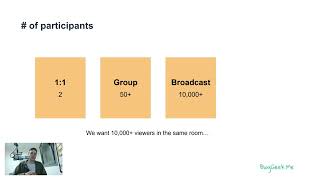
So one thing that I look at in my upcoming workshop is the change in focus that we have in the industry. And I look at three different axis. The one about the number of participants, the type of engagements that are done, and also the algorithm used. I want to go over the number of participants, it's part of what's in this email. So when we started with WebRTC it.
Was mostly peer to peer, at least.
From how it was marketed to people. So you can do one on one.
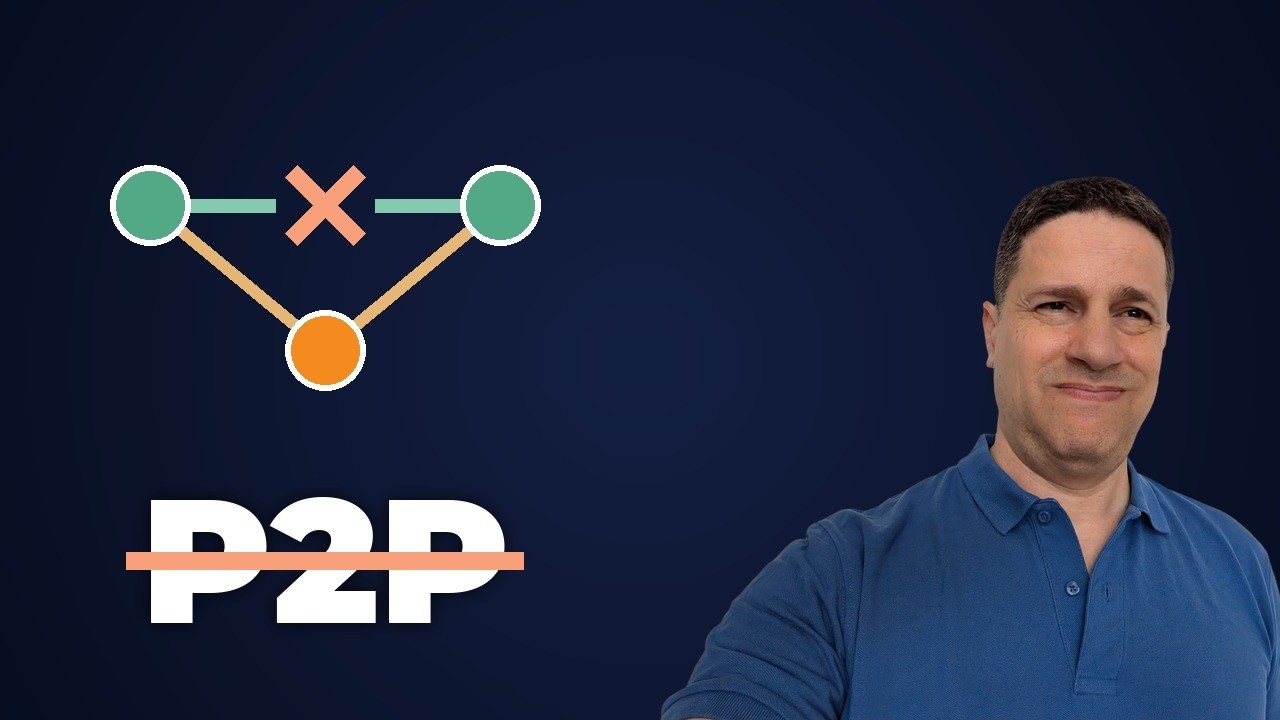
Calls, you have two people. And we all said, well P2P is.
Awesome and WebRTC can't do anything else.
Not true, but this is what you've heard people say.
Then came the other use case, the one of group meetings. The question there is, can you do a 49 gallery view? We're past that. We're now looking into 15 or 25. Why? I don't know.
But these are the numbers today.
And the other number is groups of.
Above 50 people, usually up to 200 or so.
The next different type of use case has a lot more participants. This is the broadcast. When we go into thousands or tens of thousands of users, that's again a different set with a different number of participants with a different type of a vibe. So mostly it's a lot of viewers within the same room. A town hall, a concert, a webinar or something like that. What we are seeing now is that things are shifting around. We're starting to say, you know what, groups are nice. But if you are a programmable video platform, it might not really have the number of the minutes or traffic that you're looking for. It's there, but compared to the one on one meetings, it's quite low in terms of the numbers. Okay, the number of minutes that you count and see there, then the broadcast part, that's a totally different segment or vertical or technology. I can do these things without WebRTC. You know, low latency HLS, for example, can be done here or other means and other solutions. We are now going into the future and in the future we've got a single user and that single user connect to an LLM, we're talking to a bot.
What's interesting about all these is that each one of these pillars of these.
Number of participants actually uses a slightly different architecture. In the backend of how you deal with that in one on one, I don't need a media server in groups, I need an SFU media server or an MCU for broadcast, it is something slightly different. I do use SFUs here mostly, but in a different way than what I.
Would use for a group call with.
The different types of optimizations for them. LLMs, Totally New Media processing pipeline.
Okay, so you've got these four different. I call it arch type of use.
Cases based on the number of participants within the session. The dynamics are different and the infrastructure is different as well.